The third conference of the UN Alliance for Sustainable
Growth (PAGE) began on Thursday, January 10, 2019 in Cape Town, South Africa,
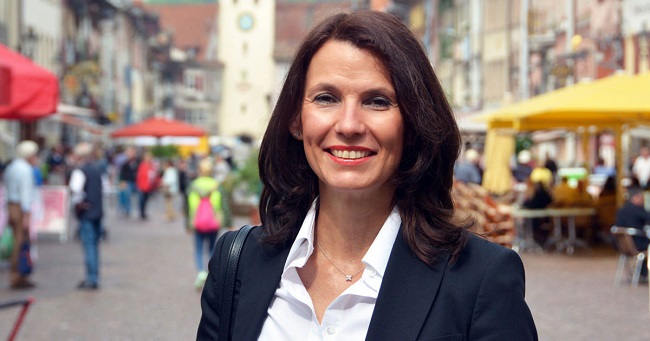
with the German Parliamentary State Secretary Rita Schwarzelühr-Sutter representing
the Federal Environment Ministry.
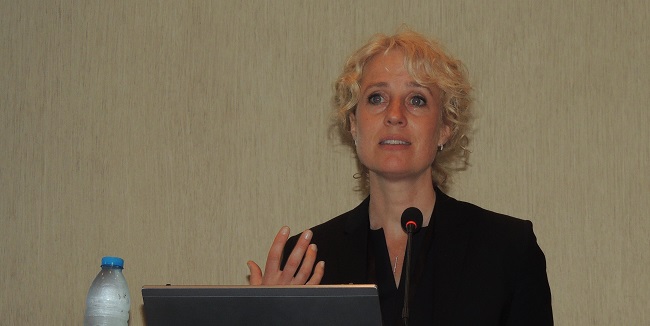
Rita Schwarzelühr-Sutter
For two days, high-ranking political, economic, civil
society, and science representatives and various UN organisations in the South
African coastal city will discuss the question of how to further accelerate the
necessary transition to a greener, fairer economy. At the opening of the
conference, Schwarzelühr-Sutter called for further efforts to be made in
implementing the UN Sustainable Development Goals.
Schwarzelühr-Sutter said: “We have only 12 years left
to reach the goals we set for 2015 as a global community with the 2030
agenda. Environmental protection must be an even more job and development
motor, especially in emerging countries such as South Africa. For this,
politics and business must already make the right investment decisions for the
future. “
In addition to the UN environmental and development programmes,
the PAGE Alliance includes the International Labour Organisation (ILO). The
partnership demonstrates how to work successfully across sectors and countries
for more sustainable business. On the sidelines of the UN conference in
Cape Town, Schwarzelühr-Sutter and ILO leader Guy Ryder agreed to intensify
cooperation on green jobs and socially responsible structural change.
PAGE’s work for sustainable business has been conceptually and financially supported by the Ministry for many years. PAGE’s goal is to help emerging and developing countries around the world move towards a sustainable, inclusive economy. This happens mainly through policy and strategy consulting. In addition, PAGE promotes the development of the necessary expertise at all levels. South Africa is one of the countries that has benefited from PAGE’s advice in recent years.
Among other things, PAGE assisted the African country in the further development of its so-called “Green Fund”, which is intended to finance projects for sustainable development in the country, and carried out regular training for the government, NGOs and companies.
As of March 2018, the majority of Americans (73%) believe
that global warming is happening, and over half of registered voters (59%)
believe that humans are the primary cause. These numbers are believed to have
grown in recent years, and even six in 10 Trump voters support taxing and/or
regulating the pollution that causes global warming.
Who exactly has changed their mind and why, however, is not
well understood, says the Centre for Climate Change Communication of the George
Mason University in Fairfax, Virginia which, in the bid to examine the scenario,
analysed nationally representative survey data that asked Americans whether
they had changed their opinions about global warming, and if so, why?
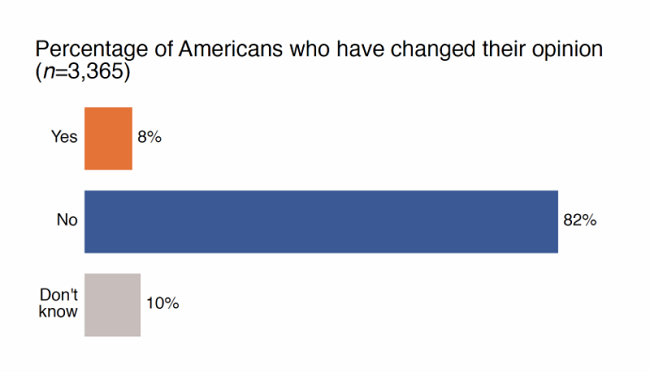
The Centre found that, across three surveys, 8% of Americans
had recently changed their opinion about global warming.
Percentage of Americans who have changed their opinion
To determine if some groups of people were more likely to
have changed their minds about global warming, the Centre examined respondents’
answers across different demographics. It found relatively small differences,
it says, adding that exceptions included Democrats (10%) who were slightly more
likely than Independents (6%), older adults (65+; 11%) were more likely than
young adults (18 to 24; 6%), and women (10%) were more likely than men (6%) to
have changed their minds.
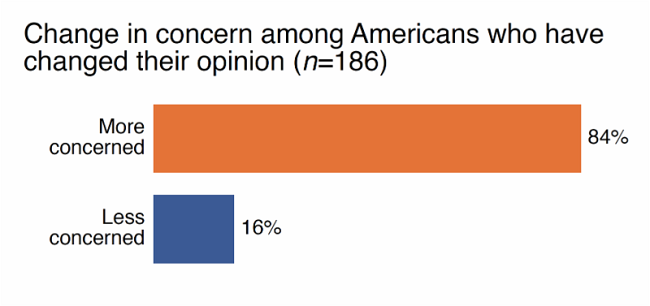
Change in concern among Americans who have changed their opinion
Of those respondents who expressed a change in their level
of concern in a clear direction (n=186), the great majority (84%) said that
they had become more concerned about the issue; 16% said they had become less
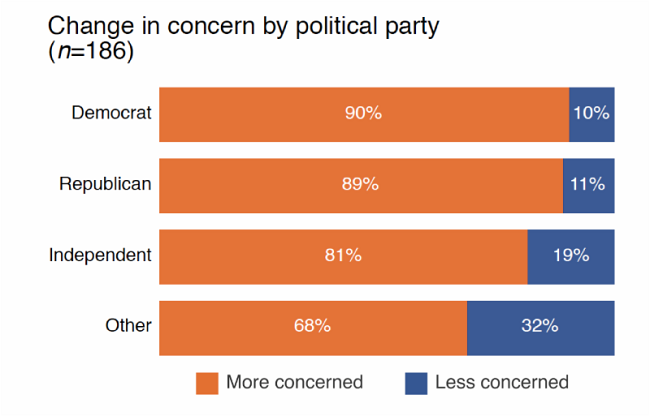
concerned. Similar proportions of Democrats and Republicans became more
concerned, while fewer Independents and people not affiliated with a major
political party or not interested in politics became more concerned.
Change in concern by political party
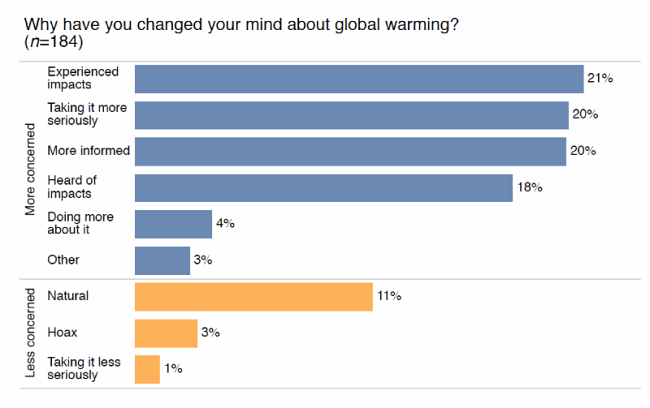
Of people who became more concerned about global warming,
the most common reasons given were: 1) directly experiencing climate change
impacts; 2) taking it more seriously (for unspecified reasons); 3) becoming
more informed about global warming; and 4) hearing about climate change
impacts.
Of people who became less concerned about global warming,
the most common reasons given for changing their minds were: 1) believing that
global warming is a natural process (not human-caused), and 2) believing that
global warming is a lie or hoax. However, 24% of those who changed their
opinion did not provide a complete or clear response as to why (these
individuals are excluded from these analyses).
Why have you changed your mind about global warming?
In conclusion, in each of several recent surveys, a small but meaningful number of American adults reported having changed their minds about global warming – with more than four out of five of them becoming more concerned. Most people offered three different reasons why they changed their minds: they had either personally experienced climate impacts or heard about them; they learned more about the problem; or they had come to see the problem as more serious.
This suggests that efforts to communicate about the reality of human-caused climate change, and its current relevance to Americans – including its impacts on local temperatures, precipitation, and extreme weather patterns – may be helping some Americans better understand the problem.
More than 10,000 small-scale farmers from Kogi State in
Nigeria are to benefit from a $200 million grant under the World Bank-assisted
Agro Processing Productivity Enhancement and Livelihood Support (APPEALS)
project.
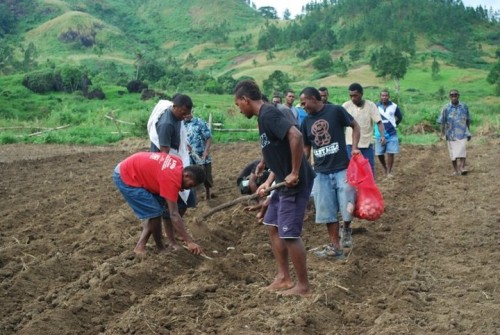
Youths involved in farming. Photo credit: smeonline.biz
Dr Abdullahi Ozomata, State Project Coordinator of APPEALS
in Kogi, told disclosed on Wednesday, January 9, 2019 in Lokoja, the state
capital, that the project was aimed at promoting transition from subsistence
farming to agribusiness in seven states, including Kogi.
Ozomata said that the World Bank grant, in line with the
“Green Alternative”, aimed to support value addition cluster farmers in three
crops – rice, cassava and cashew – in which the state has comparative
production advantage.
He said that the baseline study of the project
implementation had been concluded while the needs assessment was ongoing to
identify production gaps in the crops’ value chain.
The SPC said that Kano, Kaduna, Enugu, Cross-River, Lagos
and Kogi states were selected after a competitive selection process for the
APPEALS project expected to last seven years.
According to him, small-scale farmers holding between one
and five hectares would be upgraded to between five and 10 hectares in the
various crops’ value chain crops.
He said that existing data on farmers in the state would be
subjected to validation to enable the project to identify the real farmers.
“We are looking forward to working with the real farmers and
not political farmers. The project is also going to look at rural
infrastructure and farm clusters so that it can enhance their farming
activities and livelihood.
“Women and youths’ sub-component also give them the
opportunity to partake in other farming activities within the priority value
chain of the project,” he said.
Ozomata added that the APPEALS project had five main
components including Production and Productivity Enhancement, Primary Processing,
Value Addition, Post-harvest Management and Women/Youth Empowerment.
He listed other sub-components to include Infrastructure Support,
Technical Assistance, Knowledge and Communication, as well as Management and Coordination,
adding that the sensitisation programme would include all stakeholders.
Ozomata solicited the support and cooperation of the media
and all other stakeholders for the success of the project in the state.
To rapidly boost the knowledge necessary to seize
opportunities and manage challenges related to water, the Stockholm
International Water Institute (SIWI) and the United Nations’ SDG Academy have
unveiled plans to launch a free course on water.
Therese Sjömander Magnusson
Titled “Unique course Water – Addressing the global
crisis”, the open online course that can be accessed at http://www.siwi.org/watercourse/ begins
on Monday, January 14, 2019 and will run for over 12 weeks.
It consists of pre-recorded lectures, readings, a discussion
forum, quizzes and a final exam. The course covers nine modules: “No One Will
Be Left Behind”, “Climate Change”, “Water and Ecosystems”, “Water Governance
Crisis”, “Water and Sanitation Services and Delivery”, “Transboundary Water”, “Food
and Water”, and “Water and Energy”.
The idea is to equip students, business leaders and
change-makers at all levels with tools to handle today’s and tomorrow’s water
challenges. It is estimated that, by 2030, global demand for freshwater will
exceed available supply by 40 per cent, forcing all sectors of society to
adapt.
“Water is the defining issue of our age. We need a new
awareness of the role water plays for humans, societies and nature. Both SIWI
and the SDG Academy feel it’s urgent to spread this knowledge to as many people
as possible,” says Dr. Therese Sjömander Magnusson, Chief Operations Officer at
SIWI and Lead Faculty for the course.
SIWI was asked to organise the training to create the most
up-to-date course possible with the latest research on topics like the link
between water and health, why agriculture must rethink its water use and how
water can be a tool for peacebuilding. The modules were filmed during the 2018
World Water Week in Stockholm, Sweden, believed to be the most important yearly
event for the water community.
“Thanks to this, we’ve been able to create a unique course
with many of the world’s leading experts. I hope many people will seize this
rare opportunity to learn directly from them,” Dr. Magnusson adds.
She emphasises the broad scope of Water – addressing
the global crisis. The course explains how water is crucial to all the
Sustainable Development Goals (SDGs) and features both academic lecturers and
practitioners. After the 12-week course, students will have a good
understanding of key topics related to water scarcity, climate change,
sanitation and much more.
“Not least importantly, the course prepares you to make a
difference. This is really something that is needed across the globe to tackle
the water challenges we are facing,” Magnusson says.
Brazil is pulling out of the controversial UN migration
pact, local media reported on Wednesday, January 9, 2019 as President Jair
Bolsonaro insisted that migration policies must be defined on the national
level.
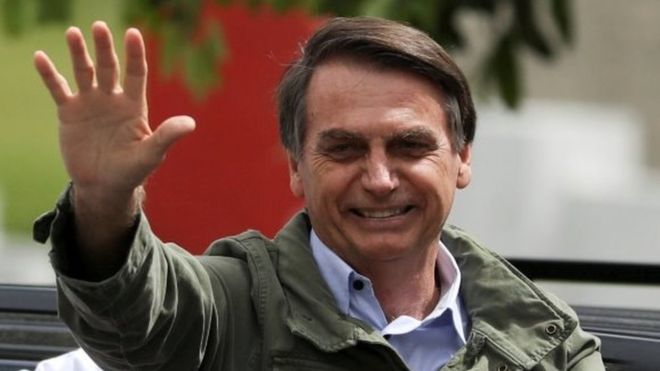
Jair Bolsonaro, President of Brazil
“No to the migration pact,” Bolsonaro said on Twitter.
“The defence of national sovereignty was one of the flags of
our (electoral) campaign and will be a priority for our government,” added the
far-right former army captain, who took office on Jan. 1.
“Brazilians and the immigrants, who live here will be safer
with rules we define on our own, without outside pressure,” he tweeted.
“We will never refuse help to those in need, but immigration
cannot be indiscriminate; If we control, who we let into our homes, why would
we do otherwise with our Brazil?” Bolsonaro asked.
News agency Agencia Brasil reported that Bolsonaro had
confirmed Brazil would be pulling out of the pact.
The UN migration pact lays out 23 objectives to ensure
“safe, orderly and regular” migration, including protecting migrants from
exploitation and human rights abuses.
It was ratified by more than 150 countries in December. They
included Brazil, which ratified the pact under Bolsonaro’s centre-right
predecessor Michel Temer.
Countries not joining the pact include the U.S., which
Bolsonaro is seeking closer ties with.
Brazil is one of the countries receiving migrants fleeing
the economic and political crisis in Venezuela.
More than 50,000 Venezuelans are estimated to
have arrived in the Northern Brazilian state of Roraima, where many of them
live in destitute conditions.
Greenpeace welcomes the European Union’s decision to
withdraw threat to ban Thai seafood imports owing to progress in tackling
illegal, unreported and unregulated fishing, its Directorate for Southeast Asia
said.
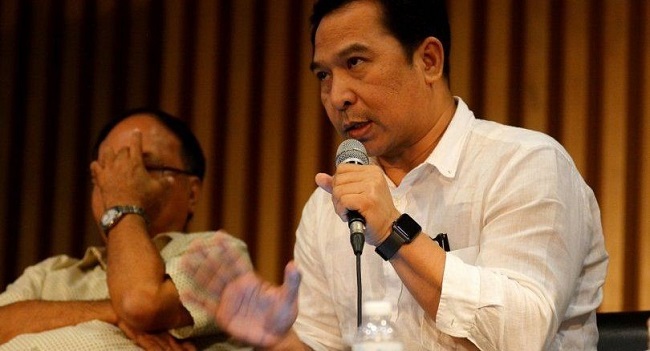
Tara Buakamsri
“We applaud the Thai government for taking the necessary and
essential steps towards reform in the Thai fishing industry,’’ the country’s
director, Tara Buakamsri, said.
Thailand’s multi-billion-dollar fishing industry, the third
largest in the world, came under international scrutiny in 2014 with reports of
illegal fishing activity that led to environmental damage, as well as worker
enslavement.
The EU, the following year, warned Thailand to make
immediate improvements or else be banned from importing fisheries products into
the bloc.
“Thailand has since then successfully implemented a major
upgrade to its oversight of the fisheries industry in line with international
commitments,’’ the European Commission said on Tuesday.
However, the environmental group warned there is still room
for improvements.
“We believe Thailand’s fisheries reforms will only be truly
effective with the actual implementation and eventual elimination of outdated
and unlawful practices adopted by some unscrupulous, exploitative and
destructive operators,’’ Buakamsri added.
No less than 15 per cent of world fish catches are thought
to be illegal, unreported or unregulated, accounting annually for up to 26
million tonnes of fish worth €10 to €20 billion ($11.45 to $23 billion).
Australian emergency services are responding to several
calls involving hazardous materials near foreign consulates in Melbourne,
officials and local media said on Wednesday, January 9, 2019.
Melbourne, Australia
Victoria Emergency said 10 hazardous material incidents are
in progress in several areas across the city.
It said the incidents are “under control’’.
“The Melbourne Metropolitan Fire Brigade is assisting
Australian Federal Police, who are the lead agency in the investigation,’’ a
spokeswoman for the fire brigade said without giving more details.
However, there has been no immediate response to requests
for comment from Australian Federal Police and Victoria Police.
Local media said no less than five diplomatic missions are
in lockdown after a series of packages of unknown origin were sent to them.
“Suspicious packages have been found at several locations,’’
Melbourne-based 3AW radio said.
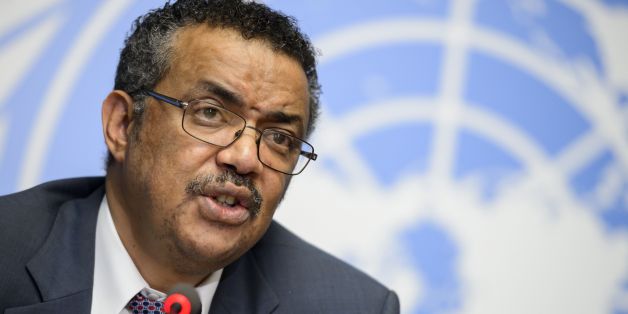
Director-General of the World Health Organisation (WHO),
Tedros Ghebreyesus, says that polio is likely to be eliminated from Pakistan by
the end of 2019, a statement said on Tuesday, January 8, 2019.
Dr Tedros Adhanom Ghebreyesus, Director-General of the World Health Organisation (WHO). Photo credit: AFP / FABRICE COFFRINI / Getty Images
Ghebreyesus, who led a delegation, met with Pakistani
Foreign Minister, Shah Qureshi, and assured the organisation’s support to the
healthcare system of the country.
“Ghebreyesus briefed the foreign minister on WHO’s enhanced
focus on public health, country-level impacts, ongoing programmes/projects in
Pakistan aimed at improving people’s access to health-related matters,”
Pakistan’s foreign ministry said in a statement.
The WHO chief said that the organisation had intensified its
activities in coordination with the Pakistani government for polio eradication,
and the enhanced efforts will lead to elimination of the disease by the end of
2019.
Qureshi said that the Pakistani government remains committed
to ensuring provision of quality health facilities to all people at all levels.
He also assured the delegation of full support in polio
eradication and implementation of other health programmes in Pakistan in the
future.
Pakistan, Afghanistan and Nigeria are the only three
countries in the world where polio virus could not be eradicated yet, the WHO
said on its website.
WHO added that the polio virus could easily be imported into
a polio-free country and can spread rapidly among unimmunised populations.
There has been a 99 per cent reduction in the polio cases in
Pakistan since 2014.
The total count of new polio cases in Pakistan in 2018 was
eight, while it was also eight in 2017, 20 in 2016, 54 in 2015 and 306 in 2014,
according to data compiled by Pakistani officials.
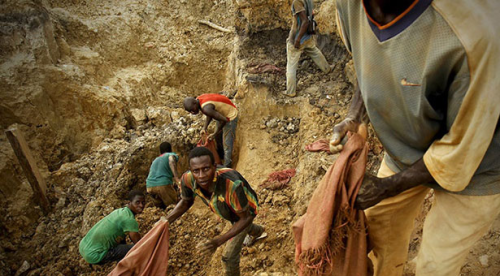
A pilot programme to reduce lead poisoning in Nigerian gold mining communities has brought extraordinary improvements to an area where hundreds of children had died from lead poisoning, according to a study published on Tuesday, January 8, 2019. The study authors concluded that a two-year effort to introduce safer mining practices was effective at preventing deaths and reducing lead poisoning in highly exposed villages.
Artisanal and small scale gold mining. Photo credit: thewillnigeria.com
“Our pilot project demonstrated that low-cost dust control
measures were effective at reducing average airborne lead exposures by 95
percent,” said Perry Gottesfeld, Executive Director of Occupational Knowledge
International (OK International) whose organisation partnered with Doctors
Without Borders/Médecins Sans Frontières (MSF) in this effort.
OK International is a U.S. based NGO that works to
build capacity in developing countries to identify, monitor, and mitigate
environmental and occupational exposures to hazardous materials in order to
protect public health and the environment.
The safer mining project took place in the Shakira community
in Niger State where high levels of lead are naturally present in the gold ore.
The primary objective was to reduce lead exposures among artisanal small-scale
miners and minimise take home exposures.
“We worked cooperatively with miners to provide them with
the information and tools to reduce their exposures to lead and silica dust.
Together we showed that these efforts minimized contamination and helped save
lives,” Gottesfeld said.
The organisation demonstrated the effectiveness of reducing
airborne lead levels by working with miners to convert dry operations to wet
methods. Water spray misting was proven to be highly effective while minimising
water consumption. In addition to significant reductions in airborne lead, the
authors reported that these control measures reduced the smaller respirable
silica dust by 80%.
Philip Aruna, Head of Mission in Nigeria for Doctors Without
Borders, said: “OK International has exceeded expectations in bringing an
entire community together to prevent severe lead poisoning and by demonstrating
significant reductions in lead exposures among miners.”
Gottesfeld noted: “Following our extensive outreach and
training, these miners were motivated to take measures to reduce hazardous lead
exposures and invested their own time and money to implement these protective
measures.”
The authors of the study, titled: “Reducing Lead and Silica
Dust Exposures in Small-Scale Mining in Northern Nigeria” and published
in Annals of Work Exposures and
Health noted that average lead exposures among ore processors before
the implementation of safer practices were 19 times greater than the U.S.
Occupational Safety and Health Administration (OSHA) permissible limit for lead.
In Nigeria and in most other African countries, there are no occupational
limits for exposure for lead or silica dust.
Silica dust causes silicosis, lung cancer and is a
significant risk factor for tuberculosis (TB). Lead causes severe
neurological deficits and death among children in these communities, but even
at low exposure levels is responsible for 674,000 deaths each year primarily
due to cardiovascular disease.
There are an estimated 40 million informal small-scale
miners working in at least 70 countries around the world. Although
some programmes have attempted to reduce mercury exposures in these
communities, this is the first such intervention to demonstrate reductions in
lead and silica dust exposures. The authors of the published article
note that in mining communities lead and silica hazards pose a far greater risk
to human health than the use of mercury.
Dr. Adolphe Fotso, Medical Coordinator for Nigeria with
Doctors Without Borders, and an author on the paper, said: “That this effort
was an extraordinary success in reducing these significant health risks and
protecting children from lead poisoning.”
In addition to introducing wet methods, OK International
focused on training miners to implement simple measures including handwashing,
showering, setting up separate eating areas, and changing out of work clothing
before going home at the end of the day. The study estimated that the overall
cost for introducing these measures in this community was approximately $5,000.
A mother, Sadiya, as fondly called, cried uncontrollably on
the aisle of a general hospital in her neighbourhood in Abuja as medical
personnel worked to announce the autopsy result of her three children that
died.
The WHO says that, in one year, 46,750 persons died as a result of outdoor pollution in Nigeria
Irrespective of pleas to be patient and wait for the result
to ascertain the cause of her children’s death, Sadiya continued to curse,
blaming the death of her children on diabolic forces.
Eventually, the autopsy result indicated that fumes from
their neighbour’s generator sniffed life out of her children while she was away
at her shop.
Her daily routine has been to bring the children from school
at noon, ensure they have lunch before she takes them home in the evening and
go back to her shop until night.
But when Sadiya’s returned from the shop on this fateful
evening while the children were sleeping, she unlocked the door and tried to
call out on them as usual but there was no response.
She guessed they must be too tired to respond but after some
minutes and she reached out to wake them only to realise that all of them were
listless.
She immediately called on her neighbour who followed her to
the hospital where the children were confirmed dead.
When the medical personnel claimed that generator fume was
responsible for their death, Sadiya remembered a neighbour’s generator that is
always situated very close to the window of children’s room.
Sadiya’s experience gives an insight to the dangers of air
pollution in major cities and rural communities of the country.
Concerned citizens argue that it is painful that industries,
group of persons responsible for such air pollution are not always punished,
perhaps, because there is no legislation or its enforcement in that regard.
In an apparent move to check environmental pollution and its
hazards, the Federal Government established the Nigerian Meteorological Agency
(NiMet) in 2003 to monitor meteorological components of environmental pollution
and ozone concentration, among other functions.
Further to that, the National Environmental Standards and
Regulation Agency (NESREA) is charged with the responsibility for the
protection, development and enforcement of regulations regarding the
environment.
To kick-start awareness on dangers of air pollution, Centre
for Atmospheric Research of the National Space Research and Development Agency
(CAR-NASRDA) organised an inaugural workshop on “Air Quality (AQ)’’ in 2018 in
Anyigba, Kogi State.
Themed: “Air Quality Research and Sustainable Development:
The Nexus, Prospects and Challenges’’, the workshop provided useful information
on how to ensure safe environment from pollution.
Prof. Sani Mashi, the Director-General, NiMet, said that
although the agency had yet to begin Air Quality Forecasting, it would work in
collaboration with stakeholders in Air Quality observations and monitoring to
access more information.
According to him, this will provide scientific platform for
campaign for forecasting in the future to enact active policy on Air Quality.
In spite of this, Prof. Babatunde Rabiu, Director, CAR, said
that the country lacked reference information for appropriate Air Quality
policy and planning which had encouraged human activities that caused air
pollution.
According to him, explosive population growth and its
attendant rural-to-urban migration and industrial expansions, have led to
excessive emission of wide range of air pollutants into the environment.
He expressed concern about the increasing emissions and its
impact on human health, ecosystems, food security and the entire climate within
Africa, describing the rate of the increase as dangerous.
Rabiu emphasised that “Air Quality is a global phenomenon
and countries of the world are taking steps to combat air pollutants that are
harmful to the environment and humans.
“It is imperative to create awareness on Air Quality intake by
citizens for effective healthcare; the country requires observational
facilities across the nation for accurate air forecasting’’.
He noted that if partners advocated seriously against the
effects of air pollution, it would prompt the government to putting measures in
place to combat it.
He observed that the National Assembly House Committee
recently expressed commitment to addressing issues on Air Quality, soliciting
increased budget for the environmental problems.
Sharing similar sentiments, Prof. Clement Akoshile, the
President, Nigerian Meteorological Society, called on government to fund
research on environmental issues adequately in collaboration stakeholders.
According to him, stakeholders need to set up a central
depository of equipment for atmospheric research and sustainability.
In the same vein, Prof. Falaiye Oluwasesan, a scientist from
the Department of Physics, University of Ilorin, said that lack of sufficient
equipment had affected the values of air forecast in the country.
“We can realise Air Quality forecasting if we get our
priorities right, when we are empowered with equipment all around the country,
we will be able to make a holistic impression.
“But at the level of equipment we have on ground now, we
might not be able to achieve that because our meteorological prediction values
are derived from ground stations that are not in that location’’, he observed.
However, Mr Najib Yusuf, the Head of Research, CAR,
suggested that measurements of air conditions could be taken in different
locations to effectively legislate on Air Quality.
Yusuf also noted that funding the sector would make
acquisition of equipment to measure atmospheric conditions easier.
“Determining Air Quality also depends on the funds from the
budget; we can at least deploy three instruments in every state of the country.
“When that is not possible, we can deploy equipment to major
locations of the country; we need data to make a good legislation on Air
Quality in Nigeria,” he said.
Similarly, Dr Sunday Akinde of the Department of Biological
Science, Osun State University, said that building a strong synergy among
stakeholders could help to fight air pollution and its effects.
Akinde alleged that the previous government had paid less
attention to the development of research and development, including research on
Air Quality.
“Science has advanced beyond what it used to be, the
government needs to see it that way and fund local research; there seems to be
a disconnect among stakeholders in the policy on Air Quality
“Without proper coordination and going from
multi-attitudinal research to trans- attitudinal research, it will be difficult
to have sustainable research activities even in Air Quality,’’ he said.
However, Sen. Oluremi Tinubu, the Chairman, Senate Committee
on Environment, said that the National Assembly would ensure legislation on the
planning and policy on Air Quality to safeguard the health of citizens.
“Safe air benefits every citizen and when we don’t have
quality air to breathe, it will lead to lots of health implications.
“The senate will ensure the pushing of the legislation on
Air Quality to provide a safe haven for all citizens,’’ she said.
This assurance notwithstanding, environmentalists insist
that the government should consider the upgrading of the 2014 National
Environmental Air Quality Regulation of the Federal Ministry of Environment for
effective protection for the environment.
By Ijeoma Olorunfemi, News Agency of Nigeria (NAN)