The 55th Global Environment Facility (GEF) Council meeting wrapped
up on Thursday, December 20 2018 following the approval of its first work
programme under its new, four-year investment cycle, known as GEF-7, and a
series of decisions that will firm up its implementation policies and
procedures.
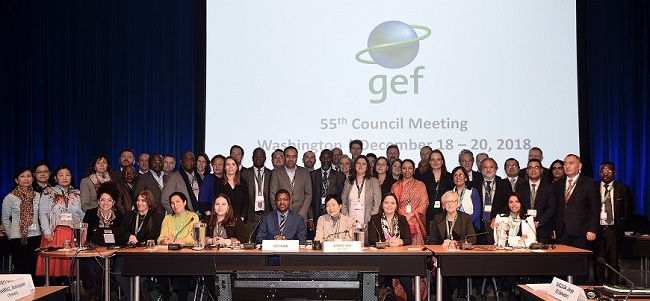
Delegates at the 55th Global Environment Facility (GEF) Council meeting
The work programme, made up of 18 different projects
benefiting 25 countries around the world, will require $157.8 million, and is
expected to attract an indicative $819.7 million in financing from other
sources.
Closing the meeting, Naoko Ishii, GEF CEO and Chairperson,
thanked council members for the “extensive, rich and fruitful three days.” Repeating
her call at the Council opening for “urgent action to get back on track”, she
said much progress has been made, and “now GEF-7 can start!”
“We have reviewed different policies and modified them to
provide a framework that will make the GEF work better,” said Abdul Bakarr
Salim, Deputy Director of the Environment Protection Agency, Sierra Leone,
and co-chairperson of the 55th GEF Council.
The three-day Council meeting, the first to be held since
governments endorsed the new GEF-7 strategy and the accompanying $4.1 billion replenishment of its trust fund, approved
various measures to further improve the GEF’s efficiency, accountability and
transparency.
This includes new policy procedures to speed up the preparation,
endorsement, implementation, and closure of projects, and, among other things,
new policies to improve access to information, and an updated policy on
environmental and social safeguards throughout the GEF project and programme
cycle.
The Council received reports from the GEF’s Scientific and Technical Advisory Panel, Independent Evaluation Office, and held discussions on
GEF’s relations with multilateral environmental agreements, the GEF-7 Non-Grant
Instrument Programme, and options for responsible investment of funds in the
GEF Trust Fund.
Following the well-received special session on gender at this year’s Civil Society
(CSO) Forum, the Council decided that plastics management to avoid pollution
would be the topic for the CSO consultation at the 56th GEF Council
meeting in June 2019.
In a demonstration of growing support for adaptation efforts
by some of the most vulnerable countries to the impacts of climate change, the
following pledges were announced by council members on behalf of their
governments.
For LDCF: Belgium, Walloon Region (€2.9 million), Denmark (Kr.150 million), Finland (€2 million), France (€20 million), and The Netherlands ($9.1 million). Switzerland announced a commitment of $13.25 million over four years to the LDCF and SCCF, with 75% going to the LDCF. Sweden highlighted its contribution of kr135 million to LDCF in 2018. Germany will finalise its contribution payments of €25 million before the end of the year.
Work Programme
Specific projects include: the long-term conservation and
management of critical and threatened sites and species along the globally
important East Asia-Australasian Flyway, by establishing a robust, resilient,
and well-managed network of protected wetlands for endangered migratory water
birds in China; transforming Sharm El Sheikh in Egypt into a sustainable
tourism city by a whole host of measures including promoting low-carbon urban
development, renewable energy generation, better waste management and
recycling, and protecting the sea and coastal areas; and tackling substantial
and alarming environmental degradation from pollution and overfishing in Africa’s
Lake Victoria.
Two projects in Chile will support decarbonisation by
fostering deployment of district energy systems which can cut emissions by 90
per cent and improve catching and management practices in fisheries over 1.7
million hectares of sea. Another two, in Turkey, will promote replacing
persistent organic pollutants with environmentally sound alternatives in its
extruded and expanded polystyrene foam industries and increasing the use of
wood in buildings, thus reducing the embedded carbon content of construction
materials.
Two more will tackle mercury pollution in Mexico and
Argentina, while a regional project in Central Asia will assess and address the
impact of climate change on glaciers in Kazakhstan, Turkmenistan and
Tajikistan.
The last project represents the first half of an
allocation of $128 million under GEF-7 for the Small Grants Programme to
provide grants to civil society and community-based organisations tackling
global environmental issues in 107 countries.
The leadership of the National Biosafety Management Agency
(NBMA) says the agency was established to ensure the safety of Genetically
Modified Organisms (GMOs), not to stop the product’s dissemination and use.
Dr Rufus Ebegba, Director-General and CEO of the the National Biosafety Management Agency (NBMA). Photo credit: climatereporters.com
Dr Rufus Ebegba, the Director-General of the agency, who
made this known to the News Agency of Nigeria (NAN) on Thursday, December 20,
2018 in Abuja, said: “NBMA is a government agency established by law as a
regulatory agency to ensure the safe handling and use of modern biotechnology
and its products, which include GMOs.
“So, the establishment of the agency is not to stop the use
of GMOs but to ensure their safety that they have no adverse effect on human
health, plants, animals and the environment.’’
On the recent public presentation of the application for the
commercialisation of genetically modified Pod Borer Resistant (PBR) Cowpea,
Ebegba said that the agency was mindful of the implications of wrong decisions
and the failure to act with courage and efficiency.
“The Institute for Agricultural Research (IAR), and Ahmadu
Bello University, Zaria, following the approvals from the Federal Ministry of
Environment and NBMA conducted confined field trials at selected sites in
Nigeria on the PBR Cowpea for nine years.
“Over the years, the ministry’s Biosafety Unit and NBMA
closely supervised the trials’ process during which all the requirements
pertaining to biosafety compliance were fully met.
“Accordingly, IAR submitted to the NBMA a formal
application, seeking permit for the general release of the PBR Cowpea in
Nigeria, pursuant to the provisions of the NBMA Acts, 2015 and the National
Biosafety Regulations.
“The application for commercial release of GM food crop, is
the first of its kind and in line with the NBMA Acts.
“It requires the agency to build on the past efforts to make
certain that stakeholders are aware of the basic science of PBR Cowpea and the
biosafety measures put in place by NBMA.
“We organised public presentations to afford the agency the
opportunity to sustain momentum in its various efforts to ensure information
sharing and dissemination among stakeholders.
“We enhance public participation in our decision-making
process by inviting representatives of agencies that we have signed MoUs with
for synergy and for effective biosafety regulation in the country.
“Representatives from relevant ministries, departments and
agencies, experts, scientists, the media, professional bodies including NBA,
Civil Society Groups (including environmental activists opposed to the
technology) partners and faith-based organisations for obvious reasons.”
Ebegba said that the objective was for the applicant to take
stakeholders through the basic science of the genetically modified cowpea and
other relevant issues related to the safety of the gene of insert and the
processes of the development of the GM Cowpea.
“At the end of the presentation, there would be a 21day
public notice in three national dallies and on the agency’s website on the
application, indicating the locations where the application/dossier would be
deposited.
“This will enable members of the public to review the
application and present their views to the NBMA.
“NBMA will also constitute a National Biosafety Committee
and National Biosafety Technical Subcommittee of Eminent Experts and Scientists
to carry out detailed review of the risk assessment and risk management and
make recommendations to guide the NBMA’s final decision.
“I wish to assure the public that the NBMA would carry out a
thorough risk assessment review of the application and make the best decision
in the interest of Nigerians and the nation.
He said that NBMA as a competent national authority on
biosafety in Nigeria had since inception faced various criticisms by some
environmental activists.
“Some of these activists have released some publications and
held public fora aimed at discrediting the agency and continually fed Nigerians
with contradictory and false information about the agency.
“While the agency believes that citizens are free to
criticize government agencies’ decisions, it is expected that such criticism
should not be without relevant knowledge.
“And should not be intended to damage the integrity of
officers who are carrying out their legitimate duties in the implementation of
the mandate of the officers.’’
Ebegba said that those who constantly criticise NBMA never
at any time visited the agency to find out why the agency took whatever
decisions it took.
“Even when they are invited to our programmes, they refuse
to attend.
“We must remember that the world’s development is dynamic,
and the world will not wait for Nigeria.”
He noted that every new technology was bound to face suspicion,
but Nigeria should not fail to move on and develop the technology.
“In spite of the various enlightenment programmes of the
agency and its engagement with the public on the mandates and workings of the
agency, the agency is still confronted with controversies.
“Despite the odds, the NBMA has continued to discharge its
duties to the people of Nigeria while meeting the mandate of government with
knowledge and courage.
“Be rest assured that the agency will not fail in the
discharge of its responsibility in the regulation of the application of modern
biotechnology, handling and use of genetically modified organism.”
NAN reports that the agency draws its mandate from the NBMA
Act 2015.
The act states that the agency is charged with the
responsibility of providing regulatory framework, institutional and
administrative mechanism for safety measures in the application of modern
biotechnology in Nigeria;
This is with the view to preventing any adverse effect on
human health, animals, plants and the environment.’’
To the media, reporting on issues is usually
the normal drill. But when media professionals decide to stick out their necks
on an issue by taking a stand that borders on advocacy, then they are damn
serious and mean business.
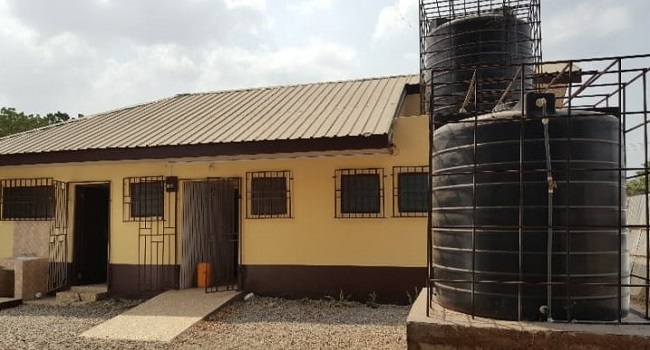
Toilet facility provided under the Ghana Water and Sanitation Project (GAMA) at the Madina Cluster of Schools in the La Nkwantanang Madina Municipal Area
Therefore, to warrant such media attention,
the issue must be wrong to a very large extent, obnoxious, injurious to the
welfare of the general populace and environment, abnormal and contrary to
social norm practices or must just be a menace, period.
Additionally, the issue must have been
attracting attention from concerned institutions and organisations including
public entities, civil society and development partners. Somehow, they are
gurus in prompting, if not directly setting and influencing the agenda for national
development. So, when the Environmental Health and Sanitation Directorate, then
under the Ministry of Local Government and Rural Development with support from
UNICEF started tackling open defecation as a major issue, the Ghanaian media
noted it.
Again, when the World Bank, SNV and World
Vision International Ghana, among other development partners, got involved in
the fight against open defecation by initiating and supporting diverse
projects, their move got media attention.
In line with this, and with the support of
World Vision International Ghana and the Coalition of NGOS in Water and
Sanitation (CONIWAS), the Media Coalition against Open Defecation (M-CODe) was
formed and launched in September 2018.
The Coalition aims to mainly intensify
public sensitisation on the menace of open defecation. It is a practice whereby
people defecate free range in any available space, bush, uncompleted buildings,
gutters and drains, along river banks and beaches or indiscriminately throw
away wrapped-up faeces and leaving the faeces in the open, exposed to the
elements.
Against this background, members of the
Coalition were acting based on an appreciation that open defecation “is the
riskiest of all sanitation practices, posing the greatest danger to human health
and is the biggest sanitation challenge in Ghana,” evidenced by statistics that
paints a gloomy picture of the nation’s open defecation status.
One out of every five Ghanaians defecates
outside a toilet each day. This represents close to six million people who
defecate without using a toilet. Open defecation is the cause of many
preventable illnesses including diarrhea and Cholera, which is killing about
19,000 Ghanaians annually. Other health related problems perpetuated by open
defecation are typhoid fever, Intestinal worms, malnutrition and stunting among
children.
Besides, open defecation costs Ghana more
than $79 million annually and this excludes the cost of funerals, tourism
losses, single parenthood, widows, orphans, and water pollution among a host of
other open defecation associated costs elements. What is more, open defecation
shames Ghana to the outside world and affects tourism potentials. Meanwhile,
financial analysts have estimated that the amount required to eliminate the
practice is far less than what it is costing the nation.
Again, M-CODe members understand the
underlying factors that appear to be reinforcing the practice of open
defecation in Ghana. Statistics indicate that about 35% of public and 18% of
private basic schools do not have toilets and pupils are compelled to resort to
unorthodox places to defecate. Many healthcare facilities lack access to clean
toilets, while, many public institutions including some Metropolitan Municipal
and District Assemblies (MMDAs) lack clean toilet facilities. Also, many public
places such as markets and lorry parks lack access to clean and hygienic
toilets.
The situation of peri-urban, rural and
local communities is even more disturbing as majority of houses do not have
toilet facilities. People still use communal latrines, an olden days’ practice
that is being held unto in a technologically modernized age. Therefore, many
communities still demand communal toilets from government instead of
constructing household toilets.
And the bottom-line of the matter is that Government
has no publicised national roadmap for eradication of open defecation. M-CODe
members recognized government’s effort in tackling open defecation as part of
the general sanitation agenda under the country’s socio-economic development
plan and in line of Sustainable Development Goal 6 on clean water and
sanitation for all by 2030.
But they have not lost sight of the fact
that there is currently no agenda in place that binds the government towards attaining
an open defecation free Ghana by a nationally determined set date.
So, what do members of M-CODe want to see? Firstly,
they want the President to declare a target date to end open defecation in
Ghana. In addition to that, they want President Akufo-Addo to direct all Regional
Coordinating Councils (RCCs) and MMDAs to develop and publicise a roadmap for
eradication of open defecation to meet the national deadline.
M-CODe also wants the President to direct
RCCs and MMDAs to ensure that every school and health centre in Ghana, whether
public and private, has access to clean and hygienic toilets by the end of
2020. In line with this particular demand, members of M-CODe are happy with the
work of the World Bank funded Ghana Sanitation Water Project (GSWP) for the
Greater Accra Metropolitan Area.
As part of its mandate, GSWP is providing toilet
facilities for some schools and health institutions in the current 11 Metropolitan
and Municipal Assemblies that the project works in. The project has so far
completed toilet facilities for 19 schools and the Kekele Polyclinic in the La
Nkwantanang Madina Municipal Assembly. While, in the Ashaiman Municipal
Assembly area, 18 schools have been provided with improved toilet facilities.
The Project has a target of building 406
toilet facilities for schools and selected institutions within the area. This
was made known to members of M-CODe, when they interacted with the GSWP team on
Tuesday, December 11, 2018. The purpose was to introduce the Coalition to the
Project and ascertain its status.
The Project Coordinator of GSWP, George Asiedu,
noted that the need for improved school toilet facilities is huge in the Accra
Metropolitan area as well as nationwide. He said the situation has become
complicated because of other factors including community encroachment on schools’
facilities, water access and maintenance issues.
Asiedu, an engineer, proposed that management
of schools toilet facilities should be privatised to ensure they are properly
cleaned, maintained and sustained. He commended the media for the initiative
and said the Project sees members as partners in the fight to end open
defecation in Ghana.
The Patron of the Coalition, Dr. Doris
Yartey, said since M-CODe and the Project have the same objective of fighting
open defecation, the two could form a strong alliance that will result in the
project becoming stronger, bigger and more impactful.
She stressed: “M-CODe considers open
defecation as a major national disgrace and that is why we have come together
to champion the advocacy cause to bring about change in the way Ghana handles
toilet, which is against our image. When we succeed, the disgrace of Ghana will
be taken away for the country to focus on more important things like education
and industry.”
In a related developed, the group, on Wednesday,
November 28, 2018, called on the Minister for Sanitation and Water Resources,
Madam Cecilia Dapaah, to formerly welcome her to the ministry and update their
knowledge on developments within the sector.
The UN General Assembly on Wednesday, December 19, 2018 in New York endorsed the adoption of the Global Compact for Safe, Orderly and Regular Migration (GCM), the UN Network on Migration said in a statement.
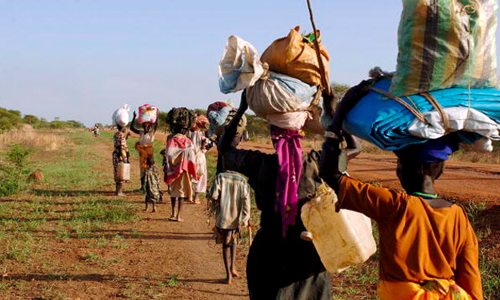
Internal migration
According to the statement, the GCM was formally adopted
with 152 votes in favour and five against while 12 abstained.
Welcoming the formal endorsement of the Compact by the
General Assembly, the Network said the adoption of the GCM represented a
landmark moment in the pursuit of international cooperation on migration for
the benefit of all.
The statement said that Compact’s significance also lay in
its recognition that effective migration policies, and greater protection of
the vulnerable, required the support of many actors.
To that end, the Compact was strengthened by the engagement
of a broad alliance of partners, including civil society, the private sector,
trade unions, Diaspora and migrant communities, national human rights
institutions, local authorities, youth networks and other actors, it noted.
The Compact was adopted on Dec. 10, during at the two-day
Intergovernmental Conference on Migration in Marrakech, Morocco.
The GCM is the first-ever negotiated global framework on a
common approach to international migration in all its dimensions.
Though non-legally binding, the Compact is the product of an
intensive process of negotiations.
It provides a strong platform for cooperation on migration
now and into the future, drawing on best practice and international law, to
make migration safe and positive for all.
In her reaction, Ms. Louise Arbour, the Special
Representative of the Secretary-General for International Migration, said in
the statement that the formal endorsement of the Compact represented “a
resounding commitment to an international migration framework based on fact,
not myth.
“It is also based on an understanding that national
migration policies are best implemented through cooperation not in isolation.
“As the many initiatives proposed by the Compact start to
take root, we will see lives saved, living conditions improve, and communities
integrate and flourish through increased development and prosperity.
“Looking to the future, we will be better equipped to rely
on a spirit of solidarity, rather than on indifference or – worse – selfishness
that could otherwise tear us apart.”
Similarly, Mr António Vitorino, the Director-General,
International Organisation for Migration, said: “The Global Compact comes at an
important moment.
“It contains within it the promise of an evidence-based less
politically charged discourse on migration, a plan for developing more
comprehensive policies to improve the lives of migrants and the communities in
which they live, and the possibility to reduce dangerous, chaotic and irregular
migration flows.”
Vitorino, speaking as the Network Coordinator on behalf of
its Executive Committee and wider membership, described migration as a
phenomenon with many dimensions.
“It touches on profound and urgent questions of sustainable
development, climate change, humanitarian crisis, border control, security,
fighting trafficking in human beings as well as smuggling, fostering means of
legal migration, including for work, and greater protection of our universal
human rights.
“No single part of the UN community can effectively address
all dimensions of migration but together, we have the chance to make a real
difference. That is what the Network is about,” he said.
The United Nations system expressed its commitment to
supporting the implementation of the Global Compact through the creation of the
UN Network on Migration.
It is a collaborative community of UN entities coming
together to provide effective and coordinated support to member-states and
other partners in carrying forward the objectives agreed to in Marrakech.
This Network will leverage the impact of the UN considerable
expertise and capacity in helping to strengthen the benefits of migration and
to address its many challenges.
It was established at the request of the secretary-general
and is welcomed in the GCM.
It currently comprises 38 entities from within the UN system
with an executive committee of eight which provides strategic oversight and is
the principal decision-making body of the network.
Members of the Executieve Committee are the United Nations
Department of Economic and Social Affairs (DESA), the International Labour
Organisation (ILO), the International Organisation for Migration (IOM) and the
Office of the High Commissioner for Human Rights (OHCHR)
Others are UN Development Programme (UNDP), UN High
Commissioner for Refugees (UNHCR), UN Children’s Fund (UNICEF), and the UN
Office on Drugs and Crime (UNODC).
The International Institute for Sustainable Development (IISD), in an analysis of the the 24th Session of the Conference of the Parties (COP24) to the United Nations Framework Convention on Climate Change (UNFCCC) that held from December 2 to 14 in Katowice, Poland, examines the rulebook by focusing on key parameters of success, such as: resolution of contentious political issues; delivering effective guidelines for a dynamic architecture; and building the basis for increased ambition
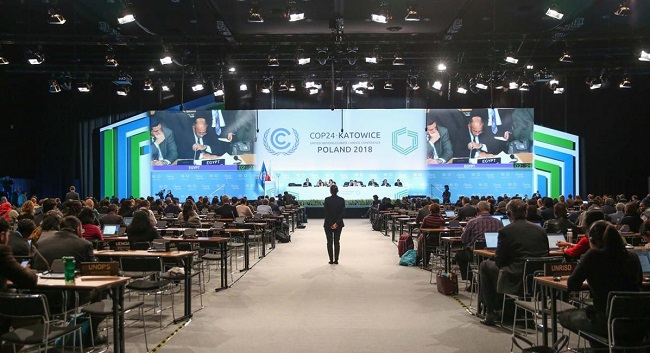
A delegate stands in the main meeting hall of COP24 in Katowice, Poland
“From now on it is only through a conscious choice and
through a deliberate policy that humanity can survive.” – Pope John Paul II
In a world facing the increasingly devastating impacts of
climate change, the Katowice Conference was a pivotal moment. With the deadline
to finalise the Paris Agreement “rulebook” looming, parties needed to overcome
long-standing disagreements and hammer out the technical details of a robust
and ambitious post-2020 climate regime.
But much has changed in the three years since Paris. Despite
the clear warnings of science and the steady drumbeat of extreme weather events
worldwide, global emissions increased in 2017. The political context has
shifted, with a marked turn away from multilateralism to populism and, in some
cases, opposition to scientific evidence. The transition to a zero-emissions
economy is not yet fully underway, a fact made clear by the location of the
Katowice Climate Conference in the heart of Poland’s coal-producing region.
Despite these political headwinds, the long-standing
disagreements among countries, and the technical complexity of the task, COP 24
delivered. The “Katowice Climate Package” adopted late on Saturday, December 15,
2018 puts in place a set of implementation guidelines that were considered by
many to be sufficiently robust. But does it establish the strong and stable
institutional framework needed to implement the Paris Agreement? And, given the
signals of increasing urgency, what does this framework mean for ambition in
the post-2020 era? This brief analysis will examine the rulebook in more detail
by focusing on key parameters of success, namely: resolution of contentious
political issues; delivering effective guidelines for a dynamic architecture;
and building the basis for increased ambition.
The Road to the
Rulebook
COP 24 had one clear goal: to deliver the “rulebook.” After
three years of difficult negotiations, parties had two final weeks to turn the
Paris Agreement’s broad commitments into the detailed technical guidance needed
to measure mitigation, account for finance, and ensure transparency. Since
establishing this deadline at COP 22 in Marrakesh, countries had barely budged
from their negotiating positions. And despite an extra negotiating session in
Bangkok in September 2018, delegates arrived in Katowice with fundamental
differences yet to be resolved in a 236-page text.
These differences were both long-standing – rooted in
historical debates about responsibility and leadership – and specific to
differing interpretations of the Paris Agreement itself. The primary sticking
point was differentiation. Developing countries have long argued that they
should be granted flexibility in their mitigation efforts, while developed
countries have sought common rules that will hold all, especially emerging economies,
equally accountable. The Paris Agreement provided little clarity on this issue.
While it broke the binary division between Annex I and non-Annex I parties, it
replaced this with language that is either ambiguous or varies across different
provisions. For example, in financing provisions, the Paris Agreement
introduced the concept of “other parties” that are encouraged to provide
voluntary support. Establishing a “robust” rulebook therefore required
resolving these ambiguities in a way that balances developing countries’
differing capacities with clear and common guidance that ensures higher
ambition.
Additionally, parties had to overcome simmering distrust
about the sufficiency and predictability of financial support to developing
countries, which they regard as crucial to enhance their ambition. In the past
year, this distrust had crystallised in debates over “Article 9.5” (indicative
information on provision of finance) and the process to establish a new
long-term finance goal. As negotiations proceeded slowly during the first week,
and chaotically behind closed doors during the second, some expressed fear that
the divides over differentiation and finance would simply be too broad to
bridge, and that another Copenhagen catastrophe could be in the making.
Parties delivered despite these fears. But how strong is the
Katowice Climate Package? The rulebook could be expected to deliver stronger
ambition in at least four ways. First, by resolving politically difficult
issues left lingering from Paris. Second, by balancing the need for binding and
prescriptive guidance with the need for flexibility, to maximise both
effectiveness and participation by all countries. Third, by enabling a dynamic
agreement through strong collective and individual review mechanisms and
timelines for revisiting its guidelines. And fourth, by addressing all relevant
issues now, as opposed to leaving them for future negotiations.
A Balanced Rulebook
Resolving long-standing issues was a prerequisite for a
successful outcome, as parties would only agree to what they perceived to be a
balanced package. The ministerial negotiations during the second week were
crucial for unlocking the agreement on the two most contentious issues:
differentiation and finance. In the final agreement, more uniform and
mitigation-centric NDC guidance, which developed countries see as central to
the Agreement, is balanced with improved processes for financial support for
developing countries.
In guidance for communicating and accounting for mitigation
targets, the majority view of creating a common set of elements that each
country would apply based on the type of its NDC – an absolute emission
reduction target or a relative emission intensity target, for example – prevailed
over long-standing calls for a binary set of rules, one for developed and
another for developing countries, which had been supported by the Like-minded
Developing Countries and Arab Group. These groups also called for a “full
scope” approach to guidance on NDCs, by which countries would communicate their
mitigation intentions together with their plans on adaptation and means of
implementation. The agreed guidance focuses on mitigation but, in an
acknowledgement to these countries, allows for inclusion in NDCs of information
on adaptation and on mitigation co-benefits resulting from adaptation actions
or economic diversification plans.
Developing countries’ calls for a clear process to assess
and review developed countries’ indicative finance provision reports were
heeded. The agreed guidance in this area (Paris Agreement Article 9.5) now
provides for synthesis reports, workshops, and ministerial meetings that will
focus on evaluating finance information and, undoubtedly, its sufficiency.
Developing countries also welcomed an agreement to initiate,
in 2020, deliberations on setting the new collective quantified finance goal
for the post-2025 period. Under the Paris Outcome, countries agreed to set this
goal, but developed countries had so far demonstrated unwillingness to even set
a date for starting discussions. While the rationale for this position was not
openly spelled out, many attributed this initial reluctance to discuss the new
finance goal to the US walking away from the Agreement as well as political and
economic challenges in many industrialised countries.
Also significant for developing countries was the final
decision on the Adaptation Fund, as many of these countries consider adaptation
finance a top priority. The Adaptation Fund, which currently serves the Kyoto
Protocol and receives shares of proceeds from its offsetting mechanisms, will
now exclusively serve the Paris Agreement once the share of proceeds from the
Paris Agreement offsetting mechanism becomes available. The Fund will also be
financed by voluntary public and private sources.
An Effective Rulebook
Reaching compromise on the politically-challenging issues of
differentiation and finance enabled parties to focus on developing guidance
that would be binding and detailed enough while maximising participation. Many
did not expect countries to reach an outcome that contains both legally-binding
language, such as “shall” or “should,” and prescriptive guidance that ensures
information communicated by countries is clear and comparable. However, the
overall sense was that the 97 pages of operational guidelines delivered by
parties in Katowice represent a commendable outcome in both regards.
The transparency framework, which, together with the global
stocktake, is often considered to be the core component of the Paris
Agreement’s “ambition mechanism,” delivers on all these parameters: the
detailed guidance on countries’ reporting and review obligations establishes
that all parties “shall” submit transparency reports every two years. The
transparency guidelines include elements that are common for all parties,
including common reporting tables and a requirement to submit the first report
by 2024, but they also allow for flexibility for developing countries in the
scope, frequency, and level of detail of reporting. However, developing
countries are also required to explain why they need the flexibility and
provide self-determined time frames to improve reporting. In many areas of the
rulebook, including transparency, the guidelines also give the most vulnerable
countries, namely LDCs and SIDS, added flexibility in terms of how and when
they apply the guidance.
It was also crucial that the guidance emerging from Katowice
enable the Paris Agreement to become the dynamic ambition mechanism it was
intended to be, with comprehensive rules for five-year cycles for submitting
national plans, or NDCs, and reviewing their implementation, on the one hand,
and a robust system for taking stock of collective progress, on the other. The
global stocktake, which is the central mechanism for this latter purpose, was
duly operationalised, but left some discouraged. Many observers from the
environmental NGO and research community, as well as many developing countries,
felt that there is insufficient guidance on how to consider equity in the
inputs and outputs of the stocktake. Observers also lamented what they felt was
a near-exclusion of non-party stakeholders from the process, with their role
reduced to making submissions and not, for example, participating in the
consideration of outputs from the stocktake. Some fear that without accounting
for equity or engaging non-party stakeholders, the global stocktake could be
less effective in holding countries accountable and in presenting a
sufficiently comprehensive overview of global efforts.
The guidelines from Katowice also give some teeth to the
implementation and compliance committee, which, as set in Paris, has a
facilitative role only, but is now empowered to initiate, of its own accord,
consideration of non-compliance in certain cases. These include when a country
has not communicated or maintained an NDC, submitted its transparency report,
or, in the case of a developed country, its indicative finance report.
A further dimension of the rulebook’s contribution to
dynamism is how it mandates adjustments to the rules over time. Many sections
of the Katowice package set timeframes for review and possible revision of the
guidance. One such example is the guidance on information and accounting
related to mitigation, which is mandated to happen in 2028, even if some
groups, such as AOSIS, felt that this will come too late.
Finally, one of the most important accomplishments of the
Katowice outcome is that parties were able to agree to most elements of the
Paris Agreement Work Programme. Failing to agree would have weakened external
perceptions of countries’ determination to implement the Agreement and damaged
the credibility of the UNFCCC process. The only major exception was cooperative
approaches under Article 6 relating to guidance for international transfers of mitigation
outcomes, rules for the Agreement’s carbon offsetting mechanism, and a work
programme for non-market-based approaches. Decisions on all these items were
postponed to the next CMA session in 2019 due to what many described as one
country’s opposition to strict rules on double counting of emission reductions.
This refusal caused negotiations to stretch late into Saturday as countries
sought to save the work accomplished during this session and to agree to key
rules and institutional arrangements, which they felt were important to provide
a signal of continuity to markets and the private sector.
Parties’ inability to resolve the future role of markets in
the institutional architecture of the Paris Agreement at COP 24 did not
necessarily weaken the outcome but will need to be quickly resolved.
A Rulebook that
Enables Ambition
The “1,000 little steps countries took together” to reach
agreement on the rulebook adopted in Katowice will undoubtedly help “move us
one step further to realising the ambition enshrined in the Paris Agreement,”
as noted by COP 24 President Michał Kurtyka upon gaveling the package through.
The rulebook itself sends an important political message that the Paris
Agreement is alive and well. But what does it mean for more ambitious climate
action going forward?
Many who came to Poland expected further political signals
on ambition, in the form of a strong outcome, or perhaps even a continuation of
the Talanoa Dialogue, broadly considered as a “pre-global stocktake” of sorts,
initiated by the Fijian COP 23 Presidency and based on a Pacific storytelling
tradition. There were also calls for decision text encouraging countries to
enhance their NDCs by 2020. Instead, the “Katowice Climate Package,” decision,
which contains the Paris rulebook and also other sections with more political
messages, merely “takes note” of the Dialogue and invites parties to consider
its outcome in preparing their NDCs. Some also noted that there were fewer
announcements of new climate finance than at previous COPs, which they felt
indicated reduced commitment by developed countries to support ambition of developing
countries.
Non-party stakeholders are considered crucial to help raise
ambition both by increasing the transparency of the negotiation process and as
important contributors to climate action. Many observers lamented the fact that
the entire second week of negotiations unfolded behind closed doors with few
reports back from the ministerial consultations. Some also noted a diminished
focus on the Global Climate Action Agenda, kickstarted in 2014 to orchestrate
broad coalitions of the willing and incorporate these actors into the formerly
exclusively intergovernmental regime. While diminished transparency may have
been necessary to allow for resolution of the most politically-difficult issues
at this COP, some expressed doubts about the UNFCCC’s ability to
institutionalize the participation of a broader set of actors in the longer
term.
Vulnerable countries, in particular, also hoped for political signals on determination to keep global warming below 1.5°C, considered a question of survival by many small island states. In this regard, resistance by four countries – Saudi Arabia, the US, Russia, and Kuwait – to “welcome” the IPCC Special Report on 1.5°C during the first week created a media tsunami, which may have compensated for the lack of strong language on the report in the final package decision. The least developed countries and small island developing states were also disappointed with what they described as continued sidelining of the issue of loss and damage and stressed the urgency to provide real financial support.
The Katowice COP delivered on its mandate and now parties
must turn the page to a new era of implementation and higher ambition. As noted
by UN Secretary-General António Guterres, in a speech read at the closing of
the conference by UNFCCC Executive Secretary Patricia Espinosa: the priorities
now are “ambition, ambition, ambition, ambition, and ambition,” on mitigation,
adaptation, finance, technological cooperation, capacity building, and
innovation. In this regard, many delegates left Katowice feeling cautiously
uplifted, looking ahead to 2019 when the UN Secretary-General, who personally
facilitated the negotiations during the second week, will hold a Climate Summit
to raise ambition ahead of the crucial year of 2020, when many countries will
deliver updated NDCs and the Paris Agreement will face its first true litmus
test.
Innovation in the cryptic world of
spiritual science is defining the expansion of indigenous knowledge on vultures
as raw materials for belief-based arts. The unintended consequences of such
innovations as echoed by the near total disappearance of the obligate
scavengers have led to concerns and uncertainty about the future of vultures in
Nigeria. Man’s outstanding reputation of squandering nature’s resources to
satisfy his immediate wants has remained the bane of biodiversity conservation.
If man must therefore continue to get his daily subsistence from the environment;
he then must keep to the tenets that guide sustainability in the use and
extraction of earth’s resources including the vultures.
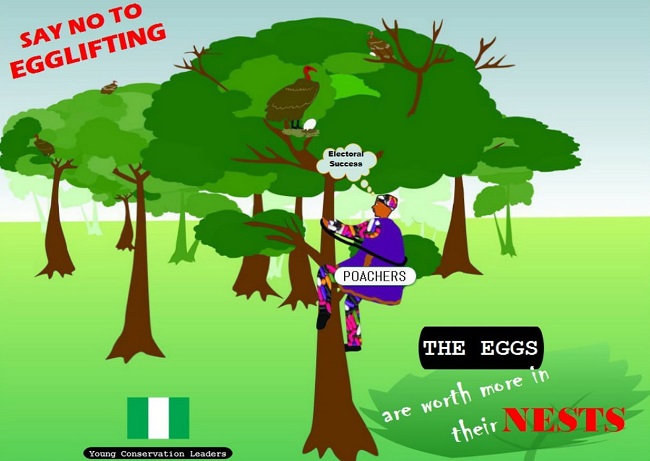
The bounty on vulture eggs has ranked trafficking in the animal as one of the most rewarding endeavours in Nigeria
Recently, eggs from vultures were astonishingly
uncovered as the favourite diabolical recipe used by several politicians for
political conquests and electoral successes in Nigeria. This observation was an
aftermath of community conservation projects implemented by the young
conservation leaders in Nigeria through the support of Birdfair/BirdLife International
and remarks from Dr. Edem Eniang of the University of Uyo. This discovery
portends a scary dimension to the vulture conservation crisis as already being
witnessed given the sweeping reawakening and desperation of gladiators on the
political landscapes. The politically sponsored belief-based ransacking of
vultures’ nests for eggs had before now remained a concealed influence with
huge periodical significance on the population of the birds in Nigeria.
In Nigeria, premiums are now incredibly
placed on the eggs and in some cases, the entire nest, every penultimate
election year as ritual items for magically assembling huge crowds at political
rallies and for winning elections, especially by those who believe that the
oddity of political popularity and acceptability is improved by fetish mix
prepared with eggs from vultures. This has led to series of politically
commissioned expeditions across community landscapes for active nests of
vultures.
The bounty on the eggs has ranked
trafficking in vultures as the most rewarding endeavour in Nigeria. Thus,
indirectly approving of a large-scale frantic search and monitoring of the
increasingly scarce active nests of vultures. An egg is reported to cost
between #500,000.00 and #2,000,000.00 depending on the location, adherence to spiritual
guidelines for harvesting and the number of middlemen involved in the
transaction. The Hooded vultures are often the victims of egglifting (a coinage
invented to describe illegal pilfering of eggs from active nests of birds) in
neighbourhood communities owing to their resident status and relative
preponderance over other species of vultures in Nigeria. Unfortunately, these
birds lay no more than one egg in several years allowing them to concentrate
efforts on nurturing their young. All parts of the miserly egg-laying bird
inclusive of feathers and the nests are considered imbued with spiritual energy
and are sought by belief-based practitioners including the now political
poachers.
Conservation practitioners have had to
tread rough paths working to prevent the total annihilation of species of
vultures. However, these attempts have always been assaulted by beliefs and
believe. The African tradition is replete with belief-based practices untiringly
moulding conservation discourse and there are those who erroneously ascribe
resources as infinitely copious believing that no human generation can exhaust
the provisions of nature. Thus, man remaining persistently unyielding to
entreaties for circumspect in the face of a rapidly changing environment
preferring rather to increase his purchasing power when in fact there is little
or nothing to buy.
If the science of political conquest
through spiritual inventions were to be true, what then becomes the fate of future
belief-based politicians if the present population of vultures in Nigeria is
driven aground? Obviously, any further exertion on vultures will only lead to
their extinction as all species of the old-world vultures, except the palm-nut
vultures, are already classified as threatened with the risk of extinction
under the IUCN Red list of threatened species.
The unusual expansion of belief-based
add-ons and the wide-spread approval of such arts despite claims of civilisation
signal for caution so as not to deprive future generations of their aspirations
to meet their own health, aesthetic, spiritual and even political needs.
Conservation therefore strives to limit man’s greed by setting scientifically
supported boundary between man’s insatiable want and the productive capacity of
the environment.
In recent past, conservation efforts have
had to address challenges that are multilayered and each layer unfolding with
every step made towards the conservation goals. Wildlife trafficking is time
and again fueled by traditional innovations and the notion of substance, in
plants and animals, traditionally held as capable of servicing the health,
aesthetic and spiritual needs of man. Egglifting being another major phenomenon
of illegal wildlife trafficking is apparently dangerous with far-reaching consequences
on the future of vulture conservation in Nigeria.
Awareness creation efforts in the country
is commendable, even though it is still at its lowest ebbs as many who aid and
abet trafficking in specimens of vultures are largely unaware of any law that
proscribes their indulgence. The secrecy and restrain sometimes shown by many in
areas outside protected areas is due to the public suspicion and scrutiny that
may attend such a rather strange transaction rather than on any known
environmental regulation.
For emphasis, all semblance of trade in
species of vultures is illegal and outlawed by the Endangered Species Act (as
amended) which offered some level of protection to all species of vultures
under schedule II of the act with a fixed penalty of N1,000,000.00 for first-time
offenders and a compulsory 12 months jail term for subsequent offenders.
Successive amendment of the act should however contemplate offering vultures
the maximum level of protection possible under schedule I.
In conclusion, any endeavor and or intent
capable of bringing harm to vultures and or inhibit the feeding, roosting,
nesting, flying and any such survival maneuvering of vultures is inimical to
the future of vultures and global conservation efforts as sustained by BirdLife
International, the Federal Ministry of Environment, the Nigerian Conservation
Foundation and other spirited nature enthusiasts in Nigeria. Therefore, appeals
are made to those whose constitution of office forbid abuse of power, either in
public or private; never to subsidize crime particularly environment-related
crimes.
By Stephen Aina (Nigerian Conservation Foundation,
Lagos; stephen.aina@ncfnigeria.org)
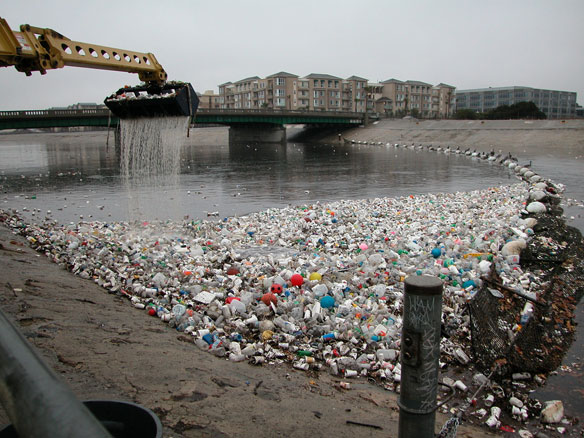
Throw-away plastic items such as straws and polystyrene cups will be banned in the European Union by 2021, EU officials agreed on Wednesday, December 19, 2018.
Plastic pollution
Negotiators from the European Parliament and for the 28 EU countries agreed a list of 10 single-use plastic products with readily available alternatives that will be banned as part of measures to cut plastic use.
The items include cotton buds, cutlery, plates, straws, drink stirrers, sticks for balloons and food containers made of expanded polystyrene.
For other plastic items, such as food containers and drinks cups and lids, the focus will be on limiting their use and setting clean-up obligations in some cases for manufacturers.
All plastic bottles will have to have at least 30 per centre cycled content by 2030.
Producers of tobacco filters containing plastic will have to cover the costs for public collection of cigarette stubs.
“We have all heard the warning by the World Economic Forum and others.
“Measured by weight, there will be more plastic than fish in the world’s oceans by 2050 if we continue dumping plastic in the sea at the present rate,” Austria’s sustainability minister Elisabeth Koestinger said.
Austria, which holds the rotating EU presidency, led talks on behalf of the 28 EU members.
Environmental campaign group Greenpeace hailed the measures as a significant step forward in tackling plastic pollution, but said they fell short in certain areas.
There was no EU-wide target to reduce consumption of food containers and cups, no obligation for EU countries to adopt targets.
There is also a requirement only by 2029 to ensure 90 per
cent of plastic bottles are collected separately, Greenpeace said.
The EU recycles only a quarter of the 25 million tonnes of plastics waste it produces per year.
China’s decision to stop processing waste coupled with growing alarm over damage to oceans has pushed the continent to end reliance on developing countries to deal with its waste.
The Global Initiative for Food Security and Ecosystem Preservation (GIFSEP) has urged government at all levels to intensify their sensitisation programmes to educate Nigerians on the effects of climate change, its mitigation and adaptation.
David Michael
Executive Director of GIFSEP, Mr David Michael, made the call in an interview with the News Agency of Nigeria (NAN) in Abuja on Wednesday, December 19, 2018.
Michael said that governments at all levels should show political will to educate Nigerians on the effects of climate change, how to mitigate and adapt it.
“Governments should address the issues arising from climate change because a good number of the populace lack an understanding of climate change and its effects as well as mitigation and adaptation strategies to adopt,’’ he said.
Michael, who attributed erratic rainfall pattern to one of the issues arising from climate change, added that climate change also had devastating effects on the environment, agriculture, ecosystem and health of both humans and animals.
“A few decades ago, farmers could sit at the comfort of their homes and forecast when rains will begin and end in year. That is not the case anymore, rather it has become increasingly difficult to predict rainfall pattern.
“This unfortunate scenario continues to pose significant threat to food security and social economic existence of people living in sub-Saharan African,’’ he said.
The executive director said that the organisation carried out some activities in 2018 to address the negative effects of climate change.
“We organised capacity building for students in Senior Secondary Schools in FCT to address climate change.
“This workshop focused on mitigation and adaptation strategies to combat climate change. The project ensured that about 60 EcoClubs were established in 60 schools in the FCT,’’ he said.
Michael said that GIFSEP also in partnership with 350 Africa and other environment-related NGOs convened the Abuja Climate Summit in Sept.7.
“This summit brought relevant government officials and
agencies, political parties, civil society organisations, religious leaders, corp
members and students together to discuss actions and strategies each
institution can adopt to mitigate carbon emissions and build resilience.’’
He said that the organisation engaged in advocacy on 100 per
cent transition from fossil fuels as a source of renewable energy.
“GIFSEP in partnership with Global Environment Facility-Small Grants Programme and African Climate Reality Project powered a block of classroom with solar power at Government Secondary School, Yaba in Abaji in the FCT.
“We powered the school to promote the adoption of renewable sources of energy,’’ Michael said.
The reality of ongoing climate warming might seem plainly obvious today, after the four warmest years on record and a summer of weather extremes in the whole northern hemisphere. A few years back however, some media and some experts were entangled in debates about an alleged pause in global warming – even though there never has been statistical evidence of any“hiatus”, as new research now confirms. In two recent studies, a group of international scientists joined forces to thoroughly disentangle any possible“hiatus” confusion, affirming that there was no evidence for a significant pause or even slowdown of global warming in the first place.
Global warming is a long-term rise in the average temperature of the Earth’s climate system
Global warming is a long-term rise in the average temperature of the Earth’s climate system, an aspect of climate change shown by temperature measurements and by multiple effects of the warming.
“Claims of a presumed slowdown or pause in global warming during the first decade of the 21st century and an alleged divergence between projections from climate models and observations have attracted considerable research attention, even though the Earth’s climate has long been known to fluctuate on a range of temporal scales,” says James S. Risbey from CSIRO in Australia, lead author of one of the new studies. “However, our findings show there is little or no statistical evidence for a pause in global warming. Neither current nor historical data support it.”
“The alleged pause in global warming was at no time statistically conspicuous or significant, but fully in line with the usual fluctuations,” explains Stefan Rahmstorf from the Potsdam Institute for Climate Impact Research, a co-author to both studies. “The results of our rigorous investigation in both studies are as simple as unambiguous: There was no pause in global warming. And global warming did not fall short of what climate models predicted. Warming continued as predicted, together with the normal short-term variability. There has been no unusual slowing of warming, as our comprehensive data analysis shows.”
There was no pause in global warming
Published in Environmental Research Letters, the first new study analyses variations in global surface temperature in historical context, while the second compares model projections to observations. They scrutinised all available global temperature data sets in all available earlier and current versions and for all alleged time periods of a “hiatus”, looking for statistical significance. In no data set and for no time period could a significant pause or slowing of global warming be detected,nor any discrepancy to climate models.
Statements claiming the contrary were based on premature conclusions, partly without considering statistics at all, partly because statistical analysis were faulty.
A common problem for instance was the so-called selection bias. Simple significance tests generally only apply to randomly drawn samples.But when a particular time interval is chosen out of many possibilities specifically because of its small trend, then this is not a random sample.“Very few articles on the ‘pause’ account for or even mention this effect, yet it has profound implications for the interpretation of the statistical results,” explains Stephan Lewandowsky from University of Bristol in the UK, lead author of the second study.
Reduced momentum for action to prevent climate change
One reason for the attention that the alleged “global warming pause” received in the public may have been that interest groups used this idea to argue against the urgency of ambitious climate policies to reduceCO2-emissions from the burning of fossil fuels. This in turn may have contributed to delays in action to halt global warming, the scientists argue.
“A final point to consider is why scientists put such emphasis on the ‘pause’ when the evidence for it was so scant. An explanation lies in the constant public and political pressure from climate contrarians,” adds Naomi Oreskes from Harvard University in the USA and co-author of the second study. “This may have caused scientists to take positions they would not have done without such opposition.”
The Federal Ministry of Water Resources on Wednesday, December 19, 2018 said Federal Government has approved N700 million to complete the Farin Ruwa Hydro power project in Nasarawa State to boost power generation in the country.
Suleiman Adamu, Minister of Water Resources
Dr Musa Ibrahim, the Permanent Secretary of the ministry, told the News Agency of Nigeria (NAN) following the end of tour to the Farin Ruwa dam site in Wamba Local Government Area.
The Federal Government had signed a Memorandum of Understanding (MoU) with the Nasarawa State Government to enable it takeover and complete the dam project.
“As at 2003 to 2004, the project was 65 per cent completed as the state government had purchased all the needed equipment, but unfortunately there was fire outbreak on the project site which destroyed most equipment, some also became obsolete.
“Governor Tanko Almakura had expressed the stategovernment’s inability to complete the project, the ministry made a presentation to President Muhammadu Buhari, he however approved the release ofN700 million in the 2018 budget for the takeoff of the project,” he said.
Ibrahim said that the project conceptualised in 2001 with the intention of providing no fewer than 20 megawatts electricity to Nasarawa State, was stalled due to paucity of funds.
He noted that the state government had initially spent N6 billion for the purchase of equipment for the project that had become moribund, to make the project be up and running.
He hinted that the Federal Government might spend additionalN10 billion for its full completion, noting that the effort was part of Federal Government’s commitment to complete all ongoing and abandoned water projects in the country.
He said that the project, which was initially developed for hydro power generation, would however include water supply and irrigation component, adding that construction of 20km access road to the project had begun.
He said that the ministry had engaged the service of a consultant and had submitted the draft report, saying a bid process had also been announced for contractors to develop the project, adding that a Public Private Partnership approach might be developed to ensure the full optimisation of the dam.
Musa expressed optimism that when the project was completed,it would improve power generation in the country, create employment, increase water supply and boost food security.
He said that when the project was conceived, the estimated hydro power potential of the dam was put at 20 megawatts, saying with improved technology, it may be increased to 24 megawatts.
“We are currently doing a hydrological analysis of the dam to know the amount of water to expect, this will be in partnership with the ministry of power, works and housing and other relevant agencies.’’
The dam, which has a capacity of 73 million cubic meters,
will serve no fewer than 10 communities in Nasarawa State.