In line with a recent submission by its Director-General,
Babatunde Irukera, the Consumer Protection Council (CPC) has began enforcing
the National Tobacco Control (NTC) Act provision banning sale of cigarettes in
single sticks and to minors.
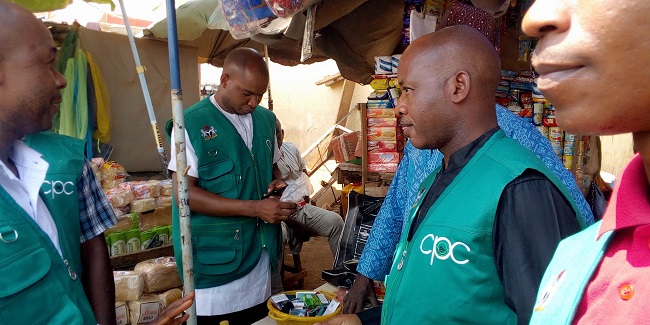
CPC Enforcement Team in Jabi Market, Abuja
The CPC in a two-day exercise on Thursday, January 24 and Friday,
January 25, 2019 in Abuja stormed several locations including the popular Jabi
Market and Wuse area where cigarettes are openly sold to patrons in single
sticks in contravention of the law which commenced in 2017.
A similar exercise was carried out in bars, lounges, and
event centers in the Wuse area.
Owners of facilities where the products were openly sold
were educated on the law and told to desist from sale of cigarettes in sticks
as well as shisha or would be arrested in the next round of the exercise by the
agency.
Ayough Moses of the Surveillance and Enforcement Department
of the CPC said that the exercise was carried out after intensive surveillance
which identified black spots and showed that there was fragrant violation of
the law despite massive awareness that government had carried out in the last
one year.
“In enforcing the law, the CPC felt it was very important to
warn sellers of cigarettes and also use the medium to educate the ignorant. The
exercise was extended to shisha bars because the product is also banned under the
NTC Act.”
Moses explained that the exercise which would henceforth be
a routine one throughout the nation is to safeguard the health of Nigerians
from tobacco harms.
Minister of Health, Professor Isaac Adewole, had in 2017
announced nine provisions of the NTC Act for immediate enforcement. They
include ban on single stick sale of cigarettes, ban on sale to minors, ban on
smoking in public places, and prosecution of owners/managers of any facility
that fails to stop smoking, or encourages it in places it is outlawed, among
others.
Reacting to the commencement of enforcement of the Act, the
Environmental Rights Action/Friends of the Earth Nigeria (ERA/FoEN) said it is
long overdue and is welcomed by Nigerians.
In a telephone chat with EnviroNews,
ERA/FoEN Deputy Executive Director, Akinbode Oluwafemi, said: “While we commend
the CPC for this action, we anticipate that other agencies of government will
take a cue.”
The Intergovernmental Panel on Climate Change (IPCC) will
open the final draft of its new methodology report, the “2019 Refinement”,
to government review on Monday, January 28, 2019, bringing the report one step
closer to consideration for adoption by the IPCC in May.
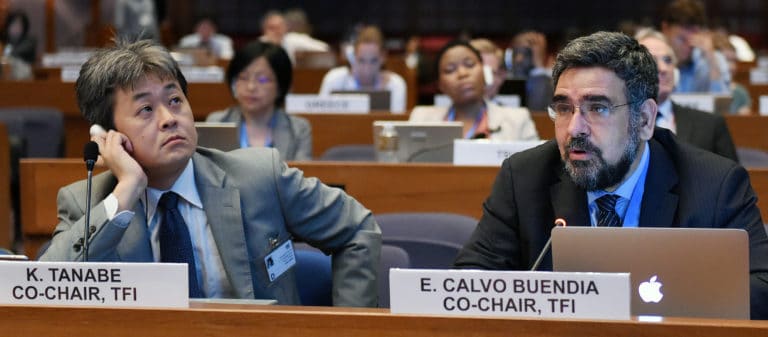
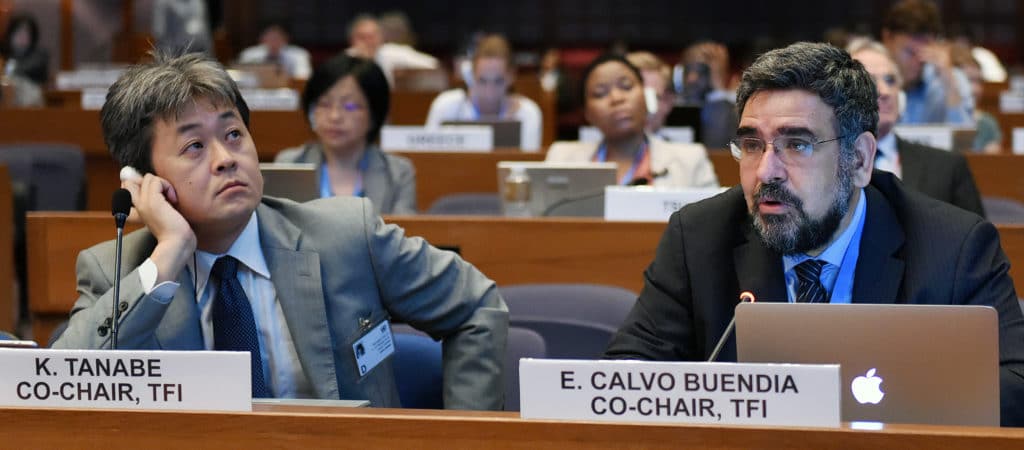
Co-Chairs of the IPCC’s Task Force on National Greenhouse Gas Inventories (TFI), Kiyoto Tanabe and Eduardo Calvo Buendia
The refinement of the IPCC’s previous guidelines published
in 2006 is necessary to provide an updated and sound scientific basis for
supporting the preparation and continuous improvement of national greenhouse
gas inventories.
Among other things, the “2019 Refinement” will
help countries enhance national inventory reports of emissions and removals
under the 2015 Paris Agreement, if they agree to use it.
The review will run for eight weeks from January 28 to March
24. IPCC reports go through multiple stages of review to ensure an objective
and comprehensive assessment of the latest science. The first draft is reviewed
by experts, the second draft by governments and experts, and the final draft by
governments only.
“Review is an essential part of the IPCC process, to help
ensure that the reports are balanced and comprehensive. I invite all
governments to contribute to this review,” said Kiyoto Tanabe, one of the two
Co-Chairs of the Task Force on National Greenhouse Gas Inventories (TFI),
which is preparing the report.
“We hope as many governments as possible will take part in
this review to strengthen the accuracy ad completeness of the draft’s
scientific information and overall balance,” said Eduardo Calvo Buendia, the
other TFI Co-Chair.
In this final review, governments will submit comments on
the report’s Overview Chapter, which will be considered for adoption section by
section at a Session of the IPCC in May in Kyoto, Japan, and on the full Final
Draft Report, which will be submitted for acceptance at the same session. The
aim of the review is to ensure that the Overview Chapter is accurate, well
balanced and presents the findings of the underlying report clearly.
Review Editors will make sure that all comments submitted
are afforded appropriate consideration by the authors of the report in
preparation for the adoption session. All comments together with responses by
the authors will be published along with the report when it is finalised.
The United Nations High Commissioner for Refugees (UNHCR)
has called for increased protection of Internally Displaced Persons (IDPs)
in the Lake Chad Region following heightened insecurity in Nigeria’s North
East.
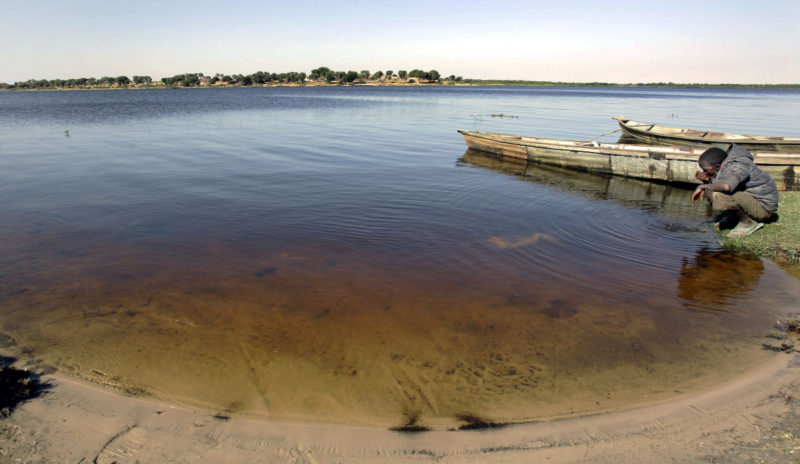
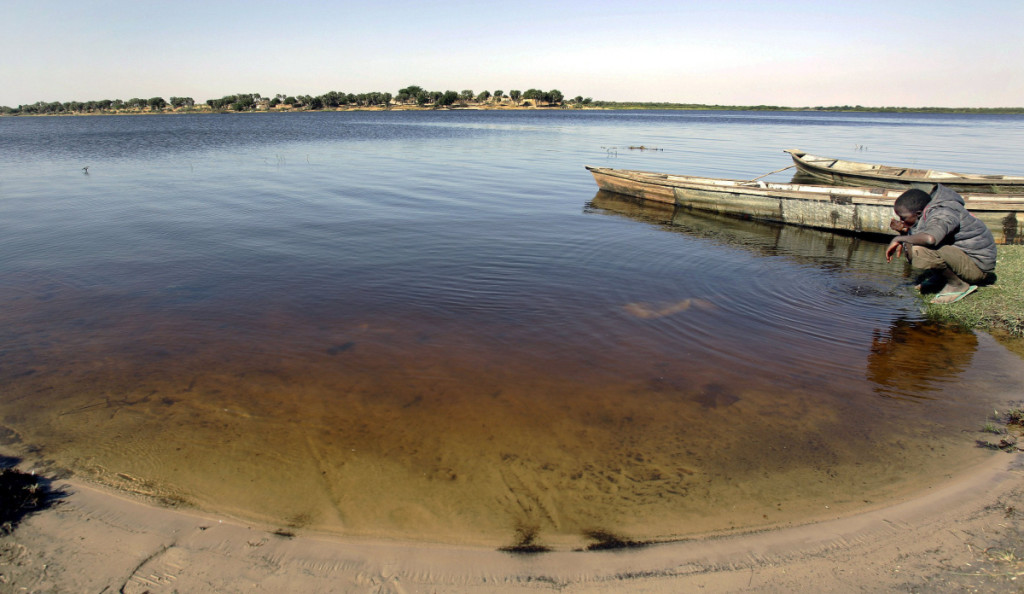
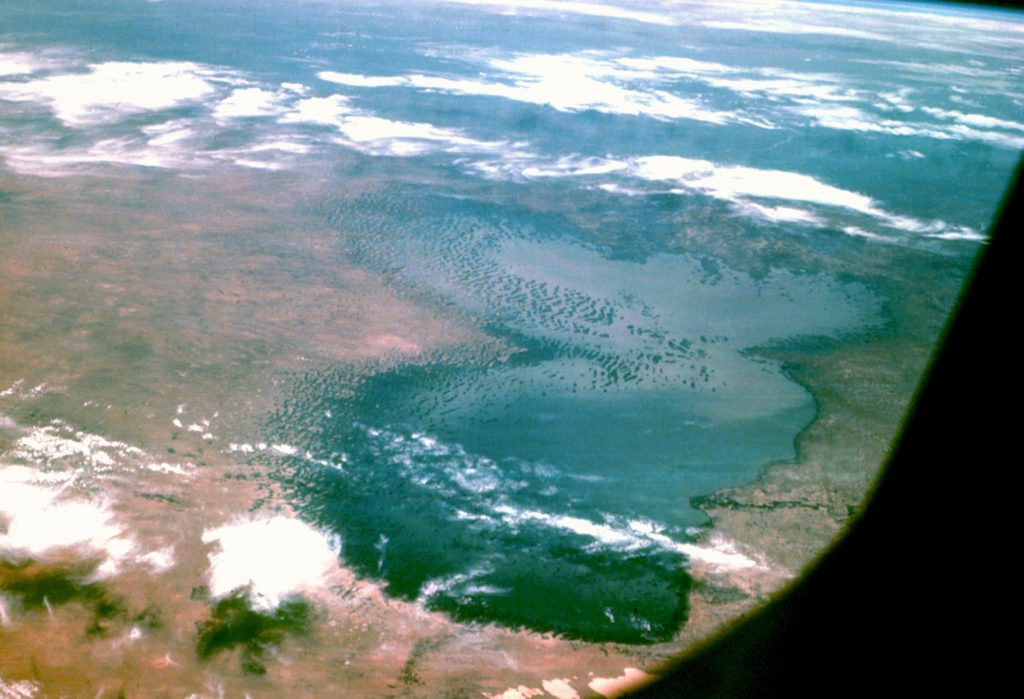
Scientists say the Lake Chad, that borders Nigeria and some other countries, has shrunken by 95 percent over the past 50 years. They have also linked the Boko Haram insurgency to the lake’s situation. Photo credit: AP/Christophe Ena
Mr Jose- Antonio Canhandula, Country Representative, UNHCR
Nigeria, made the call on Friday, January 25, 2019 in Abuja while briefing
newsmen as part of activities to commemorate the Regional Protection Dialogue
2.
Canhandula said that attacks from the insurgents have forced
about 15,000 victims of insurgency to flee to neighbouring countries in the
region, hence the need for reinforced humanitarian response.
“What is happening in the Lake Chad area remains a
protection concern not only for us but for the countries that have been hosting
Nigerian refugees, that is Chad, Niger and Cameroon.
“In the last three weeks, there had been a heightened
security problem in Baga-Kawa which had resulted in the flight of another 6,000
Nigerian refugees into Chad.
“There have also been security problems in Rann and that
resulted to the flight of 9,000 Nigerians into Cameroon and this is a situation
that only comes to reinforce the need for us to sit again.
“And see in this continuance situation of protection
problems for the Nigerian population, be they internally displaced or refugees,
are we doing a good job, can we do better?
“I should also like to highlight that we are currently with
other organisations under the leadership of the Resident Coordinator and
Humanitarian Coordinator, OCHA.
“Preparing a 90-day response plan for around 300,000
Nigerian displaced people as a result of the current security situation.
“We still need to reinforce partnership with the
humanitarian organisations, with the government, to really try and see whether
we can respond a little bit better to the plight of the IDPs population,’’
Canhandula said.
He said the Regional Protection Dialogue 2 would bring
stakeholders together to brainstorm on new ways to adequately handle the
current humanitarian situation for better response.
The country’s rep. said that during the dialogue, UNHCR
alongside other partners would inaugurate the Regional Refugee Response Plan
(RRRP).
Canhandula said that through the launch of the HRS and RRRP,
appeal funds would be raised to cater for the humanitarian needs of the
displaced population including IDPs and Nigerian refugees in neighbouring
countries.
He called on the media as partners to project the sufferings
of the affected population so that people could understand better in other to
assist better.
“They are issues of dignity of the population that we need
to take care and all of that is a responsibility of not only the humanitarian
community but also of the media.
“To project the sufferings so that people understand what
they need to do in other to assist this protection.
“It is easy to sit in Abuja and talk about the suffering
population, but when you look at how the population is suffering on ground, you
might have a better perception of why you need to talk more about them,’’
Canhandula said.
The Regional Protection Dialogue 2 will begin on Jan. 28
with the launch of the HRS and RRRP on Jan. 29 in Abuja.
The Regional Dialogue 2 is aimed at reviewing the situation
in the four countries of the Lake Chad Region (Nigeria, Niger, Cameroon and
Chad), taking stock of the current challenges and priority points of action.
The programme would also seek better ways to enhance
protection and the response to the most urgent needs of the affected
populations.
World leaders and business met recently in Davos just as the
World Economic Forum’s Global Risks Report revealed environmental factors as
the most devastating risks to business and society and the most likely. Another
major risk identified in the report are water crises, which are listed among
the five most damaging risks, confirming a trend that started eight years ago.
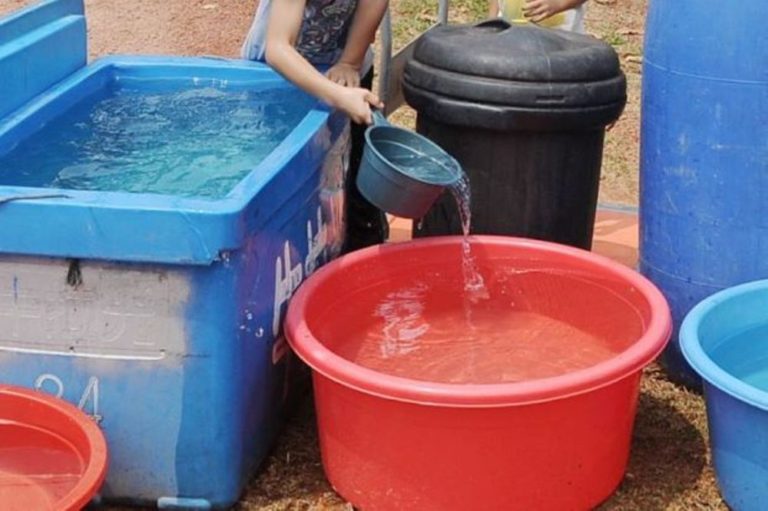
Water rationing
Among top risks, the report also lists the failure to
respond and adapt to climate change and points at a global infrastructure gap
of $18 trillion that affects both emerging and advanced countries. World
leaders all agree on the consensus, but few seem to be backing their concerns
with appropriate action.
Water is the predominant means through which the impacts of climate change and demographic pressure are being felt and investments in water infrastructure are both critical and urgent for countries to adapt to these changes, yet efforts in closing the funding gap are currently failing.
In their recently released report titled “Water
Infrastructure for Climate Adaptation”, the World Water Council and Global
Water Partnership address these issues directly. Through a set of 12
recommendations, the report explores specially-designed investments to help
increase the climate resilience of water systems.
The report argues that enough income exists, and the global
financial system has plenty of capital seeking investment opportunities. The
challenges lay in how to scale up funding and develop “water proofed”
mechanisms to finance infrastructure.
The Council has dedicated many years to understanding why
financing water is so difficult and why it fails to attract investors. A set of
financing reports released last year propose innovative and bold solutions that
could help to close the financing gap both for water and sanitation systems.
Two complementary reports offer analysis on both investors and projects for infrastructure in order to propose a better alignment between the two that would unlock and increase funding for projects.
Another paper makes the case for blended
finance, a tool that uses development finance to attract and engage the
private finance sector in scaling up its investments in water – especially
corporations, which account for more than 50% of investors.
Finally, the Council explores how to improve the financing
of urban sanitation. The report suggests using new and bold approaches to
reduce costs, stimulate increased revenues and attract new money into the
sector.
The Ministry of Interior says the upcoming Second Regional
Protection Dialogue on Lake Chad Basin will develop a framework for
comprehensive solutions to tackle refugees’ challenges in the region.
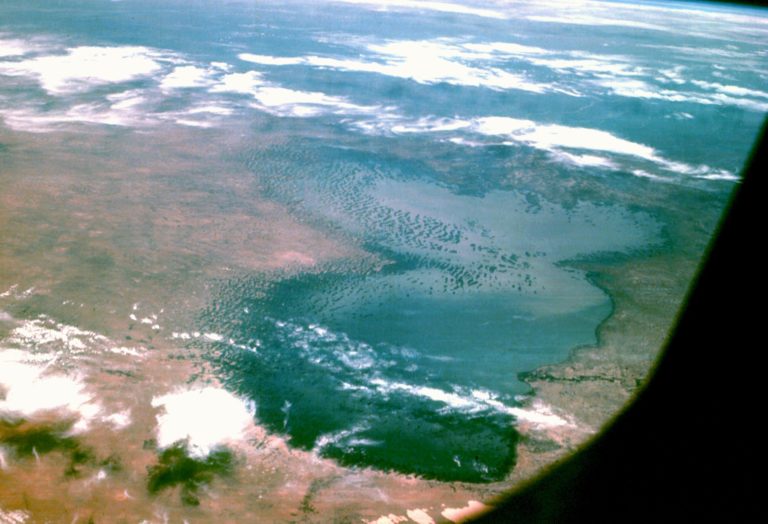
Lake Chad viewed from Apollo 7
Minister of Interior, Lt.-Gen. Abdulraham Dambazau (retd),
announced this at a pre-conference news briefing on Friday, January 25, 2019 in
Abuja.
He said that evolving the framework was in line with
international principles and standards, adding that the ministry was
collaborating with United Nations High Commissioner for Refugees (UNHCR) to
host the conference billed for Abuja.
The minister, who was represented by the Permanent Secretary
in the ministry, Dr Mohammed Umar, said that Dialogue is a two-day programme
scheduled to hold from Monday, January 28 to Tuesday, January 29.
He said that the Dialogue would review the protection
situation in the Lake Chad Basin countries, including achievements two years
after the adoption of the Abuja Action Statement, ongoing challenges, capacity
and gaps in protection response.
He added that it would also “reinvigorate consensus around
protection considerations and principles as informed by international law,
standards and norms.”
“The conference also aims to boost strategic partnerships to
enhance protection and solutions through coordinated and complementary
response.
“It also aims to enhance visibility and continue resource
mobilisation to ensure a more effective, coordinated and complementary response
to the protection risk and needs as well as the search for durable solutions in
the region,” Dambazau said.
He announced that the Dialogue would commence with technical/experts’
discussions, which would be followed by a ministerial-level meeting “to
validate first signs and endorse the way forward’’.
The minister explained that the meeting of experts would
include a mix of plenary and thematic sessions around key issues and themes
with the aim to develop recommendations for consideration during the Dialogue.
He added that the thematic session would also focus on
specific protection challenges like centrality of protection in humanitarian
action, forced displacement and access to asylum and protection.
According to Damazau, the sessions would also focus on Civil
Military Coordination and Civilian Character of Refugee and Internally
Displaced Persons hosting areas (including return areas).
In June 2016, the ministry also collaborated with UNHCR to
host the regional dialogue on Lake Chad Basin.
It was aimed at identifying the protection risk in the region, resulting from conflict-induced crises, and proffer solution.
Head of Environment Department, Gwagwalada Area Council, Mr
Tijani Ado, has told residents of the area to desist from indiscriminate waste
dumping.
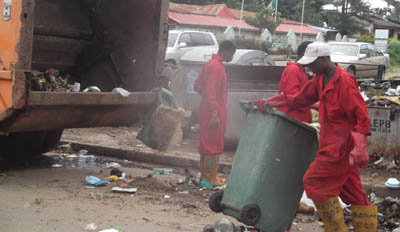
Officials of one of the AEPB waste evacuation contractors, on duty in Garki Area of Abuja
Ado, in an interview with the News Agency of Nigeria (NAN)
in Gwagwalada on Friday, January 25, 2019, said that indiscriminate waste
disposal by the roadside and gutters promotes the spread of many communicable
diseases.
“Despite the council’s effort on waste evacuation to keep
the environment clean, some people have failed to comply with sanitation rules
and regulations.
“The council is trying its best in terms of creating
awareness on proper waste disposal, but some residents have refused to do the
right thing.
“Sanitation should be a matter of necessity and should be
observed daily in every home for healthy living.’’
He also warned against open defecation and described the
inability to build toilets by some landlords in the area as a setback to good
hygiene.
Ado also advised the residents to cooperate with the council
in its effort to make the area clean.
Environmental threats like climate change and pollution are
linked to lethargic enforcement of laws governing management of vital
ecosystems, says a report released on Thursday, January 24, 2019 by the UN
Environment.
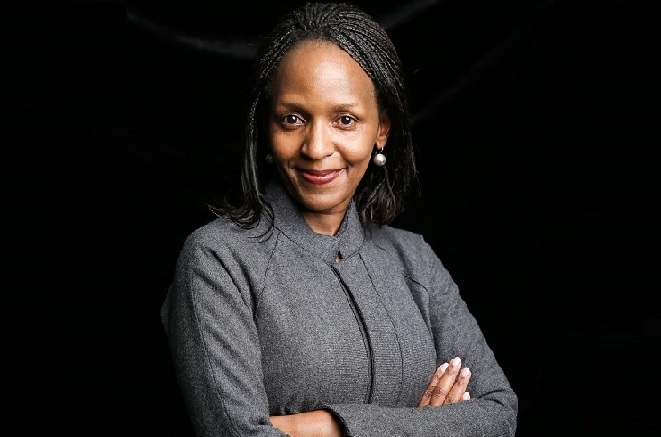
UN Environment Acting Executive Director, Joyce Msuya
According to the first ever global assessment of
environmental rule of law, the quest to maintain a healthy and clean planet is
being undermined by weak enforcement of legislation to protect it from natural
and human-induced threats.
“This report solves the mystery of why problems such as
pollution, declining biodiversity and climate change persist despite the
proliferation of environmental laws in the last 10 years,’’ said David Boyd, UN
Special Rapporteur on Human Rights and the Environment.
“Unless the environmental rule of law is strengthened, even
seemingly rigorous rules are destined to fail and the fundamental human right
to a healthy environment will go unfulfilled,’’ he added.
The UN Environment report says that rapid development of
environmental laws and treaties since 1972 has not translated into their
enactment thus escalating threats to ecosystems that sustain livelihoods.
It says more than 1,100 environmental treaties and legal
frameworks have been developed by national governments since 1972 when the UN
environment agency was formed.
At the same time, donor support and robust domestic funding
to facilitate development of new environmental laws has been consistent in the
last 40 years, but it has not been matched with their enforcement, says the
report.
The report notes that poor coordination among government
agencies, weak institutional capacity, lack of access to information,
corruption and limited civic engagement have contributed to weak enforcement of
environmental rule of laws.
“We have the machinery in the form of laws, regulations and agencies
to govern our environment sustainably,’’ said Joyce Msuya, UN Environment
acting executive director.
“Political will is now critical to making sure our laws work
for the planet.
“This first global assessment on environmental rule of law
highlights the work of those standing on the right side of history – and how
many nations are stronger and safer as a result,’’ she added.
The report reveals that 88 countries have adopted the
constitutional right to a healthy environment while an additional 65 have
enshrined environmental protection in their constitutions.
Likewise, over 350 environmental courts and tribunals have
been established in more than 50 countries while over 60 countries have some
legal provisions for citizen’s right to environmental information.
Experts urged governments to address hiccups that have
undermined enforcement of legislation that promote environmental governance.
Carl Bruch, director of international programmes
at the Environmental Law Institute said that a paradigm shift is required to
ensure that a culture of compliance with environmental laws is embraced by key
stakeholders.
The year 2018 is likely to have been the fourth warmest year
on record, a scientific group pronounced Thursday,
January 24, 2019 – and joins a quartet of extra-hot years since 2015 that
suggest a leap upward in warmth that the Earth may never return from in our
lifetimes.
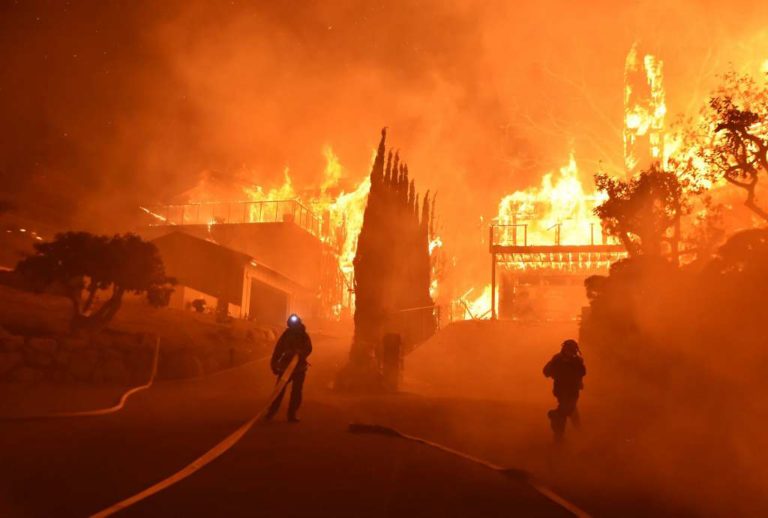
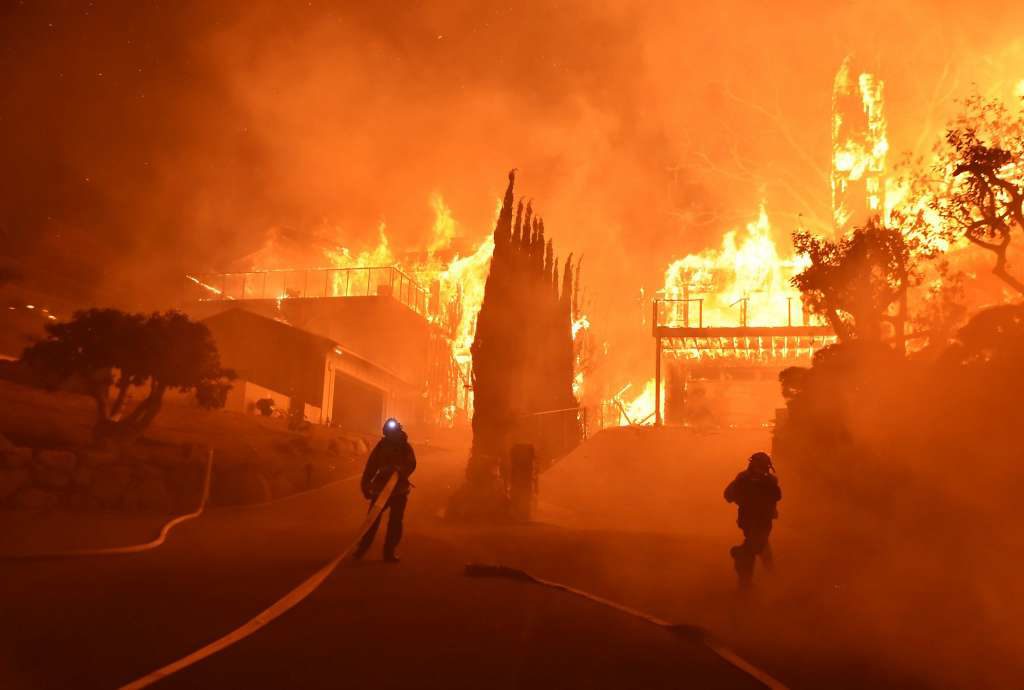
Firefighters work to put out raging flames in California. Photo credit: Ventura County Fire Department
The warmest year on record for the Earth’s land and oceans
was 2016 – by a long shot, thanks to a very strong El Nino event. That’s
followed by 2017, 2015, and now 2018, said Zeke Hausfather, a research
scientist with Berkeley Earth, which released the findings.
“2018 is consistent with the long-term warming trend,”
Hausfather said. “It’s significantly warmer than any of the years before 2015.
There’s still this big bump up after 2014, and 2015, 2016, 2017, and 2018 are
all in a class of their own.”
While expert groups have sometimes divided on such annual
temperature rankings — and not all assessments are yet in – Berkeley Earth’s
findings appear unlikely to be disputed.
The Copernicus Climate Change Service, a European Union
body, had also
proclaimed 2018 the fourth warmest year on record earlier this month.
And Kevin Cowtan, a researcher at the University of York who
also keeps an influential temperature dataset, agreed with the ranking, though
he noted by email that he is only able to track data through November of last
year due to the U.S. government shutdown, leaving his assessment one month
short at present.
“Our results to November clearly put 2018 in 4th place,
significantly warmer than 2010 in 5th,” said Cowtan. “The 11 hottest years on
record have all occurred since 2005.”
Amid the government shutdown the U.S.’s two top keepers of
temperature records — NASA and NOAA — have not yet released their findings.
Last year, both agencies released their assessments for 2017′s temperatures,
which NASA called the second warmest and NOAA the third, on January
18.
Hausfather said a coordinated release had been planned for January 17 with his organisation and the U.S. government agencies – before the shutdown, that is. Once that happened, he said, Berkeley Earth decided to go ahead and release its own numbers.
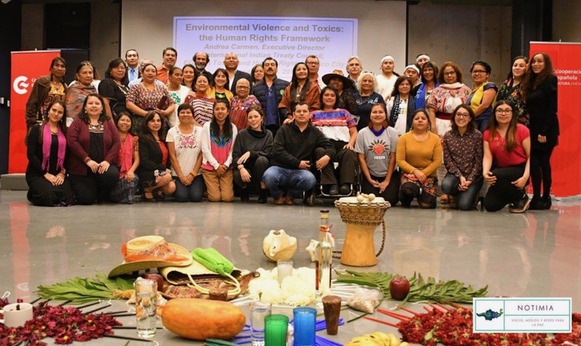
An Expert Group (EGM) meeting was held from January 19 to 20, 2019 at the Centro Cultural de España in Mexico City, Mexico, to provide information to the United Nations Special Rapporteur on the implications for human rights of the environmentally sound management and disposal of hazardous substances and wastes, Mr. Baskut Tuncak.
Participants at the UN Expert Group Meeting in Mexico City, Mexico
The EGM, hosted by the International Indian Treaty Council
(IITC) and the Centre for the Autonomy and Development of Indigenous Peoples
(CADPI, Nicaragua) with the Fund for Development of Indigenous Peoples of Latin
American and the Caribbean (FILAC), provided the opportunity for
representatives from five regions to present testimonies and community-based
studies to contribute to the Special Rapporteur’s current Human Rights Legal
Review of the United Nations Chemical Conventions focusing on the impacts on
Indigenous Peoples.
During the two-day meeting, Indigenous community-based
experts and scientists shared examples of the human rights and health impacts
caused by the application of banned and highly toxic pesticides, extractive
industries such as gold mining using mercury, toxic waste incineration and
other activities carried out in Indigenous Peoples’ lands and territories
without their free prior and informed consent.
Representatives of the United Nations Permanent Forum on
Indigenous issues, the UN Committee on the Rights of the Child, the UN Food and
Agriculture Organisation and the UN Committee on Food Security Civil Society
and indigenous Peoples Mechanism also presented at the EGM. The Mexican
government’s National Institute of Indigenous Peoples provided an official
welcome statement to inaugurate the EGM and also participated for both days.
Indigenous experts shared testimonies and studies confirming
the devastating health impacts of toxic contamination in their communities
including birth defects, infant mortality, reproductive impairment, and
cancers. Many identified these impacts as “environmental violence” resulting in
extreme suffering and many deaths, especially among infants and small children.
They affirmed that Indigenous women and girls are
particularly affected because of the well-known impacts of
environmental toxics on women’s bodies and reproductive health. The
disproportionate impacts on disabled persons in Indigenous communities were
also presented.
Indigenous presenters insisted that drastic and immediate
change was required on the local national and international levels so that the
use and storage of hazardous substances could not take place in their lands
without their free prior and informed consent as affirmed in Article 29 of the
UN Declaration on the Rights of Indigenous Peoples.
They called for effective clean-up of contaminated areas,
remedies for those whose lives and human rights have been affected, corporate
and government responsibility to provide redress and remedy to those who have
been harmed, restoration of traditional food systems and non-toxic agricultural
methods, programs to address extreme poverty and the development of safe, economically
viable livelihoods in Indigenous communities that are not harmful to their
health or the environment.
The UN Permanent Forum on Indigenous Issues (UNPFII)
recommended that this legal review be carried out in 2014 and again in 2016
with the assistance of the UN Special Rapporteur on Human Rights and Toxics to
address the disconnect between the UN chemicals conventions, in particular the
Rotterdam Convention which permits the international import and export of
banned pesticides and other toxic chemicals, and UN Human Rights Norms and
Standards including the UN Declaration on the Rights of Indigenous Peoples, the
Convention on the Rights of the Child, and the Convention on the Rights of
Persons with Disabilities.
In April 2018, the Special Rapporteur shared some of his
preliminary observations at the UNPFII’s 17th session “…Indigenous peoples such
as the Yaqui have suffered grave adverse impacts on their health and dignity
from of the ongoing use of highly hazardous pesticides. These pesticides are
often imported from countries that have banned their use domestically because
of uncontrollable and unreasonable risks.”
In this statement, he also observed that regarding the
import, export, and use of toxic substances impacting Indigenous communities “there
is no recognition of the right to free, prior and informed consent of
indigenous peoples.”
“This legal review by the Special Rapporteur on Human Rights
and Toxics is very important to the UNPFII and to Indigenous Peoples around the
world,” said Tarcila Rivera Zea, Quechua from Peru, who participated in the EGM
as an expert member of the UNPFII from Latin America and the Caribbean,
focusing on issues impacting Indigenous women, children and youth.
Rivera Zea affirmed at the EGM that “it is time for UN
mechanisms and processes to move from recommendations to implementations” and
to find “new ways forward that effectively respect international legal norms
and standards protecting the rights of women, children, and Indigenous
Peoples”. She also called upon States to take responsibility to respect the
rights of Indigenous Peoples and the public health of everyone by halting the
production, import and export and use of substances known to be deadly to human
health and children’s development, whether they are produced by industrial
agriculture, mining, oil drilling, fracking or other forms of unsustainable
production.”
The outcomes of the Special Rapporteur’s legal review will
be presented at the 18th session of the UNPFII in April and also at the 74th
session of the UN General Assembly in 2019.
The United Nations Special Rapporteur on the implications
for human rights of the environmentally sound management and disposal of
hazardous substances and wastes (informally known as the Special Rapporteur on
Human Rights and Toxics) was established by the UN Commission on Human Rights
in 1995 to examine the human rights implications of toxic and otherwise
hazardous substances.
A comprehensive conservation plan has been released to
establish a long-term mechanism for the conservation and utilisation of the
Great Wall in China, a senior official of the State Administration of Cultural
Heritage (SACH) announced on Thursday, January 24, 2019.
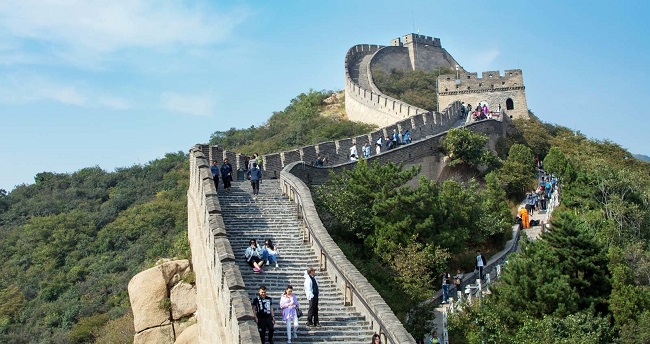
The Great Wall of China
The plan was jointly publicised by the Ministry of Culture
and Tourism and the SACH on Tuesday.
“The government’s role in protecting the Great Wall should
be strengthened,’’ Liu Yuzhu, head of SACH, at a State Council Information
Office press conference, said.
“Individuals and relevant social organisations are
encouraged to provide not-for-profit service for the Great Wall,’’ Liu said.
Liu said sections of the Great Wall built during the Qin
(221 B.C. to 206 B.C.), Han (202 B.C. to 220 A.D.) and Ming (1368 A.D. to 1644
A.D.) dynasties were the key areas to be conserved.
The Great Wall consists of many interconnected walls built
between the seventh century B.C. and the Ming Dynasty.
It was listed as a World Heritage Site by UNESCO in 1987.