Home Blog Page 1717

NiMet warns of climate-induced diseases in 2019

0

The Nigeria Meteorological Agency (NiMet) has warned that there could be prevalence of climate-induced diseases such as malaria, cerebrospinal meningitis and respiratory diseases in many parts of Nigeria in 2019.
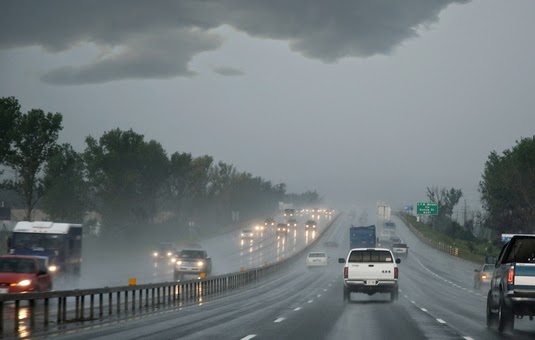
Rainfall-Lagos
Heavy rainfall is one of the factors that will trigger the diseases

NiMet’s forecast, in its 2019 Seasonal Rainfall Prediction (SRP), projects that high temperature, rainfall and relative humidity as well as harmattan dust are factors that will trigger the diseases.

It predicted that incidences of malaria and other diseases would be higher in areas with high temperatures in the range of 18 to 32 degrees Celsius associated with high relative humidity above 60 per cent precipitation.

It said areas covered by thick vegetation that provide environmental conditions conducive for the survival of vector and development of malaria parasites were also prone to malaria spread.

According to NiMet, climatic and environmental conditions expected for January, February, March and April will make many states vulnerable to incidences of malaria.

“High vigilance is required over the coastal cities of Lagos, Abakiliki, Eket and Calabar; moderate vigilance over parts of Lagos, Ogun, Ondo and southern states and low vigilance over the rest of the country.

“In February, high vigilance is advisable over parts of Lagos, Ogun and southern states; moderate vigilance required over Ogun, Owerri, southern states and parts of Lagos and Enugu states, while the rest will require low vigilance.

“In March, high vigilance is required over southern states; moderate vigilance over the inland states of Enugu, Ondo Ebonyi and parts of Kogi, Cross River, Benue, Ogun, Osun, Ondo and Delta states.

“In April, high vigilance is required over the south and parts of Kogi, Benue, Plateau and Kwara states and moderate vigilance over Abuja, parts of Kogi, Kwara, Niger, Nassarawa, Benue, Plateau and Taraba states,’’ it stated.

On cerebrospinal meningitis, NiMet disclosed that low relative humidity, low rainfall, high temperatures, dry north easterly winds and surface dust conditions would encourage the spread of the disease up to mid-March.

It said that the meningitis epidemiologic season would observe slight increase in cases due to intensifying effects of harmattan over the northern and central states.

On respiratory diseases, NiMet warned that harmattan dust in the months of December to mid-March would likely increase the incidences of asthma, bronchitis, flu silicosis and lung cancer.

It disclosed that warm conditions were expected over the country during the months of February to May, adding that heat related ailments such as measles and heat rashes were expected during the hot season.

According to NiMet, the information and projections provided will assist health policy makers to plan early warning and reduce the negative outcome with good lead time.

“Early warning would assist health authorities such as the Nigerian Centre for Disease Control (NCDC) to develop effective vaccination strategies to prevent outbreaks,’’ NiMet said. 

By Sumaila Ogbaje
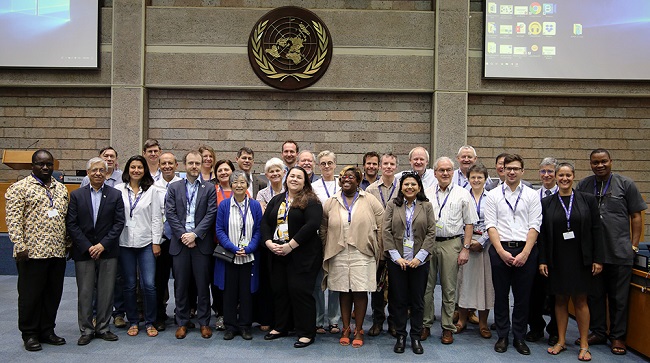
UNEP endorses 6th environment outlook ahead UNEA-4

0

The Sixth Global Environment Outlook (GEO-6) Summary for Policy Makers (SPM) has been endorsed and is set for presentation to the fourth session of the UN Environment Assembly (UNEA-4).

GEO-6 authors
GEO-6 authors

This formed a major outcome of the Intergovernmental Meeting on the GEO-6 SPM convened from January 21 to 24, 2019 at the UN Environment (UNEP) headquarters in Nairobi, Kenya. The meeting was attended by 251 participants from 95 countries, including 26 participants from major groups and stakeholders.

Throughout the week, delegates discussed the SPM in order to reach agreement on a document that will be presented to UNEA-4. On Thursday, January 24, they agreed to the GEO-6 SPM, and requested the Assessment Report Co-Chairs to formulate and forward a summary with key messages of the SPM to UNEA-4.

Jorge Laguna-Celis, Secretary, Secretariat of Governing Bodies and Stakeholders, UNEP, who opened the meeting, noted that GEO-6 would be presented to UNEA-4 for possible endorsement in March 2019.

Joyce Msuya, Acting Executive Director, UNEP, characterised the GEO reports as one of the most important UNEP products, representing “the very best of science and partnership for the environment.” She noted that, unlike previous reports, the GEO-6 report considers policies that may help make a difference in future outcomes.

Highlighting the disconnects between policy, science, and action, Keriako Tobiko, Cabinet Secretary for Environment and Forestry, Kenya, urged decision makers to incorporate science into policies and called for translating policy into tangible, concrete and measurable actions on the ground. He lauded the GEO-6 authors for incorporating traditional knowledge, thus strengthening the link between science and traditional knowledge.

The GEO-6 report, organised under the theme “Healthy Planet, Healthy People,” draws attention to the connection between environmental and human health. It also encourages the achievement of the environmental dimensions of the Sustainable Development Goals (SDGs), internationally agreed environmental goals, and the objectives of multilateral environmental agreements (MEAs), for the benefit of humankind.

The GEO-6 differs from the GEO-5 in that the development of this report involves Co-Chairs in addition to Vice-Chairs. This structure was recommended by the Scientific Advisory Panel (SAP) to help further ensure the scientific credibility of the GEO-6 process, and to encourage learning from best practices from the Intergovernmental Panel on Climate Change and Intergovernmental Science-Policy Platform on Biodiversity and Ecosystem Services.

The GEO-6 meeting considered the second order draft of the SPM, which was developed at a meeting convened by the High-level Intergovernmental and Stakeholders Advisory Group. The GEO-6 assessment report and the SPM adopted at this meeting will be presented for consideration and possible endorsement by UNEA-4, which will be held from March 11 to 15, 2019 in Nairobi, Kenya. This endorsement is expected to raise the profile of GEO assessments due to the high-level and universal membership of UNEA.

The SPM consists of five sections:

  • What is the Global Environment Outlook?
  • What is Happening to Our Environment and How Have We Responded?
  • Effectiveness of Environmental Policies;
  • Changing the Path We Are On; and
  • Knowledge for Action.

Previous GEO Reports

GEO-1, published in 1997, provided a comprehensive overview of the state of the world’s environment and showed that although significant progress had been made in confronting environmental challenges in both developing and industrialised regions, there was still a need to vigorously pursue environmental and associated socioeconomic policies.

GEO-2, published in 1999, concluded that if current trends in population, economic growth, and consumption continued, the natural environment would be increasingly stressed.

GEO-3, published in 2002, provided an overview of the main environmental developments over the previous three decades, demonstrating how social, economic, and other factors contributed to the changes that had occurred. It highlighted increasing poverty and concluded that four major divides categorise the world and threaten sustainable development, namely, the environmental, policy, and lifestyle divides, and the vulnerability gap.

GEO-4, published in 2007, assessed the state of the global atmosphere, land, water, and biodiversity, as well as the human dimensions of environmental change, and presented scenarios and policy options for action in the context of environment for development. It issued an urgent call for action in dealing with persistent and urgent environmental problems, such as climate change, that undermine human wellbeing and development.

GEO-5 was requested by the 25th session of the UNEP Governing Council, held in February 2009, in Nairobi, Kenya. The GEO-5 report differed from previous GEO reports by shifting from assessing priority “problems” to include assessments of priority solutions. The GEO-5 report consisted of three major parts: an assessment of the state and trends of the global environment; regional policy analyses; and potential opportunities for action at the global level.

Extreme weather events affected 60m people in Nigeria, others in 2018

Earthquakes and tsunamis accounted for the majority of the 10,373 lives lost in disasters last year while extreme weather events accounted for most of 61.7 million people affected by natural hazards, according to analysis of 281 events recorded by the Centre for Research on the Epidemiology of Disasters (CRED) in its EM-DAT (International Disaster Database).

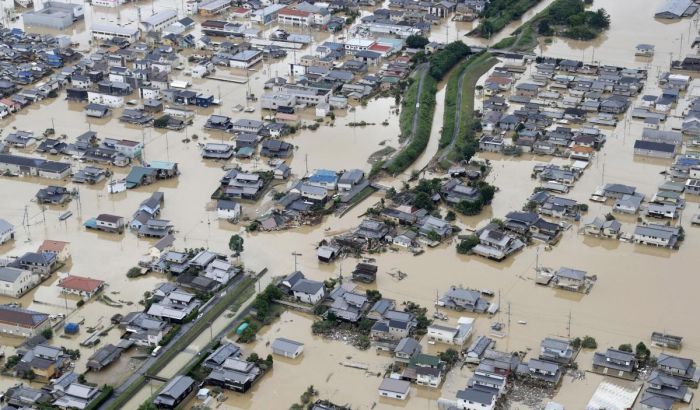
Flood in Japan
Flooding in Japan

With 3,938,204 affected persons, Nigeria is fourth out of the top 10 countries of people affected in 2018. India (23,900,348) tops the list, followed closely by The Philipines (6,490,216) and China (6,415,024).

On top 10 countries by total death toll, Nigeria is sixth (300), behind Indonesia (4,535), India (1,388), Guatemala (427), Japan (419) and China (341). The USA comes seventh with 298.

Mami Mizutori, Special Representative of the Secretary-General for Disaster Risk Reduction, said: “No part of the globe was spared from the impact of extreme weather events last year. Examined floods, droughts, storms and wildfires affected 57.3 million people, underlining once more that if we want to reduce disaster losses, then we must improve how we manage disaster risk.   

“Time is running out for limiting global warming to 1.5˚C or 2˚C. We have to be equally active about climate change adaptation which means reducing disaster risk in our cities, avoiding the creation of new risk by better land use, stronger planning regulations and building codes, safeguarding protective eco-systems, reducing poverty, and taking active measures to reduce exposure to rising sea levels.”

The 2018 toll of 10,373 lives lost compares with an annual average of 77,144 deaths recorded between 2000 and 2017, averages which are inflated by large-scale loss of life in catastrophic events such as the Indian Ocean tsunami (2004), Cyclone Nargis (2008) and the Haitian earthquake (2010). There were no such mega-disasters in 2018 but loss of life from major natural hazards appears to be on the decline likely due to improving standards of living and better disaster risk management.

Seismic activity including earthquakes, tsunamis and volcanic activity disrupted the lives of 3.4 million people last year and claimed more lives than any other hazard type, including Indonesia (4,417), Guatemala (425) and Papua New Guinea (145).

Floods continued to affect the largest number of people, 35.4 million people, including 23 million people in Kerala, India.  They caused 2,859 deaths including India (504), Japan (220), Nigeria (199), and Korea DPR (151).

Storms affected 12.8 million people last year and caused a recorded 1,593 deaths. It is anticipated that storms, particularly due to hurricanes Florence ($14 billion) and Michael ($16 billion) and typhoon Jebi ($12.5 billion), will be the costliest type of disaster of 2018 once final economic losses are compiled.

Wildfires in Europe and North America claimed a record number of lives as Greece (126) had the deadliest European wildfire on record, and the United States (88) had its deadliest wildfire in over a century, and costliest wildfire on record (estimated $16.5 billion).  

The CRED statistics highlight that 9.3 million people were affected by drought worldwide, including Kenya (3 million), Afghanistan (2.2 million), and Central America (2.5 million), including migration hotspots Guatemala, Honduras, El Salvador and Nicaragua. Insufficient reporting from drought and extreme temperatures events hinder a better understanding of these events worldwide.

Debarati Guha-Sapir, head of CRED at UCLouvain, said: “The impact of all disasters, particularly drought and extreme temperatures are notoriously poorly reported, especially from low-income countries. The human impact of these events are difficult to quantify, but it needs to be done urgently, especially in order to report on specific SDG target indicators. Therefore, innovative approaches that measure progress in resilience and the adaptive capacity of communities needs to be addressed by appropriate UN agencies.”

UN member States are committed to reducing disaster losses and implementing the Sendai Framework for Disaster Risk Reduction (2015-2030), the global plan for reducing disaster losses which has a clear focus on reducing mortality and the numbers of disaster affected people, as well as reducing associated economic losses and damage to critical infrastructure.

Climate change is biggest threat to global economy, says Guterres

0

Speaking to leaders at the 2019 World Economic Forum in Davos last week, UN Secretary-General António Guterres said that climate change was the most important global systemic threat in relation to the global economy that required a unified response in the form of inclusive multilateralism involving all parts of society.

António Guterres
António Guterres at the World Economic Forum in Davos

In Davos, the UN’s top official addressed three main mega-trends in 2019, including migration, digitalisation and climate change. Against the background of ever more frequent and intense droughts, storms and floods, Guterres left no doubt about the urgency of the situation, and the priority that tackling climate change needs to have for the international community:

“I think the climate risk is the most important systemic risk for the near future. I believe we are losing the race. Climate change is running faster than we are. And we have this paradox: the reality is proving to be worse than scientists had foreseen, and all the last indicators show that.”

On Thursday, January 24, the United Nations Office for Disaster Risk Reduction published a report outlining that extreme weather events affected 60 million  people in 2018 alone, with no part of the globe spared from the impacts of accelerating climate change.

Whilst the UN leader described the overall political will to tackle climate change as inadequate and even slowing down, he made a positive assessment of the outcome of the UN Climate Change Conference in Katowice in December.

“Everybody thought that would be a failure,” he said. “It was not. We managed to approve the Work Programme of the Paris agreement. It doesn’t solve the problem, we need more ambition, more ambition and mitigation [cutting greenhouse gases]. That was not solved there, but it was possible to bring together countries that were in a totally different position, to at least agree on the basis to move forward,” he said.

Given that with current pledges by governments, the world is heading towards a 3 degrees Celsius global average temperature rise, and that governments and multilateral institutions cannot solve the challenge of climate change alone, Guterres called for inclusive multilateralism which recognises that not only national states are part of the global system of governance and influence, but also cities, the business community, civil society and the academia.

“We need more and more a multilateralism that also is able to incorporate the contribution of all these other sectors, and I think the World Economic Forum has an absolutely vital role to play,” he said.

Looking forward to the rest of the year, Guterres told leaders in Davos that he was convening a major Climate Action Summit in September to step up ambition in cutting emissions, in adapting to the inevitable impacts of climate change, along with a focus on finance and innovation. The Summit will come ahead of the submission to the UN of the next round of national climate action plans by governments in 2020. The inclusion of civil society, and not least the business society, would be another main feature of the September meeting.

NiMet predicts below normal rainfall in 18 states

0

The Nigeria Meteorological Agency (NiMet), has predicted dwindling availability of water for various socio-economic purposes over most parts of Nigeria in 2019.

Sani Marshi
Director-General/Chief Executive Officer of NiMet, Prof. Sani Mashi

NiMet’s forecast in its 2019 Seasonal Rainfall Prediction (SRP), revealed that most places would have between below to normal amount of rainfall, while areas around Adamawa, Kwara and Oyo states would experience above-normal rainfall.

It listed states expected to experience below-normal rainfall to include: Sokoto, Katsina, Borno, Niger, Plataeu, Nasarawa, Osun, Lagos, Ondo, Ekiti, Edo, Delta, Enugu, Anambra, Imo, Bayelsa, Rivers and Cross River.

This, according to NiMet, will create water shortfall and will thus negatively affect availability of water required for domestic and industrial uses like agriculture, groundwater recharge and inland waterways transportation.

The agency, therefore, advised that integrated water resources management skills be adopted in line with the predicted amount over various parts, especially areas that might have to contend with below normal rainfall.

“There is need to impound and establish adequate irrigation facilities to mitigate the effects on agricultural activities and properly manage the available water resources for domestic and industrial use.

“However, proper Dam management is recommended to avert disastrous effects of flooding due to expected flows over the places where normal to above normal rainfall amounts were predicted,”it said.

On power generation, transmission and distribution, the prediction indicated that since power generation in Nigeria is majorly hydroelectric, it could be affected by rainfall amount as water shortage could lead to lower generation.

According to the prediction, rainfall in 2019 is expected to be below normal to normal in most parts of the country, including areas where hydroelectric dams exists such as Kainji, Jebba and Shiroro.

“This implies that power generation is likely to be affected negatively by lower rainfall amount in 2019.

“Therefore, policy makers are advised to develop alternative means of power generation so as to meet up with the growing demands in electricity by the public,”it added.

By Sumaila Ogbaje

Board reviews law to tackle Abuja’s growing environmental challenge

The Abuja Environmental Protection Board (AEPB) says it has commenced the review of its Act No 10 of 1997 to address emerging environmental challenges in the Federal Capital Territory (FCT).

Abuja
The Abuja city gate

AEPB Director, Mr Baba-Shehu Lawan, said this in Abuja on Saturday, January 26, 2019 at a two-day Management/Stakeholders Retreat.

Lawan said that the review would ensure proper composition of members of the AEPB Governing Board and ensure adequate sanctions for environmental defaulters.

“We are here today to review the AEPB Act No 10 of 1997 because it has stayed very long. It is now 21 years after the laws were enacted.

“So many environmental issues have come up that the laws had not addressed, and the penalties are not adequate to deter the defaulters.

“So, we are here for two days to review the act by putting adequate penalties to address issues that come up over the years that the act had not addressed so that we update it for the betterment of the city,’’ he said.

The Chairman, AEPB Governing Board, Dr Baruwa Yahaya, said that the review of the Act became necessary as the AEPB had been operating the same act that established it for the past 21 years.

Yahaya added that most of the rules and regulations in the Act were obsolete especially in the areas of punishment for environmental violation.

“That is why we are reviewing the act, especially in the areas of punishment.

“Some of the punishments attract N200. You can imagine. However, N200 some 20 years ago is something, but now it is nothing that is why nobody is afraid of it.

“The highest punishment that we have is about N2000, which is nothing for environmental offenders nowadays.

“So, we want to ensure that appropriate punishments and rewards are updated to the present standard,’’ Yahaya said.

He said that after the review, the board would draft the Act, take inputs from the public, before sending it to the National Assembly for legislative process.

Chief State Council of AEPB, Mr Udeme Umanah, said the new Act would assist AEPB to deliver its mandate of providing preventive health services.

Umanah said that the act would also address issues of double utility bills given to residents by AEPB and Area Councils in the FCT.

By Deji Abdulwahab

Forestry institute crucial to Ogoniland cleanup – Zarma

0

Minister of Environment, Hassan Suleiman Zarma, has said that the Forestry Research Institute of Nigeria Ibadan (FRIN) has a very crucial role to play in the cleanup of Ogoniland especially in the re-establishment of the mangroves and general restoration of remediated land.

Alhaji Suleiman Hassan Zarma
Alhaji Suleiman Hassan Zarma, Minister of Environment

The minister who stated this at the weekend during his working visit to Ibadan, Oyo State, directed the institute to scale up its research efforts and training in addressing issues of gully erosion using biological means, desertification, pollution control and climate change

While noting that the programmes of the institute cut across all areas of biodiversity, he affirmed that it is strategically placed to support and enable the achievements of National Afforestation targets through the production and improvement of indigenous species, establishment of exotic species, timber utilisation, forest products and development, bio-medicinal research, modelling forest growth, conservation of natural resources and environmental forestry and protection.

After inspecting the facilities and ongoing projects of the institute, the minister, who was visibly happy with what he saw on ground, acknowledged that the institute had become a model of innovation in its core mandate area and has demonstrated its capacity to deliver on Nigeria’s commitment to the Paris Agreement on Climate Change.

“I am pleased to note that as the lead agency on the afforestation programme funded via the green bonds, there has been an achievement of an increase in our forest cover by 5%.

“I urge that we strive to achieve more, and I am committed to supporting the institute to serve as the vehicle to other agencies and departments in achieving our afforestation targets.

“I am also pleased to note that the Institute has embarked on key initiatives to enable it sustain itself by looking inwards via Honey production, fisheries and the likes. Its most impressive impact however is in the training of farmers in agroforestry,” he stated.

While commending the efforts, Suleiman Zarma observed that it was in tandem with the Buhari-led administration’s commitment to address various developmental issues and concerns affecting our people and ecosystem.

The minister emphasised that President Muhammadu Buhari has given marching orders to implement various policies and programmes that will benefit the generality of the people, preserve the environment, assure food security and create jobs for the multitudes of young people.

“In this connection therefore, I am directing FRIN to re-calibrate its afforestation programme to ensure that there is an in-built mechanism to engage communities in the post planting management of established afforestation projects across the country,” he stressed.

Director General of FRIN, DR Adeshola Adepoju, who conducted the minister round the facilities of the institute, assured the minister that FRIN would continue to do more towards providing afforestation cover for the country. He said FRIN is currently conducting various research programmes, in collaboration with its Colleges and Research Stations spread all over the country, support the diversification of Nigeria’s economy and boost foreign exchange earnings.

Lassa fever: Centre advocates personal, environmental hygiene

0

The Nigeria Centre for Disease Control (NCDC) says it is creating more awareness to educate Nigerians on the prevention of Lassa fever.

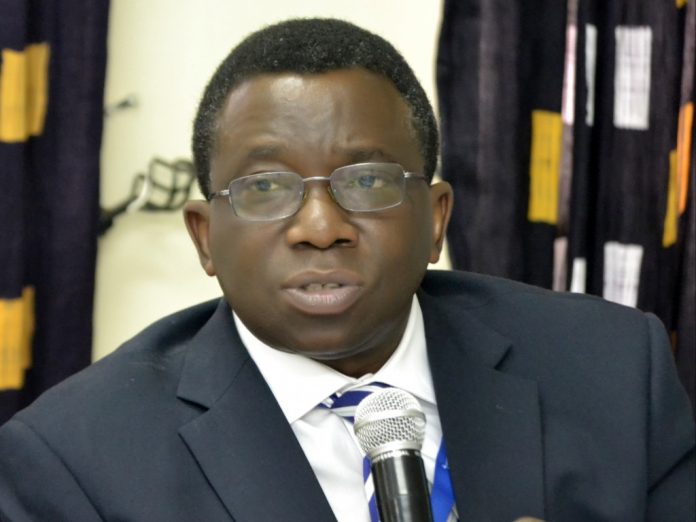
Isaac Adewole
Minister of Health, Isaac Adewole

Ms Elsie Ilori, Head, National Working Committee on Lassa fever, said this while giving update on the latest outbreak of the disease in the country on Channels Television on Saturday, January 26, 2019 in Abuja.

She said 136 confirmed cases and 31 deaths had been recorded in eight states of the federation and the FCT Abuja.

Ilori, a Deputy Director at NCDC, stressed that Nigerians must practise good personal hygiene and proper environmental sanitation to prevent further spread of the disease.

She said that the centre had been proactive in the fight to control Lassa fever and other haemorrhagic fevers by sensitising the populace on key preventive measures.

She said that the Centre was collaborating with the Ministry of Agriculture and Environment to curb further spread of the virus.

The official also said that given the increase in reported cases, the NCDC had activated an Emergency Operations Centre (EOC) to coordinate the response.

She therefore advised the public to take effective measures by storing grain and other foodstuffs in rodent-proof containers, disposing of garbage far from residences and maintaining clean households, among other measures to discourage rodents from entering homes.

She also recommended regular hand washing practise and advised against bush burning.

Ilori said that health care workers were again reminded that Lassa fever presents initially like any other disease-causing febrile illness such as malaria.

She said that healthcare providers were advised to practise standard precautions at all times and to maintain a high index of suspicion.

She also advised that Rapid Diagnostic Test (RDT) must be applied to all suspected cases of malaria.

“When the RDT is negative, other causes of febrile illness including Lassa fever should be considered. Accurate diagnosis and prompt treatment increase the chances of survival,” she said.

Ilori said that guidelines had been revised, new data management tools had been developed and the laboratory network strengthened.

She also said that risk communications had been strengthened through radio, posters, flyers and social media.

“A national research plan has been developed to enable its full integration into the outbreak response to gain a better understanding of the disease.

“The national guidelines for Infection Prevention and Control, as well as Lassa fever case management have been developed, disseminated to States and are available on the NCDC website for download: (http://ncdc.gov.ng/diseases/guidelines).

“The Nigeria Centre for Disease Control remains committed to supporting all States’ public health teams to prevent and respond to public health threats,” she assured.

Lassa fever is an acute viral haemorrhagic illness, transmitted to humans through contact with food or household items contaminated by infected rodents.

Person-to-person transmission can also occur, particularly in hospital environments in the absence of adequate infection control measures. 

By Jessica Onyegbula

Government delivers Zobe Dam water scheme in Katsina after 27 years

0

The Federal Government has reiterated its commitment to improve the lives of Nigerians, as it delivered the Zobe Regional Water Supply Scheme in Katsina.

suleiman adamu kazaure
Suleiman Adamu Kazaure, Water Resources Minister

The dam, which started in 1992, was revisited by the present administration to improve access to potable water for Katsina metropolis and environs.

At an inspection visit to the site on Friday, January 25, 2019, the Minister of Water Resources, Mr Suleiman Adamu, restated the desire of the present administration to complete all abandoned water projects.

According to him, the Federal Government is excited about progress made in the LOT 1 of the project, expressing hope that the Katsina State Government will hasten the processes to reticulate the water to homes.

“I came for inspection and celebration, because this project was started in 1992, and we want to celebrate the collaboration with the state government that we have been true to our words in completing all ongoing projects.

“I was so pleased that this has happened, we are excited that water will start flowing into Katsina and its environs before the end of January, and that has been accomplished.

“This project has been waiting for 27 years, we are glad that we are coming to the tail end of this project. There is still work to be done, but there is sufficient water to start flowing into the communities,” he said.

Mr Ibrahim Mai-Maje, consultant of the scheme, said the Zobe Water Supply Scheme was specifically targeted at bringing water from Zobe River to Katsina Local Government Areas.

He said three years ago, an MoU was signed between the state government and the federal government to bring water from Dutsinma, saying the water pumps, treatment plants, among others, had been completed and tested.

Mai-Maje said no fewer than six LGAs of Dutsinma, Kankia, Charanchi, Katsina, Bindawa and Kurfi would benefit, adding that no less than 37,000 cubic metres of water would be treated and pumped to homes.

“What is needed now is the Katsina State Government’s responsibility, this has been done since 1992, there is supposed to be an outlet that takes water into the state, then from there to other parts.

“The remaining connection from Dutsinma and to other local government areas is the responsibility of the state government and they have reached an advanced stage for the consultant to complete the work,” he said.

He added that the state government was aware that it ought to put in remaining valves and fittings toward proper water reticulation.

Mai-maje said the pumping into main Katsina tank has been tested and washed to test distribution channel network to the state, adding that the state government had begun processes to see that water gets to the populace.

The Deputy Governor, Alhaji Mannir Yakubu, commended the efforts of Federal Government and President Muhammadu Buhari for extending support towards completing all ongoing and abandoned water projects in the country.

“We thank the President and the ministry for giving this project life and bringing it to this stage, we will also do our own part.

“It is certainly a project that we must honour our own part of the agreement, because the Federal Government has honoured her own part.

“Really, this is going to bring a lot of relief, not only to Katsina and Dutsinma, but also to all the towns along the routes,” Yakubu said.

The Federal Government had released N12 billion for onward implementation of Zobe Dam in Katsina State as part of its efforts to boost water supply across the country.

Zobe Dam has the potential to irrigate about 8,000 hectares of arable land and also be used for regional water supply.

By Tosin Kolade

CPC begins clamp-down on violators of Tobacco Act

0

In line with a recent submission by its Director-General, Babatunde Irukera, the Consumer Protection Council (CPC) has began enforcing the National Tobacco Control (NTC) Act provision banning sale of cigarettes in single sticks and to minors.

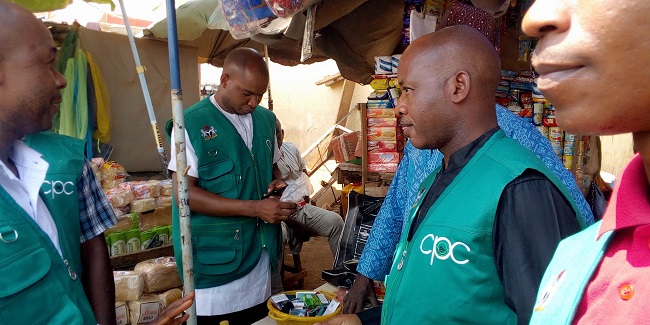
CPC Enforcement Team
CPC Enforcement Team in Jabi Market, Abuja

The CPC in a two-day exercise on Thursday, January 24 and Friday, January 25, 2019 in Abuja stormed several locations including the popular Jabi Market and Wuse area where cigarettes are openly sold to patrons in single sticks in contravention of the law which commenced in 2017.

A similar exercise was carried out in bars, lounges, and event centers in the Wuse area.

Owners of facilities where the products were openly sold were educated on the law and told to desist from sale of cigarettes in sticks as well as shisha or would be arrested in the next round of the exercise by the agency.

Ayough Moses of the Surveillance and Enforcement Department of the CPC said that the exercise was carried out after intensive surveillance which identified black spots and showed that there was fragrant violation of the law despite massive awareness that government had carried out in the last one year.

“In enforcing the law, the CPC felt it was very important to warn sellers of cigarettes and also use the medium to educate the ignorant. The exercise was extended to shisha bars because the product is also banned under the NTC Act.”

Moses explained that the exercise which would henceforth be a routine one throughout the nation is to safeguard the health of Nigerians from tobacco harms.

Minister of Health, Professor Isaac Adewole, had in 2017 announced nine provisions of the NTC Act for immediate enforcement. They include ban on single stick sale of cigarettes, ban on sale to minors, ban on smoking in public places, and prosecution of owners/managers of any facility that fails to stop smoking, or encourages it in places it is outlawed, among others.

Reacting to the commencement of enforcement of the Act, the Environmental Rights Action/Friends of the Earth Nigeria (ERA/FoEN) said it is long overdue and is welcomed by Nigerians.

In a telephone chat with EnviroNews, ERA/FoEN Deputy Executive Director, Akinbode Oluwafemi, said: “While we commend the CPC for this action, we anticipate that other agencies of government will take a cue.”