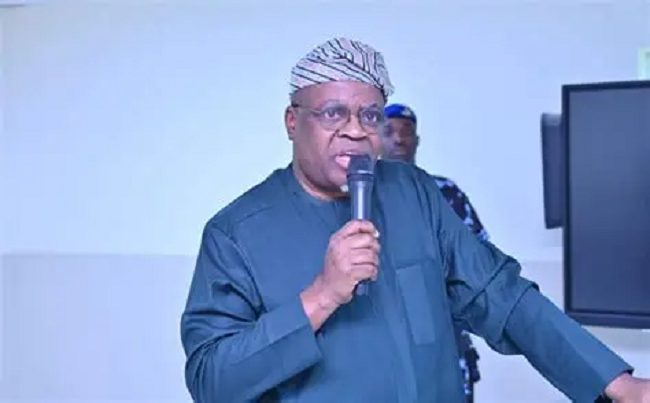
A chieftain of the Peoples Democratic Party (PDP), Chief Bode George, has charged members of the Guild of Corporate Online Publishers (GOCOP) to take the lead in clearing the obstacles facing journalism, particularly the menace of fake news and unprofessional conduct among impostors in the industry.
Chief George gave this charge on Thursday, October 9, 2025, during the 9th Annual Conference of GOCOP, held at the Radisson Blu Hotel, Ikeja, Lagos, with the theme: “Reconciling Campaign Promises with Governance Realities: Challenges and Prospects.”
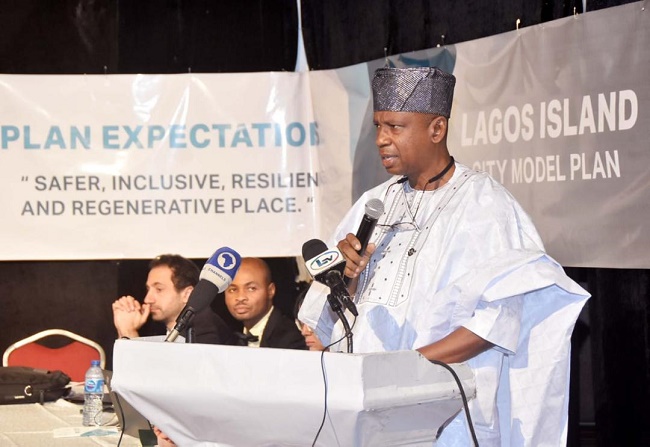
Chief Bode George at GOCOP 2025 Conference
Expressing displeasure over the growing number of untrained individuals masquerading as journalists, George commended GOCOP for its consistent efforts in promoting professionalism and integrity in digital journalism.
“I am extremely happy that GOCOP continues to grow stronger despite the odds. I have followed your activities since inception, and I am proud to be associated with a body of credible professionals,” he stated.
The elder statesman urged the Nigerian government to improve the lives of young citizens who, he lamented, have become victims of poor governance.
He emphasised that Nigeria’s diverse resources and human potential should be harnessed responsibly for national progress.
According to him, “There is no part of Nigeria that is not endowed. True democracy means utilising resources for the benefit of the people. Leaders must remember that power is transient and that posterity will judge their actions.”
Chief George further warned against any calls for military intervention, insisting that such moves would derail the nation’s democratic progress.
He stressed that the civilian system, despite its imperfections, provides checks and balances through its three arms of government, unlike the military, which centralises authority.
He also called for a comprehensive review of the Independent National Electoral Commission (INEC) to strengthen Nigeria’s democratic institutions and restore public confidence in the electoral process.
Chief George concluded by urging journalists to continue upholding truth, ethics, and patriotism, reminding them that credible journalism remains a pillar of democracy and national development.
Lekoil Nigeria Limited is marking a defining chapter in her journey as a leading independent oil and gas company in Nigeria, as President Bola Ahmed Tinubu, represented by the Minister of State for Petroleum Resources (Oil), Heineken Lokpobiri, commissions the Otakikpo Onshore Crude Oil Export Terminal.
The commissioning of the strategic export channel, through which Lekoil evacuates crude oil from the Otakikpo field, is in line with ongoing reforms to expand Nigeria’s production capacity towards Nigeria’s economic development. According to the company, “the Otakikpo Onshore Crude Oil Export Terminal is not just infrastructure; it is a symbol of progress, credibility, and the determination of indigenous producers to deliver value on a global stage.”
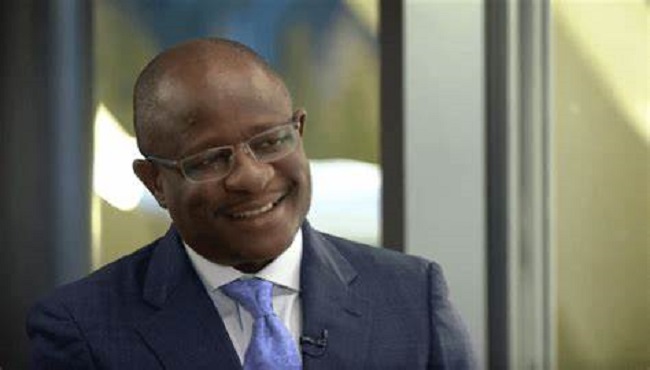
Chief Executive Officer of Lekoil, Lekan Akinyanmi
In a statement, Lekan Akinyanmi, CEO of Lekoil, praised President Tinubu and the leadership of the Nigerian Upstream Petroleum Regulatory Commission (NUPRC) for creating an enabling environment. He said the commissioning of the terminal represents a validation of the company’s commitment to consistency and building lasting value.
“The commissioning of the Otakikpo Onshore Crude Oil Export Terminal is a proud moment for Lekoil. It validates our commitment to building lasting value as an indigenous producer, delivering our crude to the market reliably while supporting our host communities and Nigeria’s broader energy ambitions. This milestone is a clear indication that Lekoil represents resilience, responsibility, and results,” Akinyanmi stated.
Lekoil, along with Green Energy International Limited, her joint venture partner on the Otakikpo field (PML 11), has consistently demonstrated that indigenous oil and gas companies can operate at world-class standards, unlock resources, advance community development, and contribute to national production growth.
With the commissioning of the terminal, Lekoil can now maximise the potential of Otakikpo, widely regarded as a prolific area for oil and gas nestled in the southeastern part of the Niger Delta basin, and ensure secure, efficient evacuation and reinforce its reputation as a reliable supplier of Nigerian crude.
“This achievement underscores Lekoil’s place as a trusted, responsible operator with a long-term commitment to Nigeria’s energy security and economic growth and its vision: to be the world’s leading exploration and production company focused on Africa. We celebrate this historic commissioning as a major step in Lekoil’s growth story, one that confirms our standing as a bonafide independent producer with the capacity, the partnerships, and the will to deliver,” Akinyanmi added.
Dangote Petroleum Refinery has dismissed recent media reports alleging that it is importing finished petrol with high sulphur content into Nigeria, describing the claims as false and misleading.
In a statement issued on Friday, October 10, 2025, the company explained that, as a world-scale complex refinery, it processes a wide range of crude oils and intermediate feedstocks, which is a standard global practice aimed at optimising production and product quality.
“The cargo in question is an intermediate feedstock, not finished petrol,” the company said. “It will be fully refined in our processing units to meet both Nigerian and international quality standards.”
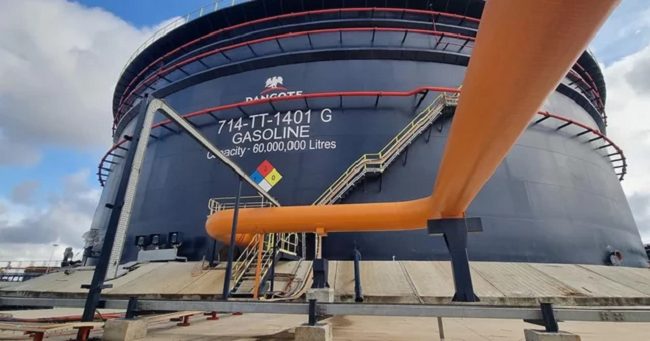
Dangote Refinery
Operating within a Free Trade Zone, Dangote Petroleum Refinery said it refines and sells only high-quality fuels that comply with all regulatory specifications. The company added that its exports of petroleum products to the United States and Europe, among the world’s most regulated markets, underscore its adherence to international benchmarks for quality and safety.
Dangote Refinery further noted that all imported feedstocks are accompanied by quality certificates, which are transparently shared with regulators.
“We are also willing to make these documents available to the public in the interest of full transparency and accountability,” the statement added.
The company reaffirmed its commitment to advancing Nigeria’s energy independence, maintaining global best practices, and delivering cleaner, high-quality fuels for both domestic and international markets.
Read full statement below:
Clarification on Importation of Intermediate Feedstocks
Dangote Petroleum Refinery has noted reports claiming it is importing finished petrol (PMS) with high sulphur content into Nigeria. These reports are false, malicious, and misleading.
As a world-scale complex refinery, Dangote processes a range of crude oils and intermediate feedstocks, a standard global practice aimed at optimising production and quality. The cargo in question is an intermediate feedstock, not finished petrol, and will be fully refined in our units to meet Nigerian and international quality standards.
Operating within a Free Trade Zone, Dangote Petroleum Refinery refines and sells only high-quality fuels, compliant with all regulatory specifications. Our exports of petroleum products to the United States and Europe, among the world’s most regulated markets, underscore our adherence to global benchmarks.
All imports are accompanied by quality certificates and shared transparently with regulators. Dangote Petroleum Refinery is also willing to make these documents available to the public in the interest of full transparency and accountability.
Dangote Refinery remains fully committed to advancing Nigeria’s energy independence, upholding the highest standards of quality and transparency, and delivering cleaner fuels for Nigeria and beyond.
The Guild of Corporate Online Publishers (GOCOP) has inaugurated a new executive council after a keenly contested election in Lagos.
The new EXCO is headed by Danlami Nmodu, as President. Other officers include Mr. Olumide Iyanda, Deputy President; Mr. Sufuyan Ojeifo, General Secretary; Mr. Akeem Oyetunji, Deputy General Secretary; Ms. Ngozi Onyeakusi, Treasurer; Mr. Moses Ebosele, Financial Secretary; and Ms. Kemi Yesufu as Publicity Secretary,
Members of the Danlami Nmodu led GOCOP Exco
With the inauguration, Nmodu took over from immediate past president of GOCOP and publisher of RealNews, Dr Maureen Chigbo.
In his acceptance speech after inauguration, Nmodu expressed gratitude to members of GOCOP for finding him worthy of the office of President.
He promised to abide by the ideals, rules and regulations of the guild in order to take the body to a higher level of growth within the online publishing community in Nigeria.
“I take the responsibility of the office seriously. Our members shall come first. I promise to work harmoniously with other exco officers and members to take GOCOP to a higher level of growth,” he declared.
Nmodu also promised to create more human capital and business opportunities for all members of GOCOP.
The presidency was the only contested position during the election between Mr. Danlami Nmodu and Mr. Segun Adeleye. The other officers were returned unopposed.
Declaring the result of the election, Mr. Yusuf Ozi-Usman, Chairman, Electoral Committee, GOCOP 2025, stated that out of a total of 120 registered members as of October 8, 114 were qualified, by the provision of GOCOP constitution to vote and be voted for.
He also disclosed that, out of the 114, 80 members attended the Annual General Congress in person, while 71 voted physically, some nine members did e-voting.
Dear President Bola Ahmed Tinubu, Minister of Works, David Umahi, and Minister of Environment, Balarabe Abbas Lawal,
As Nigeria charts a new trajectory toward becoming an economic powerhouse in Africa, critical infrastructure projects like the Lagos-Calabar Coastal Highway represent a beacon of hope and progress. This 700-kilometre standard highway, now advancing simultaneously across several states of the federation, including Lagos, Ogun, Ondo, Edo, Akwa Ibom, and Cross River, embodies the vision of a connected and unified nation. This lofty and ambitious project has the potential to transform our coastal regions into hubs of commerce, tourism, and innovation, much like major infrastructural developments seen in nations such as Indonesia and the United Arab Emirates.
Surajdeen Alabede
The true beauty of this project lies in its vast potential to boost economic growth by facilitating faster trade, reducing transportation costs, and creating thousands of jobs both during construction and long after completion. Imagine seamless travel along our stunning Atlantic coastline, unlocking opportunities for ecotourism, aquaculture, and blue economy initiatives capable of generating billions in revenue while showcasing Nigeria’s natural splendour to the world.
Beyond the economic benefits, enhanced connectivity will not only bridge urban centers but also empower rural communities, fostering inclusive development and attracting diaspora investments that strengthen our global ties. Indeed, this highway is far more than asphalt and concrete; it is a symbol of national unity, visionary leadership, and Nigeria’s unstoppable march toward progress under the present administration.
However, as stewards of our nation’s resources, we must confront the sobering realities that come with such grand endeavours. The highway’s proposed route through ecologically sensitive coastal ecosystems, including mangroves, wetlands, barrier islands, and biodiversity hotspots in the Niger Delta, raises significant environmental concerns that could undermine the very progress we seek to achieve.
Ongoing construction activities such as dredging, land reclamation, and earthworks are already contributing to the degradation of natural habitats, resulting in loss of species, the spread of invasive species, and a troubling increase in roadkill involving fish, birds, reptiles, and mammals.
Research shows that coastal erosion is already prevalent at rates up to 8 meters per year in states like Lagos and may speed up due to altered sediment dynamics and vulnerability to sea-level rise, leading to saltwater intrusion, subsidence, and heightened flooding risks. Runoff, sediments, heavy metals, and hydrocarbons pollute coastal water, thereby threatening aquatic life, fisheries, and community water sources, with potential for eutrophication and toxicity in lagoons and estuaries.
Also, air and noise pollution during construction exceed standards, impacting human and animal health, while long-term traffic could worsen greenhouse gas emissions and urban heat islands without proper offsets. These impacts not only jeopardise our rich biodiversity but also affect vulnerable communities, potentially displacing livelihoods and deepening social tensions amid ongoing land disputes.
This project can still be a model of sustainable development if we prioritise mitigation strategies grounded in global best practices and supported by rigorous environmental oversight. Foremost, it is essential to enforce comprehensive Environmental and Social Impact Assessments (ESIAs) across all project sections, ensuring full compliance before further advancement, in line with Lagos State regulations and federal environmental guidelines.
Additionally, the creation of wildlife corridors, mangrove restoration programmes, and artificial reefs will help restore habitats and preserve ecological connectivity. To protect the coastline, authorities should implement soil-stabilisation measures, such as ocean-wave barriers, improved drainage systems, and bioengineering techniques, to stabilise shorelines and mitigate the effects of sea-level rise.
The contractors handling the project should be encouraged to use low-emission machinery, dust-suppression measures, and noise barriers to significantly reduce environmental pollution. Regular monitoring of air, water, and soil quality should also be mandated to ensure adherence to environmental standards. Furthermore, transparent stakeholder engagement involving local communities, environmental NGOs, and diaspora groups is vital for building trust, addressing genuine concerns, and fostering a shared sense of ownership of this project.
In conclusion, the federal government must integrate sustainable funding and long-term maintenance plans that prioritise green infrastructure, such as cool pavements and the integration of renewable energy along the route.
Your Excellencies, let me remind you that Nigeria’s legacy depends on balancing ambition with responsibility. By heeding this call to duty, you can ensure the Lagos-Calabar Coastal Highway becomes a triumph of progress that preserves our environment for future generations to come. Let us build not just a road, but a sustainable future.
By Surajdeen Alabede, a Nigerian Canadian environmental professional, environmental protection and sustainability advocate and Co-Founder of Environmental and Green Initiative for Sustainability (EGIS)
The Lagos State Government has restated its zero tolerance for illegal and unapproved buildings within the Trade Fair Complex, Ojo, saying such developments pose serious risks to public safety.
The Commissioner for Physical Planning and Urban Development, Dr Oluyinka Olumide, said this in a statement on Thursday, October 9, 2025, in Lagos.
The state government had recently demolished illegal structures in different parts of the state including around the trade fair complex.
Lagos State Commissioner for Physical Planning and Urban Development, Dr. Oluyinka Olumide
The demolition exercise around the trade fair area had been perceived as targeting particular ethnic group by some aggrieved residents.
Olumide however said that the government’s enforcement was backed by the Supreme Court judgment of 2003, which empowers states to control physical developments within their territories, except in areas under exclusive federal use.
He also said that the state government’s stance was in line with its mandate to ensure a safe, orderly and sustainable physical environment, as provided by the Nigerian Urban and Regional Planning Act of 1992 and the Lagos State Urban and Regional Planning and Development Law of 2019.
The commissioner therefore gave all developers and occupants within the trade fair complex a two-week deadline to regularise their building approvals with the ministry.
According to him, the exercise at the trade fair complex is not about land ownership or title but about ensuring that all buildings have valid planning permits.
He cautioned some political actors, especially those from the south-east, against misrepresenting facts and using ethnic sentiments to discredit the government’s enforcement efforts.
The commissioner stressed that the ongoing action was not targeted at any group but part of a wider exercise to maintain order and public safety across Lagos.
Olumide listed places where illegal structures had also been removed to include Pelewura Market, Bombata Market, LSDPC Ilasan Estate, Otumara in Ebute Metta, Alaba Rago, and Oluwole Market.
According to him, these areas are largely occupied by different ethnic groups.
He noted that other states such as Abia, Anambra, Ebonyi and Imo had also carried out similar demolitions to enforce urban renewal and flood control measures without ethnic bias.
”It is therefore wrong for anyone to attach ethnic meaning to the enforcement in Lagos. The actions of the state government are always guided by law,” he said.
He urged all residents and stakeholders to support the government’s efforts to achieve a safe, well-planned and sustainable city for everyone.
Representatives of member governments and other Global Environment Facility (GEF) stakeholders gathered from October 7 to 9, 2025, in Kasane, Botswana, to review proposed plans for the multilateral trust fund in its ninth funding cycle for the 2026-2030 period.
The GEF can be a “source of hope” for international action on threats to nature, and related environmental threats, the head of the multilateral trust fund told its donor and recipient countries as they held their second formal discussions in preparation for the GEF-9 funding cycle.
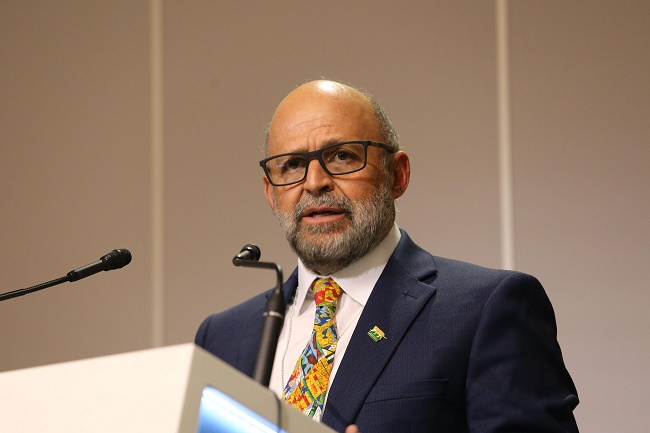
Carlos Manuel Rodriguez, GEF CEO and Chairperson
Addressing representatives of donor and recipient countries, agencies, civil society, and observers from the wider GEF community, CEO and Chairperson, Carlos Manuel Rodriguez, made the case for a robust ninth replenishment that would help deliver a safer, healthier future for people and the planet.
“In uncertain times, it is extremely important that we’re able to give hope for a brighter future,” said Rodríguez. “The GEF, and this crucial ninth replenishment, can be a source of hope and optimism to help achieve global environmental goals and live in harmony with nature.”
“Building on ongoing reforms to increase efficiency and effectiveness, the replenishment takes place as the GEF further evolves towards a whole of government and whole of society approach,” he added.
The GEF-9 investment period, which will span from July 2026 to June 2030, aligns with a crucial time for the world to make progress toward 2030 environmental goals, and growing inter-related threats including climate change, biodiversity loss, and pollution.
Building on the first replenishment meeting held in Paris in May, GEF donors and partners, meeting in hybrid format, held further discussions on the proposed GEF-9 strategic programming directions and policy package, and a draft report by the GEF Independent Evaluation Office on the GEF’s overall performance (OPS8).
The meeting was opened by Phenyo Butale, Minister of International Relations and Acting Minister of Environment and Tourism, Botswana, who highlighted the GEF’s “critical” support in meeting its obligations under the Rio Conventions.
Thanking delegates for their participation, he said, “Your presence here today signals your commitment to ensuring the GEF remains a strong and effective mechanism for financing environmental action across the world – especially in the places and communities that need it most.”
In advance of the meeting, delegates visited Chobe National Park, part of the Kavango-Zambezi Transfrontier Conservation Area (KAZA). As the largest land-based transboundary conservation area in the world, KAZA is among ecosystems that are vital to biodiversity, tourism, and regional stability. GEF-funded projects across the region have helped to improve the ways protected areas are managed and financed.
The replenishment meeting was co-hosted by the World Bank, which is one of the GEF’s 18 partner agencies as well as its trustee, with responsibility for the mobilisation of resources for the trust fund every four years.
The third official replenishment meeting is planned for January 2026, and a pledging meeting is expected to take place next April. A final decision about the size and ambition of the GEF-9 funding envelope is expected to be taken by June 2026.
Lead reviewers under the Paris Agreement’s Enhanced Transparency Framework (ETF) play a crucial role in ensuring the quality and consistency of technical expert reviews of Parties’ Biennial Transparency Reports (BTRs). These reports assess the actions countries have taken to deliver on their climate commitments, and help inform decision-making, attract climate finance, and strengthen national climate policies over time.
BTRs provide key data on national greenhouse gas emissions, progress towards national climate plans (NDCs), as well as information on finance, technology transfer, and adaptation efforts, among others. Successful technical expert reviews of BTRs are essential to assessing progress on climate action and identifying where further efforts and support are needed.
Lead reviewers
The 2025 annual meeting of lead reviewers was held virtually in September, bringing together 63 experts from both developed and developing countries. Observers included the co-chairs of the Paris Agreement Implementation and Compliance Committee (PAICC).
Lead reviewers ensure the quality, objectivity, and timeliness of technical expert reviews, providing continuity and consistency across Parties. They meet annually to discuss ways to improve the efficiency and consistency of the review process.
Since July, lead reviewers have been working in groups to strengthen BTR reviews. During the September meeting, they adopted conclusions aimed at boosting the effectiveness and impact of reviews, while welcoming progress by the UNFCCC secretariat in organizing the 2024-2025 review cycle, including the rollout of simplified reviews for Annex I inventories.
Participants also agreed on guidance covering seven key review areas, including flexibility for developing countries, inventory methods, and the treatment of NDC targets and mitigation measures. The meeting underscored the importance of continued Party support – both financial and through expert nominations – to sustain the review process.
Later this month, UN Climate Change will present the first BTR synthesis report, providing an initial picture of Paris Agreement implementation. The report will highlight progress made in mitigation, adaptation, and support, while identifying areas where additional efforts are needed to achieve the Paris Agreement goals.
The Nigeria Export Processing Zones Authority (NEPZA) has cautioned the Petroleum and Natural Gas Senior Staff Association of Nigeria (PENGASSAN) against actions that contravene Free Trade Zone (FTZ) regulations, reaffirming that strikes and lockouts are expressly prohibited within such zones for a period of ten years from commencement of operations.
The Authority’s Managing Director, Dr. Olufemi Ogunyemi, stated this in Abuja following reports of escalating industrial tensions and “frequent and excessive external union infiltrations” that have disrupted operations at the Dangote Refinery, the country’s largest private industrial complex.
Managing Director, Nigeria Export Processing Zones Authority (NEPZA), Dr. Olufemi Ogunyemi
In a statement signed by Dr. Martins Odeh, Head of Corporate Communications at NEPZA, the agency described the recent shutdown of critical oil and gas facilities by PENGASSAN as unlawful within the context of the Free Trade Zone framework.
PENGASSAN had last week directed its members to down tools over allegations that the Dangote Refinery dismissed about 800 workers who had joined the union. The company, however, denied the figure, maintaining that only a few workers were disengaged “for acts of sabotage” as part of an ongoing organisational restructuring.
Dr. Ogunyemi expressed concern over the escalation of the dispute, noting that the refinery’s FTZ status meant that all labour-related grievances should have been channelled through the Authority.
“Section 18(5) of the Nigeria Export Processing Zones (NEPZA) Act provides that ‘there shall be no strikes or lock-outs for a period of 10 years following the commencement of operations within a Zone, and the Authority shall resolve any trade dispute arising within a Zone,’” he said.
According to him, the provision imposes a 10-year prohibition on strikes and lockouts within Free Zones, while still allowing workers the right to form or join trade unions and engage in collective bargaining.
“We are pleased that the conflict has been de-escalated. Dangote Refinery is a declared FTZ that continues to benefit from tax incentives and customs duty waivers to support the economy, and NEPZA regulates it.
The Free Trade Zone scheme in Nigeria is slightly over 30 years old, and we ought to be familiar with the scheme and the global rules that guide the operation of this world economic model, which aims to accelerate economic development and industrialisation,” he said.
Dr. Ogunyemi emphasised that trade disputes originating within any Free Zone must be referred to NEPZA for resolution, clarifying that this restriction applies solely within the zones and not to the wider Nigerian economy.
He also drew attention to Section 24(1) of the NEPZA Act, which limits the application of external laws within Free Zones, noting that such laws are only operational to the extent that they do not conflict with NEPZA’s enabling Act.
“Consequently, in cases of conflict between the Trade Unions Act (TUA) or Trade Disputes Act (TDA) and Section 18(5), the provisions of Section 18(5) take precedence as the more specific regulation governing Free Zones,” he stated.
The NEPZA chief commended President Bola Ahmed Tinubu for his prompt intervention in resolving the dispute, describing it as a demonstration of responsive governance and a commitment to safeguarding a critical national asset.
“It is a sign of President BAT’s maturing democracy that this has been resolved quickly without deleterious effects on our economy,” he said.
Dr. Ogunyemi reiterated that while industrial relations are part of the process of economic transformation, stakeholders must operate within the legal and administrative frameworks designed to protect investments and ensure the sustainability of industrial growth within the Free Zones.
According to recent Nigerian media reports and a statement by the oil regulator itself, the Nigerian Upstream Petroleum Regulatory Commission (NUPRC) has cancelled the approval for TotalEnergies $860 million sale of its share in the Renaissance Africa Energy Company Joint Venture to Chappal Energies. The Joint Venture was managed by Shell prior to the sale of the Shell Petroleum Development Company to Renaissance.
Although public details are scarce as to the collapse of the Total-Chappal deal, media reports record the NUPRC spokesperson as confirming that Chappal Energies failed to raise the funds, and as a result TotalEnergies reportedly did not fulfil its requirement to pay regulatory fees and cover funds for environmental rehabilitation and future liabilities.
TotalEnergies
In a reaction to the development, a group of 106 representatives of Nigerian and international civil society organisations, community groups and concerned citizens haswelcomed NUPRC’s enforcement of the regulations it is mandated to enforce but regretted that it has taken months for the decision to enter the public domain.
“The Nigerian public has a right to be informed of such developments as and when they occur,” the campaigners stated.
They went further: “Now that the Total-Chappal deal has been revealed to have been founded on sand, the question arises why did the deal obtain ministerial consent in the first place? And, if Ministers gave approval for a deal that was without foundation, what other permissions have been similarly granted?
“In particular, the cancellation of the Total-Chappal sale calls into question President Tinubu’s decision to over-rule NUPRC’s advice that the sale of SPDC to Renaissance did not meet the regulatory requirements. That advice is understood to have rested on concerns over Renaissance’s technical and financial ability to pay for the historic liabilities of SPDC for cleaning up pollution from its operations and facilities, which are likely to run into tens of billions of dollars.
“We therefore call for the Shell-Renaissance deal to be subject to independent review. If NUPRC’s concerns were indeed well founded, there is a huge risk that the Nigerian people will end up having to pick up the tab for cleaning up SPDC’s mess. We also call for the release of the Environmental Evaluation Studies (EES) for each sale, and also the S&P assessment that was reportedly commissioned by NUPRC to assess the sale of SPDC to Renaissance.
“Democracy is not a spectator sport. It rests on the active involvement of citizens. As we mark the posthumous birthday of Ken Saro-Wiwa on 10th October and approach the 30-year memorial of the Ogoni-9, we demand action against these companies and their abusive practices.
“We call on civil society groups and parliamentarians to take up the call for the government to take urgent measures to ensure that the legacy of pollution caused by international oil companies is immediately cleaned up to international standards. And that the companies pay, not the Nigerian state and its peoples. It is unacceptable that the companies should profit at the expense of Nigeria.”