Home Blog Page 170

Firm breaks ground on $4.6m biofertiliser production facility in Kentucky

Global agriculture company Alltech broke ground on Tuesday, October 14, 2025, on a new $4.6 million, 15,000-square-foot manufacturing facility that will produce biological fertilisers and crop inputs, providing farmers with an environmentally responsible alternatives to traditional chemical fertilisers and helping reduce reliance on imported, synthetic inputs.

Located on the campus of Alltech’s global headquarters, the facility will be the company’s first U.S. manufacturing plant dedicated solely to producing crop science technologies. Modeled after Alltech Crop Science (ACS) facilities in Brazil and Spain, the Kentucky site will produce more than 66,000 gallons of biological fertilisers per shift per month and create at least six new full-time jobs. It will also manufacture more than 30 natural products designed to help farmers enhance soil and crop vitality.

Mark Lyons
Dr. Mark Lyons, president and CEO of Alltech

The project is supported by a $2.34 million grant from the USDA Fertiliser Production Expansion Programme (FPEP). The $500 million FPEP initiative, launched in 2022 in response to supply chain disruptions and rising fertiliser prices, aims to expand the production, availability and affordability of domestic fertiliser and nutrient alternatives and reduce reliance on imported synthetic fertilisers.

Alltech’s project was selected for its innovative approach to soil and crop health. Made with beneficial microorganisms, the company’s biofertilisers improve soil fertility, stimulate root development, enhance nutrient uptake and support a healthier soil microbiome, enabling farmers to maintain productivity while reducing environmental impact.

“This facility represents the next phase in scaling our biological innovations for agriculture,” said ACS vice president Dr. Steve Borst, who leads the project. “By expanding production here in Kentucky, we can bring farmers natural, science-based solutions that improve soil health, strengthen crops and reduce reliance on synthetic fertilisers. We’re grateful to the USDA and to our state and local partners for their support in making this vision a reality.”

In addition to supporting U.S. farmers in reducing dependence on imported synthetic fertilizers, the new crop science facility will enable ACS to expand the reach of its natural agronomic technologies across both the U.S. and international markets. Leveraging Alltech’s more than four decades of expertise in microbial fermentation and nutrigenomics, ACS delivers environmentally responsible alternatives to traditional chemical applications. These biological solutions restore soil balance, strengthen soil health, maximise crop yields, improve plant resilience, promote stewardship and create long-term value across the food chain.

Nationally, this project’s impact enables the export of domestic technologies, driving international uptake of U.S. products and supply chain resiliency for U.S. growers. In addition, Alltech’s new facility will be instrumental in growing the offering of its in-market sustainable technologies domestically and internationally.

The project aligns with Alltech’s purpose of “Working Together for a Planet of Plenty®,” which unites the agri-food community in creating science-based solutions that provide nutrition for all, revitalise local economies and replenish the planet’s natural resources.

“Fermentation has always been at the heart of our business, and this facility allows us to apply that expertise in new ways to support crop health, productivity and sustainability,” said Dr. Mark Lyons, president and CEO of Alltech. “We’re proud to strengthen our presence at our global headquarters in Kentucky, creating an innovation and manufacturing centre that will serve U.S. farmers, strengthen our local community and continue to advance the science of agriculture.”

The groundbreaking ceremony featured remarks from Rocky Adkins, senior advisor to Kentucky Gov. Andy Beshear; David West, Jessamine County judge-executive; and Alex Carter, mayor of Nicholasville. Alltech’s FPEP grant application was endorsed by Gov. Beshear, Mayor Carter and Judge West, along with U.S. Sen. Mitch McConnell and U.S. Rep. Andy Barr.

“Alltech has been a leader in the agriculture industry for nearly half a century and has provided Kentuckians with good, quality manufacturing jobs over the years,” Adkins said. “This project shows that companies are continuing to choose Kentucky as their home and as a prime place to do business. I want to congratulate Alltech on their new expansion and we look forward to seeing their success continue.”

“Alltech continues to set the standard for innovation in Kentucky’s agricultural economy,” said Congressman Barr, who supported Alltech with a letter of support for the company’s USDA grant application. “I’m grateful to Dr. Mark Lyons and the Alltech team for their persistence and dedication to expanding right here in Jessamine County. This grant will help expand production capacity, strengthen supply chains, and create more opportunities for Kentuckians.”

The event was also attended by leaders of more than 70 global agri-food companies who traveled to Kentucky for Alltech Presidents Club, an annual gathering that convenes industry leaders for peer-to-peer learning, thought-provoking discussion and collaboration on some of the most pressing issues facing agriculture and the agri-food industry.

Gas Investment Forum 2025: NGA President champions urgent action to unlock Nigeria’s gas potential

0

The President of the Nigerian Gas Association (NGA), Mr. Akachukwu Nwokedi, has called for bold, coordinated action to unlock Nigeria’s immense gas potential and drive the nation’s industrial renaissance.

Speaking at the 3rd Edition of the Gas Investment Forum (GIF 2025), held on October 7, 2025, at the Oriental Hotel, Lagos, Mr. Nwokedi reaffirmed NGA’s unwavering commitment to positioning natural gas as the cornerstone of Nigeria’s economic transformation and sustainable growth.

Akachukwu Nwokedi
President of the Nigerian Gas Association (NGA), Mr. Akachukwu Nwokedi

The event, themed “Charting New Opportunities: For Investment, Growth and Industrialisation,” brought together key industry leaders, investors, and policymakers.

“Natural gas is no longer just a fuel – it is an economic multiplier,” Mr. Nwokedi declared. “It powers energy access, enhances food security, enables clean cooking, strengthens industrial competitiveness, and deepens regional integration. Above all, it serves as our collective bridge to a low-carbon, high-impact economic future.”

He applauded President Bola Ahmed Tinubu’s administration for making gas development a central pillar of Nigeria’s energy and industrial policy. He also welcomed the participation of the President of the International Gas Union, describing it as a testament to the growing global recognition of Nigeria’s role in the global energy transition.

Emphasising the need to move from rhetoric to results, Mr. Nwokedi urged all stakeholders to focus on translating Nigeria’s estimated 200+ trillion cubic feet of proven gas reserves into tangible socio-economic value.

“This forum offers more than dialogue – it is a launchpad for ideas, partnerships, and investments that turn potential into performance,” he noted. “By fully harnessing our gas resources, we can ignite innovation, create sustainable jobs, enhance industrial productivity, and drive inclusive national growth.”

Nwokedi further called on participants to seize the momentum to design actionable strategies and policy frameworks that will position the gas sector as a driver of Nigeria’s industrialisation, diversification, and global competitiveness.

He commended the forum’s organisers, partners, and sponsors for sustaining this vital industry platform. He emphasised NGA’s role as a bridge between government, industry, and investors, working to accelerate the pace of policy reforms, infrastructure development, and market-driven investments that can unleash Nigeria’s gas economy.

Founded in 1999, the Nigerian Gas Association is the umbrella professional body for stakeholders across Nigeria’s gas value chain. As a chartered member of the International Gas Union (IGU), the NGA advocates for policies, partnerships, and investments that promote the sustainable development and utilisation of natural gas to drive industrialisation, economic growth, and improve quality of life across Nigeria and Africa.

Nigeria unlocking $410bn investment on renewable energy – Shettima

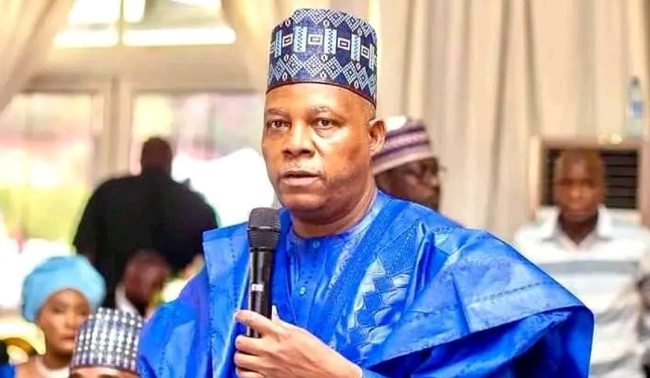
Vice-President, Kashim Shettima, says Nigeria’s energy transition journey under President Bola Tinubu’s administration is unlocking an investment opportunity of over $410 billion between now and 2060.

Shettima said this on Tuesday, October 14, in Abuja at the inaugural Nigerian Renewable Energy Innovation Forum (NREIF) 2025.

According to the Vice-President, the investment will position Nigeria as the heartbeat of Africa’s renewable energy revolution.

Kashim Shettima
Alhaji Kashim Shettima, Vice President of Nigeria

Shettima said that over $23 billion is needed to expand energy access and connect the millions of Nigerians who still live in energy poverty.

The Vice-President noted that as the world sails fast towards net zero, Nigeria and Africa must not be left behind.

“We have too much at stake. We are blessed with the minerals that power clean technologies, and Nigeria brings to the table youth, ambition, and untapped renewable potential.

“Let us seize this moment. Let us affirm that Nigeria is ready, ready to harness her resources, unlock her capital, and become the vibrant heartbeat of Africa’s renewable energy revolution.

“Nigeria’s energy transition is targeting an investment opportunity of over $410 billion between now and 2060, with over $23 billion needed to expand energy access and connect the millions of Nigerians who still live in energy poverty.”

According to him, beyond access lies the nation’s grander ambition, which is to deliver a power system capable of 277 gigawatts of total installed capacity by 2060.

“This ambition demands more than investment; it demands innovation, local capacity, and commitment,” he added.

He assured investors, development partners and other stakeholders at the forum of President Tinubu’s commitment to consolidating policy foundations that would lead to a renewable energy market that is self-sustaining.

“We are enhancing incentives for local manufacturing, streamlining regulatory frameworks, and deepening collaboration with State Governments, investors, and development partners.

“This is with a view to de-risk private capital and accelerate the emergence of a self-sustaining renewable energy market.

“Nigeria first’ industrial strategy demands that the future of Africa’s renewable energy supply chains be anchored indigenously.

“From solar panel assembly lines in Lagos to battery recycling hubs along our industrial corridors, Nigeria must not only participate in this revolution but lead it.”

Shettima hinted at the Federal Ministry of Power’s readiness to develop policies that would lay the foundation for a more decentralised, competitive, and inclusive electricity market.

The Vice-President, however, noted that efforts to prioritise energy transition cannot succeed without the private sector.

He called on development partners and Original Equipment Manufacturers to localise technologies, strengthen value chains, and invest in skills and knowledge transfer.

“We count on our State Governments to champion renewable industrial clusters and serve as engines of green growth across the federation.”

Shettima urged participants at the forum to reach agreements, forge partnerships and consolidate a national roadmap that would unfold the over $400 million investment in Nigeria’s renewable energy manufacturing value chain into a reality.

He announced that, through the engagements facilitated under the forum, more than 400 million dollars in new investment commitments are being mobilised into Nigeria’s renewable energy manufacturing value chain.

“These include solar panels, smart meters, battery storage, and recycling facilities. These investments are projected to create over 1,500 direct jobs across multiple states and reflect growing global confidence in Nigeria’s clean energy industrialisation drive. ”

The Minister of Power, Chief Adebayo Adelabu, said the forum marks a new chapter in Nigeria’s energy transformation pathway that highlights the role of innovative partnership in targeting significant amounts of local solar energy production capacity.

Adelabu said the government’s multipronged approach is aimed at addressing Nigeria’s structural challenges and unlocking private capital in the bid to transform the entire energy sector value chain.

He described the Integrated National Electricity policy as a comprehensive sector-wide policy framework that is aimed at strengthening gains recorded in the sector, including the decentralisation of the value chain.

By Salisu Sani-Idris

COP30: Group seeks urgent action as world crosses first climate tipping point

0

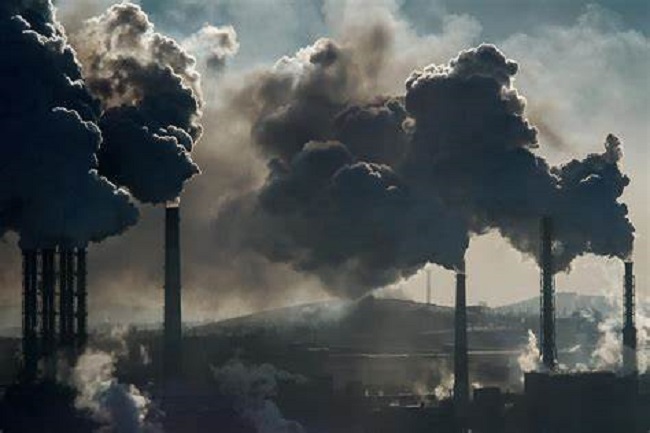
The world has officially crossed its first climate tipping point due to unchecked greenhouse gas emissions, scientists warned on Monday, October 13. The 2025 Global Tipping Point Report produced by 160 researchers across 23 countries warns that coral reefs, vital ecosystems that support a quarter of all marine life and protect hundreds of millions of people, are now in irreversible decline due to ocean warming and acidification. It also indicates other tipping points, including the Amazon rainforest, are at severe risk.

The report warns that the 1.5-degree threshold enshrined in the Paris Agreement will be breached within 10 years without a rapid and urgent decline in greenhouse gas emissions. This news comes just weeks before COP30 in Belém, Brazil, a pivotal moment for global climate negotiations, where local traditional communities and Indigenous Peoples are demanding a seat at the table at the summit.

International Day of Carbon Emission Reduction
The world has officially crossed its first climate tipping point due to unchecked greenhouse gas emissions

These groups are currently leading restoration projects that regenerate land, store carbon, and protect biodiversity in solidarity with communities the world over whose ecosystems and livelihoods are at risk.

Officials of environment watchdog group, 350.org, are expressing reservations over the development.

Anne Jellema, Executive Director at 350.org, says: “This is a heartbreaking loss. Future generations will inherit empty seas where magical kaleidoscopes of life once thrived. This irreversible collapse is a preview of what we’re about to lose next: rainforests, glaciers, entire species. COP30 must be the moment leaders choose to stop fossil fuels and protect what can still be saved.”

Fenton Lutunatabua, Deputy Head of Regions at 350.org, says: “This is not only an ecological tragedy but a profound injustice for the communities who did the least to cause this crisis. From the Pacific to the Caribbean and the Indian Ocean, people are at risk of losing their food systems, cultures, and livelihoods due to warming oceans and rising seas. Now more than ever we must draw the line to keep the 1.5 degree warming threshold intact.

“At COP30, the most polluting countries need to step up and stop putting profits over people and the planet. We’re tired of excuses and delays.”

Norly Mercado, Asia Regional Director at 350.org, says: “In Southeast Asia alone, more than 120 million people rely on the Coral Triangle’s rich marine habitats for food and income. These frontline communities have faced increasing hunger and declining incomes for years. This report only confirms their lived realities and warns us of the even greater destruction ahead. But the fight isn’t over. The renewable energy revolution is here, reimagining Asia’s future. At COP30, world leaders must deliver what the science now demands – an end to fossil fuels – or condemn future generations to a world without coral reefs and the life they sustain.” 

350.org and partners are demanding COP30 deliver:

  • A rapid phaseout of fossil fuels, with no new oil, gas, or coal projects.
  • Increased finance and reparations for communities on the frontlines of climate loss and damage.
  • Protection and restoration of biodiversity through rights-based conservation led by Indigenous Peoples and local communities.

Lagos tops, as 2025 Subnational Climate Governance Ranking is released

0

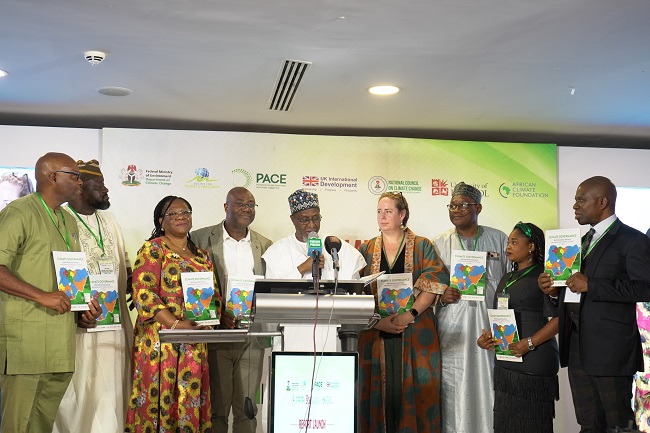
For the second year in a row, Lagos State has topped the table in the annual Subnational Climate Governance Performance Rating and Ranking exercise. This was announced on Tuesday, October 14, 2025, during the launch of the second edition of the report, in Abuja.

Speaking during the unveiling of the top performing states, the Minister of Environment, Malam Balarabe Abbas Lawal, said Lagos polled a total of 315 points to come first. Katsina, with 310 points, and Kaduna, with 305 points came second and third respectively.

Subnational Climate Governance Ranking
Minister of Environment, Malam Balarabe Abbas Lawal, with project officials at the launch of the second edition of the report, in Abuja

An initiative of the Department of Climate Change, Federal Ministry of Environment, in collaboration with the Society for Planet and Prosperity (SPP), the Subnational Climate Governance Rating and Ranking project seeks to motivate subnational climate action by measuring the extent of states’ actions using five thematic areas, listed to include: States’ Climate Institutional Arrangements; Status of Climate Policies, Action Plans, and legal frameworks at the State Level; Budgetary Allocation to Climate Change Projects; Climate Project Implementation and Monitoring; and Online Visibility and Publicity on Climate Change Issues at the State-level.

Explaining the rationale behind this, the President of the Society for Planet and Prosperity, Professor Chukwumerije Okereke, stated that the five thematic areas represent critical pillars of climate action. Therefore, an interrogation of States’ efforts along those lines will spur action and provide guidance on the path States must toe.

In her speech, the Director General of the National Council on Climate Change, Barrister Tenioye Majekodunmi, described the ranking as a critical milestone in Nigeria’s journey towards a robust grassroot driven climate action.

“This second ranking stands as a testament to the growing political will and commitment demonstrated by our state governments. The National Council on Climate Change as the apex regulatory body, is committed to translating the highest national ambition into local realities, and your performance is central to that mission,” she said.

This was further echoed by the First Secretary for Climate Diplomacy, UK Foreign Commonwealth and Development Office (FCDO), Samantha Harrison, during her goodwill message.

“We know that subnational actors are the heartbeat of climate action. Without them, our policies remain spreadsheets on paper. Effective climate governance at the subnational level is not just beneficial, it is essential,” she said.

This year’s edition saw Kano and Enugu states breaking into the top five by making tremendous improvements from their outing last year.

Initiated in 2024, the rating and ranking project has helped create healthy competition and collaborative actions amongst states in Nigeria. Reflections from States and other stakeholders reveal that the initiative has been very impactful.

Accordingly, Dr. Dahiru Muhammad Hashim, Commissioner, Ministry of Environment and Climate Change, Kano State, affirmed: “Kano welcomes this platform as an opportunity to showcase progress, foster collaboration, and inspire greater ambition. The Ranking strengthens healthy competition, promotes knowledge exchange, and reinforces the urgency of addressing the climate crisis at the subnational level, where the impacts are most immediate and the solutions most impactful.”

Mr. Tokunbo Wahab, Commissioner, Ministry of the Environment and Water Resources, Lagos State, represented by Olakunle Olamidosu Rotimi-Akodu, the Special Adviser to the Governor on Environment, stated: “For Lagos, the ranking boosts our commitment to building resilience, driving green growth, and embedding climate action into every part of our economy. We value this initiative not only for the healthy competition it encourages among states but also for the opportunities it creates for collaboration and shared progress. Lagos State remains determined to lead by example, making sure that our climate actions deliver sustainable development and a better quality of life for our people.”

Donor agencies have also seen the initiative as an important measuring board which helps provide guidance on what form of intervention States need to boost climate action.

Professor Anthony Nyong, Director of Climate Change and Green Growth at the African Development Bank, sees the exercise as an “innovative approach to strengthening subnational climate governance in Nigeria, fostering accountability, and catalysing green growth and climate- resilient development across the continent.

It provides a valuable model for evidence-based policymaking and investment alignment to accelerate Africa’s just climate transition.” Nigeria’s subnationals remain the frontliners in the country’s efforts at addressing climate change. They are therefore critical for any meaningful impact to be made. The rating and ranking project seeks to inspire greater action.

SEEPCO, NAEC launch ‘Bringing Smiles with Each Barrel’ sustainability campaign

In what appears to be major push to integrate environmental, social, and governance (ESG) values into Nigeria’s energy landscape, Sterling Oil Exploration and Energy Production Company Limited (SEEPCO) has launched its flagship “Global Sustainability Campaign” in partnership with the Association of Energy Correspondents of Nigeria (NAEC).

The initiative, themed “Bringing Smiles with Each Barrel,” was unveiled at the NAEC Annual Conference held on Thursday, October 9, 2025, in Lagos. The event was attended by industry leaders, and media executives.

Speaking at the flag-off, representatives of Sterling Oil described the campaign as a defining step in the company’s journey towards building a more inclusive and sustainable future through measurable social impact.

SEEPCO
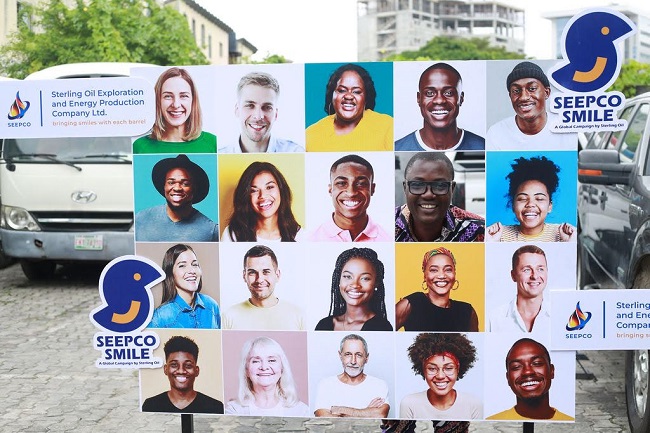
A SEEPCO ‘Bring Smiles with Each Barrel’ campaign poster

“We take pride in flagging off this project where our joint initiatives and impact will get their deserved voice. Without bandeing loud, we will continue to bring our sustainability initiatives together channel every effort into a purposeful movement – one that brings real-life transformational activities for smiles that sustain,” said Aveek Biswas, Head, Corporate Communications, SEEPCO.

According to SEEPCO, the campaign embodies its enduring commitment to sustainability, innovation, and social transformation – values that have defined its over 20-year journey in Nigeria’s oil and gas industry.

“At Sterling Oil, we measure success not only by business growth but by the positive impact we create for our team members, communities, and the environment. Our commitment to sustainability goes beyond compliance – it is about responsibility, measurable progress, and shaping a sustainable future,” Biswas emphasised.

The campaign, designed to promote cross-sector collaboration, will spotlight sports, culture, art, health, gender equality, and environmental conservation as tools for nation-building, empowerment, and talent development. SEEPCO said these areas form a vital part of its vision for sustainable national growth.

SEEPCO also reaffirmed its position as one of Africa’s fastest-growing exploration and production companies, noting its resilience in navigating tough terrains where many others have exited.

“Our vision is to grow continuously as a social enterprise that contributes to national development, respects communities, and creates value for all stakeholders,” the company noted.

The “SEEPCO Smile” campaign – as it is fondly branded – celebrates Nigeria’s 65 years of resilience and progress, while reinforcing SEEPCO’s mission to blend industrial excellence with human-centered development.

“The pinnacle is to bring a meaningful and lasting smile – representing our belief of ‘Bringing Smiles with Each Barrel.’ It is a campaign crafted to envision millions of lasting smiles that sustain across the globe,” Biswas stated.

Industry stakeholders and NAEC members commended SEEPCO’s commitment to ESG and sustainable energy practices, describing the collaboration as a model for private-sector leadership in social responsibility.

The event concluded with a call for broad stakeholder participation to ensure the success of the campaign and its vision to create a future “where no one is left behind.”

UN calls for urgent action to end homelessness

Homelessness is rising in every region and must be addressed as a structural crisis rooted in inequality, unaffordable housing, and weak social protection, according to a new United Nations report presented to the General Assembly.

Prepared by UN-Habitat on behalf of the UN Secretary-General, the report Inclusive Policies and Programmes to Address Homelessness urges governments to shift from short-term emergency responses to long-term, rights-based housing solutions.

Homelessness
Homelessness
A systemic problem, not an individual failure

Millions of people worldwide still lack secure and adequate housing. Conflicts, climate impacts and rising living costs are worsening the situation, while many forms of “hidden homelessness” remain uncounted. A rights-based global definition, now being developed through a UN-Habitat-led expert process, aims to close these data gaps and strengthen accountability.

Promising shifts in policy

Across regions, more governments are adopting housing-led and prevention-focused approaches, such as integrated social protection, community-driven housing, and rental mediation. Local authorities are playing a key role, driving innovation through inclusive urban planning.

The report warns that punitive measures like forced evictions and criminalizing people in public spaces only deepen exclusion. Instead, countries are urged to strengthen tenure security and uphold human rights in urban development.

Housing and dignity at the centre of policy

Countries that link housing with robust social protection systems are better able to prevent homelessness and support long-term stability. Expanding universal access to social protection, particularly for marginalized groups, is essential to tackling root causes.

The Secretary-General calls on governments to adopt rights-based data systems, end criminalization, invest in permanent and affordable housing, and integrate prevention across health, education, justice, and social protection systems.

By treating housing as a human right and focusing on prevention and inclusion, the report concludes, governments can move from managing homelessness to ending it for good.

GCF, CABEI, EU commit $800m to finance Costa Rica’s electric train

0

The Green Climate Fund (GCF), the Central American Bank for Economic Integration (CABEI), and the European Union, through its Global Gateway strategy, have come together to fully finance the “Construction, Equipment, and Start-up of Lines 1 and 2 of the Costa Rica Electric Train System” for $800 million.

GCF is co-financing $178.7 million and donating another $21.3 million of the CABEI’s $550 million investment, which is also supported by $250 million from the European Investment Bank. Thanks to a credit scheme with highly competitive interest rates and grace periods, this initiative is a fiscally responsible project that saves Costa Rica resources and requires no annual subsidy.

Costa Rica
Electric train in Costa Rica

The project will include two lines comprising 51 kilometres of double track; one running from Paraíso Cartago to San José, and another between San José and downtown Alajuela. Also included are the procurement of 28 new electric units, 30 stations, two completely new terminals, and nine overpasses, which will allow for continuous, high-quality service, with buses running every 10 minutes, every day of the week.

“The electric train is no longer just a dream or a promise left on paper. Today it is a concrete and viable decision, financially backed by three international entities that believe in Costa Rica and its people. Unlike previous proposals that could not be sustained, this one is solid, fiscally responsible, and will not require a state subsidy. Because the train of progress does not wait – this is a train we can all board,” emphasised the President of the Republic, Rodrigo Chaves.

GCF Director of the Department of Latin America and the Caribbean Region, Kristin Lang, said: “This project is a big step forward for Costa Rica. Using the country’s nearly 100 per cent clean, renewable energy to power the new trains will cut harmful GHG emissions and make travel safer and faster. The Green Climate Fund is proud to partner with CABEI and the Government of Costa Rica to build a modern and sustainable transport system for the people of San José Greater Metropolitan, with an annual average of 68 million passengers expected to benefit from the services.”

European Commissioner for International Partnerships, Jozef Síkela, said: “I would like to congratulate Costa Rica and its government on their decision to promote a modern, sustainable, and cost-effective public transport system, in which the European Union has been a strong partner in this vision. The support announced today will ensure a state-of-the-art electric train, with direct support to INCOFER, to maintain the highest standards of quality and environmental impact. This support reflects what Global Gateway stands for: investing alongside our partners in sustainable development that generates concrete benefits.”

CABEI Executive President, Gisela Sánchez, emphasised: “CABEI is proud to accompany Costa Rica in the development of a project that builds a more just and sustainable future for all.” Together with our strategic allies, the Green Climate Fund and the EIB, we have joined forces to fully finance this national project, which will transform the lives of more than three million people and mark a turning point in the history of urban mobility.”

For his part, the Vice-President of the European Investment Bank (EIB), Ioannis Tsakiris, said: “This project is a great example of strategic cooperation between the European Union and Costa Rica, where for the first time the European Investment Bank is co-financing alongside the Green Climate Fund and the CABEI. The EIB reaffirms its commitment to supporting solid projects that improve connectivity, sustainability, and economic growth.”

Álvaro Bermúdez Peña, Executive President of INCOFER, stated: “We set out to optimise this project with a clear vision: to deliver a solid proposal to Costa Ricans, aligned with the real needs of the population and without unnecessarily indebting the country. It not only represents technical progress, but also a commitment fulfilled to Costa Rica.”

The project will prioritise the integration of multiple modes of transportation, with stations designed to provide efficient access to bus stops, taxis, and bicycle spaces. Critically, it is estimated that the operation of the national project will result in a reduction of 6.54 million tCO2 of greenhouse gas emissions, among other benefits – roughly equivalent to getting 1.5 million cars off Costa Rica’s roads.

Three entrepreneurs awarded UNEP Young Champions of the Earth prize

The UN Environment Programme (UNEP) and American cleantech CEO Chris Kemper have announced the selection of three environmental entrepreneurs from India, Kenya and the United States as the 2025 Young Champions of the Earth.

Winners are recognised for groundbreaking contributions that advance a global circular economy and improving environmental outcomes by treating wastewater, expanding access to clean water, tackling plastic pollution, and creating sustainable alternatives to conventional materials. Award recipients will receive seed funding, mentoring, communications support, and a global platform to showcase and scale their solutions.

UNEP Young Champions of the Earth
2025 UNEP Young Champions of the Earth: Jinali, Joseph, and Noemi

The Young Champions programme, which UNEP founded in 2017, was re-launched in 2025 in partnership with Mr. Kemper, who in 2023 was designated as UNEP’s Advocate for Partnerships to mobilise resources and action around today’s most urgent environmental issues. Mr. Kemper is the Chairman, Founder and CEO of U.S. climate tech company Palmetto and a climate philanthropist. Through the support of The Christopher Kemper Foundation, this year Mr. Kemper co-founded Planet A, a new YouTube channel to drive environmental awareness and action.

This year’s Young Champions of the Earth winners each received US$20,000. They were opportuned to compete in the first-ever Planet A pitch competition for a business growth grant of US$100,000 and a possible seed investment of US$1 million committed to a future fundraising round. Planet A is filming the competition, and the Young Champions’ leading up to it, to be released on Planet A’s YouTube channel in October.

The 2025 Young Champions of the Earth are:

●      Jinali Mody (28, India): Jinali is a biochemistry graduate from St. Xavier’s College in Mumbai and the Yale School of Environment. She founded Banofi Leather, an India-based women-led company aiming to make the fast fashion business sustainable by producing leather alternatives made from banana crop waste. Compared to conventional leather, Banofi drastically reduces water use, toxic waste, and CO₂ emissions.

●      Joseph Nguthiru (27, Kenya): A climate-tech engineer, Joseph’s company HyaPak converts the invasive species hyacinth in Lake Naivasha into packaging bags and biodegradable seedling wrappers. By replacing single-use plastic products, HyaPak makes agricultural lands healthier and offsets CO₂ emissions.

●      Noemi Florea (24, US): Climate innovator Noemi has founded Cycleau, a compact water reuse system, in consultation with dozens of marginalized communities. The company transforms greywater into drinking water. Retrofitted under sinks, showers, and laundry units, Cycleau significantly reduces wastewater, using much less energy than alternative systems.

 “The lives of our children and our children’s children are already being dramatically impacted by the triple planetary crisis of climate change, biodiversity loss and pollution and waste. I commend these inspiring Young Champions of the Earth for their innovations, for the benefit of this and future generations,” said Inger Andersen, Executive Director of UNEP.

The Young Champions of the Earth prize is UNEP’s flagship initiative on youth engagement. Since 2017, it has recognised 30 young trailblazers – activists, entrepreneurs, and environmental innovators under the age of 30 – for their outstanding ideas to protect the environment.

“I’m honored to support the Young Champions programme in my philanthropic role with the United Nations; over 5,000 amazing entrepreneurs around the world were interested in the program – all of whom are seeking to make a positive impact on the planet. It was difficult to select only three winners for the 2025 Young Champions program, but these three leaders stood out for their passion, drive, execution and innovation,” said Mr. Kemper, who participated in the selection of this year’s winners.

“A huge congratulations to Jinali, Joseph, and Noemi for their successful achievements and in winning this highly competitive award,” he added.

UN report calls for responsible financing, investment in energy transition minerals

0

The financial system, governance and regulation of mineral exploration and mining must be reformed to ensure greater capital flows and a clean energy transition, say the authors of a new report by the UN Environment Programme-hosted International Resource Panel. With mineral extraction rising to 50% of annual global raw material extraction up from 31% in 1970, financing responsible mining will be critical to a successful and fair energy transition. 

Mineral extraction has increased five-fold since 1970, and the market for critical energy transition minerals – the building blocks of clean energy technologies like solar panels, wind turbines, and batteries – is expected to continue expanding rapidly. In 2023 alone, the demand for materials such as nickel, cobalt, graphite, and rare earth elements saw increases of between 8 and 15 per cent. In the case of lithium, demand by 2050 will be equivalent to 9 times the 2022 world production.

Janez Potočnik
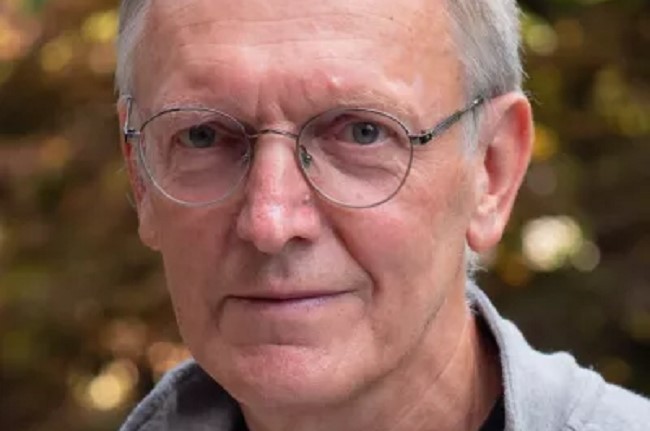
Janez Potočnik, Co-Chair of the International Resource Panel

This report, “Financing the Responsible Supply of Energy Transition Minerals for Sustainable Development”, analyses demand, production, trade, and financing of key minerals, highlighting high-concentration regions such as Africa, China, and South America, and presents a series of recommendations for driving finance and investment into responsible mining. 

“The demand for minerals and metals needed for the energy transition requires a mining industry that contributes to sustainable development, while respecting human rights and the environment. Through sustainable finance, responsible mining can become the default, not the exception,” said Janez Potočnik, Co-Chair of the International Resource Panel. 

A capital-intensive and high-risk industry, mining relies on diverse sources of finance – public, private or a mixture of both – for each stage of a project, including the closure of mines, as well as upstream activities in the minerals and metals value chain, such as mineral-processing facilities, metallurgical plants, and metal refineries. 

A survey conducted for this report among large-scale mining-related companies confirms that maintaining environmental standards is perceived to be expensive, but most companies considered that this would add less than 25% to their operational costs. However, most respondents believe that environmental, social and governance reporting will attract new investors. In this context, the large investments required by mining companies put the financial sector in a strong position to exert pressure on companies to take account of their Environmental, Social, and Governance (ESG) performance.

The report also notes that enhancing circularity in the sector could curb demand for additional energy transition minerals. Measures such as recycling targets, government-backed financing and extended tax provisions for recycling infrastructure, incentives for eco-design, or green bonds to fund recycling facilities can reduce the need for virgin materials. Public-private partnerships, public awareness campaigns, and the creation of a global database for former and operating mining tailings facilities are also part of the recommended approaches.

Still, even with far-reaching circularity measures, the scale of investment required is significant. According to the International Energy Agency, achieving net zero by 2050 would require investments in mining energy transition minerals of up to $450 billion by 2030 and $800 billion by 2040.

The report also recommends improvements in ESG outcomes in artisanal and small-scale mining. It calls for increased transparency, formalising labour through locally tailored licensing procedures, capacity building, tax incentives, funding, technical support, more local participation, and access to geological and geospatial data. An international sustainability framework for this industry could help manage environmental and social risks and improve access to formal sources of finance in the artisanal and small-scale mining sector. 

Finally, the report highlights the importance of rewarding responsible mining practices, not only for companies, but also for the communities hosting these activities. Current ESG efforts often go unnoticed or uncompensated in global markets. To address this, the International Resource Panel recommends government-backed certification and incentive schemes, including favourable fiscal policies and improved market access.  

To encourage ESG performance, the report specifically recommends:

  • Strengthen financial institutions’ capacity to recognise and finance mining operations that meet high ESG standards.
  • Develop a digital product passport for all mineral commodities and their value chains, including ESG information, on the basis of a standard reporting protocol.
  • Report financial and ESG outcomes on a site-by-site, gendered and “shared value” basis by mining companies, that also takes indigenous rights into account, following an agreed industry-wide protocol.
  • Include mining that meets high ESG standards in the list of sectors that qualify for “sustainable finance” and “climate finance” in finance taxonomies.
  • Link mining investments and financing to climate and nature-positive requirements, with mining excluded from protected areas.
  • Allow companies with validated ESG transition plans to access sustainable and climate finance.
  • Use fiscal, financial, and monetary policies to support investment in responsible mining and infrastructure, and to promote the circular use of metals in society.
  • Implement a global ad valorem levy on all companies to fund a Mining Sustainable Development Fund that supports training, capacity-building, legal assistance for developing countries, research, innovation projects, and technology transfer.
  • Establish a global database for mine tailings facilities and track the potential availability of minor (or companion) metals.
  • Forge mutually beneficial partnerships between the communities and countries that host the mines and the importing and processing countries.

The report will contribute to advancing the work of the Panel on Critical Energy Transition Minerals, convened by the UN Secretary-General, which details guiding principles on critical energy transition minerals, as well as the 2024 commitment by the International Council of Minerals and Metals (ICMM) for ‘nature-positive mining’ and the seventh session of the UN Environment Assembly’s resolutions on minerals.