The world’s first-ever global, legally binding carbon price – for any industry – is on the table for adoption at the upcoming International Maritime Organisation (IMO) meeting from October 14-17, 2025, in London. If the IMO Net-Zero Framework is adopted, all large ships operating globally, including cruise ships, would be required to slash emissions by 17% by 2028 – with increasing emission reduction targets thereafter – or pay a fee.
Currently, the global shipping industry runs on some of the dirtiest fossil fuels and accounts for 3% of global carbon emissions – polluting the ocean and imperiling the health of people in coastal areas.
Carbon tax
Delaine McCullough, Ocean Conservancy’s shipping programme director, said in a statement: “This agreement provides a lesson for the world that legally binding climate action is possible now. It is a major win for our climate – and for human health, wildlife and the ocean. For too long, ships across the globe have run on crude, dirty oil, worsening the climate crisis and causing a whopping 250,000 premature deaths and 6 million cases of childhood asthma globally every year.
“It’s encouraging to see an industry rally around a real, binding commitment to drastically reduce these dangerous emissions. The technology to make ships greener has long existed. This includes measures like reducing vessel speed, adding sails to harness wind power, powering ships through rechargeable batteries and fuel cells where possible, and deploying new zero-emission fuels that are safer for people and the ocean. What has been missing – until now – is a plan that countries could agree on.
“More will need to be done to strengthen this agreement to ensure there are no loopholes for unsustainable fuels, incentivise the rapid uptake of clean alternative fuels, and distribute revenues fairly. But we applaud the IMO and the countries who have led this process for taking this important step and look forward to continuing our work to make this framework as ambitious as possible.”
In the 2018 Greenhouse Gas Strategy, the IMO’s goal was to halve emissions by 2050; thanks to Ocean Conservancy’s advocacy, their aim is now to reach net-zero at the same time. Ocean Conservancy said it played an important part in ensuring that the 2023 Greenhouse Gas Strategy includes interim targets to drive early emission cuts and was deeply involved in the negotiations on the Net-Zero Framework.
The recently concluded second Africa Climate Summit and the Addis Ababa declaration did more than restate ambition. They set out a practical agenda to finance and deliver resilience at scale, with agriculture at the centre. For governments, financiers and development partners, the signal is clear. Move rapidly from broad commitments to bankable projects that protect livelihoods, raise productivity and de-risk investment across rural economies, writes Tilahun Amede
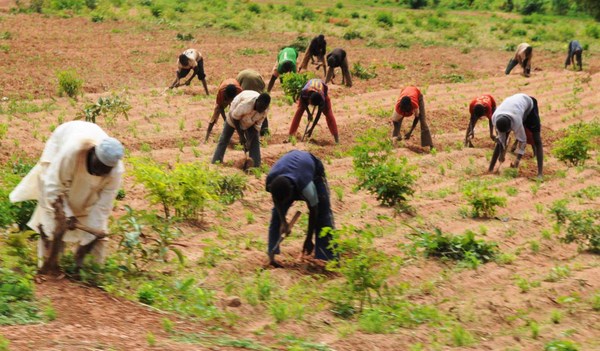
Farming. Climate change has greatly affected farming in Africa
That signal took concrete form. The Africa Climate Innovation Compact was launched to mobilise $50 billion a year and deliver one thousand African climate solutions by 2030.
The facility behind it is built to crowd in blended finance and take homegrown ideas to scale in energy, water, transport, agriculture and community resilience. This is not a slogan.
It is an execution plan with pillars for innovation, financing, policy and public engagement.
Alongside it, African development banks and commercial lenders announced $100 billion in commitments to power a green industrialisation pathway.
The idea is straightforward. Use clean power to drive new industries, expand trade and create decent jobs while cutting emissions. It is a bet on Africa’s ingenuity and markets, not on its misery.
These financial signals matter for one reason above all others: adaptation. Our farmers and pastoral communities are on the front line of climate change. Droughts burn through savings. Crop yield has been reduced by up to 25 per cent. Floods sweep away topsoil and seeds.
Heat waves turn reliable planting calendars into guesses. Extreme climate-related fatalities increased threefold in the last 15 years.
The Addis Ababa declaration puts adaptation first and calls for predictable and accessible finance to build resilient food systems, climate-smart cities and early warning systems.
For agriculture, that means rainwater harvesting, afforestation, land reclamation and soil health at scale, drought-tolerant seeds in every district, and digital weather and market services that reach the last mile.
Africa has been investing in regenerating degraded lands and adapting to climate change, including through the African green belt, stretching 5000 miles from Senegal coast to Djibouti, spanning 11 countries and covered with billions of trees.
Only Ethiopia, through its green legacy program, claimed to plant 50 billion trees by 2026.
The declaration also stands for fairness. Leaders urged reform of multilateral development banks, lower borrowing costs and a stronger African voice in decisions that shape our future.
It capitalises on African-led initiatives such as the Great Green Wall and landscape restoration and recognises the role of traditional knowledge in keeping ecosystems and farms in balance.
For those of us who work with smallholders every day, that recognition is not abstract. It is how adaptation becomes yields, incomes and dignity.
Agriculture runs through the core of the Addis outcomes.
The declaration endorses joint work on agriculture and climate action that connects ministries and research bodies, supports the Food and Agriculture for Sustainable Transformation (FAST) partnership to channel finance into food systems, and affirms commitments under the Kampala Comprehensive Africa Agriculture Development Programme (CAADP) agenda.
Most importantly, it calls for direct grant-based support to national, regional and philanthropy funds that can reach smallholder farmers, especially women and youth, with inputs, credit and extension. This is where impact is fastest and most equitable.
Energy access is part of the action. We cannot transform rural economies if agriculture remains a shamba culture, cool storage facilities do not exist, clinics are dark, schools cannot power computers, and small processors cannot run.
The summit advanced the Mission 300 agenda to connect 300 million people to modern energy and a clean cooking initiative aiming to reach 900 million by 2030.
Besides being the cause of deforestation, clean cooking is a public health, gender and climate solution rolled into one, and Africa has already shown that targeted finance can unlock billions for it.
Sceptics will ask if this time is different. My answer is yes, for three reasons. First, politics are aligned.
Addis built on the momentum from Nairobi and set a common African position for COP30.
Leaders spoke with one voice about moving from aid to investment and about climate justice that is real, not rhetorical. Second, the architecture is taking shape.
The innovation compact, the facility behind it and the green industrialisation framework give financiers credible vehicles to back.
Third, urgency on the ground cannot be ignored, from failed rains in the Horn to floods in southern Africa.
So, what must we do next? As a continent, we should double down on four practical shifts.
First, make adaptation finance grants the default for smallholders and local governments.
New loans for adaptation add weight to shoulders already carrying heavy debt. Grants channelled through national or subnational windows can crowd in private co-investment without pushing countries toward distress.
That is the path to resilient food systems at speed.
Second, integrate the climate change agenda with agriculture, by adopting climate-smart practices that would enhance productivity, reduce risk, improve livelihood and ecosystem services
Third, scale what already works.
Across our programmes, we see farmers who beat drought with water harvesting and soil cover, cooperatives that raise incomes with climate-smart seed and regenerative practices, and districts that use digital advisories to cut risk.
With concessional capital from the compact and green industrialisation initiatives, these solutions can move from thousands to millions of households in a few seasons.
Fourth, put women and youth at the centre of design and delivery. When women get direct support, adoption rises, and nutrition improves.
When agripreneurs can access blended finance, we see rapid growth in local processing, storage and logistics that reduce losses and create jobs near the farm.
The Addis declaration reinforces that priority. Our task is to wire it into budgets, procurement and reporting.
There is also a narrative shift underway. In Addis Ababa, we talked less about what we lack and more about what we can build together.
Ethiopia showcased trees planted at record scale and new renewable energy sourcing through hydropower. Kenya pointed to progress since the Nairobi declaration in building green infrastructure.
Civil society pushed hard on accountability and on taxing pollution. That mix of ambition and scrutiny is healthy. It keeps attention on delivery.
The world should pay attention. Africa has a young population, vast renewable energy potential and the soils, crops and ingenuity to feed its people and supply global markets.
If we invest now in resilient agriculture, clean energy and local industries, we will slow emissions growth while lifting millions out of poverty. That is climate leadership. Not only because it is morally right, but because it is economically smart.
Addis was a turning point. It gave us tools, targets and a timetable. The next move is ours. As we head toward COP30, let us take this playbook to the farm, the cooperative, the district and the bank.
Let us bring back African ideas with African capital and global partnership. And let us measure success not by communiqués but by families who get through the next failed season with food on the table and money in the mobile wallet.
That is what success looks like. That is what Africa has just set in motion.
Prof Amede is Director, Climate Adaptation, Sustainable Agriculture and Resilience, AGRA
The Ghana Space Science and Technology Institute (GSSTI) has reaffirmed the country’s growing leadership in Africa’s space development efforts, highlighting the nation’s progress since the launch of its first satellite, GhanaSat-1, in 2017 and the launch of the Ghana Space Policy in 2024.
In a keynote address delivered during the ongoing Ghana Space Conference taking place at the University of Ghana in Accra, officials from the GSSTI underscored the country’s commitment to harnessing space science and technology for socio-economic transformation. The GSSTI is spearheading efforts to coordinate cross-sectoral collaboration, build local capacity, and create a thriving market for space-based applications.
The Chief Executive Officer of the Environmental Protection Authority (EPA), Prof. Nana Ama Browne Klutse, giving a keynote address at the ongoing Ghana Space Conference
“The establishment of the Ghana Space Agency will ensure national coordination and efficient resource use across sectors such as the environment, communications, and education. Our goal is to strengthen Ghana’s human resource and technological base to leverage space technology for the benefits of the ordinary Ghanaian,” said Dr. Joseph Tandoh, Director of the Ghana Space Science Institute.
On her part, the Chief Executive Officer of the Environmental Protection Authority (EPA), Prof. Nana Ama Browne Klutse, emphasised the need for Ghana to deepen its commitment to space science applications, particularly in the agriculture and mining sectors – two key pillars of the national economy increasingly affected by climate variability, land degradation, and unsustainable resource extraction.
Prof. Klutse noted that the integration of satellite data, remote sensing, and geospatial technologies holds immense potential to improve environmental monitoring, precision agriculture, and sustainable mineral exploration. She further underscored that the global space economy, currently valued at around $600 billion, is projected to exceed $1.3 trillion within the next decade – a trajectory that presents both economic and strategic opportunities for Ghana.
She urged the country to invest in local capacity development in space technology production, data analytics, and innovation-led research, stressing that this will enable Ghana to harness emerging opportunities within the global space ecosystem.
Prof. Klutse’s remarks firmly position the EPA as a champion of cross-sectoral collaboration, calling on academia, government, and private industry to work together in leveraging space science as a catalyst for sustainable environmental management and resilient national development.
Professor Melvin Hoare of the University of Leeds, in his presentation, emphasised that astronomy and space science are key to inspiring youth in STEM and driving innovation in data science, remote sensing, and related industries. He noted that the conversion of a 32-metre telecom dish into a functional radio telescope has not only advanced research but also provided high-level technical training for Ghanaians.
Human Capital Development
According to Prof Hoare, Ghana continues to benefit from international partnerships that build technical expertise and research capacity.
He said the gains include the South African Radio Astronomy Observatory (SARAO) HCD Program, offering training in engineering and scientific skills, the Development in Africa with Radio Astronomy (DARA) Project, funded by the UK government, which has trained many young Ghanaians and theBig Data Project, focusing on data analytics for applications such as remote sensing and medical imaging.
These initiatives are strengthening Ghana’s human capital base and creating pathways for entrepreneurship and job creation in the space economy.
Strategic Milestones and Ongoing Initiatives
Ghana’s achievements in space development include the 2022 approval of the Ghana Space Policy, laying the foundation for institutional coordination and governance of the sector, the launch of GhanaSat-1 in 2017, a milestone marking Ghana’s entry into the global space community and active participation in the Square Kilometer Array (SKA) project, an international collaboration involving eight African countries to build one of the world’s largest radio telescope networks.
Dr Tandoh outlined the items to accelerate national progress in space science and technology citing the finalisation of the draft Ghana Space Bill for presentation to Parliament by the end of the year, continued capacity building in radio astronomy and space-related disciplines through training and partnerships and leveraging synergies between radio astronomy, data science, and applications such as remote sensing and medical imaging.
Further, Dr Tandoh said the Ghana Space Science and Technology Institute intends to expand astronomy education and research at Ghanaian universities, including the University of Cape Coast (UCC) and Kwame Nkrumah University of Science and Technology (KNUST) and promote gender equality and diversity, targeting equal participation of women and men in space and astronomy programs.
“Our vision is to develop space sector hubs that stimulate economic growth while ensuring gender equity and equal opportunities for all trained professionals,” Dr Tandoh added.
The Ghana Space Science and Technology Institute’s initiatives align with the broader African Union agenda to build indigenous space capabilities and strengthen Africa’s role in the global space economy.
The United Nations has called for collective action to strengthen urban resilience and ensure inclusive cities amid global challenges of conflict, displacement and climate change.
The call was made on Monday, October 6, at the commemoration of the 2025 World Habitat Day at the UN Office in Nairobi, Kenya.
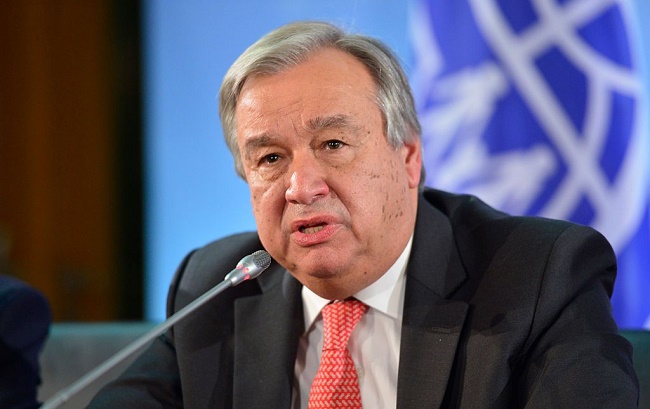
UN Secretary-General, António Guterres
The day, marked annually on the first Monday of October, brings together stakeholders to reflect on the state of towns and cities and the right of all to adequate shelter.
UN Secretary-General, António Guterres, in a message delivered by Mr. Stephen Jackson, UN Resident Coordinator in Kenya, said cities bore the brunt of today’s crises and emergencies.
He said conflict, political instability and the climate emergency had forced 123 million people from their homes, most seeking safety in cities and towns already under intense pressure.
“About one in eight people live in informal settlements, and more than 300 million have no home at all,” Guterres said.
He noted that health services, water systems and transport networks were overstretched, with the risk of new disasters looming.
Guterres, however, said cities are where solutions could take root and grow, driving inclusion and economic growth while enriching communities and culture.
He commended the leadership of mayors and local government area, and the resilience of women, youth and urban communities in addressing challenges.
“We seek to share innovations that help guarantee access for the most vulnerable, including people with disabilities, older persons and children.
“A city is more than bricks and mortar, it is the promise of home. Let’s build stronger cities that ensure safety and belonging for us all,” he said.
Echoing the secretary-general’s call, Kor Ming, Minister of Housing and Local Government of Malaysia and President, UN-Habitat Assembly, said in crisis, there is opportunity to build back better and stronger.
According to him, with over 120 active conflicts worldwide, there is a need to redouble efforts toward equitable and sustainable development as a safeguard against instability.
Citing UN data, he said a record 182 million people had been displaced by conflict and political instability, with 60 per cent seeking refuge in cities.
This trend, he said, is placing enormous pressure on local governments and urban systems, requiring renewed multilateral cooperation and resource mobilisation.
Kor Ming referenced Asia and the Pacific, where rapid urbanisation and ongoing conflicts have made local governments the first responders to humanitarian and development challenges.
“I call on member states to enhance multilateral cooperation to equip city mayors and local leaders with the tools needed to ensure no one and no place is left behind.
“As we invest in basic services for refugee camps, we must extend these rights to host and existing communities,” he added.
Kor Ming also appealed for continued support to UN-Habitat, noting that shelter must evolve beyond mere provision to adequate housing, as sustainable cities and communities cannot exist without decent homes for all.
Also, Ms. Anacláudia Rossbach, Executive Director, UN-Habitat, said that each year, disasters damaged or destroyed more than 92,000 essential facilities and caused 1.6 million service disruptions globally.
“The global housing crisis now affects nearly three billion people, with over one billion living in slums and informal settlements and more than 300 million experiencing homelessness,” Rossbach said.
She warned that without proactive urban planning, the housing crisis would deepen further as displaced populations continued to rise.
“We must put housing, land and basic services at the centre of solutions for urban crises and displacement.
“Humanitarian aid alone is insufficient, as people desire to regain their homes, old or new as quickly as possible.”
She said that local governments are the “firefighters” on the frontlines of urban crises, while also being champions of long-term resilience and community rebuilding.
According to her, strengthening local governance and linking humanitarian and development responses are central to UN Habitat’s 2026–2029 Strategic Plan.
This plan, she said, identified crisis response as one of three key impact areas, focusing on displacement, disaster, conflict and climate fragility.
At the event, the UN-Habitat Scroll of Honour Award was also presented to recipients from Nigeria, Lebanon, Portugal and Mexico.
The award recognises individuals and institutions making outstanding contributions to urban development in fields, including shelter provision, leadership in post conflict reconstruction, and others.
President Bola Tinubu has called for caution and retrospection over the industrial dispute between the management of Dangote Petroleum Refinery and the Petroleum and Natural Gas Senior Staff Association of Nigeria (PENGASSAN).
Tinubu, represented by Vice-President Kashim Shettima, made the call at the 31st Nigerian Economic Summit (NES) organised by the Nigerian Economic Summit Group (NESG), on Monday, October 6, 2025, in Abuja.
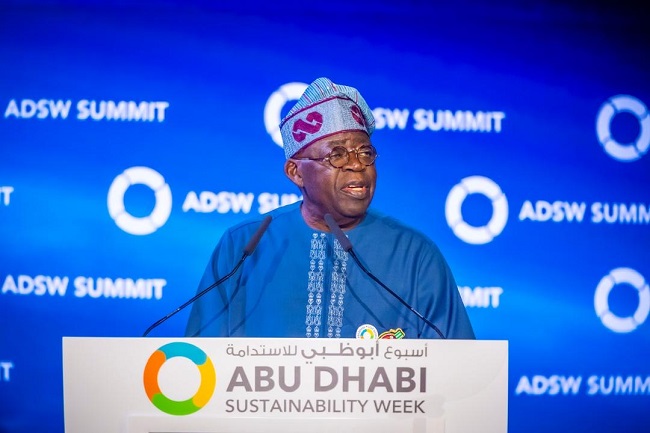
President Bola Tinubu
The summit has “The Reform Imperative: Building a Prosperous and Inclusive Nigeria by 2030″ as its theme.
The president revealed that government was taking steps to protect big industry to guarantee industrial harmony for the good of the nation.
According to him, Aliko Dangote is not an individual; he is an institution.
”He opted to invest in this country, so we owe it to future generation to jealously protect, promote, preserve this investment.
”I therefore call for caution, retrospection and a deeper sense of patriotism from both the labour and the organised private sector in defining and improving relationship in the interest of all Nigerians.”
Tinubu also warned trade unions against holding the nation to ransom over dispute.
”Nigeria is greater than PENGASSAN and every one of us here.
“This is a refinery that was financed through a combination of equity investment and loans from local and foreign banks.
“Therefore, the refinery has to function to service the debt,” he said.
It will be recalled that the Federal Government recently brokered truce between the PENGASSAN and the management of Dangote Petroleum Refinery.
PENGASSAN had directed its members to stop gas supply and withdraw services from the refinery, accusing the company of terminating the employment of more than 800 of its members.
Dangote Refinery, however, explained that the disengagement of workers was due to an ongoing restructuring exercise in the company.
Recently, we sat down with the Director-General of the Nigerian Conservation Foundation (NCF), Dr. Joseph Onoja, to discuss key environmental issues and the outcomes of Ramsar COP15. Our conversation covered the importance of wetlands, key resolutions from the convention, the role of youths, and how Africa is preparing for Climate Week
Director-General of the Nigerian Conservation Foundation (NCF), Dr. Joseph Onoja
What is Ramsar COP15 and why does it matter to Nigeria?
Ramsar is an Iranian city where the agreement to conserve wetlands was first established, hence the name “Ramsar Convention.” It is a global treaty for the conservation and wise use of wetlands. Countries that have signed up are called Parties.
Wetlands identified as internationally significant based on specific criteria are designated as Ramsar sites. Every two or three years, Parties meet to review progress, evaluate agreements, and determine new measures to strengthen global wetland conservation.
Why are wetlands so important?
Wetlands are vital ecosystems. They recharge groundwater, serve as biodiversity hotspots, and support livelihoods by providing water, fish, and fertile soil for farming. They build community resilience by absorbing excess water during floods and releasing it during dry periods. Wetlands also provide habitats for aquatic and terrestrial species.
Seeing how Nigeria is home to mangroves, freshwater wetlands, and key migratory bird flyways, how will COP15 resolutions impact conservation efforts here?
Nigeria’s wetlands are of immense value. We have the Apoi Creek Forest, Baturiya wetlands, Lake Chad wetlands, the Niger Delta, and the Hadejia-Nguru wetland, which is especially important for the Sahel. It holds over 120,000 birds across 69 species and serves as a stopover for migratory birds from Europe. Local communities depend on these wetlands for fishing, irrigation, and transportation.
The Ramsar Convention is therefore critical for Nigeria’s conservation efforts.
What are the key resolutions from the convention that touch Nigeria?
Nigeria was represented at COP15, and some important outcomes include:
Establishment of the Waterbird Estimate Partnership: This global initiative will coordinate waterbird counts. Nigeria, as part of the East Atlantic Flyway, will play a central role. The NCF, BirdLife’s partner in Nigeria, has long organized annual bird counts, and our expertise contributed to shaping this partnership. The first World Waterbird Estimate will take place in 2027, and Nigeria will be fully involved.
Engagement with the Convention’s Secretary General: Dr. Musonda Mumba called on Nigeria to play its part in implementing Ramsar commitments. The Nigerian delegation pledged full support, and her proposed visit to Nigeria coincides with the plan to designate six additional Ramsar sites. Preparations are underway with relevant authorities to make this a reality.
How do Ramsar COP15 outcomes prepare Nigeria and Africa to better address climate change? And are youths included in these conversations?
Climate change directly affects wetlands and biodiversity. Ramsar recognizes the need for synergy with other global conventions to address these challenges.
Youth engagement is crucial. A coalition called Youths for Wetlands was launched, and NCF signed on. Young people bring energy, innovation, and technical know-how. Many also participate in Nigeria’s annual waterbird counts, especially in coastal and mangrove areas, where NCF has built local capacity. This gives youths both learning and earning opportunities while contributing data to global databases.
Healthy wetlands support migratory birds, local communities, and biodiversity. Conserving them sustains both ecosystems and livelihoods.
Nigeria raised the issue of outdated wetland data. Why is updating this data significant?
Outdated data limits effective management. Some wetlands may have been degraded or lost. Updating inventories helps us know their current status and informs conservation actions. This review process has already led to the proposal of six additional Ramsar sites in Nigeria.
How do global Ramsar decisions translate into local benefits for Nigeria?
Conservation has no borders. For instance, if you consider migratory birds that change locations in different seasons, in Europe they are called European birds. Once they cross into Nigeria they become Nigerian birds. If one country conserves wetlands while another neglects them, the birds suffer. This global interdependence is why Ramsar matters.
Freshwater is increasingly scarce and a potential source of conflict. Conserving wetlands helps secure it. For Nigeria, protecting wetlands also strengthens our case for international financial and technical support.
With Africa Climate Week approaching, how do Ramsar outcomes position Africa for stronger climate action?
Climate change is shrinking wetlands, as seen in Lake Chad, which has lost over 95% of its original size. Africa Climate Week provides an opportunity for the continent to unite around financing, renewable energy, youth, and community roles so Africa can speak with one voice at COP30 in Brazil.
What about the role of traditional knowledge in wetland conservation?
Indigenous communities have conserved landscapes for generations, relying on them for food, medicine, and livelihoods. Their knowledge is invaluable. We must ensure their voices are heard alongside science, or we risk sidelining their needs and weakening conservation. Encouragingly, many communities are willing to share their knowledge, which is a strength we must build on.
Finally, what message would you like to leave with Nigerians about protecting wetlands?
We all have a duty to protect our habitats—forests, wetlands, everything. If we fail, nature will protect itself without us. Policymakers must not only make but also enforce strong, practical conservation policies.
For local communities, wetlands are your lifeline. Guard your resources; don’t trade long-term well-being for short-term gain. Protecting wetlands safeguards your future and that of your children.
Such powerful last words. Thank you for your time, sir.
The newly appointed Director General/Chief Executive Officer of the National Biosafety Management Agency (NBMA), Bello Bawa Bwari, formally assumed duty on Monday, October 6, 2025, at the Agency’s headquarters in Abuja.
He was warmly received by the management and staff of the Agency, who expressed optimism about the new leadership.
Director General/Chief Executive Officer of the National Biosafety Management Agency (NBMA), Bello Bawa Bwari
In his inaugural address, he commended the dedication and professionalism of the NBMA staff, acknowledging the Agency’s significant progress over the years in ensuring the safe application of modern biotechnology and biosafety practices in Nigeria. He commended the immediate past Director General for her leadership and pledged to build upon her achievements.
“I am here to build on what my predecessors established,” Bwari stated. “The NBMA has a strong foundation, and together, we will strengthen our mandate, promote innovation, and ensure that Nigeria remains a leader in biosafety management across Africa. Staff welfare will remain a top priority because a motivated workforce is essential for effective service delivery.”
The new DG also emphasised his commitment to deepening stakeholder engagement, enhancing transparency in regulatory processes, and advancing public trust in the Agency’s work.
Bello Bawa Bwari is a seasoned administrator and legal professional with extensive experience in environmental law, public administration, and institutional development. His appointment marks a new chapter in the Agency’s drive to safeguard human health and the environment from potential risks associated with genetically modified organisms and other modern biotechnologies.
The NBMA management and staff expressed their readiness to work closely with the new DG in advancing the Agency’s vision of a safe, sustainable, and biotechnology-enabled Nigeria.
Going by recent happenings in Africa’s healthcare sector, most hospitals only think about public relations (PR) when public trust is already damaged, perhaps by a negative patient story that has gone viral on social media or when litigation is imminent.
This type of communication is reactive, defensive, and typically limited to damage control. Professionally, healthcare is more than merely curing diseases. It is about establishing trust and dignity throughout the patient journey, rather than just before or during a crisis.
Winnie Gor
A recent webinar “Communication Crisis in Healthcare in Africa – Examining gaps and lived experiences”, empaneled by patients, medical and communication experts, heard harrowing stories of patients being dismissed untreated, reduced to their fertility, or given frightening diagnoses without compassion. These are not only communication failures, but they also point towards reputational crises waiting to happen.
A hospital can invest billions in equipment, but if patients feel unseen or unheard, the institution risks losing credibility in an era where one TikTok video (whether justified or not), can undo decades of brand-building.
Globally, the best in-class hospitals understand that PR is not about firefighting or fudging facts. It is about protecting the organisation’s reputation through proactive and well-timed strategic actions before complaints escalate into front-page scandals to act.
Pro-active PR seeks to shape the narrative through transparency, education, and human connection. Hospitals need to move beyond slogans about “patient-centered care” to demonstrating it daily through communication, empathy, and shared decision-making. As communicators we need to help our hospitals to re-frame the patient relationship from a “client” to a “partner”.
When patients feel informed and respected, they become allies, not adversaries. This is particularly critical in Africa, where cultural deference to doctors, coupled with the perceived elitism of the medical profession, often silences patients until mistrust festers into frustration.
In a continent where proper healthcare is still a preserve of a few, hospitals must do more to educate the public on their healthcare rights and standards through proactive engagement and storytelling, including basic patient communication expectations and procedures.
Worldwide, there are numerous examples of stellar communication and patient engagement efforts by other hospitals around the world that we can borrow from. The video campaign “Empathy: The Human Connection to Patient Care” by United States based Cleveland Clinic, is one of the most-watched healthcare videos globally.
More than a glossy advert, this campaign highlighted the unseen struggles of patients and staff. A reminder that empathy is medicine, the video built emotional connection and reinforced trust without waiting for a PR crisis.
Similarly, The National Health Service in the United Kingdom, has increasingly embraced proactive digital engagement, publishing waiting times, patient rights, and safety protocols openly online. While not perfect, this open access and transparency reduces anxiety and shows patients they are partners in the system, not just passive recipients of healthcare services.
In India, Apollo Hospitals runs constant patient education campaigns on preventive care primarily on heart health, diabetes management and cancer screening, using social media, webinars, and community forums. This positions the hospital not as a reactive service provider but as a crucial partner in everyday health management.
The Mayo Clinic in the United States has also consistently ranked as one of the most trusted hospitals globally. Mayo has used blogs, podcasts, and patient stories to demystify treatment and spotlight hope. Their proactive storytelling over the years has ensured patients associate the brand with care and credibility before illness even strikes.
With African hospitals at crossroads, they can continue using PR as a fire extinguisher, or they can embrace it as preventive medicine by urgently adopting a few simple but proactive measures. The first step would be to invest in patient engagement and communication units.
Just as corporates have customer experience departments, hospitals should build dedicated patient communications teams. These teams should not only handle complaints but proactively share updates, explain procedures in plain language, and check in with patients during recovery.
Additionally, hospitals should normalise transparency in hospital operations and patient care, unlike the present situation where patients and doctors alike admit that many patients leave consultations intimidated, more confused, or misinformed. Proactive PR means engaging patients with empathy, breaking medical jargon into digestible content, creating explainer videos, and encouraging patients to ask questions. Hospitals should publish patient charters, rights, and responsibilities prominently, on websites, mobile apps, and posters in waiting areas.
We have an opportunity to change this scenario by telling stories of humanity, not just marketing our technology, beds and machines. While these are important, patients just want to be treated with dignity when accessing healthcare services. Proactive storytelling should spotlight doctors who listen, nurses who comfort, and patients who overcame illness. This is the content that builds trust before crisis headlines appear.
As came out in the webinar, most medical schools in Africa do not teach communication skills. As communicators, we are aiming to push for continuous training in emotional intelligence, trauma-informed communication, and active listening. A doctor who explains, “Here’s what this means and why it matters,” prevents mistrust before it begins. Afterall, we must bring the humanity to the science and the care to the health.
Ultimately, healthcare is not about curing diseases alone, but about the entire healing experience. Healthcare communications in Africa must therefore evolve from crisis response to proactive trust-building. Hospitals should not wait for scandals to hire communication consultants or scramble for press releases. Instead, they must embed storytelling, transparency, and empathy into their daily operations.
By Winnie Gor, Founder and CEO, Winnie Gor Communications Africa
Vice President Kashim Shettima on Monday, October 6, 2025, commended the investments of Shell in Nigeria as he visited the company’s exhibition stand at the opening of the 31st Nigerian Economic Summit (NES) in Abuja.
The exhibition complements the participation of Shell in the summit and features the operations of Shell Nigeria Exploration and Production Company Ltd (SNEPCo), Shell Nigeria Gas (SNG), All On and Daystar Power.
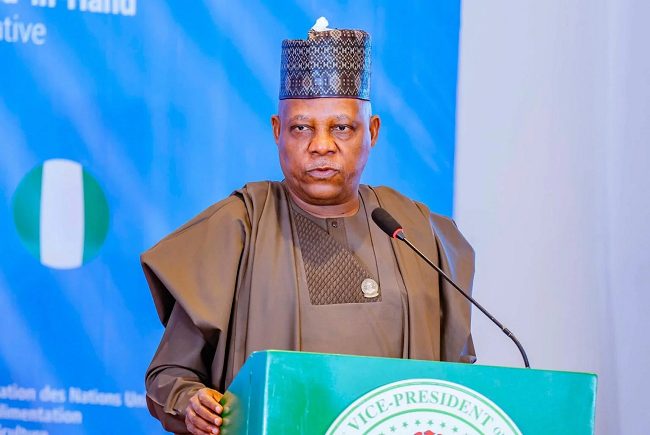
Vice-President Kashim Shettima
Vice President Shettima, who had earlier declared the summit open on behalf of President Bola Ahmed Tinubu, was briefed on the contributions of the companies to the economic development of Nigeria, especially the energy sector.
Accompanied by the Minister of Finance and Coordinating Minister of the Economy, Wale Edun, the Minister of Trade and Investment Jumoke Oduwole and the Emir of Kano, Sanusi Lamido Sanusi, Vice President Shettima said he was impressed with the investments of Shell in deep-water including the $5-billion Bonga North development. Work on the project is in progress following the FID which was taken early last year.
Vice President, Kashim Shettima, Ministers and other distinguished dignitaries at Shell’s exhibition booth during the Nigerian Economic Summit in Abuja
Business Value Manager Chidi Nkazi, who conducted the VIPs round the exhibition stand, also highlighted the impact of Shell’s social investments in health, education and employment generation.
“Every year our operations generate revenues which are used to finance development,” Chidi said, adding; “In 2024 alone, Shell Companies in Nigeria paid $1.209 billion in taxes and royalties to the Federal Government.”
The world is smoking less, but the tobacco epidemic is far from over. A new WHO global report shows the number of tobacco users has dropped from 1.38 billion in 2000 to 1.2 billion in 2024. Since 2010, the number of people using tobacco has dropped by 120 million – a 27% drop in relative terms. Yet, tobacco still hooks one in five adults worldwide, fuelling millions of preventable deaths every year.
“Millions of people are stopping, or not taking up, tobacco use thanks to tobacco control efforts by countries around the world,” said Dr Tedros Adhanom Ghebreyesus, WHO Director-General. “In response to this strong progress, the tobacco industry is fighting back with new nicotine products, aggressively targeting young people. Governments must act faster and stronger in implementing proven tobacco control policies.”
Tobacco smoking
For the first time, WHO has estimated global e-cigarette use – and the numbers are alarming: more than 100 million people worldwide are now vaping. This includes:
Adults: at least 86 million users, mostly in high-income countries.
Adolescents: at least 15 million children (13–15 years) already using e-cigarettes. In countries with data, children are on average nine times more likely than adults to vape.
The tobacco industry is introducing an incessant chain of new products and technologies for its aim to market tobacco addiction with not just cigarettes but also e-cigarettes, nicotine pouches, heated tobacco products among others, which all harm people’s health, and more worryingly the health of new generations, youth and adolescents.
“E-cigarettes are fuelling a new wave of nicotine addiction,” said Etienne Krug, WHO Director of Health Determinants, Promotion and Prevention Department. “They are marketed as harm reduction but, in reality, are hooking kids on nicotine earlier and risk undermining decades of progress.”
More women are quitting tobacco than men
While there has been a steady decline in tobacco use for both men and women across all age-groups during 2000–2024, women have been leading the charge to quit tobacco. They hit the global reduction target for 2025 five years early, reaching the 30% milestone back in 2020. Prevalence of tobacco use among women dropped from 11% in 2010 to just 6.6% in 2024, with the number of female tobacco users falling from 277 million in 2010 to 206 million in 2024.
By contrast, men are not expected to reach the goal until 2031. Today, more than four out of five tobacco users worldwide are men, with just under 1 billion men still using tobacco. While prevalence among men has fallen from 41.4% in 2010 to 32.5% in 2024, the pace of change is too slow.
Regional picture
South-East Asia: Once the world’s hotspot, prevalence among men nearly halved – from 70% in 2000 to 37% in 2024. The Region alone accounts for over half of the global decline.
Africa: Prevalence is the lowest of all regions at 9.5% in 2024, and the Region is on track to meet the 30% target. However, because of population growth, the absolute number of tobacco users continues to rise.
Americas: The Region has achieved a 36% relative reduction, with prevalence dropping to 14% in 2024, though some countries still lack sufficient data.
Europe: This is now the highest-prevalence Region globally, with 24.1% of adults using tobacco in 2024, with women in Europe having the highest global prevalence at 17.4%.
Eastern Mediterranean: Prevalence is 18%, with tobacco use continuing to rise in some countries.
Western Pacific: With 22.9% of adults using tobacco in 2024, down from 25.8% in 2010, the progress in this Region is the slowest. While women have low prevalence at 2.5%, men have the highest prevalence of all regions at 43.3%.
Actions needed
WHO is urging governments everywhere to step up tobacco control. This means fully implementing and enforcing the MPOWER package and the WHO Framework Convention on Tobacco Control, closing loopholes that allow the tobacco and nicotine industries to target children, and regulating new nicotine products like e-cigarettes. It also means raising tobacco taxes, banning advertising, and expanding cessation services so that millions more people can quit.
“Nearly 20% of adults people still use tobacco and nicotine products. We cannot let up now,” said Jeremy Farrar, WHO Assistant Director-General for Health Promotion and Disease Prevention and Care. “The world has made gains, but stronger, faster action is the only way to beat the tobacco epidemic.”