Home Blog Page 143

Nigeria validates just transition guidelines, action plan

0

Nigeria has taken a bold and historic step toward building an inclusive, sustainable, and low-carbon future.

The National Council on Climate Change (NCCC) has officially validated the Just Transition Guidelines and Action Plan (JT-GAP) – a landmark framework designed to steer the nation’s shift to a green and climate-resilient economy.
Validation Workshop
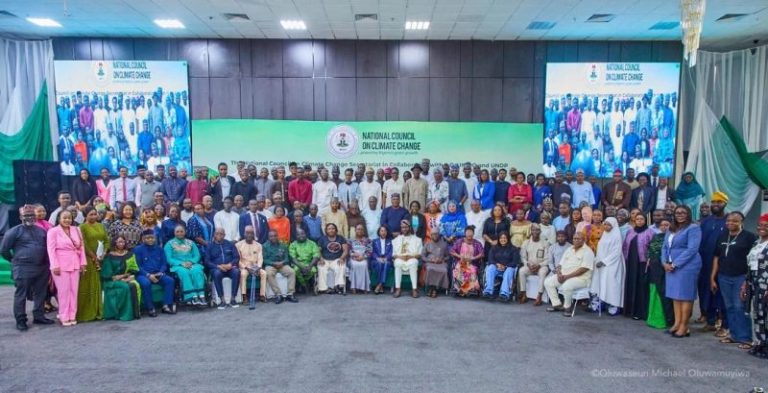
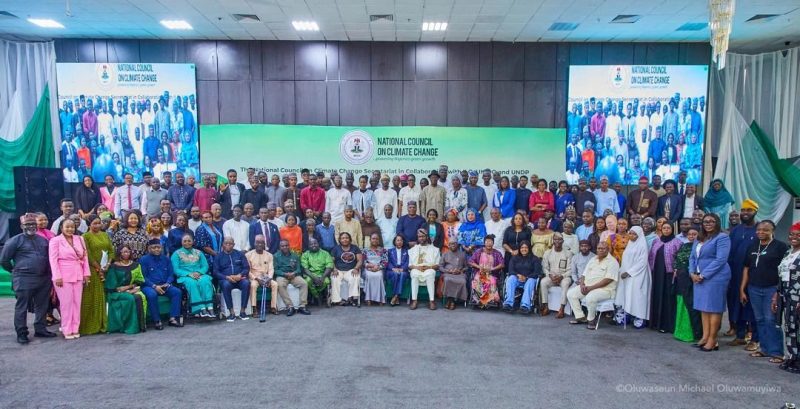
Participants at the Validation Workshop for Nigeria’s Just Transition in Abuja

The validation ceremony, held from October 6 to 7, 2025, at the Nigeria Air Force Conference Centre, Kado, Abuja, marks a pivotal moment in Nigeria’s journey toward a fair and equitable transition.

Developed by the Centre for Climate Change and Development (CCCD), Alex Ekwueme Federal University, Ndufu-Alike, Ebonyi State, with support from International Labour Organisation (ILO), the United Nations Development Programme (UNDP), and the United Nations Industrial Development Organisation (UNIDO), the Just Transition Guidelines and Action Plan stands as a model of evidence-based, inclusive policy formulation.

The two-day event commenced with a technical session, which provided an in-depth review of the draft JT-GAP. The session brought together technical experts from across government, academia, and international development institutions to deliberate on key components of the report.

The technical presentation was anchored by Professor Emmanuel Oladipo, representing the lead consultant, Professor Chukwumerije Okereke, while the cross-cutting themes of the JT-GAP – such as gender inclusion, youth empowerment, and social equity – were presented by Dr. Austine Sadiq Okoh, who served as the Project Manager. Their presentations set the tone for a robust exchange of ideas, ensuring the technical soundness and inclusivity of the final document.

The workshop featured participants from various ministries, departments, and agencies (MDAs); multilateral institutions; civil society organizations; women and youth groups; representatives of persons with disabilities; labor unions; and private sector actors. This wide-ranging participation underscored the national commitment to ensuring that Just Transition truly leaves no one behind.

The validation ceremony, which took place on the second day, was graced by an array of distinguished personalities, including the Director-General of the NCCC, Mrs. Tenioye Majekodunmi; Mr. Ibrahim Shelleng, Senior Special Assistant to the President on Climate Finance and Stakeholder Engagement; the Chairman and Deputy Chairman of the House of Representatives Committee on Climate Change; the Special Adviser to the President on the Ease of Doing Business; the Country Director of the NDC Partnership; and Permanent Secretaries on Climate Change from Lagos, Cross River, and Imo States.

Also in attendance were heads of federal ministries, development partners, industrial leaders, labor union representatives, CSOs, youth advocates, people living with disabilities, and members of the consultant team.

In her remarks, Mrs. Tenioye Majekodunmi, the Director-General of the NCCC, described the JT-GAP as “a comprehensive, evidence-based, and professionally crafted document that reflects Nigeria’s unwavering commitment to an equitable energy transition and decarbonisation pathway.”

She emphasised that the plan aligns seamlessly with Nigeria’s Nationally Determined Contributions (NDCs), Energy Transition Plan (ETP), and long-term net-zero ambitions, adding that it was developed through an extensive process of national and international review.

She further commended the consultant team and stakeholders for producing a document that “leaves no one behind,” reaffirming that “the Just Transition is not merely an environmental agenda, but a people-centered development vision that ensures economic growth, social justice, and environmental sustainability move hand in hand.”

The DG called on all stakeholders to take collective ownership of the report and ensure the timely implementation of its recommendations across all sectors.

Participants at the validation ceremony unanimously applauded the quality, inclusiveness, and international standard of the Just Transition Guidelines and Action Plan.

They lauded the depth of consultation and participatory engagement that characterised its preparation, describing it as a true reflection of national will and international best practice.

Professor Chukwumerije Okereke, the Lead Consultant, says: “I am delighted to have led the team that produced the Just Transition Guidelines and Action Plan (JT-GAP). Our report offers insight on how Nigeria can unlock new opportunities in green growth, innovation and emerging industrial ecosystems while taking ambitious climate action. We have not only provided a detailed analysis of the justice dimensions of climate impact and transition pathways in key sectors of Nigeria’s economy. But we have also offered clear guidance and action plan on how Nigeria can align climate ambition with its development priorities to ensure that decarbonisation does not come at the expense of jobs, livelihoods and social stability.”

Continuing, Okereke says, “Both climate change and action implicate equity and justice in profound and complect ways. By embedding fairness and inclusivity at the core of Nigeria’s transition effort, the JT-GAP if implemented will protect workers, trade unions, women, the youth, and marginalized groups and communities and help Nigeria to mitigate critical transition risks such as job displacement, stranded assets and fiscal stress.”

The validation of the JT-GAP therefore marks a new dawn for Nigeria. And is a milestone in the nation’s commitment to achieving a just, inclusive, and people-driven transition that prioritises social equity, decent jobs, and community well-being in the face of climate change.

It reaffirms Nigeria’s determination to lead Africa’s march toward a low-carbon, climate-resilient, and sustainable future.

By Paul Ogwu, Assistant Project Manager
ACReSAL moves to deepen collaboration on climate resilience, food security

The Federal Government of Nigeria, through the collaborative efforts of the Ministries of Environment, Water Resources and Sanitation, and Agriculture and Food Security, appears committed to combating climate change and environmental degradation, with the ACReSAL project yielding tangible results in restoring degraded lands and promoting sustainable livelihoods in the semi-arid region of the country.

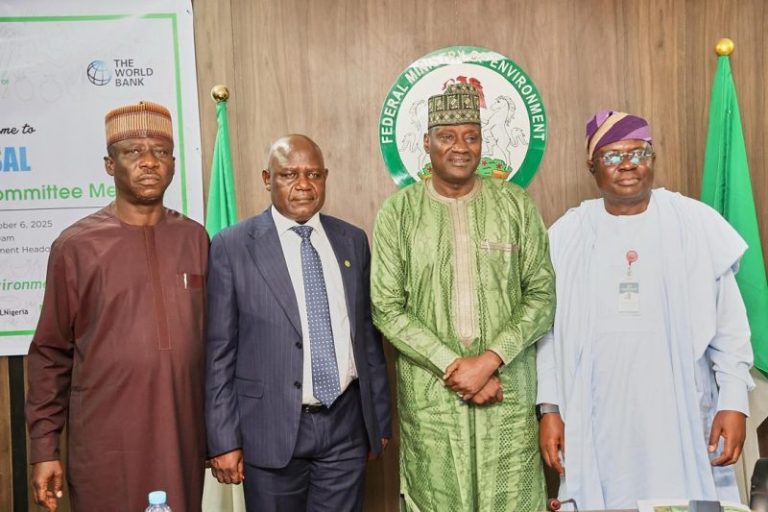
This resolve was emphasised during the Federal Technical Committee (FTC) meeting of the Agro-Climatic Resilience in Semi-Arid Landscapes (ACReSAL) Project, held at the Federal Ministry of Environment in Abuja. The meeting was attended by the Permanent Secretaries of the three implementing ministries, key Director Generals, Directors, and other ACReSAL Project stakeholders from federal ministries, departments, and agencies to review the project’s progress and examine its Annual Work Plan for the upcoming implementation year.

ACReSAL
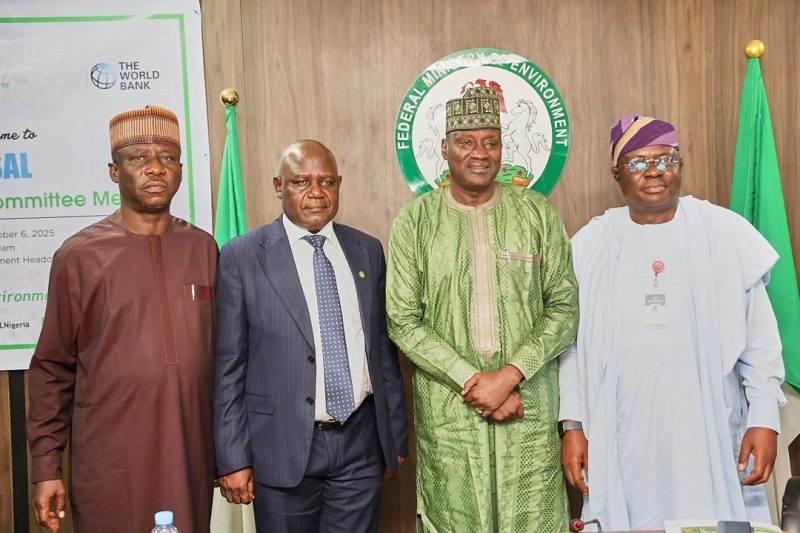
Some delegates at the the Federal Technical Committee (FTC) meeting of the Agro-Climatic Resilience in Semi-Arid Landscapes (ACReSAL) Project

Delivering the opening remarks, the Permanent Secretary, Federal Ministry of Environment, Mr. Mahmud Adam Gambari, described the gathering as a defining moment in Nigeria’s pursuit of environmental sustainability and community resilience.

“As we confront the realities of climate change, drought, and food insecurity, our shared vision through ACReSAL is transforming into concrete action,” he said. “This plan embodies our collective responsibility to restore degraded lands, strengthen livelihoods, and secure a sustainable future for millions of Nigerians.”

From the agriculture sector, the Permanent Secretary, Federal Ministry of Agriculture and Food Security, Dr. Marcus Ogunbiyi, reaffirmed the ministry’s full support for the project’s objectives.

“The ACReSAL project aligns perfectly with our mission to strengthen food security through climate-smart agriculture,” he stated. “By promoting drought-tolerant crops, soil restoration, and improved farming practices, we are empowering smallholder farmers and building resilience in rural communities. Together, we can ensure that our agricultural sector continues to thrive despite environmental challenges.”

The Permanent Secretary, Federal Ministry of Water Resources and Sanitation, Mr. Richard Philaangwa, highlighted the project’s critical role in protecting Nigeria’s water ecosystems and improving sanitation standards in semi-arid regions.

“ACReSAL offers a comprehensive approach to managing our fragile water systems,” he noted. “Through watershed rehabilitation, sustainable irrigation, and rainwater harvesting, we are not only preserving water resources but also enhancing public health and agricultural productivity. Our ministry remains committed to providing the technical leadership necessary to advance water security across the country.”

Following the remarks by the Permanent Secretaries, the National Project Coordinator (NPC) of ACReSAL, Abdulhamid Umar, delivered a presentation on the project’s current status and impact across the participating states. 

He noted that ACReSAL’s interventions are technologically driven and encompass afforestation, reforestation, ecosystem restoration, erosion and flood control, livelihood initiatives, climate-smart agriculture, water management, capacity building, policy development, strategic catchment management planning, institutional strengthening, and environmental education initiatives – all geared toward long-term impacts and sustainable environments.

Mr. Umar revealed that, so far, the project has restored over 800,000 hectares of degraded landscapes. He added that civil works have reached an almost completion stage in some states. 

He further stated that out of the wide range of impactful activities implemented in the state, 8,708,291 persons have benefited from the project intervention, with 4,120,649 being women.

According to him, ACReSAL has successfully addressed numerous environmental challenges, including those that once plagued communities in the Nguru Wetlands and Hadejia axis of the Northeast—now cited as classical examples of the project’s transformative impact.

The Permanent Secretaries commended the collaboration among the three ministries and stakeholders, stressing that the FTC’s recommendations would be forwarded to the Federal Steering Committee (FSC), chaired by the Honourable Ministers of Environment, Water Resources and Sanitation, and Agriculture and Food Security, for approval.

The Agro-Climatic Resilience in Semi-Arid Landscapes (ACReSAL) project seeks to mitigate the impacts of climate change in northern Nigeria by restoring degraded lands, improving water management, increasing agricultural yields, and promoting sustainable livelihoods.

The meeting concluded with a collective call for continued inter-ministerial synergy to ensure that ACReSAL delivers measurable benefits to communities most affected by desertification, drought, and land degradation.

In a show of courtesy, the committee paid a visit to the Minister of Environment, Malam Balarabe Abbas Lawal, at the end of the meeting, which took place at the Ministry of Environment Headquarters, Abuja.

UN member states explore strategies for space weather monitoring

Twenty-three UN member states under the auspices of Office for Outer Space Affairs (UNOOSA) are exploring strategies, tools and means of acquiring accurate data for space weather monitoring, forecasting.

They sought to achieve this on Tuesday, October 7, 2025, during a five-day UNOOSA and Nigeria workshop on International Space Weather Initiative (ISWI) being organised by the National Space Research and Development Agency (NASRDA) in Abuja.

Space weather
Space weather

Space weather refers to the environmental conditions in space, particularly the effects of solar activity on Earth’s atmosphere and magnetic field.

The participating countries included France, Germany, Japan, Cote’ Ivoire, South Africa, Brazil, India, Indonesia and the National Aeronautics and Space Administration.

The workshop focused on Space Weather during a Moderate Solar Cycle 25.

Space weather, during a moderate solar cycle, signifies a period of relatively low, though not minimal, solar activities.

It could  lead to geomagnetic storms that cause visible phenomena and disrupt activities such as aviation communication, power grid and Global Positioning System (GPS) disruptions.

Ms. Sharafat Gadimova, UNOOSA, Austria, said developing capabilities in space weather was one of many space activities UNOOSA supported members states to achieve.

Gadimova said the international community would explore strategies to improve the collection, exchange in delivering space weather data modelling and forecasting methods to enhance accuracy and reliability.

“This community will also work to design a platform to identify user requirement and promote synergy between different communities addressing space weather impact.

“These activities will support capacity building, training, initiatives and providing data information on cutting-edge, up-to-date space weather research,’’ she said.

Chief Uche Nnaji, Minister of Innovation, Science and Technology, said space weather was a global phenomenon which required a collective international action because of its impact on orbit infrastructure.

Represented by Dr Matthew Adepoju, Director-General, NASRDA, Nnaji also drew the attention of global partners to the need for addressing extreme weather conditions such as hurricane.

“This is an opportunity for scientists and global policy makers to shift attention to the root cause of most of the hurricane that takes its origin from Sahara Desert in Africa.

“We need to join hands for programmes such as Great Green Wall to become a successful initiative and address the causes of these disasters related to extreme weather condition,’’ he said.

The minister pledged that Nigeria would be committed to spearheading activities aimed at boosting weather conditions in Africa.

Adepoju, in his capacity as NASRDA D-G, said that developing countries, particularly those in Africa, should take climate impacts seriously and develop tools to address them.

“For developing nations such as Nigeria, and indeed the entire African continent which is advancing rapidly in digital transformation, our vulnerability to this phenomenon is growing.

“Our dependence on satellite technology for banking, telecommunication, broadcasting, weather forecasting and national security makes the understanding and prediction of space weather not simply a scientific theory,’’ Adepoju said.

By Ijeoma Olorunfemi

Kukah, Sanusi, Atedo rally behind Dangote Refinery, warn Labour against disruption

0

A group of eminent Nigerians, top business leaders, clerics, and civil society advocates, have cautioned the Petroleum and Natural Gas Senior Staff Association of Nigeria (PENGASSAN) and the organised labour movement against actions capable of undermining national economic interests, particularly concerning the Dangote Petroleum Refinery.

In a joint statement signed by Atedo Peterside (CON), Khalifa Muhammad Sanusi II, Bishop Matthew Hassan Kukah (CON), Osita Chidoka, Opeyemi Adamolekun, and several other prominent Nigerians, the group described recent disruptions and threats of industrial action around the refinery as unfortunate and dangerous to Nigeria’s energy security and investment outlook.

Matthew Hassan Kukah
Bishop Matthew Hassan Kukah

They noted that while government mediation had helped de-escalate tensions, the episode underscored the need for restraint and dialogue in addressing labour grievances.

“The right to organise cannot become a licence to hold the economy hostage,” the statement warned. “Productive enterprises that lower costs and create jobs must be safeguarded. Industrial disputes, if not carefully managed, risk discouraging both domestic and foreign investment at a time when Nigeria most needs capital and innovation. A refinery of this scale is a national lifeline, with profound consequences for jobs, energy security, and inflation.”

The leaders lamented that for decades, Nigerians endured the collapse of government-owned refineries, the waste of trillions of naira in subsidies, and dependence on fuel imports. “These failures left citizens exposed to scarcity, inflation, and insecurity”.

Describing the Dangote Refinery as “a national symbol of what bold domestic investment can achieve,” the leaders said Nigerians have already begun to feel its impact through the significant drop in fuel prices from about N1,500 per litre to around N820 in some areas, and the resulting reductions in transport fares and food costs.

“This impact on transport and food prices gives Nigerians a glimpse of how local productivity can improve daily life,” they added. “It also sends a message to investors at home and abroad that genuine industry, rather than speculation, can still thrive in Nigeria.”

The group stressed that while workers’ rights must be protected, such rights must also be exercised responsibly and within the law.

They also dismissed allegations of monopoly, clarifying that the refinery operates in an open market where others are free to invest. Stakeholders with genuine competition concerns, they advised, should approach statutory regulators such as the Federal Competition and Consumer Protection Commission (FCCPC) rather than resort to strikes or blockades.

“There is no legal monopoly here,” the statement noted. “Others are free to invest in refining, provided they can mobilise the necessary resources and expertise.”

Commending the Federal Government, labour unions, and the management of Dangote Refinery for stepping back from confrontation, the signatories urged all parties to embrace dialogue as a lasting framework for resolving disputes.

“This crisis is not about a refinery or any other business,” the statement noted. “It is about the direction of our economy: whether we will continue in a cycle of scarcity and rent-seeking or build a future anchored on productivity, fairness, and shared prosperity. The Dangote refinery represents an audacious step forward. It should not be undermined but strengthened – as a signal to other industrialists that investing in Nigeria’s future is worthwhile.”

The statement was also signed by Ibrahim Dahiru Waziri, Abubakar Siddique Mohammed, Obonganwan Barbara Etim James, Senator Sola Akinyede, Dudu Mamman Manuga, Dr. Salamatu Hussaini Suleiman, Arunma Oteh, and Aisha Yesufu.

Nigeria calls for pan-African strategy to dominate LNG trade

0

Nigeria Liquefied Natural Gas Limited (NLNG) has urged African nations to move beyond the role of raw material suppliers and take their place as key players in the global LNG market.

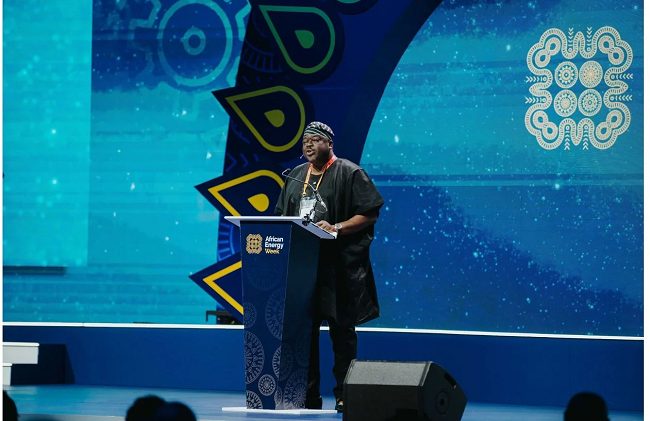
NLNG’s Deputy Managing Director, Mr. Olakunle Osobu, in a statement, made the remarks while addressing political and business leaders at the 2025 Africa Energy Week in Cape Town, South Africa.

Africa Energy Week
Deputy Managing Director of NLNG, Olakunle Osobu, addressing participants during the 2025 Africa Energy Week in Cape Town, South Africa

The statement was issued by the company’s General Manager, External Relations and Sustainable Development, Dr Sophia Horsfall, in Port Harcourt on Tuesday, October 7, 2025.

Speaking further, Osobu said Africa was no longer a bystander in global discussions on energy security, affordability, and sustainability, but a rising pillar of global supply, one which Nigeria had a duty to lead.

He stated that with more than 850 trillion cubic feet of natural gas reserves, representing about six per cent of global reserves, Africa was critical to the ongoing global energy transition.

“Africa has the resources, positioning, and ambition to double its share of the global LNG market within the next decade,” he said.

Highlighting Nigeria’s pioneering role in LNG development, Osobu pointed out the ongoing NLNG Train 7 expansion project which, he said, would increase the company’s production capacity.

“The Train 7 expansion project will increase our LNG production capacity from 22 million tonnes per annum (MTPA) to 30 MTPA.

“Our  investment in expansion shows that Nigeria is driving LNG growth not only for exports but also for domestic industries and energy access.

“We must prove that Africa can deliver LNG that is secure, competitive, and sustainable,” he added.

Osobu noted that the emerging LNG frontiers across the continent collectively represented more than 45 MTPA of potential new supply.

According to him, with these additions, Africa’s LNG output could rise from about 70 MTPA today to 120 MTPA by 2035, further consolidating the continent’s standing as a global LNG hub.

He pointed out Africa’s strategic advantage, including shorter shipping routes to both European and Asian markets, but said that competitiveness, financing, and domestic energy responsibility remained the continent’s biggest challenges.

Osobu observed that countries such as the United States and Qatar were rapidly expanding their LNG capacities, while global financiers increasingly demanded low-carbon and decarbonised LNG projects.

“Therefore, Africa’s LNG journey must strike a balance between reliably supplying the world, catalysing industrialisation across the continent, and demonstrating sustainability in line with global decarbonisation goals,” Osobu said.

The Africa Energy Week 2025 brought together policymakers, investors, and industry leaders to shape Africa’s energy future.

By Desmond Ejibas

Nigeria aims to refine more oil locally – Lokpobiri

0

Minister of State for Petroleum Resources (Oil), Heineken Lokpobiri, says the Federal Government is determined to ensure that every barrel of crude produced in Nigeria adds real value at home and abroad.

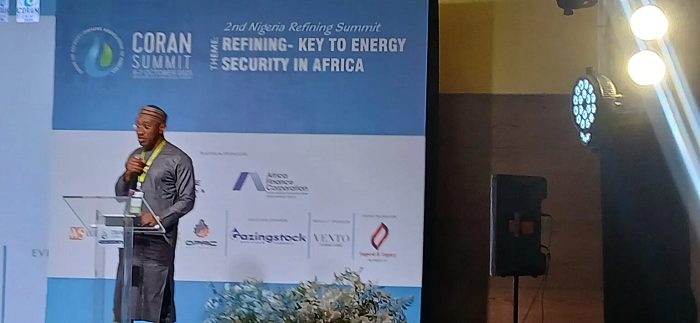
He said this while speaking at the 2025 Crude Oil Refinery-Owners Association of Nigeria (CORAN) Summit in Lagos on Tuesday, October 7.

Ndah Adaba
Ndah Adaba

Lokpobiri, who was represented by his technical adviser, Ndah Adaba, said improving local refining capacity and energy security remains central to Nigeria’s development goals.

The theme of the summit is “Refinery – Key to Energy Security in Africa”.

It brought together engineers, policymakers, and energy professionals from across the continent.

According to the minister, as part of a deliberate policy and broader strategy, the “Naira for Crude” sales agreement will continue to play a vital role in reducing the cost of fuel production.

He added that it also helps in mitigating exchange rate volatility and supporting indigenous refining capacity.

Lokpobiri stated that, through the Nigerian Midstream and Downstream Petroleum Regulatory Authority (NMDPRA), the government had streamlined the licensing process, from the Licence to Establish, to Construct, and Operate.

This, he added, helps in ensuring that credible investors are supported rather than hindered by bureaucratic bottlenecks.

The minister noted: “Beyond licensing, the government is also facilitating crude oil supply to domestic refiners through the effective implementation of the Domestic Crude Oil Supply Obligation (DSCO).

“No nation can claim energy independence without the ability to refine its own crude.”

He stressed that the timing of the summit is critical, as Nigeria, and Africa at large, faces a pivotal moment requiring bold action to ensure energy security, promote indigenous refining, and position the continent as a net exporter of petroleum products.

He said that under the Renewed Hope Agenda of President Bola Tinubu, indigenous refining had been identified as a key driver of energy independence, job creation, and industrial revitalisation.

“Today, we have seen indigenous success stories such as Dangote Refinery & Petrochemical, Waltersmith Petroman Refinery, and Aradel Holdings, among others.

“These demonstrate that Nigerians possess both the capacity and the will to refine Nigeria’s crude oil locally.

“These projects are more than just facilities; they symbolize confidence in our policy direction. We are committed to replicating such success across all oil-producing states,” Lokpobiri said.

In a move to expand Nigeria’s refining influence beyond its border, he added that the government had launched the West African Fuel Reference Market, aimed at positioning Nigeria as a regional hub for refining and petroleum product supply within the West African subregion.

“With increased domestic refining capacity, Nigeria will not only meet its internal demands but also become a reliable supplier to neighboring countries, reducing dependence on distant refineries and costly maritime imports.

“This aligns with the African Union’s vision for energy integration and intra-African trade under the African Continental Free Trade Area (AfCFTA),” he noted.

Looking ahead, Lokpobiri said the government would ensure feedstock security for all licensed refiners and deepen fiscal incentives to attract further investments.

He also highlighted ongoing efforts to enhance collaboration among the Ministry of Petroleum Resources, NMDPRA, NUPRC, and security agencies to combat crude theft, pipeline vandalism, and improve relationships with host communities.

The minister further stressed the need for African nations to collaborate on product exchange, logistics, and shared energy infrastructure.

“The path to Africa’s energy security runs through the gates of our refineries and the institutions that support them.

“The Federal Government remains fully committed to supporting indigenous refiners, strengthening regulatory institutions, and creating an enabling environment for sustainable growth in the downstream sector.

“Let this CORAN Summit 2025 serves as a renewed call to industry players, regulators, investors, and policymakers – to unite in building an Africa that refines what it produces and powers its future through its own resources,” he said.

Meanwhile, CORAN has called for joint efforts to position Nigeria as a net exporter of crude oil within Africa and beyond.

The Chairman of CORAN, Mr Momoh Oyarekhua, said the association is working to ensure Nigeria’s crude oil production serves markets beyond its borders.

“This summit brings together visionaries, policymakers, investors, and industry leaders committed to shaping Nigeria’s and Africa’s refining future,” he said.

According to him, CORAN’s vision is to transform Nigeria from a petroleum importer into a self-sufficient refining nation and eventually a net exporter across Africa.

“This summit provides a platform to advance this mission through dialogue, innovation, and collaboration among stakeholders.

“Africa’s energy security depends on refining more of its crude oil,” Oyarekhua said.

He said strengthening domestic refining capacity would stabilise fuel supply, cut import dependence, retain value locally, and create employment opportunities.

“The 2025 CORAN Summit offers a chance to explore policy reforms, financing strategies, and technological partnerships to achieve this goal.

“As we discuss refining integration, modular and large-scale projects, and regional cooperation under AfCFTA, I urge participants to share ideas for sustainable progress.

“Together, we must build a resilient and self-reliant energy future — one refinery, one partnership, and one innovation at a time,” he said.

Also speaking, Mr. Clement Isong, Chief Executive Officer of the Major Energies Marketers Association of Nigeria (MEMAN), described the summit’s theme as timely and strategic.

He said it reflects a shared understanding that Africa’s energy independence depends on strengthening local refining capacities.

“As Africa faces market volatility and energy transition, refining remains vital for sustainable growth, industrial strength, and economic empowerment,” Isong noted.

He commended CORAN’s leadership for driving key discussions linking refining development to wider national and regional energy goals.

“MEMAN supports this vision. We continue to promote collaboration, efficiency, and innovation across the downstream petroleum value chain.

“We hope this summit delivers actionable insights and partnerships to achieve energy security — not just for Nigeria, but for all of Africa.

“MEMAN remains a committed partner on this shared journey toward a sustainable and self-reliant energy future,” he said.

Just Transition plan to drive inclusive climate action in Nigeria – NCCC

The National Council on Climate Change (NCCC) says Nigeria is charting a path towards an inclusive, low-carbon and climate-resilient economy through the Just Transition Guideline and Action Plan (JT-GAP).

Director-General of NCCC, Mrs. Omotenioye Majekodunmi, said this on Tuesday, October 7, 2025, in Abuja at the opening of a two-day validation workshop for the Just Transition Guideline and Action Plan.

Mrs. Omotenioye Majekodunmi
Mrs. Omotenioye Majekodunmi, Director-General of the National Council for Climate Change (NCCC)

Majekodunmi, who was represented by Mrs. Jummai Vandu, Desk Officer for Just Transition, said the framework integrates equity and inclusiveness into national climate policies and aligns with Nigeria’s Net Zero target by 2060.

She said the JT-GAP complements the Energy Transition Plan and the National Climate Change Act (2021), addressing job displacement risks while promoting green job creation and sustainable livelihoods across sectors.

“We commend the International Labour Organisation (ILO), UNIDO, UNDP and the Centre for Climate Change and Development (CCCD) for providing technical and research support in developing the draft framework.”

Also speaking, Ms. Vanessa Phala, ILO Country Director for Nigeria, Ghana, Liberia, Sierra Leone and ECOWAS, described the framework as vital for guiding Nigeria’s transition to a sustainable, low-carbon economy.

Phala, who was represented by Mr. Guite Diop, ILO Specialist on Climate Change, said the ILO’s Just Transition principles included equity, inclusion, stakeholders’ engagement and worker protection, which were embedded in Nigeria’s framework.

According to her, the integration of these principles demonstrates Nigeria’s commitment to fairness, inclusivity and sustainability in implementing climate action policies that benefit workers, communities and enterprises.

She commended the NCCC, European Union (EU), GIZ SKYE Programme, French Government and partner UN agencies for their support and pledged ILO’s continued collaboration with the council.

Mr. Echezona Asuzu, NLC Focal Person on Climate Change, commended the NCCC for leading an inclusive process, ensuring workers’ voices were reflected throughout the development of the JT-GAP.

Asuzu appreciated partners such as ILO, UNDP and UNIDO for their support, urging continued collaboration during implementation to strengthen social protection and ensure fair labour outcomes.

He said although the draft reflected strong partnerships among government, labour and development partners, further refinements would make it more effective and representative of Nigeria’s workforce.

By Joan Nwagwu

Dialogue calls for stronger ocean action in national climate plans, scaled-up finance

The informal summary report of the 2025 Ocean and Climate Change Dialogue, released at the end of September, urges countries to step up ocean action in their new national climate plans (NDCs), scale up finance for ocean solutions, and strengthen synergies between climate, biodiversity and ocean health.

The annual Dialogue, mandated at COP26, took place during the 62nd session of the UNFCCC Subsidiary Body for Scientific and Technological Advice (SBSTA62) in June, and was co-facilitated by Ambassador Carlos Cozendey of Brazil and Ulrik Lenaerts of Belgium.

Ulrik Lenaerts
Ulrik Lenaerts, Deputy Director for Environment and Climate Policy and Cooperation of the Federal Public Service for Foreign Affairs, Foreign Trade and Development Cooperation of Belgium

“This year’s ocean and climate dialogue demonstrated once more how critical ocean-based climate action is for reaching the goals of the Paris Agreement and for following up on the global stocktake,” said Ulrik Lenaerts.

“While there is no one-size-fits-all solution, sustainable ocean climate action has a huge potential in contributing to the 1.5°C goal and in building resilience to climate change,” added Lenaerts. “We need to grasp these opportunities and make them an integral part of our NDC cycle and of our actions implementing the Global Goal on Adaptation. Synergetic actions on ocean, climate and biodiversity will make our response to these interlinked challenges better and more impactful.”

On the Global Goal on Adaptation (GGA), the report recommends integrating the ocean across all relevant GGA thematic targets, including disaggregated indicators that capture ecosystem integrity and connectivity. It also highlights the importance of aligning indicators with existing multilateral frameworks such as the Convention on Biological Diversity’s Global Biodiversity Framework to reduce duplication and maximize impact.

The Dialogue underscored the importance of international cooperation and welcomed momentum from initiatives such as the Blue NDC Challenge, launched by Brazil and France, and the 2025 UN Ocean Conference declaration “Our ocean, our future: united for urgent action.” It also stressed that the implementation of the Agreement on Marine Biological Diversity of Areas beyond National Jurisdiction (BBNJ Agreement) provides a critical opportunity to advance integrated ocean governance that supports climate ambition beyond national jurisdictions.

Finance emerged as a central issue.

“Ocean solutions cannot remain on the margins. We need finance that is predictable, accessible and targeted to those who need it most – developing countries,” said Ambassador Carlos Cozendey. “Blue finance must match the ambition we are asking Parties to deliver in their new NDCs.”

The report underscores that finance, technology and capacity-building are critical enablers for advancing ocean action.

At COP30, the co-facilitators will present the Dialogue’s outcomes and host a special event for Parties and observers to exchange on the report’s key messages.

First-in-Africa climate-animal confab explores livestock emissions mitigation, food security

For the first time, the International Greenhouse Gas & Animal Agriculture Conference (GGAA) is being held in Africa, a continent that is home to one-third of the world’s livestock. The 9th edition of the conference is taking place from October 5 to 9, 2025, in Nairobi, Kenya, marking a pivotal shift towards inclusive, globally representative dialogues on mitigating livestock emissions while bolstering food security and rural economies.

Co-hosted by the International Livestock Research Institute (ILRI) and the Norwegian Institute of Bioeconomy Research (NIBIO), GGAA2025 convenes over 500 leading scientists, policymakers, industry experts, and civil society representatives to address one of agriculture’s most urgent challenges: reducing greenhouse gas emissions from livestock while ensuring food security, rural livelihoods, and climate resilience.

9th Greenhouse Gas & Animal Agricultural Conference
L-R: Claudia Ardnt, Senior Scientist at the International Livestock Research Institute, ILRI, and Team Leader of the Mazingira Centre and Vibeke Lind, a Research Scientist at Norwegian Institute of Bioeconomy Research, NIBIO, address delegates during the opening ceremony of the 9th Greenhouse Gas & Animal Agricultural Conference in Nairobi, Kenya. Photo Credit: Saleef Nyambok/ILRI

Centring the Global South in the Climate-Livestock Dialogue

Hosting GGAA2025 in Nairobi underscores the continent’s central role in shaping a sustainable future for the sector. Africa is home to one-third of the world’s livestock, which contribute up to 80% of national GDP in some countries and account for nearly 0.8 gigatons of annual emissions. This move amplifies the voice of Low- and middle-income countries in global climate discussions and provides a critical platform to address the unique opportunities and constraints faced by the hundreds of millions of smallholder farmers who form the backbone of livestock production in the region.

The conference agenda is built on the fundamental principle that “one size does not fit all.” Solutions effective for high-productivity systems in Europe or North America – such as feed additives for cows producing 40-50 litres of milk per day – are often not feasible for smallholder systems in Africa, where cows may produce only 5-6 litres. For these farmers, the most significant emissions reduction opportunities lie in improving animal health, enhancing feed quality, and genetic improvement to raise productivity and lower emissions intensity.

“Bringing GGAA to Nairobi is a deliberate and significant move. Low- and middle-income developing country livestock systems have been under-represented in global climate science. GGAA 2025 changes that. We are showcasing research from low- and middle-income countries, particularly Africa where we have 17 countries represented. This is where we can forge a sustainable future for the global livestock sector, one that is built on context-specific solutions,” said Claudia Arndt, Senior Scientist at the International Livestock Research Institute, ILRI and Team Leader of the Mazingira Centre.

Showcasing Achievable, Climate-Smart Solutions

The conference underscores that climate-smart livestock is not a future aspiration but a present-day reality. Research shows that combined strategies in animal nutrition, health, genetics, and manure management can cut livestock greenhouse gas emissions by 20–50% while simultaneously boosting productivity and farmer incomes.

The event is unveiling scientific breakthroughs and showcasing scalable technologies, including:

  • Breeding low-methane livestock through genomic selection tools.
  • “Exhalomics” cow breath analysis to monitor methane emissions in real time.
  • Circular manure systems that reduce emissions by up to 90% while producing renewable energy and organic fertiliser.
  • Animal health interventions, with new modeling showing that reducing disease could cut emissions intensity by up to 12%.
  • Forage innovations that improve productivity and reduce methane emissions.
  • Digital farm tools and carbon accounting systems for tracking and managing emissions.

Academic and policy sessions will cover critical themes such as rumen microbial genomics, manure management, GHG measurement techniques, and policy frameworks for integrating livestock into national climate commitments.

“We want GGAA 2025 to be a springboard for lasting partnerships that ensure solutions are farmer-ready, affordable, and equitable and support resilient livelihoods. We don’t have to choose between food security and climate mitigation as the priority pathway for both is to improve livestock productivity. Farmer-ready solutions are proving it’s possible to do both. The goal is to cut emissions while raising yields – that’s the win-win of climate-smart livestock,” added Professor Appolinaire Djikeng, the Director General of the International Livestock Research Institute (ILRI).

NIRSAL unlocks N70bn in financing for agriculture in 2025

The Nigeria Incentive-Based Risk Sharing System for Agricultural Lending (NIRSAL Plc) has announced a remarkable rebound in its operations, which has resulted in the facilitation of over ₦70 billion in commercial financing for agribusiness as at Q3 2025, its strongest annual performance since inception.

In operation since 2013, this result represents nearly a quarter of the organisation’s cumulative ₦270 billion facilitated for agriculture and agribusiness to date, an achievement that appears to underscore the impact of NIRSAL’s revamped strategy under its new Board and Executive Management. 

NIRSAL
NIRSAL

The timing of this turnaround has been described as critical: Bank lending to agriculture had been in steady decline, falling from 6.18% of aggregate lending in 2022 to 4.82% in 2024, while sectoral growth slowed from 2.5% to 1.7% within the same period. By applying its signature tools for value chain modelling to address identified issues, providing technical support to agribusinesses and financial institutions, all while deploying its risk-sharing frameworks, NIRSAL is said to have restored lender confidence thus channelling fresh funds into key value chains, including grains, cocoa, shea, and livestock. 

In terms of impact, the organisation said that there has been an improvement in local production across key commodities and a positive balance of trade for agriculture, with over 32% of the facilitated sum directly supporting value-added commodity export. Most notably, agriculture’s share of bank lending has risen again to 5.33% as of May 2025, reflecting renewed interest from financiers. Two newly licensed banks have also entered the sector relying on NIRSAL’s frameworks, contributing to the ₦70 billion facilitated so far this year.

Commenting on the milestone, NIRSAL’s Managing Director/CEO, Sa’ad Hamidu, said: “₦70 billion may appear modest compared to the size of Nigeria’s agricultural financing needs, but the significance is profound. It proves that agriculture can be commercially and sustainably financed. With the right blend of capital, technical support, and risk mitigation, the sector can become more productive, resilient, and globally competitive.”

Hamidu added that NIRSAL remains confident of hitting its ₦150 billion target for 2025: “This is not yet the peak of the harvest season when merchants typically seek credit for offtake and storage, and when super agro-dealers stock up on fertilisers and inputs ahead of the next planting cycle. Therefore, the opportunities still to come give us every reason for optimism.”

Beyond headline figures, NIRSAL says it is working to reshape the lending landscape for agriculture. Its integrated model, spanning prospect identification, deal structuring, business advisory, and credit guarantees, handholds agribusinesses from loan origination to disbursement. Also, by providing tailored advisory and risk mitigation, the institution helps businesses once deemed unbankable to gain access to sustainable credit.

Through this approach NIRSAL aid the creation of a pipeline of emerging agribusinesses while supporting established firms to scale. Meanwhile, several borrowers who once engaged NIRSAL have since graduated into routine lending relationships with their bankers whose understanding of the dynamics of agribusiness has grown, leading to greater comfort in lending. This proves that the NIRSAL model is a pathway to long-term sustainability in the agriculture sector.

The ₦70 billion facilitated so far this year is a direct outcome of NIRSAL’s sustained capacity-building efforts for financial institutions. Through targeted training sessions for over 1,100 staff of banks, NIRSAL has deepened understanding of agricultural financing within its risk-sharing framework leading to an increase in loan request approvals. Similar training programs for agricultural value chain actors, including 450 participants trained on feedlot management, commodity export, and climate finance so far, will become increasingly evident over time, as capacity and confidence grow across these sub-sectors.

As part of its forward agenda, NIRSAL is developing a digital network it calls the NIRSAL LandBank portal – a connected ecosystem of agricultural stakeholders, from research and development to markets, to provide data-driven insights for investors, policy makers, and development partners for the identification of opportunities, risk reduction, and informed decision-making.

The LandBank portal would become an additional channel for project development, with climate finance another potential source of funding. NIRSAL continues to deepen its interest in and collaboration around climate finance, recently signing an understanding with the Rural Electrification Agency to provide off-grid power to production and processing clusters in rural locations. These efforts, the institution believes, will build resilience into the agricultural value chain and aid Nigeria’s push toward a $1 trillion economy.