A new off-road electric vehicle manufactured in Europe was tested by nature conservationists in the European Serengeti large herbivore reserve near Prague. The Spartan EV 2.0 electric off-roader produced by the European company MW Motors had to handle the harshest of terrains during the tests.
“We tested the off-road electric vehicle in the roughest part of the reserve, which is nicknamed the ‘tank graveyard’. During the tests, the EV managed to traverse the most difficult of terrains and steep slopes. Of the off-roaders that we’ve used or tested at the reserve over the ten years of its existence, it definitely handles the terrain the best,” said Dalibor Dostal, director of the European Wildlife conservation organisation, which founded the large herbivore reserve in collaboration with scientists in 2015.
Spartan EV 2.0 off-road electric vehicle
The large herbivore reserve is striving to implement the changeover to zero-emission equipment as fast as possible. A Polaris Ranger electric utility vehicle with a flatbed has been used for everyday care of the reserve since last year. In the near future, the reserve also needs a multi-seat vehicle for visitors, school excursions, film-makers and other fairly large groups that the existing working machine cannot accommodate.
“A fast transition to electromobility in the reserve is important not just for limiting greenhouse emissions. Exhaust emissions from internal combustion engines also adversely impact biodiversity and human health. That’s why electric vehicles have several benefits. It’s in nature conservation and forest care in particular that the transition to electromobility should be faster than in other fields,” added Dostal.
The Spartan EV 2.0 electric off-roader was placed on the market by MW Motors last year. In terms of appearance, the vehicle resembles the German Mercedes-Benz G-Class. The sturdy off-roader with a range of 240 km can pull up to 3.5 tonnes and is intended for a segment that does not have a broad offer in the Czech market as yet.
The vehicle also manages to draw energy through fast charging; its V2L interface enables it to charge various electric tools or domestic appliances. The vehicle is manufactured in two sizes: in four-seat and six-seat versions. Both have a cargo variant available, in which the back seats are replaced by a storage space.
“The main advantage is its ease of off-road control. Even an unexperienced driver can handle a complicated section. The huge torque available in a wide range of speeds provides a sense of security. You can get up a steep hill just by lightly touching the accelerator. Thanks to precise power delivery, it is possible to move literally by centimetres, which is appreciated by anyone who must manoeuvre, for example, with a trailer in difficult terrain,” says Martin Vesely, technical director of MW Motors.
Thus, typical users of the off-road electric vehicle include nature reserves, farmers, foresters and people who need to utilise the advantages of an electric vehicle in harsh terrain. The UK is one of the main markets for the electric off-roader.
MW Motors was founded by Irish native Maurice Anthony Ward in 2017. In addition to the Spartan EV 2.0 electric off-roader, it is also developing the Luka EV retro electric sports car.
The Federal Government of Nigeria has stated that it harbours no plans to unlawfully arrest, detain, or prosecute opposition figures. This clarification is in response to a supposedly fabricated document in circulation alleging the establishment of a multi-agency task force for a purported programme tagged “ADP4VIP” (Arrest, Detain, Prosecute for Very Important Persons).
Mohammed Idris, Minister of Information and National Orientation, disclosed in a statement that the document falsely claims that a task force comprising the Economic and Financial Crimes Commission (EFCC), the Independent Corrupt Practices and Other Related Offences Commission (ICPC), and the Nigerian Financial Intelligence Unit (NFIU), coordinated by the Office of the National Security Adviser, aims to aggressively target prominent opposition figures without due process.
Minister of Information and National Orientation, Mohammed Idris
“The authors of this deliberate disinformation imprudently cite ‘multiple credible sources’ to allege a planned “systematic weakening and neutralisation of opposition political activity,” particularly within the African Democratic Congress (ADC),” submitted Idris.
The Federal Government, he added, wishes to state emphatically:
1. There is no such programme as “ADP4VIP.”
2. The administration of President Bola Ahmed Tinubu, GCFR, is firmly and successfully focused on its core agenda: implementing measurable economic reforms, defeating insecurity, expanding trade opportunities, and restoring investor confidence.
3. The attempt by some opposition elements to frame lawful accountability as political targeting is a dangerous red herring designed to shield so-called VIPs from answering to our national laws and anti-corruption agencies.
He went further: “The Government underscores its foundational principles. Section 40 of the 1999 Constitution (as amended) guarantees every Nigerian the right to freely associate and assemble. President Tinubu swore an oath to uphold this Constitution and its protections, including the freedoms of association and religion. He is a democrat with considerable and positive footprints.
“Under President Tinubu’s leadership, the Federal Government remains unwavering in its commitment to the rule of law, due process, and the independence of institutions. Nigeria is a constitutional democracy where law enforcement and judicial agencies are obligated to perform their duties professionally, without interference, and in the nation’s best interest.
“Politicians and citizens are therefore enjoined to desist from engaging in disinformation, misinformation, and fake news, especially in an era where credibility is intrinsically linked to informational fidelity.
“With the 2027 general elections on the horizon, the public should anticipate an increase in fabricated narratives and political blackmail by actors who employ falsehood as a strategy for relevance. We urge all Nigerians to remain vigilant and to reject the politics of distortion and division.
“Every Nigerian retains the constitutional right to lawful association and political activity. Concurrently, our security and anti-corruption institutions retain the lawful mandate to operate in the nation’s interest.
“As we draw the curtain on 2025 and step into a new year, this government will not be distracted by those invested in perpetual politicking. Nigerians deserve continuity, progress, and tangible results – and that is what the Tinubu Administration remains dedicated to delivering.”
The launch of Nigeria’s e-Pharmacy Policy, according to industry experts, marks a decisive transition in the pharmaceutical service delivery because of its unifying and regulatory framework that governs both electronic and hybrid pharmacy practices across the country.
In a ceremony hosted by the Federal Ministry of Health & Social Welfare in Abuja, Nigeria’s capital, to unveil the plan, the stakeholders, while narrating the journey that led to the development of the document, said they were happy because for the first time, the nation now has a guideline that formally integrates digital pharmacy into Nigeria’s broader health-system architecture.
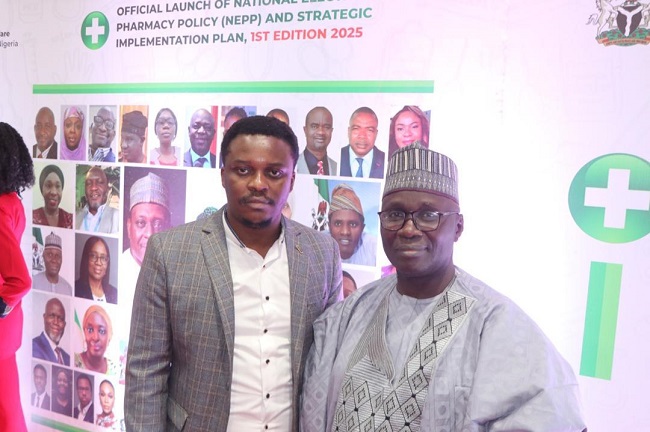
L-R: David Adeyemi, CEO/Founder, Pharmachain Technologies, and the Registrar/CEO of the Pharmacy Council of Nigeria (PCN), Ibrahim-Babashehu Ahmed, during the launch of the National e-Pharmacy Policy held in Abuja
They are further excited because the framework also positioned e-Pharmacy as a regulated complement to physical service delivery rather than an informal, parallel market.
“I will say that the policy is actually great because it protects indigenous innovators,” David Adeyemi, CEO/Founder, Pharmachain Technologies, stated while delivering his goodwill speech at the launch of the policy.
The pharmacist believes the unveiling of the guideline was significant because if properly implemented, he said it will help to address the various health challenges that are currently bedevilling the country, especially the issues around out-of-pocket expenditure, workforce shortages, and uneven availability of essential medicines and family planning services.
Disclosing the historical origin of his organisation and its pathway in the e-pharmacy sector, he hinted that it all started during COVID-19 when they were motivated and thought of how to penetrate the lockdown that the world experienced during that period to get essential medicines across to those in need.
He expressed optimism that the policy will be well executed as a matter of urgency, considering its long-awaited arrival and the fact that Nigeria is many steps behind other countries in having a framework for the deployment of e-Pharmacy to deliver effective healthcare services.
For a country like Nigeria, where you find all sorts of web platforms selling and advertising medicines, Adeyemi, whose establishment was among those selected to draft the policy, assured that with the release of the policy, innovators, software developers, and business owners will now know that there is a formal way of approaching the e-pharmacy practices in the nation.
In response to how those in rural communities will benefit from this new guideline, he said it will help address the issue of quack practices in those areas and increase access to certified e-pharmacy stores, which remained a very big hurdle.
“The government has to communicate to help people know that they are not trying to stifle innovations, because the spirit of this document was made to be fair and encourage innovators,” the Pharmachain Technologies chieftain said when asked what he would do differently if in the position to ensure that the policy is effectively implemented to redirect the nation on the path of medical prosperity.
He commended the Ministry for considering his organisation and others worthy of participation in the process, which he said made it more inclusive by capturing all voices and improving the final document.
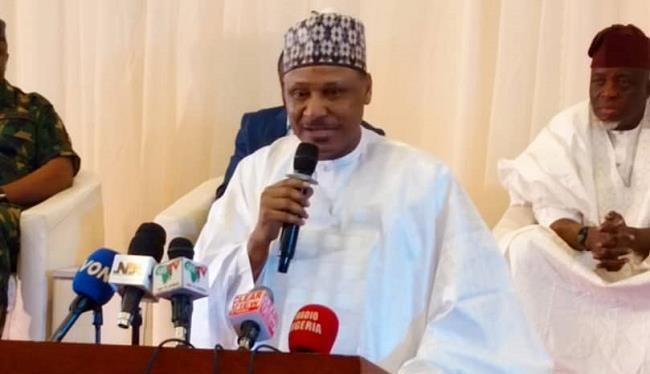
The policy, according to the Coordinating Minister of Health and Social Welfare, Professor Ali Pate, would regulate the production and sale of pharmaceuticals and allow Nigerians access to quality-assured medicines.
Pate, who was represented at the meeting by the Director of Food and Drug Services, Olubumi Aribeana, said the policy was inspired to advance the healthcare delivery and allow Nigerians access to affordable medicine without the conventional barriers of location.
He went on to say that the framework’s implementation will also help to address the issue of fragmentation and lax oversight of online pharmaceutical sales, which had created dangerous gaps where poor and counterfeit medicines, unlicensed vendors, and disinformation flourish.
“Today marks a bold step forward in our collective mission to modernise healthcare delivery and ensure that every Nigerian has access to safe, affordable, and quality-assured medicines—no matter where they live,” Prof. Pate stated.
In the same line of thought, Ibrahim-Babashehu Ahmed, the Registrar/CEO of the Pharmacy Council of Nigeria (PCN), acknowledged that the policy would provide strategic direction for regulation, especially for PCN, being the implementing agency.
“We have developed the regulation to guide this particular endeavour. The regulation was approved by the Coordinating Minister of Health and endorsed by the Minister of Justice,” he noted.
He assured that PCN is positive that there will not be any difficulty in the implementation of the policy, urging Nigerians to embrace the document to ensure it successful execution.
In all honesty, the National e-Pharmacy Policy clearly signifies Nigeria’s shift from preparation to action based on the remarks made by the different speakers. Its impact, however, will depend on its deployment being disciplined and equitable, establishing e-pharmacy as a long-lasting foundation of the health system that increases access, fortifies regulation, and provides care with dignity.
Regulatory reform is emerging as a decisive factor in Africa’s push to raise oil and gas output and attract new investment, with leading producers such as Angola, Nigeria and the Republic of Congo demonstrating how clearer rules and targeted incentives can deliver tangible results.
Angola has positioned itself as one of Africa’s most proactive reformers, rolling out multi-year licensing rounds, establishing the National Oil, Gas & Biofuels Agency and introducing measures such as the incremental production decree.
The reforms have revived exploration in frontier and mature basins, leading to discoveries including ExxonMobil’s Likember-01 and Azule Energy’s Block 1/14 gas find.
Oil
Integrated developments such as Kaminho, Agogo and the New Gas Consortium project are helping sustain production above 1 million barrels per day, with authorities citing a projected investment pipeline of about $70 billion over the coming years.
Nigeria has also underscored the impact of reform through the Petroleum Industry Act of 2021, which streamlined licensing and reduced bureaucratic hurdles.
The changes are aimed at restoring investor confidence and lifting output toward a target of 2.5 million barrels per day.
Licensing rounds held in 2024 and 2025 have further boosted interest, with a November 2025 bid round offering 50 blocks and targeting $10 billion in new investment.
The Republic of Congo is pursuing similar measures as it targets production of 500,000 barrels per day and seeks to expand liquefied natural gas capacity to 3 million tons per year.
Planned reforms include a Gas Master Plan, a dedicated Gas Code and new licensing rounds, alongside ongoing projects such as TotalEnergies’ $600 million investment in Moho Nord and the second phase of Congo LNG, which began operations in November 2025.
The experiences of Africa’s largest producers are increasingly shaping policy choices in emerging markets.
Namibia, following major offshore discoveries in the Orange Basin, is targeting first oil by 2029 through projects led by TotalEnergies and Galp, while a December 2025 onshore discovery by ReconAfrica has added to its prospects.
Analysts say stable fiscal regimes and predictable regulation will be key as the country moves from exploration to development.
Uganda, which expects first oil from the Kingfisher and Tilenga fields in 2026, is also drawing lessons from regional peers.
Its development strategy includes the 1,443-kilometre East African Crude Oil Pipeline linking Lake Albert to Tanzania’s Port of Tanga, highlighting the importance of aligning upstream, midstream and industrial policies.
As discoveries mature across the continent, experts say regulatory frameworks must evolve from exploration-focused policies toward comprehensive strategies covering development, commercialization and exports.
That shift is expected to feature prominently at African Energy Week 2026, where governments, regulators and investors will exchange best practices.
“Africa’s energy future will be built by countries that embrace reform, attract investment and move fast,” said NJ Ayuk, executive chairman of the African Energy Chamber.
“Policy clarity, stability and bold decision-making remain central to unlocking projects and expanding access to energy.”
Heirs Energies, said to be Africa’s leading indigenous integrated energy company, has acquired the entire 20.07% equity stake (120.4 million ordinary shares) previously held by Maurel & Prom S.A. in Seplat Energy Plc at a price of £3.05 pence per share, valuing the transaction at approximately $500 million.
The acquisition represents a further milestone in Heirs Energies’ long-term strategy to strengthen indigenous participation in strategic assets and accelerate sustainable energy development and security for Nigeria and Africa.
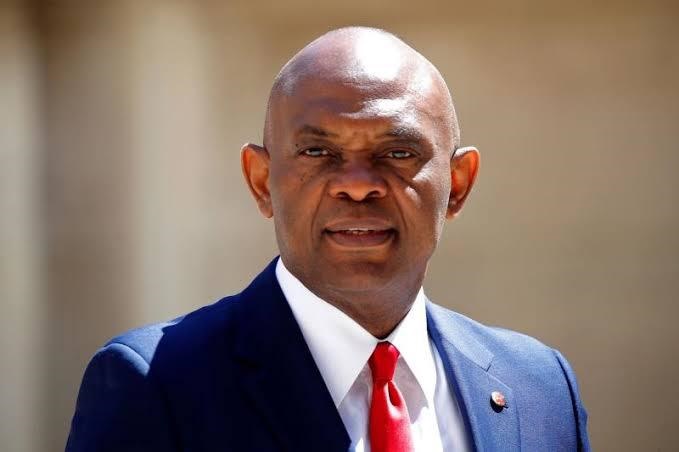
Chairman of Heirs Energies, Tony O. Elumelu
Commenting on the transaction, Tony Elumelu, Chairman of Heirs Energies, said: “This acquisition reflects our strong belief in Africa’s ability to own, develop, and responsibly manage its strategic resources. It is a long-term investment in Nigeria’s and Africa’s energy future, and aligns with our mission to drive energy security, industrialisation, and shared prosperity. Seplat Energy has built a resilient, well-governed platform with compelling long-term prospects, and we are pleased to support its continued growth and value creation for all stakeholders.”
The landmark achievement was supported by two leading African financial institutions – Afreximbank and AFC – further demonstrating Africa’s capacity to finance its own deals.
Having a strong focus on safe operations, innovation driven growth, environmental responsibility, and creating shared prosperity for all stakeholders, Heirs Energies operates OML 17 in the Niger Delta, producing over 50 thousand barrels of oil per day (50 kbopd) and 120 million cubic feet of gas per day (120 mmcfd), with reserves base of over 1.5 billion barrels of oil (MMBo) and 2.5 trillion cubic feet of gas (Tcf).
Seplat Energy Plc is a Nigerian independent energy company focused on oil and gas exploration, production, and gas processing, primarily in the Niger Delta. It is listed on both the Nigerian Exchange and the London Stock Exchange and is as a key player in Nigeria’s energy transition.
President of the Nigerian Institution of Estate Surveyors and Valuers (NIESV), Mr. Victor Alonge, says Nigeria’s new tax reforms will positively impact the real estate sector from Jan. 1, 2026.
Alonge spoke on Tuesday, December 30, 2025, in Lagos during a press briefing marking the signing of a Memorandum of Understanding between QShelter Ltd and M.I. Okoro and Associates.
The firms signed the MoU to jointly market housing units under the Federal Government’s Renewed Hope Housing Schemes across Abuja, Kano and the Lagos Coastal Road corridor.
NIESV President and Chairman of Council, Victor Alonge
Speaking at the event, Alonge said the reforms would boost real estate investment and expand home ownership opportunities nationwide.
“The new tax law is actually a positive thing for the real estate sector,” Alonge said.
He explained that the law exempts several small-scale businesses within the construction value chain, describing it as a model adopted by advanced economies for growth.
Alonge added that value added tax had been removed for the informal segment of the construction industry under the new law.
He said although large construction firms would still pay VAT on some materials, provisions exist to offset costs through other incentives, including local production.
According to him, savings from the reforms will strengthen mortgage financing and improve access to housing for Nigerians.
“So it’s something that we need to see as positive for our industry,” Alonge said.
He described the law as one of the most beneficial for Nigerian workers, citing broad tax exemptions for low-income earners.
Alonge said it was encouraging that about 90 per cent of workers would no longer pay taxes due to the higher income threshold.
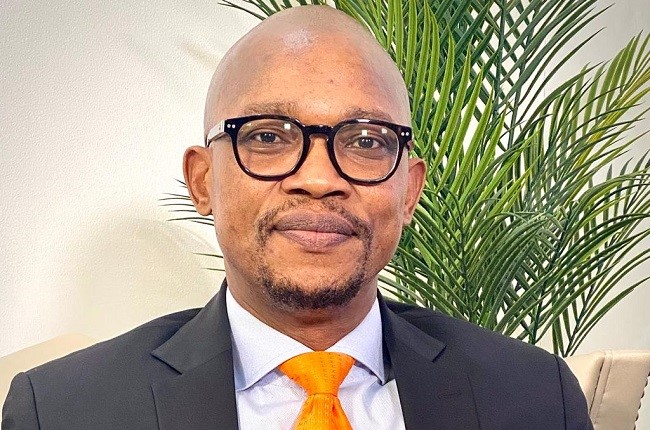
Also speaking, Mr. Adegbenga Alamu, Chief Operating Officer, QShelter Ltd., said cheaper debt servicing would stimulate real estate investment under the new regime.
“The interest paid on a mortgage is now deductible before tax computation, making borrowing cheaper for home buyers.
“For those of us from banking, if I have cash, I will borrow. Debt is cheaper and better with the new law,” Alamu said.
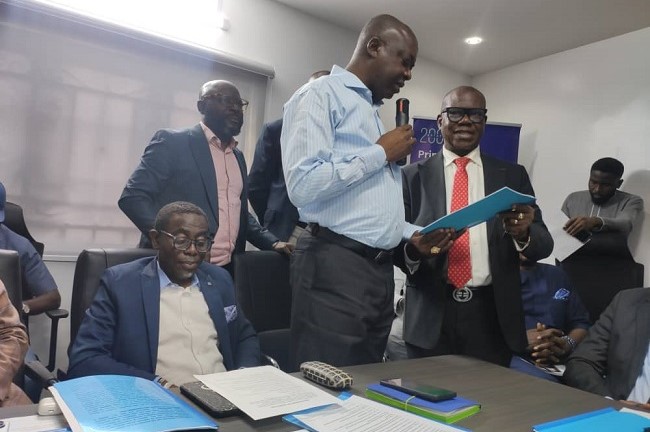
The firms of QShelter Limited and M. I. Okoro & Associates have signed a Memorandum of Understanding (MoU) towards the marketing of the Federal Government sponsored Renewed Hope Housing Estates in Abuja and Kano, as well as the 2004 Coastal Road Estate in Lagos.
Chairman, QShelter Limited, Mr. Kola Sowande, and Principal/CEO of M. I. Okoro & Associates, Dr. Innocent Meckson Okoro, signed the MoU on behalf of their respective organisations at a media session in Lagos on Tuesday, December 30, 2025.
The duo disclosed that they signed the MoU agreement to guide the two companies in their resolve to collaborate in the marketing of the various units of accommodation being marketed by QShelter Ltd as sole agent.
L-R: Chairman of Qshelter Limited, Pastor Kola Sowande, Chief Commercial Officer, QShelter Limited, Dare Makinde, Chief Operating Officer, QShelter Limited, Gbenga Alamu and Principal/CEO of M. I. Okoro & Associates, Dr, Chief M. I Okoro at the MoU signing in respect of marketing of Fed Govt Renewed Hope Housing Estates in Lagos, Abuja and Kano, held in Lagos
They also highlighted the successes of QShelter in the housing delivery within the context of Renewed Hope Housing Estates, which is the initiative of the Federal Government of Nigeria under the leadership of President Ahmed Bola Tinubu.
“The present Renewed Hopes Housing Policy of the Federal Government is a policy in the right direction because it addresses the housing needs of the middle class, and with the funding arrangement via FMBN NHF Mortgage and Rent to own of 6% and 7% respectively that guarantees ₦50 million per subscriber and a tenure of up to 30 years mortgage which is a decision in the right direction and highly commendable.
“The most recent addition to the Nigeria’s housing finance landscape is the Ministry of Finance Incorporated Real Estate Investment Fund (MREIF), under which 250 billion has been made available for disbursement to Nigerians seeking homeownership. The fund offers mortgage financing at a rate of 9.75%, with eligible individuals able to access up to N100 million per beneficiary,” Sowande and Okoro disclosed in a joint presentation.
Highlighting the efforts both firms are putting in place to ensure Nigerians all over the world benefit from the Renewed Hope Estates, Sowande and Okoro said that they are putting plans together to stage an international building exhibition in Liverpool, United Kingdom, during the Nigerian–UK Golfing Association International Golf tournaments holding in Liverpool, UK, which will attract Nigerian Golfers from Nigeria, UK, USA, Canada, etc.
“Also, this partnership will engage with the management of Access Bank Plc to work out arrangements for our sales team to participate in their annual polo tournament in London coming up within the 2nd quarter of 2026. Both arrangements will go a long way to address the UK Nigerian audience.
“While we have also commenced arrangements to feature in the OTC World Oil Institutions Conference holding in Houston USA about May 2026, this particular move will go a long way in addressing the Nigerian audience in the United States of America. Trust us, we shall leave no stone unturned in making sure that we succeed in addressing the interest of our Nigerians abroad as far as Renewed Hope Estates is concerned.”
Okoro commended government for the initiative of delivering houses to the teaming population and matching it with funding cum mortgage facilities of 20 years tenure and single-digit interest rate with contribution of 10% equity from the subscribers.
He said: “This is the first in the history of Nigeria that we are getting closer to what obtains in overseas countries. Now that this initiative has started, I implore the Federal Government through the Ministry of Housing and Urban Planning to ensure that this housing provision strategy does not die even after the eight years of President Ahmed Bola Tinubu’s administration. What the Ministry could be doing is to gather data based on feedback from the present initiative of the Renewed Hope Estates and try to modify the strategy where necessary in order to achieve far better approach and strategy in future housing policy and delivery.
“Critical components in housing delivery are finance, land and infrastructure generally. In order for the cost of our housing delivery to get cheaper, I suggest government will pay more attention on directly allocating lands for this type of developments, and put in place as a matter of deliberate policy infrastructure such as good roads, electricity, pipe-borne water, good transport/mass transit to move the population that occupy these developments, particularly where the land is far from the urban center.
“Such easy transport system would motivate people to buy and occupy the estate, while government direct involvement on infrastructural development would reduce the selling price per unit. If the developer is allowed to create roads, put electricity, water etc, the costs of these facilities will push up delivery cost of the estate per unit.
“I also suggest that in every Federal Government Housing Estate, let the developer incorporate solar panels as a means of power supply in order not to allow the subscribers to start buying generators to power the buildings throughout.”
Experts in the oil and gas industry have said that Nigeria could still secure a more sustainable oil and gas future if it gets governance right, enforces existing laws and restores confidence in regulation.
The experts, in separate interviews on Tuesday, December 30, 2025, in Lagos, said that the country’s biggest challenge was no longer the availability of oil and gas, but how the sector was managed.
They warned that weak institutions, policy inconsistency and poor execution continue to erode value in Africa’s largest energy producer, in spite of its vast hydrocarbon reserves.
Minister of State, Petroleum Resources (Oil), Sen. Heineken Lokpobiri (left) with Minister of State, Petroleum Resources (Gas), Ekperipe Ekpo
According to them, 2026 will be a decisive year, as Nigeria faces a clear choice between strengthening institutional discipline or sliding back into discretionary, personality-driven governance.
Prof. Wumi Iledare, Prof. Emeritus of Petroleum Economics, Louisiana State University, said the outlook for the sector in 2026 would depend more on governance quality and regulatory discipline than on geology.
“Nigeria is richly endowed with petroleum resources, but sustainable value creation depends on faithful implementation of the Petroleum Industry Act (PIA), regulatory neutrality and credible leadership,” Iledare said.
He stressed that the industry does not need new laws or emergency interventions, but consistent enforcement of existing regulations.
“What the sector needs in 2026 is predictable regulation, institutional restraint and strict adherence to the PIA,” he said.
Iledare pointed to the absence of fully constituted governing boards for petroleum regulatory agencies as a major weakness in the current framework.
He explained that the PIA deliberately created boards for the Upstream Commission and the Petroleum Authority to ensure accountability, strategic oversight and protection against regulatory capture.
Without such boards, he warned, regulators risk becoming overly personalised and exposed to political and commercial pressure.
On upstream operations, Iledare called for urgent steps to halt declining production, including better asset security, faster project approvals and transparent fiscal administration.
He said divestments by international oil companies must be closely monitored to ensure technical competence, financial strength and environmental responsibility.
On the downstream, he explained Nigeria was going through a structural market transition rather than a market failure, urging regulators to enforce competition rules and remain neutral among dominant players.
He also advised government to step back from refinery operations and focus on creating a stable and predictable commercial environment.
“Refining is a business, not a sovereign obligation. It will only thrive if private investors operate on a level playing field,” he said.
Iledare added that the commercialisation of the Nigerian National Petroleum Company Ltd. (NNPC Ltd.) would remain incomplete if balance-sheet discipline is replaced by repeated fiscal bailouts.
“Institutions, not improvisation, must guide the sector in 2026,” he said.
In a similar view, Dr Ayodele Oni, Partner and Chair of the Energy and Natural Resources Practice Group at Bloomfield Law Practice, said 2026 should be defined by policy stability and effective implementation.
He said crude oil production could rise toward the Nigerian Upstream Petroleum Regulatory Commission’s target of 2.5 million barrels per day from the current 1.7 million barrels per day to 1.83 million bpd, but only with coordinated action across regulatory, operational and security fronts.
Oni noted that indigenous producers, following asset divestments by international oil companies, now carry greater responsibility for sustaining output and would require government support through financing frameworks, timely approvals and fiscal incentives.
On the downstream sector, he projected modest gains in domestic refining driven by the Dangote Refinery and modular plants, but cautioned that progress depends on enforcing Domestic Crude Supply Obligations.
He also said cleaner fuels such as compressed natural gas, liquefied natural gas and liquefied petroleum gas are likely to gain wider adoption in 2026.
On security, Oni said crude theft and pipeline vandalism continue to drain production, urging operators to strengthen environmental, social and governance practices to reduce community tensions.
Responding to governance concerns, Mr Andy Odeh, Chief Corporate Communications Officer of NNPC Ltd., said the company operates under a best-practice governance framework established by the PIA.
He said NNPC Ltd. runs transparent procurement processes, maintains board oversight of major contracts and applies commercial, arm’s-length crude allocation systems.
Odeh added that legacy joint-venture cash call arrears have been cleared through pre-funded budgets, while the company’s accounts are audited by international firms and overseen by statutory institutions.
On refineries, he said reviews of NNPC’s four refineries are ongoing, with plans to disclose technical and equity partners to reposition the assets on a commercial footing.
The Nigerian Meteorological Agency (NiMet) on Tuesday, December 30, 2025, said it would improve its weather forecast, towards achieving national climate resilience in 2026.
The Director, Public Affairs and Consumer Protection of the agency, Mrs. Funke Adebayo-Arowojobe, disclosed this in an interview on Tuesday in Abuja.
She said that the agency is set to partner with relevant agencies in achieving this feat.
Mrs. Funke Adebayo-Arowojobe, NIMet Director, Public Affairs and Consumer Protection
Adebayo-Arowojobe noted that, based on the progress recorded in the first two years, Nigerians can expect more simplified weather information, improved early-warning systems, and wider rural reach, through road shows.
“The agency has planned to realise these, by engaging in town hall meetings, enhancing consumer protection processes, and innovative digital engagement tools.
“NiMet remains committed to collaborating with critical sectors to safeguard lives, protect property, and strengthen national climate resilience,” she said.
She commended the general public and stakeholders, for their continued support in 2025, and called for improved feedback and engagements in 2026, in order to better serve the public.
She noted that her department played a central role in coordinating NiMet’s public image, disseminating the weather information, and safeguarding consumer rights for early warning systems.
“The notion to segment weather action, is to tailor adaptation and risk management strategies, to specific context hazards, industries, sectors, communities and their locations.
“Weather data and weather action for the aviation sector is different from that for the Agricultural sector, state government, construction, humanitarian and healthcare sectors among others.
“The target approach helps each group and the Federal Government as a whole to increase the effectiveness of resilience building efforts across board,” she said.
She noted that the directorate had deepened its mandate by improving simplification of technical forecasts for dissemination, while forecast communication team receives continuous training.
She said that this enables them to translate complex meteorological data into clear public advisories.
“ Towards improved customer engagement and service delivery, the Directorate strengthened internal coordination among the Public Relations, Commercial, and Consumer Protection units and other units within the agency.
“As a result, weather alerts and advisories are now closely aligned with customer-service responses, ensuring faster public feedback handling,” she said.
According to her, in the past year, the agency conducted a stakeholder forum, targeted at farmer education programs and stakeholder feedback sessions, which expanded its presence on digital platforms.
She said that the directorate has now set new service standards to improve customer experiences in the new year.
“ These include defined response-time benchmarks, clearer and more user-friendly weather updates, strengthened internal accuracy checks, and adherence to professional and empathetic customer-service practices,” she said
Meanwhile, she noted that the agency had also entered into MOUs with local and international organisations.
She said that was with a view to improving collaboration that will drive progress going forward.
On assuming office, President Bola Tinubu placed food security at the core of his administration’s agenda, framing it as both an economic necessity and a national security imperative.
This priority informed his declaration of a state of emergency on food security in July 2023, a move officials say reshaped Nigeria’s agricultural strategy.
The declaration shifted emphasis from policy debates to practical, on-the-ground initiatives aimed at boosting production, stabilising markets and improving food access nationwide.
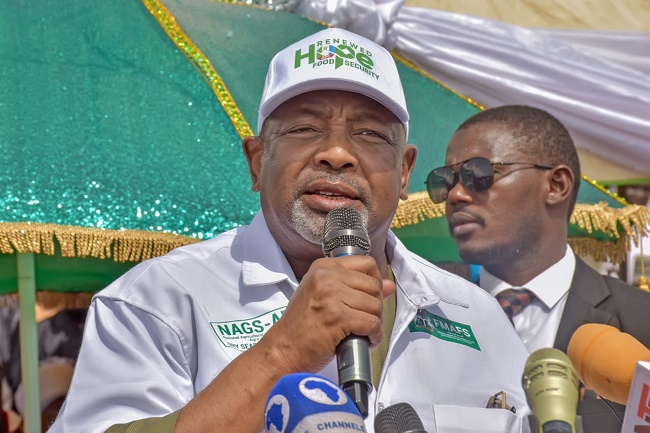
Minister of Agriculture and Food Security, Sen. Abubakar Kyari
Central to this shift is Nigeria’s partnership with Belarus to acquire 10,000 tractors over five years under the Belarus Agricultural Mechanisation Programme.
Officials said the initiative was a major step towards modernising farming while equipping young Nigerians with practical skills in mechanised agriculture.
With Belarus providing equipment and technical support, the programme is expected to create jobs, reduce food imports and revitalise rural economies.
Complementing this is the Greener Hope Agricultural Mechanisation Programme, designed to further enhance food production and strengthen agricultural resilience.
In June 2025, President Tinubu inaugurated 2,000 tractors for nationwide deployment under the Renewed Hope Agricultural Mechanisation Programme.
The initiative aims to empower smallholder farmers with modern equipment, reduce manual labour and greatly increase crop yields.
Government projections indicate the programme will produce over two million metric tonnes of staple foods while creating jobs for youths and women.
The tractors have been delivered, with plans to deploy them through Agricultural Mechanisation Service Centres to ensure affordability, maintenance and efficient service delivery.
At the unveiling, President Tinubu reaffirmed his administration’s commitment to transforming agriculture through mechanisation and national food security.
He stated that the rollout was a landmark moment in his food security agenda and a crucial effort to empower farmers and stimulate rural development.
“When deployed, the equipment will empower mechanisation, create job opportunities and make farming easier,” Tinubu said.
He added, “We made a promise when we came in. We are fulfilling that promise. Two years ago, I sounded the alarm on our nation’s food security”.
Tinubu stressed that agricultural productivity was synonymous with national stability and food sovereignty.
Minister of Agriculture and Food Security, Sen. Abubakar Kyari, said the unveiling was a defining milestone in Nigeria’s agricultural transformation.
“It is a bold affirmation that under President Tinubu, agriculture is once again at the heart of our national development strategy,” Kyari said.
“Never in Nigeria’s history have we witnessed an agricultural mechanisation initiative of this scale, ambition and national focus,” he added.
Kyari noted that the programme unveiled 2,000 tractors, harvesters, mobile workshops, over 9,000 implements and spare parts.
He said the initiative would cultivate over 550,000 hectares, produce over two million metric tonnes of staples and directly benefit 550,000 farming households.
Beyond mechanisation, agro-industrialisation remains a key pillar of the administration’s agricultural reforms.
The Special Agro-Industrial Processing Zones programme is designed to drive industrial transformation across the agricultural value chain.
At the SAPZ groundbreaking in Ijaiye, Ibadan, Vice-President Kashim Shettima described the initiative as a catalyst for industrial revolution.
Represented by Kyari, Shettima said the programme marked a decisive stride toward building a resilient, self-sufficient and prosperous Nigeria.
“This is not just infrastructure, It is a bold declaration that Nigeria’s future lies in value-added agricultural production.
“The SAPZ initiative is a cornerstone of the Renewed Hope Agenda championed by President Tinubu,” Shettima added.
Youth and women inclusion has also featured prominently in the administration’s food security strategy.
Kyari said empowering youth and women farmers would accelerate development, boost production and revitalise agribusiness.
According to him, young entrepreneurs drive innovation, create economic opportunities and foster inclusive agricultural growth.
Meanwhile, Minister of State for Agriculture, Sen. Aliyu Abdullahi, said government was promoting year-round farming.
He disclosed that a Dry Season Farming Initiative covering 500,000 hectares had commenced nationwide.
“The first phase focused on wheat in 15 states, while the second phase covers rice, maize and cassava,” Abdullahi said.
To strengthen planning and competitiveness, the Federal Government signed an MoU with the National Space Research and Development Agency (NASRDA) on agricultural produce traceability and farmland monitoring.
Kyari said the agreement was “strategic and symbolic” for Nigeria’s participation in global markets.
NASRDA Director-General, Dr Mathew Adepoju, said satellite technology would be deployed to trace agricultural produce.
“We will continuously support the ministry’s programmes and ensure full implementation of the MoU,” Adepoju said.
Permanent Secretary, Dr Marcus Ogunbiyi, said traceability and deforestation-free supply chains had become global imperatives.
The government also reported steady growth in agricultural output during the 2025 wet season.
Presenting the 2025 Agricultural Performance Survey, Kyari said production of major staples rose above 2024 levels.
“This progress, coupled with significant price drops, reflects improved supply and cumulative intervention effects,” he said.
Similarly, Prof. Yusuf Ahmad, Executive Director of the National Agricultural Extension and Research Liaison Services (NAERLS), said maize, rice and sorghum prices dropped by over 50 per cent nationwide.
Also, Vice-Chancellor of ABU Zaria, Prof. Adamu Ahmed, said Nigerian farmers had shown remarkable resilience.
“Our task now is to make agriculture more adaptive, efficient and data-driven,” he said.
To address financing gaps, Kyari disclosed that President Tinubu approved N1.5 trillion recapitalisation of the Bank of Agriculture.
He added that a N250 billion financing window for smallholder farmers had also been approved.
Kyari said agriculture remains the backbone of Nigeria’s economy and central to national renewal.
“Independence is not only political; it is economic and agricultural self-reliance,” he said.
“With President Tinubu at the helm, Nigeria will achieve food sovereignty where no family goes hungry,” Kyari added.
However, some agricultural economists caution that mechanisation alone cannot resolve Nigeria’s deep-rooted food insecurity challenges without parallel investments in infrastructure and security.
Dr Muhammad Ibrahim, an agricultural economist, said poor rural roads, storage deficits and insecurity still limit farmers’ ability to maximise mechanisation gains.
“Tractors increase output, but without access roads, storage facilities and stable markets, farmers may still incur post-harvest losses,” Ibrahim said.
Similarly, food systems analyst Dr Aisha Bello warned that affordability remains a major concern for smallholder farmers.
“If access to mechanisation services is not subsidised and transparent, smallholders risk exclusion despite the scale of these interventions,” she said.
Some farmer groups have also urged caution, stressing the need for inclusive deployment models.
A maize farmer in Kaduna, who requested anonymity, said, “Mechanisation is welcome, but farmers need clarity on costs, availability and maintenance support”.
Climate experts further argue that mechanisation must be aligned with climate-smart agriculture.
Dr Samuel Onyekachi, an environmental policy researcher, said erratic rainfall and soil degradation could undermine productivity gains.
“Without climate adaptation measures, higher production targets may not be sustainable in the long term,” he said.
Civil society organisations have also called for stronger monitoring and transparency.
The Agriculture and Food Security Network said independent oversight was needed to ensure equitable tractor allocation and prevent elite capture.
In spite of the concerns, most experts agree that the administration’s interventions mark a huge departure from past approaches.
They stress that sustained implementation, accountability and farmer-centred execution will determine whether the reforms translate into lasting food security.