Against the backdrop of the New Year,global trade has been faced with a significant development – from January 1, 2026, exports of select industrial goods to the European Union (EU) is being charged a carbon price under the EU’s Carbon Border Adjustment Mechanism (CBAM).
Says Sunita Narain, director general of the New Delhi-based think tank Centre for Science and Environment (CSE): “By putting a carbon price at the border, CBAM changes how competitiveness is defined in global trade. But what it also does is shift the decarbonisation costs to developing countries, thus extending a familiar dynamic where developing countries adapt to rules set elsewhere, under conditions that structurally disadvantage them.”
Carbon tax
A carbon tax is a financial charge imposed on businesses for their carbon dioxide emissions, aimed at reducing greenhouse gas emissions and combating climate change.
Narain adds: “Decarbonisation in industry is both necessary and unavoidable. Developing countries will need to pursue decarbonisation to remain competitive. However, this transition cannot be driven through unilateral measures alone.”
CSE has recommended that developed countries like India should collect a carbon tax domestically at point of exports, so that the funds can be directed towards decarbonisation of domestic industry, whilst also meeting the CBAM’s carbon pricing criteria.
Says Avantika Goswami, programme manager, climate change unit, CSE: “To promote truly equitable global climate action, the provision of real sectoral decarbonisation support in the form of concessional finance and technology transfer from the EU to developing country partners is crucial. This can help reduce the carbon intensity of manufacturing. It will also ensure a level playing field and also provide funds for countries of the Global South to invest in low carbon growth.”
CSE had flagged its concerns in its 2024 study Carbon Border Adjustment Mechanism (CBAM): The Global South’s response to a changing trade regime in the era of climate change, warning that the mechanism does not address historical responsibility or structural asymmetries.
The debate on CBAM
Over the past 15 months, a series of measures under CBAM has expanded its scope — turning it into an extensive trade obligation, placing growing demands on exporters for data provision and verification. Recent proposals to expand CBAM’s scope to other sectors, tighten verification requirements, and introduce anti-circumvention provisions, further increase compliance and cost pressures on exporters from the Global South.
While the technical requirements have tightened, the political trajectory of CBAM has been shaped increasingly by domestic industrial pressures within the EU, with discussions on carve-outs, exemptions, and simplification geared towards the preferences of domestic industry.
Says Goswami: “This reflects a prioritisation of internal competitiveness rather than easing obligations on partner countries or contributing to global climate benefits, reinforcing trade partners’ branding of the EU’s policy as a protectionist measure rather than a climate tool.”
In international fora, developing countries have highlighted that climate-linked trade measures such as CBAM risk increasing the overall cost of climate action, fragmenting multilateral cooperation, and shifting mitigation burdens onto countries with lower historical emissions and weaker capacities.
Implications for India
For India, the implications are significant. CSE’s analysis shows that CBAM could impose substantial cost pressures on steel and aluminium exports to the EU. The study estimated that affected exports could face a price burden of around 25 per cent – a shock that exporters are likely to absorb through price compression in order to remain competitive.
Redressal measures must be urgently pursued
In addition to measures such as ensuring funds from the carbon tax stay within borders and the need for EU to provide additional decarbonisation-climate finance, a package of additional steps can be considered. These include recycling of CBAM revenues to developing country partners, support for monitoring and reporting of emissions, and exemptions for least developed countries.
However, these may provide only temporary relief and alleviate some immediate impacts of the CBAM; in the long run enabling the transition in developing countries through real finance must be a key goal for the EU.
CSE experts say multilateral fora must also urgently reckon with the structural inequities of the global trade, finance and industrial regimes, and envision equitable pathways to global green industrialisation, where developing countries can both decarbonise existing industry and participate in emerging green industries without being left behind.
The Federal Government has restated its commitment to unlocking the vast potentials of Nigeria’s steel resources for inclusive and sustainable development.
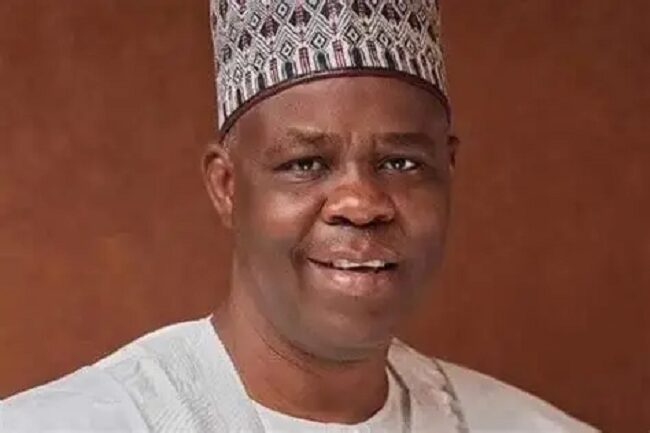
Minister of Steel Development, Prince Shuaibu Audu, made the commitment in his New Year message to Nigerians on Thursday, January 1, 2026, in Abuja.
Audu said that the ministry remained committed to working collaboratively with sub-national governments, the private sector, development partners and host communities to achieve the feat.
Minister of Steel Development, Shuaibu Abubakar Audu
“As we move into the New Year, our focus remains resolute.
“To strengthen institutional frameworks, accelerate the revitalisation of critical steel assets, promote local steel production, attract both domestic and foreign investments and enhance human capacity development across the sector.
“These efforts are central to our mandate of ensuring that the steel industry effectively supports infrastructure development, manufacturing, job creation, and national self-reliance.
“In realisation of the Renewed Hope Agenda of President Bola Tinubu, the ministry will continue to pursue policies and partnerships that foster transparency, efficiency, innovation, and sustainability,” he said.
The minister said that in spite of constraints in 2025, particularly the non-release of funds for the implementation of the 2025 budget, it sustained its reform momentum through the prudent implementation of key components of the 2024 Appropriation.
According to him, by prioritising strategic partnerships, investments’ facilitation and policy-led interventions over direct budgetary outlays, the ministry recorded notable achievements that reaffirm the resilience and ingenuity of its leadership.
A major milestone in 2025, he said, was the successful hosting of the inaugural National Steel Summit 2025, which brought together stakeholders from across the nation to chart a new course for the sector’s revival.
He said that Nigeria had advanced in discussions with prospective investors in China to facilitate the revival of the Ajaokuta steel plant.
The ministry, he said, facilitated a $500 million investment by NNPC and its partners for the establishment of five mini-Liquefied Natural Gas plants within the Ajaokuta Steel Territory.
This initiative, he explained, would ensure a reliable power supply, reduce production costs, promote cleaner energy use and stimulate industrial growth with a particular focus on Northern Nigeria.
He added that the ministry executed an MoU with the Federal Ministry of Defence for the local production of military hardware and the establishment of a Military Industrial Complex within the Ajaokuta Steel Territory, in collaboration with Defence Industries Corporation of Nigeria.
The minister said he approved the employment of over 200 pioneer steel-sector experts into the National Steel Council, Abuja, while over 700 youths were empowered with technical skills
“Looking ahead to 2026, the Ministry is focused on consolidating these gains and transitioning from policy reforms to measurable production outcomes.
“Expectations include accelerated implementation of signed investments, tangible progress at Ajaokuta, phased production in the new steel plant.
“Deeper local content integration, and sustainable job creation, supported by stronger budgetary alignment and private sector participation,” he said.
The issue of estimated billing has been a challenge in the power sector with many electricity consumers across the country complaining about it due to inflated costs, lack of transparency, and being charged more than actual power consumption.
For several years, there have been protests over exploitative billing by Electricity Distribution Companies (DisCos).
Many homes that barely get electricity supply once a week are charged outrageous sums of money per month, in a billing that is not cost effective.
Minister of Power, Mr. Adebayo Adelabu
In some cases, the difference in charges could be as high as 500 per cent within a short time, even when there is little or no improvement in power supply.
Most affected by this exploitation are electricity consumers without pre-paid meters, as their billings are estimated.
Affected consumers have continued to complain that the high billing led to overpayments or disputes, with common complaints focusing on high charges, opaque calculations, and issues with meter installation.
They said that 11 years after privatisation; millions of them still relied on estimated billing due to the absence of prepaid meters.
According to them, estimated billing has led to “crazy billing”, charges far higher than the electricity they consume.
Mr. Princewill Okorie, Executive Director, Electricity Consumer Protection Advocacy Centre, described estimated billing as criminal, adding that it is not done according to the Nigerian Electricity Regulatory Commission (NERC) methodology.
According to him, NERC directed that transformers used in supplying electricity to those on estimated billing should have a meter to check what energy goes to a place and multiply it with the kilowatts per hour
He said that most of the distribution companies are using transformers that do not have meters because they want to exploit consumers.
“You must not give bills anyhow, you must check the meters on the transformer to know the electricity supplied to consumers.
“It is wrong for people to be paying for what they did not consume,‘’ he said.
A consumer in Lugbe Zone 7, Mrs. Mabel Osuji, said that the Abuja Electricity Distribution Company (AEDC) had not provided the area with meters, so residents pay whatever bill is giving to them.
According to her, sometimes the bill will be high other time it will be low.
“We are waiting for the pre-paid meters that government promised to roll out so that we can only pay for what we consume,‘’ she said.
Another consumer in the same area, Mr Monday Olaniyi, said that having to pay bills through estimation was not the best.
Olaniyi said that he did not know what he consumed but just keeps paying any bill given to him.
“I have applied for the pre-paid meter and I am patiently waiting for it to end this crazy bills,‘’ he said.
To solve the problem of estimated billing, the Federal Government, through NERC, issued an order capping estimated bills for unmetered customers based on feeder averages to ensure fairness.
The NERC Order on Capping of Estimated Bills is contained in Order No: NERC/197/2020.
It protects unmetered customers in Nigeria by setting maximum charges for estimated electricity bills, aligning them with actual consumption of metered users on the same feeder.
“This has led to subsequent enforcement orders and sanctions for Electricity Distribution Companies (DisCos) failing to comply, requiring credit adjustments for over billed customers
“This order repealed older regulations and mandates that Distribution Companies (DisCos) provide these caps, with specific monthly energy caps available for different feeders,” NERC said.
According to the commission, Electricity consumers do not want to pay on the basis of estimated bills, rather they want to pay for what they consume and should be provided meters in order to achieve this.
The Federal Government is currently metering electricity consumers to ensure accurate billing, end to estimated billing , reduce revenue leakages, and boost power sector transparency.
The Federal Government also seeks to improve efficiency, and restore public trust through its Presidential Metering Initiative (PMI), deploying millions of smart meters to bridge the gap, protect vulnerable Nigerians, and make the sector financially viable.
The key objectives of the FG metering initiative to end estimated billing is to eliminate the practice where consumers are billed based on assumptions rather than actual consumption.
It is also to ensure that consumers pay only for the electricity they use, promoting transparency, revenue protection help DisCos recover revenue loss to non-payment and inefficiencies.
“Ensure sector viability: enhance the financial health of the power sector to attract investment, ensure public trust and confidence in electricity providers.
The initiative would also support Local Production, and foster local meter manufacturing and job creation.
The Minister of Power, Mr. Adebayo Adelabu, said that the Federal Government had secured about N700 billion, for the rollout of two million meters annually over the next five years under the initiative.
Adelabu disclosed this at the 2025 Nigerian Energy Forum, with the theme “Powering Nigeria through Investment, Innovation, and Partnership”.
He said that the fund was obtained from the Federation Account Allocation Committee by the Federal Government.
According to him, the PMI aims to close Nigeria’s metering gap, improve transparency, and enhance the financial stability of the power sector.
He said the initiative complemented the 3.2 million meters being procured through the World Bank’s Distribution Sector Recovery Programme (DISREP), positioning the country to bridge the metering gap within five years.
The minister said that the Federal Government was leveraging bilateral funding and development finance to attract private investment and expand electricity access in underserved communities, schools, hospitals and public institutions.
“In the past two years, more than two billion dollars has been mobilised through key programmes, including the World Bank’s DARES, NSIA’s RIPLE, and the JICA fund.
“These interventions are accelerating renewable energy deployment and access to reliable power,” he said.
The Federal Government, through NERC, approved the disbursement of N28 billion to DisCos for the procurement and installation of prepaid meters under the Meter Acquisition Fund (MAF) Tranche B scheme.
NERC said that the N28 billion was for the procurement of meters for all outstanding unmetered Band A customers at no cost.
This announcement was contained in the Order on the Operationalisation of “Tranche B” of MAF issued by NERC and signed by its Vice Chairman, Musiliu Oseni, and Commissioner, Legal, Licensing and Compliance, Dafe Akpeneye,
According to the order, the funds approved under Tranche B of MAF are intended to meter all outstanding unmetered Band A customers.
They also focus on expediting the closure of the metering gap for customers currently classified under Tariff Band B
”The N28 billion shall be allocated in proportion to the respective contributions of the DisCos, and the DisCos are expected to meter all outstanding unmetered Band A customers.
”They are also required to expedite the closure of the metering gap for customers currently classified under Tariff Band B.
“Schedule 1 provides the detailed breakdown of the funds available to each DisCo for the purchase of end-use customer meters.
“All the meters to be procured and installed under the MAF framework shall be provided at no cost to the customers,” it said.
The commission said that the order seeks to establish a clear and transparent framework for the implementation of Tranche B of the MAF scheme.
It also said that the order sought to define the eligibility requirements and obligations of DisCos and Meter Assert Provider (MAP) in accessing and utilising funds.
“It prescribes the terms of financing, repayment, and utilisation of funds under the scheme.
“It also sets out the monitoring, reporting and evaluation requirements to ensure accountability, efficiency and transparency in the deployment of MAF funded meters.
”It provides operational guidelines and conditions applicable to participating entities to safeguard the integrity of the MAF scheme, ”it said.
Giving a breakdown of the releases of funds accrued under MAF, NERC explained that in April 2024, out of the accrued sum of N21.864 billion, it released N21 billion to the DisCos for the procurement of meters under tranche A of the MAF scheme.
It said that the latest is the N28 billion released under tranch B of the MAF scheme.
Also recently, NERC said that between 600,000 and 700,000 electricity meters are currently available for distribution across the country.
Its chairman, Musiliu Oseni, said this at the 4th Nigerian Electricity Supply Industry (NESI) Stakeholders’ Meeting in Abuja.
Oseni, while urging DisCos to speed up the rollout of the meters, said that government had already made the necessary investments to make the meters available.
According to him, DisCos should take the responsibility of ensuring that the meters reach customers without delay
“There are currently 600,000 to 700,000 meters available in the country. Government has made the investment, so the DisCos need to step up.”
Oseni, who also spoke on the ongoing transition to State Electricity Regulatory Commissions, called on the DisCos to fully cooperate with the new regulators, saying no operator is above regulatory oversight.
As the Federal Government and other stakeholders take steps to address the contentious issue of estimated billing through provision of prepaid meters, affected consumers urge them to expedite actions to correct the situation.
Experts are of the opinion that if more pre-paid meters are brought into the power sector, estimated billing would be a thing of the past.
By Constance Athekame, News Agency of Nigeria (NAN)
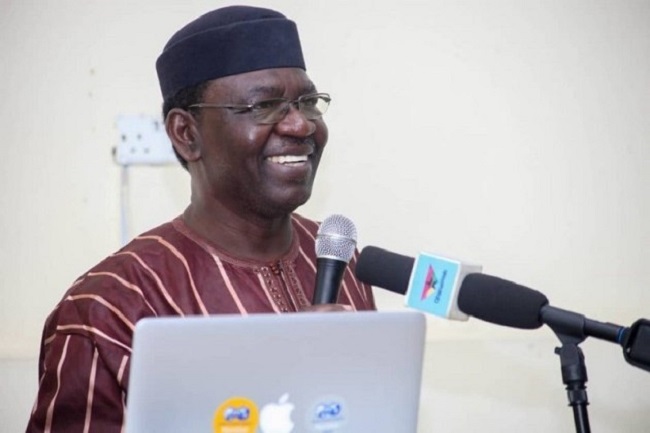
An energy expert, Prof. Wumi Iledare, says Nigeria’s oil and gas sector recorded a measurable rebound in 2025, driven by improved security, relative regulatory stability and renewed operational activity.
Iledare, a Professor Emeritus of Petroleum Economics and Policy Research at the Louisiana State University Centre for Energy Studies, USA, said the gains remain fragile and far from transformational.
He disclosed this in an interview on Thursday, January 1, 2026, in Lagos while reviewing sector performance in 2025 and outlining imperatives for 2026.
Prof. Wumi Iledare
According to Iledare, the improved security environment and gradual stabilisation under the Petroleum Industry Act (PIA), combined with renewed government focus on operations, helped reverse parts of the sector’s recent decline.
“The direction of travel is positive. However, the temptation to declare a full turnaround should be resisted. Recovery is not the same as transformation,” he said.
He noted that crude oil production improved from recent lows, averaging between 1.6 and 1.7 million barrels per day in 2025, describing the development as a meaningful recovery.
He, however, cautioned that claims of consistently meeting Nigeria’s OPEC+ quota were not fully supported by production and fiscal data.
“Average output remained below benchmark levels, and oil revenue underperformed budget expectations in the first half of 2025.
“The gains were real, but uneven and not yet structurally secured,” he said.
Iledare, who is also Executive Director of the Emmanuel Egbogah Foundation, acknowledged progress in curbing crude oil theft and vandalism.
He attributed improvements to enhanced surveillance and stronger community–security collaboration.
“Headline claims of a 90 per cent reduction should be treated with caution.
“Theft estimates remain largely administrative and not independently audited. The trend is credible; the precision is not,” he said.
On upstream activity, he observed that while rig counts rebounded, growth figures were exaggerated by comparison with the unusually depressed 2021 base year.
He added that not all counted rigs were fully active, adding that translating rig numbers into sustained production growth would depend on financing availability, evacuation infrastructure and contract stability.
Iledare said output recovery in 2025 was incremental and driven by multiple factors, including initiatives such as Project One Million Barrels and cost-efficiency measures that refocused attention on brownfield and dormant assets.
“Production outcomes cannot be attributed to any single initiative. Petroleum systems respond to a bundle of incentives, risks and constraints – not policy branding,” he said.
He described the downstream sector as the most contested reform space, noting that Nigeria operates an oligopolistic market structure dominated by a few large players.
He said public debate often framed competition as a moral contest between investors and importers, a view he described as misleading.
“From a petroleum economics standpoint, competition is defined by market structure and regulatory neutrality, not by the size of capital deployed.
“Imports do not negate competition unless subsidised or preferentially treated,” he said.
On the Dangote Refinery, Iledare said its strategic importance to Nigeria’s industrial narrative was not in doubt.
“Claims of sustained 85 per cent utilisation, massive import reduction and billions of dollars in foreign-exchange savings should be seen as projections rather than realised outcomes.
“The refinery’s impact remains contingent on feedstock logistics, pricing transparency, market governance and regulatory consistency,” he said.
He explained that proposed upstream divestments by the Nigerian National Petroleum Company Ltd., (NNPCL) reflected deeper structural pressures.
“This include capital scarcity, rising operational risk and the limits of state participation in high-risk ventures.
“Divestment is not abdication; it is portfolio optimisation. But without strong board oversight, transparency and disciplined reinvestment of proceeds, it risks becoming a fiscal patch rather than a strategic reset,” he said.
In the gas sector, Iledare said progress on reserves growth, reduced flaring and increased domestic supply broadly aligned with regulatory disclosures.
However, he warned that major projects such as the Ajaokuta–Kaduna–Kano (AKK) pipeline and the Nigeria–Morocco gas pipeline remained vulnerable to execution risks and financing timelines.
“Optimism is warranted; complacency is not,” he said.
He identified the disconnect between production recovery and fiscal performance as one of the clearest signals of unfinished reform.
“Higher output did not translate proportionately into public revenue, reflecting price volatility, cost structures and governance leakages,” he said,
He added that attributing Nigeria’s improved GDP growth primarily to oil risked overstating the sector’s current contribution.
Iledare stressed that the overarching lesson of 2025 was that institutions matter more than announcements, calling for stronger regulatory guardrails and empowered boards of directors to ensure credibility and continuity.
He also underscored the need for visible sectoral leadership, noting that Nigeria’s oil and gas industry was too strategic to be managed by fragmented or virtual authority.
“A substantive, accountable minister remains a necessary condition for coherence and sustained impact.
“2025 was a year of recovery and re-anchoring, not full transformation. The gains are real but fragile.
“The imperative for 2026 is consolidation, discipline and institutional endurance,” Iledare said.
The World Health Organisation (WHO) says its new research shows up-to-date vaccination remains the most effective way to prevent severe COVID-19 illness.
WHO said while the pandemic has officially ended and COVID-19 no longer caused the widespread disruption seen during the global health emergency, studies led by the WHO Regional Office for Europe confirmed that people who received timely booster doses were far less likely to develop severe disease, require intensive care or die.
The findings were based on data from the European Severe Acute Respiratory Infection Vaccine Effectiveness (EuroSAVE) network.
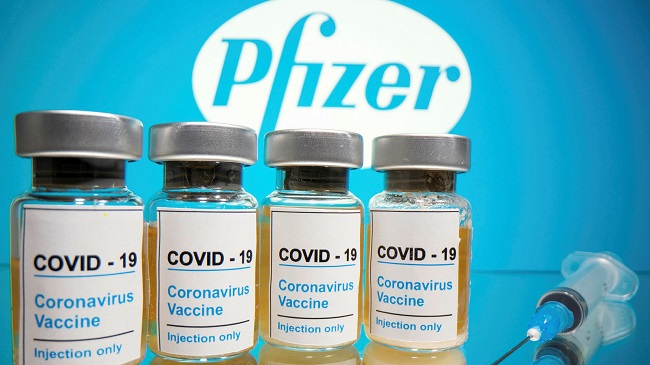
Pfizer Covid-19 Vaccine
It monitors respiratory infections in hospitals across parts of Europe, the Balkans, the South Caucasus and Central Asia.
Mark Katz, a Medical Epidemiologist at the WHO regional office, however, said the virus continued to hospitalise and kill people.
“The studies highlight that, while COVID-19 is not leading to the widespread disease we saw during the pandemic, it has still been causing a considerable number of hospitalisations and deaths.”
Between May 2023 and April 2024, nearly 4,000 patients were hospitalised with acute respiratory infections in countries covered by the network.
Almost 10 per cent of those cases were caused by COVID-19, in spite of the pandemic having been declared over.
Among patients hospitalised with COVID-19, just three per cent had received a vaccine dose within the previous 12 months.
The consequences were often severe as 13 per cent of COVID-19 patients required admission to intensive care units, and 11 per cent died.
Comparative research also showed that patients hospitalised with COVID-19 were more likely than those with influenza to need oxygen, intensive care or to succumb to the illness.
By contrast, vaccination offered strong protection.
One EuroSAVE study found that an up-to-date COVID-19 vaccine received within the past six months was 72 per cent effective at preventing hospitalisation.
The vaccine was also 67 per cent effective at preventing the most serious outcomes, including ICU admission and death.
In addition, separate multi-country analysis found vaccines reduced COVID-19 related hospitalisations by about 60 per cent.
The Nigerian Navy has dredged and cleared 11 kilometres of waterways to enhance navigability and increase accessibility to previously inaccessible routes, thereby facilitating the gradual revival of socio-economic activities in the Lake Chad basin.
The Chief of Naval Staff (CNS), Vice Admiral Idi Abbas, made this known during his visit to Maiduguri, Borno State, on Thursday, January 1, 2026.
The naval chief stated that the service has been conducting serious operations against terrorists in the Lake Chad Basin to restore normal economic activities in the region.
Nigerian Navy officers
“The Nigerian Navy Base, Lake Chad (NBLC) has significantly improved access to critical waterways through targeted engineering interventions.
“In particular, the NBLC has successfully dredged and cleared approximately 11km of waterways, enhancing navigability and reopening previously inaccessible routes.
“These efforts have facilitated the safe return of fishermen, farmers, traders and transport operators, thereby supporting the gradual revival of socio-economic activities across the region,” Abbas said.
The naval chief said the Nigerian Navy remained fully committed to denying terrorists the use of the Lake Chad waterways through sustained coordinated operations in collaboration with the Multinational Joint Task Force (MNJTF).
He insisted that the Navy had played a key role in clearing terrorist elements from waterways, particularly during Operation Lake Sanity III, which focused on degrading insurgent logistics and ensuring freedom of movement to consolidate the gains achieved by the joint task force.
“Additionally, the Navy ensures persistent Intelligence, Surveillance, and Reconnaissance (ISR) coverage in close coordination with the Nigerian Air Force.
“This joint ISR effort enhances situational awareness, enables timely targeting of terrorist activities and supports effective maritime interdiction operations, thereby sustaining pressure on terrorist elements within the Lake Chad Basin,” Abbas said.
He, however, urged the troops at Baga Naval Base to focus more on the fight against the enemies of the state in Lake Chad Basin, the terrorists.
The naval chief also assured the troops of his commitment to their welfare and the deployment of manpower and more equipment to support their efforts.
The Kebbi State Government says it has recorded significant progress in efforts to revitalise the Birnin Kebbi waterworks to restore normal water supply to the state capital.
The Secretary to the State Government (SSG), Alhaji Yakubu Bala-Tafida, made this known in Birnin Kebbi, the state capital, on Thursday, January 1, 2026, while inspecting ongoing repair works at the facility.
Bala-Tafida said Gov. Nasir Idris had constituted a task force to ensure speedy resuscitation of the waterworks supplying Birnin Kebbi township.
Kebbi State Government officials inspecting ongoing repair works at the Birnin Kebbi waterworks
He added that the task force comprises the SSG, the Commissioner for Information and Culture, Alhaji Yakubu Ahmed-BK, officials of the Ministry of Water Resources, security agencies and technical staff of the Kebbi State Water Board.
He said: “We have seen remarkable progress in the effort to resuscitate the waterworks.
“We will remain on ground until everything that needs to be done is completed.”
Earlier, the Permanent Secretary, Ministry of Water Resources, Alhaji Isah Arzika, explained that engineers had detected a major burst at the Dukki waterworks shortly after the lifting period on Wednesday.
He said that by the time the engineers arrived, the lifting machines had already been submerged, but swift action was taken to shut them down to minimise damage.
Arzika added that pumping machines had since been sourced and deployed to evacuate flooded areas.
He added that “fortunately, the evacuation was completed by about 11 p.m. yesterday.
“As you can see, the six intake machines are now visible and no longer submerged.”
The permanent secretary noted that a team of engineers was already on site to dismantle the machines and move them for proper drying and testing.
“We are confident that the machines will function properly after drying and testing. Whatever needs to be done will be done,” Arzika assured.
He appealed to the public for patience, assuring that the state government was doing everything humanly possible to restore normal water supply.
The General Manager of the state Water Board, Alhaji Zayyanu Shehu, also assured residents that water supply would be fully restored within one week.
The Managing Director of the Hadejia Jam’are River Basin Development Authority (HJRBDA), Rabiu Bichi, on Wednesday, December 31, 2025, extolled the donation of 100 tree seedlings by the Association of Professional Women Engineers of Nigeria (APWEN) to the authority.
He described the invaluable gesture as a major boost to the extant efforts aimed at tackling climate change, land degradation and soil erosion in the region.
Bichi stated this while receiving the seedlings donated by APWEN for onward distribution to farmers within the authority’s operational areas.
Managing Director of the Hadejia Jam’are River Basin Development Authority (HJRBDA), Rabiu Bichi
He commended the association for what he termed a timely and thoughtful intervention that aligned with the agency’s mandate of sustainable environmental and agricultural development.
According to the managing director, the authority would ensure that the seedlings are distributed to farmers across Kano, Bauchi and Jigawa states.
He stressed that the beneficiaries would be encouraged to plant and nurture the trees on their farms to achieve long-term environmental benefits.
Bichi stated that tree planting remained one of the most effective ways of curbing soil erosion, combating desertification and mitigating the adverse effects of climate change
According to him, this is particularly in river basin communities that are vulnerable to environmental degradation.
Bichi further assured that the HJRBDA would intensify its sensitisation programmes to educate farmers on the importance of tree planting, sustainable land use and environmental protection, adding that collective action is crucial to achieving lasting results.
Earlier, the Chairperson of the association, Safiyya Aliyu Mahmud, said the donation was part of its corporate social responsibility aimed at addressing climate change challenges in society.
She explained that APWEN provided 100 tree seedlings of different varieties, which would be planted across the areas covered by the river basin authority.
This is to help restore degraded land and reduce the menace of soil erosion and other environmental problems.
She said that professional bodies have a responsibility to support government efforts in promoting environmental sustainability, stressing that women engineers were committed to using their expertise and platforms to contribute to national development.
She expressed confidence that the collaboration with HJRBDA would yield positive results, especially with the authority’s wide reach among farmers and rural communities.
The APWEN chairperson called on farmers and community members to take ownership of the initiative by ensuring the seedlings are properly planted and protected
She added that tree planting was an investment in the future of coming generations.
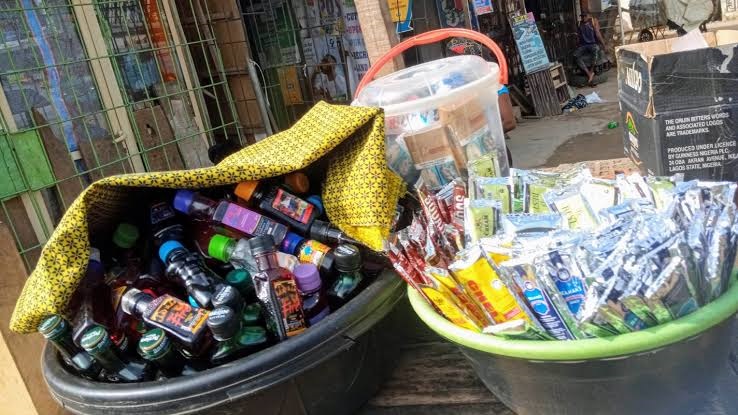
Integrity Advocacy for Development Initiative (IADI), a civil society organisation (CSO), has condemned the planned ban on alcohol in sachets and PET bottles below 200ml, describing it as misguided and unlikely to reduce alcohol abuse.
In a statement on Wednesday, December 31, 2025, IADI Executive Director, Christopher Ofomhi, said targeting packaging formats did not address the root causes of substance abuse.
He warned the ban could push consumers toward larger bottles, increase excessive drinking, threaten the livelihoods of small-scale traders, and fuel the circulation of unregulated and counterfeit alcohol, which posed greater public health risks.
Alcoholic drinks in sachets and small volume bottles
Ofomhi also criticised NAFDAC for allegedly using the ban to divert attention from its ongoing regulatory failures, particularly in combating fake and substandard drugs.
“NAFDAC must face its responsibilities and ensure product safety and authenticity, not restrict lawful adult consumption,” he said.
The CSO urged NAFDAC to reconsider the policy, focus on tackling counterfeit products, strengthen regulation, and restore public trust; actions it says would more effectively protect Nigerians.
The Nigerian National Petroleum Company Limited (NNPC Ltd.) has reported a Profit After Tax (PAT) of N502 billion in November 2025.
The NNPC Limited made this known in its Monthly Report Summary for November 2025, released on Wednesday, December 31.
The report also highlighted key figures, including crude oil and condensate production, natural gas output, revenue, strategic initiatives during the period, and more.
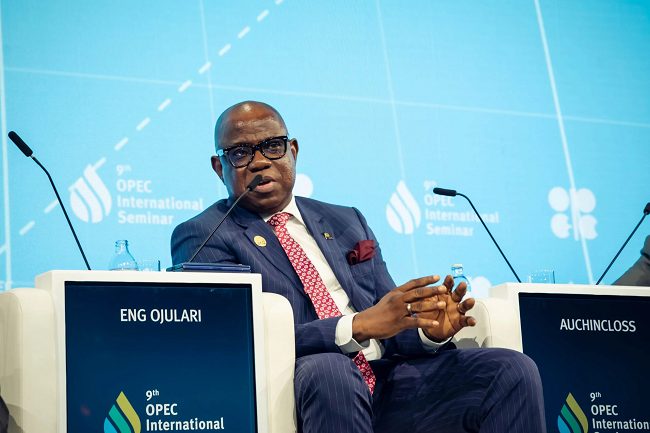
Bayo Ojulari, GCEO, National Petroleum Company (NNPC) Limited
The report showed that the NNPC Ltd generated a total sum of N4,358 billion within the same period reported.
It also revealed that Crude Oil and Condensate Production was 1.60 million barrels per day (mbopd), while Natural Gas Production was 6,968 mscf/d in November 2025.
The report put NNPC’s statutory payments between January and August 2025 at N12.117 billion, while disclosing 61 per cent Premium Motor Spirit (PMS) availability in its retail filling stations across the country.
It said that November production performance was largely due to planned maintenance activities across key assets nearing completion, with production recovery expected at the end of December 2025 and continued delays with WAEP first oil.
It listed the key assets as Esso-Erha, Stardeep-Agbami and Renaissance-Estuary Area.
It announced that it has completed the 2025 scheduled facilities Turn Around Maintenance (TAM), and production initiatives from JV, PSC, and NEPL assets in readiness for delivering the 2026 production plan.
The report put the overall completion of Ajaokuta-Kaduna-Kano (AKK) Gas Pipeline project at 90 per cent, disclosing that sustained focus is being directed towards completion of the mainline welding works and pressure-testing.
According to the report, the project is to be completed in 2026.
The report also put the completion of the Obiafu-Obrikom-Oben (OB3) Gas Pipeline project (River Niger Crossing) at 96 per cent, revealing that all required equipment, materials and personnel have been mobilised to site.