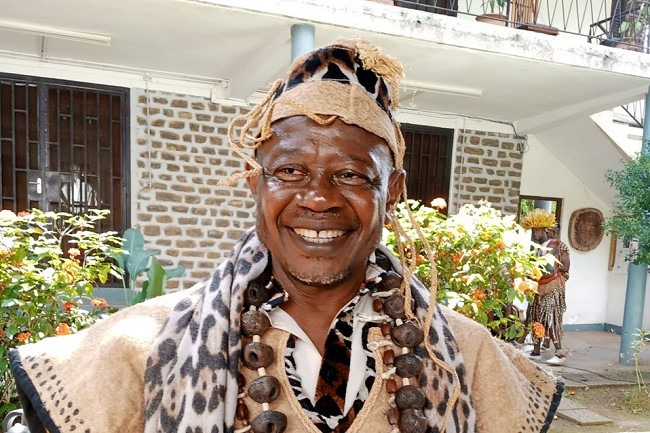
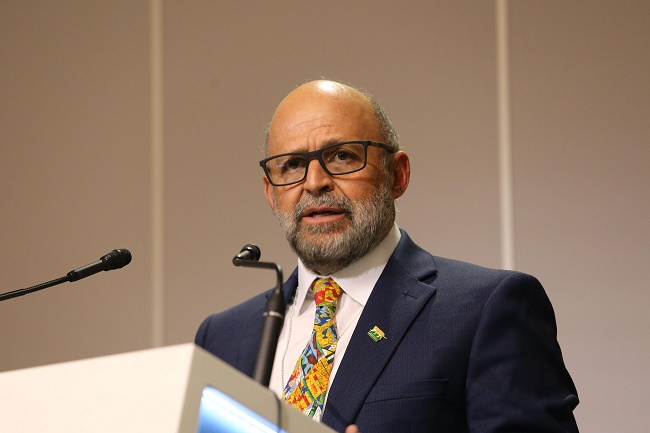
The Elephant Protection Initiative (EPI) Foundation’s friend of the month for December 2025 is Mvondo Bruno, Traditional Chief of Minkok-Bityli in the Sanaga Maritime Division of Cameroon’s Littoral Region. He stands as a respected leader whose influence extends far beyond his village. Known for his unwavering commitment to environmental protection, cultural preservation, and community leadership, he plays a key role in regional initiatives focused on conserving natural resources and strengthening traditional governance.
Beyond ritual knowledge, he is also a senior expert in traditional knowledge associated with genetic resources, an expert in sacred forest management, and a ritualist for forest peoples. His dedication to cultural advocacy has led him to serve as a spokesperson for the Fang-Béti-Bulu communities in their efforts to repatriate cultural property taken during colonial times. His passion for forest and wildlife conservation comes from his upbringing as the son of a farmer in the heart of the Congo Basin rainforest.
Mvondo Bruno
The forest, he explains, is the source of food, materials, and spiritual balance. Without it, life loses its richness. For him, protecting forests and wildlife, especially species essential to rituals and livelihoods, is inseparable from his role as a traditional chief.
Among his most memorable moments in the fight for land rights are the advocacy campaigns aimed at ensuring that customary provisions are recognised in land management. He recalls the 2013 correspondence from Cameroon’s Head of State urging the Government to consider traditional chiefs’ proposals in land reform, as well as his 2014 trip to the United States to negotiate key projects such as the Tenure Facilities initiative and the Unification of Participatory Mapping Approaches in Cameroon.
Another highlight was his speech at the African Union forum in Addis Ababa, where he championed customary land rights and better land access for women and young people. More recently, he has helped establish mechanisms to prevent and manage land conflicts in communities within Yoko and Nanga Eboko.
When asked about how citizens can help conserve wildlife, particularly elephants, His Majesty suggests promoting alternatives to poaching, encouraging ecotourism and solidarity tourism, and preserving traditional knowledge that helps keep elephants away from villages. He also advocates for the planting of moabi trees, which grow quickly thanks to elephant dung.
Addressing conflicts between humans and elephants remains a major concern in many Cameroonian communities. For His Majesty, the most realistic and respectful solutions include strengthening state–community collaboration, ensuring that communities play a primary role in managing protected areas, and allocating sufficient resources to support these efforts.
Through his leadership, His Majesty Mvondo Bruno embodies a powerful blend of cultural stewardship, environmental advocacy, and community empowerment, which is an example of how traditional authority can guide modern solutions to protect both heritage and nature.
Demand isn’t the problem; broken input systems are. Fixing them could unlock 5,000 youth jobs and make local processors competitive again.
When Everyone Is Rational and the System Still Fails
Few meals are as quintessentially Kenyan as chicken and chips. From roadside kiosks to fast-food chains, this simple pairing cuts across classes, incomes and geographies. Yet behind the ubiquity of this dish lies a quiet paradox: despite surging demand, the value chains that underpin chicken and chips remain structurally fragile and chronically underperforming.
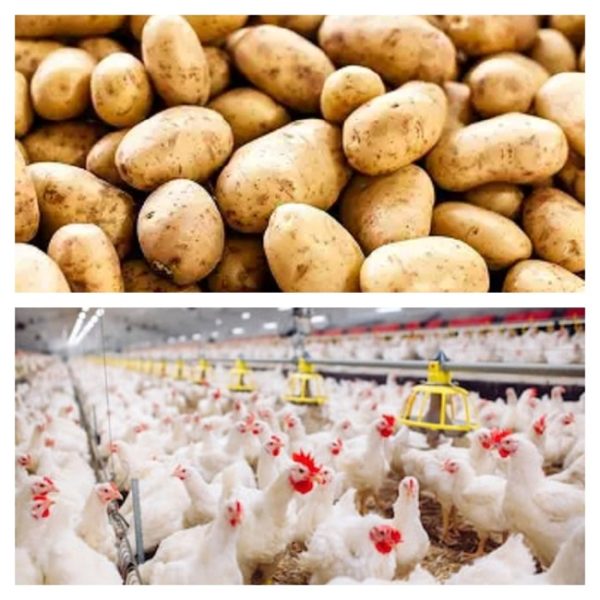
Potato (top) and poultry sectors
Over the past months, through deep-dives into both the potato and poultry sectors culminating in a recent webinar with processors and off-takers, a consistent message has emerged: demand is not the problem; reliability is. Kenya does not lack buyers or consumers. It lacks the aligned systems required to consistently produce what the market wants, when it wants it, and at the quality and cost it requires.
Most Kenyan potato farmers grow what they can afford and sell where they can be paid quickly. That usually means informal markets that are cash-based, fast-moving, and tolerant of variability. They suit the realities of smallholders managing tiny plots with limited cashflow.
Processors, on the other hand, operate under entirely different pressures. They must produce to specification, on schedule, with low rejection rates and high plant utilisation. Yet the varieties they require such as Markies, Voyager and Dutch Robijn are rarely available locally. Farmers overwhelmingly plant Shangi, a fast-maturing table potato well-suited for boiling and local markets but poorly suited for frying due to its inconsistent dry matter content and storage behaviour.
Even when farmers try to grow to spec, the system is stacked against them: less than one per cent of potato seed in Kenya is certified. Without clean planting material, yields stagnate at 8–10 MT/ha against a potential of 30–40 MT/ha, and quality falls short of processor standards.
Poultry tells the same story in a different register. Feed which accounts for 50 to 60 per cent of production costs is among the most expensive in East Africa, while reliable day-old chicks are costly and erratic. Formal buyers demand strict weights, chilling and biosecurity, but often pay slowly; informal wet markets pay in cash on delivery and overlook variability. Rationally, farmers choose speed and certainty over delayed payments and penalties.
The outcome is predictable: processors operate at barely 40 per cent of installed capacity, unable to compete with imports on cost, while farmers remain locked into low-productivity systems that deliver neither scale nor stability.
No Seed, No Scale
Most discussions about agricultural competitiveness focus on prices, yet price cannot compensate for the absence of foundational inputs. The central choke point in both value chains is not farmer motivation or processor behaviour, it is the absence of reliable seed, breeds, and input systems to produce to specification.
Without accessible stocks of processing-grade potato seed, it is impossible to meet the size, shape, dry matter and storability attributes that processors require. No amount of training, contract design or pricing reform can overcome this bottleneck. It must be solved upstream before efficiency can flow downstream.
From Seed to Scale: A 5,000-Job Youth Opportunity
Fixing this seed bottleneck offers a powerful economic opportunity particularly for young people through the production of apical cuttings.
Apical cuttings are clean, disease-free potato plantlets produced in greenhouses from tissue-culture mother stock. They allow fast, local multiplication of varieties commonly grown by farmers, such as Shangi, as well as processor-preferred varieties like Markies. Each cutting can generate multiple tubers within a season, compressing a seed multiplication process that typically takes five years into just two to three cycles, while reducing the disease risks that undermine conventional seed systems.
This is an inherently youth-friendly enterprise: it requires only a ¼-acre plot, modest capital (about KES 250,000 to set up a greenhouse), fast turnover, and serves a market where demand far exceeds supply. A small unit can produce 10,000-15,000 apical cuttings per cycle, selling at KES 10 each. With one to two trained operators per ward in key potato counties, this model could create 2,000–2,500 youth-led seed enterprises employing around 5,000 young people while simultaneously solving the certified seed constraint that keeps processors starved of consistent, quality raw material.
From Plate to Seed: Reversing the Logic with Collaboration
Kenya’s challenge is not a lack of effort. It is a lack of alignment. Farmers grow what they can, buyers demand what they cannot get, and processors limp along at half capacity while imports quietly fill the gap.
To change this, we must reverse the logic: start from the plate and plan backwards to the seed. That means specifying the products the market wants (chips-grade potatoes, standardised poultry weights), aligning input systems to produce them, and financing production based on off-take contracts rather than collateral.
Solving these systemic bottlenecks isn’t a solo effort – it demands collaboration across sectors to align incentives, share expertise and scale solutions. That’s why Kuza has collaborated with TRANSFORM, an impact accelerator led by Unilever, the UK Government’s Foreign, Commonwealth and Development Office (FCDO) and EY, to tackle agricultural challenges in Kenya and beyond. Through this collaboration, we are leveraging over 3,000 trained local changemakers, our “Agripreneurs” – entrepreneurial leaders who deliver market-aligned guidance to smallholder farmers to start thinking market first, Using over 10,000 bite-sized, hyperlocal videos accessible online/offline through Edge Computing, these young Agripreneurs help farmers make smarter decisions about what to grow, when, and how based on market demand.
The change is happening but more stakeholders in the sectors need to join and collaborate to drive faster impact.
If Kenya can align these pieces, chicken and chips could become more than a popular street meal. They could become a case study in how to rebuild value chains for competitiveness, jobs and food security.
Because chicken and chips are not hard to eat – they are just hard to coordinate.
By Sheena Raikundalia, chief growth officer at Kuza
Shelter Afrique Development Bank (ShafDB), the Pan-African Multilateral Development Bank (MDB) dedicated to promoting and financing housing, urban development and related infrastructure, has announced the election of Mr. Lionel Zinsou as Chairman of the Board of Directors and Mr. Said Athman Mtwana as Vice Chairman.
The elections were concluded during the 149th Meeting of the Board of Directors held on Thursday, December 11, 2025.
Mr. Zinsou, a distinguished economist, seasoned investment banker, and former Prime Minister of the Republic of Benin (2015–2016) brings to the role extensive experience spanning public policy, global finance, and private equity.
Mr. Lionel Zinsou, Chairman of the Board of Directors (bottom), and Mr. Said Athman Mtwana, Vice Chairman
Acceptinghis appointment, Mr. Zinsou said:“I am honoured to assume the Chairmanship of ShafDB at this pivotal moment in its transformation. Across our continent, the demand for dignified, affordable housing and vibrant urban environments is both urgent and inspiring. Together with my fellow Directors, I am committed to steering the Bank with clarity, purpose, and ambition; ensuring that our investments strengthen communities, unlock economic opportunity, and reflect Africa’s boundless potential.”
Mr. Mtwana, who is representing Group 1 Member States, brings strong expertise in urban development policy, project planning, and built-environment economics, together with extensive experience working in senior government roles on national housing and land policy.
“It is a privilege to serve as Vice Chairman of a Bank whose mission speaks directly to the aspirations of millions of African families. I look forward to working closely with the Board and Management to deepen ShafDB’s impact, advance innovative urban development solutions, and uphold the governance needed to deliver lasting, inclusive growth across our Member States,” Mr. Mtwana said in response to his appointment.
Mr. Mtwana holds a Master’s degree in Urban and Regional Planning and a Bachelor of Arts in Building Economics from the University of Nairobi, Kenya.
Dedicated Leadership
Shelter Afrique Development Bank Managing Director, Thierno-Habib Hann, welcomed the new board leadership and also expressed appreciation to the outgoing Chairperson, Dr. Chii Akporjiand, and the outgoing Vice Chairman, Mr. Ahmed Belayat, for their dedicated service and leadership.
“We warmly welcome Mr. Lionel Zinsou and Mr. Said Athman Mtwana to their new leadership roles at Shelter Afrique Development Bank. Their combined depth of experience in global finance, public policy, and urban development comes at a defining moment in the Bank’s evolution. As we deepen our transformation into a fully-fledged Pan-African Development Bank, their guidance will be instrumental in advancing innovative housing finance solutions, strengthening partnerships, and accelerating inclusive, climate-resilient urban development across our Member States.
“We also extend our sincere appreciation to Dr. Chii Akporji and Mr. Ahmed Belayat, whose principled leadership and strategic stewardship have laid a strong foundation for the next phase of the Bank’s growth and impact,” Mr. Hann said.
Sustainable Urban Growth
The leadership transition reaffirms ShafDB’s commitment to its mandate of financing affordable housing and urban development across Africa. With the stewardship of its newly elected Board Chairman and Vice Chairman, the Bank is well-positioned to advance its vision for sustainable and inclusive urban growth on the continent.
A research study conducted in Oyo State has indicated that many public primary schools in the state lack adequate water and sanitation facilities, posing serious health risks to pupils.
The study, conducted by the Geospatial Research Unit of The Olympus Consciousness Initiative, indicated that this also threatens the attainment of the United Nations Sustainable Development Goal 6 (SDG 6).
Presenting the report on Monday, December 15, 2025, in Ibadan, the lead researcher, Dr Oluwaseun Addie, said the situation was most critical in rural schools, where basic water and toilet infrastructure were largely absent.
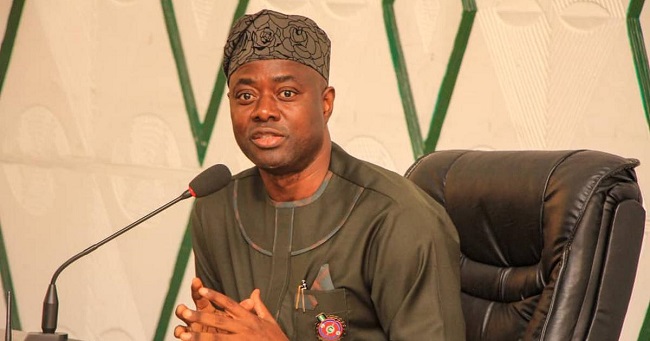
Gov. Seyi Makinde of Oyo State
“We found that fewer than 20 per cent of public primary schools in the state have adequate sanitation facilities, while access to safe drinking water remains severely limited,” he said.
According to the report, wells constitute the major source of water in most schools, while pit latrines are the dominant toilet facility.
He, however, said these facilities were often poorly maintained, unhygienic and unsafe for children.
“The lack of functional toilets in many schools likely encourages open defecation, which increases exposure to health risks among pupils,” Addie said.
The study indicated that disparities exist among urban, semi-urban and rural schools, with rural communities being the most underserved in terms of water and sanitation provision.
The report linked the poor facilities to the spread of water and sanitation related diseases, including malaria, typhoid and diarrhoea, which negatively affect pupils’ health, school attendance and overall learning outcomes.
Addie warned that, without urgent intervention, the state would struggle to meet SDG 6, which targets universal access to clean water and sanitation by 2030.
To address the challenges, the study recommended that the Oyo State Government prioritise the provision of clean and reliable water sources and improved sanitation facilities in public primary schools.
It also stressed the need for gender-sensitive toilets, particularly to support girls’ health, safety and retention in school.
The report further called for greater community involvement in the maintenance of school facilities, as well as regular hygiene education programmes for pupils and teachers.
“Improving water and sanitation in schools is not just a health issue; it is fundamental to quality education and child development,” Addie said.
Nigeria’s long delayed Lagos-Calabar Coastal Highway is set to be rescued by thousands of AI-driven, solar-powered streetlights that turn it into a revenue-generating asset.
British greentech firm Conflow Power Group, working in partnership with Nigerian infrastructure company Mora Energy, has announced a plan under discussion with the Nigerian government to solve the highway’s financing crisis by providing thousands of iLamps – solar-powered streetlights that double as a distributed AI data centre.
No external electricity supply is required, and every iLamp is packed with Nvidia AI processors, meaning that they provide significant revenue because AI providers such as OpenAI pay for the processing power.
iLamp
Through a partnership with British firm AI Factories Limited, each iLamp unit becomes a node in a distributed AI computing network, generating up to $4,500 annually paid by the AI firms.
Deployed across the 700km corridor, the proposed 28,000 iLamps would generate $1.26 billion in annual revenue, helping fund construction of the highway.
Stanley Chuka-Umeora, Founder of Mora Energy, said: “Our government contacts immediately understood the significance of what Conflow was proposing. For 50 years, Nigeria has struggled with this project because we were applying 20th-century solutions to 21st-century problems. iLamp represents genuinely innovative thinking. It is not just infrastructure, it is revenue-generating technology that brings AI capabilities to Nigeria for the first time.
“Government officials were particularly impressed that iLamp solves multiple problems simultaneously. It’s not just about financing, it’s about security, communications infrastructure, and bringing cutting-edge technology to Nigerian communities.”
Zainu Goba, CEO of iLamp Africa, said: “The financial mathematics are compelling. iLamp doesn’t just provide lighting and security, it creates a new revenue stream that could contribute more than a billion dollars towards project costs annually. Combined with zero operational costs through solar power, this improves the project’s attractiveness to private investors and has the potential to positively transform the lives of millions of Nigerians.”
Under the iLamp proposal, revenue generation would begin as soon as sections of the highway are completed, reducing reliance on tolling and public funding. The smart streetlights also provide high-efficiency LED lighting, surveillance cameras, vehicle recognition, emergency response systems, public connectivity and environmental monitoring – all powered entirely by solar energy.
The deployment would also establish one of Africa’s largest distributed AI computing networks, enabling AI services to be processed locally rather than overseas, which would support Nigeria’s growing tech sector and position the country as a regional hub for AI infrastructure.
The iLamp Africa team and Mora Energy are continuing discussions with the Nigerian Government and project partners to explore formal integration of iLamp technology into the Lagos-Calabar Coastal Highway.
First proposed in the 1970s, the highway spans 700km and is designed to connect nine coastal states, unlocking trade, tourism and economic growth across southern Nigeria. Despite its strategic importance, the project has been repeatedly delayed by funding shortfalls, political changes and economic instability.
Construction resumed in 2024, but only $747 million has so far been secured – less than 6% of the estimated $11–12.5 billion total cost, leaving a funding gap of more than $10 billion and raising fears the project could again stall.
The Nigerian National Petroleum Company Limited, (NNPC Ltd.) says it has successfully contained the fire outbreak on a section of the Escravos-Lagos Pipeline System (ELPS) in South-West Warri, Delta State.
The Chief Corporate Communications Officer of NNPC Ltd., Andy Odeh, confirmed this in a statement on Sunday, December 14, 2025.
The NNPC Limited had confirmed an incident involving an explosion reported at about 17:50 hours on Wednesday near Tebijor, Okpele, and Ikpopo communities in Gbaramatu Kingdom, Delta.
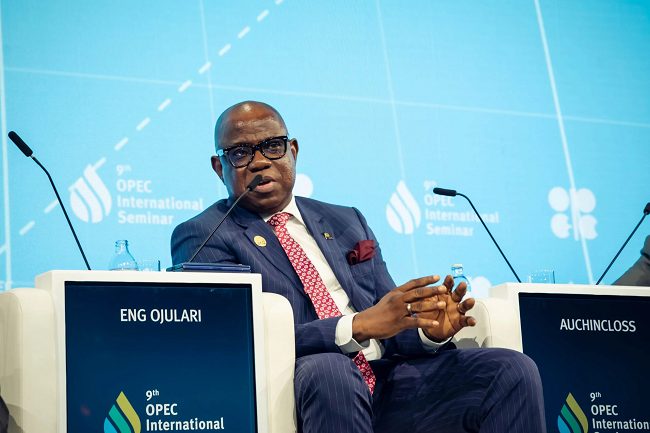
Bayo Ojulari, GCEO, National Petroleum Company (NNPC) Limited
Odeh said coordinated containment measures had been successfully executed, ensuring the safety of host communities, personnel, and the environment.
“All relevant pipeline sections have been safely and securely isolated,” he said.
Odeh said a joint preliminary inspection involving NNPC Limited, the Nigeria Midstream and Downstream Petroleum Regulatory Authority (NMDPRA) technical teams, and maintenance contractors had been conducted at the affected site.
He said the NNPC Gas Infrastructure Company (NGIC), the operator of the network, had activated its Business Continuity Plan to manage the impact on all affected stakeholders, including shippers and suppliers.
“NNPC Ltd continues to maintain open communication with host communities, state authorities, and other critical stakeholders, and appreciates their sustained support and cooperation.
“The company remains committed to the safety of its host communities, the protection of the environment, and the reliability of its operations across all assets,” he said.
At COP30, held in Belém, Brazil from November 10 to 21, 2025, the African Development Bank Group introduced a new, more interactive way to showcase its climate solutions by hosting informal, coffee-style dialogues that allowed participants to engage directly with Bank experts.
The discussions focused on accelerating sustainable and resilient development as Africa faces the threat of climate change.
Al-Hamndou Dorsouma, the Bank Group’s Climate and Green Growth Division Manager, opened the discussions. He explained that African countries, despite contributing less than four percent of global emissions, are experiencing rising temperatures, extreme weather events and increasing vulnerability.
Davinah Milenge, the Bank Group’s Chief Programme Coordinator for Climate Change and Green Growth, talks with participants about the Bank’s special climate initiatives
The Bank Group was also represented by Davinah Milenge, Chief Programme Coordinator for Climate Change and Green Growth, who outlined Bank Group special initiatives, including relating to the circular economy in Africa.
Gareth Phillips, Manager for Climate and Environmental Finance, described the Bank’s green finance initiatives with a particular focus on the African Green Banks Initiative.
Meanwhile, James Kinyangi, Coordinator of the ClimDev Special Fund and the Climate Action Window, captivated audiences with a presentation on these two financing windows.
Also, Arona Soumaré, the Bank’s Chief Regional Specialist on Climate Change for West Africa, led a dialogue on the institution’s climate activities in the region, which is considered a global climate change hot spots. Soumare addressed, in particular, the Bank’s commitment to creating synergies between the Rio Conventions on climate, biodiversity, and desertification.
The Bank representatives fielded several questions and comments. Reilo Idagiza Sirali and Lydia Wanjo, two Kenyan visitors, praised the “original idea” behind this session. “It was as if we had met over coffee to discuss serious issues about the future of the planet,” said Wanjo.
“It was very interesting – I learned a lot about the just energy transition, nationally determined contributions (NDCs) and the Bank’s measures on the circular economy,” said Maria Micah Maua, a member of the Kenyan youth delegation to COP30.
“At the African Development Bank, our role is to help unlock this potential through integrated and transformative action,” said Dorsouma.
He noted that under the leadership of President Sidi Ould Tah, the Bank Group has just adopted a new strategic direction centred on ‘Four Cardinal Points, which are improving access to capital to unlock Africa’s financial potential and increase investment; reforming and strengthening financial systems to build resilience and increase the continent’s influence; harnessing Africa’s demographic transformation through innovation, skills and job creation, particularly for the green transition; and building climate-resilient infrastructure and value chains to ensure long-term sustainable growth.
Doursouma said, “the initiatives we are discussing today – the circular economy, climate information services and green finance – contribute directly to these priority areas and illustrate how the Bank integrates innovation, information and investment to drive large-scale climate action.”
The Global Environment Facility (GEF) Consultation with civil society organisations (CSOs) took place on Friday, December 12, 2025, ahead of the 70th Meeting of the GEF Council. It provided an opportunity for GEF Council members, the GEF Secretariat, and civil society leaders and representatives to reflect on progress toward the ninth replenishment cycle (GEF-9) and to consider how a whole-of-society approach can be embedded across GEF-9.
Opening the meeting, Gabriella Richardson Temm, Lead, Small Grants Programme, GEF, underscored the importance of the consultation, noting that it is the final meeting during the GEF-8 cycle. She emphasised that the discussions would provide an opportunity to consider how to strengthen whole-of-society implementation under GEF-9 and inform the GEF-9 replenishment meeting scheduled for January 2026.
Carlos Manuel Rodriguez, GEF CEO and Chairperson
Adriana Moreira, Lead, Partnerships Division, GEF, then provided a stocktaking of GEF-8 approaches and targeted programmes, emphasising increased engagement with, and participation of, CSOs. She discussed the “substantially transformed” Small Grants Programme (SGP), highlighting strong success in expanding the choice of GEF implementing agencies and its innovative new approaches, such as the CSO Challenge programme and Microfinancing Initiative.
Sagar Aryal, Head, Technical Subcommittee, CSO Network, provided an overview and reflection on the GEF-9 whole-of-society approach, drawing on discussions from the CSO Consultations held in May 2025 and the Whole-of-Society Talks organised by the GEF CSO Network. He underscored convergence from these discussions that “whole of society” must be more than a paper commitment: it should operate as a practical delivery engine, moving beyond consultation and towards implementation.
Aryal highlighted that while GEF-9 signals strong policy ambition around a whole-of-society approach, greater commitment is needed to translate this into delivery. He identified persistent gaps, pointing to declining support for CSO-led projects, barriers to access for grassroots actors, and insufficient empowerment of IPLCs. He called for predictable and adequate funding, stronger representation of whole-of-society actors in decision-making, and clearer mechanisms to match GEF-9 ambitions with budgetary allocations.
Facilitated Conversation Between Civil Society Negotiators and GEF Replenishment and Council Members
Moderated by Aryal, the session focused on facilitating access to finance for civil society, IPLCs, women, and youth during GEF-9. Richard Bontjer, GEF Council Member, Australia, highlighted the importance of a whole-of-society approach in achieving environmental and development targets, and of Indigenous Peoples’ knowledge in curbing biodiversity loss. He praised the SGP’s effectiveness in engaging civil society and called for increased financial allocation for it.
Bontjer noted that none of the GEF Implementing Agencies are Indigenous-led and proposed: enhancing the effectiveness of existing Implementing Agencies in working with Indigenous Peoples; and selectively expanding the GEF partnership by bringing in new Agencies with expertise in collaborating with IPLCs. In line with GEF-9’s goal to increase risk appetite, he supported encouraging civil society to bring their projects forward to develop innovative approaches.
Referencing recent GEF performance reports, he noted: GEF’s comparative advantages in supporting collaboration across multilateral agencies in the environmental and climate space; increased co-financing mobilization, stressing that more ambitious steps are needed; and concern that only 59% of projects show broad adoption.
Hoda Elshawadfy, GEF Replenishment Member, Egypt, called for increased financing for the SGP to support the inclusion of civil society and local communities throughout project lifecycles. She highlighted the need to balance the needs of the country and civil society, noting that her country dedicated 20% of its allocation directly to the SGP.
To advance civil society participation under GEF-9, she proposed setting clear roles and expectations across partnerships and providing capacity building and support to non-governmental organisations. Finally, she called for increased private sector participation and efforts to achieve gender balance.
Faizal Parish, Chair, GEF CSO Network, underscored the significance of traditional knowledge in addressing the triple planetary crisis. While highlighting the value of existing mechanisms such as the SGP and ICI, he stressed the need to empower civil society across the entire GEF programme and portfolio.
Parish noted that the ICI was oversubscribed by more than 80 times, reflecting significant unmet demand, and called for increasing the replenishment target from $5.4 to 7.5 billion to keep up with funding needs. He indicated that a higher risk-tolerance approach can empower local communities and civil society and support experimentation, necessary for discovering innovative and high-impact approaches.
Carlos Manuel Rodríguez, CEO and Chairperson, GEF, underscored the importance of increasing CSO involvement, stating that, for the GEF to achieve its institutional mandate, it must work with everyone who is part of the solution. He stressed that CSOs set an expectation for the sustainability of GEF’s investments and portfolios. He stated that there must be a clear role and expectation for what CSO engagement will look like, noting that a whole-of-society approach will guide comprehensive CSO inclusion and utilisation.
Rodríguez urged the expansion and simplification of finance for community-led actions, emphasising that GEF-9 represents a transition toward a more effective model of cooperation that can demonstrate the value of a whole-of-society approach. He noted that combining whole-of-society and whole-of-government approaches will help sustain GEF programming over time. Acknowledging that internal dynamics may differ for GEF-10, he stressed the importance of placing non-state actors at the centre of GEF action now.
In the subsequent discussion, speakers responded to questions and comments from participants. Rodríguez underscored the SGP’s role in piloting a whole-of-society approach and highlighted emerging windows of opportunity, such as blended finance. On accessing GEF funds for civil society, he recommended engaging with operational focal points and building a relationship with them, noting there is now a budget line to support their work.
On supporting the vision of youth and improving collaboration with the CSO network, Parish said a key reform for countries is the establishment of national steering committees for the GEF, and that CSO representation on these is needed. This reform, he noted, is already underway and in place in some countries. He highlighted the importance of recognising that IPLCs have the right to self-determination.
Closing the meeting, Rodríguez stressed that the GEF must recognise the role of CSOs in leading solutions, with governments and the private sector complementing these efforts to achieve progress.
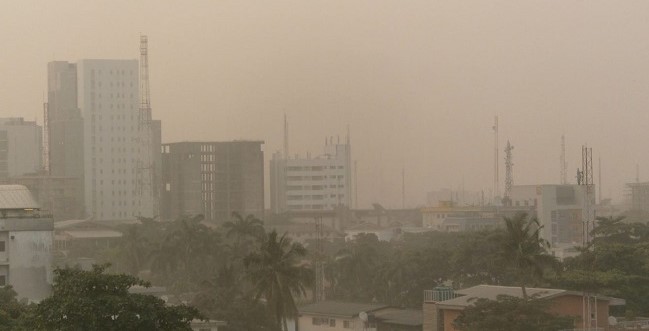
The Nigerian Meteorological Agency (NiMet) has predicted sunny and hazy weather conditions from Sunday, December 14 to Tuesday, December 16, 2025, across the country.
NiMet’s weather outlook released on Sunday in Abuja envisaged a sunny and hazy atmosphere over the northern region during the forecast period.
According to it, slight dust haze is expected over the central region throughout the forecast period.
Hazy weather
The agency anticipated a cloudy atmosphere with some hours of sunshine over the southern region during the morning period.
NiMet forecast isolated thunderstorms over parts of Rivers, Bayelsa, Cross River, Lagos and Akwa Ibom states in the southern later in the day.
“On Monday, moderate dust haze atmosphere is anticipated over the northern region throughout the forecast period. Slight dust haze is expected over the central region during the forecast period.
“Cloudy atmosphere with a few hours of sunshine is anticipated over the southern region with prospects of isolated thunderstorms over parts of Bayelsa, Akwa Ibom, Cross River and Rivers states during the morning hours,” it said.
It predicted cloudy atmosphere later in the day with intervals of sunshine over the southern region.
According to the agency, moderate dust haze is anticipated over the northern region throughout the forecast period on Tuesday.
It envisaged a sunny and hazy atmosphere over the central region throughout the forecast period.
It forecast cloudy atmosphere over the southern region during the morning hours.
The agency predicted isolated thunderstorms with light rains over parts of Anambra, Imo, Ogun, Ondo, Bayelsa, Akwa Ibom, Cross River, Lagos, Delta and Rivers states.
NiMet urged the public to take necessary precaution as dust particles could be in suspension over the northern region.
“People with asthmatic health condition and other respiratory issues should be cautious of the present weather condition.
“Driving under rain should be with caution.
“Airline operators are advised to get airport-specific weather reports (flight documentation) from NiMet for effective planning in their operations.
“Residents are advised to stay informed through weather updates from NiMet. Visit our website (www.nimet.gov.ng),” it said.
How does the Convention on International Trade in Endangered Species of Wild Fauna and Flora (CITES) operate in practice? What underpins the CITES permit system, the scientific and legal acquisition assessments that guide decisions, and the structure of the CITES Appendices? How do the roles of national CITES authorities differ from those of the CITES Secretariat?
These are just some of the questions that can be answered by taking the new CITES online courses launched at the 20th World Wildlife Conference.
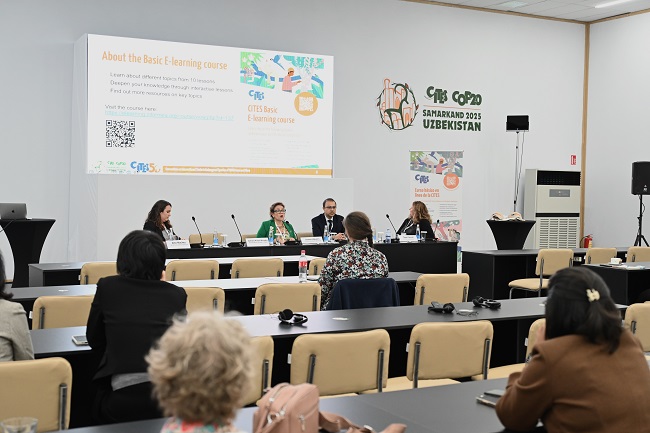
At a side event in the margins of the 20th meeting of the Conference of the Parties to CITES (CoP20) that took place in Samarkand, Uzbekistan, from November 24 to December 5, 2025, the CITES Secretariat announced the launch of two new e-learning courses.
The side event in the margins of the 20th meeting of the Conference of the Parties to CITES (CoP20) held in Samarkand, Uzbekistan
The CITES Basic e-Learning Course and the CITES e-Learning Course on the Amendment of Appendices I and II are interactive, self-paced tools designed to support Parties, enforcement authorities, non-governmental organizations, academia, the youth, and the broader conservation community in understanding and implementing the Convention more effectively. Both courses are hosted on the United Nations Environment Programme (UNEP) InforMEA knowledge management platform, which provides a central hub for knowledge-sharing across multilateral environmental agreements.
Opening the side event at CoP20, CITES Secretary-General, Ivonne Higuero, emphasised the importance of digital transformation in strengthening knowledge management and global cooperation, by stating: “These courses come at a particularly meaningful moment, as we celebrate the 50th anniversary of CITES, marking a major step forward in making CITES knowledge more accessible, inclusive, and impactful for all Parties.
“These new e-learning tools will help strengthen global cooperation and support our shared commitment to conserving biodiversity in line with the Kunming-Montreal Global Biodiversity Framework, the 2030 Agenda for Sustainable Development and CITES Strategi Vision.”
The side event featured an interactive quiz with event participants, a walk-through of the online platform and demonstrations of the new courses on topics including:
CITES authorities
Regulation of trade in specimens of CITES-listed species and the CITES permit system
Exemptions and other special provisions
Non-Detriment Findings
Proposals to Amend the CITES Appendices
CITES enforcement
These new digital tools are expected to play a critical role in building capacity among Parties and stakeholders, particularly in regions where resources for training and implementation are limited.