The last Ebola patient in the Democratic Republic of the Congo was discharged on Sunday, October 19, 2025, marking an important milestone in the efforts to end the outbreak. The recovery kicks off a 42-day countdown to declaring the outbreak over if no further cases are confirmed.
A total of 19 patients has recovered from the disease. No new cases have been reported since September 25. In total, 64 cases (53 confirmed and 11 probable) have been reported since the outbreak was declared on September 4 in Bulape health zone, in Kasai Province.
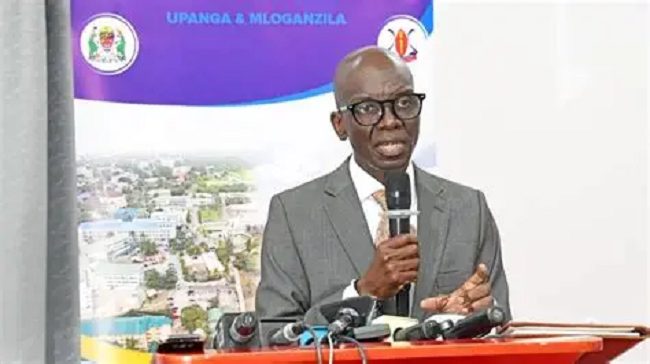
Dr Mohamed Janabi, WHO Regional Director for Africa
The outbreak occurred in a rural and hard-to-reach locality. Despite the challenges of distance, poor roads, and limited infrastructure, the Ministry of Health, with support from World Health Organisation (WHO) and partners, acted swiftly to scale up outbreak response measures.
WHO deployed multidisciplinary teams to strengthen surveillance, clinical care, infection prevention and control, logistics, community engagement and other key response measures. A 32-bed Ebola treatment centre, fitted with a two-bed Intensive Infectious Disease Treatment Module (IIDTM), was set up in record time, the first deployment of its kind outside a simulation exercise setting in the region. Additionally, more than 35,000 people have been vaccinated against Ebola in Bulape.
“The recovery of the last patient just six weeks after the outbreak was declared is a remarkable achievement that shows how strong partnership, national expertise and determination have contributed to overcoming challenges to save and protect lives,” said Dr Mohamed Janabi, WHO Regional Director for Africa.
WHO and partners remain on the ground, working closely with government to ensure measures are maintained to swiftly detect and respond to any cases as the country counts down to the end of the outbreak.
If no new cases are detected, the outbreak will be declared over in early December 2025.
The National Council for Climate Change (NCCC) is partnering with the Organisation of Petroleum Exporting Countries (OPEC), the African Group of Negotiators (AGN), and others to promote sustainable energy use and achieve climate goals.
Mrs. Omoteniola Majekodunmi, Director-General of NCCC, said this during a panel discussion session at the three-day retreat on Pre-COP30 Synthesis meeting and Regional Strategy Review Session on Thursday, October 16, 2025, in Keffi, Nasarawa State.
The programme was organised by the International Labour Organisation (ILO) in collaboration with the Nigeria Labour Congress (NLC).
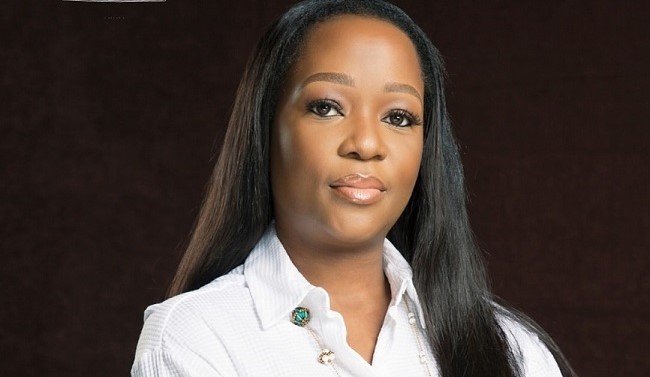
Omotenioye “Teni” Majekodunmi
The meeting was convened to engage stakeholders on Nigeria’s climate transition strategy ahead of the 30th UN Climate Change Conference (COP30).
Majekodunmi, represented by Ms. Jummai Vandu, a climate change specialist at NCCC, said the collaboration would help Nigeria utilise its abundant natural gas resources responsibly and reduce environmental risks.
“We are working closely with strong institutions like OPEC, the African Group of Negotiators, and others to ensure Nigeria’s energy use aligns with global climate commitments,” she said.
Majekodunmi said that the partnership would also protect Nigeria’s economy from fiscal shocks that might result from a hasty energy phase-out.
She added that the goal was to balance the nation’s development needs with climate action in a way that leaves no one behind.
The NCCC D-G explained that the government was exploring technologies such as carbon capture and storage to manage emissions and attract private investment in clean energy.
She also warned that a sudden phase-out of fossil fuels in the name of addressing climate change could trigger fiscal and economic crises in the country.
According to her Nigeria must adopt a balanced and gradual approach to energy transition to protect its economy and livelihoods.
“If we rush into a complete energy phase-out, two things will happen, fiscal shock and economic contraction and we cannot afford that because of our population size and economic realities,” she said.
Majekodunmi explained that Nigeria’s vast natural gas reserves remain a key resource in ensuring a just and inclusive energy transition.
“Our strategy is to use natural gas as a bridge fuel while investing in cleaner technologies that reduce emissions,” she added.
She, therefore, called for increased private sector investment to drive the implementation of Nigeria’s National Climate Transition Plan.
She said that the plan, developed through wide consultations, would not be effective if left on the shelf without the needed financing and digitalisation.
Majekodunmi said that private funding would also help accelerate Nigeria’s climate goals and strengthen adaptation measures across key economic sectors.
She also reaffirmed NCCC’s commitment to ensuring that Nigeria’s transition policies are inclusive, data-driven, and aligned with national development priorities.
The Small-Scale Women Farmers Organisation in Nigeria (SWOFON) has appealed to the Federal Government and the FCT Administration to take urgent steps to address insecurity affecting farmers.
The group said the move would guarantee safe access to farmlands and production zones, thereby improving agricultural output and livelihoods.
The call was made during the presentation of SWOFON’s “Charter of Demand of Smallholder Women Farmers in the FCT” at a State-Level Interactive Forum and World Food Day commemoration.
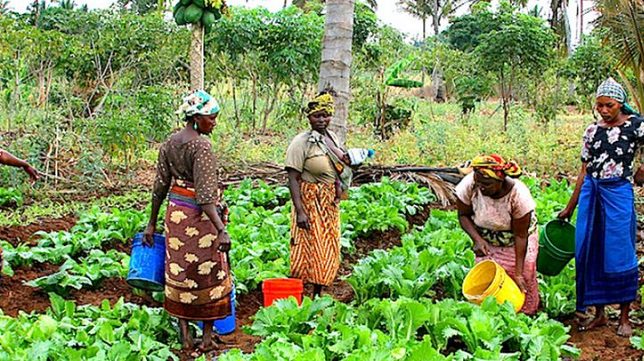
Women farmers
It was organised by ActionAid in collaboration with SWOFON in Abuja.
Mrs. Comfort Sunday, FCT Coordinator of SWOFON, said improved security for farmers would enhance agricultural productivity, raise household income and promote sustainable development.
She noted that empowering smallholder women farmers remained a pathway to food security and poverty reduction, as well as a key strategy for promoting gender equality.
Sunday said women farmers play a crucial role in food production but continue to face barriers in accessing land, agricultural inputs, credit facilities, technology, markets, and extension services.
“These challenges limit productivity, reduce household income and weaken national food security,” she said.
According to her, the charter represents the collective voice of smallholder women farmers in the FCT and calls for inclusive, gender-responsive agricultural policies that guarantee equitable access to resources.
She urged the government to scale up public investment in agriculture, ensure timely and transparent budgeting, and make financing more accessible to farmers.
Sunday also called on FCT departments and area councils to fully implement the National Gender Policy in Agriculture, while prioritising improved access to markets, infrastructure, and capacity building for extension services.
She further appealed for investment in gender-responsive post-harvest solutions such as processing centres, storage facilities, and market linkages to reduce waste and improve livelihoods.
SWOFON also urged the government to strengthen women’s land tenure systems by granting cooperatives access to fertile land and protecting them from commercial eviction and land grabbing.
The group called for the recruitment of more agricultural extension agents and training in Climate-Resilient Sustainable Agriculture (CRSA) to promote climate adaptation and innovation among smallholder farmers.
It also advocated for the upgrading of rural roads, water systems and affordable transport such as tricycles to ease movement of produce to markets.
Sunday said the charter would serve as a policy advocacy tool to influence government plans and budgets toward inclusive and gender-responsive agricultural development.
She expressed optimism that implementing the charter would improve the livelihood and productivity of women farmers, strengthen partnerships with the FCT Administration and enhance food security.
The Association of Chartered Certified Accountants (ACCA) has launched the Sustainability Hour to promote awareness of the United Nations Sustainable Development Goals (SDGs) among Nigerian students.
The six-month initiative, starting in October 2025, targets students aged 10–16 and features monthly interactive learning modules on key sustainability themes.
The programme focuses on UN SDGs such as climate action, waste and water management, energy efficiency, poverty, and hunger, supporting the global 2030 Agenda.
L-R: Dayo Adetona, Regional Head of customer service, Africa, ACCA,; Tom Isibor, Country Head, Nigeria, ACCA; Mrs. Kofo Karunwi, Vice Chair, Association of International Schools in Nigeria (AISEN); Dr Rabiu Olowo, CEO, Financial Reporting Council of Nigeria; Rukaiya el-Rufai, Special Adviser to the President on National Economic Council (NEC) and Climate Change; Jamil Ampomah, Director, Africa, ACCA; Dr Olushola Olowoyeye, MD, BetaPlus Group; Chiamaka Nnake, Commissioner for Budget and Economic Planning, Anambra State; Seyi Willoughby , Managing Partner, Elm Park Advisors Limited; Evelyn Isioye, Regional Lead, Policy & Insights, India & Africa, ACCA; and Kola Agunbiade. Regional Financial Controller, Africa, ACCA
Speaking at the launch on Friday, October 17, 2025, in Ikeja, Country Head, ACCA Nigeria, Mr. Thomas Isibor, said the initiative aims to equip future leaders with knowledge of the SDGs.
Isibor explained that the “Sustainability Hour” is designed to promote advocacy, behavioural change, and understanding of the SDGs among students nationwide.
He added that the initiative is driven by a shared concern for the planet and the need to prepare young leaders for a sustainable future.
According to him, the impact sought includes lasting behavioural change, innovation, and excellence in education while inspiring responsible citizenship among young Nigerians.
He stated that the programme targets public and private schools, focusing on six SDGs, including Quality Education and Responsible Consumption and Production.
Isibor said the pilot phase will be evaluated after six months to determine the programme’s reach and potential expansion to more schools and communities.
“We want our future leaders to adopt the right behaviours and become changemakers capable of building a sustainable world for generations after them,” he said.
Special Adviser to the President on National Economic Council and Climate Change, Mrs. Rukaiya El-Rufai, commended the ACCA for the initiative.
She described it as a timely step toward empowering young Nigerians to tackle environmental and social challenges through education and awareness.
“Education remains vital for sustainable development. Teaching SDGs equips future generations to confront climate change and inequality,” El-Rufai said.
She added that sustainability education fosters global citizenship, critical thinking, and problem-solving skills for inclusive and environmentally responsible societies.
Special Adviser to the Lagos State Governor on SDGs, Dr Oreoluwa Finnih, also praised ACCA for aligning the programme with SDGs 1, 2, 4, 6, 12, and 13.
Finnih said the initiative complements the Lagos State THEMES Agenda and Governor Babajide Sanwo-Olu’s vision of integrating SDGs into development strategies.
She urged students to embrace sustainability, noting that it is the foundation for shared prosperity and environmental stewardship.
Finnih emphasised that the programme helps nurture young minds to think critically about environmental, social, and governance issues.
She encouraged students to become sustainability champions in their schools, communities, and homes through conscious daily actions.
Mr. Wonderful Olulano, a member of the ACCA curriculum team, said the programme promotes global awareness through SDG-centred learning.
He noted that it seeks to inspire students and engage teachers, parents, and guardians in driving sustainable solutions to global challenges.
Olulano explained that Temple School has introduced Project-Based Learning, where students design projects tackling issues like hunger, poverty, and gender equality.
“We teach young people to understand the SDGs, recognise real problems, and collaborate to create sustainable change,” he said.
Miss Jennifer Obiorah of Queen’s College said she learnt that waste materials like paper, metal, nylon, and plastics can be recycled for useful purposes.
Also, Okon Mitchell from King’s College thanked ACCA for the programme, saying it taught him that “nothing is a waste until you waste it.”
The highlight of the event was a fashion show featuring creative outfits made from recycled materials such as plastics, newspapers, and nylon.
The Global Initiative for Food Security and Ecosystem Preservation (GIFSEP), a non-governmental organisation (NGO), has pledged to combat hunger among Persons with Disabilities (PWDs) through inclusive agricultural empowerment initiatives.
Dr Michael David, Executive Director of GIFSEP, made the pledge in Abuja on Friday, October 17, 2025, during the organisation’s 10th anniversary celebration and inauguration of its new board of directors.
“GIFSEP’s Food for All Initiative is more than a project, it is a movement of hope and action.
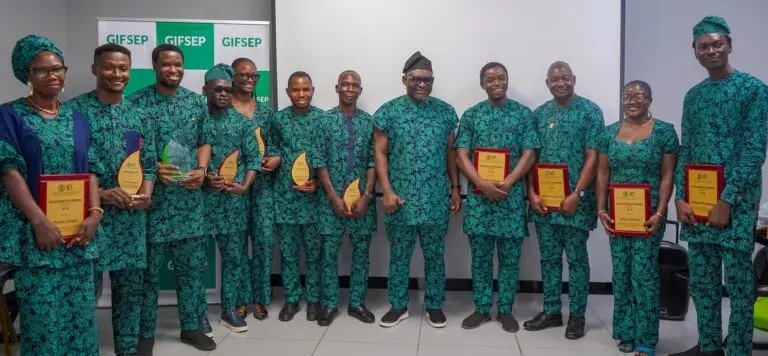
GIFSEP staff at 10
“Through our #Food4PWDs campaign, we empower persons with disabilities to become self-reliant food producers and contributors to national food security,” David said.
He said the initiative aimed to build climate-resilient food systems rooted in inclusion, innovation, and community strength.
He also announced plans to partner with CBM Global Disabilities, an international organisation fighting hunger among PWDs.
David appealed for funding and collaboration from development partners, noting that such partnerships were essential to scale up efforts and reach more communities.
Mr. John Makina, Country Director of Oxfam in Nigeria, commended GIFSEP’s resilience and accountability over the past decade.
“Ten years is a significant milestone, especially for a grassroots organisation. GIFSEP has shown transparency and commitment, and we will continue to support their projects,” he said.
Mrs. Judith Gbagidi, Governance Specialist at ActionAid Nigeria, also hailed GIFSEP for consistently including PWDs in its projects and for its decade-long contribution to inclusive development.
Also speaking, Mrs. Paulyn Opara, Head of Food Security and Livelihoods at Action Against Hunger, expressed optimism about the next decade and pledged continued support for the initiative.
Dr Olumide Ojo, Strategy Director at Propcom+, a UK aid programme, described GIFSEP as a consistent partner and assured backing for its future projects.
Ms. Regina Nwaneri, Director of Desertification, Land Degradation, and Drought Management at the Federal Ministry of Environment, said the ministry would support GIFSEP’s efforts to improve the lives of PWDs.
The event featured the inauguration of a seven-member board, award presentations, and the cutting of the 10th anniversary cake.
The Global Champions of Adequate Housing have issued a strong Call to Action on Adequate and Affordable Housing, urging countries and partners to prioritise housing as a foundation for sustainable development.
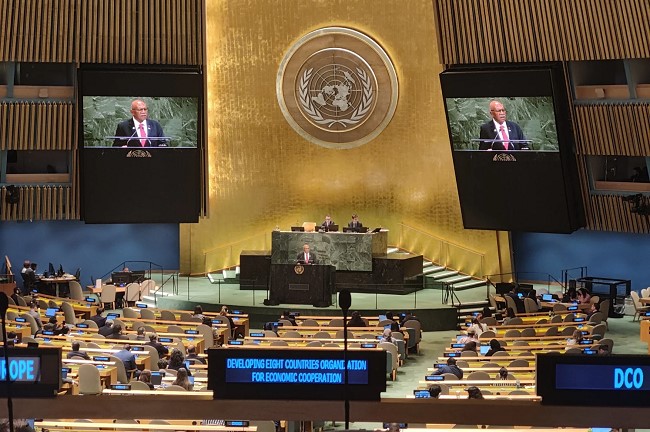
The Call was announced during the High-Level Roundtable of Global Champions on Adequate and Affordable Housing, held on the sidelines of the 80th session of the United Nations General Assembly (UNGA80) at the UN Headquarters in New York. The roundtable was convened under the leadership of the Government of Kenya and President William Samoei Ruto and co-hosted with UN-Habitat.
“Adequate and affordable housing is not a privilege – it is a human right and the foundation for equality, resilience, and sustainable development,” said Anacláudia Rossbach, Executive Director of UN-Habitat. “We invite more Member States to join this commitment … and to work together to ensure every person has a safe and decent place to call home.”
80th session of the United Nations General Assembly (UNGA80)
Responding to a global crisis
Almost 3 billion people lack access to adequate housing, including 1.1 billion living in informal settlements and over 300 million who are homeless. The Call to Action urges countries to strengthen housing strategies, integrate housing with climate resilience and social protection, and scale up investment to address this urgent challenge.
The roundtable brought together heads of state, ministers and senior representatives from across regions to reaffirm political commitment, share experiences, and mobilize partnerships. It also reinforced the work of the Open-ended Intergovernmental Expert Working Group on Adequate Housing for All, co-chaired by Kenya and France.
Key commitments of the Call to Action
Through the Call to Action, the Global Champions committed to:
Strengthen a global coalition to champion housing as a development priority.
Mobilize financing and partnerships to accelerate delivery of affordable, resilient housing.
Advance UN-Habitat Resolution 2/7 with measurable progress and accountability.
Promote innovation and inclusion through sustainable technologies and locally driven solutions.
Elevate housing on the global agenda at major international fora.
Inspire collective action from governments, communities, civil society and the private sector.
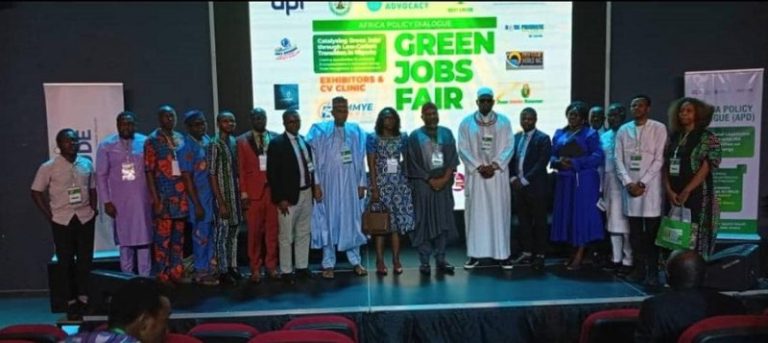
Advocacy for Policy and Innovation (API) and Connected Advocacy, with support from the INCLUDE Knowledge Platform and in collaboration with the House Committee on Renewable Energy, convened on Friday, October 17, 2025, the “Merged-Zonal Africa Policy Dialogue (APD) Legislative Engagement and Green Jobs Fair”, in Benin City, Edo State.
The South West and South-South “Merged-Zonal APD Legislative Engagement, and Green Jobs Fair” showcased the zones as champions in renewable energy, green skills innovation, youth capacity to drive the nation’s green economic growth, and investment opportunities.
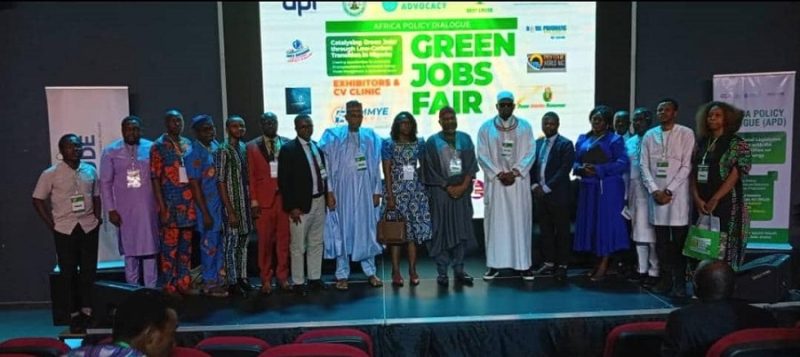
Participants at the Legislative Engagement and Green Jobs Fair in Benin City, Edo State
The event, which brought together key stakeholders from across the South-West and South-South zones, combined a focused legislative workshop in the session and a Green Jobs Fair matching employees/interns with the green sector players. The dialogue aimed to receive citizens’ recommendations into the National Inclusive Green Jobs Act (NIGJA) Bill, and the National Green Skills Employment Alliance (NGSEA), ensuring subnational contributions, ownership, and alignment between policy priorities, employment opportunities, and market-driven green skills.
The dialogue was declared open by Afam Victor Ogene, Chairman of the House Committee on Renewable Energy, and his deputy, Iliyasu Aliyu Abubakar, Abra Dangnan, Deputy Chair of the CoP/APD Co-Lead, provided the Overview of the APD project and objectives for the merged-zonal conference and job fair.
Mr. Aniebiet Obot’s APD Co-lead gave a progress report on the APD methodology. Prince Israel Orekha, Executive Director of Connected Advocacy, the organizing partner for the South-South South West Zonal Legislative Engagement and Green Job Fairs in Edo State.
Other dignitaries included Mr. Kenneth Iwoghiren, Director for Climate, representing the Commissioner of the Ministry of Environment and Sustainability, Edo State; and Dr. Emeribe Chukwudi Nnaemeka,Chief Research Officer, Energy Commission of Nigeria,
Osakwe Ize-Iyamu (Representative, NDDC Edo State); traditional ruler, Chief Kelvin Edegie, the Edegin N’ Useh; religious leader, Rev Ogakwu Abaros Simeon; the Immediate Past Vice Chairman, Christian Association of Nigeria, Edo State Chapter, led the goodwillmessages and shared insight into their various sectors’ recommendations, ensuring the National Inclusive Green Jobs Act Bills become a reality, looking at the various gaps that are required to cover to ensure inclusive implementation
The Green Jobs Fair Panel session was facilitated by Carl Oshodi-Isibor, and Mrs. Adesuwa James Jang, panelists were Prof. (Mrs.) Georgina Erifeta. Prof of Ecotoxicology and Ecological Biochemistry, Igbinedion University, Okada; Dr Ogiemwonyi Brightence, CEO of Brightence Electricals; Mrs. Edith Iyalomhe, CEO of Best-Cruse; Mrs. Irene Ipogah from NABTEB; Mr. Kenneth Iwoghiren, President Aigbokhan ED FOI, were other renewable energy companies present.
Their presence, according to the organisers, underscored the strong government, institutional, and community backing for Nigeria’s low-carbon transition toward a green and inclusive economy.
“The South Dialogue provided a bridge between legislative discourse and practical employment outcomes, reinforcing Nigeria’s national agenda for inclusive green growth. By linking policymakers, employers, and young talent, the dialogue demonstrated how subnational engagement can drive tangible progress toward a low-carbon, job-rich economy.
“With sustained collaboration, financing, and monitoring, the APD South Dialogue’s momentum will continue to shape policy implementation and deliver real impact in communities across Nigeria.,” they added.
Nigeria needs sustained actions to attract and retain investments in the gas sector to ensure economic growth and industrialization, senior leaders of the Shell Energy Nigeria organisation said at the 3rd edition of the Gas Investment Forum which held in Lagos recently.
Investments in key infrastructure, consistency in policy and regulations and partnerships were highlighted as enablers for the development of the nation’s huge gas resources.
General Manager Shell Energy Nigeria, Markus Hector, and Managing Director, Shell Nigeria Gas (SNG), Ralph Gbobo, made the remarks at separate sessions at the conference.
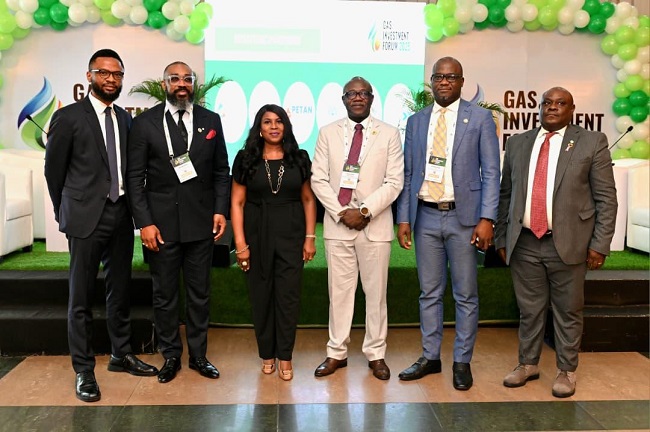
L-R: Head , Portfolio, Regulation and Supply, Chukwuka Amos-Ejesi, Shell Nigeria Energy (SEN); President, Nigeria Gas Association (NGA) , Akachukwu Nwokedi ; Manager, Commercial Sales and Customer Service , Ehizogie Olotu, Shell Nigeria Gas (SNG); Executive Commissioner, Development and Production, Eronse Amadasun , Nigerian Upstream Petroleum Regulatory Commission (NUPRC);President, Nigerian Association of Petroleum Explorationists, Uche Johnbosco; Regional Representative United Nations General Protocol( UNGP) for Sustainable Development Goals(SDGs), Dr Douglas Jombo…at the Gas Investment Forum in Lagos
In remarks delivered on his behalf by Head, Portfolio, Regulation and Supply Chuka Amos-Ejesi, at a panel session on “Nigeria’s Decade of Gas Imperative: Driving Investments through IOC–Independent Partnerships”, Markus said: “There is a clear strategic case for collaboration. IOCs bring international experience, deep capital reserves, and strong technical and risk management frameworks while independents bring local insight, agility, and operational flexibility in the Nigerian context.”
He said such “partnerships must also build domestic capacity – in engineering, supply chain, operations, and maintenance.”
Earlier in his own remarks at the opening ceremony, Gbobo said SNG was developing infrastructure by building gas hubs in Port Harcourt, Aba, Ota, and, recently Yenagoa, and hopes to extend to other cities.
He described infrastructure “as the backbone of Nigeria’s gas industrialisation journey, saying investments in this area “will not only improve access but also reduce costs and emissions, making gas a more viable option for industries and communities.”
Gbobo said policy clarity and consistency is essential for attracting long-term capital while “effective collaboration is the catalyst for scale and innovation.”
He added: “The opportunities are immense, gas will continue to support Nigeria’s energy transition, providing reliable power while displacing more carbon-intensive fuels, enhance job creation, industrial diversification, and regional trade. The success of these levers will be a collaborative effort from both the public and private sectors.”
The Gas Investment Forum brought together industry leaders, policymakers, investors, and other stakeholders on investment opportunities across the gas value chain – upstream, midstream and downstream.
The International Labour Organisation (ILO) has commended the Federal Government for ensuring that workers’ voices are reflected in Nigeria’s updated Nationally Determined Contributions (NDC) 3.0 on climate action.
Ms. Inviolata Chinyangarara, ILO Senior Specialist, on Friday, October 17, 2025, in Abuja said the inclusion of workers’ concerns in the NDCs 3.0 demonstrated the success of social dialogue and inclusiveness led by the National Council on Climate Change (NCCC).
“The fact that workers’ issues are now at the centre of Nigeria’s NDC 3.0 shows that social dialogue still works,” she said.
Inviolata Chinyangarara, ILO Senior Specialist
According to her, the Nigeria Labour Congress (NLC) played a vital role in shaping the document by contributing ideas on how a just transition should guide Nigeria’s climate policy.
“The NLC brought their membership, their structures across the 36 states and their views on how just transition should inform the NDC reviews,” she added.
Chinyangarara said that the ILO provided technical and capacity-building support to the NLC to strengthen its participation in the NDC process and promote evidence-based advocacy.
“We empowered the trade unions to come to the discussion table with evidence on why workers’ issues should be integrated into national climate plans,” she said.
She noted that the collaboration among government, ILO and trade unions ensured a balanced and inclusive process where “no one is left behind” in the transition to a green economy.
Chinyangarara, however, cautioned that while Nigeria had developed strong and inclusive policies, implementation remained the greatest challenge.
“We are optimistic, but with a big caution. Nigeria, like many countries in Africa, has good policies, but the issue of implementation is the real challenge,” she said.
She said that there was need for sustained collaboration among labour, government and development partners to ensure that climate commitments translate into real results for workers.
According to her, the NLC’s charter of demands highlights key areas such as occupational safety, gender equality, youth re-skilling and social protection for workers affected by the energy transition.
Chinyangarara further urged Nigeria to mobilise domestic resources to finance its climate goals, adding that, with local resources, you can plan, you can own and you can commit to the work areas.
She assured that the ILO will continue to support Nigeria through training, technical assistance and partnerships to ensure workers’ welfare remain central to climate action.
The story of food waste doesn’t end in the trash can – it’s a starting point for climate change, economic challenges and the empty plates of hundreds of millions. According to the Food Waste Index Report 2024, recent years have seen 19 per cent of food available to consumers wasted, which in turn is responsible for five times the total emissions from the aviation sector – and this comes while a third of humanity faces food insecurity.
However, as much as food loss and waste is a systemic issue of global scale, it’s also an area where individuals, families and communities can readily take action – and in creative ways that celebrate culture and tradition.
One foremost fighter of food loss and waste is United Nations Environment Programme (UNEP) Goodwill Ambassador and globally renowned chef Massmio Bottura, whose Food for Soul initiative runs community kitchens – “Refettorios,” now in nine countries – that rely on surplus food for ingredients. Here, Bottura shares how turning attention to food waste is not only an environmentally responsible thing to do, but also an act of memory and beauty.
Massimo Bottura
Why should we worry about food waste?
The greatest amount of food waste happens quite innocently in home kitchens around the world. When we throw away food, we are collectively wasting resources, wasting opportunity and wasting dignity. Reducing food waste is a win for the planet – it can cut up to 10 per cent of global emissions. It is also a win for people, turning surplus into billions of meals a day to fight hunger, and a win for the economy, saving nearly US$1 trillion a year. Fighting food waste is one of the simplest, most powerful actions people can take to create a better future for everyone.
Memory shapes taste. How can family traditions and childhood flavors help fight food waste? Memory is the foundation of taste, and taste is a foundation of culture. I often say that my mother was my first teacher in the kitchen. She respected every crumb. Leftover bread became passatelli in broth, vegetable scraps became minestrone and nothing ended up in the bin. These traditions are not nostalgia; they are lessons in sustainability. When we cook with memory, we are reminded that every ingredient carries history, labor, and love. Reviving those flavors teaches us to honor food not as a disposable commodity, but as a story to be carried forward.
This is the spirit behind my work with Food for Soul, where we transform surplus food into meals that restore dignity and nourish the community. And it is the same spirit behind the UNEP Food Waste Breakthrough, which I support as a UNEP Goodwill Ambassador and UN SDG Advocate – reminding the world that reducing food waste is not a side issue. It is central to fighting climate change, hunger and inequality.
How can chefs turn overlooked foods into something extraordinary?
Chefs have the privilege to transform what is overlooked into something extraordinary, and in doing so, they change perceptions. What was once seen as waste becomes culture on a plate. Some of the most renowned recipes all over the world came from the kitchens where people had to make do with what was in the pantry – humble, seasonal, local ingredients. Ribollita, paella, feijoada – these dishes are monuments to resourcefulness. A bruised peach becomes a granita. Carrot tops become pesto. Stale bread becomes cake.
This is what we practice every day in the Refettorios: we take surplus food destined for landfill and turn it into delicious meals full of dignity and beauty. As a UNEP Goodwill Ambassador, I see it as my duty to inspire others to recognize that the future of gastronomy is not about excess, but about creating beauty through respect.
You’ve worked on projects from Modena to Rio. In places like Brazil, resourceful cooking is cultural. What lessons can the world learn from that approach?
Brazil taught me resilience in the kitchen. In the favelas of Rio, I saw families doing with little what many of us fail to do with abundance. Cassava peels are dried and fried, fish bones flavor broths, banana skins become sweets. This is not “poor cuisine” – it is an ingenious cuisine.
Waste is not inevitable – it is the result of privilege and disconnection from nature. Communities with fewer resources remind us that true abundance is not endless supply; it is creativity, solidarity, and the transformation of every ingredient into a communal meal.
In their role as influencers, how can chefs spark a movement to bring back zero-waste traditions?
Chefs today hold enormous cultural influence. If we use it only to create luxury, we are missing the point. Zero-waste traditions like fermenting, pickling and curing are not just techniques but are also acts of preservation and wisdom passed from generation to generation. By putting them back on the table, we remind people that they are not old-fashioned; they are the future. At Osteria Francescana, if I celebrate potato skins or bread crusts on a Michelin-starred plate, I give dignity back to what many saw as disposable. At the Refettorios, we do the same for communities in need, proving that scraps can nourish both body and soul. This visibility sparks curiosity, then imitation, then systemic change.
Why did you become a UNEP Goodwill Ambassador?
I carry this role because chefs have a responsibility beyond cooking. Food is culture, memory and care. Through Food for Soul, I’ve seen how surplus can restore dignity. Becoming a UNEP Goodwill Ambassador, and later an SDG Advocate, allows me to bring this message to the world: Food is never just food, it is our common future.