Africa faces a housing deficit of over 51 million units – projected to reach 130 million by 2030. Behind this figure lies a deeper reality: more than one billion people live in informal settlements globally, many in rapidly growing African cities.
These are not just statistics; they reflect one of the defining urban challenges of our time – and a call to action that shaped discussions at the Second Africa Urban Forum (AUF), held from April 8 to 10, 2026, in Nairobi, Kenya.
Over three days, nearly 8,000 delegates came together with a shared purpose: to move from dialogue to implementation. What emerged was a unified continental voice – positioning Africa not as a recipient of solutions, but as a driver of global urban transformation through South-South cooperation.
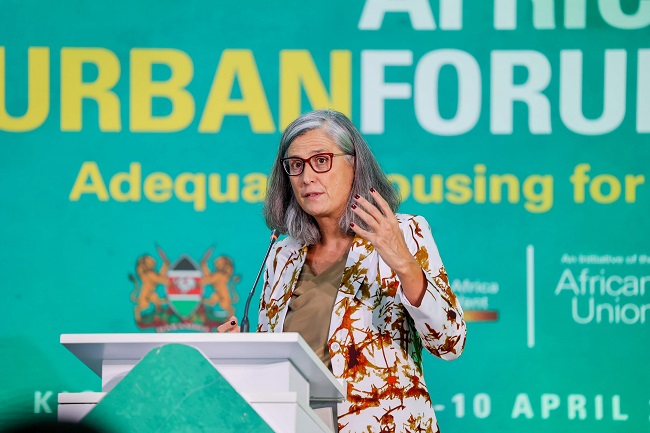
Anacláudia Rossbach, Executive Director of UN-Habitat. Photo credit: UN-Habitat/Peter Ndolo
For Anacláudia Rossbach, Executive Director of UN-Habitat, the Forum marked a turning point. “When Africa chooses to speak with one voice, the world has no choice but to listen,” she said at the closing ceremony.
Ms. Rossbach stressed that with only a few years left to deliver the 2030 Agenda for Sustainable Development, urgent action is needed to move from commitments to implementation. Housing and informal settlements are central to Sustainable Development Goal 11 and all other SDGs – and must be understood not only as shelter, but as essential infrastructure underpinning access to education, health, water and sanitation, and inclusive development.
At the heart of the Forum’s outcomes is the recognition that housing is not merely shelter – it is an economic infrastructure. This underpins the Africa Affordable Housing Compact, a multi-stakeholder platform designed to accelerate affordable housing delivery at scale. By bringing together governments, private sector developers, financial institutions, international organizations and innovative stakeholders, the Housing Compact aims to mobilize innovative financing, reduce investment risks, and support bankable housing solutions tailored to diverse national and local contexts.
Complementing this is the Nairobi Declaration 2026, a continental commitment by African Union Member States to take time-bound, action-oriented steps toward sustainable urbanisation. It prioritises land reforms, integrated housing policies and strengthened urban planning systems, while embedding housing into national development and fiscal frameworks. It also calls for prioritizing informal settlements and advancing climate-resilient urban development.
As noted by Moses Vilakati, AU Commissioner for Agriculture, Rural Development, Blue Economy and Sustainable Environment, Africa is generating home-grown solutions with global relevance. From housing finance innovation to land and planning reforms, these approaches can support other regions facing similar urbanisation pressures and strengthen South-South cooperation.
The Africa Urban Forum outcomes will directly inform discussions at the World Urban Forum (WUF13) in Baku, Azerbaijan, in May 2026. The Nairobi Declaration will guide Africa’s unified position, while the Housing Compact will support implementation through partnerships and investment. Importantly, the Nairobi Declaration will contribute to the formulation of the Baku Call to Action, ensuring Africa’s priorities are reflected in global commitments on housing systems and land reform.
At WUF13, African delegations will help shape global discussions, including pathways to strengthen housing finance and implement the New Urban Agenda and SDG 11 review processes.
From Nairobi to Baku, the message is clear: Africa is not waiting for solutions – it is building them, shaping global frameworks, and redefining the future of sustainable urban development.
Energia Ltd., an independent oil and gas company, has appointed Mr. Oladimeji Bashorun as its Chief Executive Officer (CEO), following the exit of Mr. Chidi Egonu.
The company disclosed this in a statement issued on Monday, April 13, 2026, in Lagos.
It stated that Bashorun, who previously served as Chief Operating Officer (COO), assumed the new role after years of providing strategic and operational leadership within the organisation.
Mr. Oladimeji Bashorun, CEO, Energia Limited
According to the statement, Bashorun, during his tenure as COO, oversaw the company’s operations, driving efficiency and supporting its long-term growth strategy.
The company described him as a seasoned oil and gas professional with over two decades of industry experience.
It added that he held several technical and leadership positions at Shell Petroleum Development Company and later at Sahara Upstream before joining Energia.
In those roles, he contributed to operational leadership, asset management, and initiatives aimed at improving operational stability and performance.
The Chairman of Energia, Mr. George Osahon, said Bashorun had demonstrated exceptional leadership and deep industry expertise during his time as COO.
“Oladimeji Bashorun has demonstrated exceptional leadership and deep industry expertise during his time as Chief Operating Officer.
“His commitment to operational excellence and strategic growth has been instrumental to Energia’s progress.
“The Board is confident that under his leadership as Chief Executive Officer, the company will continue to strengthen its position as a key player in the industry, while delivering sustained value to its stakeholders,” he said.
In his remarks, Bashorun expressed appreciation for the appointment.
“I am honoured to assume the role of Chief Executive Officer of Energia.
“Working closely with a talented team that drives the company’s success, I look forward to building on our achievements and advancing Energia’s commitment to operational excellence, responsible energy development, and value creation for our stakeholders,” he said.
The company said that under Bashorun’s leadership, it would continue to focus on strengthening operational performance, expanding strategic opportunities, and contributing to Nigeria’s energy security, while maintaining commitment to environmental stewardship and community development.
Stakeholders at the 51st Annual Conference of Nigerian Society for Plant Protection have raised concerns over the effect of pests and climate change on food security in Nigeria.
The conference, which had the theme: “Plant Protection and Biotechnological Solutions for Sustainable Food Production in Nigeria”, held on Monday, April 13, 2026, at the National Horticultural Research Institute (NIHORT), Ibadan.
The stakeholders said that the prevalent climate situation in the country had led to emergence of new pests and pathogens that severely attack crop plants.
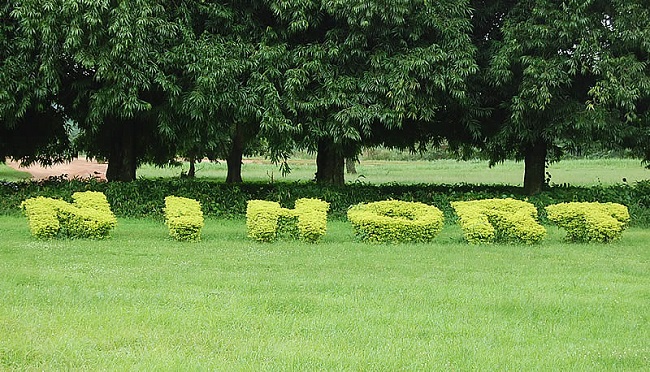
National Horticultural Research Institute (NIHORT), Ibadan
The Executive Director, NIHORT, Prof. Muhammed Attanda, however said that biotechnology has opened up a new era of plant protection options to outsmart these evolving biotic stressors and rapidly deliver results towards attaining food sustainability.
Attanda implored Nigerians to embrace biotechnology, stressing: “NIHORT has the mandate to conduct research into genetic improvement, production technologies, storage, utilisation, marketing of fruits, vegetables, spices, and other medicinal and aromatic plants of nutritional and nomic importance.
“NIHORT has developed numerous technologies in the horticultural value chain and is continually coming up with more technologies that would launch the country into self-sufficiency in horticulture.
“The Institute conducts extensive research tailored to various agro-ogical zones in the country. NIHORT plays a critical role in advancing Nigeria’s horticulture landscape,” he said.
The director added that the institute has released several improved crop varieties, which include two pepper varieties (HORTIPEP 1 and 2) for improved aroma and higher yield.
“Seven tomato varieties (HORTITOM 1-7 series) produced for resistance, heat tolerance and high productivity.
“Dry-season onion varieties (HORTIONI 1, 2 and 3 series) and wet-season onion varieties (HORTIONI 4, 5 and 6 series) released, along with three eggplant varieties (HORTIPICUM 1, 2 and 3 series),” he said.
Attanda added that the institute’s research was not limited to vegetables alone.
“We’ve released two plantain varieties (HORTIPLAN 1 and 2) and two banana varieties (HORTIBAN 1 and 2) to contribute positively towards food sustainability and economic empowerment in the country,” he said.
According to him, various technologies have been developed to proffer solutions to evolving pest challenges.
“The institute has developed Tuta-trap, an eco-friendly technology that traps the pest, as well as NIHORT-Lyptol and NIHORT-Raktin, the biopesticides available in both liquid and powder to effectively manage the ravaging situation of pest on tomato.
“The institute has up-scaled its various laboratories, Biotechnology, Virology, Pathology, Soil and Agronomy, which are equipped with cutting-edge technologies to make research easy for our scientists, the pride of the nation.
“NIHORT’s mission also covers technology dissemination and collaboration with farmers and stakeholders throughout the horticultural value chain,” he said.
Attanda, however, urged all participants to engage actively in the discussions .
“Your insights and knowledge are invaluable as we work collaboratively towards promotion of resilience in our agricultural systems.
“Let us utilize this opportunity to share knowledge, forge partnerships, and inspire innovation in our collective quest for sustainable horticulture.
“Let us seize the opportunity to provide advanced biotechnological solutions to solving myriads of challenges confronting food security,” he said.
Also, Dr Adamu Abubakar Dabban, the Executive Secretary, Agricultural Research Council Of Nigeria (ARCN), said that Nigeria, like many developing nations, was faced with the dual challenge of increasing food production while combating the threats posed by pests, diseases, and climate change.
He said that, without effective plant protection strategies, the country’s efforts toward food security would remain significantly constrained.
“Agriculture remains a cornerstone of Nigeria’s economy, contributing immensely to employment, food supply, and industrial raw materials.
“Crop losses due to pests and diseases continue to undermine productivity.
“It is therefore imperative that we embrace innovative, science-driven, and sustainable solutions particularly biotechnology and digital tools to safeguard our crops and ensure food availability for our growing population,” he said.
Dabban added that ARCN recognises the critical role of research in transforming agriculture.
“Through our network of National Agricultural Research Institutes, including NIHORT, we are committed to promoting cutting-edge research, capacity building, and technology dissemination.
“We are particularly focused on strengthening linkages between research institutions, universities, extension services, and the private sector to ensure that innovations reach the farmers who need them most,” he said.
The ARCN executive secretary added that the conference was focused on key areas that would help food security.
In his address, Dr David Olufolaji, the Chairman of the Board of Trustees of the Nigerian Society for Plant Protection (NSPP), called for full implementation of ideas shared.
Olufolaji said that it was only through this that food security could be guranteed.
On Saturday May 9, 2026, World Migratory Bird Day will spotlight the important role of community science (also referred to as citizen science) in the conservation of migratory birds.
Under the theme “Every Bird Counts – Your Observations Matter!”, the 2026 campaign focuses on how individual observations and participation in community science programs help generate knowledge that supports science, conservation, and policy-making across the world’s flyways.
World Migratory Bird Day 2026 is a global awareness-raising campaign highlighting the role of community science in migratory bird conservation.
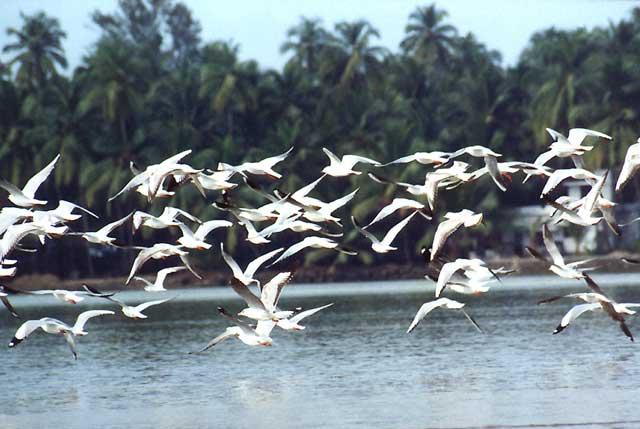
Migratory birds
The World Migratory Bird Day (WMBD), an international educational and awareness-raising campaign that promotes conservation efforts for migratory birds and their journeys across borders, is organised by a global partnership consisting of the Convention on the Conservation of Migratory Species of Wild Animals (CMS), the Agreement on the Conservation of African-Eurasian Migratory Waterbirds (AEWA), the East Asian–Australasian Flyway Partnership (EAAFP), and Environment for the Americas (EFTA).
Around the globe, hundreds of events are planned locally, including community/citizen science projects, bird walks, awareness-raising activities, workshops, monitoring efforts, volunteer actions and other public events that reflect the campaign’s message and showcase how local participation contributes to global bird conservation.
From backyard bird observations registered via apps to coordinated international monitoring efforts, people around the world contribute valuable information on migratory birds, their movements, their habitats, and the pressures they face. These observations help track migration patterns, population trends, and changes across flyways, strengthening the evidence base needed to better conserve migratory birds across borders.
The 2026 theme also highlights how participation in bird monitoring can deepen people’s connection to nature and strengthen public engagement in conservation. This year’s campaign is especially timely as it coincides with the 60th anniversary of the International Waterbird Census, providing an opportunity to recognise one of the longest-running international bird monitoring efforts and the wider importance of volunteer-based observations worldwide.
Potential media angles include how community science is helping build the knowledge needed to conserve migratory birds across borders; how local bird observation contributes to a larger picture of migration across continents; the people and communities behind bird monitoring efforts worldwide; and how apps and platforms are opening new ways for the general public to take part in bird conservation by identifying and recording birds in ways that support science and conservation action across flyways.
Celebrated on two days each year (in 2026, on May 9 and October 10) to reflect the cyclical nature of bird migration and the varying peak migration periods in the northern and southern hemispheres, WMBD triggers hundreds of educational events around the world, united by their common goal of raising awareness and advocating for international bird protection.
Three young Nigerians have been named among the top 35 global teams in The Earth Prize 2026, the world’s largest environmental competition and incubator for young people aged 13-19 years.
Representing the region of Africa, the students have presented two solutions: “BookBank Africa”, a network and app to redistribute school textbooks, “PantiPads”, affordable and biodegradable sanitary pads.
BookBank Africa is the creation of teenagers Ossai Gift Chimdiuto and Ekwueme Chiziterem Noalene. After discovering that many young people are unable to access school textbooks in not only their local community but also across Nigeria, and that book burning causes environmental damage and waste, they decided to take action by repurposing unused spaces in their school to collect, sort, log, and redistribute books.
BookBank Africa is the creation of teenagers Ossai Gift Chimdiuto and Ekwueme Chiziterem Noalene
Having worked on the solution for about a year, they hope to scale to additional schools with a network of Student Ambassadors and support from Teacher Facilitators and additionally build an app to reach this goal.
PantiPads is the creation of teenager Raheema Auwal-Panti, who was motivated by the conditions of her local environment, where young women often don’t have access to affordable sanitary products. After discovering that conventional sanitary pads used by women today are 90% plastic, and take up to 500–800 years to decompose, she decided to create PantiPads, a biodegradable sanitary pad made from agricultural waste.
Raheema Auwal-Panti, Ossai Gift Chimdiuto, and Ekwueme Chiziterem Noalene, all from Nigeria, impressed The Earth Prize’s expert jury with their projects, forming two of the five teams selected to represent Africa.
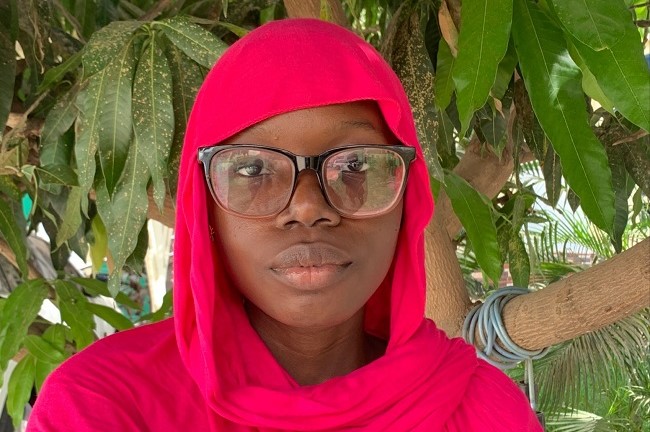
PantiPads is the creation of teenager Raheema Auwal-Panti
Now in its fifth year, The Earth Prize has reached over 21,000 students across 169 countries and territories. Previous winners have been featured in leading international media including Forbes, Business Insider (US and Africa), The Irish Times, and UN Today, with several teams advancing their ideas through patents and corporate partnerships.
This year’s teams represent seven global regions: Africa, Asia, Europe, North America, Central and South America, the Middle East, and Oceania and Southeast Asia. Their solutions span a wide range of innovations, from an ocean-cleaning robot, to fog-powered drinking water, and an AI-driven drought predictor.
The Earth Prize is run by The Earth Foundation, a non-profit based in Geneva, Switzerland, founded during the School Strike for Climate in 2019. At a time when climate anxiety affects a majority of young people – 59% reporting they are very or extremely worried about the environment – the Prize provides a pathway from concern to action, equipping students with the tools to develop tangible, real-world solutions.
Peter McGarry, Founder of The Earth Foundation, commented on this year’s competition:
“The 2026 Earth Prize Scholars represent an extraordinary wave of ingenuity and determination from young people around the world. This year’s applicants have once again shown that age is no barrier to tackling complex environmental challenges with creativity and purpose. As we look ahead to announcing our regional winners in May, we are inspired by the bold thinking and real-world impact already demonstrated by this year’s cohort.”
The next stage of the competition will see seven Regional Winners announced from May 11 to 17, each representing one of the seven global regions and receiving $12.5K to accelerate their innovation. This will be followed by a public vote, with the global winner announced on Friday, May 29.
Financial experts have advised the Federal Government to invest the gains from the excess crude oil sales to better the lot of Nigerians.
A chartered accountant, Chief Abiola Ali, in an interview in Ibadan on Monday, April 13, 2026, said such an investment was crucial.
Ali, also a businessman, added that an emergency at hand required an emergency response, such as subsidising food items.
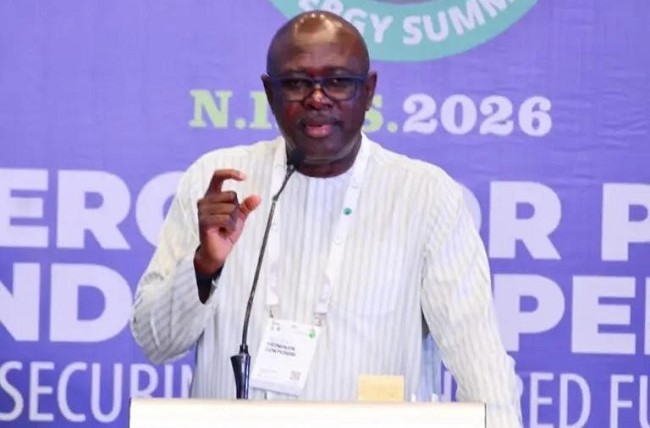
Sen. Heineken Lokpobiri, Minister of State for Petroleum Resources (Oil)
“The government can also find a way to give certain allowances to workers to compensate for the increase in transportation.
“Similarly, there are other social intervention programmes they can put in place for non-civil servants to cushion the effect of the hardship.
“Nigerians are not just complaining; things are deteriorating by the day,” he said.
According to him, the government should respond swiftly because the people, who are the reason for the government’s existence in the first place, should not be abandoned to continue suffering.
“Government could deplore any form of palliative that could be useful at this point,” Ali said.
Similarly, an industrialist, Chief Kola Akosile, said it would be nice to devote as much as 80 per cent of excess crude gains to provide palliatives for investors and goods manufacturers.
This, he said, would result in producing at a reduced rate for society.
Akosile, a national officer of the Nigerian Association of Chambers of Commerce, Industry, Mining and Agriculture (NACCIMA), called for small-business grants and improved transportation.
According to him, these would automatically bring down the high cost of living.
“The hardship is too much, especially on the poor people, so it is important for the government to pump the excess gains into various palliative measures to ease the hardship,” Akosile said.
President, Trade Union Congress (TUC), Mr. Festus Osifo, recently urged the government to invest 60 per cent of gains from crude oil revenue on the landing cost of fuel.
This, he said, would ease the economic hardship caused by the rising cost of fuel.
Some environmental experts have decried worsening environmental degradation in the South-South region and urged adequate utilisation of ecological funds to address the challenges.
The stakeholders, who reacted to a survey on the state of environment, said the environmental challenges in the region were caused by natural and human activities.
They identified the environmental degradation in the region to include erosion, carbon emissions, water pollution, tree felling, ocean encroachment, among others.
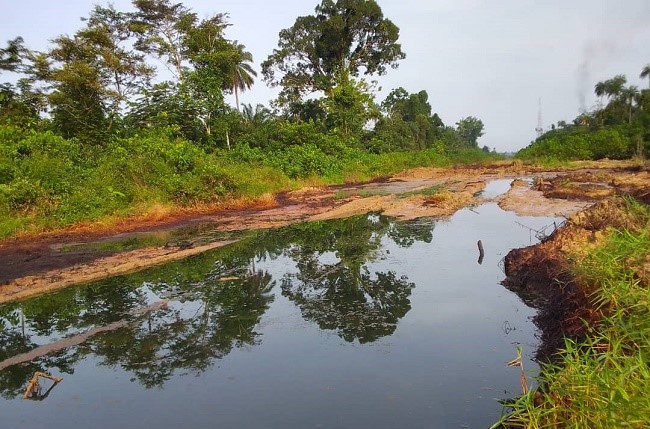
Oil spill at Ogboinbiri community in Bayelsa State
The stakeholders also urged strict enforcement of laws to protect the environment from further damage.
In Rivers State, some environmental experts charged authorities to execute extant laws to safeguard the earth as they decried the increasing pollution resulting from human activities.
Prof. Chibuogwu Eze, Director, Institute of Pollution Studies, Rivers State University, criticised the level of underground water pollution in Niger Delta, saying that poisonous substances including lead infiltrated the underground water.
Eze attributed the pollution of the underground waters to the neglect of the fuel station operators over the maintenance of their underground storage tanks which sometimes, leaked fuel into underground waters and invariably into the boreholes.
According to his research, sponsored by the university (RSU) on ground water pollution, such pollution affects everyone since every household now depends on boreholes.
“In Rivers, for instance, you don’t need to dredge too deep into the ground before getting water; this, on the other hand is a risk factor; sadly, boiling water only kills pathogens and not lead.
Eze added that extant laws guiding maintenance of underground fuel storage tanks including confirmatory tests and certification of fuel tanks were safety measure that should not be undermined by fuel station operators.
“The law also stipulates an interval of five-years test for corrosion or possible leakage as a result of wear and tear and allows for a maximum of 20 years lifespan for underground fuel storage tanks.
“We should be more careful and abide by these regulatory guidelines because of our low topography so that petroleum products don’t find their way into our underground water,” he added.
Mr. Fyneface Dumnamene, Executive Director, Youths and Environmental Advocacy Centre (YEAC-Nigeria), analysed the ecological funds disbursements and faulted states particularly Rivers on inadequate spending of the fund.
He noted that the ecological funds were about two per cent of federal budget allocated to states in varying degrees to address environmental challenges across the country.
”These funds are not given separately but added to the federal allocation that goes to each state of the federation at the end of every 30 days,” he said.
Dumnamene explained that while some states utilised their ecological funds to address issues associated with ecology, others were yet to do the same.
He claimed that the state received its ecological allocation which ran into hundreds of millions of Naira from 2023 to 2025 but the ecological issued had remained unaddressed.
“Rivers is one of the states in Nigeria that have suffered a lot of environmental challenges including erosion, flood, oil spills, ocean encroachments, among others, sadly, the state is not maximizing these funds to address these challenges,” he alleged.
Dumnamene urged government to set up a special committee on disaster management through which the ecological funds would be utilised to tackle the environmental challenges confronting the state.
In Cross River State, Prof. Francis Bissong, a Professor of Conservation and Bio Geography in the University of Calabar (UniCal), said large-scale logging had been going on around the key forest corridors in the state.
He said the illegal activities were threatening the biodiversity and livelihoods of local communities and the state in general.
He warned that the uncoordinated activities around the Mbe Mountains and other areas would endanger critical habitats, including gorilla conservation areas, and could lead to long-term ecological and economic losses.
According to Bissong, Cross River falls within one of the world’s biodiversity hotspots, making reckless logging a major environmental threat.
“Unsustainable logging practices destroy non-timber forest products, displace wildlife, and increase risks of flooding and erosion,” he said.
Cross River has one of Africa’s last remaining high-biodiversity tropical forests.
Its richest biodiversity is characterised by tropical rainforest, mangroves, and diverse system which makes it a global biodiversity hotspot.
It is also hosting immense flora/fauna, rare species like Calabar angwantibo and threatened fisheries; however, the deforestation, occasioned by the felling of trees, is threatening the critical ecosystem.
The don stressed that involving local communities in forest management would enhance protection and create alternative livelihoods through ecosystem-based enterprises.
Bissong advocated land-use zoning and stronger enforcement of existing forestry regulations.
In his contribution, Mr. George Oben-Etchi, Director-General of the Cross River Forestry Commission, said efforts were ongoing to curb illegal logging which had impacted the environment adversely.
Oben-Etchi said the commission planned to introduce a “permiteeship” system to regulate logging activities and reduce unauthorised operations.
He added that illegal loggers were being arrested while designated courts had been established to prosecute offenders.
On his part, Ken Henshaw of “We the People” called for the inclusion of communities and experts in decision-making and stronger laws, as well as recognising them in climate finance opportunities to ensure sustainable forest management.
“When natural resources are extracted without benefiting local communities, resentment grows. This is why our review emphasises community participation.
“The current Forestry Law treats communities as passive recipients of government policy, there is no formal space for community representatives on the Forestry Commission board.
“Climate finance globally amounts to trillions of dollars annually, yet local forest communities receive virtually nothing,” he said.
Henshaw added that civil society, the media, and other stakeholders must continue the advocacy and public engagement on the degradation of Cross River Forest and environment to ensure a sustainable future of the state.
In Akwa Ibom State, Dr Sunday Nditoi, an Environmental Consultant in Uyo, urged the government to enact strong regulations to protect the forests and guard against environmental degradation.
Nditoi, who is a former State Director of Environment, Federal Ministry of Environment, condemned the felling of trees in the forest, saying: “Deforestation has affected the environment in no small ways.”
He said the smoke from bush burning and gas flaring had also affected the environment, adding: “We have lost our forest by indiscriminate felling of trees.
”Any tree we cut, two trees should be planted to protect the environment; we should not cut trees and burn bushes unnecessarily.
“We should have some forest reserve that could help the areas that have less oxygen production.”
Nditoi added that spraying of chemicals on crops and herbicides also affected the environment and injurious to health, calling for sensitisation of farmers on the side effects of chemicals.
Mr. Umo Isua-Ikoh, the Coordinator of Peace Point Development Foundation (PPDF), in Uyo, said the environmental degradation in the state was majorly caused by human activities which included oil spills and gas flare.
He said that in the Niger Delta, a lot of issues like oil spill, gas flaring, deforestation and ocean encroachment threatened the human existence, food safety and food security.
“Life expectancy is extremely low and our farmers cannot plant and have a good harvest due to oil spill and gas flaring in the area.
He said the level of fish extinction due to human activities had caused fishermen to travel long distances for weeks on sea to fish and would only come back with little or no fish at all.
Isua-Ikoh, an Environment Justice Advocate, urged the state government to update and enforce environmental laws in order to save the environment and protect human life.
He commended the Ministry of Environment for always creating awareness on environmental issues in the country.
Dr Aniekan Umanah, Commissioner for Information, said that the state government had done so much work in checking the menace of erosion and other environmental degradation.
Umanah said the government had reclaimed over 75 hectares of land along brooks street near government house which was a completely gully ravaged environment.
He said that the government also built an Akwa Ibom resort on the reclaimed land, adding that with the dualism of Uyo villages, the gullies are being cleared
“Also reclaimed, are the Mandala area along Ikot Ekpene road which is ongoing; the ground water that almost brought down the area has been stopped, and several ecological interventions are done to check environmental degradation,” Umanah said.
Umanah acknowledged that the state government had been benefiting from the Federal Government ecological funds but could not mention the amount collected so far.
He promised that the government would continue to invest in ecological management and urged citizens to be part of the process of mitigating environmental hazards by ensuring that they protect the environment.
He said that the state government had made it mandatory for construction companies in the state to return their borrow pit to its original state after construction to avoid environmental challenges.
A group of non-governmental organisations on Monday, April 13, 2026, reported that millions of people in Sudan are surviving on just one meal a day.
This came as the country’s food crisis deepens and threatens to spread, according to a published report.
Sudan’s war between the Sudanese army and the paramilitary Rapid Support Forces, which enters its third year on Wednesday, has caused widespread hunger and displaced millions of people amid one of the world’s largest humanitarian crises.
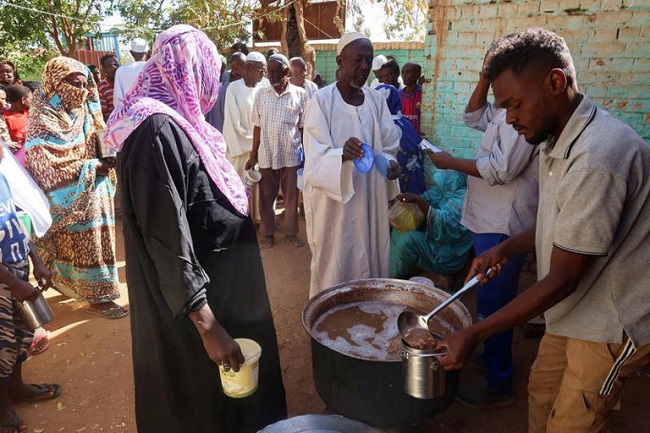
Volunteers distribute food to residents and displaced people in Omdurman, Sudan, March 8, 2024. Nearly five million people in the country are close to famine as Sudan’s civil war passes the one-year mark. Photo credit: REUTERS/El Tayeb Siddig/File Photo
“In the two areas worst hit by the conflict; North Darfur and South Kordofan, millions of families can only access one meal a day.’’
This was reported by Action Against Hunger, CARE International, International Rescue Committee, Mercy Corps, and the Norwegian Refugee Council found.
“Often, they miss meals for entire days,” the report stated, adding that many people have resorted to eating leaves and animal feed to survive.
The army-aligned Sudanese government denies the existence of famine, while the RSF denies responsibility for such conditions in areas under its control.
Some 61.7 per cent of Sudan’s population, 28.9 million people is acutely food-insecure, according to the 2026 Humanitarian Needs and Response Plan.
The United Nations has reported widespread atrocities and waves of ethnically charged violence.
In November, the global hunger monitor confirmed, for the first time, famine conditions in al-Fashir, as well as Kadugli.
In February, the UN-backed Integrated Food Security Phase Classification found that famine thresholds for acute malnutrition have been surpassed in Um Baru, where the rate of acutely malnourished children under 5 was nearly double the famine threshold, and Kernoi.
The report, based on interviews with farmers, traders, and humanitarian actors in Sudan, details how the war in Sudan is driving communities towards famine conditions due to disruptions to farming as well as the use of starvation as a weapon of war.
The report stated that including deliberate destruction of farms and markets.
The report said communal kitchens are increasingly unable to meet rising needs, while major donor funding cuts are impeding aid agencies’ abilities to respond.
Women and girls have been disproportionately affected, as they face a high risk of rape and harassment when going to fields, visiting markets or collecting water, the report said.
It added that female-headed households are three times more likely to experience food insecurity than male-headed households.
The Federal Government of Nigeria announced on Sunday, April 12, 2026, that electricity generation improved from 3,951 MW to 4,300 between March 28 and April 10.
This is contained in a statement issued by Mr. Bolaji Tunji, Special Adviser to the Minister of Power on Strategic Communications and Media Relations in Abuja
The gradual rise in generation output within the period, Tunji said, was in tandem with the assurance given by the Minister of Power, Mr. Adebayo Adelabu, at the Power Sector Working Group, where he pledged that electricity supply would improve within two weeks.
Minister of Power, Mr Adebayo Adelabu
He explained that this improvement closely aligns with the steady increase in gas supply to thermal power plants, which rose from approximately 605 million standard cubic feet (mmscfd) to over 704 mmscfd within the same timeframe.
Tunji further stated that mechanical availability remained stable and even improved, peaking at over 7,796 Megawatts (MW) in early April, while operational availability rose from about 4,208MW to a peak of over 4,694MW, indicating enhanced efficiency in converting available gas into electricity.
“Inspite of minor fluctuations recorded on some days, the overall trajectory points to a gradual recovery in the power sector, driven largely by improved gas supply and better coordination among critical stakeholders,” he said.
Tunji also said that the strong correlation between gas availability and generation output underscores the importance of sustained interventions in the gas-to-power value chain, given Nigeria’s heavy reliance on thermal power plants.
”To consolidate the gains recorded so far, the minister recently inaugurated a Gas-to-Power Monitoring Committee to ensure improved coordination, real-time monitoring, and sustained gas supply to generating companies.
“The committee is expected to address bottlenecks in gas delivery, enhance synergy between gas producers and power generation companies, and ultimately guarantee a more stable and reliable electricity supply across the country,” he said.
“The minister remains committed to ensuring that the modest gains recorded are not only sustained but significantly improved upon in the coming weeks,” he said.
Tunji assured Nigerians that ongoing reforms and targeted interventions in the sector would continue to yield measurable improvements in power generation and supply, in line with the administration’s broader objective of stabilising the nation’s electricity sector.
“We are not there yet, but we will continue to ensure measurable improvements,” he said.
Tunji also said that the minister urged the new management of the Nigeria Electricity Management Services Agency (NEMSA) to focus on improving its Internally Generated Revenue (IGR).
The minister spoke during the visit of the newly appointed Managing Director of the agency, Mr. Olusegun Adesayo, and the chairman of the Board, Ikechi Nwosu, to his office at the weekend.
Adelabu said that the agency should focus on improving IGR while reducing dependence on appropriation especially in funding their operational cost.
He also urged the management to look into establishing more meter testing centres across the country in order to enhance and improve on their role.
While expressing confidence in the new management, he assured that the full board would be inaugurated soon.
“I have no doubt about your ability, and I can also say that with your appointment by the president, you will do well. The President knows what he is doing by appointing you and any appointee of the president will have my full cooperation,” he said.
Decrying the dearth of manpower especially meter installers, the minister again reiterated his call for collaboration between the National Power Training Institute of Nigeria (NAPTIN) and NEMSA to tackle the issue.
“We need to ensure more installers are trained in order to accelerate the government’s plan to bridge the meter gap in the country,” he said.
On meter testing stations, he said that there should be plan towards having them in each of the geo-political zones.
He urged Adesayo to conduct a comprehensive diagnosis of the agency and list the challenges in order to know where to start from.
Earlier, the Managing Director informed the minister of his visit to the other agencies to get their support.
He also spoke on the required support from the ministry in order to ensure the successful discharge of the agency ‘s responsibilities.
Nigeria’s onshore, swamp, and shallow-water basins remain among the most technically rich and commercially attractive in Africa, it could even be argued in the world. The momentum we are seeing around interest in marginal fields, mature assets, and brownfield redevelopment reflects a significant shift in how nations and investors are approaching upstream value creation.
Around Africa, marginal and mature fields are becoming the engines of near-term production gains, driving immediate cashflow, and enabling accelerated development timelines.
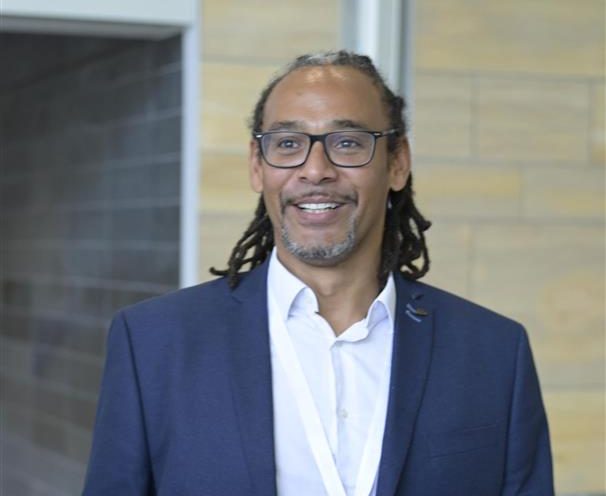
Paul Sinclair, CEO, AOW: Energy
At AOW:Energy, we are speaking more than ever with Ministers, regulators, and operators who emphasise the crucial role these assets now play in delivering energy security, local content growth, increased production, and national development via our precious natural resources.
We must acknowledge the incredible work being achieved in Nigeria as we see a government committed to resource development as a cornerstone of economic development. Now is the moment, more than ever we must exploit our energy potential and oil and gas must be at the heart of our economic development.
The forward-looking reforms, clarity, and stability being introduced by Gbenga Komolafe and the NUPRC continue to position the country as one of the most attractive upstream destinations globally. The Commission has also been a central force behind AFRIPERF, promoting pan-African collaboration and regulatory alignment, critical steps toward a more competitive and cohesive continental energy landscape.
These efforts deserve immense recognition. They are reshaping investment sentiment not only in Nigeria but across Africa.
But Nigeria is not alone in setting the pace, on recent trips I had the pleasure of meeting some incredible visionaries, and in the media we are reading about some of the most progressive governments achieving new heights in upstream development and infrastructure investment.
Namibia: A Model of Upstream Excellence
The entire continent continues to be inspired by the remarkable progress in Namibia, where NAMCOR is redefining world-class upstream development in the Orange, Walvis and Luderitz Basins. The leadership being demonstrated across the country, and particularly the visionary direction of Her Excellency Netumbo Nandi-Ndaitwah, which led to the establishment of the Upstream Petroleum Unit (UPU) under the guidance of Kornelia Shilunga is nothing short of transformative. Namibia stands as a beacon of what strategic leadership can achieve.
Mozambique: A Continental Powerhouse in the Making
We must also acknowledge the exceptional work of INP Mozambique, who continue to elevate the region’s profile with major accomplishments in the energy sector alongside other domestic agencies to bring mega projects such as the Coral project, all of this while driving forward new exploration opportunities that will underpin the nation’s future energy security and industrial expansion.
Liberia: A New Era of Ambition
We are equally proud to read of the bold progress emanating from Liberia. At AOW:Energy 2026 I had the pleasure of meeting the new dynamic leadership of Hon. Fabian M. Lai, President/CEO-designate of NOCAL. Mr. Lai is setting new national benchmarks, achieving new milestones and driving some of the most exciting opportunities in and around the Harper Basin.
I recently had the pleasure of speaking with him, and his ambition for Liberia’s upstream future is both refreshing and inspiring – It is fair to say watch this space, Liberia is a talking point today and the opportunity that will inspire companies in the coming months.
Africa Is Setting the Global Pace
Across the continent, Africa is shaping the next chapter of global exploration and production. Countries are advancing innovative policies, launching new licensing rounds, fostering investment-ready environments, and accelerating partnerships that will propel Africa to the forefront of the global energy sector.
At AOW:Energy, we are proud to stand shoulder-to-shoulder with our partners and we champion your success, your reforms, your vision, and your unwavering commitment to building an African-led energy future.
But via this article, this is Nigeria’s Moment. And Our Shared passion for upstream growth is unwavering, unrelenting and we will build the Africa we want together, in unity and in partnership with domestic and international partners”
The 2025/26 Licensing Round is poised to deliver one of the most compelling cohorts of upstream opportunities in recent memory. The aggressive and inspiring national production targets set by Nigeria can and will be achieve, and it is all powered by strong regulatory leadership and strategic collaboration with partners such as AOW:Energy who will stop at nothing to support our partners in their goals and objectives. We encourage the AOW:Energy network to familiarise themselves with the marginal field licence round and visit the NUPRC website for more details.
To our friends at NUPRC: we stand with you, committed to supporting your goals for investment attraction, production growth, and long-term national value creation. This licensing round marks the beginning of an extraordinary chapter for Nigeria, and we look forward to supporting you every step of the way.
At AOW:Energy, we are preparing major announcements in 2026 to deepen our support for African governments, licensing rounds, investment promotion, and upstream development.