The Lagos State Government has urged the Local Government (LG) chairmen to work out modalities to tackle street trading and waste pollution for a cleaner environment.
The Commissioner for Environment and Water Resources, Mr. Tokunbo Wahab, made this known in a meeting with all the chairmen at the Protea Hotel, Ikeja, on Wednesday, October 22, 2025.
While speaking with journalists after the meeting, Tokunbo said it was aimed at ensuring a cleaner environment in the state.
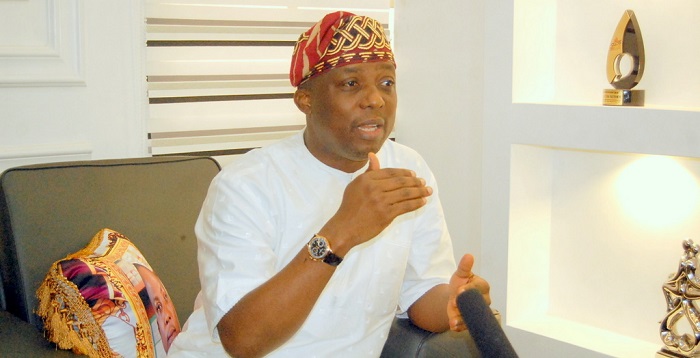
Commissioner for Environment and Water Resources, Mr. Tokunbo Wahab
“We just had a meeting with all the LG chairmen, state wide, to work out a collaborative working relationship with respect to the environment, transport, drainage, street trading issues, and water management.
“The meeting is for us to have their input, and their input is to enable us to know where the gaps are so that we can collaborate with them at the local level.
“We need to also inject new life into the Lagos Waste Management Authority’s system. Hence, we appeal to our LG chairmen to assist,” he said.
The Chairman of Conference of 57 LG Chairmen, Mr. Sesan Olowa, in his reaction, appealed to the state government to partner more with the LGs at ensuring a cleaner environment.
“The major challenge here as to waste is collection and transportation. So, when you look at the value chain, you see a lot of gaps within it.
“In my local government, Ibeju-Lekki, we procured 20 tricycles, and the first two months, we were able to pick 12,000 bins of bags from our streets.
“So, we discovered that serious inefficiency within the value chain is a major challenge. LGs definitely have the capacity to clean up Lagos.
“But we won’t be able to clean Lagos if we don’t have where we take our waste to,” he said.
He added that the ministry should begin to look at how to create different hubs in Lagos where wastes can be taken to.
“Today, we have several youths across Lagos who are jobless, I think, if we have this waste management revolution, we can use it to create a lot of jobs for our youths.
“We need a lot of support from the state to work together,” he said.
While responding, Wahab assured the chairmen that the state would do everything in its power to ensure Lagos was free from environmental infractions.
Present at the meeting were LG and Local Council Development Area chairmen alongside management and staff of the Ministry of Environment and Water Resources.
An ad hoc committee of the House of Representatives has pledged to probe and unearth alleged Nigeria’s unrepatriated $850 billion oil and non-oil export proceeds between 1996 and 2014.
Chairman, Ad hoc Committee to Investigate Pre-Shipment Inspection of Exports and the Non-Repatriation of Crude Oil Proceeds, Rep. Seyi Sowunmi (LP-Lagos), made this known on Wednesday, October 22, 2025, in Abuja.
Addressing newsmen at the inauguration of the committee, Sowunmi said that recent allegations suggested a significant breakdown in compliance by relevant stakeholders.
Oil
“It is alleged that operators in the oil and gas industry failed to repatriate an estimated 40 to 45 per cent of Nigeria’s crude oil export proceeds, amounting to approximately 850 billion dollar between 1996 and 2014 in clear contravention of the law.
“Even more worrisome is the disparity among export-earnings data reported by government agencies such as the Central Bank of Nigeria (CBN), the Department of Petroleum Resources (Now NUPRC), the Nigerian National Petroleum Corporation and the National Bureau of Statistics, as well as the inconsistencies between Nigerian and international bodies such as OPEC data.
“The non-oil export, especially solid minerals from mining activities and production and export of commodities allegedly have high non-compliant export earnings reports.
“The House of Representatives, in support of the Renewed Hope Agenda of President Bola Tinubu, set up this committee to investigate the massive revenue leakage stated above.
“This committee will conduct investigative public hearings to determine the exact amount of oil, gas and non-oil export proceeds unrepatriated since 1996,” Sowunmi said.
The lawmaker said that the committee would also ascertain why government agencies were in the habit of reporting conflicting export-earnings data, engage experts for forensic reconciliation of export-proceeds accounts and investigate the management and utilisation of funds under the Nigerian Export Supervision Scheme.
According to him, the committee will be guided strictly by evidence, data driven, transparent, and verifiable documents and not speculation.
The lawmaker said that Nigeria must receive, in full and promptly, every dollar legally due from its exports.
Sowunmi, however, stated that the success of the committee would depend on the collective support of Nigerians for the benefit of the country.
“Our measure of success is not publicity, but verifiable financial recovery to the Federation Account.
“This is a whole-of-system exercise. Operators must supply shipment-to-receipt trails; regulators must reconcile production, certification, and forex returns.
“Financial institutions must provide account-level evidence of repatriation within time. Where breaches are discovered, appropriate civil and criminal sanctions shall be applied,” he said.
The chairman pledged to provide periodic factual updates and publish non-sensitive documents, where necessary.
Sowunmi urged the media to focus on verifiable progress and avoid premature figures that could mislead the public.
He said that the committee would actively utilise existing whistle-blowing channels, guaranteeing confidentiality and possible rewards for credible information from industry staff members, inspection agents, bankers and concerned citizens.
The lawmaker urged all stakeholders, corporate and individual, to cooperate fully with the committee, saying that the inquiry was non-partisan, but to protect and strengthen the country’s economy.
The Nigerian Upstream Petroleum Regulatory Commission (NUPRC) has reaffirmed its commitment to promoting ethical governance as the foundation for sustainable growth in Nigeria’s and Africa’s hydrocarbon industry.
Mr. Gbenga Komolafe, Commission Chief Executive, NUPRC reaffirmed the commitment on Wednesday, October 22, in Abuja at the 2025 International Conference on Hydrocarbon Science and Technology (ICHST) organised by the Petroleum Training Institute (PTI).
Komolafe was represented by Dr Kelechi Ofoegbu, Executive Commissioner, Corporate Services and Administration, NUPRC
In a keynote address titled “Ethical Governance: The Bedrock of Africa’s Hydrocarbon Future,” he said that the prosperity of Africa’s energy sector depended on resource endowment and also the quality of governance driving its utilisation.
“When we speak about Africa’s hydrocarbon future, it is not merely about how many barrels of oil we can producandl
“It is fundamentally about whether we can govern these resources in ways that build trust, attract investment and safeguard the environment,” he said.
He said that ethical governance had enabled Nigeria to record progress in reducing gas flaring through its flare gas commercialisation initiative.
According to him, the initiative is aimed at achieving total flare-out by 2030.
He said the initiative had transformed the image of the Niger Delta from one characterised by wasteful flaring to one of renewed opportunity and economic empowerment.
He also cited the Host Community Development Trusts (HCDTs), established under the Petroleum Industry Act (PIA) 2021, as an example of governance reforms delivering tangible benefits to oil-producing communities.
“In villages that once knew only resentment, schools are now under construction, clinics are opening and roads are being built.
“These are not acts of charity, but legal entitlements guaranteed by governance,” he said.
The NUPRC boss said that under the administration of President Bola Tinubu, Nigeria had embarked on a new path anchored on transparency, accountability and fairness in the oil and gas sector, through the Petroleum Industry Act (PIA).
He said key initiatives undertaken by the commission to promote transparency and accountability included development of 25 new upstream regulations in consultation with the Nigeria Extractive Industries Transparency Initiative (NEITI) and industry stakeholders.
He listed others to include the launch of the Public Register of Petroleum Concessions and Beneficial Ownership database, Transparent conduct of the 2022 and 2024 licensing rounds through open digital platforms.
Others are the empowerment of indigenous oil firms, now contributing over 30 per cent of Nigeria’s total oil output, and implementation of the Metering and Measurement Audit Initiative to ensure that every barrel produced is accurately recorded.
According to Komolafe, these reforms have strengthened investors’ confidence and demonstrated that “what wins investment is not geology but governance”.
The Petroleum Technology Development Fund (PTDF) also reaffirmed its commitment to building human and institutional capacity to drive Africa’s hydrocarbon transformation anchored on innovation, environmental stewardship and sound governance.
The Executive Secretary of PTDF, Ahmed Aminu, said that Africa must reposition itself as a supplier of hydrocarbons, and also as a hub for innovation, supported by strong policies and skilled manpower.
Aminu was represented by Mr. Olayinka Agboola, General Manager, Strategic Planning and Documentation Department, PTDF.
He said that PTDF was advancing Nigeria’s energy-transition goals through scholarships, research funding, and partnerships that strengthen technical competence and knowledge transfer.
“Our task is to shift from mere resource extraction to sustainable, inclusive value creation grounded in environmental stewardship, sound institutions and robust local content,” Aminu said.
He said that PTDF’s partnership with PTI reflected a shared vision to nurture a new generation of professionals and innovators who will anchor Africa’s energy transformation.
The theme of the conference is, “Transforming Africa’s Hydrocarbon Sector: Balancing Growth, Environment and Governance”.
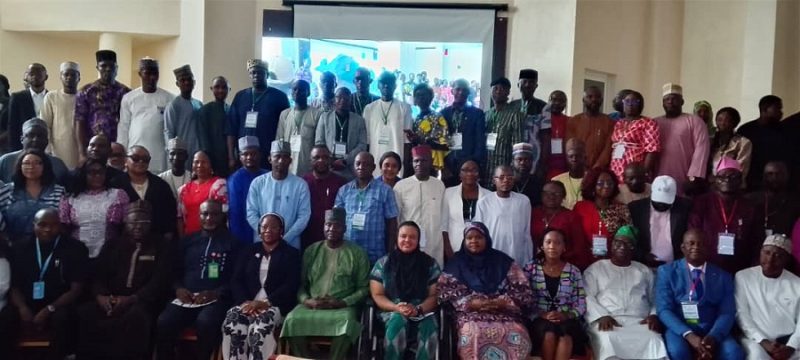
A major stride toward ensuring equitable access to safe water, sanitation, and hygiene (WASH) services was taken in Lagos as WaterAid Nigeria, in partnership with DP World, formally launched the Advancing Inclusive Water, Sanitation, and Hygiene (AI WASH) Project. The event, held in Lagos on Wednesday October 22, 2025, marked the beginning of a collaborative effort aimed at improving public health, gender equity, and environmental sustainability across selected communities.
Representing the WaterAid Country Director, Evelyn Mere, Iorkumbor Emmanuel, Head of Grant Strategic Partnership and Head of Strategy Performance Effectiveness and Learning (SPEL) at WaterAid Nigeria, reaffirmed the organisation’s commitment to deepening access to clean water and sanitation facilities through strategic collaboration with government and private partners.
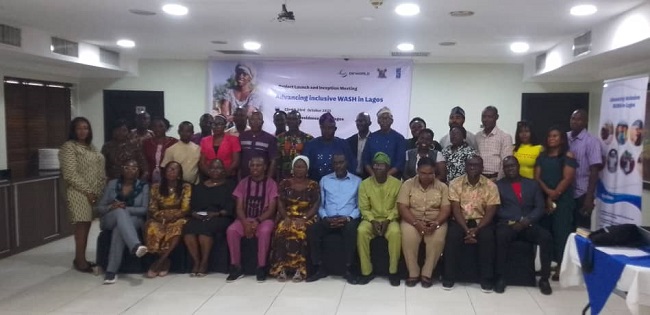
Participants at the launch of the Advancing Inclusive Water, Sanitation, and Hygiene (AI WASH) Project
“WaterAid has found a dependable ally in the Lagos State Ministry of Environment and Water Resources,” Emmanuel said. “They have provided the leadership and direction that continues to guide our work. Our focus is to demonstrate models that work in Ojodu and Ikorodu North LCDAs – models that can be scaled up across Lagos State.”
He further announced that WaterAid had secured fresh funding from InfiWall Logistics, supported by PepsiCo Corporation, to sustain interventions in Lagos communities and schools over the next 12 months.
“Today marks a very special milestone as we introduce the AI WASH project, aligned with WaterAid’s vision of achieving universal access to safe water, sanitation, and hygiene by 2030,” Emmanuel noted. “This partnership signifies inclusivity and shared responsibility, ensuring everyone has a role in creating a healthier Lagos.”
Emmanuel emphasised WaterAid’s strategy of “saturation and sustainability”, ensuring that interventions do not end with infrastructure delivery but extend into long-term management and behavioural change.
He disclosed that a five-year investment plan has been developed for the participating Local Council Development Areas (LCDAs) to help local authorities plan, budget, and sustain facilities.
“Sustainability is not an afterthought; it begins now,” he explained. “Local councils must start budgeting for the repair and replacement of facilities, not just commissioning new ones. Our goal is 24/7 access to clean water in every community.”
He added that WaterAid’s behavioural change campaign targets schools and households as change agents, promoting hygiene education and discouraging open defecation.
Babatunde Akinwunmi, Deputy Director, Office of Drainage and Water Resources, who represented the Lagos State Commissioner for Environment, commended WaterAid’s impact across the state.
“We appreciate WaterAid’s consistent inclusion of DP World as a funding partner,” Akinwunmi said. “Virtually all schools and primary health centres in Ikorodu and Ojodu LCDAs have benefited. However, we must now move from provision to sustainability. We expect more ownership and maintenance from the councils and communities.”
He urged that the successful model be replicated in other LCDAs across the state, emphasising that the sustainability of existing facilities should take priority before new expansions.
In his remarks, Mayor Ameen Olawale Ibrahim Apanisile, Executive Chairman of Ikorodu North LCDA, expressed appreciation to WaterAid and DP World for their support, pledging his council’s commitment to sustain the gains made.
“We are complementing WaterAid’s efforts by preaching maintenance and ownership to our communities,” he said. “If people take care of these facilities, more projects will come. But if they neglect them, resources that could go into new projects will be spent on repairs. Ownership is the key.”
Representing the Lagos State Ministry of Basic and Secondary Education, the Director of Basic Education Services lauded the tangible improvements the WASH initiatives have brought to schools across Lagos.
“For helping our schools overcome water scarcity and sanitation challenges, we are grateful,” he stated. “We have introduced monitoring systems to ensure proper maintenance and accountability. WaterAid’s impact is visible and commendable.”
Speaking on behalf of the WaterAid fundraising team, Ruth Agwulobi reiterated that the AI WASH Project seeks to advance inclusive and sustainable WASH services for improved health and equity, with a strong focus on women, girls, and vulnerable populations.
“Our goal is simple – every woman, girl, and family deserves safe access to water, sanitation, and hygiene,” she affirmed.
The AI WASH project is expected to serve as a blueprint for sustainable and inclusive WASH programming in Lagos State, combining technical expertise, private-sector funding, and government leadership to ensure long-term impact.
Emmanuel concluded: “We are not just bringing money; we are bringing solutions—and asking the government and communities to bring their commitment. Together, we can make safe water and sanitation a reality for all.”
Tobacco control advocacy organisations in Nigeria have called on the Federal Government, health authorities, and relevant stakeholders to take immediate action against what they termed as “the clandestine marketing” of nicotine-based products disguised as “harm reduction education” by local tobacco industry fronts and a group from Sweden.
In a joint statement, the Nigerian Tobacco Control Alliance (NTCA), Corporate Accountability and Public Participation Africa (CAPPA), and Gatefield warned that the tobacco industry, through its cronies, is covertly introducing these products to Nigerian youth, including students, thus threatening to reverse years of progress in tobacco control and public health.
Nicotine and Tobacco
They noted that this move comes at a time when at least 43 countries have banned nicotine vaping products, and 26 others have prohibited heated tobacco products due to health concerns, unethical marketing, and the urgent need to prevent youth addiction.
“Nigeria cannot be a dumping ground for these rejected products,” the organisations declared. “The government has a duty to protect citizens from this dangerous tactic.”
They cited a recent event in Abuja organised by an industry front group posing as a “harm reduction organisation from Sweden,” describing it as a deliberate attempt by the tobacco industry to derail the full implementation of Nigeria’s tobacco control laws and worsen the country’s growing non-communicable diseases (NCD) crisis.
According to media reports, the group urged Nigeria to adopt a “localised harm reduction strategy” and “learn from the Quit Like Sweden model.” While claiming to promote alternatives for smokers, the group simultaneously launched mass media campaigns marketing the products to the general public as “safer options”.
NTCA, CAPPA, and Gatefield described this as a deceptive rebranding of tobacco marketing, warning that the tobacco industry is exploiting harm-reduction rhetoric to recruit a new generation of nicotine users.
They also condemned the Swedish group’s claim that “there can never be a nicotine-free world”, calling it the clearest evidence yet that the industry is deliberately perpetuating addiction while most countries are adopting endgame tobacco strategies aimed at a nicotine-free future.
Akinbode Oluwafemi, Executive Director of CAPPA, said, “There is no safe level of nicotine. These groups are marketing nicotine pouches, vapes and heated tobacco devices as harm-reducing or safer alternatives, and that is a dangerous lie that fuels a youth addiction crisis right here at home.”
Oluwafemi cited recent World Health Organisation (WHO) data showing that at least 15 million children aged 13 to 15 are already addicted to e-cigarettes, with children being nine times more likely than adults to vape.
“This is the so-called ‘smoke-free future’ the industry envisions — one that sustains a steady pipeline of young addicts to replace those killed or harmed by tobacco and nicotine products so shareholders can keep smiling to the bank,” he said.
He urged the government to adopt bold, decisive actions to eliminate youth access to nicotine products, protect children, and end the nicotine epidemic in Nigeria.
“Harm is harm; there is no safe level of poison. Any message suggesting nicotine can be safely used is a public health misstep with devastating consequences for our youth and families. Nigeria must prioritise the elimination of access and strict enforcement of comprehensive protections over any form of so-called harm reduction marketing,” he said.
Olawale Makanjuola, NTCA Alliance Coordinator, corroborated this view, stressing that the country already has a robust legal framework that, if properly implemented, can curb the spread of nicotine addiction.
Makanjuola added, “We have the tools: strong taxation, comprehensive advertising bans, plain packaging, strict age verification, and well-funded cessation support. What’s needed is political will.
“Industry-backed programmes falsely claim not to target youths, yet they simultaneously launch ‘educational’ campaigns in schools that normalise nicotine use. These are Trojan horses disguised as public health initiatives.”
Similarly, Omei Bongos-Ikwue, Health Communications, Policy and Advocacy Specialist at Gatefield, backed the call for more robust policies to protect the youth.
“The industry does not seek to eradicate tobacco and nicotine, but to dress itself in packaging that attracts its most important market, the youth. As a party to the Framework Convention on Tobacco Control (FCTC), Nigeria must protect public health policies from the tobacco industry’s commercial interests. We must maintain our focus on preventing initiation and ending the epidemic, not advancing nicotine addiction.”
The statement noted that global evidence consistently shows that comprehensive tobacco control policies, not alternative product marketing, drive quitting rates and reduce tobacco use prevalence.
“Nigeria must align with global best practices and stand firm against the industry’s deceptive harm-reduction tactics. Beyond that, we must also develop home-grown public health solutions that reflect our social and local realities, not copy and paste narratives from countries where nicotine addiction is already entrenched. Nigerian youth do not need new forms of addiction disguised as lifestyle accessories.” the organisations warned.
They further urged parents, guardians, school authorities, and the general public to stay vigilant against the growing infiltration of these nicotine products into everyday spaces.
“If our public institutions and communities fail to act now, Nigeria risks importing a major public health crisis,” the statement concluded.
After painstaking consultations with several stakeholders and field assessments, Nigeria has eventually validated its National Adaptation Plan (NAP), signaling the nation’s readiness for its submission to the United Nations Framework Convention on Climate Change (UNFCCC) ahead of the Conference of Parties (COP30), which is scheduled to take place from November 10 to 21, 2025, in Belem, Brazil.
The high-level event, which was organised by the Department of Climate Change (DCC) under the Federal Ministry of Environment in Abuja, Nigeria’s capital, on Wednesday, October 22, 2025, brought together non-state actors and representatives from various Ministries, Departments and Agencies (MDAs) across the 36 states of the federation, including the federal capital territory, who all lauded the process, describing it as being inclusive and encompassing in nature.
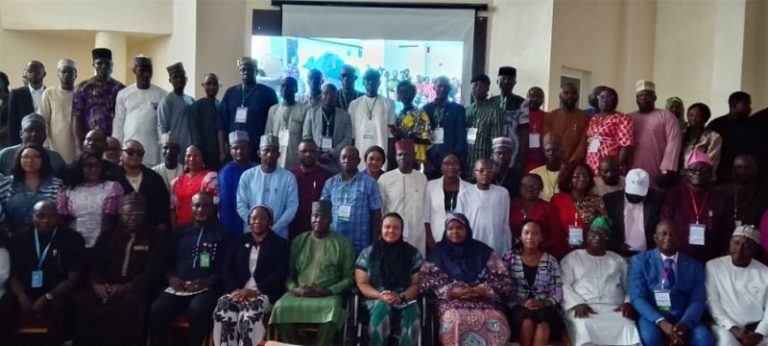
Stakeholders at the National Adaptation Plan (NAP) validation meeting in Abuja
Minister of Environment, Balarabe Abbas Lawal, drew attention to Nigeria’s climate vulnerability, such as drought and desertification, rising seas, and flooding, which he said if drastic and decisive actions are not taken now to address them, coping with these impacts in the future will be more difficult and costly.
“Adapting to climate change means taking action to prepare for and adjust to both the current effects of climate change and the predicted impacts in the future,” Lawal, who was represented by the Permanent Secretary (PS) of the Ministry, Mahmud Kambari, said.
Nigeria’s National Adaptation Plan (NAP), conducted with the support of the Green Climate Fund (GCF), focuses on the 13 thematic areas outlined in the National Adaptation Strategy and Plan of Action (NASPA). A key component of the process, the nation’s environment chieftain highlighted, is the Climate Risk and Vulnerability Assessment (CRVA), which identifies community vulnerabilities and suggests adaptation options to address challenges.
Other gaps that would further enrich and make the document more robust were also identified during this process, particularly gender considerations and conflict sensitivity & peacebuilding, which have all been integrated into the document.
“I especially appreciate the NAP Global Network, who supported the country in addressing these gaps,” he stated.
He informed the participants that presently, talks are on with the NAP Global Network and other delivery partners to address other identified gaps such as issues on loss & damage and human mobility, as well as education, to further enhance the document.
Now that the nation has created its NAP, he said, the next stage would be implementation, which calls for everyone to work together to make sure Nigeria can secure the funding it needs, both local and international, to address the effects of climate change, particularly in the area of adaptation.
Mr. Gift Gewona, Task Manager for the United Nations Environment Programme (UNEP) Nigeria, referred to the NAP as a living document that allows Nigeria to plan for its short-term, medium-term and long-term activities to ensure that the resilience of communities is gained.
According to him, the process arose due to Nigeria’s pressing climate challenges, which he assured that he was going to be working with his team members to address.
“I would like to thank the whole team that has been involved in this process. We are going to ensure we implement the plan to finance the global climate fund,” he guaranteed.
The validation of the NAP document, according to Dr. Angelina Ugben, President of Global Disabilities Green Initiative (GDGI), represents more than a policy milestone; it is a crucial opportunity to ensure that no Nigerian is left behind in the collective response to climate change.
She hinted that her organisation strongly advocates for a climate adaptation framework that is inclusive, accessible, and disability-responsive, stressing that persons with disabilities – who are often among the most vulnerable in times of environmental crisis – must be recognised not just as beneficiaries, but as active participants and contributors to national climate planning.
“Inclusion must go beyond consultation – it must be reflected in implementation, with clear strategies for accessibility, representation, and data-driven monitoring to track the impact of climate actions on persons with disabilities,” Dr Ugben stated.
Consequently, the GDGI boss urged that the NAP document should be a bold blueprint for resilience, justice, and equity – one that reflects Nigeria’s diversity and upholds the rights of every citizen, regardless of ability.
In conclusion, this document arrives at a crucial moment as Nigeria aligns itself with global efforts to green its economy. It is anticipated that the insights contained within will significantly contribute to shaping, enriching, and assisting the country in achieving its global climate targets.
The Nigerian Meteorological Agency (NiMet) has predicted sunny and thundery weather conditions from Wednesday, October 22 to Friday, October 24, 2025, across the country.
NiMet’s weather outlook, released on Tuesday, October 21, in Abuja envisaged sunny skies over the northern region during the morning hours on Wednesday.
NiMet anticipated slim chances of isolated thunderstorms over South of Taraba State later in the day.
Thundery weather
“For central region, sunny skies with patches of clouds are expected over the region during the morning hours.
“In the afternoon/evening hours, isolated thunderstorms with moderate rains are expected over parts of Kogi, Kwara, Benue, the Federal Capital Territory and Nasarawa states,” it said.
The agency predicted a cloudy atmosphere over the southern region with prospects of morning thunderstorms with light rains over parts of Edo, Ogun, Ondo, Ebonyi, Cross River, Rivers, Lagos and Akwa Ibom states.
NiMet envisaged thunderstorms with moderate rains over the entire region later in the day.
It projected that sunny skies would be expected over the northern region during the morning hours on Thursday.
According to NiMet, later in the afternoon/evening hours, there are chances of isolated thunderstorms over South of Taraba State.
“For central region, sunny skies with patches of clouds are expected over the region during the morning hours.
“In the afternoon/evening hours, isolated thunderstorms with moderate rains are expected over parts of Kwara, Kogi, Benue, the Federal Capital Territory and Nasarawa states,’’ it said.
It anticipated cloudy atmosphere over the southern region with prospects of morning thunderstorms and light rains over parts of Ondo, Imo, Edo, Ebonyi, Bayelsa, Rivers, Cross River and Akwa Ibom states.
NiMet forecast thunderstorms with moderate rains over most parts of the region later in the day.
According to NiMet, sunny skies are expected over the northern region during the morning hours on Friday.
It predicted isolated thunderstorms over the southern part of Taraba State later in the day.
”Sunny skies with patches of clouds are expected over the central region during the morning hours.
’In the afternoon/evening hours, isolated thunderstorms with moderate rains are expected over parts of Benue, the Federal Capital Territory, Kwara, Kogi and Nasarawa states,” it said.
The agency envisaged the cloudy atmosphere over the southern region with prospects of morning thunderstorms with light rains over parts of Osun, Ogun, Ondo, Ebonyi, Lagos, Rivers, Bayelsa, Cross River and Akwa Ibom states.
NiMet forecast thunderstorms with moderate rains over most parts of the region later in the day.
”Airline operators are advised to get airport-specific weather reports (flight documentation) from NiMet for effective planning in their operations.
“Residents are advised to stay informed through weather updates from NiMet. Visit our website www.nimet.gov.ng,’’ it said.
UN Climate Change chief Simon Stiell has urged countries to deliver a rapid surge in climate finance ahead of COP30 to address the impact of climate change.
Stiell, the head of United Nations Framework Convention on Climate Change (UNFCCC), however, warned that developing nations remained dangerously short of the resources needed to withstand worsening storms, floods and droughts.
UN climate chief, in a statement on Tuesday, October 21, 2025, called for finance to “flow right now”, as delegates prepare to head for the Brazilian city of Belém in November for what is being seen as a crunch summit for turning promises into action.
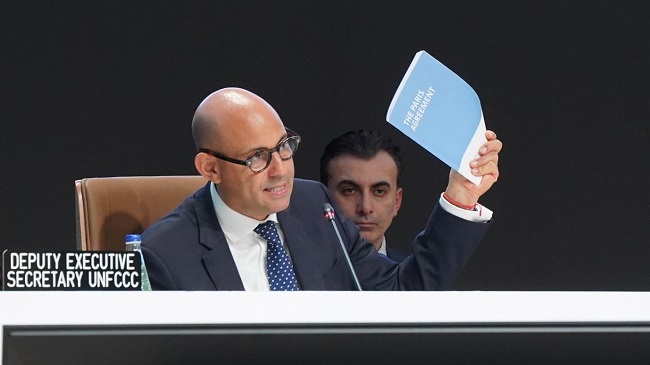
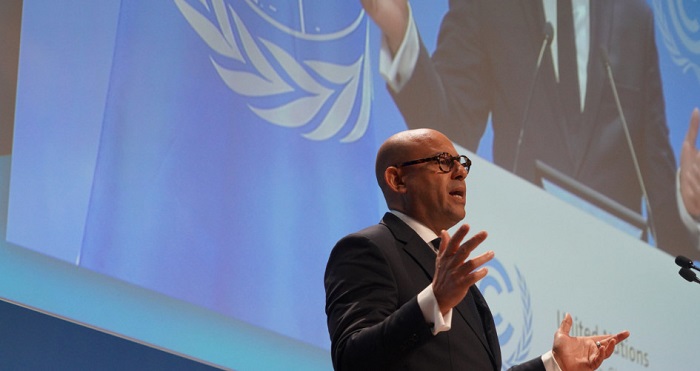
Simon Stiell, UN Climate Change Executive Secretary. Phoro credit UN Climate Change / Lucia Vasquez Tumi
“Whether or not countries need to be prepared to cope with a changing, more unpredictable climate is hardly in question:
“Extreme weather events such as devastating wildfires, catastrophic droughts, and apocalyptic floods are making life increasingly difficult in all parts of the world.
“There are plenty of examples of effective measures that countries can take to adapt to this new normal, ranging from high sea walls to cyclone warning systems, floating homes and planting drought-tolerant crops,’’ he said.
UN Climate Change agency released a new report detailing the progress countries are making on their national climate adaptation plans (NAPs). It confirms that the persistent funding gap risks scuppering plans that many are attempting to implement.
Speaking at the launch in the Brazilian capital, Brasilia, Stiell reminded that the climate crisis is destroying lives and livelihoods in every region of the world, especially in the most vulnerable countries, and that “adaptation is not optional; it is absolutely essential.”
The UN climate chief said adaptation would not only protect lives but also help empower communities and countries to thrive.
National Adaptation Plans, he declared, are “key to unleashing the epic transformative power of investing in climate resilience.”
Aside from the funding challenge, progress is being made as 67 developing countries have submitted plans.
These, he said, include 23 from least developed countries and 14 small island developing States – with an approach aimed at engaging more women, young people, Indigenous Peoples, local communities and the private sector.
These efforts explain in detail what the priorities and needs are – and should, Stiell suggested, make it more straightforward for investors and financial institutions to fund climate adaptation.
The report comes 19 days before the opening of the COP30 UN climate conference in the Amazonian city of Belém, where adaptation and the funding gap will be a central issue for negotiators, with the aim of mobilising 1.3 trillion dollars in climate finance.
Looking ahead to the UN summit, Stiell said it was a “key test of global solidarity,” that must “connect climate action to real lives everywhere to spread the vast benefits.”
Remarks delivered by UN Climate Change Executive Secretary, Simon Stiell, on the launch of the National Adaptation Plans Progress Report, released on Tuesday, October 21, 2025
Simon Stiell
Every year, the impacts of climate change grow more intense, and more uneven. In August I went back to Carriacou, my home island which was brutalised by Hurricane Beryl last year. It was sobering.
Although the spirit of the people is incredibly strong, many continue to struggle to rebuild their lives.
Lives and livelihoods are being destroyed in every region of the world, and especially in the most vulnerable countries. Adaptation is not optional; it is absolutely essential.
It means protecting communities from worsening floods, droughts, wildfires and storms. It also means protecting economies.
Global supply chains, food systems, vital health care facilities and energy security all depend on climate resilience.
But adaptation is about far more than protecting human lives and economies.
It’s about empowerment: enabling communities and countries to thrive despite a changing climate.
National Adaptation Plans are key to unleashing the epic transformative power of investing in climate resilience.
They are the blueprints for stronger economies, more resilient societies, and faster progress right across the SDGs.
So, what are the key takeouts from this report? I’m an optimist so I’ll start with the good news. This new NAP (progress) report shows that real progress is being made.
It shows the direction of travel is clear. The analytical frameworks are increasingly in place. In many respects, this is the hardest part.
Around the world, governments are building the foundations for more climate-resilient economies and societies.
Almost all developing countries are working on their adaptation plans. Sixty-seven have submitted plans to the UNFCCC – including 23 from the Least Developed Countries and 14 Small Island Developing States. That adds up to a big collective commitment, despite very limited capacity and resources.
Adaptation is increasingly being integrated into national development plans.
Countries are putting in place coordination mechanisms, financing strategies, and monitoring systems.
They are deepening their efforts in every key sector – for example in agriculture and health – with specialized plans.
And crucially, adaptation plans are showing a whole-of-society approach – engaging more women, young people, Indigenous Peoples, local communities and the private sector in planning and implementation.
But there are also several worrying aspects of this report. It points to some persistent barriers that are holding back progress at the speed and scale that we need.
No prizes for guessing the number one constraint. Many countries still lack access to the funding that’s needed. Too often, they face complex approval processes, fragmented support, and overdependence on external expertise.
It’s clear from this report that the systems are increasingly ready, but the finance must flow right now.
So, this report could easily be sub-titled: “No more excuses, investors!”.
Because investors and financial institutions can no longer say they don’t know where or how to invest in adaptation. These plans clarify – country by country, sector by sector – what the priorities are, what the needs are, and what opportunities exist.
The task is to match those priorities, needs and opportunities with more quantity, but also better-quality finance. That means long-term, predictable, and equitable support that empowers countries to take the lead.
More broadly, where does this report leave us? What’s the bottom line?
So let me boil it right down. Before this report, we faced two climate adaptation challenges – direction and speed. Now it’s largely just one: the direction is right – but we have a serious need for speed.
So, we must pick up the pace. Which brings us to COP30, where nations must respond.
Adaptation will be a central issue. Parties are expected to agree on adaptation indicators, and work to close the adaptation finance gap.
The roadmap to mobilise $1.3 trillion in climate finance will clearly be key at COP30.
Let’s be very clear: climate finance is not charity. It is vital for protecting every population and economy, and the global supply chains that every nation depends on for low-inflationary growth, and food and energy security.
On adaptation issues, but also more broadly, COP30 will be a key test of global solidarity. So, it must do three things:
It must show nations are fully on board for climate cooperation because it works, with stronger outcomes in all key issues.
It must spur faster and wider implementation, leaving no one behind.
And it must connect climate action to real lives everywhere, to spread the vast benefits.
Meeting that test is how we turn plans into protection, prosperity and progress.
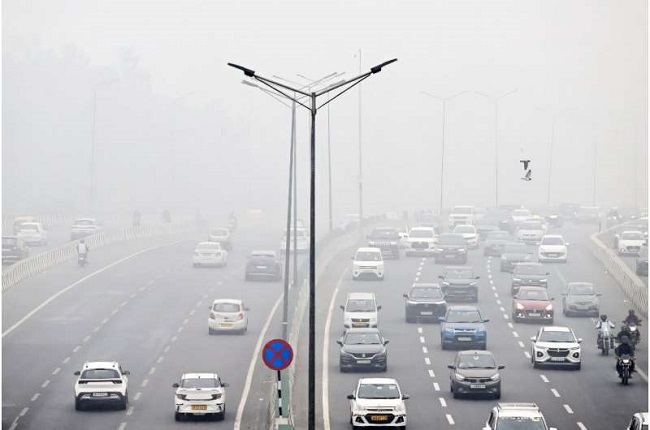
India’s capital New Delhi was shrouded in a thick, toxic haze on Monday, October 20, 2025, as air pollution levels soared to more than 16 times the World Health Organization’s recommended daily maximum.
New Delhi and its sprawling metropolitan region – home to more than 30 million people – are regularly ranked among the world’s most polluted capitals, with acrid smog blanketing the skyline each winter.
New Delhi, India
Cooler air traps pollutants close to the ground, creating a deadly mix of emissions from crop burning, factories and heavy traffic.
But pollution has also spiked due to days of fireworks set off to mark Diwali, the major Hindu festival of lights, which culminates on Monday night.
The Supreme Court relaxed this month a blanket ban on fireworks over Diwali to allow the use of the less-polluting “green firecrackers” – designed to emit fewer particulates.
The ban was widely ignored in past years.
On Monday, levels of PM2.5 – cancer-causing microparticles small enough to enter the bloodstream – hit 248 micrograms per cubic meter in parts of the city, according to monitoring organisation IQAir.
The government’s Commission of Air Quality Management said air quality is expected to further deteriorate in the coming days.
It also implemented a set of measures to curb pollution levels, including asking authorities to ensure uninterrupted power supply to reduce the use of diesel generators.
City authorities have also said they will trial cloud seeding by airplanes for the first time over Delhi this month, the practice of firing salt or other chemicals into clouds to induce rain to clear the air.
“We’ve already got everything we need to do the cloud seeding,” Delhi Environment Minister Manjinder, Singh Sirsa, told reporters this month, saying flight trials and pilot training had been completed.
A study in The Lancet Planetary Health last year estimated 3.8 million deaths in India between 2009 and 2019 were linked to air pollution.
The UN children’s agency warns that polluted air puts children at heightened risk of acute respiratory infections.