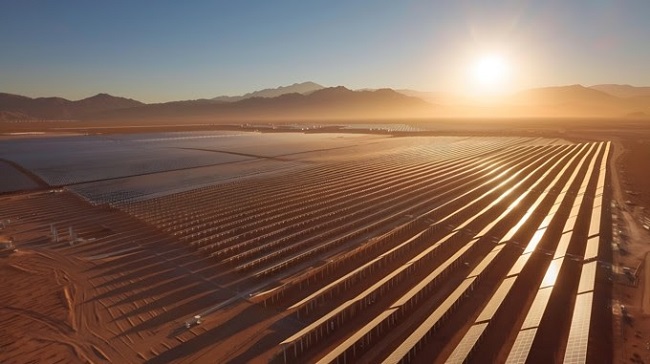
The consortium composed of TotalEnergies and Saudi developer Aljomaih Energy & Water (AEW) has been awarded, following a tender conducted by the Saudi Power Procurement Company (SPPC), the license to develop, construct and operate a 400 megawatt (MW) solar power plant in As Sufun, Saudi Arabia.
The electricity generated will be sold to SPPC under a 25-year Power Purchase Agreement (PPA). The solar power plant is expected to be connected to the grid in 2027 and will power more than 68,400 homes.
Solar power plant
The As Sufun project is part of the sixth phase of the National Renewable Energy Programme (NREP), overseen by the Ministry of Energy. The programme aims to reduce reliance on liquid fuels in electricity generation, in line with Saudi Arabia’s Vision 2030 plan, which aims to achieve up to 50% of installed capacity from renewable energy and energy storage systems by 2030, depending on the growth in electricity demand.
“Together with our partner Aljomaih Energy and Water, we are delighted to contribute to Saudi Arabia’s objective of increasing the share of renewable energy in its energy mix. This project marks the second success of our consortium within the framework of the Saudi National Renewable Energy Programme. TotalEnergies is a long-standing partner of Saudi Arabia, where we are deploying our multi-energy strategy, notably through our participation in major assets in refining and petrochemicals,” said Olivier Jouny, Director of Renewables at TotalEnergies.
“We are proud to lead the development of the 400 MW As Sufun solar photovoltaic project in partnership with TotalEnergies. This milestone reflects our unwavering commitment to supporting the Saudi Green Initiative and advancing the goals of Vision 2030. Through our deep local expertise and trusted international partnerships, we continue to contribute to the Kingdom’s energy transition towards a more sustainable future. We also express our sincere gratitude to SPPC for its continued trust and cooperation,” said Mr. Ibrahim Aljomaih, Chairman of the Board of Directors of Aljomaih Energy and Water Company.
“The 400 MW As Sufun solar photovoltaic project in the Hail region illustrates our continued efforts to expand our investments in renewable energy in the Kingdom. The project will provide green energy to more than 68,400 households, underscoring our role in supporting the goals of Saudi Vision 2030 for a prosperous and sustainable economy,” added Adnan Buhuligah, Acting Managing Director of Aljomaih Energy and Water Company.
According to the promoters, the new renewable project represents an important milestone for TotalEnergies in Saudi Arabia, where the company currently operates the 119 MW Wadi Al Dawasir solar power plant and is building the 300 MW Rabigh 2 project.
The much-vaunted Paris Climate Agreement, adopted in 2015 and to which the South African government is a signatory, has failed to prevent a 1.5 °C planetary overshoot. The Trump administration has withdrawn from the Paris Agreement, is gutting climate science institutions (including the National Ocean and Atmospheric Administration), rolling back investments in renewable energy, increasing coal investments, and is cranking up Liquid Natural Gas (LNG) exports to Europe.
Together with Qatar, the US has also put pressure on Europe to soften its commitments to its Green Deal and climate policies. At the same time, digital monopolies are driving demand for gas and nuclear energy sources, to ensure big data centres, computing power and AI scalability is reached. In other words, the countries that have historically been responsible for most climate emissions are continuing to intensify emissions and further lock into fossil fuels and dangerous nuclear energy. Instead of rapidly phasing out fossil fuels and nuclear power, the world is moving in the opposite direction, including South Africa.
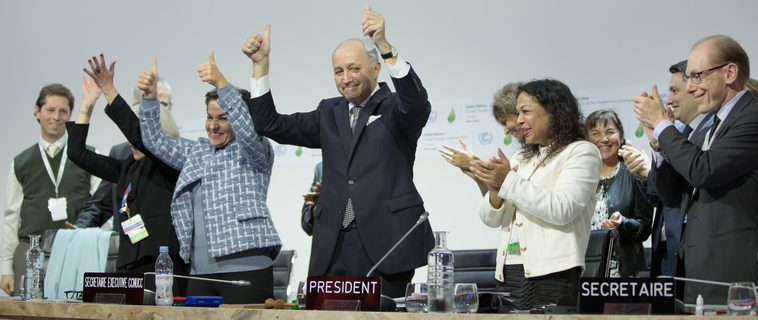
Jubilation greeted the adoption of the Paris Agreement in December 2015 in Paris, France. Photo credit: unfccc.int
At the same time, leading climate scientists are suggesting that a 1.5 °C overshoot over the past two years is here to stay. At the first-ever conference to assess the 1.5 °C overshoot, held this year many climate scientists in attendance expressed views that suggest 1.5 °C is already lost. Whether the planetary average temperature exceeds 1.5 °C temporarily or the planet overshoots 1.5 °C as a permanent planetary average, climate extremes are intensifying with serious implications for life and fiscal costs for governments.
In the first half of 2025, climate disasters were the most costly on record, exceeding $101 billion. Many highly indebted countries, including South Africa, face the risk of climate insolvency in this context. A group of 160 scientists from 23 countries has warned that we have reached the first catastrophic tipping point in our oceans, marked by mass coral reef die-offs. This impacts half a billion people worldwide who rely on coral reefs for food. The oceans are just one of many tipping points that are on the verge of collapsing. The Arctic continues to thaw, releasing methane, the Amazon rainforest has become a net emitter of CO2, and ice sheet loss continues at an unprecedented rate. These developments all add up to negative feedback loops accelerating planetary heating.
Almost a decade after the South African Government became a signatory to the Paris Agreement, the South African cabinet has approved the final draft of the disastrous Integrated Resource Plan (IRP). While a significant amount of new generation capacity is set to be generated through solar photovoltaics and wind energy (11270 MW and 7340 MW respectively), a significant proportion of the proposed future energy mix relies on gas-to- power and new nuclear energy: 6,000 megawatts (MWe) of gas-powered electricity generation by 2030 and 5200 MW of new nuclear.
This continued commitment to non- renewable forms of energy, which is falsely marketed as ‘green’, takes place in a country that is heating at twice the global average, and is already experiencing increasingly frequent and destructive unnatural climate shocks. Just four months ago, over a hundred people were killed by floods in Mthatha, with thousands left homeless. Many key sectors in South Africa are already at significant monetary risk, with the South African Government not offering any significant and transformative responses to the intensifying climate crisis. We reject this IRP because it locks the country into fossil fuel dependence for generations.
From the October 23 to the 24, 2025, representatives of the Climate Justice Charter Movement (CJCM) from frontline communities across South Africa came together to chart a path forward centred around its transformative politics. From our deliberations, we believe the best response for South Africa to a 1.5 °C overshoot and worsening climate crisis is to get prepared now. South Africa is unprepared, but we can take active steps together now. We call for:
Climate risks assessments to be mainstreamed at all levels of government, sectors and in communities. The CJCM calls on the 292 organisations that have endorsed the Climate Justice Charter to work with us bottom up to get people and worker driven climate risk assessments going in communities, workplaces and sectors so we can make the necessary and hard adaptation choices to limit harm;
The country to embrace a Climate Emergency Social Contract consistent with the pluri-vision of the Climate Justice Charter to address the legacies of apartheid, our current polycrisis and secure a just, democratic and emancipated future for all. We call on all endorsing organisations of the charter to work with us bottom up to popularise this idea and to build such a contract in the deep just transition;
Accelerating the deep just transition from below through supporting the campaigns of the CJCM and allies such as the South African Food Sovereignty Campaign, Rights of Nature Campaign , Water Commons and Justice Campaign, including community mobilisation to address the water crisis in the City of Johannesburg on 1st November outside Council Chambers;
Collaboration with us to build a national and united campaign to stop and phase out fossil fuels and nuclear. Let’s stand with communities fighting offshore oil and gas extraction, impacted by more coal extraction such as New Castle, and unite with anti- nuclear campaigners;
United action in support of our campaign for Just Transition Cities, Towns and Communities during the 2026 local government elections. As an anti-party movement, we are clear that political parties do not have the vision and systemic solutions the country needs. Let’s use the local government elections moment to ensure the people own the problems and solutions for the country. Let’s take back power for people and worker-driven local government!
The Climate Justice Charter is five years old. It invites us to advance climate justice as a political project, grounded in an ethics of care for people and planet. We will continue on our journey to institutionalise the CJCM as a people and worker-driven movement in provinces and local communities.
In recent years, Nigeria has been feeling the impact of climate change in more visible and severe ways, and one of the most pressing challenges is extreme heat. Temperatures across the country are rising faster than ever, with prolonged periods of heat pushing both people and infrastructure to their limits. Heatwaves and high-temperature days are no longer rare events, and they carry significant risks for people’s health especially for vulnerable groups like the elderly, children, pregnant women, and outdoor workers.
Extreme heat kills more people globally than any other weather hazard, yet it remains one of Nigeria’s most underestimated public health threats. The Nigerian Meteorological Agency (NiMet) already provides heat advisories and forecasts, while health agencies such as the Federal Ministry of Health, the Nigeria Centre for Disease Control (NCDC), and state or local health authorities also share related public health messages.
Kamdi Chike-Nwaka
On paper, this looks like a functional system, one where science informs policy and policy informs the public. But, in practice, things are not working well, and lives are being lost as a result.
When Abuja’s temperature hit 39°C earlier this year, the city seemed to melt into silence. Pedestrians slowed down, children huddled under kiosks for shade, and even the evening air felt heavy. Yet amid the sweltering heat, there was little to no public guidance, no clear warning about what was coming or how to cope. This silence reflects a dangerous communication gap in Nigeria’s climate response: we are forecasting the heat but not communicating it effectively.
While NiMet provides forecasts and health agencies issue advisories, there is no clearly defined chain of responsibility that determines who triggers what once an alert is released. The result is confusion; forecasts remain in reports or social media posts without being translated into clear, actionable steps for communities. This lack of coordination is not bureaucratic inconvenience; it is a public health threat. Without a structured response system, hospitals remain unprepared for heat-related illnesses, schools carry on normal schedules in unsafe conditions, and communities are left without practical guidance.
Countries like India and the United Kingdom show that it can be done differently. In India’s Ahmedabad city, once a heat alert is declared, every sector from hospitals and schools to radio stations knows exactly what to do. In the United Kingdom, the Met Office’s color-coded heat-health alerts automatically trigger actions across institutions: care homes activate cooling plans, hospitals prepare for heat-related admissions, and the public receives simple, actionable instructions. Nigeria needs the same sense of urgency and organisation.
Another challenge is how heat warnings are written and delivered. Many NiMet advisories are technically sound but difficult for the average Nigerian to understand. Phrases like “heat stress index” and “temperature values remain high” sound scientific but offer little guidance. A warning that cannot be acted upon is as dangerous as no warning at all.
Nigeria must therefore adopt a plain-language approach to all heat advisories; one that tells people exactly what to do, when to do it, and why. Instead of vague phrases like “take precautions,” advisories should clearly say, “Drink water every hour, even if you’re not thirsty,” or “Avoid strenuous outdoor work between noon and 3 p.m.” These messages must be translated into Hausa, Yoruba, Igbo, and Pidgin, and tailored for vulnerable groups such as outdoor workers, students, and the elderly. Communication should not only inform but instruct – clearly, simply, and immediately.
The communication gap is also structural. Nigeria’s system relies heavily on national media and online platforms, which fail to reach rural communities and informal settlements; the areas most exposed to heat. Many outdoor workers have little internet access or awareness of official advisories. When temperatures soar, they are left to cope alone.
To fix this, messages must reach people through the channels they trust. Community radio, religious institutions, traditional rulers, and market associations are powerful platforms for local communication. In India, for example, community radio stations broadcast daily heat-safety tips, while volunteers share leaflets in local languages. Nigeria can replicate this easily. Ministries of Health and SEMAs can partner with radio stations and local health officers to deliver short, repeated, relatable messages. Churches and mosques can share heat-safety reminders during announcements. Posters and jingles can spread awareness faster than a press release ever will.
The World Health Organisation (WHO) recommends that every country develop a comprehensive Heat–Health Action Plan that links forecasting, early warning, healthcare response, and public communication. Nigeria currently has no such plan, leaving agencies to act in isolation and communities unprotected. Developing a national framework is an urgent necessity. Such a plan could be anchored by a “Heat Action Chain”, a simple, one-page guide mapping who does what within 24 to 48 hours of a NiMet alert.
Once a warning is issued, the Federal Ministry of Health should immediately notify state and local health departments, which in turn activate primary health centers and community broadcasters. Messages would begin circulating within hours, not days. The faster people hear, the faster they act.
As climate change intensifies, the heat will continue to rise; but the silence around it must not. Forecasting alone will not save lives; communication will. Every uncommunicated alert is a missed opportunity to protect Nigerians from preventable harm.
The next time NiMet issues a heat advisory, it must not end as a headline or a tweet. It should reach the people who sell under the sun, walk to work, or sleep without power. It should come in a language they understand, through voices they trust, with actions they can take. The heat is already here. What remains to be seen is whether our response will catch up or whether Nigeria will continue to be caught unprepared in the rising silence of the sun.
By Kamdi Chike-Nwaka, Society for Planet and Prosperity
The Nasarawa State House of Assembly has passed a bill for a law to provide for state policy on mainstreaming of climate change actions in the state.
The bill is to provide for the establishment of a Climate Change Advisory Committee and other related purposes.
Dr Danladi Jatau, the Speaker of the House, announced the passage of the bill into law during plenary on Monday, October 27, 2025, in Lafia, the state capital.
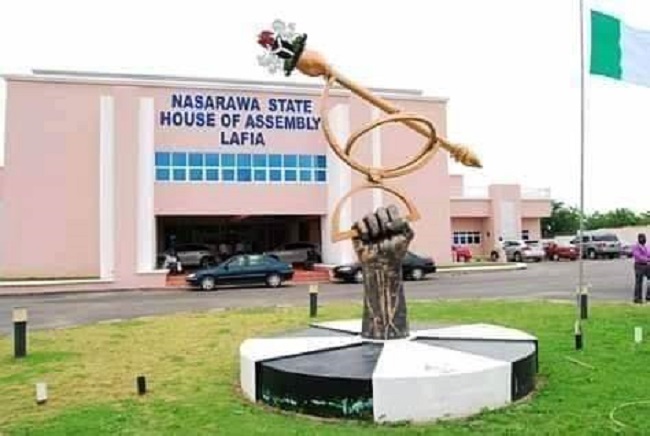
Nasarawa State House of Assembly, Lafia
The speaker said that the bill was aimed at mitigating the effects of climate change on the environment and for the benefit of the people of the state.
He said that the bill, if assented to by Gov. Abdullah I Sule, would establish Climate Change Advisory Committee to be headed by the governor, and the Climate Change Agency which would formulate climate change related policies.
He appreciated Mr. Mohammed Omadefu (APC- Keana), for sponsoring the bill, and other colleagues for their inputs in ensuring that the bill was passed into law.
“A Bill for a Law to Provide for Nasarawa State Policy on Climate Change for the Mainstreaming of Climate Change Actions in Nasarawa State, to Provide for the Establishment of a Climate Change Advisory Committee and other Related Purposes read for the third time and passed,” he said
The speaker directed the clerk of the House to produce a clean copy of the bill for Sule’s assent.
Earlier, Mr. Suleiman Azara, the Majority Leader of the House, moved a motion for the bill to scale third reading, seconded by Luka Zhekaba, the Minority Leader of the Assembly.
The Assembly, thereafter, unanimously passed the bill into law.
The Adaptation Fund Board concluded its 45th meeting recently with the clearance of over $125 million in new adaptation projects for the most vulnerable countries, strengthening its global adaptation portfolio.
The Board also made strides toward readying the Fund to transition its operations exclusively under the Paris Agreement.
The Board significantly advanced the Fund’s adaptation work for the most vulnerable, technically clearing $125.6 million in new projects and programmes, nearly matching the Board’s previous record high of $137 million in new project funding approved at its previous meeting in April 2025.
The Adaptation Fund Board gathered in Bonn, Germany for its 45th meeting
A total of 18 new projects were given the greenlight by the Board.
These projects included seven single-country projects (two each in Armenia and Indonesia, and one each in Ethiopia, Kenya and Mexico) that will be implemented by national implementing entities (NIEs) under the Fund’s Direct Access programme that empowers country ownership in adaptation, and another three projects (in the Dominican Republic, Egypt, and Grenada) proposed by regional and multilateral implementing entities (RIEs and MIEs). These cleared projects totaled $76.5 million, with the projects in Grenada and Mexico being first-time regular AF projects in those countries.
Several other projects were cleared through the Fund’s expanding grant windows in Locally Led Adaptation (LLA) and Innovation. These included $12 million to the Development Bank of Latin America and the Caribbean to administer regional LLA grants in the Latin America and Caribbean region; $10 million to the United Nations Development Programme (UNDP) to administer regional LLA grants in Africa; $5 million for a large innovation project in Belize to be carried out by the NIE, Protected Areas Conservation Trust; and nearly $15 million for three large regional innovation projects that will be implemented by UNDP (in Bosnia and Herzegovina, Montenegro, North Macedonia andSerbia), the United Nations Industrial Development Organisation (in Kenya andUganda) and the World Meteorological Organisation (in The Gambiaand Tanzania).
Additionally a $5 million project was approved from the RIE, the Pacific Community, to aggregate and administer small innovation grant projects throughout the Pacific region under the Fund’s AFCIA programme (Adaptation Fund Climate Innovation Accelerator), which fosters innovation in adaptation in developing countries through a broad range of local actors, including local governments, NGOs, community groups, entrepreneurs, indigenous peoples, young innovators and others.
Further funding approved included a $750,000 combination innovation and learning grant in Costa Rica.
Another 18 project concepts and pre-concepts were endorsed by the Board, which also approved $1.3 million in project formulation grants to help implementing partners develop several of those proposals further.
The funding decisions align well with the call from COP29 for a tripling of the Fund’s outflows from 2022 levels by 2030. With these new approvals, the Fund surpassed the milestone of 200 projects approved since it launched its operations 18 years ago. The Fund now has committed over $1.5 billion to 217 projects to date.
In advancing the Fund’s transition toward fully serving the Paris Agreement, this past week the Board reviewed and refined its draft terms and conditions for trustee services to support the Fund’s future operations under the Paris Agreement, and progressed on a memorandum of understanding for its secretariat services – both necessary steps that will help pave a smoother path toward the Fund exclusively serving the Paris Agreement.
Among other decisions, the Board approved a revised Strategic Results Framework to further strengthen the Fund’s monitoring and evaluation systems, bolstering the Fund’s ability to demonstrate its impact. The Board also gave the go ahead for the Secretariat to develop an option for a new, more streamlined reaccreditation process aimed at enhancing the efficiency and transparency of the Fund’s accreditation programs.
“The Board accomplished a great deal in advancing the work and reach of the Adaptation Fund to support the most vulnerable in building resilience to climate change, surpassing a big milestone to date of over 200 projects approved,” said Mr. Washington Zhakata, Vice Chair of the Board who presided over the meeting as Chair in the absence of current Chair Antonio Navarra.
“We not only took steps toward strengthening the Fund’s systems in monitoring and evaluation, reaccreditation, and serving the Paris Agreement, but advanced a large number of concrete actions for vulnerable communities including clearing 18 new adaptation projects and endorsing another 18 in the pipeline – all of which will serve the Fund’s mission and stakeholders well toward reaching its mandate to triple funding outflows by 2030,” added Zhakata.
“It was great to see the Board achieve a lot in this meeting, setting the stage for the Adaptation Fund’s eventual transition to exclusively serve the Paris Agreement, and clearing more than $125 million in new projects that further the Fund’s concrete work on the ground for the vulnerable – including empowering local and country ownership through new actions in Direct Access, Locally Led Adaptation, and Innovation,” said Mr. Mikko Ollikainen, Head of the Adaptation Fund.
Other Board decisions helped broaden the Fund’s reach and scope of its partnerships, including deciding to invite the World Bank and European Bank for Reconstruction and Development to submit proposals under the Fund’s AFCIA program, and reaccrediting the World Food Programme as an MIE for another five years.
The Board will next meet April 6-10, 2026, in Bonn, Germany.
Indonesia has achieved a significant milestone in scaling up climate action through the Reducing Emissions from Deforestation and Forest Degradation (REDD+) programme, with financing support from the Green Climate Fund (GCF).
The sum of $499.8 million has been committed to the country under the Results-Based Payments system in recognition of its successful reduction of emissions from the forestry and land-use sectors.
A total of $340.7 million has been disbursed, of which $103.8 million is financing from GCF, which was channelled through the United Nations Development Programme (UNDP).
The sum of $499.8 million has been committed to Indonesia in recognition of its successful reduction of emissions from the forestry and land-use sectors. Photo credit: UNDP Cambodia/Chansok Lay/Oddar Meanchey
Since REDD+ began, Indonesia has rehabilitated over two million hectares of forest and land while reducing forest fires by 19.6 per cent. Indonesia’s forests provide a net carbon sink of -67.2 ktCO2e per year, a critical resource as the region faces the growing climate crisis.
Hemant Mandal, Director of GCF’s Department of the Asia and the Pacific Region, said: “This project stands as a powerful testament to Indonesia’s leadership in global climate action and to the catalytic role of the GCF. The proceeds of this project have been strategically invested to advance Indonesia’s national REDD+ strategy.
“This includes strengthening the REDD+ architecture, enhancing implementation capacity, supporting decentralized forest governance, and expanding the national Social Forestry programme. These efforts have empowered local communities, improved forest restoration, and supported the alignment of REDD+ with the updated Nationally Determined Contributions (NDCs).”
The Indonesian Environment Fund acts as the fund manager for REDD+ in Indonesia. With the support of GCF, it acts as a bridge between international commitments and on-the-ground needs.
Indonesia’s NDC for 2031-2035 is set to be finalised for COP30, in Belém, Brazil, next month.
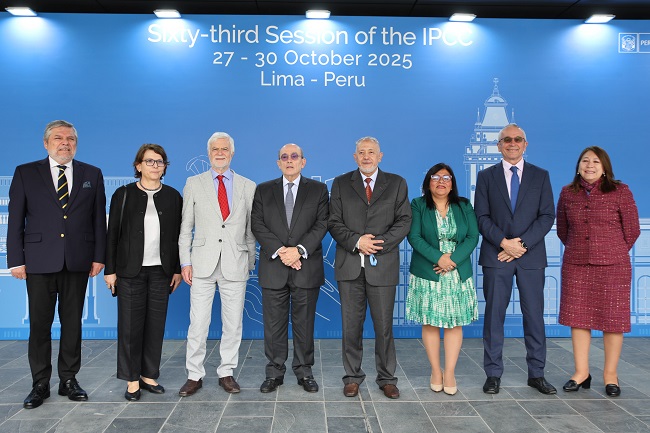
The Intergovernmental Panel on Climate Change (IPCC) on Monday, October 27, 2025, opened its 63rd Plenary Session in Lima, Peru, bringing together some 300 delegates from IPCC member governments and observer organizations to advance its work in the seventh assessment cycle.
Over the four-day session, the Panel will continue discussions on the timelines for the three Working Group contributions to the Seventh Assessment Report (AR7), as well as on the draft outline and timeline of the Methodology Report on Carbon Dioxide Removal Technologies, Carbon Capture Utilisation and Storage.
In addition, the Panel will discuss the IPCC’s Trust Fund programme and budget for 2026, the indicative budget for 2027 and 2028, a proposal for an expert meeting, and other agenda items.
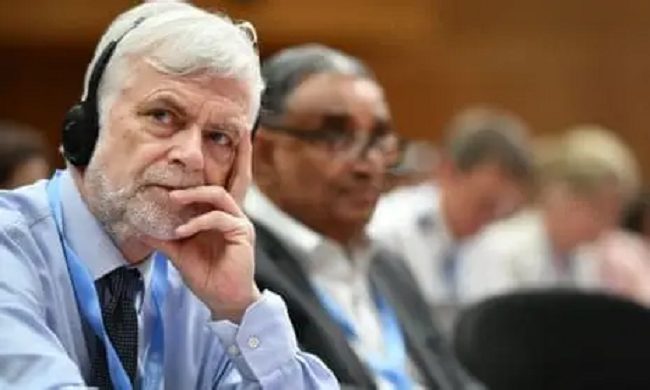
Dignitaries at the IPCC 63rd Plenary Session in Lima. Photo credit: IISD / Anastasia Rodopoulou
“By now, we know the scope of the Seventh Assessment Report, and we have selected the scientists who will be delivering the work,” said IPCC Chair, Jim Skea. “Building on the progress made so far, the Panel now needs to settle the important matter of the timelines for producing the reports, taking into account inclusive assessment practices and policy relevance. I trust that Panel members will seek consensus on the timelines in line with the IPCC’s established procedures.”
The Peruvian Minister of Foreign Affairs, Hugo de Zela, addressed the opening of the IPCC’s 63rd Plenary Session, reaffirming the country’s commitment to the global fight against climate change. In his remarks, Minister De Zela urged member states to act with a sense of urgency and responsibility to finalize the reports and methodologies necessary to accelerate climate action.
“Information produced by the IPCC remains essential to guiding the policy decisions of States seeking to reduce global warming,” said Minister De Zela.
The IPCC’s seventh assessment cycle formally began in July 2023 and will culminate in the release of the AR7 Synthesis Report in 2029. In this cycle, the IPCC will prepare the AR7, which comprises three Working Group contributions and a Synthesis Report, as well as update the 1994 Technical Guidelines for Assessing Climate Change Impact and Adaptation. The Panel will also produce a Special Report on Climate Change and Cities, and two Methodology Reports.
Delegates were welcomed at an opening ceremony in Lima, which included remarks from Peru’s Minister of Foreign Affairs, Ambassador Hugo de Zela; Deputy Minister of Strategic Development of Natural Resources for Peru’s Ministry of Environment, Raquel Hilianova Soto Torres; the IPCC Chair, Jim Skea; and Director of Climate Change Division of the UN Environment Programme (UNEP). Martin Krause.
The opening also included projections of video messages from Celeste Saulo, the Secretary-General of the World Meteorological Organisation and Simon Stiell, the Executive Director of the United Nations Framework Convention on Climate Change.
The Biotechnology Society of Nigeria (BSN) says it aligns with the safe application of biotechnology because it promotes enhanced health care delivery and engenders a sustainable food security and environment.
Prof. Sylvia Uzochukwu, President of BSN, said this during an interview on Monday, October 27, 2025, in Abuja.
The society’s position comes at a period when there is controversy over the safety of Genetically Modified Organisms (GMO) and food security.
Prof. Sylvia Uzochukwu, President of BSN
Uzochukwu explained that biotechnology is a form of technology that uses biological systems, living organisms or their parts to develop or create different products.
She said that in healthcare, for instance, the world benefitted from the messenger ribonucleic acid (mRNA) vaccines that contributed in bringing COVID-19 to an end.
NAN reports that an mRNA vaccine is a type of vaccine that uses mRNA to produce an immune response.
According to her, similar great strides are being recorded in sickle cell research using biotech.
She further told NAN that there was a possibility of having an affordable cure for it and other diseases lodged in the DNA such as hepatitis B and HIV AIDS.
“Modern biotechnology has revolutionalised health care, with procedures such as gene therapy, becoming more and more routine in healthcare, for the cure of genetic diseases.
“In agriculture, Nigerian beans will soon no longer be rejected in international trade because of high pesticide residues and high levels of cancer-causing fungal toxins.
“This is because Nigerian scientists have developed the insect resistant beans called Bt cowpea which requires little or no insecticide sprays to do well,’’ she said.
Uzochukwu said that the environment was also becoming safer due to biotechnology.
She said the development of pest-resistant crops using biotechnology tools had taken tonnes of toxic chemicals off the farms across the world.
Accordingly, this makes the air, as well as surface and ground waters safer for humans and aquatic lives.
“Modern techniques in biotechnology are here to stay and will only get better as they have enormous potentials for improving the life of man,’’ Uzochukwu said.
The professor of Food Science and Biotechnology assured that Nigerian scientists would not harm their compatriots because they have the mandate to promote and regulate biotechnology.
Executive Vice President (EVP) of Downstream, NNPC Ltd., Dr Mumuni Dagazau, says the nation’s downstream oil and gas sector is undergoing a transformation driven by deregulation, foreign exchange reforms, and strategic collaborations.
Dagazau made this known on Monday, October 27, 2025, in Lagos at the 19th Africa Downstream Energy Week, with the theme “Energy Sustainability: Growth Beyond Boundaries and Competition”.
He said recent policy reforms had unlocked new growth opportunities, encouraging integration, innovation, and stronger partnerships across the energy value chain.
xecutive Vice President (EVP) of Downstream, NNPC Ltd., Dr Mumuni Dagazau
“We are witnessing strategic measures, supply partnerships, and joint investments that signal a shift from siloed operations to integrated ecosystems.
“These developments are not merely transactional. They are structural, redefining how we produce, distribute, and consume energy,” Dagazau said.
The NNPC executive noted that sustaining the current momentum required prioritising key enablers such as security, infrastructure, innovation, and transparency.
He said, “The safety of our people and assets is foundational.
“Investment in robust infrastructure is essential to meet demand and unlock new opportunities.”
Dagazau said frameworks like the Petroleum Industry Act (PIA) and fiscal incentives for renewable and gas projects were creating a stable environment for long-term investment.
He emphasised the growing role of digitisation, automation, and low-carbon technologies, saying they were key to achieving operational excellence and reducing environmental impacts.
Dagazau also noted that government reforms had catalysed growth in the Liquefied Petroleum Gas (LPG) and Compressed Natural Gas (CNG) markets, opening new business frontiers and empowering indigenous small and medium enterprises.
“Despite local and global headwinds, Nigeria’s downstream sector enjoys strategic advantages.
“Abundant reserves and expanding infrastructure position the country as a regional energy hub,” Gagazau noted.
He added that the transition to cleaner fuels presented niche export opportunities, while access to international financing platforms was enhancing competitiveness.
Dagazau commended the increasing collaboration among African downstream players through public listings, mergers, and cross-border partnerships, saying such efforts were positioning Africa as a global energy player.
He explained, “Collaboration is Africa’s new competitive edge. To consolidate our gains and unlock new frontiers, cooperation must become our default mode.”
He noted that platforms such as OTL Africa Downstream Week remained vital in aligning stakeholders and advancing shared industry goals.
“At NNPC Limited, we are deploying new infrastructure and revamping existing assets to support strategic alliances.
“Our co-investments across upstream, midstream, and downstream operations reflect our belief that shared growth is sustainable growth,” Dagazau maintained.
He urged industry leaders to view sustainability as a catalyst, not a constraint, saying it should drive profitability, innovation, and long-term value.
“The leaders who will thrive are those who deliver not just energy, but trust, transparency, and sustainability,” he further said.
Dagazau reaffirmedthe commitment of NNPC Ltd. to building an inclusive, secure, and sustainable energy future, calling for purpose-driven innovation and collaboration.
“Together, we can grow beyond boundaries and competition, building an energy future for ourselves and for generations to come,” he said.
Also speaking, Gov. Babajide Sanwo-Olu of Lagos State described the OTL Africa Downstream Energy Week as the continent’s foremost platform for driving energy dialogue, policy reform, and investment.
Represented by Mr. Abiodun Ogunleye, Commissioner for Energy Resources, Sanwo-Olu said Lagos had hosted nearly every edition of the event over the years, reinforcing the city’s status as the energy and logistics capital of sub-Saharan Africa.
“We in Lagos take pride in hosting this global event, which has found a home in our city for nearly every edition since it began.
“This enduring relationship reinforces Lagos’s position as a true hub of innovation, enterprise, and strategic investment,” the governor said
Sanwo-Olu commended the OTL Africa platform for its impact, noting that it had influenced major policy shifts and encouraged private-sector participation across the continent.
“Over the years, OTL Africa has played a pivotal role in shaping the agenda for downstream development across Africa, sparking reforms, attracting investments, and driving meaningful change,” he said.
The governor cited recent multi-billion-naira investments by Mainland Oil and Gas and long-term partnerships with Rainoil Ltd. as examples of how engagement through the forum continued to stimulate growth.
He added that global technology firms such as Dover Fueling Solutions had leveraged the platform to introduce automation and digital tools, transforming Africa’s fuel retailing sector.
“These examples underscore the strength of collaboration, the very essence of this year’s theme, Growth Beyond Boundaries and Competition.
“It challenges us to envision a future where sustainability, innovation, and inclusivity shape the African energy landscape.”
The governor reiterated tje commitment of Lagos State to clean energy and inclusive growth through initiatives like the Lagos Electricity Policy and Energy Transition Plan, which promote private participation and sustainable development.
“As Chief Host, I reaffirm Lagos State’s commitment to collaborating with platforms like OTL Africa that bring together policymakers, regulators, investors, and innovators to build a sustainable energy future,” he said.
Sanwo-Olu welcomed delegates and investors, expressing optimism that the forum would unlock new opportunities for Nigeria and the continent.
“I am confident that the discussions and partnerships formed here will open new doors, not just for Lagos, but for Nigeria and Africa as a whole,” he said.
The Federal Ministry of Housing and Urban Development and the Nigerian Institute of Town Planners (NITP) have raised concerns over the lack of full implementation and domestication of the 1992 Urban and Regional Planning (URP) Law.
They said this at the National Colloquium on the Implementation of the Urban and Regional Planning (URP) Law, organised by the Nigerian Institute of Town Planners (NITP) in Abuja on Monday, October 27, 2025.
They said that the URP law, officially codified as CAP 138 of the Laws of the Federation of Nigeria, 2004, had suffered setback due to non domestication by states.
A panel discussion session during the National Colloquium on the Implementation of the Urban and Regional Planning (URP) Law
The Minister of Housing and Urban Development, Ahmed Dangiwa, recalled that the law was a bold reform designed to replace the outdated 1946 Town and Country Planning Law, a colonial relic that had become inadequate for a rapidly urbanising nation.
“The 1992 Law was conceived to provide a comprehensive framework for the orderly use and development of land across all tiers of government.
“It sought to ensure coordination in physical planning and promote the creation of functional, efficient, and livable human settlements across Nigeria.”
The minister said in spite of its ambitious objectives, the full potential of the landmark legislation has yet to be realised for over three decades.
“Many states and local governments have not domesticated or operationalised the law’s provisions, resulting in uncoordinated urban growth, proliferation of informal settlements, and inadequate infrastructure.
“Some states have not even enacted the enabling laws necessary to activate the institutional framework envisaged by the URP Law,” he noted.
“Others grapple with weak institutional capacity, inadequate technical manpower, and poor coordination among government agencies.”
Dangiwa said that limited public awareness, weak development control mechanisms, and the evolving realities of urbanisation, climate change, and technology have further underscored the urgent need to update and adapt the 1992 legislation to contemporary challenges.
He said that under the Renewed Hope Agenda of President Bola Tinubu, the Ministry is working to reinvigorate urban and regional planning as an integral component of national development.
He called on all stakeholders, policymakers, professionals, and citizens to renew their commitment to structured urban growth and the enforcement of planning regulations as tools for order, productivity, and resilience.
Also Speaking, Gov. Dikko Radda of Katsina State revealed that Katsina was among the few states that have fully implemented the provisions of the Law, adding that it helped to establish a transparent, structured, and accountable planning system in the state.
Radda represented by his Deputy, Malam Faruk Jobe, disclosed that in the administration’s first year, about N1 billion was invested in re-equipping the state’s Urban and Regional Planning Board with modern tools to ensure effective development control and enforcement.
He announced that revised master plans for Katsina, Funtua, and Daura which had remained unchanged for over two decades were recently completed and four additional cities were expected to receive new master plans by 2026.
According to him, the state government is investing over N72 billion in comprehensive urban renewal projects aimed at upgrading road infrastructure, revitalising aging neighborhoods, and stimulating balanced economic growth in the state capital.
The governor urged states to domesticate the law emphasising to the need for stronger institutions, sustained professionalism, and practical outcomes from the colloquium.
“The framework already exists. What we need now is unwavering consistency in implementation and stronger institutional backing,” he said.
The President of NITP, Dr Ogbonna Chime, called on all tiers of government to fully implement the provisions of the 1992 URP Law (CAP 138, Laws of the Federation of Nigeria, 2004) to ensure sustainable national development, efficient resource management, and orderly growth of Nigerian settlements.
“The Institute is concerned about the implementation of the Law because of the far-reaching implications of non-adherence to its provisions on national development planning and efficient resource management,”he said
He explained that many levels of government were yet to domesticate or operationalise its key provisions thereby contributing to persistent challenges such as unregulated urban expansion, inadequate infrastructure, poor land-use planning, and environmental degradation.
“All levels of government should play their constitutional roles effectively through mutual cooperation.
“Development experts now recognise that the daunting challenges of delivering the dividends of democracy can only be overcome through partnership and stakeholder collaboration.”
Chime lauded state governments that have begun reviewing their urban and regional planning laws in line with federal expectations, urging others to follow suit.
He, therefore, expressed optimism that the deliberations would “usher in a new dawn in national development planning,” reinforcing the importance of effective urban governance as a catalyst for Nigeria’s economic transformation.