As the world prepares for the 30th Session of the Conference of the Parties (COP30) to the United Nations Framework Convention on Climate Change (UNFCCC) inC Belém, Brazil, from November 10–21, 2025, Africa faces a critical question of representation and moral authority. Tanzania, currently chairing the African Group of Negotiators (AGN), is poised to lead the continent’s agenda on climate justice, gender equality, energy transition, and the issue of Loss and Damage.
Yet, this leadership role comes at a time when serious concerns have been raised regarding the Tanzanian government’s commitment to democratic governance and respect for civil liberties.
Chair the African Group of Negotiators (AGN), Dr. Richard Muyungi
Recent reports of electoral irregularities, suppression of dissent, and curtailment of media and civic freedoms in Tanzania have sparked debate about whether a government facing such accusations should speak for Africa on a global platform grounded in principles of justice, equity, and inclusivity. The question is not merely political – it is moral. How can a state accused of undermining the democratic rights of its own citizens credibly advocate for fairness and accountability in international climate governance?
The African Group of Negotiators represents the collective voice of a continent disproportionately affected by climate change, yet rich in solutions and aspirations for sustainable development. Its leadership must, therefore, reflect not only technical competence but also moral legitimacy and democratic integrity. For Africa to champion global climate justice effectively, its representatives must embody the very values they seek to advance – transparency, participation, and respect for human rights.
While Tanzania’s AGN Chair, Dr. Richard Muyungi, has reiterated his commitment to promoting the common African position, questions persist about whether such representation can be trusted to uphold inclusive and participatory processes.
Henry Neondo, a policy advocacy and influencing advisor at the African Coalition of Communities Responsive to Climate Change (ACCRCC) said allowing Dr Muyungi carry out his function as the AGN chair at COP30 will be a loud statement by Africans that they don’t care what happens to the grassroot citizen.
“How can a government that denies its own citizens the right to fair and transparent elections credibly advocate for fairness and justice in the global climate arena? Can Africa’s moral authority on climate justice stand firm when its representative faces allegations of silencing dissent at home?”
As the newly established Fund for Response to Loss and Damage (FRLD) begins disbursing its initial $250 million to support vulnerable nations, including Tanzania, it is imperative that African negotiators ensure that resources reach those most in need – communities at the frontlines of climate impacts – without political interference or elite capture.
African delegations heading to COP30 must, therefore, reflect deeply on who speaks for them and on what moral grounds. Leadership in climate negotiations should not be divorced from respect for democratic values at home. If Tanzania’s current political trajectory continues to contradict the principles of justice and accountability, then it is both prudent and necessary for African countries to reconsider its chairmanship of the AGN.
Africa’s call for climate justice will only carry weight if it is anchored in the same values it demands from the global community – fairness, transparency, and respect for human dignity. We are attending the 30th conference of parties to the UN Framework Convention to Climate Change on the pretext that we are fighting for climate justice for Africans. Allowing Dr Muyungi on the table will nullify all that we are here for and our arguments will be defeatist, weaken the continent’s moral standing and undermine the integrity of its voice at COP30 and beyond.
African climate negotiators have outlined a unified set of priorities for COP30, concluding a two-day pre-session meeting of the African Group of Negotiators on Climate Change (AGN) held in Belem from November 6 to 7, 2025.
Opening the meeting, AGN Chair, Dr. Richard Muyungi, said COP30 must deliver “ambitious, balanced, fair and just outcomes across adaptation, mitigation, loss and damage, and climate finance,” emphasising that negotiations must be anchored in the latest science and the principles of equity and common but differentiated responsibilities and respective capabilities (CBDR–RC).
Faces at the AGN pre-session meeting
Dr. Muyungi warned that despite contributing less than 4% of global emissions, Africa faces rapidly intensifying climate impacts and requires outcomes that reflect its “special needs, developmental context, and heightened vulnerability.”
Climate Finance at the Forefront
Climate finance remains Africa’s top priority going into COP30. Negotiators called for a clear alignment between financing flows and the ambition reflected in countries’ next round of Nationally Determined Contributions (NDCs 3.0).
Key demands include:
Concrete steps to operationalise $1.3 trillion annually by 2030 and the $300 billion climate finance goal;
Predictable, equitable funding through public grants and highly concessional loans;
Transparent accounting under Article 9.5 and Biennial Transparency Reports;
Support for implementing NDCs and National Adaptation Plans (NAPs), which already draw on domestic resources amounting to up to 5% of Africa’s GDP; and
A replenishment plan for the Fund for Responding to Loss and Damage (FRLD).
Strengthening Adaptation Action
Adaptation remains central to Africa’s climate agenda. The AGN stressed the need to finalise and adopt means of implementation indicators under the Global Goal on Adaptation (GGA), close the widening adaptation finance gap, and ease access to funds for developing and implementing NAPs.
“The indicators must be guided by Articles 9, 10 and 11 of the Paris Agreement, without shifting burdens onto developing countries,” said Kulthoum Omari Motsumi, AGN Lead Coordinator on the GGA. She underscored that adaptation is a “global responsibility, not a national one.”
Climate and Health Gains Momentum
In a notable development, Africa placed the intersection of climate change and health among its top priorities. The continent’s negotiators argued that health remains underrepresented in UNFCCC processes despite Africa, and other developing parties experiencing severe climate-related health risks.
The meeting thus called for stronger global collaboration to integrate health into climate policy through finance, technology transfer, and capacity-building; the inclusion of health outcomes across the GGA, Global Stocktake (GST), and Joint Work on Implementation (JTWP); and a firm grounding of these efforts in equity, CBDR, gender considerations, and children’s rights.
GST, Just Transition, and Africa’s Special Needs
The group also stressed the need to refine the GST process and strengthen discussions under the UAE Dialogue on Implementation, particularly around financing.
At COP30, Africa is also seeking for an ambitious Just Transition decision that embeds equity across all pillars of climate action; and formal recognition of Africa’s Special Needs and Circumstances, given its extreme vulnerability, low progress on the SDGs, and limited capacity to act without support.
Experts have said that Nigeria will need to implement what they called the “three Cs solution” – capacity, capability and competence (CCC) – to enhance the nation’s readiness and make it eligible for international funding to address its climate challenges.
Their statement is predicated on the idea that putting the three Cs strategy into practice would provide a strong base for a community of partners that would help in resolving the climate-related problems hindering the country’s socioeconomic development.
Participants from various ministries, departments, agencies, enterprises, media, civil society groups, and financial institutions gathered in Abuja, Nigeria’s capital, for the validation of the coordinated mechanism and capacity building workshop
Speaking at a two-day validation of the coordinated mechanism (CM) and capacity-building workshop held in Abuja by the National Council on Climate Change (NCCC) in partnership with the Green Climate Fund (GCF) and NIRSAL PLC, the stakeholders commended the organisers for putting together the programme, particularly because it has improved their knowledge on how they can access climate finance to carry out various projects across the country.
“I will build on those three Cs because, with them, you can achieve everything,” Dr. Osita Aniemeka, a director with Shine Bridge Global, Nigeria, responded when asked what he would do differently if in the position to help solve Nigeria’s climate crisis.
This is significant, he explained, because, instead of wasting time, this knowledge will guide the country on its direction, how to reach its goals, and what it needs to achieve.
Although it may appear impossible from the outside, the expert assured that Nigeria won’t have any issues once the country starts doing that, builds the foundation for success, and sustains it through commitment. That commitment, which he contends must come from the three tiers – “national, subnational, and the rest of us” – is what will help the nation sustain its achievements for as long as it should.
He cited the failure in the Niger Delta region to highlight a significant knowledge gap, which he claimed has hindered Nigeria’s ability to connect environmental concerns with development.
“And that knowledge gap that we talk about all the time is what will take us to where we should be, show us how to get there, and what to achieve,” Aniemeka said in response to a previous question about what he would do differently if in the position to bridge that divide.
In the same vein, Comrade Eche Asuzu, National Coordinator of Climate Change for the Nigeria Labour Congress (NLC), underscored the importance of prioritising capacity building, retraining, and reskilling of the workforce if Nigeria truly wants to access climate finance from organisations such as the GCF.
He was therefore delighted that the workshop had met two of GCF’s thematic goals, which are inclusivity and transparency through stakeholder engagement. It was also a vital step toward ensuring Nigeria’s readiness to access and manage climate finance effectively.
According to him, “The whole-of-government and whole-of-society approach to Nigeria’s programme idealisation on climate finance is primed at preparing Nigeria to meet the tough conditions for accessing the GCF.”
How these problems can be resolved continues to cause controversy inside the government, which is why six series of events, including the CM validation meeting, have been set aside to address the issue.
Mrs. Bennie Ejiofor, an officer in the Climate Finance Desk at the NCCC, revealed that before the establishment of the CM, individuals typically submitted proposals to the Council, many of which did not come to fruition.
However, the MC has set a framework for coordination among relevant stakeholders, which, according to her, will ensure that when a project arises, it is not just one individual or organisation that conducts the review; instead, those who matter examine it and provide input that enriches the proposal so that it becomes bankable.
“We are now having a principle, kind of, with this mechanism to help us produce more bankable projects and attract more global funds – that is basically the essence.”
There is no doubt that Nigeria faces a significant knowledge deficit in terms of accessing global funding to meet its climate demands, but Samira Richards-Agulu, a representative of NIRSAL PLC at the event, acknowledged that the validation of the CM and capacity building for MDAs had established the groundwork for a thousand-mile journey.
She also emphasised that in order to sustain this journey, the NCCC, NIRSAL, donor agencies, NGOs, and financial institutions must streamline the MC to develop viable climate-resilient projects and ensure the effective mobilisation and management of climate financing. This will promote transparency, inclusiveness, and the readiness to scale climate-smart initiatives for national benefits.
The Global Methane Hub has launched a new globally coordinated research accelerator to fast-track innovations that reduce methane emissions from rice cultivation without compromising yields and profitability.
The Hub announced a $30 million commitment towards the Rice Methane Innovation Accelerator during Singapore International Agri-Food Week, and the Global Climate-Smart Agriculture Conference in Brasília, Brazil, in two countries where rice plays a significant role in diets.
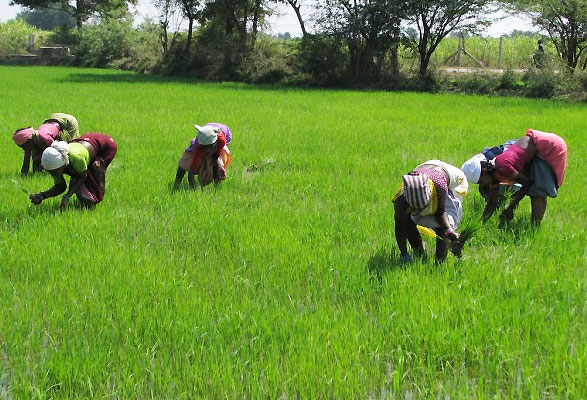
Rice farming
The Accelerator aims to raise at least $100 million in philanthropic, public and private sector funding, and is already supported by funding from the Gates Foundation, Philanthropy Asia Alliance, Quadrature Climate Foundation, and Temasek Life Sciences Laboratory, among others. It is dedicated to expanding the suite of current options for reducing emissions, and improving resilience, focusing on four key areas of research: plant genetics and physiology, soil microbiome, agronomy, and emissions measurement.
Rice is a vital staple food for half the global population, especially in Asia, sub-Saharan Africa, and Latin America, making up to 70 per cent of daily caloric intake for millions. More than 75 per cent of rice produced globally directly serves as food for people, which is significantly higher than wheat at 66 per cent and maize at 12 per cent.
However, rice paddies, the dominant flooded system responsible for more than 90 per cent of global rice production, are a significant source of methane emissions. They account for approximately eight per cent of anthropogenic methane emissions and consume about 40 per cent of the world’s irrigation water. The submerged conditions in these paddies create an oxygen-free environment where specific soil microbes flourish. These microbes consume organic matter and produce methane as a byproduct, most of which is subsequently released into the atmosphere via the rice plants.
For close to four decades, strategies like Alternate Wetting and Drying (AWD), in which fields are intermittently drained, have been promoted as ways to save water and, more recently, reduce methane emissions. However, their effectiveness is heavily dependent on local infrastructure, agronomic conditions, and the farmer’s capacity to implement them. As a result, these strategies have not delivered the necessary reductions at scale to significantly bend the curve of rice methane emissions.
Without new low-emission strategies that are adaptable across diverse contexts and able to balance productivity, water-use efficiency and sustainability with improved farmer resilience, rice methane emissions could increase by an estimated seven per cent by 2030.
“Methane is a powerful but short-lived greenhouse gas. Reducing methane emissions from all sectors is critical, not just for climate action but also for protecting global food security, and agriculture and rice farming is no exception,” said Hayden Montgomery, director of the Global Methane Hub’s Agriculture Programme.
“But the transition to low-emissions agriculture cannot come at the expense of food production and livelihoods. The Rice Methane Innovation Accelerator aims to give farmers new, viable options, suitable for their growing conditions and cultures, to grow rice with lower methane emissions, while saving water and building resilience.”
The Accelerator strategy, expected to be released in early 2026, will develop a roadmap for improving the readiness and real-world performance of various solutions identified under the four key research areas for rice systems.
The outputs of this work will complement existing mitigation solutions including the AWD method, which was developed by the International Rice Research Institute (IRRI) and has demonstrated an emissions reduction potential of 30 to 70 per cent.
“Rice is one of the world’s most important crops, and is deeply embedded in cultural, social, and economic traditions. Farmers urgently need new tools and methods to adapt to new conditions and improve the sustainability of cultivation,” said Dr. Yvonne Pinto, Director General of the International Rice Research Institute.
“The Rice Methane Innovation Accelerator is an exciting new investment which will enhance and support the existing research ecosystem for sustainable rice production.”
The existing research ecosystem includes other specialist rice research centres like AfricaRice and The Alliance of Biodiversity International and CIAT, as well as national agricultural research institutes and universities involved in the Global Research Alliance on Agricultural Greenhouse Gases.
The Accelerator is the Global Methane Hub’s second flagship research initiative under its agriculture programme after its Enteric Fermentation Accelerator, which focuses on reducing livestock emissions.
Amid record heat and worsening climate impacts on people’s lives, 2025 is a turning point for global climate action, as countries renew their climate commitments – known as Nationally Determined Contributions (NDCs) – under the international Paris Agreement. This process reveals whether global ambition to tackle climate change is rising fast enough to meet the crisis head on.
Over the past decade, the Paris Agreement has delivered meaningful progress. Prior to the agreement, the world was hurtling toward 4 degrees Celsius (7.2 degrees Fahrenheit) of warming by the end of the century. Ten years after the agreement’s adoption, the latest NDCs and current policies bring us closer to a 2.3-2.8 degrees C (4.1-5.0 degrees F) trajectory – modestly better than the previously projected 2.6-3.1 degrees C (4.7-5.6 degrees F) path.
During the 2025 UN Climate Change Conference, countries will need to reaffirm their commitments and create climate plans that will bring the world closer to the Paris Agreement’s 1.5 degree C goal. Photo credit: Luis War
Yet even with this shift, we remain far above the 1.5 degrees C (2.7 degrees F) guardrail set by the Paris Agreement that can prevent some of the most serious damage from a warming planet. And while some sectors are showing real momentum – including the renewable energy, transport and land-use action reflected in many countries’ NDCs – overall progress is still dangerously slow.
Every fraction of a degree of warming the planet avoids helps secure a safer, greener future. And the investment required to achieve this is far less than the costs of the alternative path, which would bring increased floods, wildfires, insecure food supplies and destroyed lives.
At the annual UN Climate Change Conference (COP30) in Belém, Brazil, nations must confront the gap between current climate pledges and what is needed to unlock a new economy that’s better for both people and the planet.
Here, we propose five key actions that countries can rally behind for a credible response:
Reaffirm 1.5 degrees C and commission a global roadmap for ambition and implementation.
Accelerate near-term sectoral action to deliver 2030 global goals.
Mobilise long-term strategies for equitable, resilient transitions to net zero.
Strengthen intergovernmental initiatives for greater impact.
Deliver a credible finance package to back ambitious climate goals.
With countries gathered under one roof, a clear political response will be needed that faces up to the shortfall in ambition and seizes the economic, social and other opportunities that assertive action can provide.
1) Reaffirm 1.5 Degrees C and Commission a Global Roadmap for Ambition and Implementation
Acknowledging both the progress underway and the remaining gaps will be essential for sustaining global cooperation for deeper, faster action. As a starting point, COP30 should reaffirm that 1.5 degrees C remains the guiding star for global climate action. By doing so, it can send a clear political signal that the goal continues to be the benchmark for assessing progress toward achieving a healthy, livable and resilient world.
But underscoring those objectives alone will not be enough; COP30 will also need to spur implementation and drive ambition toward 1.5 degrees C in ways that ensure a just and inclusive transition. At COP30, countries could agree to develop a “Global Roadmap for Accelerated Implementation” – a forward-looking gameplan that identifies the pathways, policies and enabling conditions needed to achieve the Paris Agreement goals.
The roadmap can draw on findings from the Global Stocktake and insights from the NDC Synthesis Report to identify specific near-term and transformational opportunities for accelerating emissions reductions across key sectors such as energy, forests, transport and methane, while scaling up adaptation, resilience and just transition efforts – with a particular emphasis on the tremendous economic, social and other benefits that can be seized from taking climate action.
To underpin this process, the COP30 and COP31 presidencies could convene a high-level dialogue, anchored by technical analysis, to examine how different pathways, timelines and investment conditions can shape an equitable, systemwide transformation. The process could culminate next year at COP31 with the publication of a clear, actionable roadmap that identifies opportunities for urgent action, the sectors with the greatest potential for impact and the actors best placed to drive it forward.
2) Accelerate Near-Term Sectoral Action to Deliver 2030 Global Goals
Building on the roadmap for accelerated implementation, COP30 will also need to encourage countries to achieve near-term sectoral delivery by 2030. The task will involve translating collective signals from the Global Stocktake and the UAE Framework for Global Climate Resilience – along with the direction provided by the proposed global ambition and implementation roadmap mentioned above – into concrete economic planning, national policies and investments that can accelerate on-the-ground progress and deliver on the benefits of taking action.
At COP30, countries could be called upon to voluntarily develop near-term sectoral strategies and progress updates that translate and build upon their existing NDCs, turning national climate goals into concrete pathways for implementation. These strategies and updates could be submitted on a voluntary basis by countries to the United Nations Framework Convention on Climate Change (UNFCCC) to inform the second Global Stocktake, which begins at the end of 2026 and concludes in 2028.
For the greatest impact, these strategies should be focused on the priority areas highlighted in the Global Stocktake for 2030 (e.g., tripling renewable energy capacity, doubling energy efficiency, transitioning away from fossil fuels, driving down transport emissions, and halting and reversing deforestation, among others), as well as the thematic areas of the UAE Framework for Global Climate Resilience (e.g., water, health, ecosystems and biodiversity, and infrastructure).
While these global priorities are shared, their emphasis will naturally vary by country. Sectoral strategies can be used to set each country’s own specific plans, policies, investment priorities, support needs and enabling reforms needed to strengthen near-term actions. Most importantly, these strategies are a key opportunity to describe the actions that can seize the substantial benefits for the economy and people’s lives.
3) Mobilise Long-Term Strategies for Equitable, Resilient Transitions to Net Zero
Long-term climate strategies – or long-term low greenhouse gas emission development strategies (LT-LEDS or LTS) – are a critical bridge between NDCs and the collective objective to limit global warming to 1.5 degrees C. Countries have already established 2030 targets and this round of NDCs sets emission-reduction targets through 2035, a key waypoint on the path to mid-century and the net zero goals set by many countries, most notably all of the Group of 20 major economies (G20).
As countries move toward net zero, LT-LEDS allow them to outline key sectoral transformations and show how these steps can drive economic growth in the decades ahead, informing and spurring the policy decisions that governments take now.
Now more than ever, these strategies are essential for helping countries focus on the sectors that have a domino effect across the wider economy such as energy, food and agriculture, and transport. So far, nearly 80 countries have developed and submitted long-term strategies – but fewer than 10 have updated their initial plans, and more than 100 have yet to produce one.
COP30 can be a turning point, calling on all countries to submit or update LT-LEDS by COP31, treating the strategies not just as paperwork but as catalysts for real sectoral transformation, fully integrated into economic policies, development strategies and finance plans. G20 countries, in particular, should lead by example by developing implementation pathways that align their near-term goals (e.g., 2030 and 2035) with just transition toward their national net-zero and resilience goals. These pathways should also be integrated into national development objectives and processes.
4) Strengthen Intergovernmental Initiatives for Greater Impact
Throughout the year, the COP30 presidency has brought renewed attention and momentum to the Action Agenda of initiatives outside the UNFCCC negotiations. Most important, it has sought to connect climate action initiatives and coalitions – including those involving national governments – to the formal COP process by aligning them with the themes of the first Global Stocktake on energy, forests, and more.
At COP30, there’s an important opportunity to place greater attention on the role of intergovernmental cooperative initiatives and coalitions and integrate them more fully into the Action Agenda, which has previously focused on initiatives by non-state actors. The number of these initiatives and coalitions has grown rapidly in recent years, and governments should now explore their impact and lessons.
COP30 can also play an important role in fostering transparency for these intergovernmental initiatives and coalitions, encouraging and driving regular reporting, including through the UNFCCC Global Climate Action Portal. During future COPs, dedicated events can allow these initiatives to share their successes, experiences, lessons and best practices.
5) Deliver a Credible Finance Package to Back Ambitious Climate Goals
Delivering a strong package of finance outcomes at COP30 will signal that the support needed to turn ambition into action is within reach. This includes progress on the Baku-to-Belém Roadmap – a collective pathway for scaling climate finance for developing countries from all sources through 2035 – which can spur action on key issues such as the cost of capital. Such progress would send a powerful signal that international public and private finance will flow to countries that step-up ambition and translate this into strong domestic finance and public policy signals.
A key signal at COP30 would be the creation and further strengthening of country platforms as a way to align domestic and international finance, facilitate an enabling policy environment for investment across key sectors, develop investible pipelines, engage a broad spectrum of stakeholders and optimize the use of concessional finance to de-risk projects and unlock capital flows.
This way, countries can integrate proposed climate plans into broader economic frameworks and promote an enabling environment for all finance flows to support progress towards climate commitments while strengthening countries’ development pathways.
Building an Actionable Future
The gaps are clear, but so is the opportunity for getting closer to the goals of the Paris Agreement. COP30 gathers the world’s leaders armed with the tools to close the emissions and ambition gaps. What’s needed now is bold political action and a strong response to the NDCs to restore confidence in multilateralism, set the world more firmly on course to achieve climate goals and ensure shared prosperity from taking that action. The legacy of the Belém COP will rest in large measure on doing so.
By David Waskow, Jamal Srouji, Kiyomi de Zoysa, Cynthia Elliott, Nathan Cogswell, Deirdre Cogan and Natalia Alayza (World Resources Institute)
The Interfaith Rainforest Initiative (IRI) in Brazil, Colombia and Peru have jointly issued a call for an ethical, fair, and action-oriented COP30, urging governments to use the conference in Belem as a moment to adopt, fulfill and expand upon commitments to end deforestation and protect the Amazon
We address you, heads of state, presidents, world leaders… not with empty requests, but with a demand born of solidarity and hope… make a true, courageous commitment that does not give in to this climate crisis that is taking our breath away and threatening our existence.
We can no longer accept that the Amazon is treated as anything but sacred.
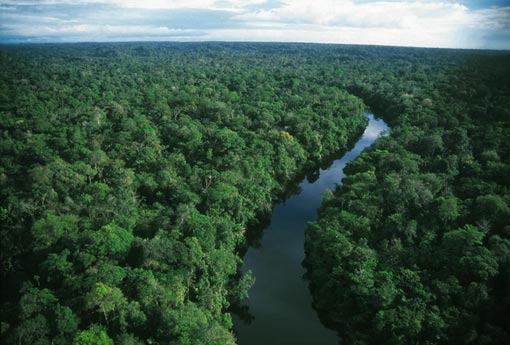
The Amazon rainforest
COP30 must be the birthplace of a new global ethical pact, where the faith that moves us, the science that guides us, and the politics that organise us walk hand in hand toward the only goal that matters: preserving life.
Now is the moment for genuine environmental transformation and bold leadership for our forests, our climate and our people.
We urge COP30 to make commitments that restore our hope… listen to and respect the sacred limits of nature, halting projects that bring irreversible social and environmental pain.
We support with hope the creation of the Tropical Forests Forever Facility (TFFF)… (and) urge political leaders to ensure that this fund will be a channel for delivering resources quickly and transparently.
Faith, when united with science and filled with solidarity, is a powerful force capable of transforming the world.
We are ready to walk hand in hand with governments, communities, authorities, and civil society organisations in Brazil, Colombia, and Peru. Together, we will sow and reap public policies as solid as the trees of the rainforest itself.
Special adviser to President Bola Tinubu on Energy, Olu Verheijen, has said that the federal government is ready to sell the refineries of the Nigerian National Petroleum Company (NNPC) Limited.
Verheijen spoke in an interview with Bloomberg TV on the sidelines of the ADIPEC energy conference in Abu Dhabi, United Arab Emirates (UAE).
The presidential aide said the consideration was part of an effort to boost competition in the refining industry.
Olu Arowolo Verheijen, Special Adviser to the President on Energy
“It’s one of the options that you have to consider if you find the right technical partner with the right capital,” she said.
Verheijen noted that the plants had largely been sustained by subsidies, saying “but now that we’ve removed the subsidies, we’ve removed the distortions in that market”.
In October, NNPC said it had commenced a comprehensive technical and commercial review of the moribund refineries in Warri, Port Harcourt, and Kaduna.
On July 11, Bayo Ojulari, the group chief executive officer (GCEO) of the NNPC, said it is becoming a “bit more” complicated to revamp state-owned refineries, hinting at completing an ongoing reassessment by year-end.
Speaking further, Verheijen said the government also sees a long-anticipated initial public offering for NNPC as “an end destination”
“What’s really important to the shareholders is that we have an NNPC that’s a lot more transparent, a lot more efficient and delivers,” she said.
On Tuesday, Ojulari said NNPC has been enhancing transparency regarding its operations in preparation for the much-anticipated initial public offering.
The Federal Government says it has signed a pivotal agreement with Germany to strengthen the technical foundations of its energy transition.
Mr. Bolaji Tunji, the Special Adviser, Strategic Communication and Media Relations to the Minister of Power, made this known in a statement in Abuja on Friday, November 7, 2025.
Tunji said that the landmark achievement was contained in a new Joint Declaration of Intent on Bilateral Energy Transition Dialogue and Cooperation, endorsed at the Working Group on Power, Energy and Climate held in Germany.
Minister of Power, Mr Adebayo Adelabu
He said that the working group also underscored the vital role of strategic partnerships between Nigerian and German companie, highlighting importance of the private sector for the energy relations between both countries.
Tunji said that the two countries also noted the continued progress on the “Presidential Power Initiative,” while looking forward to furthering progress in the realisation of the Initiative
The Minister of Power, Mr. Adebayo Adelabu, who represented Nigeria at the event, said that the Joint Declaration was a game-changer for the country’s national energy architecture.
“It moves our partnership with Germany beyond dialogue into the realm of concrete technical assistance, ensuring Nigeria receives the specialised expertise needed to build a robust, sustainable, and secure energy future for our people.
“The enhanced technical cooperation complements the long-standing Nigerian-German Energy Partnership and was reached during the meeting where both countries reiterated their commitment to renewable energy and socio-economic development.
“It also intensifies our close cooperation to advance energy security and renewable energy and energy efficiency for socio-economic development in line with technology innovation and long-term decarbonisation targets,” he said.
Adelabu said that the partnership was already delivering tangible benefits, with Germany’s Federal Ministry for Economic Cooperation and Development (BMZ) providing an additional nine million Euros in 2024 to the “Nigeria Energy Support Programme (NESP).
”This is in addition to a further 12 million Euros for the newly inaugurated “Energy Transition Challenge Fund (ETCF).”
The minister welcomed the progress, adding that the financial mechanisms, including the “Green Line of Credit” for Nigeria’s Small Medium Enterprises (SMEs) and the mobilisation of private investment through GET.invest, are critical enablers.
“When combined with the technical expertise now formalised in our Joint Declaration, we are building a comprehensive ecosystem for energy success,” he said.
Germany reiterated its desire for NGEP meetings to be held annually at the level of under-secretaries in the future, beginning from 2026.
UN Secretary-General, António Guterres, on Thursday, November 6, 2025, called for urgent action to drive down global temperatures and keep the 1.5°C goal within reach.
Guterres made the call at the COP30 climate summit in Belém, Brazil, where negotiators, scientists, and civil society are gathering to discuss priority actions to tackle climate change.
The gathering focuses on the efforts needed to limit the global temperature increase to 1.5°C, the presentation of new national action plans (NDCs), and the progress on the finance pledges made at COP29.
UN Secretary-General António Guterres
“Every fraction of a degree means more hunger, displacement, and loss – especially for those least responsible.
“It could push ecosystems past irreversible tipping points, expose billions to unlivable conditions, and amplify threats to peace and security,” Guterres told leaders in Belém.
Failure to contain global heating amounts to “moral failure and deadly negligence,” he added.
Each year that is warmer, he said, “will hammer economies, deepen inequalities and impact developing countries hardest – even though they did least to cause it.”
“After decades of denial and delay, science now tells us that a temporary overshoot beyond the 1.5°C limit – starting at the latest in the early 2030s – is inevitable,” Guterres said.
“We need a fundamental paradigm shift to limit this overshoot’s magnitude and duration and quickly drive it down. Even a temporary overshoot will unleash far greater destruction and costs for every nation.”
The secretary-general told COP30 that the 1.5°C limit remains “a red line for humanity”, calling for rapid emissions cuts, an accelerated phase-out of fossil fuels, and stronger protection of forests and oceans.
Guterres highlighted the growing momentum of the clean energy revolution, noting that investments in renewables now exceed those in fossil fuels by $800 billion.
“Clean energy is winning in price, performance, and potential,” he said, “but what is still missing is political courage.”
Echoing his remarks, World Meteorological Organisation (WMO) chief, Celeste Saulo, said that greenhouse gas emissions are now at their highest level in 800,000 years.
“From January to August this year, the Earth’s average temperature was about 1.42°C above pre-industrial levels, with oceans also reaching record highs, which is inflicting lasting damage on marine ecosystems and economies,” she said.
The planet’s relentless warming trend has shown no sign of slowing, with 2025 projected to be either the second or third warmest year on record, according to the State of the Global Climate Update 2025 issued by the WMO on Thursday.
It warns that the 11-year stretch from 2015 to 2025 will be the hottest period since records began 176 years ago.
“This unprecedented streak of high temperatures, combined with last year’s record increase in greenhouse gas levels, makes it clear that it will be virtually impossible to limit global warming to 1.5°C in the next few years without temporarily overshooting this target,” WMO Secretary-General Celeste Saulo, said.
She stressed that science still shows it is possible to bring temperatures back below that threshold by the end of the century.
The report paints a stark picture of compounding climate impacts. Arctic sea ice reached its lowest winter maximum on record, while Antarctic sea ice remained well below average.
Global sea level rise, nearly twice as fast as in the 1990s, continued to accelerate due to ocean warming and ice melt.
Extreme weather events – from devastating floods and storms to prolonged heatwaves and wildfires – have disrupted food systems, displaced communities and hindered economic development across multiple regions.
COP30, which opened on Thursday, Nov. 6, and will run through Nov. 21.
Vice-President Kashim Shettima has tasked global leaders on taking “reasonable action” and moving from pledges to performance in tackling climate change.
Shettima made the call at the opening of the Heads of State Summit at the 30th UN Climate Change Conference (COP30), on Thursday, November 6, 2025, in Belém, Brazil.
He also implored world leaders to be more proactive in curtailing climate change attendant natural disasters that have claimed innocent lives and rendered many homeless across the globe.
Vice-President Kashim Shettima with President Lula Inacio Da Silva of Brazil at COP30
“Let COP30 be remembered as the moment when the world moved from pledges to performance, from ambition to action, and from dialogue to delivery,” he said.
The Vice-President, who is representing President Bola Tinubu at the global event, reaffirmed Nigeria’s global climate leadership with a commitment to achieving an emission reduction target of 32 per cent by 2035.
He explained that the new initiatives form the core of Nigeria’s climate finance architecture designed to attract billions of dollars in clean energy and adaptation investments.
Shettima said Nigeria’s renewed climate agenda represents “not just an aspiration, but a solemn national commitment to preserve the planet for future generations.
“The earth speaks in the language of loss and warning. It tells us that our survival is tied to its well-being.
“These are the cries that have compelled us to gather, from one city to another, in pursuit of one shared purpose – to save the only home we have.”
He stressed that climate ambition could be sustained by goodwill alone, saying ” No nation can finance climate ambition with goodwill alone.
“We need a reliable and equitable architecture that recognises the realities of developing nations and empowers them to deliver on global commitments.”
“I hereby say without absolute certainty that we are not the problem; we are an integral part of the solution.
“This is why, at COP30, we hope to demonstrate that Africa can lead in carbon capture through forests, in renewable energy expansion, in digital monitoring of emissions, and in regional cooperation that translates ambition into prosperity,” he said.
Shettima maintained that Nigeria is ready “to work with all nations to build a fairer, greener, and more resilient world, one where our children inherit not the ruins of our indifference, but the fruits of our collective resolve.”
He stated that the National Carbon Market Framework would enable Nigeria to generate, trade, and retire carbon credits in alignment with Article 6 of the Paris Agreement, ensuring transparency and integrity in carbon transactions.
The proceeds, he noted, will flow into the newly established Climate Change Fund to support communities most affected by floods, droughts, and desertification.
Shettima further revealed that the Nigerian government has launched a five-year Carbon Market Roadmap that will lay the groundwork for an Emissions Trading System and a Carbon Tax Regime.
The vice-president added that it will be reinforced by fiscal incentives to promote clean industrial innovation.
Shettima said the decade of gas strategy remains pivotal in powering the transition, balancing natural gas utilisation with expanded solar and off-grid electrification to drive rural energy access and sustainable development.
The UN Secretary General, Antonio Gutierres, said it was unfortunate that countries of the world have failed to remain below 1.5 degrees.
He charged world leaders to embrace a paradigm shift to limit the overshoot magnitude and quickly drive it down in order to salvage what he described as a highly risky situation.
“I cannot agree more, and the real truth is that we have failed to remain below 1.5 degrees, and science now tells us that the temporary overshoot between the 1.5 limit, starting at the latest in the early 2030s, is inevitable.
“We therefore need a paradigm shift to limit these overshoots magnitude and duration and quickly drive it down.
“Given the temporary average overshoots and their thematic consequences, it could push ecosystems and expose billions of people to unliveable conditions and amplify threats to peace and security.
“Every fraction of a degree means more hunger, displacement and loss especially for those least responsible. This is more of failure and deadly negligence.
“The world metrological service has indicated that emissions will begin to increase this year, and the 1.5 degrees is a red line for humanity.”
He urged world leaders to act with speed and scale in order to make the overshoot as small and as safe as possible thus bringing temperatures to back to below 1.5 degrees Celsius before the end of the century.
Brazil’s President, Lula Inacio Da Silva, said it will take a collective effort for the world to fight climate change, emphasizing that fighting climate change must be a priority for every government and individual on earth.
“We will need to overcome the mismatch of lack of connection between diplomatic dialogue and the actual world.
“It will take a collective effort, listening to indigenous communities and those bearing the brunt of climate change in order to take a global approach to the challenge,” he said.
President Da Silva added that thethe slogan of “Collective Efforts” was adopted for COP 30 to encourage climate action worldwide.
“From all sectors of society, in particular civic societies and grassroots organisations.”
“Climate change is the result of the same dynamics that, during centuries, has broken our societies between rich and poor.
“Climate justice is aligned with fighting hunger and poverty, the struggle against racism and gender inequality,” he added.
The Prince of Wales, Williams, who represented his father, King Charles, at the plenary, said it was time for his generation to safeguard the natural world for generations to come.
“Our children and grandchildren will stand on the shoulders of our collective action.
“Let us use these inspiring surroundings here in the heart of the Amazon to rise to meet this moment, not with hesitation, but with courage; not with division, but with collaboration; not with delay, but with decisive commitment,” he said.