Governments and everyday people have been charged to acknowledge that nature has rights just as humans do, and that ecosystems deserve to exist, thrive, and bounce back.
The submission is contained in a declaration released by the International Rights of Nature Tribunal at a side event at COP30 to mark the close of its 6th international tribunal. The declaration is titled: “A New Pledge for Mother Nature”.
The Tribunal noted that the loss of species is occurring at an alarming rate and that it is time to stop exploiting nature and start protecting it.
Nnimmo Bassey, co-president and judge of the International Rights of Nature Tribunal
The Tribunal urged nations to write laws that protect rivers, forests, oceans, and to end ecocide, recognise and support Indigenous communities, who have always been the best caretakers of the land.
The pledge, among other things, noted that “We are all part of the Earth, an indivisible and living community of interrelated and interdependent beings with a common destiny but with different existential conditions and rights. The multiple crises we are experiencing are rooted in the economic, political, legal and social systems established by the industrial and growth-oriented cultures that dominate the world today, including capitalism, along with patriarchy, sexism, racism, and anthropocentrism.”
It was noted that the choice by the Brazilian government to host COP30 serves as a symbol of the importance of the Amazon. They denounced the current and future impacts of the expansion of the extractivist frontier, deforestation, fossil fuels and large-scale mining.
It was urged that the Amazon, with its ecosystems, animal, plant species, and rich biodiversity, natural medicines and its vital and reproductive cycles, should be considered as a subject of rights together with the Indigenous Peoples, and other communities that inhabit it.
The co-president and judge of the tribunal, Nnimmo Bassey, while delivering the verdict, noted that the defence of the rights of Nature is the right way to carry out real climate action and that there is no climate justice without the rights of Nature.
The tribunal stressed the need to phase out fossil fuels and quickly move to renewable energy as a way that protects both communities and ecosystems from false solutions that merely benefit financial speculators and compound climate injustices. The Tribunal also urged the United Nations to adopt the pledge as a blueprint for international environmental law.
Judges at the Tribunal included Ana Alfinito of Brazil, Nnimmo Bassey ( Nigeria), Enrique Viale (Argentina), Shannon Biggs (USA), Casey Camp Horinek (Ponca Nation, USA), Tom Goldtooth (USA), Princes Esmeralda (Belgium), Cormac Cullinan (South Africa), Patricia Gualings (Ecuador), Francesco Martone (Italy) Tzeporah Berman (USA), Ashish Katharine (India), Osprey Orielle Lake (USA), Pooven Moodley (South Africa) and Felicio Pontes (Brazil).
The International Energy Agency (IEA) on Wednesday, November 12, 2025, called on governments to diversify supplies and increase cooperation as global need for energy continues to grow.
The Paris-based agency warned of “pressing energy security threats and growing longer-term risks across an unprecedented range of fuels and technologies” as it released its flagship World Energy Outlook.
The outlook highlights that, while renewable energies were deployed at record rates for a 23rd consecutive year in 2024, traditional sources of energy like oil, natural gas and coal also hit all-time highs.
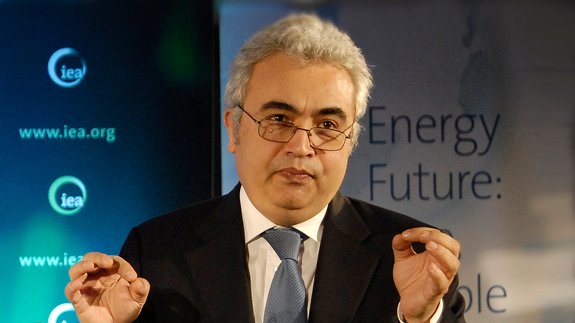
Fatih Birol, Executive Director of the International Energy Agency (IEA)
“When we look at the history of the energy world in recent decades, there is no other time when energy security tensions have applied to so many fuels and technologies at once,” said IEA head, Fatih Birol.
“With energy security front and centre for many governments, their responses need to consider the synergies and trade-offs that can arise with other policy goals on affordability, access, competitiveness and climate change.”
The report presents three scenarios “none of which is a forecast” the agency stresses based on the latest data policies, technologies and markets and aided by modelling.
In all three scenarios the Current Policies Scenario (CPS), the Stated Policies Scenario (STEPS) and the Net Zero Emissions by 2050 (NZE) Scenario.
The world is projected to surpass the threshold of 1.5 degrees Celsius above pre-industrial levels.
The NZE scenario however, would see temperatures dropped back below the 1.5-degree threshold in the long term, the agency said.
It insisted that, while the energy sector must be set up to deal with the security risks brought by higher temperatures, “there is still scope to avoid the worst climate outcomes.”
Birol said that the consumption of electricity in no longer growing merely in emerging and developing economies, marking a change in trend.
“Breakneck demand growth from data centres and AI is helping drive up electricity use in advanced economies, too,” Birol said.
“Last year, we said the world was moving quickly into the Age of Electricity and it’s clear today that it has already arrived.
“Global investment in data centres is expected to reach $580 billion in 2025.
“Those who say that ‘data is the new oil’ will note that this surpasses the $540 billion being spent on global oil supply a striking example of the changing nature of modern economies,” the IEA chief noted.
In response to the IEA’s World Energy Outlook, observers have submitted that the governmental OECD and global think tank has shown how it largely does not have its finger on the pulse of where most countries are at regarding support for net zero emissions.
“Even if temperature overshoot is very likely in the next few decades, getting below 1.5C° is still possible with political will. This is crucial, as across the world people and ecosystems are already experiencing more frequent weather disasters, sea level rise and heatwaves. While the likely prioritisation by the IEA of its new Energy ‘Access’ scenario shockingly ditches the UN SDG agreement to overcome energy poverty by 2030 and moves that goal to 2040.”
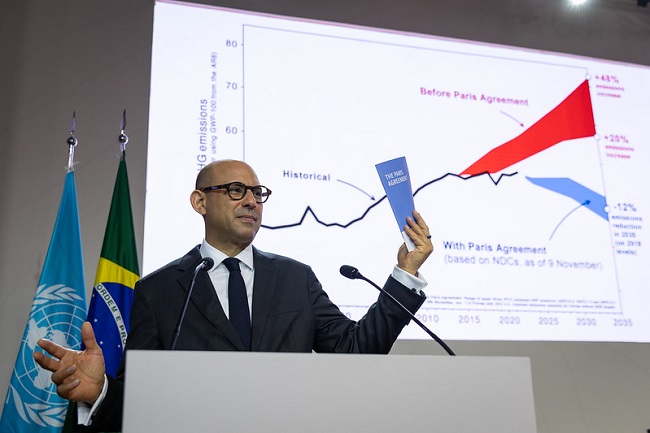
Dr Stephan Singer, Global Energy Senior Advisor, CAN International, said:“In a nutshell, the IEA is backsliding. As a global think tank, the IEA has largely failed to represent where most countries in the OECD and the developing world are, as they’re supporting net zero emissions with 98% CO2 emissions reductions by mid-century. The IEA has also failed to put the global 1.5 C objective as the fundamental centre piece of its WEO and across all their reasoning and missed out on calling the other scenarios what they are – a strong violation of the Paris Agreement. Even if temperature overshoot is very likely in the next few decades, getting below 1.5C° is still possible with political will.”
Svitlana Romanko, Founder and Executive Director of Razom We Stand, said:“While this vital new report highlights the urgency of quickly transitioning to renewables to achieve energy security and a chance to stop climate disruption, it also gives hope. We can clearly see that clean energy is now cheaper than ever, and its rapid buildout is happening at a faster pace than ever. In Ukraine, this also gives us hope, because the faster we can end global consumption of fossil fuels, especially those from Russia, the quicker we can dry up the Kremlin’s funded war, and have a chance for a just peace in Ukraine.”
Mohamed Adow, Founder and Director of Power Shift Africa, said: “The march of clean energy is now unstoppable and it’s offering a lifeline to people in Africa and around the world living with the impacts of the climate crisis. Not only is it cheaper and cleaner than fossil fuel, renewable energy is also far more agile, adaptable and quicker to get up and running. For Africa this is a huge opportunity. We have an abundance of wind and solar potential that can power our development, but this report also shows that keeping global heating rise to 1.5C is still possible with the right investments and a phase out of fossil fuels.
“We need countries at the COP30 climate summit to heed the message of this report and realise they have nothing to fear from committing to a phaseout of fossil fuels, something that Brazil’s President Lula has mooted could be on the table. In fact, when it comes to the impacts of the climate crisis that are biting hard around the world, countries would be mad not to embrace the benefits of the clean energy revolution.”
Kaisa Kosonen, Senior Policy Advisor, Greenpeace Nordic, said: “This report clearly shows we still have a choice: a path still exists to avoid the worst of climate disasters by defending the Paris Agreement 1.5°C warming limit and it comes with many benefits. That’s the path governments in Belém must take, by agreeing on a roadmap for a fair fossil fuel phase out. The great news here is that solar, wind and energy smart solutions are ready to deliver faster CO2 cuts than what countries currently assume in their pledged climate targets. So the key is to push fossil fuels out of the way, and eliminate barriers related to grids, storage and climate finance gaps.
“Regardless of which future scenario you looked at, the winners are clear. The future will be increasingly powered by cheap, abundant renewable energy, coupled with electrification. But we need to speed up and scale up and governments at COP30 must now agree on a global response plan to urgently bridge the 1.5°C ambition gap.”
David Tong, Global Industry Campaign Manager at Oil Change International, said: “This year’s World Energy Outlook makes the choice clear: uphold 1.5ºC with no new fossil fuels and a just energy transition, accept a business-as-usual path to 2.5ºC, or backslide into a nightmare future. Under U.S. pressure, the IEA reintroduced a regressive obsolete scenario. Despite the industry spin, the facts of the WEO show Donald Trump’s path is a dystopian energy fantasy with high energy costs and climate disaster. The IEA affirms that breaking free from fossil fuels is the best, most affordable way to secure energy for all. At COP30, governments must commit to a fast, fair, and funded phase-out of fossil fuels.”
Maria Pastukhova, Programme Leader Energy Transition at E3G, said: “This year’s World Energy Outlook makes the choices for the global energy system and the global economy unambiguous. The Current Policies Scenario points to continued fossil fuel dependence, persistent market volatility, and structurally high energy prices… If countries want to grow their economies and protect their citizens from rollercoaster energy prices, they need to focus relentlessly on energy efficiency and the decarbonisation of energy demand. These are not just climate measures: they are economic imperatives.”
Dr. Rachel Cleetus, Senior Policy Director for Climate and Energy, Union of Concerned Scientists, said:“The IEA’s latest report underscores the daunting challenge ahead for rapidly decarbonizing the world’s economy but also highlights the tremendous opportunity to do so in a way that prioritizes renewable energy, energy efficiency, climate resilience and addressing energy poverty. With the world on the brink of overshooting 1.5C, it’s crucial to double down on clean energy policies and investments that align with climate and sustainable development goals.
“A fast fair phaseout of fossil fuels – coal, oil and gas – is also essential, yet nations continue to recklessly expand these polluting sources of energy. Contrary to the IEA’s framing, cooperation among countries will be key to accelerating the manufacture and deployment of clean energy technologies globally. At COP30, we need world leaders to live up to the commitments they made in Dubai to advance a clean energy transition within this critical decade.”
Mariana Paoli, Global Advocacy Lead, Christian Aid, said:“The IEA’s report confirms what many climate-vulnerable communities have known for years: the fossil fuel era is ending, but governments are still dragging their feet when it comes to building the clean energy systems that need to replace it. Oil and coal are peaking, renewables are surging, yet public money continues to flow into new fossil fuel projects that the IEA itself says we simply don’t need.
“This report underlines why the issue of funding the energy transition is so important. Developing countries want to embrace the benefits of clean energy and not follow the destructive fossil fuel development of the global north, but they need climate finance to allow them to do that.”
Janet Milongo, Senior Manager Energy Transition, CAN International, said:“The IEA World Energy Outlook illustrates that a full, fast, and funded phase-out of all fossil fuels is critical and urgent. The world needs renewable energy to deliver universal access and eradication of energy poverty for all people, while attaining the 1.5°C survival limit. Nuclear energy and other false solutions only delay real progress. Governments must lead the way to realize 100% renewables through enabling policies and step up with public finance to power a truly just transition that protects people, not polluters.”
Sriram Madhusoodanan, US Climate Action Network, Director of Policy & Advocacy, said: “The latest edition of the IEA’s World Energy Outlook is one more sad example of how the regressive mindset and bullying actions of the US government are having deadly consequences even though they are absent at COP30. Despite the signs of caving to US pressure – the scenarios outlined in the report must be a wake up call to delegates in Belem – most especially for Global North countries – if we are to stand any chance of a liveable planet. Delegates at COP30 have an opportunity to choose which of these scenarios becomes a lived reality for billions around the world. We hope they rise to the moment.”
Hari Krishna Nibanupudi, Global Climate Change Adviser, HelpAge International, said: “The IEA’s outlook confirms a stark truth: pathways that keep fossil fuels flowing lock in deadly heat, energy poverty and widening inequality. Only a rapid, fair transition to renewables and efficiency can protect lives – especially older people – while delivering affordable, clean energy and honouring the 1.5°C promise to future generations in all countries.”
The African Coalition of Communities Responsive to Climate Change (ACCRCC) appears to have cemented its position as a leading advocate for grassroots climate justice at the 30th Conference of the Parties (COP30) to the United Nations Framework Convention on Climate Change (UNFCCC).
At COP30, ACCRCC pushed for the recognition of pastoralist governance systems, particularly the “mom” dialogue mechanism used across the Kenya-Uganda border and other parts of eastern Africa. This traditional governance model – representing more than 50 million pastoralists – was highlighted as a vital climate adaptation and conflict management tool that aligns with the principles of global climate diplomacy.
Participants at the Local Communities and Pastoralists side event at COP30
“Our communities are not just victims of climate change; they are innovators, custodians of knowledge, and rightful actors in shaping global climate policy,” said Henry Neondo, Policy Advocacy and Influencing Advisor at ACCRCC, during the Mandated Dialogues on Community Inclusion.
Pastoralists across Africa face climate-related violence, and inadequate climate policies that do not solve their challenges from Uganda to Djibouti
Through active participation in the Local Communities and Indigenous Peoples Platform (LCIPP) and collaboration with partners such as the European Union, ACCRCC helped shape discussions on Decision 14/CP.29, which reinforces the inclusion of local communities across all UNFCCC workstreams.
Geert Freema, representative of the European Union, to discuss local community engagement emphasised the importance of respecting and promoting the rights of indigenous peoples and local communities in any working arrangements.
Freema stressed the need for transparent, inclusive, and constructive processes in enhancing local community participation but noted concerns about conflating local communities and indigenous peoples urging for recognition of the rights of both groups.
Participants pushed for the recognition of African pastoralist governance (“mom”) in adaptation dialogues, inclusion of grassroots leaders in the Facilitative Working Group (FWG) discussions and advocacy for direct climate financing to local governance structures. In addition, they urged for the elevation of local communities as rights and knowledge holders within global climate policy.
“Pastoralists do not need to be made resilient. They already practice resilience daily, relationally and collectively, let the UNFCC send a new kind of message, one that travels both ways, from crowds to the COP and from the COP to the crowds, from observation to co design, from policy for pastoralist to policy with pastoralists,” said Simon Longoli, a leader among the pastoral peoples of Uganda, linked to the Karamoja Herders.
COP21 held in Paris, France in 2015 established the local communities and indigenous peoples’ platform (LCI, PP) for the exchange of experiences and sharing of best practices on mitigation and adaptation in a holistic and integrated manner.
This recognition has been reinforced in several subsequent COPs and CMA decisions. During Climate Week in Ethiopia, local community representatives shared powerful accounts where communities, particularly pastoralists, emphasised their reciprocity and shared stewardship, as long-standing practices sustaining livelihoods and ecosystems for generations, noting that local organisations and leaders are not merely project implementers, but drivers of transformation that strengthens food systems social inclusion and resilience through their knowledge mobility.
ACCRCC will continue building continental networks of local climate governance platforms, strengthening engagement with national adaptation planning, and advocating for direct access to climate finance that empowers communities on the frontline.
“Climate justice begins with inclusion. Without grassroots voices, global climate solutions remain incomplete,” said Neondo.
Located in Ovia South-West Local Government Area of Edo State, the Okomu National Park is one of Nigeria’s largest surviving rainforests.
Birds call from the towering mahogany trees, as a thin mist drifts across the dense undergrowth.
Kowei Kingsley, a 31-year-old ranger, tightens his bootlaces and checks his GPS tracker as his team sets out for their routine morning patrol – a daily pushback against illegal loggers, poachers, and farmers from nearby communities, who, for decades, have endangered the forest.
Entrance to Okomu National Park
But Kingsley was not always on the conservation side; his transformation followed a non-profit initiative that integrated community participation and alternative livelihood support into conservation, turning former exploiters into protectors.
Just a few years ago, Kingsley was one of those who crept into the park; with a chainsaw slung over his shoulder, he felled precious trees, hunted ‘bushmeat’, and returned home with enough to feed his family.
“I did not realise the harm; we thought the forest was endless; but when the animals began to disappear and the tall trees were depleted, I knew something was wrong.
“Now, I tell others to stop cutting trees; this is because these trees help us in several ways, such as the air we breathe; they help in erosion and wind control, and also serve as shelter to humans and the animals,” he said.
Kingsley is one of the many residents of the communities neighbouring Okomu National Park, who, previously, viewed the park as a government-imposed barrier on their livelihoods.
Okomu National Park spans over 202 square kilometres of tropical rainforest, a remnant of Nigeria’s once-vast rainforest belt.
It is home to forest elephants, white-throated monkeys, buffaloes, bush pigs, duikers, and more than 150 bird species, many of them endangered.
What was once a haven for biodiversity became a battleground between survival and sustainability.
Israel Nosakhare, another resident-turned-forest ranger and an indigene of the Udo community, recounted how they could see monkeys and even buffalo crossing the road, to their admiration.
“We were always excited to watch them; but after some years, those animals disappeared.
“Hunting, logging, and small-scale farming were the pillars of livelihood in the forest communities,” Nosakhare said.
However, excessive exploitation by hunters, loggers, and farmers wiped out much of the park’s wildlife population over time.
“It was not good at all; the forest became quiet, and that made me realise something had to change.
“That is what motivated me to join the rangers: to help protect what is left and bring back the animals we once had,” he said.
Mr. Lawrence Osaze, Conservator of Park at Okomu National Park, recalled that when he was transferred to the park in 2022, he met “a place in total disarray.”
However, 2022 marked a turning point; a new community-led conservation model, introduced through a partnership between the Africa Nature Investors (ANI) Foundation and the National Park Service (NPS), began to transform the park.
The model restored order and rebuilt trust with surrounding communities, and redefined conservation from enforcement to collaboration.
It turned the very people who once threatened the forest into its strongest defenders.
Today, 38 forest rangers employed by ANI from the communities, and who are mostly young men like Kingsley and Nosakhare, patrol the park daily.
Using GPS-enabled Spatial Monitoring and Reporting Tools (SMART), they track wildlife movements, monitor illegal incursions, and collect real-time data.
‘A major turnaround’
According to the Project Manager for Okomu at the Africa Nature Investors (ANI) Foundation, Peter Abanyam, the progress has been remarkable.
“Before, we used to hear chainsaws almost every week; now, two or three months can pass without hearing a single one.
“Patrol coverage has reached more than 80 per cent of the park; it is a major turnaround.
“Camera traps deployed by the foundation have recorded more than 32 forest elephants, including calves, clear evidence that the population is not only stable but breeding.
“The forest is regenerating; areas that were once logged are now lush again,” Abanyam said.
Beyond enforcement, the conservation model introduced by the ANI and NPS partnership also recognises the close link between conservation and community livelihoods.
To reduce local dependence on illegal forest activities, six Savings and Loan Groups (SLGs) were established across surrounding settlements, including Udo, Iguewan, Okomu AT&P, and Ugolo.
Each group comprises about 20 members, mostly women and young people, who pool their savings, access small loans, and receive training in entrepreneurship and sustainable farming practices.
Rita Jerome, a 35-year-old teacher-turned-entrepreneur from the Okomu AT&P community, smiled as she spoke about how the initiative transformed her life.
“Before, I had business ideas but no money; through our group, I have taken loans of N300,000 and N700,000.
“I started poultry farming, and now I supply eggs to nearby villages,” she said.
She added that the opportunity had helped reduce her reliance on the forest for income.
Similarly, a cocoa farmer from the Udo community, Sikiru Azeez, recalled how he once depended on middlemen for loans to buy farm inputs, often on exploitative terms.
“Now we have financial independence; it has reduced pressure on the park because people have alternatives,” he said.
So far, records show that more than 120 residents have benefited from the SLG model, creating a ripple effect of economic empowerment and environmental consciousness in communities surrounding the park.
‘Lungs of Edo’
The Edo State Forestry Commission has also endorsed the ANI and NPS initiative.
The commission’s chairman, Valentine Asue, described Okomu as the “lungs of Edo State” and a vital component of Nigeria’s climate resilience strategy.
“Okomu is the only forest in Edo that still has large trees standing among 49 reserves.”
He explained that the state government’s support for ANI’s work aligns with its forest regeneration policy, which mandated the planting of five trees for every one felled.
“Conservation is now part of our development agenda,” Asue said.
He added that the government recently constructed a 30-room accommodation block for park rangers to enhance their living and working conditions, another sign of its commitment to sustainable forest management.
Relations between local communities and park authorities were once strained. Many residents saw the park as a government-controlled “no-go zone.”
But a participatory management approach has helped change that perception.
The park’s conservator, Osaze, admits that past confrontations were frequent.
“Before now, we had constant clashes; today, communities call to report illegal activities before we even get there. They have become our eyes and ears; that shift in mindset, is perhaps the greatest success of all,” he said.
Nigeria remains one of the top 10 countries losing primary forest cover at the fastest rate.
Between 2001 and 2023, the country lost more than 1.9 million hectares of tree cover, a 14 per cent decline, according to Global Forest Watch.
The Niger-Delta region, where Okomu National Park is located and which harbours some of Africa’s richest biodiversity, faces mounting threats from oil pollution, deforestation, and population pressure.
Top-down never works
Experts warn that without community participation, conservation policies are bound to fail; they note that top-down protection has never worked in isolation.
Dr Stella Egbe of the Nigerian Conservation Foundation (NCF) commended the community-led approach at Okomu National Park, describing it as a model that placed ownership and responsibility in the hands of local people.
“With that level of support and incentives from conservation organisations, the activities do not appear alien but are formed in line with the culture of the proximal community.
“It is therefore a welcome development.”
Egbe described the establishment of Okomu National Park as a deliberate policy initiative, noting that Nigeria’s network of national parks formed a key component of the country’s broader strategy to conserve its rich genetic and ecological resources.
“It is great that it is being sustained; the 2030 biodiversity targets rest on the protection of 30 per cent of land and other ecosystems within our boundaries.
“The existence of our national parks ensures that we are on course to meet these targets,” she said.
Beyond wildlife preservation, the Okomu model also supports climate adaptation.
The rainforest serves as a vital carbon sink, storing thousands of tonnes of carbon dioxide (CO₂) each year.
By curbing deforestation and promoting sustainable livelihoods, the initiative aligns with Nigeria’s Nationally Determined Contributions (NDCs) under the Paris Agreement.
However, in spite of its progress, Okomu faces logistical and financial constraints.
Rangers still lack sufficient patrol vehicles and communication gadgets, while some park boundaries remain unmapped, leading to land disputes.
“People sometimes encroach unknowingly; ANI is working with the Edo GIS agency to clearly demarcate the park boundaries,” Abanyam said
Scaling up the model is another hurdle; Edo has 49 forest reserves, many of which are under severe pressure.
Observers say replicating Okomu’s success elsewhere will require sustained funding, stronger enforcement, and policy consistency.
At the 30th session of the Conference of the Parties (COP30) to the United Nations Framework Convention on Climate Change (UNFCCC) holding from Nov.10 to Nov. 21 in Belem, Brazil, Africa stands at a crossroads.
The conference, in the face of a changing global landscape, presents a unique opportunity for African nations to articulate their needs and aspirations in the fight against climate change.
With the continent among the hardest hit by environmental crises, its stance at COP30 is not merely a matter of policy but a fight for survival and sustainable development.
Head of UNFCCC, Mr. Simon Stiell
The Head of UNFCCC, Mr. Simon Stiell, warned in a recent forum that developing nations remained dangerously short of the resources needed to withstand worsening storms, flood and droughts.
Stiell called for finance to “flow right now” as delegates prepared for COP30, seen as a crunch summit for turning promises into action.
“Extreme weather events such as devastating wildfires, catastrophic droughts, and apocalyptic floods are making life increasingly difficult in all parts of the world.
“There are plenty of examples of effective measures that countries can take to adapt to this new normal, ranging from high sea walls to cyclone warning system, floating homes and planting drought- tolerant crops,” he said.
In the same vein, the Vice- President Kaship Shetima, said a reliable and equitable architecture that recognised the realities of developing nations and empowered them to deliver on global commitment was needed.
Shetima, who rallied global leaders at opening of the Heads of State Summit at the COP30, pointed out that no nation could finance climate ambition with goodwill alone.
“I hereby say with absolute certainty that we are not the problem; we are an integral part of the solution.
“This is why, at COP30, we hope to demonstrate that Africa can lead in Carbon capture through forests, in renewable energy expansion, and in regional cooperation that translates ambition into prosperity,’’ he said.
Some of the African delegates, who spoke at separate interviews, expressed optimism that the outcomes of the event would reposition African continent.
Mr. Tamba Nyaka, the Director of Climate Change, Sierra Leone, said that outcome of COP30 would further address impacts of climate change on Africa.
He added that his country had been engaging in several adaptable measure mitigate climate change.
According to him, COP30 promises a platform for negotiations on critical issues, including emissions reduction, financing for climate adaptation, and equitable resource distribution.
“For Africa, which bears only a fraction of global carbon emissions but suffers disproportionately from climate impacts – such as droughts, floods, and rising temperatures—this conference is crucial.
“With the reality of climate change increasingly evident, the continent seeks not just recognition but substantial commitments from developed nations,’’ he said.
Moreover, Mr. Francis Opolot, an Official of Ministry of Water and Environment, Uganda, said the Africa was ready to fully say her story in the coming COP 30 for proper consideration.
According to him, one of Africa’s primary demands is increased access to climate finance.
“The continent needs substantial investments for adaptation and mitigation efforts, which are essential for building resilient infrastructure and sustainable agricultural practices.
“At COP30, African nations will push for the fulfillment of past pledges made by developed countries to mobilise $100 billion annually for climate action.
“Also, advocating for innovative finance mechanisms, such as debt relief in exchange for climate action, to allow the continent to redirect funds toward sustainable development,’’ he said.
Meanwhile, Mr. Tewaney Seifesellassie, Senior Climate Advisor of the Ethiopian Orthodox Church, said that Africa stood to be favourably considered during the negotiations and decisions making at COP30.
According to him, the developed countries are more convinced that assisting Africa to mitigate climate change is as well for their good.
“Africa is at the frontline of climate-induced disasters.
“The establishment of a loss and damage fund meant for compensating nations for irreparable damage due to climate change will be a focal point for African negotiators.
“By emphasising the importance of addressing loss and damage, African nations aim to secure international recognition of their plight and the need for reparative justice.
“While many African countries are rich in renewable energy resources such as solar and wind, transitioning from fossil fuels is essential yet challenging.
“COP30 is an opportunity for African nations to highlight the need for a just transition that considers their economic realities.
“They seek partnerships to develop renewable energy without compromising energy access and development goals for their populations. “
According to him, Africa is home to diverse ecosystems that are critical for global biodiversity and climate regulation.
Seifesellassie said delegates from the Africa continent would advocate for the protection and restoration of the ecosystems.
He argued that preserving biodiversity was not only a local priority but also a global imperative.
The senior climate advisor added that African delegates would push for commitments to protect rainforests, savannas, and wetlands, which were vital to both climate stability and livelihoods.
“Recognising that climate action must be inclusive, Africa will focus on integrating the voices of youth and local communities into COP30 discussions.
“Young activists from across the continent are expected to mobilise, advocating for their future and calling for actionable commitments from leaders.
“Local communities, who are often the first responders to climate impacts, will also be represented, emphasising traditional knowledge and practices in climate resilience strategies.”
According to him, Africa’s stance at COP30 is not just about immediate gains; it is about shaping the future of the continent in an era of climate uncertainty.
“By standing united, African nations aim to leverage their collective bargaining power, not only to address climate change but to pursue development goals that can uplift millions out of poverty.
“Furthermore, the outcomes of COP30 could set a precedent for future climate negotiations, influencing the global response to climate change for decades to come.
“A successful conference for Africa could inspire similar movements in other vulnerable regions, fostering a global coalition aimed at equitable and sustainable climate action,’’ he said.
As COP30 unfolds, all eyes will be on Africa; the continent’s stance is rooted in urgency and resilience – a demand for justice, support, and recognition that cannot be overlooked.
Climate change advocates say the world must listen to Africa’s voice, as its future hinges on the commitments made at this pivotal conference.
With strong advocacy and solidarity, stakeholders believe Africa can emerge not just as a victim of climate change but as a leader in the quest for a sustainable and equitable future.
At the UN Climate Change Conference (COP30) in Brazil on Tuesday, November 11, 2025, the UK government officially launched Phase Two of the Nigeria–UK PACT (Partnering for Accelerated Climate Transitions) Fund. This significant package of support includes eight new technical assistance projects and five expert deployments aimed at supporting Nigeria’s implementation of its ambitious Nationally Determined Contributions (NDCs).
Strengthening Nigeria’s capacity to deliver on its Nationally Determined Contributions (NDCs) and achieve net-zero emissions by 2060 is vital to both national development and global climate goals.
A session to officially launch Phase Two of the Nigeria–UK PACT (Partnering for Accelerated Climate Transitions) Fund
UK PACT is a flagship programme under the UK Government’s International Climate Finance (ICF) portfolio, jointly managed by the Foreign, Commonwealth and Development Office (FCDO) and the Department for Energy Security and Net Zero (DESNZ). Operating across Africa, Asia, and Latin America, UK PACT provides technical assistance, capacity building, and knowledge exchange to help partner countries deliver their climate commitments and advance just, inclusive transitions.
UK PACT currently supports 14 countries with expertise, funding, and partnership models that combine innovation, policy reform, and capacity strengthening. The Nigeria-UK PACT Fund part of this global effort and launched in 2021, supports Nigeria in strengthening climate governance, increase incentives for mobilising finance, and implementing clean energy and nature-based solutions that align with Nigeria’s Energy Transition Plan, Climate Change Act, and NDCs.
The new phase two portfolio is structured around supporting a transition to a low-carbon, climate-resilient future through:
Clean Energy Transition Projects: Five new projects are dedicated to support the accelerating clean energy transition, a critical area for sustainable development and emissions reduction in Nigeria by:
Unlocking renewable energy access by scaling up the deployment of decentralised renewable energy solutions, including mini-grids and embedded generation, to provide reliable power to underserved communities.
Strengthening energy systems by enhancing the technical and regulatory capacity of key energy sector institutions to effectively integrate a higher share of renewables into the national grid.
Driving innovation and investment by creating market-enabling environments that de-risk and attract private investment into clean technologies.
Implementing Partners for Clean Energy Transition Projects include the Landell Mills, Africa PPP Advisory Services, Mercy Corps, Wayne Energy Consult, and Glasgow Caledonian University.
Climate policy and governance projects: Three projects aiming to institutionalise and sustain climate action within the Nigerian government by:
Enhancing institutional capacity to develop, implement, and monitor climate-smart policies.
Supporting evidence-based policymaking by improving data collection, Measurement, Reporting, and Verification (MRV) systems to ensure policies are informed by robust data and align with international best practice.
Creating an enabling environment by fostering the necessary policy frameworks to promote private sector participation and innovation in Nigeria’s low-carbon economy
There will be expert deployments working with the Nigerian Electricity Regulatory Commission (NERC), Rural Electrification Agency (REA), and National Council on Climate Change (NCCC).
Implementing Partners for CPG Projects include the Greenhouse Gas Management Institute, Perspectives Climate Research gGmbH, and University of York.
These projects are expected to:
Enhance climate data tracking and reporting on NDCs through the development of an economy wide, harmonised MRV system.
Facilitate the deployment of small-scale hydropower in off-grid areas.
Build Nigeria’s strategic and technical negotiation skills.
Creating market-enabling environments to de-risk and attract private investment into clean technologies for healthcare electrification.
Piloting scalable renewable embedded generation in Nigeria’s power sector to reduce risk and unlock over $8 billion in private investment.
Together, these achievements form a foundation for deeper engagement in Phase 2, linking clean energy, climate policy, and governance to accelerate Nigeria’s pathway to net zero.
The Phase 2 launch builds directly on the foundational success of UK PACT support in Nigeria which has been ongoing since September 2021.
The cooling demand is set to triple across the globe by 2050, driving climate change and overloading power grids.
This is contained in a report issued by the UN Environment Programme (UNEP) on Tuesday, November 11, 2025, in Belem, Brazil.
The report encouraged countries to embrace Sustainable Cooling Pathway (SCP) which would cut 64 per cent off cooling emissions by 2050.
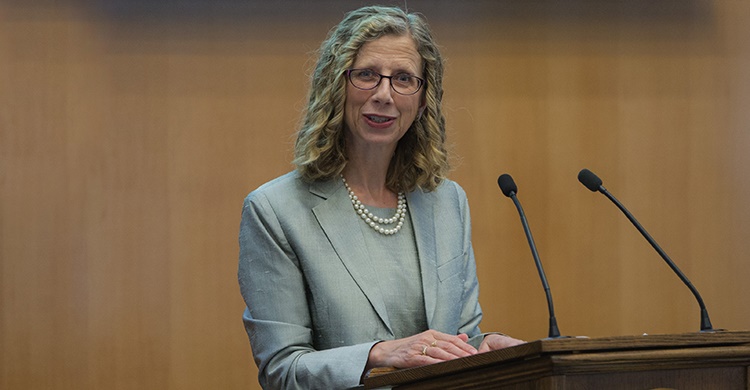
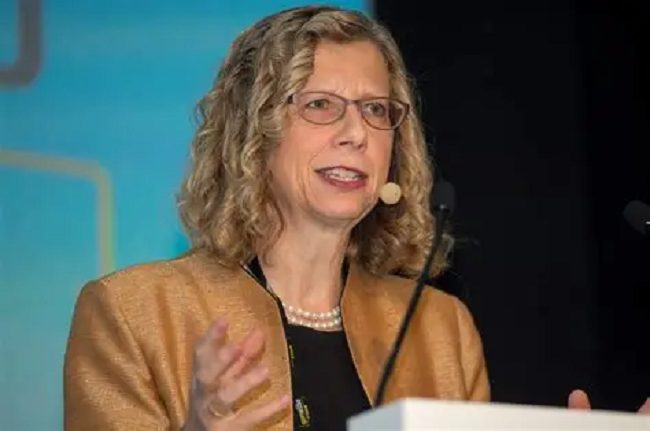
Inger Andersen, executive director of the United Nations Environment Programme (UNEP)
According to the report, the SCP is capable of protecting three billion people from rising heat, saving up to $43 trillion in avoided electricity, and infrastructure costs.
The SCP, published by the UNEP-led Cool Coalition, is the most comprehensive assessment to date of rapidly growing global demand for cooling and the need for climate-friendly solutions to the issue.
It can provide access to space cooling or refrigeration, resilient buildings and urban green spaces to all – including low-income and vulnerable groups – such as smallholder farmers, women and elderly – without exacerbating the climate crisis.
The report said, adopting sustainable cooling, with a strong focus on passive techniques of low-energy and hybrid cooling that combines fans and air conditioners that consume little or no power, could cut greenhouse gas emissions.
According to it, sustainable cooling can save trillions of dollars and expand life-saving cooling access to those who need it.
“Global Cooling Watch 2025 launched today at COP30 in Belém, Brazil, finds that cooling demand could be more than triple by 2050 under business as usual, driven by increases in population and wealth.
“Also by more extreme heat events and low-income households increasingly gaining access to more polluting and inefficient cooling.
“This would almost double cooling-related greenhouse gas emissions over 2022 levels.
“This tends to push cooling emissions to an estimated 7.2 billion tons of CO2e by 2050 despite efforts to improve energy efficiency, phase down climate-warming refrigerants and overwhelm power grids during peak load,” it said.
The report stated that adopting SCP would reduce emissions to 64 per cent, 2.6 billion tons of CO2e, below the levels expected in 2050.
“When combined with rapid decarbonisation of the global power sector, residual cooling emissions could fall to 97 per cent below business-as-usual levels,” it added.
At a high-level ministerial session of the Fourth Ministerial Meeting on Urbanisation and Climate Change at COP30, the Government of Brazil unveiled two milestones to advance multilevel climate governance: the launch of the Plan to Accelerate the Solution (PAS) on Multilevel Governance and the announcement of a new co-chair governance framework for the Coalition for High Ambition Multilevel Partnerships (CHAMP), to be jointly led by Brazil and Germany until 2027.
Launched in 2023 during COP28, the coalition is a platform to enhance collaboration between national and subnational governments in climate policy and finance. As of today, 77 countries and the European Union have endorsed CHAMP, demonstrating a growing global commitment to multilevel governance.
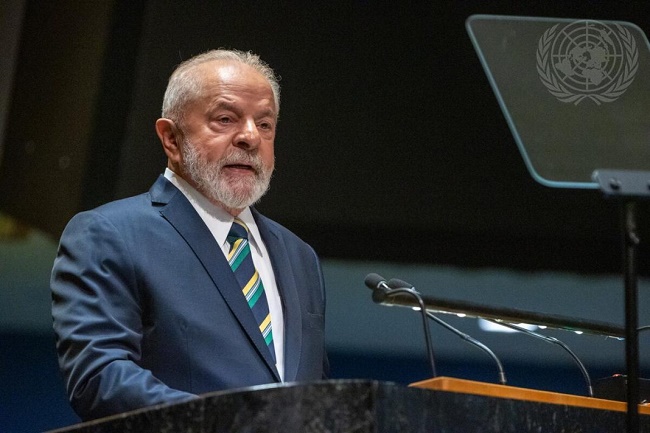
Lula da Silva, President of Brazil
The “High-Level Ministerial Panel on Multilevel Governance for the Implementation of the Paris Agreement and Climate Strategies”, hosted by the COP30 Presidency, Brazil’s Ministry of Environment and Climate Change, Brazil’s Ministry of Cities, and UN-Habitat, brought together ministers and senior officials from national and subnational levels to discuss integrated approaches to achieving the Paris Agreement goals.
In his speech on Monday, November 10, 2025, ambassador André Corrêa do Lado highlighted the importance of national, regional, and local collaboration around a shared agenda for tackling the climate crisis.
“The presence of governors and mayors is extremely important, because subnational entities play a central role in implementing the decisions made at COPs. It is essential that the world sees the unity that exists in Brazil – across all levels of government – around an agenda that, as we know, will be extraordinary for growth, job creation, and improving people’s lives,” he said.
Accelerating Multilevel Governance to Advance Climate Action
The Plan to Accelerate the Solution (PAS) of Multilevel, Multisectoral, and Participatory Governance Model for the Implementation of the Paris Agreement marks a new phase in global climate cooperation, serving as the implementation instrument of the CHAMP Coalition. It is the first of its kind global effort to institutionalise multilevel climate governance as an enabling condition for effective implementation of the Paris Agreement.
Coordinated by the COP30 Presidency and the Government of Brazil (Ministry of Environment and Climate Change and Ministry of Cities), in collaboration with UN-Habitat, CHAMP partners, and a wide coalition of global and regional institutions, it represents the largest coordinated mobilisation ever led by a COP Presidency to strengthen collaboration between national and subnational governments – bridging political commitment, institutional reform, and access to finance.
To drive this operational delivery, the PAS has established clear, measurable targets. By 2028, the plan aims for 100 national climate plans and NDC implementation plans to officially include multilevel governance structures and mechanisms, with a view to 120 plans by 2030. A significant focus is placed on enhancing capacity, with a target to train 6,000 public officials and practitioners in CHAMP-endorsing and other countries by 2028. This training, to be delivered through ongoing programmes, centres on multilevel governance and climate action to accelerate the delivery of the Paris Agreement.
The PAS moves the coalition from political commitment to operational delivery by connecting policy, capacity building, and finance across all levels of government. The PAS brings countries together with international partners and subnational networks to align national ambition with local action, integrate local priorities into NDCs, and institutionalise multilevel governance as a foundation for achieving the Paris Agreement’s goals.
The plan positions multilevel collaboration as a key solution for scaling effective climate action. It establishes a structured process to link national, regional, and local efforts under a shared framework designed to strengthen implementation.
Developed within the COP30 Presidency’s Action Agenda, it aligns with Axis IV: “Building Resilience for Cities, Infrastructure, and Water”, where Multilevel Governance is one of five key objectives under this axis. The COP30 Action Agenda includes six thematic axes and 30 specific objectives, each supported by activation groups that bring together governments, businesses, investors, and communities to deliver coordinated results.
Implementation of the PAS will be led by Brazil’s Ministry of Cities and Ministry of Environment and Climate Change, supported by UN-Habitat and CHAMP, and in collaboration with C40 Cities, the Global Covenant of Mayors for Climate & Energy (GCoM), and WRI, among other global initiatives. Over the coming months, these partners will refine the framework and support the activation of collaborative initiatives at both national and local levels.
A New Era for the CHAMP Coalition
The event also marked a new chapter for the CHAMP Coalition, which has grown to 78 endorsers since its launch at COP28. Brazil and Germany were announced as the first Co-Chairs of the coalition in a new formal, country-led governance framework – guiding the coalition’s next phase of action in partnership with local governments and global networks beyond COP30. This transition to a structured, government-led framework strengthens CHAMP’s capacity to guide international cooperation on multilevel governance and support practical implementation at all levels of government.
Following consultations since New York Climate Week, members have endorsed a Co-Chair and Steering Group model, ensuring that decision-making and coordination reflect national ownership. The Co-Chairs will serve a two-year term, responsible for guiding CHAMP’s activities, shaping its governance structure, and overseeing the CHAMP Secretariat, in consultation with members of the Steering Group. The nomination process for Steering Group members remains open and will conclude by the end of this month with a minimum of six acting members.
From the outset, Brazil has played a leading role in championing the coalition’s vision for stronger collaboration between national and subnational governments. This leadership was reaffirmed through the explicit inclusion of CHAMP in Brazil’s revised Nationally Determined Contribution (NDC), underscoring the country’s commitment to institutionalising multilevel governance as a cornerstone of climate implementation.
The updated EU NDC reaffirms the importance of involving and empowering all levels of governance to drive effective climate action. As a federal state, Germany promotes multilevel climate action nationally and internationally, including through the International Climate Initiative (IKI).
Since 2008, IKI has supported 1,000+ climate and biodiversity projects worldwide, including subnational initiatives, with nearly 7.5 billion euros. Building on this experience, Germany has played a central role in shaping the coalition and advancing its global implementation, helping to translate CHAMP’s commitments into tangible climate action.
The President of 3Oth United Nations Climate Change Conference of the Parties, Mr. André Corrêa do Lago, has called on all countries to harness local actions to improve lives.
The president made the call on Tuesday, November 11, 2025, at the ongoing COP30 in Belém.
According to him, harnessing local and subnational action to build resilience and improve lives will reduce the impact of climate change.
André Corrêa do Lago, COP30 President
“COP30 continues its focus on turning ambition into implementation by advancing the solutions driving systemic change, in real places, led by real people.
“Nowhere is that more evident than in our cities, regions and communities where climate action connects to daily life evidenced by today’s announcements including accelerated progress on housing, water, waste reduction, buildings, infrastructure, and governance.
“Events like the High-Level Ministerial on Multilevel Governance to the Beat the Heat Global Mutirão High-Level Event, deliver a clear message that climate action starts at the local level,” he said.
He stated that the launch of the “Plan to Accelerate Multilevel Governance” and the operationalisation of the “Coalition for High Ambition Multilevel Partnerships (CHAMP)” further demonstrated the reality, embedding local leadership into global frameworks with people at the center.
He said local and subnational governments were translating ambition into safer homes, cleaner water, and stronger economies, delivering real-world action and increasing resilience where it is needed most, from resilient buildings to early warning systems.
“Today also marks the release of the Yearbook of Global Climate Action 2025, the annually published report led by the Climate Champions and UN Climate Change with data from its NAZCA portal.
“This presents a snapshot of global climate action and showcases its progress and gaps.
“The yearbook’s findings highlight that 95 per cent of countries in the 2025 NDC Synthesis Report now engage cities, businesses, and civil society in implementing climate plans, demonstrating that whole-of-society action is accelerating,” he said.
He said there was a need for deeper alignment between national ambition and local delivery to close remaining gaps in finance and capacity.
Renaissance Africa Energy Company Limited has called for an urgent overhaul of operational efficiency and accelerated upskilling of Nigeria’s youthful energy workforce to unlock the country’s competitive advantage in the global energy market.
Speaking at the 43rd annual international conference of the Nigerian Association of Petroleum Explorationists (NAPE) in Lagos, Renaissance Managing Director and Chief Executive Officer, Tony Attah, said Nigeria stands at a critical juncture as global energy dynamics shift, capital allocation becomes more selective, and technology disrupts traditional value chains.
Managing Director and Chief Executive Officer of Renaissance, Tony Attah
“Despite these complexities, Nigeria retains enormous strategic advantages – world-class reserves, a young and dynamic population, entrepreneurial agility, and resilience to innovate our way forward,” Attah said in a keynote address delivered by the company’s General Manager for Greenfields Capital Projects, Abimbola Tijani.
Attah stressed that improving operational efficiency and developing human capital are not just corporate objectives but national priorities.
“We must operate smarter, faster, and more efficiently, while building and empowering the next generation of energy talent,” he said.
He defined operational excellence as streamlining workflows, empowering teams with data-driven autonomy, and creating feedback loops for continuous improvement.
“Operational efficiency is not about doing more; it is about doing better, consistently, sustainably, and smartly. It is no longer optional. It is the price of relevance,” he added.
Attah noted that while hydrocarbons will remain vital for revenue and energy security in the near term, competitiveness will hinge on modernising operations and workforce capabilities. “We are not just competing with national oil companies; we are competing with agile, technology-enabled energy firms worldwide,” he said.
The Renaissance CEO urged policy reforms and investment alignment to create an enabling environment for efficiency and talent development.
“Clear, consistent, and forward-looking regulatory frameworks, de-risked funding models, and partnerships between government, industry, and academia are essential,” he said.
On workforce transformation, Attah highlighted targeted training, diversity and inclusion, retention strategies, and safety-first cultures as critical.
“Potential needs development and platforms to excel, training, mentorship, and opportunity,” he said.