

A don, Prof. Moshood Lawal, on Thursday, February 12, 2026, said that educating students to become responsible citizens and caretakers of the earth was far more than an academic subject.
Lawal made this known while delivering the First Edition of the Inaugural Lecture Series of the Lagos State University of Education (LASUED) in Oto-Ijaniki.
Lawal is a Professor of Social Studies Education, Department of Sociological Sciences Education in LASUED.
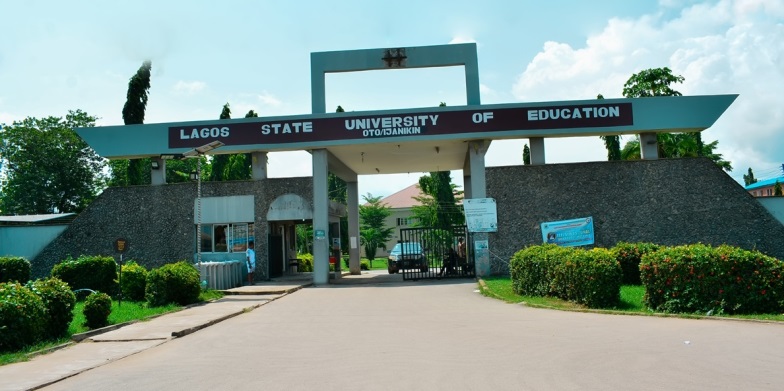
The theme of the lecture was “Nurturing Eco-Conscious and Socially Just Citizen: My Scholarly Journey in Social Studies and Environmental Education”.
“This inaugural lecture has presented a fundamental realisation, which is environmental degradation and social injustice are not separate crises. They are intertwined.
“The deforestation, unsustainable natural resource exploitation issues I witnessed in communities from Oyo to Taraba State were not just a reflection of an ecological tragedy.
“It was a social story, destroying livelihoods and crushing the most vulnerable.
“Educating students to become responsible citizens and caretakers of the Earth is far more than an academic subject; it represents one of the most meaningful human endeavours,” he said.
The professor added that this envisioned a generation of citizens who not only would be caretakers of the planet but also embody principles of social justice in their everyday lives.
“They also integrate environmental responsibility with equitable and ethical conduct.
“This education is about shaping a future that reflects shared values and collective pride.
“By cultivating these values, we are better assured of an education that helps build sustainable and equitable communities committed to protecting both natural ecosystems and human dignity,” he said.
Lawal said that the understanding formed the bedrock of his desire to promote Eco-Social Justice Pedagogy.
“This I regard as not merely a teaching strategy but a philosophical commitment to an education that weds ecological awareness with the relentless pursuit of social equity.
“It is built on three pillars, understanding our Ecological Interdependence, upholding the Social Foundations of Sustainability that guarantee human dignity, and embracing citizenship as an active responsibility,” he said.
The professor said that the challenges that could obstruct the realisation of developing eco-conscious and social justice citizens were not insurmountable.
“They are a call to action. This lecture is that call. It is a plea to all of us educators, administrators, policymakers, to become weavers of a new social fabric.
“We must empower our teachers, reimagine our curricula, and align our resources to this most urgent of goals.
“This education is fundamentally about collaboratively shaping a future that reflects our highest ideals and one that we can take pride in inhabiting,” he said.
While dwelling more on the theme, Lawal said that social studies as a discipline was basically concerned with acquiring the knowledge, values, attitudes and skills.
He added that these knowledge and values were required for building a better life for people and coping with changes or alterations in the environment.
“Social Studies is an interdisciplinary field that draws upon insights from multiple disciplines to deepen understanding of human societies and their complexities,” he said.
He said environmental education was, therefore, all about helping everyone understand the natural world and people’s deep connection with it.
“It brings together ideas from Biology, Ecology, Geography, Chemistry, Earth Science, Economics, and the Social Sciences.
“These are to paint a clear picture of how our actions impact the environment and how the environment shapes our lives in return.
“At its core, environmental education encourages us to become aware of important issues like climate change, pollution, and the loss of biodiversity.
“It is not just about facts; it is about developing a sense of responsibility and care for the planet,” he said.
He added that the relationship between social studies and environmental education reflected a deeply interconnected and mutually reinforcing one.
“This emphasises the importance of understanding the social, economic, political, and cultural dimensions of environmental issues.
“Social studies, therefore, provides a vital platform for the integration of environmental education by contextualising environmental challenges within human societies and fostering critical thinking about sustainability and environmental justice,” he said.
The professor, however, recommended that there should be teacher training institutions.
He said the Nigerian education system required a comprehensive review of the curricula.
“The universities, colleges and faculties of education responsible for the preparation of pre-service teachers in social studies and environmental education within the Nigerian education system needs this review.
“These institutions must be positioned to produce graduates who will serve as catalysts for community transformation and national development.
“To achieve this, course structures should incorporate interdisciplinary perspectives that integrate technology, environmental studies, and the principles of social studies.
“LASUED should seriously consider introducing an undergraduate degree programme in environmental education, B.Sc. Ed. Environmental Education,” he said.
By Henry Oladele