

It is easy to get discouraged by the state of the planet.
Humanity is breaking all the wrong records on global warming. Fragile ecosystems face enormous pressure. Dirty air and chemical pollution threaten our land, ocean and health.
But International Mother Earth Day, observed on Wednesday, April 22, 2026, is a reminder that there is a lot we can do as individuals to tackle environmental crises like climate change, nature, land and biodiversity loss, and pollution and waste.
To help you in that quest, the United Nations Environment Programme (UNEP) has developed toolkits for taking action on a range of environmental issues. Here is what those documents recommend.
1. Revive the ecosystems that sustain us
Did you know that globally over 2 billion hectares of land are degraded? Or that the number and duration of droughts has risen by 29 per cent since 2000? Finding solutions to these global problems is crucial. That is why World Environment Day on June 5 is focusing on land restoration, desertification and drought resilience.
The Ecosystem Restoration Playbook: A Practical Guide to Healing the Planet describes approaches to restoring eight important types of ecosystems – forests, farmlands, grassland and savannahs, rivers and lakes, oceans and coasts, towns and cities, peatlands, and mountains. By taking these recommended actions, you can become part of a #GenerationRestoration!
2. Make some noise about climate change
The world is in the grip of a climate emergency, a “code red for humanity,” according to the UN Secretary-General. Unless humanity reins in greenhouse gas emissions, warming could reach a catastrophic 2.8°C this century.
The United Nations’ Act Now campaign shows how everyday people can cut their carbon footprint by doing simple things, like eating more plants, switching to LED lights and walking instead of driving. The campaign also dives into how citizens can urge governments and businesses to deliver the kind of systemic change needed to avoid a full-blown climate catastrophe.
3. Conquer the global mountain of plastic
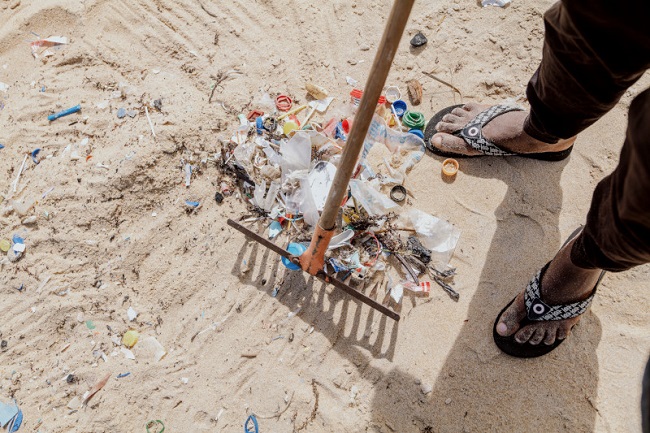
Plastic is everywhere you look. It is in our clothing, household appliances, children’s toys, food packaging, medical devices…the list goes on. While plastic has many uses, plastic pollution is proving disastrous for the planet, swamping lakes, rivers, the soil and the ocean.
UNEP’s Gameplan: It’s time to beat plastic pollution toolkit sets out what individuals can do to help end this environmental scourge. Its recommendations include cutting down on single-use plastic and supporting brands that are developing plastic alternatives.
4. Banish dirty air from the skies
More than 99 per cent of the global population breathes unsafe air. Air pollution is the biggest environmental health risk of our time, causing an estimated 8 million premature deaths every year.
This UNEP interactive guide details how you can help make the air cleaner. Some of the pointers are remarkably simple, like walking a little more, recycling non-organic trash and avoiding single-use plastic where possible.
5. Get tree planting right
Trees are amazing. They capture carbon from the atmosphere, protect and fertilize soils, provide a source of firewood and timber, and shelter many animals, birds and insects. No wonder tree planting, to restore ecosystems and counter climate change, has become so popular. But it is not as simple as it sounds.
For example, planting the wrong trees in the wrong places can harm biodiversity and lead to all sorts of unintended consequences. UNEP’s crash course on Tree planting and ecosystem restoration sets out five basic rules for getting the process right.