

Following the release of the Environmental Investigation Agency (EIA) and PremiCongo’s groundbreaking report Toxic Transition, and allegations that the world’s largest cobalt producer, CMOC Group Ltd. (CMOC), has polluted the air and caused a health crisis in the Democratic Republic of Congo (DRC), the government of DRC has announced that a government-led inspection will soon take place at the Tenke Fungurume mine.
EIA and PremiCongo commend the DRC government’s response and offer our full cooperation, including sharing our database of 1,200+ medical records documenting the health crisis in Fungurume, and an independently commissioned study demonstrating air pollution allegedly caused by CMOC’s subsidiary, Tenke Fungurume Mining. EIA looks forward to supporting the DRC government’s initiative, as it has done for 7+ years in Gabon, with the development of the most advanced national timber traceability system in the Congo Basin.
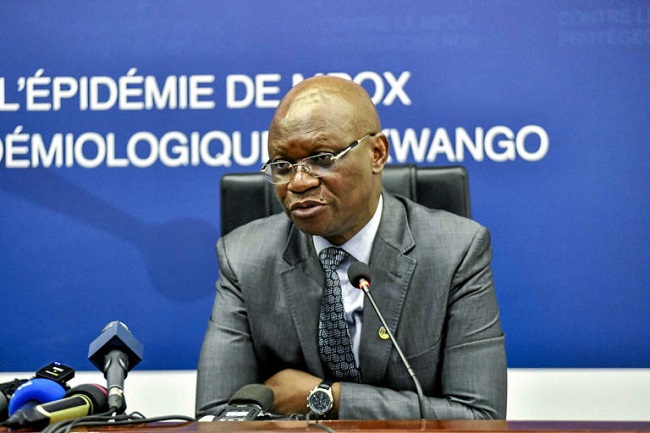
EIA and PremiCongo will also request to be invited to support the field mission as independent observers. A rigorous and transparent inspection, including the collection, publication, and analysis of active monitoring data on sulfur dioxide (SO2) emissions for the years 2023 and 2024, is crucial, as TFM recently admitted for the first time, after having denied it for almost two years, that the company was indeed responsible for spikes in emissions of toxic gas emission in 2023 and 2024.
The company’s admissions and the government’s acknowledgement of allegations that TFM’s mining activities poisoned families near the mine is an important step forward, as explained by Christian Bwenda, Coordinator of PremiCongo: “This is a victory for the communities and people who have resisted and raised this environmental problem for years. It is time now for our government to do their part and shed light on the health crisis and the pollution caused by TFM in Manomapia, Kabombwa, and other areas.”
Key findings from EIA’s investigation include the fact that – according to the analysis of 1,200+ medical records – dozens of families living next to the new “30k” processing plant sought medical treatment for nosebleeds, coughing up blood, and severe respiratory illness. These symptoms are consistent with SO2 exposure, and with longstanding complaints by community members dating back to the commissioning of the 30k plant.
Independent air monitoring commissioned by EIA found SO2 levels in the Manomapia neighborhood exceeding World Health Organisation guidelines on multiple occasions between September 2024 and January 2025, including levels that remained above safe thresholds for several hours at a time.
According to EIA’s investigation, more than 12,000 people have been displaced by TFM’s expansion since 2022. Residents told investigators they received as little as US$60 in compensation, and residents alleged that their standard of living had declined. They also explained that they were asked to sign relocation agreements before being told how much they would receive. TFM allegedly kept the only copy of the signed contracts.
In their public response to EIA’s finding, TFM appears to try to cast doubts on the validity of EIA’s findings and conclusions, including the existence of a public health crisis in Manomapia and the existence of SO2 emissions above international safety standards. EIA offers in-depth answers to TFM’s critique in a dedicated response available here.
The elements brought forward by TFM do not amount to any robust counterargument. EIA fully stands by its findings and conclusions, and looks forward to open, serious, and transparent discussions on SO2 monitoring with the company, with the participation of independent experts.
As TFM insinuates the possibility of legal action against EIA, it is worth recalling that, according to DRC Mining Code (article 285 ter), TFM is “liable in the event of direct or indirect contamination resulting from mining activities that have an impact on human health and/or lead to environmental degradation, particularly in the form of water, soil, and air pollution, and cause harm to humans, fauna, and flora.”
“The health and wellbeing of entire communities is at stake here. TFM claims its own monitoring shows compliance. We call on TFM to publish its complete daily SO2 monitoring data – right now, publicly, in full,” says Alexander von Bismarck, Executive Director of EIA. While disclosure of SO2 monitoring data by TFM is necessary, it is not sufficient to guarantee residents’ safety. For that, EIA is supporting the emergence of a community-led air monitoring program that will bring transparency to the other side of TFM”s fence.
The growing awareness of the issue in DRC and the swift decision to intervene from the DRC government contrast with the silence from automakers, including BMW Group, Mercedes-Benz, Volkswagen, and Stellantis, who according to EIA’s investigation have relied on TFM’s cobalt for years.
Pragmatic solutions to the pollution crisis are also available on the demand side – automakers could support community-led monitoring, participate in multistakeholder initiatives, and change their due diligence practices to prevent and mitigate the environmental and human rights harms allegedly caused in DRC.
“The precautionary principle must prevail from the mine to the automaker while the government, the company, and communities are all trying to understand the impacts of TFM’s operations,” says von Bismarck.