

Introduction
Natural bitumen, a dense, viscous, semi-solid form of petroleum composed of aliphatic and aromatic hydrocarbons, asphaltenes, resins, sulphur compounds, and trace metals constitutes a globally significant unconventional hydrocarbon resource. Nigeria’s bitumen reserves, estimated at 42.47 billion metric tons in situ, are concentrated within the sedimentary sequences of the East Dahomey (Benin) Basin in south-western Nigeria, principally within Ondo, Ogun, Lagos, and Edo states.
Ondo State alone is reported to host the world’s second-largest bitumen deposit, with a projected market value of approximately US$17 trillion. In Canadian dollar equivalents, the Alberta oil sands, the world’s largest oil sands deposit generates approximately CAN$9–10 billion annually in economic output, underscoring the transformative potential of the Nigerian reserves if responsibly developed.
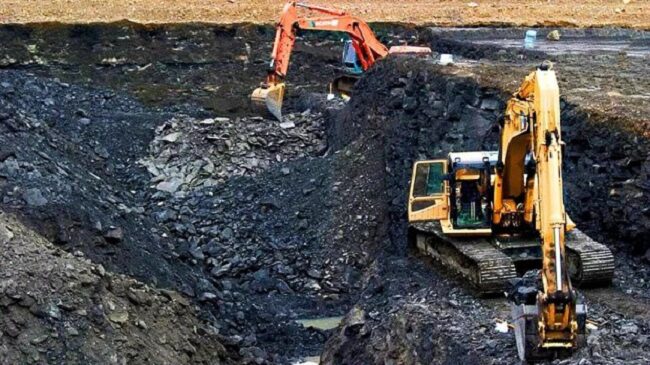
Ondo State’s bitumen belt exhibits analogous characteristics: abundant resource wealth coexisting with socioeconomic marginalisation, environmental degradation, and institutional inertia. Surface-level seepages are a common phenomenon in the southern part of the state, serving as a visible indicator of the substantial reserves beneath.
Research confirms the presence of bitumen reserves across six blocks in several Local Government Areas (LGAs), including Odigbo, Irele, and Okitipupa. Specific communities where bitumen seepages have been identified and studied include Ode-Irele and Agbabu.
Geographic Distribution
The Nigerian bitumen belt is hosted within Cretaceous terrigenous sediments of the East Dahomey Basin. Within Ondo State, hydrocarbon-bearing strata occur in two principal sandy units: Horizon Y (3–26 m thick, fine-to-medium quartz sand, mean oil saturation ~12%) and the overlying Horizon X (10–22 m, sandstone–shale interbeds).
The low clay content of these units (2–7%) facilitates upward hydraulic migration of bituminous fluids through faults and fractures, generating the surface seepages documented across communities including Ode-Irele, Agbabu, Ludasa, and Idioilayo. Seepage induces measurable alteration of near-surface soil properties: research at Agbabu demonstrates significantly reduced hydraulic conductivity and increased bulk density in bitumen-impregnated soil horizons relative to unimpacted controls, with direct implications for agricultural productivity and groundwater recharge.
Multi-temporal satellite imagery analysis and GIS delineation confirm the areal concentration of bitumen deposition across six prospecting blocks in three principal LGAs: Irele (~940.5 km²), Odigbo (~609.2 km²), and Okitipupa (~590.4 km²). The technique validated extensively for hydrocarbon contamination mapping via spectral reflectance differentiation of impregnated vs. uncontaminated soils further reveals a progressive expansion of seepage extent in Ludasa and Idioilayo communities over the 30-year period 1991-2021. This temporal trajectory is consistent with ongoing geogenic hydrocarbon migration, potentially amplified by exploratory disturbance creating preferential upward migration conduits.
Environmental and Public Health Implications
Natural bitumen is a chemically complex matrix that mobilises a suite of potentially toxic elements (PTEs) into surrounding soil via leaching, volatilisation, and physical incorporation during seepage events. A 2025 geochemical study at seepage and exploration sites in Ode-Irele, employing atomic absorption spectrometry (AAS) on composite soil samples, documented concentrations of nine PTEs including manganese (Mn), iron (Fe), lead (Pb), arsenic (As), copper (Cu), zinc (Zn), nickel (Ni), chromium (Cr), and cadmium (Cd) that exceeded FEPA (1991) permissible thresholds at both site categories.
The lead concentration at exploration sites (290.00 ± 56.60 mg/kg) is particularly concerning. Global soil contamination analyses at 796,084 sampling points classify lead enrichment above 200 mg/kg as severe contamination with high potential for food chain infiltration and non-carcinogenic and carcinogenic health risk. Heavy metal accumulation in soil concurrently reduces pore connectivity and water-holding capacity, diminishing soil fertility and agricultural output, effects documented for chromium, cadmium, nickel, copper, and zinc at concentrations analogous to those measured at Ode-Irele.
Bitumen is a primary environmental source of polycyclic aromatic hydrocarbons (PAHs) – fused aromatic ring compounds produced during incomplete thermal decomposition of organic matter. PAHs are genotoxic and carcinogenic, classified by the International Agency for Research on Cancer (IARC) as Group 1 and Group 2A carcinogens. Prior studies at Agbabu, Ondo State, detected total petroleum hydrocarbons (TPH) and elevated PAH profiles in both soil and water samples consistent with geogenic petroleum-source contamination.
Research in Odigbo and Irele LGAs documents contamination of both surface and groundwater resources utilised by host communities as primary potable water sources. Manganese, iron, copper, zinc, chromium, cadmium, nickel, vanadium, and arsenic have been measured in wells and streams at concentrations exceeding FEPA and WHO drinking water guideline values.
Total petroleum hydrocarbon concentrations in wells at Ludasa have been recorded as high as 1,480 mg/L which far exceed environmental safety thresholds. A particularly hazardous hydrological phenomenon observed in the area is the post-rainfall formation of bitumen films on stream surfaces, which physically impede atmospheric oxygen exchange, suppress aquatic biodiversity, depress benthic invertebrate communities, and reduce the water body’s self-purification capacity.
Socio-Economic Impact on Resident Communities
While bitumen deposits represent a significant economic resource, exploration activities have not translated into improved livelihoods for local residents. A comprehensive study on the socio-economic effects of bitumen exploration in Southern Ondo State revealed a starkly negative picture.
This is evidence of the “resource curse”, being the empirically documented tendency for resource-abundant territories to exhibit greater poverty, weaker institutional performance, and lower economic growth than resource-poor counterparts.
A comprehensive socio-economic impact study across nine communities in Odigbo, Irele, and Okitipupa LGAs found that many residents subsist on a mean daily income of approximately US$0.67 (₦1,139) – only 31% of the World Bank’s international extreme poverty threshold of US$2.15 per day. Statistical analysis confirmed a significant negative association between bitumen exploration activities and community well-being, implying that exploration has not yielded positive livelihood outcomes for host populations.
This is consistent with the broader Nigerian experience: despite oil accounting for 95% of export earnings and 90% of government revenue over the past six decades, over 70% of Nigeria’s population lives below the poverty line, and 90% of oil revenue has historically accrued to just 1% of the population.
Adepoju et al. (2025), in the most recent peer-reviewed assessment of the Ondo State bitumen paradox, describe Agbabu, one of the most prominent bitumen communities as “socioeconomically disadvantaged,” with residents’ livelihoods dependent on subsistence farming, fishing, and tree logging in an environment visibly affected by bitumen’s environmental footprint. Research confirms that current levels of bitumen development, with BCE Greensands Nigeria Limited identified as the only active mining company in Ondo State, “have brought no change to the development of a sustainable economy in Nigeria”.
Bitumen-induced soil modification directly undermines agricultural viability: elevated bulk density and reduced hydraulic conductivity impair root penetration, drainage, and moisture availability, while elevated heavy metal concentrations in soil translate into phytotoxic conditions and measurable bioaccumulation in plant tissues.
Studies on soil–plant transfer of Mn, Zn, Cu, and Fe at bitumen-contaminated sites in the region document concentrations in edible plant parts significantly elevated relative to uncontaminated controls, constituting a dietary exposure pathway for heavy metals in dependent communities.
A critical enabling factor in the perpetuation of environmental harm without community benefit is the inadequacy of Nigeria’s regulatory framework as applied to bitumen exploration. Analysis of the Environmental Impact Assessment (EIA) Act and NESREA Act has identified structural lapses that permit exploratory activity to proceed without mandatory baseline environmental assessments, community consultation, or legally enforceable remediation obligations.
Conclusion
Ondo State’s natural bitumen belt represents a resource of unparalleled economic potential. However, the scientific evidence discussed in this article reveals that the current governance paradigm characterised by uncontrolled geogenic seepage, exploratory soil disturbance, regulatory inaction, and structural exclusion of host communities from resource revenues is generating a multidimensional crisis of environmental contamination and socio-economic marginalisation.
Heavy metal concentrations exceeding regulatory thresholds, progressive expansion of surface seepage over three decades, degradation of water resources on which vulnerable populations depend, and community incomes at one-third of the extreme poverty line collectively constitute an obvious case of environmental injustice that demands urgent, evidence-based intervention.
By Sasere Omolade Victoria, Nigerian Environmental Study Action Team (NEST), Ibadan, Nigeria