

Nigeria is not prepared for a blanket ban on solar panel imports, experts in the environment and energy sector said in Abuja on Tuesday, February 24, 2026.
They said this at the National Stakeholders Engagement Workshop on accelerating Nigeria’s Clean Energy Transition.
Dr Michael David, the Executive-Director, Global Initiative for Food Security and Ecosystem Preservation (GIFSEP), said that solar is the beacon of hope – the lifeline, adding that a pathway out of energy poverty in Nigeria is through solar.
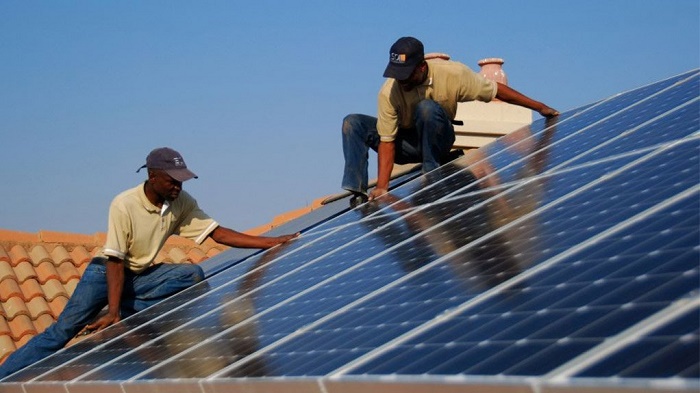
According to him, Nigeria faces a paradox of energy wealth and energy poverty, so Nigeria is not yet ready for a blanket ban on solar panel imports.
“Nigeria is faced with widespread energy poverty, severe electricity access deficit, chronic power shortages, persistent energy inequality, limited access to reliable electricity, access to electricity remains unreliable, unaffordable, and unequal.
“Energy poverty continues to undermine economic growth and human development. It is correct to say that energy poverty is communities in poverty.
David said that solar energy offers Nigeria a real chance to close its energy gap to clean, affordable, and accessible power for millions left behind by the grid.
“Banning solar imports now would be like removing lifelines in a crisis.
“Such a policy, if implemented now, would likely worsen energy poverty, slow renewable energy adoption, and hurt households and businesses.
“What we need now is a clean energy policy that offers incentives for local solar production, promotes local assembly and manufacturing, and offers affordable financing for clean energy systems. Let’s get some basic things right before a blanket ban.
“Nigeria has one of the largest electricity access deficits in the world. Despite being one of Africa’s largest economies, Nigeria’s national electricity grid is one of the least reliable on the continent, with electricity demand consistently outstripping supply,” he said.
David stated that a study by Nigeria’s World Data in 2026 shows that billions of people have access to far less electricity per day than is required to run an air conditioner (AC) for just one hour.
“The study revealed that while people in richer parts of the world can switch on their ACs, for billions in energy-poor countries, there is little electricity available to power a fan or an air conditioner.
“We can see this by comparing how much electricity people use at home on a typical day with how much power an air conditioner requires. Let’s consider a typical single-room air conditioner that uses around 1,000 watt-hours of electricity in an hour.
“The study finds that, in at least 45 countries, the average residential electricity use per person for an entire day is less than the electricity that is required to power an air conditioner for one hour.
“The number of people without access to electricity in Nigeria is put at 86.8 million, the highest world-wide, says a World Bank 2025 report.”
He stated that on the role of state governors, the enactment of the Electricity Act 2023 represents a significant policy shift.
“The act seeks to restructure the electricity sector by promoting decentralised generation, incentivising investment in renewable energy, and granting state governments greater regulatory authority over electricity supply.”
Rep. Terseer Ugbor, the Deputy Chairman, House Committee on Environment, in a keynote address, said that solar energy is becoming a necessity in Nigeria due to the level of power failure experienced in almost every part of the country.
“I imagine a Nigeria where every home has electric power where no child studies in the dark, where businesses thrive with constant power supply without the use of generators.
“Solar energy is central to economic diversification, job creation, climate responsibilities, rural transformation and national development.
“Solar energy is a tool for survival and growth in our country, an abstruct restriction of solar panels imports without sufficient global capacity will unintentionally affect rural and upgrade community businesses, institutions and healthcare facilities,” Ugbor worried.
Also, Mr. Joseph Ibrahim, Nigeria Campaign Director Secure Energy Project, frowned at the proposed ban on importation of solar panels, advising that renewable energy be made affordable to everyone.
By Abigael Joshua