33 C
Lagos
Tuesday, January 20, 2026
Home Blog

Construction industry showing recovery, targeting measured growth in 2026

0

Stakeholders in the built environment and construction industry have described 2025 as a period of recovery and resilience for the sector, expressing cautious optimism for further growth in 2026.

Industry observers are convinced that the construction sector recorded a remarkable improvement in 2025 compared to the previous year.

They project a slight growth in 2026 to be driven by economic rebound recorded in the last quarter of 2025, rapid infrastructure, high population growth, and significant government investment in infrastructure.
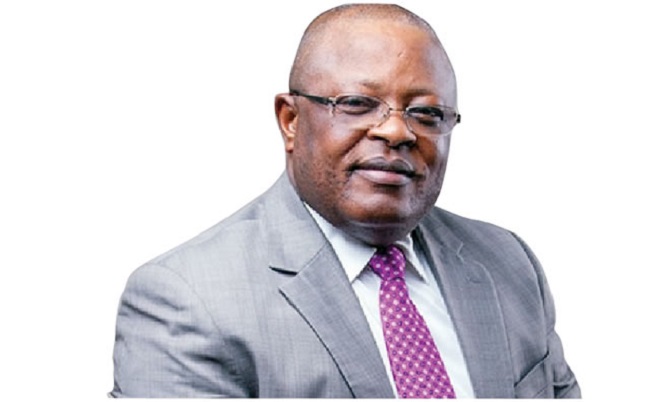
David Umahi
Minister of Works, David Umahi

Analysts believe that stronger investment in housing, infrastructure, oil and gas, and renewable energy would have driven greater growth, arguing that government initiatives, including the approval of major funding packages and reforms in construction-related laws, helped to create a better environment for the industry.

Major players in Nigeria’s construction space in 2025 include Hitech Construction Company Ltd., Julius Berger Nig. Plc, Megastar Technical and Construction Company, Setraco Nig. Ltd., and Dutum Group Construction Company.

In 2026, stakeholders expect improved performance supported by steady contract flow and earnings from projects secured in 2025.

They expect residential building segment to grow slightly, driven by the Federal Government’s pledge to construct about 550,000 new houses annually, projecting infrastructure development to play a major role, with anticipated investments in roads, rail systems, bridges and urban renewal projects.

Experts also foresee increased adoption of modern construction technologies such as Building Information Modelling (BIM) and digital twin technology, which are expected to improve efficiency and project delivery.

The Chairman, Nigerian Society of Engineers (NSE), Apapa Branch, Mr. Emmanuel Okolo, urges that engineers and other professionals should be fully in charge of construction projects in 2026.

He advises governments and other stakeholders to avoid patronising quacks, saying that professionalism is key to safety, quality, and sustainable growth in the sector.

The Chairman of NSE, Ikeja Branch, Mrs. Nimot Muili, notes that the industry faced a number of challenges in 2025, including rising material costs, labour shortages, brain drain and economic uncertainty, which, she argues, affected foreign investment.

She is, however, optimistic the industry will grow more in 2026.

She believes that the growth will be driven by investments in data centres, water infrastructure, transport, renewable energy, and digital transformation.

According to her, expected expansion in the movement of goods and services will further drive infrastructure investments, while increased adoption of Artificial Intelligence, automation, smart buildings, and BIM will enhance productivity and reduce project delivery time.

She, however, expects labour shortages to persist, as the industry is projected to require about 499,000 new workers in 2026, up from 439,000 in 2025.

Mr. Olumide Adewebi, Vice President, West African Region of the Commonwealth Association for Surveying and Land Economy, and Chief Executive Officer of Geosys Nigeria, describes Nigeria’s built environment in 2025 as resilient “but under strain”.

According to Adewebi, the sector showed adaptability in spite of high inflation, exchange rate volatility, rising material costs and limited access to finance.

Adewebi is convinced that these pressures exposed long-standing weaknesses in planning, regulation, professionalism and project execution.

Adewebi argues that while government at both the federal and state levels showed increased awareness of housing delivery and infrastructure renewal, implementation remained inconsistent due to slow and largely manual planning and land administration processes.

He says investments in roads, rail, ports, and energy projects continued in 2025 largely through public/private partnerships and donor funding, but revealed gaps in project management, local content execution, and maintenance culture.

Adewebi expects that 2026 will be a year of measured recovery and consolidation rather than rapid expansion for the industry.

He expects faster regulatory reforms and digitisation, especially in land administration and planning approvals, which may attract more private investment.

Adewebi also predicts stronger professional accountability, deeper technology adoption, and increased focus on affordable housing, modular construction, sustainability, and climate resilience.

According to him, clients and investors will demand greater transparency, speed, and certainty of delivery, rewarding professionals who prioritise competence, ethics and long-term value.

“While challenges will remain, the industry will increasingly favour competence over connections, systems over improvisation, and long-term value over short-term gains,” Adewebi says.

By Lydia Chigozie-Ngwakwe

Nigerian lawyer, Tengi George-Ikoli, makes 2025 women in climate list

0

A Nigerian lawyer, economist and energy sector analyst, Tengi George-Ikoli, has been named amongst the 2025 list of 101 women in the world unlocking climate and providing sustainable solutions.

Tengi George-Ikoli is the Nigerian Country Manager for the Natural Resource Governance Institute. She has over a decade experience in the governance of oil, gas, and mining governance.

As Country Manager, Tengi leads the Nigeria Programme, providing technical assistance, capacity development, and policy analysis to oil, gas, and mining-focused government institutions, non-governmental organisations, civil society, media, and communities as Nigeria navigates its energy transition.

Tengi George-Ikoli
Tengi George-Ikoli

She shapes public discourse and drives policy reforms focused on achieving people-centered energy transitions, catalyzing transition finance, right-sizing gas ambitions, diversifying energy and economy systems, and advancing a just, equitable, and sustainable energy transition.

Prior to working at NRGI, she played a pivotal role in the passage of the Petroleum Industry Act (PIA) in her role as Programme Coordinator under the Nigeria Natural Resource Charter (NNRC) targeted at strengthening legal, regulatory frameworks and revenue management, reducing environmental and socioeconomic impacts and enhancing community beneficiation.

Tengi holds an LLM Master’s in Commercial Law from the University of Bristol and a joint honors LLB Law and Economics from the University of Wales. Tengi served on the Global Council; Global Reach Seat of the Resource Justice Network (RJN) formerly Publish What You Pay (PWYP), a civil society movement of more than 1,000 organisations working to improve natural resource governance. She served on the Methane Financing Working Group (MFWG) launched at COP28 and was recognised by Fin-Earth Awards on their 2025 List of 101 Leading Women in Climate and SEVA as one of the Women Leading Nigeria’s Green Energy Transition.

In appreciation, Tengi thanks SEVA Centre for Development Initiatives (SEVA CDI) for the honour of being named among the “Women at the Heart of Nigeria’s Green Transition” alongside Anita Otubu Omiesam Ibanibo making significant strides to drive an #energytransition that is just, equitable and sustainable for the African continent.

She said: “This recognition reminds me why this work matters and why representation and inclusion are essential for the future we hope to build. I consider it a privilege to work on issues that resonate within an organisation Natural Resource Governance Institute whose vision and purpose align with my raison d’etre; to leave the world better than I found it.

“As Nigeria navigates the complex path toward a just, equitable and sustainable energy transition, I am encouraged by the growing visibility and influence of women across sectors. Recently, we’ve seen important conversations about creating more space for women in Parliament and public leadership. These shifts matter. When women participate meaningfully in decision making, from national to resource governance, the outcomes are more representative, resilient and responsive to needs of citizens and the underserved, communities, youth, women and people with disabilities.

“I’m grateful to be part of a network of women whose expertise, courage and leadership continue to shape Africa’s future. Thank you to the colleagues, mentors and partners who walk this journey with me and challenge me to do better every day.

“There is still much work ahead, but there is also momentum. With more women at the table; in Parliament, in boardrooms, and the energy sector, our collective impact will only grow stronger.

Here’s to advancing energy transition in Nigeria and on the continent!”.

Game-changing international ocean treaty comes into force

0

Almost two decades in the making, an international agreement to protect and sustainably use marine life in international waters and the international seabed came into force on Saturday, January 17, 2026, marking a major step forward in efforts to ensure the health of ocean ecosystems for decades to come.

Officially known as the Biodiversity Beyond National Jurisdiction (BBNJ) Agreement, the legally binding UN treaty covers the ocean zones that lie beyond national waters (namely, the “high seas”) and the international seabed area. 

These regions make up over two-thirds of the ocean’s surface, representing over 90 per cent of Earth’s habitat by volume. This is because the ocean is vast, and most living space on Earth is underwater.

Sea turtle
A sea turtle

UN Secretary-General, António Guterres, said that in a world of accelerating crises the agreement “fills a critical governance gap to secure a resilient and productive ocean for all. Let us now move swiftly to universal and full implementation.”

Why it matters

The BBNJ is designed to ensure that the “high seas”  and international seabed are managed sustainably for the benefit of all humanity. 

It is also the first legally binding ocean instrument to provide for inclusive ocean governance, with provisions on the engagement of Indigenous Peoples and local communities and on gender balance.

It is hoped that, once it is fully implemented, the Agreement will make a vital contribution to addressing the so-called “triple planetary crisis” of climate change, biodiversity loss and pollution.

Speaking to UN News, Tanzanian diplomat Mzee Ali Haji, who led his country’s negotiation team during BBNJ discussions, said that the agreement marks a major step in the protection of international waters.

“Everyone should bear in mind that there is now control of the activity in the high seas. For instance, when you pollute, you are responsible for your acts”.

The BBNJ strengthens the current international legal framework: it builds on the UN Convention on the Law of the Sea – in effect the “constitution for the oceans” – which has set the rules for maritime and seabed exploitation and marine protection since it came into force in 1994.

It also aims to ensure the effective implementation of the Convention, including more detail on how to manage biodiversity and aligns ocean governance with modern challenges like climate change and the 2030 Agenda for Sustainable Development (the UN-brokered blueprint for solving the world’s most intractable challenges).

What does ‘entry into force’ mean?

After the entry into force, it becomes legally binding for the 81 nations that have ratified it so far, meaning that they agree to put it into effect at the national level.

The treaty specifies that it enters into force this Saturday: 120 days after it was ratified – accepted as legally by binding – by at least 60 countries.

Who has signed up?

The countries that have so far ratified the BBNJ including several major economies, notably China, Germany, Japan, France and Brazil. 

China has a particularly important impact on industries connected to the ocean (such as shipbuilding, aquaculture, fisheries and offshore oil and gas), exporting some $155 billion of ocean-related goods in 2023, according to UN trade agency figures.

Several major economies have not yet ratified

The US, the world’s biggest economy, is one of the top five ranked ocean-related goods exporters ($61 billion). Although the country signed the treaty in 2023, it is not yet ratified, and the Senate has not acted on it.

India, one of the top developing-economy exporters ($19 billion), adopted the treaty in 2024 but domestic legislation on ratification is still pending. While the UK did introduce legislation on the matter in 2025, parliament is still to ratify it.

Russia remains one of the minority of nations that has neither adopted nor ratified the treaty, citing its wish to preserve existing governance frameworks, and ensure that freedom of navigation and shipping in international waters is guaranteed.

Is this a big setback for the treaty?

Despite the reluctance of some major economies to commit fully by ratifying, Mr. Haji is positive about the impact that the BBNJ, in its current state, will have.

 “Developing countries and small island countries need support,” he says. “We expect that, in the future, they will accept this agreement, because it will help them. The protection of the high seas is the responsibility of all of us.”

What happens next?

The door remains open for more countries to ratify, which will make it more effective. 

“When you negotiate something, you can’t get 100 percent people to ratify it or to accept it in one term,” says Mr. Haji. “Some just observe and then, when they see the advantages, they join. I believe that, in the future others will join”.

Apart from universal participation, the key to making the BBNJ work will be implementation, including acting against those who break the rules. 

According to the text of the agreement, the first meeting to monitor progress on both these fronts will take place no later than one year after the Agreement’s entry into force.

By Conor Lennon, UN News

Lagos LCDA deploys PSP to clear indiscriminately dumped refuse on road medians

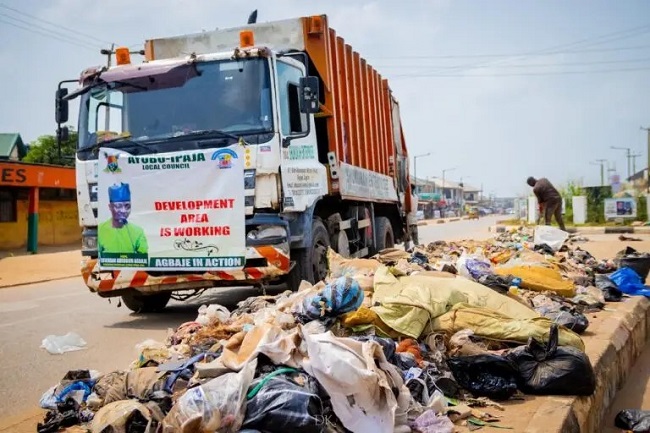
The Executive Chairman, Ayobo-Ipaja Local Council Development Area (LCDA), Lukmon Agbaje, has deployed private sector waste managers, popularly known as PSP, to clear refuse dumped indiscriminately on the road medians.

The LCDA chairman took the action to address environmental pollution within the council area.

Agbaje said in a statement on Tuesday, January 20, 2026, that the deployment of the external PSP operators, supported with compactors to clear the huge refuse dumped on the road medians, was part of his agenda to ensure environmental sanity in the community.

Refuse
Clearing disposed refuse at Ayobo-Ipaja Local Council Development Area (LCDA)

According to him, the exercise is part of his administration’s ongoing commitment to environmental sanitation, public health and urban renewal.

“The initiative is aimed at restoring the cleanliness and aesthetic value of the environment, while safeguarding residents’ health and well-being.

“Our timely action once again underscores our dedication to providing a clean, healthy and livable Ayobo-Ipaja LCDA.

“The clean-up operation is currently ongoing, and residents are urged to cooperate with the authorities and support the council’s efforts by disposing their waste properly and maintaining a culture of cleanliness across the community,” he said.

The chairman added that efforts had also been put in place to ensure refuse are picked at various households by the waste managers in a timely fashion.

Agbaje warned that no resident would be allowed to dump refuse indiscriminately on the road from now on, saying anyone caught doing so, would be punished in accordance with the law.

“We are appealing to the residents to desist from dumping their refuse on the road, whoever is found guilty would face the wrath of the law.

“We assure you that from now, there will be prompt evacuation of refuse at various households by the waste managers,” Agbaje assured.

By Kazeem Akande

Seplat Energy’s ANOH project achieves first gas

0

Seplat Energy Plc, a leading Nigerian independent energy company listed on both the Nigerian Exchange Limited and London Stock Exchange, has disclosed that its 300 MMscfd ANOH gas project has achieved first gas.

Following completion of the 11km Indorama gas export pipeline and receipt of regulatory approval from the Nigerian Upstream Petroleum Regulatory Commission (NUPRC), on Friday, January 16, 2026, ANOH Gas Processing Company (AGPC) commenced gas supply to Indorama, under a firm and interruptible offtake Gas Sales Agreements (GSAs). To enable the flow of gas, the four upstream wells, which had been on standby since November 2025, were brought online.

Seplat
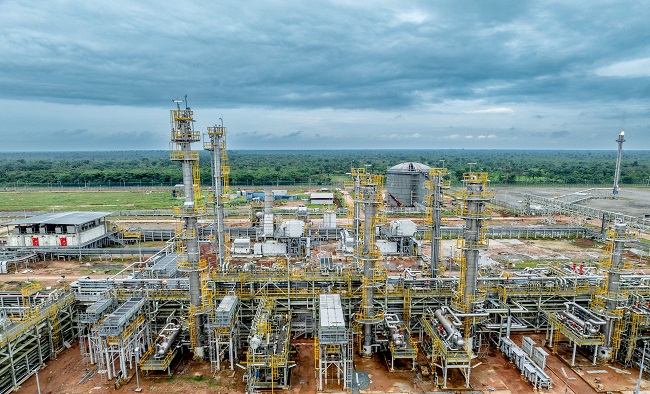
Seplat’s ANOH gas plant

Since first gas, wet gas production is said to have been stabilising, delivering 40-52 MMscfd of processed gas directly from the ANOH gas plant to the Indorama Petrochemical Plant. Condensate production has reached 2.0-2.5 kboepd and is expected to increase with gas production as the plant ramps up to design capacity, submitted Seplat.

“In addition, preparations are underway to initiate sales of processed gas to the Nigeria LNG (NLNG) with an offtake agreement structured on an interruptible basis and will support the gas plant to further scale production towards full design capacity of 300MMscfd,” the firm said in a statement endorsed by Stanley Opara, Manager, Corporate Communications, External Affairs & Social Performance.

Meanwhile, the construction of the OB3 pipeline export route by Nigerian Gas Infrastructure Company (NGIC), originally designated as the primary channel for ANOH gas supply to the domestic market, has resumed and a revised completion date will be communicated in due course.

The ANOH gas plant was developed by AGPC, an incorporated joint venture between Seplat Energy and the NGIC. The integrated plant consists of two 150 MMscfd gas processing units, Liquefied Petroleum Gas (LPG) recovery units, condensate stabilization units, a 16MW power plant and other supporting facilities, and has been built to operate with zero routine flares.

Across the unitised field of OML 53 and OML 21, the ANOH gas plant unlocks an estimated 4.6 Tcf condensate rich gas resource base. Seplat’s working interest 2P reserves in the unitised field, as booked at year end 2024, stood at 0.8 Tcf.  Seplat will derive value from two distinct income streams: wet gas sales from OML 53 to the ANOH gas plant, and dividends from its 50% equity ownership in AGPC.

The LPG produced from ANOH, combined with the LPG production at Sapele and the Bonny River Terminal (BRT), will make Seplat a leading supplier of clean cooking fuel to the domestic market. In addition, the ANOH gas plant will process the flared gas from the Ohaji field, enabling Seplat to achieve its onshore End of Routine Flaring programme, a key commercial and sustainability initiative for the company.

The ANOH gas plant has been developed without a single recordable Lost Time Incident (LTI) across 17.5-million-man hours, a testament to the focus of the whole team on safe and secure operations. 

Roger Brown, Chief Executive Officer of Seplat Energy, commenting on the feat, said: “ANOH is the first of the seven critical gas development projects identified by Federal Government of Nigeria to commence operations. It is an important strategic project for Seplat, our partner NGIC, and Nigeria as a whole. It has taken a significant amount of commitment and hard work to complete the project in a part of the onshore Niger Delta with limited gas pipeline infrastructure, and we are extremely proud of this achievement.  This is our third major gas processing facility onshore and increases our Joint Venture gross gas processing capacity onshore to over 850 MMscfd.

“ANOH will provide material income streams for Seplat, reduce our carbon intensity and contribute significantly to the 2030 production target of 200 kboepd, set at our recent CMD. It will also increase energy access for Nigerians in terms of both power and clean cooking fuel for the local communities, while advancing delivery of our mission to support economic prosperity in Nigeria.”

Seplat Energy’s portfolio consists of 11 oil and gas blocks in onshore and shallow water locations in the Niger Delta region of Nigeria, which it operates with partners including the Nigerian Government and other oil producers.

The firm operates three gas processing plants onshore, at Oben in OML 4 and Sapele in OML 41 and the 300 MMscfd ANOH Gas Processing Plant in OML 53, an integrated joint venture with NGIC.

Residents scoop fuel as diesel tanker overturns on Lagos bridge

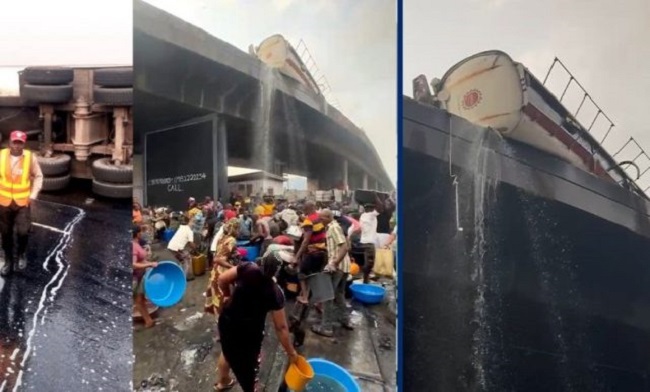
A diesel tanker overturned on Tincan-Liverpool Bridge in Apapa, Lagos State, on Monday, January 19, 2026.

The incident occurred inward Mile 2, spilling diesel and disrupting movement along the busy corridor.

Commuters were unable to pass through the road as traffic slowed to a crawl.

Fuel
Lagosians scooping fuel

Videos circulating on social media showed residents and commuters scooping diesel from the fallen tanker.

The footage captured scenes of confusion as people rushed to collect the spilled fuel amid congestion.

The Lagos State Traffic Management Authority (LASTMA) confirmed that the tanker was loaded with diesel.

“There’s a fallen tanker loaded with diesel on top of Liverpool bridge inward Mile2,” LASTMA said.

The agency said the spill was caused by a damaged tank.

“The diesel is spreading on the bridge as a result of the damaged tank,” it added.

LASTMA said security agencies were alerted shortly after the incident.

“Men of the Nigerian Police Force from Area B and other safety Agencies have been swiftly notified.”

Emergency response teams later arrived at the scene to manage the situation.

“Men of Lagos State Fire Service and rescue team are on the ground doing the needful. Traffic has been diverted to the other side of the bridge for safety measures,” the statement said.

The authority said further restrictions were put in place pending recovery of the tanker.

“Pending the time of the recovery, Liverpool Bridge has been cordoned off, and Counter flow method of traffic control is in use. Vehicular movement along the corridor is very slow. Plan your movement.”

The incident happened at Liverpool Bridge in Apapa, with operatives from the Lagos State Fire and Rescue Service and the Nigerian Police Force deployed to the area.

Women in housing conference to enhance gender-responsive development in built environment

0

The Founder and Convener of the 2026 Africa Women in Housing and Construction (AWHC) Conference and Business Expo, Flora Anne, says it aims to enhance gender-responsive development in Africa’s built environment.

Anne said on Monday, January 19, 2026, in Abuja that the conference would examine the role of housing and construction in advancing inclusive economic growth.

Anne said that the conference, themed “Work, Wealth and Worth: Redefining Work, Building Wealth, Elevating Worth in Africa’s Built Environment Inclusive”, would also spotlight decent work, and gender equity across Africa.

Flora Anne
Flora Anne

According to her, the event is designed to contribute to broader conversations around gender-responsive development during the International Women’s Month of March.

“This is because while Africa’s housing and construction sector holds significant potential for job creation and economic expansion, women remain disproportionately excluded from access to finance, technical roles, entrepreneurship opportunities, and decision-making positions.

“Addressing these challenges requires deliberate policy engagement, institutional collaboration, and inclusive sector reforms.”

Anne explained that hosting the conference in March align with global efforts to spotlight women’s contributions to economic development.

She added that it would also address persistent gaps in access, women’s participation, and leadership within key productive sectors such as housing and construction.

According to her, AWHC’s theme reflects the interconnection between productive work, sustainable wealth creation, and human dignity, particularly for women operating across the housing and construction value chain.

The founder said that the two-day conference would bring together government policymakers, housing authorities, financial institutions, developers, professional bodies, civil society organisations, and private sector stakeholders from across Africa.

Anne said that discussions would focus on key areas including affordable housing finance, public-private partnerships, real estate market dynamics, technology and sustainability in construction, urban development.

She added that discussions would include women’s leadership and participation across the housing value chain.

“In addition to policy and technical sessions, the event will feature a business exhibition, showcasing building materials, construction technologies, and housing solutions relevant to Africa’s urban and development needs.

“The conference will highlight pathways for inclusive participation by encouraging collaboration between men and women in building resilient and sustainable housing systems.

“The platform is also expected to support knowledge exchange, mentorship, and engagement opportunities for emerging professionals and small and medium-sized enterprises operating within the sector,” she said.

According to Anne, outcomes from the AWHC conference are expected to contribute to national and regional conversations on housing delivery, employment generation, and gender equity, in line with the objectives of International Women’s Month.

She described AWHC as a pan African platform committed to promoting gender balance, capacity development, and inclusive participation within the housing and construction sectors.

“Through advocacy, professional engagement, and policy dialogue, AWHC supports initiatives that advance sustainable and equitable development across Africa.”

She said the 2026 AWHC would hold as part of activities marking the International Women’s Month scheduled to hold from March 16 to 17 in Abuja.

By Angela Atabo

Govt intensifies efforts to address housing deficits, urban development challenges

The Federal Government says it is intensifying efforts to address Nigeria’s growing housing deficit through a new national housing strategy focused on land reforms, urban renewal, and public-private partnerships.

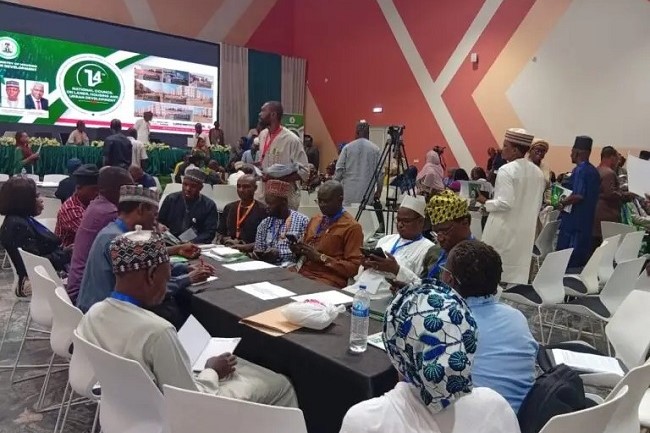
The Minister of Housing and Urban Development, Ahmed Musa Dangiwa, said this while declaring open the 14th meeting of the National Council on Lands, Housing and Urban Development on Monday in Ilorin, Kwara State.

The 14th National Council had the theme: “Achieving Housing Delivery and Sustainable Cities Through Effective Land Management, Urban Renewal, Promotion of Local Building Materials, and Public-Private Partnership in Nigeria.”

National Council on Lands, Housing and Urban Development
Participants at the 14th meeting of the National Council on Lands, Housing and Urban Development in Ilorin, Kwara State

Represented by Alhaji Mukhtar Ilyasu, the Director of Planning, Research and Statistics in the ministry, Dangiwa said that the strategy placed effective land administration at the centre of housing delivery nationwide.

He explained that the policy adopted urban renewal as a key tool for rebuilding Nigerian cities, while positioning private sector investment as the main driver of mass housing development.

”Nigeria’s housing deficit, estimated in the tens of millions, remains one of the country’s most pressing social and economic challenges, driven by rapid urbanisation, population growth and rising construction costs.

“The new framework is expected to guide housing delivery, land administration, and urban development planning across the Federation in the coming years.

”Urban renewal and regeneration have been adopted as national policy tools to modernise cities, curb uncontrolled urban expansion, and respond to population pressure and climate challenges,” he said.

The minister also disclosed that the Federal Government was prioritising the large-scale use of locally sourced building materials and construction technologies to reduce costs, improve affordability, and strengthen domestic industries.

He said public-private partnerships would serve as the main engine for mass housing and urban infrastructure delivery across the country.

The Kwara Commissioner for Housing and Urban Development, Dr Segun Ogunshola, said challenges affecting housing provision persisted, but the state government was implementing measures to address land and housing shortages.

He said the 20,000-unit Kwara Smart City Project was already laying the foundation for a next-generation mega city, adding that the project’s master plan had been reviewed to improve livability.

The commissioner added that municipal areas across the state had been upgraded with improved water supply, road networks, and other infrastructure to enhance urban development and beautification.

Earlier in her remarks, the Permanent Secretary, Kwara State Ministry of Housing and Urban Development, Alhaja Risikat Abdulazeez, called for a holistic approach to reducing the housing deficit amid rapid urbanisation.

The National Council Meeting is a forum that provides a strategic platform for aligning federal and state policies and accelerating reforms in the housing and urban development sector.

The meeting remains a critical avenue for strengthening intergovernmental collaboration, reviewing sectoral policies, and evolving practical solutions to fast-track the delivery of affordable housing and sustainable urban development across the country.

Participants at the meeting include states’ commissioners, permanent secretaries, directors in charge of Lands, Housing and Urban Development and chief executives of Housing Corporations.

Surveyor-Generals, professional bodies, and other key stakeholders in the built environment sector were also present.

By Bushrah Yusuf-Badmus

EHCON declares public health emergency over emissions-related diseases

0

The Environmental Health Council of Nigeria (EHCON) has declared a public health emergency over environmental diseases linked to greenhouse gas emissions nationwide.

The council’s Registrar and Chief Executive Officer, Dr Yakubu Baba, confirmed this on Monday, January 19, 2026, at a news conference in Abuja.

Baba said the declaration aligned with President Bola Tinubu’s Renewed Hope Agenda to strengthen environmental public health nationwide.

Environmental Health Council of Nigeria (EHCON)
Officials of the Environmental Health Council of Nigeria (EHCON) at the news briefing in Abuja

He said EHCON was raising a national alarm over the silent but rapidly escalating burden of emission-related diseases.

According to him, environmental diseases from greenhouse gas emissions represent one of the greatest silent public health threats of this period.

“Declaring a state of emergency is not an exaggeration; it is a necessity. EHCON stands fully prepared, alongside partners, to lead this urgent response.

“The health of Nigerians today and tomorrow depends on actions taken now. We call on government, industry, communities and the media to support this initiative,” Baba added.

He said the council was also raising awareness about the health burden of combustion-engine pollution across the country.

Baba said the emergency declaration was necessary as Nigeria faces rising, preventable deaths from pollution-induced diseases daily.

He attributed the situation to unregulated reliance on combustion engines, weak emission controls, rising healthcare costs and loss of productive human capital.

Baba warned that failure to act decisively would overburden the healthcare system and undermine national development.

“Our investigations reveal environmental diseases linked to air pollution are increasing beyond the long-term public health impact of COVID-19,” he said.

He said many Nigerians who neither smoke nor drink are increasingly diagnosed with acute and chronic respiratory infections.

Baba listed associated conditions as lung and other environmentally induced cancers, cardiovascular diseases, systemic inflammation and climate-related dust exposure.

“These are linked to prolonged exposure to black carbon, particulate matter and toxic emissions from generators, heavy vehicles and industrial operations,” he said.

He added that marine engines, port activities, mining and petroleum operations worsened the largely invisible but devastating emergency.

Baba said emergency actions included intensified inspections of high-emission facilities and transport corridors, alongside mandatory compliance audits.

Other measures include sanctions under the 2024 Environmental Health Provision Rules and targeted emission-reduction interventions.

He said EHCON would deploy 70,000 environmental and public health response staff nationwide for surveillance and rapid response.

Additional measures include regulating fuel additives, mandatory emission testing for generators and vehicles, and phased restrictions on highly polluting engines.

Baba said the response would reduce pollution-related deaths, improve air quality and strengthen environmental public health governance.

He added that enhanced compliance would boost national resilience against environmental health threats.

By Felicia Imohimi

UN urges media to spotlight humanitarian crisis 

0

The United Nations has called for stronger global media engagement on humanitarian crisis around the world, particularly the situation in Yemen.

The organisation said that limited international attention is hampering awareness and support, at a time when millions face deepening food insecurity, health risks and shrinking aid resources.

The UN Resident and Humanitarian Coordinator for Yemen, Mr. Julien Harneis, made the call on Monday, January 19, 2026, during a news conference on the humanitarian situation in the country.

Julien Harneis
UN Resident and Humanitarian Coordinator for Yemen, Mr. Julien Harneis

He warned that the situation in Yemen is expected to deteriorate further in 2026, amid worsening food insecurity, economic pressures and reduced funding for critical services.

Harneis noted that in 2025 alone, about 19.5 million people were in need of humanitarian assistance, while the Humanitarian Response Plan was only 28 per cent funded.

He attributed the bleak outlook to economic and political decisions that were exacerbating food insecurity across all parts of Yemen.

According to him, the worsening food situation is already manifesting in rising levels of malnutrition and increased pressure on the health system.

Harneis noted that Yemen’s health system had been supported by the United Nations, in collaboration with the World Bank for the past 10 years, but warned that this support would significantly reduce.

“We’re going to see a major change there, where the health system is not going to be supported in the way it has been in the past, and that is going to have very major consequences.

“Yemeni government lacks the capacity to finance and sustain the health system, leaving the country vulnerable to disease outbreaks.

“In a country which has already seen the highest rates of measles in the world, and which has frequently had cholera epidemics, we’re going to be very vulnerable to epidemics across the country, particularly in the North,” Harneis added.

The UN official said that humanitarian operations in northern Yemen were further complicated by the detention of 73 UN personnel as well as the seizure of UN offices.

He described the detentions as part of a broader pattern, noting that staff of international NGOs, embassy workers, activists and political actors, had also been detained often without public attention.

Harneis said that UN was working with the broader humanitarian country team, including international and national NGOs, to explore how other organisations could step in to cover gaps left by the UN.

He, however, stressed that some capacities were unique to UN agencies.

“Only the UN agencies have the scale of response that is required for a country where, for example, 2,300 primary health care facilities have been supported by UN agencies.

“No INGO has the capacity to support all of that,” he said.

He acknowledged that the humanitarian community would attempt to restructure and reorganise its response, but described the current circumstances as “deeply challenging”.

On media coverage, Harneis said that while regional and Arabic-language media paid attention to developments in Yemen, there was limited access to areas outside government control.

He added that although humanitarian organisations regularly briefed the UN Security Council and the Office of the High Commissioner for Human Rights on the situation, international media engagement remained insufficient.

“The international media is not engaging with Yemen in the way that is needed now and the UN also needs to do more outreach.”

He clarified that while food insecurity was a major concern, it was not the direct cause of death.

He argued that food insecurity contributes to malnutrition, but so do poor access to clean water and lack of access to healthcare services.

According to him, when these factors combine with poor socio-economic conditions, they result in malnutrition, leading to increased mortality and morbidity, especially among children.

Harneis consequently, identified Nutrition, public health at the primary healthcare level, as well as freedom and security, as key priorities for humanitarian actors.

By Busayo Onijala

×