The Nigerian Meteorological Agency (NiMet) has predicted partly cloudy weather conditions over the central states of the country in the morning of Monday, March 18, 2017 with chances of localised thunderstorm over Jos, Makurdi, Lafia and Abuja in the afternoon and evening hours.
cloudy weather
NiMet’s Weather Outlook by its Central Forecast Office in Abuja on Sunday also predicted day and night temperatures in the range of 34 to 41 and 18 to 26 degrees Celsius respectively.
The agency predicted that the southern States would experience cloudy morning over the Inland states with prospects of localised thunderstorm over Enugu, Owerri, Akure, Abeokuta, Oshogbo and Shaki in the afternoon and evening period.
It also predicted cloudy condition over the coastal cities with prospects of localised thunderstorms over Calabar and Eket in the morning hours.
NiMet further predicted localised thunderstorm over the entire region in the afternoon and evening hours with day and night temperatures of 33 to 37 and 21 to 27 degrees Celsius respectively.
According to NiMet, northern states will experience partly cloudy to sunny conditions throughout the forecast period with day and night temperatures in the ranges of 37 to 41 and 15 to 27 degrees Celsius respectively.
“Stable conditions are anticipated over the northern states with chances of localised thunderstorm over some places in the southern region in the next 24 hours,” NiMet predicts.
A Cross River State-based environmentalist, Chief Edwin Ogar, has called on the federal government of Nigeria to come out with a law regulating the number of children couples can have so as to check deforestation in the country.
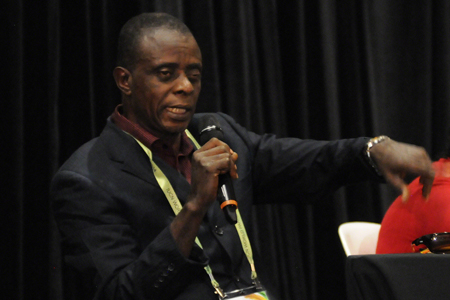
Chief Edwin Ogar, Programme Coordinator, Wise Administration of Terrestrial Environment and Resources (WATER)
The environmentalist said this call has become necessary considering the massive destruction of the forest today by mankind, adding that, if nothing drastic is done, generations unborn will have no conducive environment to live in.
Delivering a special talk on “environment and generation unborn” at a forest enlightenment campaign programme in Akamkpa, Cross River State recently, he said, “We have destroyed the forest to the extent that the effect is now on us and that is climate change. The future of our children, children is threatened and that is why it is essential for us to protect the forest. There is need for me to pass this message to you to help educate one another on the need to protect the environment so that we can guarantee the future of our children’s lives today and not the one trouble, wastage, new and old diseases that are so destructive will reign”.
Chief Ogar, who is the Programme Coordinator of Wise Administration of Terrestrial Environment and Recourses (WATER), said, “God in its infinite wisdom created the world and created the trees to serve as absorbers of carbon dioxide. Nigeria was a little country with a little population but now we have grown well over 170 million people and all of us are emitting carbon in different ways and it is only the trees that take the carbon and give us oxygen yet we keep destroying the trees and the carbon is becoming excess in the atmosphere, the forest no longer there and the result is the climate change we are suffering from.
“In one aspect, we fall down the trees, burn them and some trees are over 1,000 years and the destroyed trees that have stored carbon for over the years are now released into the atmosphere and the trees are no longer there. The ones that were as big as a large circle are gone and the few trees that are there can longer absorb the carbon and the excess carbon now contribute to climate change that is affecting all of us.
“It is dangerous we celebrate for ourselves today and let our children and generations unborn have a bleak life and it is an irresponsible father or parents can afford to that. If we love our children we must love the forest with all its bio diversity. Let the forest continue to be there for our children and generations unborn.”
Besides the direct activities of man cutting down the forest, he stated that Industrialisation is another key factor affecting the environment as “we know what is happening in Nigeria today as a result of gas flaring and even the few industries here send out so much carbon into the atmosphere, and the only solution is the forest to absorb the carbon and now the forest is gone and we are celebrating millennium development goals, now its social development goals.
“It is not going to work unless we begin to do something that is very practical to change the way things are then we will guarantee the future generation a sustainable life as God created the world. So we need to go back to the drawing board and allow the forest to survive and not everyday we continue to cut down the forest.
“We should keep the forest standing and regenerate it as well. We should exercise limit in the production of children because what we are seeing in Nigeria today is as a result of the production of children. When you have plenty children they have to encroach and plant in the forest.
“We need government legislation on this because if we have a meaningful number of children, then there is little they can do to harm the forest. We need to also do what is called sustainable or intensive agriculture by continuing to plant in one place as it is done in advance countries so as to reduce the pressure on the forest.”
As the African Clean Mobility Week drew to a close in Nairobi, Kenya on Friday, March 16, 2018, participants have identified electric mobility as a workable pathway to a more sustainable and cleaner transport system in Africa.
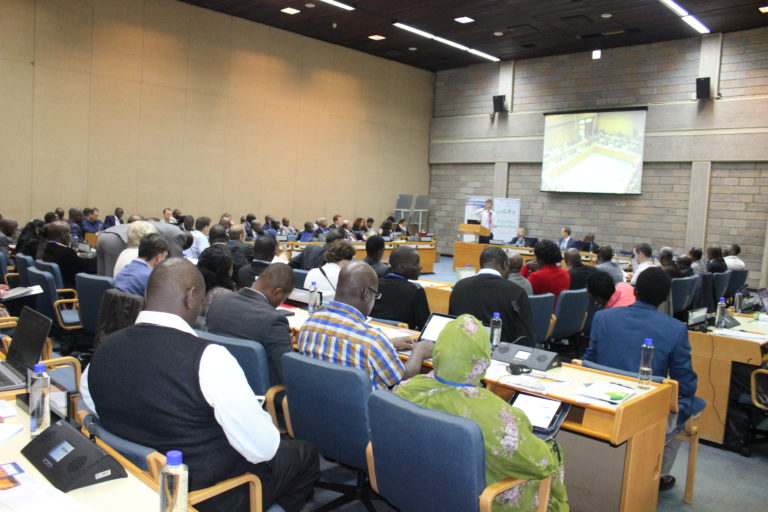
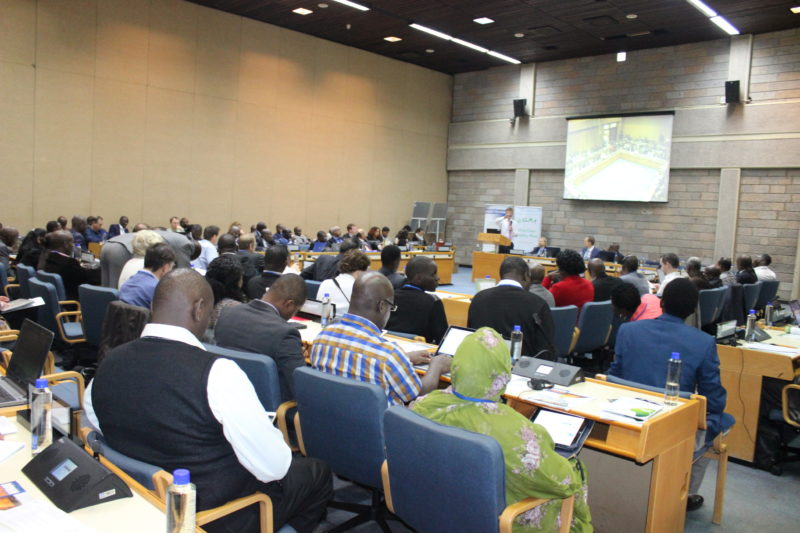
A view of participants at the Clean Mobility Week
This recommendation, alongside other strategies, was approved by delegates to the week-long forum, which comprised representatives of government agencies responsible for transport, environment, energy and finance from 42 African countries; oil and vehicle industry; and donor agencies.
Other delegates were drawn from the academia, civil society and the media.
Taking cognisance of the rapid urbanisation fueled by technological growth as well as Africa’s increasing rate of motorisation which is considered the highest in the world, electric mobility, delegates say, presents an opportunity for African countries to leapfrog to cleaner transport with regards to reduced carbon emissions, improved air quality and economic growth.
African countries, according to the recommendations, are to explore the two low-hanging entry points into electric mobility. These low-hanging entry points revolve round deploying electric/hybrid buses and electric two/three wheelers for public transport.
In view of the fact that only a handful of African countries have put in place policies and regulations on electric mobility, delegates urged African governments to develop fiscal and institutional policy interventions capable of creating a favourable environment for electric mobility uptake.
These policies, they underlined, must be integrated into the wider urban transport system planning with solutions for batteries, recycling and end of life programmes.
However, they warn that Africa’s unique mobility challenges with electric solutions must be understood.
The Africa Clean Mobility Week therefore called for tailor-made products for African countries. These products, according to the delegates, must incorporate electric motorcycles that can run long distances, and on high-load and rough roads.
Local manufacturing capacities are to be strengthened while governments are to set aside resources for peer reviews, and consumer awareness campaigns on the benefits of electric mobility and its impact on everyday life including road safety.
Other recommendations aimed at fast-tracking Africa’s switch to electric mobility include: mainstreaming electric mobility policies into their nationally determined contributions as a way of supporting national and global climate change targets, and the constructive engagement of the private sector.
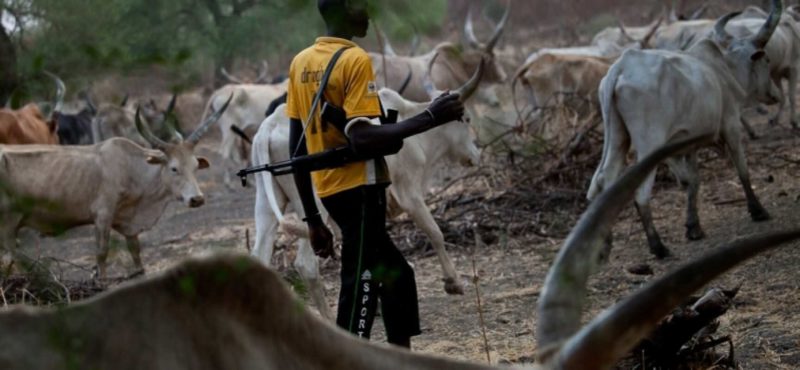
The Socio-Economic Rights and Accountability Project (SERAP) has called on the United Nations (UN) to urgently declare attacks by herdsmen in Nigeria as acts of terrorism.
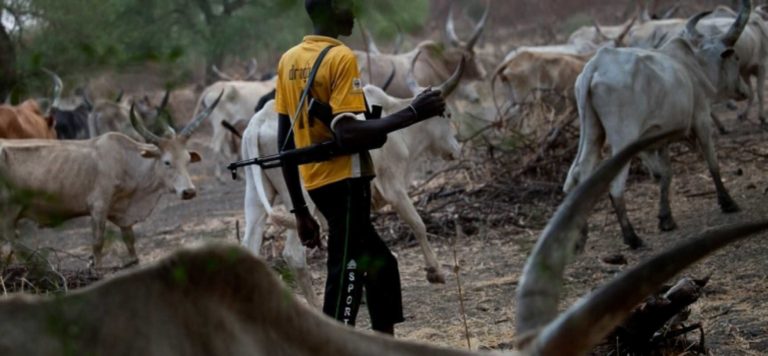
A armed herdsman
In an open letter to the UN Security Council and its members, SERAP urged them to urgently hold a special session on Nigereia and to visit the country to press the authorities to end continuing killings and destruction of property by suspected herdsmen, particularly in the north-central of the country.
The organisation also asked the Council to treat the atrocities by herdsmen as terrorist acts, in line with the UN Security Council resolution 2349 (2017), which addresses Boko Haram’s presence in the Lake Chad Basin and calls on all states to combat all forms and manifestations of terrorism.
“Declaring attacks by herdsmen as terrorist acts would help make up the authorities to seriously address the threats posed by herdsmen and combat the crimes against humanity being committed against Nigerians,” said SERAP.
In the letter dated Friday, March 16, 2018 and signed by SERAP’s deputy director, Timothy Adewale, the organisation expressed serious concern that the government of President Muhammadu Buhari is failing to uphold its responsibility to protect the citizens from increasing atrocities by the herdsmen which, if not urgently addressed, would pose serious threat to regional peace and security and, by extension, international peace and security.
“The Security Council must act now to protect Nigerians, including women and children, if the Council is not to be accused of failing the people of Nigeria,” declared SERAP.
The organisation said further: “The attacks by herdsmen have uprooted families, destroyed communities’ socio-economic activities, and taken away their livelihoods and common heritage. These attacks undermine the very purposes and principles of the UN Charter. If not urgently combatted, such attacks may rise to the level of threat to international peace and security. SERAP notes that the first ‘purpose’ listed for the UN is to maintain international peace and security, and to that end: to take effective collective measures for the prevention and removal of threats to the peace.”
The letter reads in part: “SERAP urges the Security Council and its members to publicly condemn these terrorist attacks, express concern about the protection of Nigerians and communities affected by the violations of international humanitarian and human rights law and press the authorities to put in place special mechanisms for bringing those suspected to be responsible to justice, and victims to receive redress, including adequate compensation and guarantee of non-repetition.
“The Security Council and its members should reaffirm that terrorism of all forms and manifestations, such as the growing attacks by herdsmen in Nigeria, are criminal and unjustifiable regardless of their motivations. They should also recognise that security, development and human rights are interlinked and mutually reinforcing and are vital to an effective and comprehensive approach to countering all forms of terrorism in Nigeria.
“The Security Council and its members should adopt a resolution to: Characterise killings by herdsmen as terrorist acts and mobilise international support for Nigeria to combat these attacks, including for the authorities to adopt and implement measures to tackle the causes and consequences of these attacks and end all forms of terrorism in the country.
“The resolution should also call on the UN Secretary-General to carry out a joint visit to Nigeria with the High Commissioner for Human Rights, Chairperson of the African Union Commission, and the African Union Peace and Security Council to investigate allegations of killings by herdsmen and to better understand the root causes of these killings and put pressure on the Nigerian authorities to end them.
“The resolution should express concern that unabated killings by herdsmen may ultimately contribute to undermining the ability of the Nigerian authorities to provide security, good governance, social and economic development in the country. It should affirm the international community’s solidarity and full support for the victims of killings by herdsmen and the communities affected, including those displaced because of the attacks.
“The Security Council and its members should support collaboration with the African Union Peace and Security Council to combat the threats posed by herdsmen and enable both institutions to support stability and development in Nigeria. We believe that a UN Security Council resolution would help to put pressure on the Nigerian authorities to take urgent and concrete measures to end the killings and secure the safety of all Nigerians. We urge you to act urgently as recommended, and we would be pleased to discuss these issues further.
“SERAP notes that hundreds of people including women and children, have been killed apparently by herdsmen, and several more have been displaced and others forced to flee their homes and communities. The past weeks alone have seen some of the worst attacks against innocent citizens, including unlawful killings, destruction and pillage of property by herdsmen across the country. The attacks have been fuelled by impunity that has plagued the authorities’ response to the problem.
“According reports, at least seven people have been killed and property worth millions of naira destroyed following series of attacks on Takum and Ussa local government areas of Taraba State by herdsmen. In Plateau State of Nigeria, a man identified as Joseph Alli, 23, was killed and beheaded by herdsmen during a fresh attack on Rotsu village, Miango District in Bassa Local Government Area of the State.
“His killers reportedly ate the food that he was about to eat, burnt the kitchen and food barn in the house and left. Three houses around the area were also burnt. In Kogi State, at least 50 people have been killed, with several still missing following an attack on Oganenigwu in Dekina Local Government Area of the state by herdsmen.”
The Security Council has five permanent members: China, France, Russian Federation, the United Kingdom, and the United States, and 10 non-permanent members elected for two-year terms by the General Assembly. The non-permanent members are: Bolivia; Côte d’Ivoire; Equatorial Guinea; Ethiopia; and Kazakhstan. Others are: Kuwait; Netherlands; Peru; Poland; and Sweden.
The presidency of the Council is held by each of the members in turn for one month, following the English alphabetical order of the Member States names. The current president of the Council is the Netherlands.
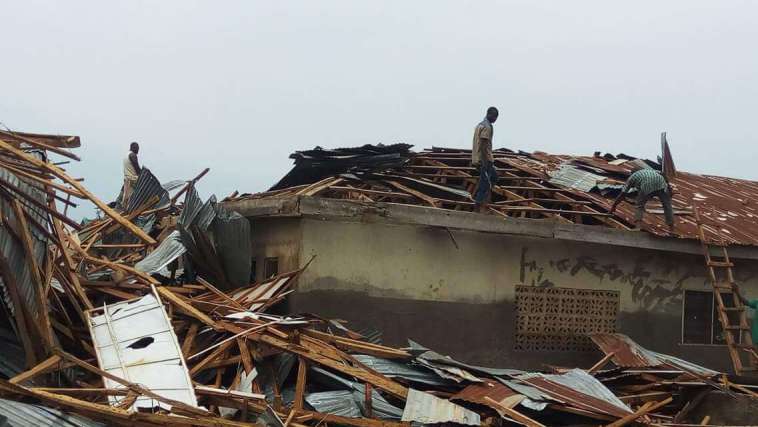
Hundreds of residents in various parts of llorin, the Kwara State capital, have been rendered homeless by rainstorm, following downpour which lasted for over three hours in the evening of Saturday, March 17, 2018.
A house with its roof blown off in Ilorin
The News Agency of Nigeria (NAN) reports that some of the affected houses, which had their roofs blown off by the storm, were in densely populated areas of the township.
NAN observed that several belongings of the victims including clothing, food items, electrical gadgets and other valuables littered the ground in the affected areas.
Some of the affected areas in llorin and its environs were Ganmo, Gaa Saka, Alore Guniyan, Agbooba, Adewole, Kuntu, Magaji Ogidi compound and Okelele among others.
One of the victims, Alhaji Oba Aremu, who resides at Magaji Ogidi compound, Ojuekun area of llorin, told NAN that his residence was completely damaged by the storm.
Aremu explained that he and his 15 family members were currently taking refuge in a small place given to them by the Magaji Ogidi, Alhaji Salihu Amosa-Ajape.
Another victim, Alhaji Asinmi Aliyu, who is a landlord of a six bedroom flat at Agbooba in llorin, said that he was yet to quantify things damaged by the rainstorm in his house.
In their separate reactions, some of the victims appealed to both the state and local governments to come to their aid and give them necessary support.
Most of the affected areas are still in total blackout following damages to electric poles and cables.
The Senior Special Assistant to Governor AbdulFatah Ahmed on Media and Communications, Dr Muideen Akorede, while reacting on the development on Sunday, said the state government symphatised with the victims over the incident.
Akorede assured that appropriate agencies of the government would embark on inspection of all the affected areas with a view to support the victims.
Some of the affected residents are now taking refuge in mosques and some with neighbours.
The African Development Bank (AfDB) says it will support Nigeria’s Power Sector Recovery Programme (PSRP) in three areas.
Vice-President, Yemi Osinbajo, receives African Development Bank Vice-President for Power, Energy, Climate Change and Green Growth, Amadou Hott, and other African Development Bank Senior Managers in his office to discuss Nigeria’s Power Sector Recovery Programme (PSRP), State House Abuja
It listed the areas to include: operational and technical intervention, governance issues, and policy based support.
The bank disclosed this in Abuja on Friday, March 16, 2018 in a statement signed by Mrs Fatimah Alkali, the Senior Communications Officer in Nigeria Country Office.
AfDB said it had undertaken a mission to hold further discussions on Nigeria’s PSRP with several stakeholders.
The bank said that the mission was led by Mr Amadou Hott, the bank’s Vice President for Power, Energy, Climate Change and Green Growth.
It said meetings had been held with relevant ministries, departments and agencies (MDAs) to harmonise plans and areas of intervention.
The ministries and agencies include the Ministries of Finance, Power, the Nigerian Electricity Regulatory Commission, the Transmission Company of Nigeria, World Bank and solar power developers.
The bank said the programme was designed to promote energy access to rural communities through the expansion of the transmission grid, development of innovative financing products and provision of technical assistance to improve revenue generation by the distribution companies.
It said the goal of the mission was to identify opportunities for collaboration in the programme.
“The bank’s energy strategy identifies energy as crucial not only for the attainment of health and education outcomes, but for industrialisation, reducing the cost of doing business and for unlocking economic potential and creating jobs.
“In line with its high 5 development priorities, the bank is committed to supporting Nigeria in the effective and efficient implementation of the country’s Power Sector Recovery Programme,” the bank said.
The statement quoted the bank’s President, Dr Akinwumi Adesina, as saying that “Africa is simply tired of being in the dark.
“It is time to take decisive action and turn around this narrative: to light up and power Africa and accelerate the pace of economic transformation, unlock the potential of businesses and drive much needed industrialisation to create jobs,” he said.
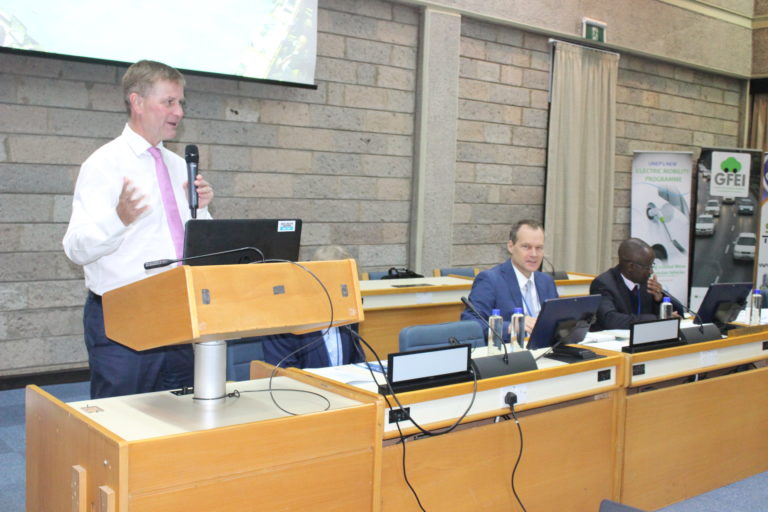
Possibilities for swift transition to clean and efficient mobility exist more in Africa than other regions, experts have affirmed.
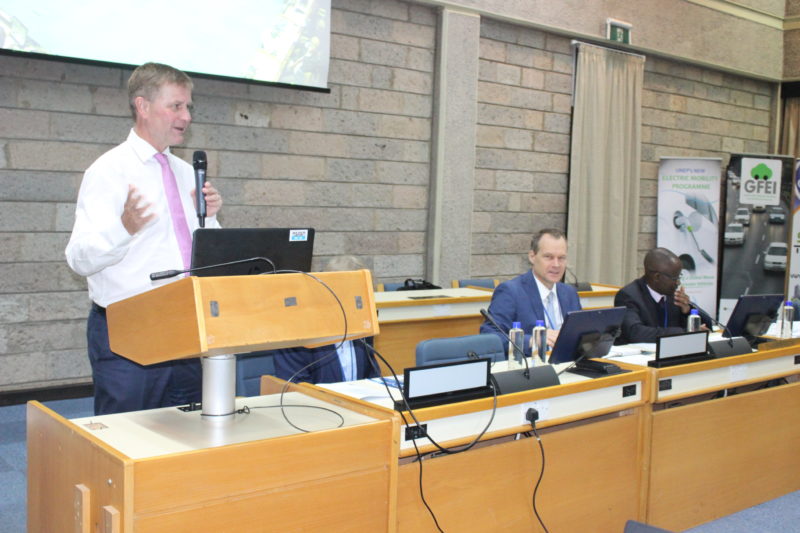
Head of UN Environment, Erik Solheim, speaking during the Africa Mobility Week
Experts at the Africa Clean Mobility Week that ended in Nairobi, Kenya on Friday, March 16, 2018 believe that Africa’s readiness for the much-needed transition remains exceedingly higher than those of other regions that are deeply entrenched in dirty and inefficient fuel economies.
Africa, according to Rob de Jong, Head of the Air Quality and Mobility Unit of the UN Environment, is very ready to transit because the region depends largely on imported fuel to meet 80% of its consumption needs.
The region, he added, “is not producing a lot of vehicles, most vehicles are imported and more than any other continent in the world, Africa can today decide to import cleaner cars and efficient fuel and through this, leapfrog to a new era of clean mobility.”
“In other continents like Asia, where there is so much production of poor quality vehicles, its very difficult to introduce vehicle standards, but for Africa, it becomes easier for the region to set up policy frameworks that regulate the quality of fuel it imports and many African states are already doing that,” Jong said.
Experts are also of the view that a larger part of Africa’s vehicular need is yet to be met even though the region is motorising very quickly. In Kenya for example, the number of vehicles doubles every seven years while in Europe, there are already too many cars and if Africa adopts the clean transition policy today, it will successfully influence a cleaner future.
Jane Akumu, Programme Officer at the Economy Division of the Air Quality and Mobility Unit of the UN Environment, sees great prospects in Africa’s transition to a clean mobility future.
“We see good prospects for progress,” Akumu said. “When we started this move less than a decade ago, Africa was predominantly using lead petrol but today its only one country that is still using lead petrol out of Africa’s 55 countries,” she says.
“What took other regions over a decade was achieved within less than five years in Africa,” Akumu added.
The UN Environment, on its part, has been prioritising and bringing the issues of cleaner transport into the discussions of African ministers and various stakeholders including the private sector, civil society and the media.
“Once issues are prioritised with cost-effective solutions, we see very good and remarkable progress in Africa especially when we link them with health, environment and climate change considerations, it’s a win-win situation,” Akumu said.
Science, technological innovation and a fundamental understanding of nature are among the major drivers of progress. Today’s advances in the treatment of human disease have been made possible by the discovery of penicillin by Alexander Fleming in 1928 and the DNA double-helix structure by Watson and Crick in 1953. These discoveries have saved the lives of countless people battling with bacterial infections; the number one cause of death in the last century and made possible today’s advances in the treatment of human diseases. Significantly, advances in the agricultural sciences and plant breeding through Green Revolution, has also saved millions of people from starvation.
GMOs. The GM technology has been described as an important tool in the fight against global poverty and food insecurity
Farmers all over the world face the challenge of doubling food production to meet the needs of a population that is expected to reach nine billion by mid-century and maintaining soil and water quality and conserving biodiversity. Maintenance and reservation of natural resources and need to support the livelihoods of farmers and rural populations around the world are major concerns. These challenges which are mainly linked to climate change, food safety and security, poverty and social exclusion, global warming, depletion of fossil fuel resources and fights against disease are already high on the public and political agendas.
In Nigeria, the challenges together with other constraints such as insect range expansion, extreme weather increase, weed pressure and Fulani herdsmen have broadened the scope of the impact. Agriculture, which needed to increase production by 70% to feed the population, is grossly affected by these natural hazards and disasters. Therefore, innovation and technology are fundamental to Agricultural transformation, in the reduction of major impacts and Nigerians, particularly farmers need to make decisions under these extreme unstable and insecure circumstances. Besides, there is need to support farmers and increase access to innovation, impact policy and improve public perception.
To counterpoise the predicted increase in the world population and the related implication of climate change, science has to develop technologies that increase yields and productivity in a sustainable way, while lowering the demand for fertilisers and pesticides, and adapting crops to match the effects of changes in the environment.
Technological development and demonstration activities are some of the world’s largest international projects for basic and applied research, and are means of our collaborative innovation to tackle these global challenges we face.The concept of the Bio-Economy provides many scientific and technical solutions to enhance resource efficiencies and reduce environmental footprints through an economically viable and socially responsible approach. The basic challenges for global institutions and industries will be to increase resource efficiency and develop more eco-efficient products and life cycles.
Biotechnology became the key component of the Bio-Economy due to its large diversity. It is a concept applicable in a range of fields ranging from primary production to industrial and pharmaceutical applications, and involving emerging technologies such as synthetic biology. Modern biology is used to address major challenges, including food and feed security and safety, the development of renewable resource platforms and pharmaceuticals, while improving environmental sustainability.
Biotechnologies could provide us with useful tools in sectors such as agriculture, fisheries, food production and industry. Crop production will have to subsist with rapidly increasing demand while ensuring environmental sustainability. In order to achieve the best solutions, we must consider all the alternatives for addressing these challenges using independent and scientifically sound methods. These alternatives include genetically modified organisms (GMO) and their potential use.
Undeniably, GM technology is an important tool in the fight against global poverty and food insecurity and based on a growing body of evidence, biotechnology is not more risky than alternative technologies. The introduction of such advanced processes and materials based on biotechnology and GMOs has enormous potential not only to enhance quality of life while reducing environmental footprints, but also to improve the competitiveness of global industry. As with all new technologies, the potential risks and benefits must be identified and quantified. You will note that recent projects dealing with the development of new products and processes based on GMO technology fully integrate safety assessments in their conception, experimentation, development and application.
As published in “A decade of EU-funded GMO research”, a publication of the Directorate-General, European Commission, for research and development; the principles laid down in the “Europe 2020” Strategy, adopted by the European Council on 17 June 2010, where building the Bio-Economy is one of its main targets, are aiming to “… re-focus R&D and innovation policy on the challenges facing our society, such as climate change, energy and resource efficiency, health and demographic change. Every link should be strengthened in the innovation chain, from ‘blue sky’ research to commercialisation.” It stated “that these principles will enable Europe to thrive in an even more competitive and resource-limited global economy, providing education, knowledge, health support and, above all, job opportunities for generations to come”.
From same publication, review of the last 10 years of research projects launched under the Framework Programmes for research, technological development and demonstration activities, focusing on safety aspects of GMOs, took account of developments in the field over time. It shows that more than €200 million has been invested through the Framework Programmes since the year 2001, developing agricultural management techniques for co-existence, tools for detection in and analysis of food and feed, and methods for risk assessment of GMOs, thus responding to the need of farmers, consumers, industry and policymakers. Estimates indicate that the European Bio-Economy is worth €2 trillion annually and accounts for some 22 million employees. The EU already has a very strong research presence in the field, for example in industrial and pharmaceutical biotechnologies, and includes significant know-how on the health-related aspects of the Bio-Economy. It is quite interesting to note these developments from Europe.
However, “economic pressure in a globalised world and the experience with biotechnology in Europe should encourage us to pursue the development and application of all available technologies without prejudice, while respecting fundamental safety and ethical principles. It is predicted that, whereas the past century was transformed with the commercialisation of personal computers and the development of the Internet, the 21st century will be revolutionised by our growing understanding of the functioning and interaction of biological systems, whether at the molecular or at the ecosystem level’’.
However, sound policy, which shall take account of a wide range of views, must be based on sound science. Only a structured dialogue with policymakers, stakeholders and the public, based on science and empirical evidence, will clear the coast for a balanced assessment of the benefits and risks of biotechnology and GMOs within the framework of the bio-economy. Therefore, there is need to support scientific studies on Biotechnologies and the GMOs to ensure available evidence for a constructive debate in our societies.
It is remarkable that after 25 years of field trials without evidence of harm, fears continue to trigger major fuss and controversies like; can a GM crop become a “super weed”, devastating our habitat in a glimpse? Do we disturb the “natural biodiversity balance” more when we grow GM crops than when we stay with traditional crops and intensive monocultures where large quantities of chemicals are used? Does the involuntary and irreversible spread of genes really represent such a danger and justify such an alarming scenario? The potential adverse effect on non-target organisms is also frequently mentioned by ecologists.
It should be noted that meeting the challenge of proving the safety of GM crops is not so easy. Apparently, it looks scientific, but not at all. Science can certify the existence of danger, but not its absence. Expert contention that a 100 % GM variety approved for commercialisation is neither more nor less of a health or environmental problem than its parent crop will not shelve these questions. The scientific world did not realise that it was not just enough to say that intensive agriculture causes environmental disruption, independent of whether the crop is GM or not, and that we can in any case develop novel GM varieties that are more environmentally friendly. Our society needs a step-by-step evidence of studies that support such statements.
Fortunately, genomic studies of the last decade, as published on page 55 of “A decade of…; have demonstrated that a genome is not a static entity but a dynamic structure continuously refining its gene pool. The adaptation, survival and evolution of plants depend on their ability to alter genomes through transposition of the movable elements, accumulation of deletions, insertions, gene amplifications and point mutations. So, for a scientist in genetics, the act of splicing to generate a transgenic organism is a modest step when compared to the genomic changes induced by all the ‘crosses’ and breeding events used in agriculture and husbandry. The molecular biology tools simply add a new precision, speed and reach to this indispensable process of species domestication’’.
It was therefore a surprise for scientists to discover that public opinion did not “buy into” this line of thought. Reports from EU fact sheets stated that “GM foods currently available on the international market have passed safety assessments and are not likely to present risks for human health. In addition, no effects on human health have been shown as a result of the consumption of such foods by the general population in the countries where they have been approved. Continuous application of safety assessments based on the Codex Alimentarius principles and, where appropriate, adequate post market monitoring, should form the basis for ensuring the safety of GM foods”.
Prof. B.O Solomon from Obafemi Awolowo University Ile-Ife, Nigeria, pointed out that is important that farmers and consumers of crop products in Africa be given an opportunity to benefit from increased opportunities, productivity, and efficiency which can result in low costs of food by having GM crops commercialised in African countries. According to Clet Masiga from Uganda, ‘’Every field is using scientific innovations to advance and there should be no exception in plant breeding”.
By Edel-Quinn Agbaegbu (Executive Directo, Every Woman Centre – EWHC; Secretary, National Biotechnology and Biosafety Consortium – NBBC)
A research project by Amnesty International has exposed evidence of severe negligence by oil giants Shell and Eni, whose approach to oil spills in the Niger Delta seems to be exacerbating an environmental crisis.
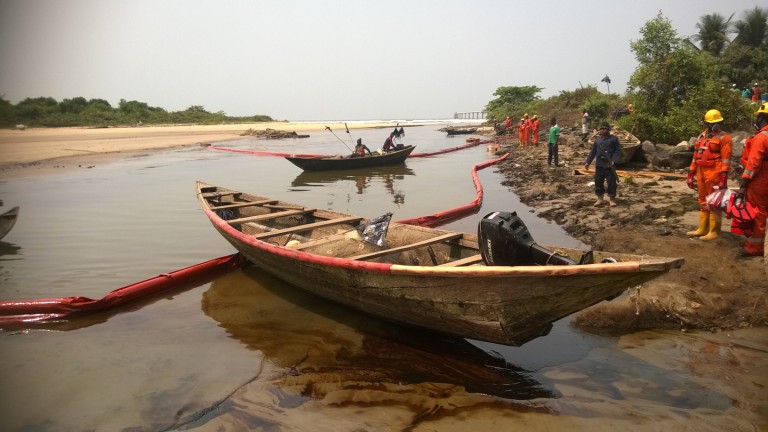
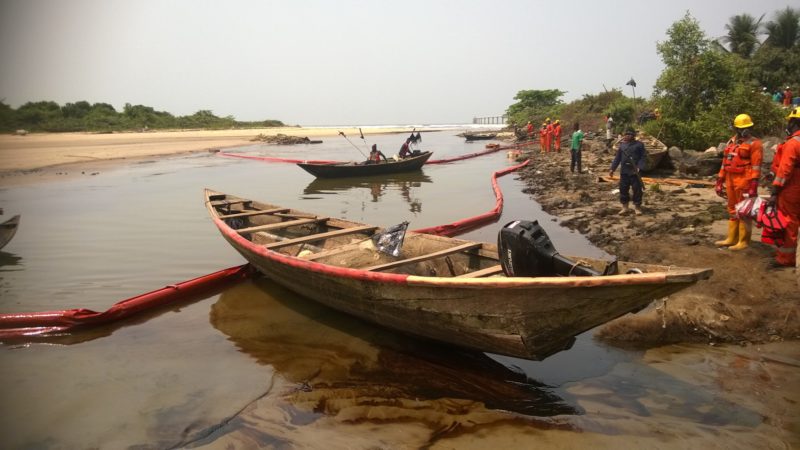
Attending to oil spill in the Niger Delta
Through the Decoders network, an innovative platform developed by Amnesty International to crowdsource human rights research, the organisation enlisted thousands of supporters and activists to collect data about oil spills in the Niger Delta. Their findings were then analysed by Amnesty International’s researchers and verified by Accufacts, an independent pipelines expert.
According to this publicly available data, Amnesty International found that Shell and Eni are taking weeks to respond to reports of spills and publishing ambiguous information about the cause and severity of spills, which may result in communities not receiving compensation.
“Shell and Eni claim they are doing everything they can to prevent oil spills but Decoders’ research suggests otherwise. They found that the companies often ignore reports of oil spills for months on end – on one occasion Eni took more than a year to respond. The Niger Delta is one of the most polluted places on earth and it beggars belief that the companies responsible are still displaying this level of negligence,” said Mark Dummett, Business and Human Rights Researcher at Amnesty International.
“Adding insult to injury is the fact that Shell and Eni seem to be publishing unreliable information about the cause and extent of spills. The people of the Niger Delta have paid the price for Shell and Eni’s recklessness for too long. Thanks to Decoders, we’re a step closer to bringing them to account.”
Amnesty International is now asking the Nigerian government to re-open investigations into 89 oil spills.
What Decoders did
Decoders collected information about the contents of the reports that Shell and Eni publish each time they visit the site of an oil spill. These reports detail the likely cause, location and extent of the damage, and are often accompanied by photographs. They are important because companies pay compensation to affected communities based on this information.
Previous research by Amnesty International has revealed that the information in these reports is often inaccurate. For example, Shell reportedly understated the amount of oil spill in the fishing town of Bodo between 2008 and 2009. With the help of Amnesty International, the Bodo community eventually took legal action, forcing Shell to admit the real amount and pay £55 million in compensation.
To help other communities like Bodo, Amnesty International needed to analyse masses of publicly available data about oil spills, and enlisted activists from around the world to help. A total of 3,545 people, from 142 countries, took part in Decode Oil Spills. They answered 163,063 individual questions about reports and photographs and worked 1,300 hours – the equivalent of someone working full-time for eight months.
What Decoders found
Decoders’ work helped Amnesty International confirm two main things:
1. Shell and Eni are publishing misleading information
Since 2011, Shell has reported 1,010 spills, with 110,535 barrels (or 17.5 million litres) lost along the network of pipelines and wells that it operates. Since 2014, Eni has reported 820 spills, with 26,286 barrels or (4.1 million litres) lost.
Shell and Eni claim that most oil spills in Nigeria are caused by theft and sabotage.
This claim is contested by communities in the Niger Delta, who stand to lose compensation if the companies attribute spills to third party activity. Previous research by Amnesty International has exposed cases where the companies have wrongly labelled spills.
For these reasons, Amnesty International asked Decoders to review and describe all the photographs of spills published by Shell and Eni, and to highlight anything that looked unusual.
They identified at least 89 spills (46 Shell, 43 Eni) about which there are reasonable doubts surrounding the cause provided by the oil companies.
For example, Decoders highlighted photos where spills which appear to have been caused by corrosion were attributed to theft. If confirmed, this could mean that dozens of affected communities have not received the compensation that they deserve.
2. They are not responding quickly enough to reports of spills
Nigerian government regulations require companies to visit the site of a spill within 24 hours of reporting it.
Analysis of company documents shows that Shell responded within 24 hours of a spill occurring on only 26% of occasions, compared to Eni which did so on 76% of occasions. The data also shows that Shell’s response to spills has become slower over time, even though the number of spills it is reporting has reduced. On one occasion it took 252 days to visit the site of a leak.
“The government regulations are there for a reason. The longer companies take to respond to spills, the higher the risk of oil spreading into food and water sources, and Shell knows this. There’s no way they’d be so irresponsible if their oil was seeping into European land,” said Mark Dummett.
By far the slowest response was recorded when Eni took 430 days to respond to one spill in Bayelsa State. Eni told Amnesty Interntional that the delay was caused by the local community refusing to give it permission to visit the site, although this information was not reported at the time. When the company finally showed up, it calculated the amount of oil spilled by measuring the area that was visibly contaminated – amounting to four barrels.
Amnesty International consulted pipeline experts Accufacts, who verified that this figure is not credible, highlighting the problem with the way spills are measured.
“Eni’s risible claim that just four barrels of oil were spilled over the course of a year demonstrates the urgent need for better regulation. Oil that spreads into swampland and rivers quickly becomes invisible, but this does not mean it becomes harmless. A quick visual assessment is not an accurate measurement of pollution, and it’s likely that this approach is resulting in understatement across the board,” said Dummett.
“We consider Shell and Eni to be deliberately reckless and therefore wilfully negligent in their operations in Nigeria – their failure to operate in line with Nigerian law and best practice standards is having a devastating impact on the human rights of Niger Delta communities.
“Decoders is people power at its best. By giving just a few minutes of their time, activists are helping us hold these oil giants to account.”
Recommendations
Amnesty International will present the findings of Decode Oil Spills to the government of Nigeria, calling on it to significantly strengthen its regulation of the oil industry. This includes making sure that the government oil spills agency (NOSDRA) has the tools to ensure that the companies are taking all reasonable steps to prevent and clean up spills.
The home states of Shell and Eni, the UK, the Netherlands and Italy, also have important roles to play. They should step up support for the Nigerian government, and require by law that extractive companies whose headquarters are in their country undertake human rights due diligence measures.
President, Maize Growers, Processors and Marketers Association of Nigeria (MAGPAMAN), Dr Edwin Uche, has advised farmers in the northern part of the country to cultivate vitamin A bio-fortified maize, as the wet season farming sets in.
A maize farm
Uche gave the advice on Friday, March 16, 2018 in a telephone interview with News Agency of Nigeria (NAN) in Abuja.
The advice is sequel to a complaint by Mr Dollah Yusuf, a maize specialist with HarvestPlus Nigeria, at the 2018 stakeholders’ meeting in Abuja on Jan. 31.
Yusuf then moaned that most farmers in the North still preferred to cultivate the white maize, as against the vitamin A bio-fortified disease-resistant, nutrient-rich maize.
Uche said that the association had initiated an awareness campaign in the North to sensitise farmers to the benefits of cultivating vitamin A bio-fortified maize and where the seed could be obtained.
“We are already sensitising farmers across the country; we have been able to work out a plan and budget for the sensitisation campaign, especially in the North.
“We are getting the information down to the grassroots because farmers need to be informed on why they should plant vitamin A bio-fortified maize.
“If you don’t convince the people on why they should embrace vitamin A bio-fortified maize, they will not accept the proposal,” he said.
Uche said that vitamin A bio-fortified maize had been tested extensively in Oyo, Imo, Kaduna, Osun, Ogun states and the result had been “thrilling and fulfilling.
“The passion with which the farmers in the South are embracing vitamin A bio-fortified maize is increasing by the day.
“We are mobilising northern farmers to join in and embrace the planting of this disease-resistant, nutrient rich maize, which will give farmers better yield for their efforts.
“The health benefits of vitamin A bio-fortified maize are numerous and the consumption of this maize can make people live healthy lives,” he said.
Besides, Uche said that the association was interfacing between maize farmers and seed companies to ensure that the farmers got improved seeds, as the wet season farming began across the country.
He advised maize farmers to always approach the association’s officials in all the states for assistance whenever they encountered any problem in the course of their agricultural activities.