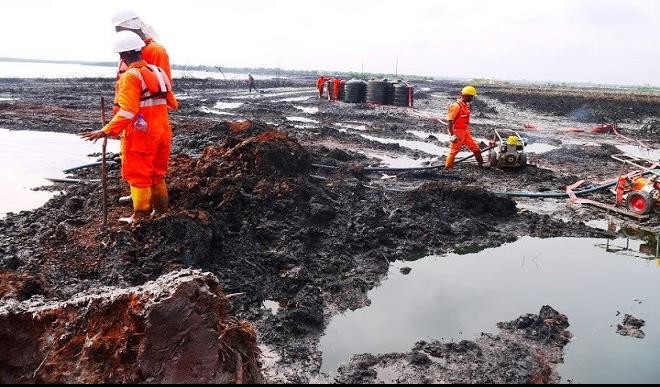
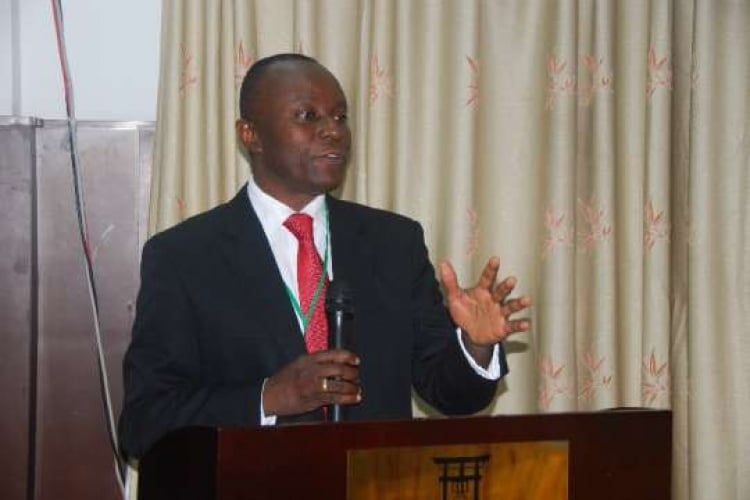
Project Coordinator, Hydrocarbon Pollution and Remediation Project (HYPREP), Dr Marvin Dekil, has commended Ogoni communities for donating several hectares of land to the body.
Ogoniland clean-up
Dekil gave the commendation at a ceremony to mark handover of the expansive land to HYPREP in Lumene-Bangha, Khana Local Government Area of Rivers State on Wednesday, June 20, 2018.
Represented by Mr Isa Wasa, HYPREP’s Head of Communication, Dekil said the expansive landed property would enable HYPREP to fast track clean-up of oil impacted sites in Ogoniland.
He said: “The landed property will be used for the training of Ogoni women and youths for creation of wealth on agro-allied skills in fish farming, feed mills and cropping, among others.
“We pledge to carry everyone along in the clean-up process and in the livelihood restoration programme that is slated to commence soon.”
Dekil told traditional rulers in the area that the project would soon provide potable water to hydrocarbon impacted communities as recommended by United Nations Environment Report (UNEP) on Ogoni.
He explained that companies have submitted bids for the water project and clean-up exercise and assured that the best companies would be hired for the jobs.
“We thank the Nyo-Khana and Ken-Khana kingdoms for giving us the land. This gesture is not just for us (HYPREP) but for the Federal Government.
“HYPREP’s mandate is to clean Ogoniland and restore its livelihoods; and we are committed to carrying out this mandate,” he assured.
Dekil urged other communities in the area to emulate Nyo-Khana and Ken-Khana communities to enable HYPREP fast track the clean-up process.
He said the project would carry out survey on the parcels of land to determine its size.
Speaking, Dr Melford Eguru, Gbenemene of Ken-Khana Kingdom in Khana LGA, said the land was big enough to accommodate any project that would be sited on it.
He urged the Federal Government to accommodate traditional rulers in the clean-up exercise due to the role they play in maintaining peace in the communities.
On his part, the Gbenemene of Nyo-Khana, HRM Suanu Baridam, pledged to support and cooperate with authorities to fast track the remediation process.
Baridam cautioned against the use of the clean-up exercise by some politicians to drive regional and religious sentiments.
The Benue State Government says it has put in place plans for adequate provision of fertiliser to farmers in the 2018 farming season.
Benue State governor, Samuel Ortom
This was made known Wednesday, June 20, 2018 at the Synergos organised AVG/AIG meeting in the Benue State capital, Makurdi, by the Director, Planning and Statistics, Ministry of Agriculture, Mr Lucky Izobo. He revealed that the ministry had procured 180 trucks of fertilisers for farmers and five trucks of granulated organic fertiliser.
According to him, the ministry is doing all it can to sell the fertiliser to farmers at a subsidised rate and also to sell improved seeds at reduced price, in order to encourage farming and support good yields.
He further urged farmers to try and pay back loans taken from government to enable it access more loans for them, and advised them to veer into planting of stimulants like ogbono and bitter kola to create more wealth opportunities for themselves in the agriculture market linkage.
Also speaking, Mr Felix Odife from the Federal Ministry of Agriculture said training was ongoing at the ministry for pig and grasscutter farmers and that the training is free.
He further urged farmers to explore other relevant options to enable the state grow in agricultural business.
In another remark, Mr Donald Akule, President, Prime Multipurpose Cooperative, urged farmers who have access to social media to try and advertise their products on groups.
He said they should also organise lectures online for youths who want to also venture into farming to enable them know the dos and don’ts of farming, as well as what to start with and the benefits.
In his submission, Mr Philip Ogoji from Technoserve while interacting with farmers at the meeting charged them on the way forward to promote market linkage.
According to him, farmers need to promote market linkage with their farm produce.
However, most of the participants blamed the low sale of their products on bad roads, climate change and lack of fertile land.
To that end, they pleaded with the state government to lessen the pre-application process for farmers to enable them access loans for their farms.
A broad combination of policies might be best suited to help achieve both climate stabilisation targets as well as most of the UN Sustainable Development Goals (SDGs). These policies reach from straightforward CO2 pricing to regulation of water and forest protection, to lifestyle changes such as eating less meat, a new study shows.
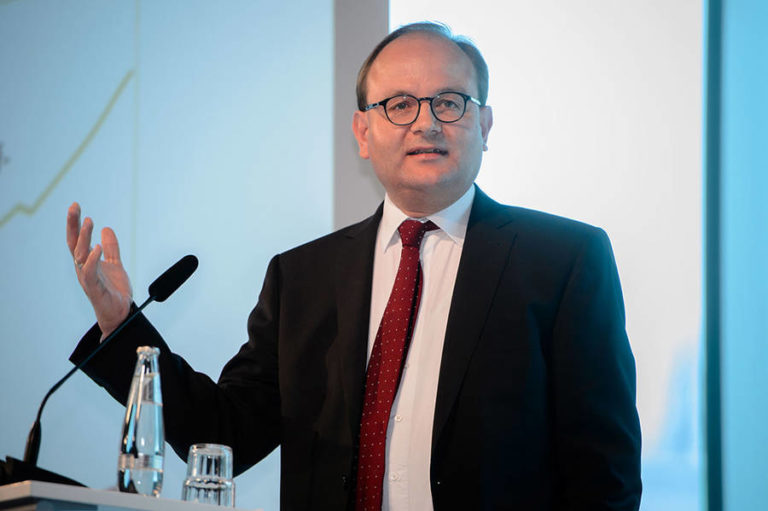
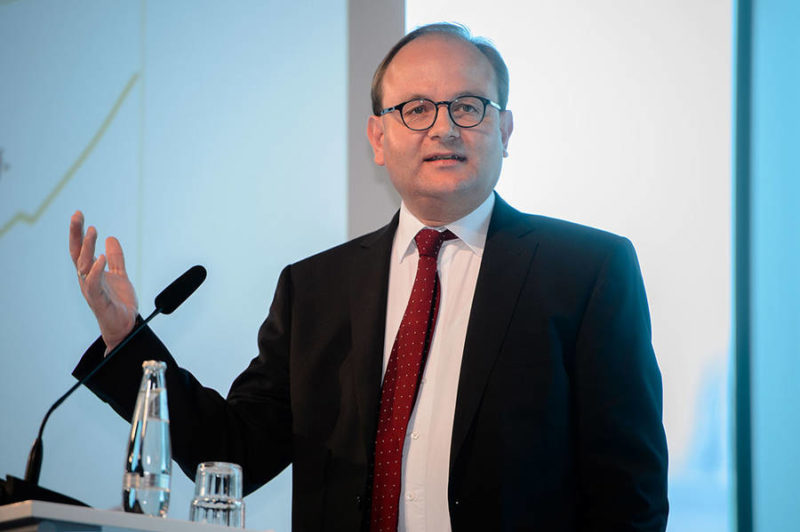
Ottmar Edenhofer, Chief Economist at the Potsdam Institute for Climate Impact Research (PIK)
The scientists highlight the complex interplay between the different targets. A policy focused only on CO2 pricing would cost the least, they show, but would likely trigger substantial land-use changes.
“To keep global warming risks within the limits agreed by governments in the Paris Agreement, we need to fundamentally rebuild our energy systems,” says lead-author Christoph Bertram from the Potsdam-Institute for Climate Impact Research (PIK, member of Leibniz Association). “This will have profound effects in other areas that are relevant for the United Nations’ Sustainable Development Goals, creating both benefits and risks that are very immediate to the people, like on the one hand reduced air pollution and on the other hand higher prices for food and energy.”
Assessing these trade-offs is crucial information for decision-makers. “This is the first study to analyse the impact of different policies on a range of sustainability elements,” says Bertram. “We find that a package of policies can greatly enhance the sustainability benefits of greenhouse-gas mitigation, and reduce the risks.”
The competition for land
The competition for land is one of the key issues here. “Without additional regulation, climate-only polices of a rapid phase-out of fossil-fuelled power generation would for example boost farming plants for generating bioenergy from them,” says co-author Alexander Popp from PIK. “This would reduce greenhouse-gas emissions, since burning the plants only releases the CO2 they have taken up while growning – yet it would also mean large-scale transformation of agricultural land otherwise used for food production, or for ecosystems that safeguard biodiversity. In the worst case, up to one third of today’s cropland area could be used for bioenergy plantations.”
“Some sustainability issues such as food security and access to affordable energy are more salient to the public than climate change – simply because the most severe impacts of global warming will occur in the future. Our study shows that both challenges can be tackled at once: It is possible to design smart climate policy packages that also ensure crucial progress in other key dimensions of human development,” says co-author Jan Minx from the Mercator Research Institute on Global Commons and Climate Change (MCC). “This is good news for governments and society: There is not one but a range of options.”
The researchers analysed 16 policy elements and 12 indicators related to 10 out of the 17 SDGs, using computer simulations, explains Minx. “Scientists need to point out the specific benefits and disadvantages of different policies so that policy makers can make informed decisions.”
Even the best policy package comes with a trade-off
Even the policy package that scores best in most of the analysed sustainability indicators comes with a trade-off: a broad combination of sustainability policies costs more money in the short-term than CO2 pricing alone. The pricing-only policy would keep energy generation costs in check and would in this respect be most cost-effective. Yet such a policy could lead to an increase of food prices by about one third in 15 years due to the use of land for climate change mitigation. In the end, this could potentially run counter the sustainable development goal of zero hunger. To avoid this unintended effect, additional policies would be needed.
The scientists emphasise that a higher cost of a broad combination of sustainability policies, compared with climate-only policy, is not the full picture. The analysis does not spell out climate damage costs that would arise if no policy action at all is taken – yet it is clear that the costs of non-action, both in terms of money and of human suffering, would be tremendous.
Both sustainability benefits and risks increase if ambition is raised to limiting global warming to 1.5 degrees, the aspirational goal mentioned in the Paris Agreement.
“On the one hand, for instance coral reefs might be saved and a risk of long-term complete Greenland melting, resulting in substantial sea-level rise, would be reduced,” says co-author Gunnar Luderer from PIK. “On the other hand, economic short-term costs could triple and long-term costs double. This is because we would have to reduce fossil fuel use much faster, and also rapidly scale up the availability of CO2 removal from the atmosphere by using for instance carbon capture and storage technologies, CCS.”
Lifestyle changes turn out to be one of the most efficient pathways
“Yet, if CO2 pricing would be combined with dedicated policies, the sustainability challenges can be greatly reduced. To our great surprise, such dedicated policies can more than overcompensate the negative side-effects on for instance food and energy prices from strengthening the warming limit from 2 degrees to 1.5 degrees,” says Luderer. “This is an important insight: while more ambitious climate policy certainly is more expensive and hence consumes money needed for other sustainability goals such as poverty reduction, combining the climate policy with other policies can close the sustainability gap.”
Lifestyle changes turn out to be one of the most efficient pathways to complement CO2 pricing. If people reduce for instance air flight travel and meat consumption, this could be offsetting the higher short-term costs of early climate action.
“While options to bring about such lifestyle changes often are very contentious and thus are not at the centre of current policy discussions, these changes appear to have greatest potential for reducing sustainability risks and maximizing co-benefits of mitigation,” says Luderer. “Together, policies and people can achieve more than they think.”
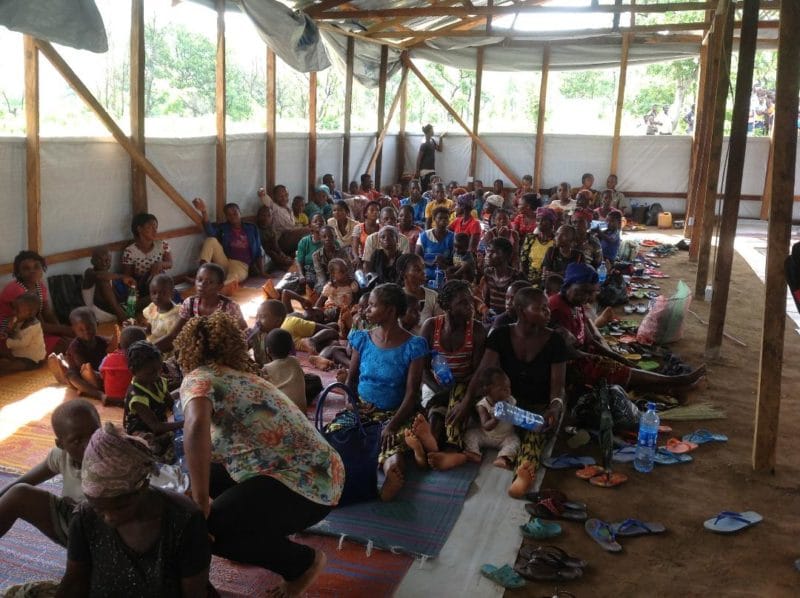
The High Commissioner, United Nations High Commission for Refugees (UNHCR), Mr Philipo Grandi, has expressed worry that about 68.5 million people were currently living around the world as refugees.
Cameroonian refugees in Nigeria
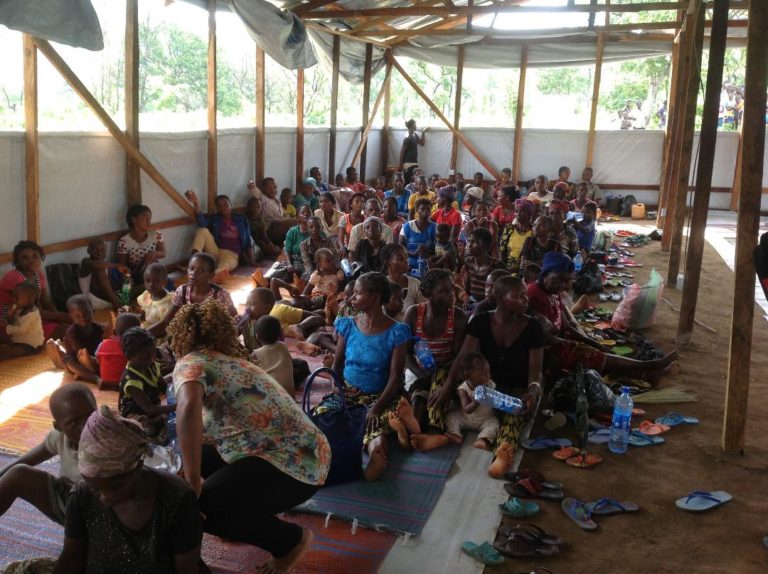
Grandi stated this in his address on Wednesday, June 20, 2018 to mark the World Refugee Day at Anyake, Ikyurav-ya in Menev District, Kwande Local Government Area of Benue State, the settlement where Cameroonian refugees are camped.
He said the growing number of refugees across the world has called for a need to increase support to assist them return home when the time was right, or build new lives elsewhere.
He noted that they needed to be included in new communities and given the chance to realise their potentials.
Stressing further, the High Commissioner urged countries and communities hosting refugees to evolve more systematic, long term support as they take on the job of helping the uprooted families.
Grandi also said that helping refugees to rebuild their lives needed the cooperation of everybody, so that they could achieve what most people take for granted such as education, a place to live, a job, and being part of a community.
“I challenge organisations and others to join us in receiving and supporting refugees in our schools, neighbourhoods, and workplaces,” he said.
In a welcome address, the UNHCR Head of Office Adikpo, Mr Thomas Faustini, encouraged people to strive to be resolving issues amicably, devoid of conflict in order not to displace people.
Faustini further appreciated the Federal and Benue governments, as well as the non-governmental organisations that were taking care of the Cameroonian refugees.
The Senior Desk Officer, UNHCR Geneva, Mr Zulqarnain Anjum, said that the Cameroonian refugees who were of school age would be enrolled in schools in order to build their capacity to be of immense benefit to themselves and the society.
Chairman, Kwande Local Government Area of the State, Mr Terdoo Kente, appreciated the host community for donating their farmlands to be used as camp for the refugees.
Represented by the Vice Chairman, Mr Andrew Orvande, Kente commended the various organisations taking care of the refugees, stressing that it was a Herculean task to cater for displaced people.
Also, the Divisional Police Officer (DPO), Kwande LGA, Mr Rasheed Alli, called for the fencing of the camp so as to check criminality, stating that the Police would continue to ensure the protection of lives and property in the area.
Meanwhile, leader of the host community, Mr Levi Ikyum, charged the refugees not to tamper with the mineral deposits in the area to avoid conflict with the community.
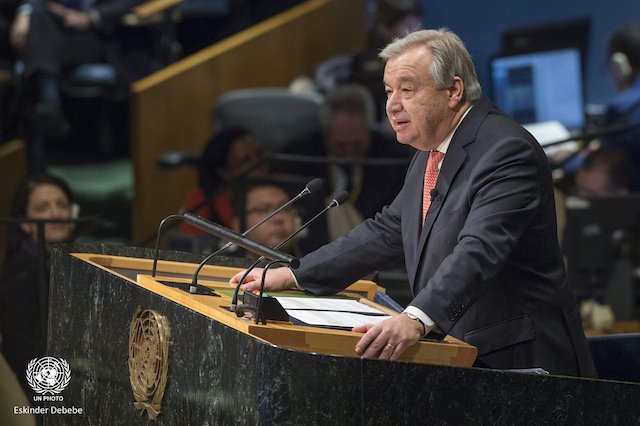
With more than 68 million people worldwide displaced due to conflict or persecution, UN Secretary-General António Guterres has called for unity and solidarity as a first step to support them.
Antonio Guterres, UN Secretary General
Guterres, who made the appeal in a message for the World Refugee Day, observed on June 20, said the number of refugees was roughly equivalent to the population of Thailand.
The UN chief, himself a former High Commissioner for Refugees, reported that a person was displaced every two seconds during 2017.
“On World Refugee Day, we must all think about what more we can we do to help. The answer begins with unity and solidarity,” he added.
Guterres also expressed deep concern over the rise in the number of refugees who are not receiving the protection they are entitled to.
He added that communities, or countries, that provide a safe haven for those fleeing war or persecution should be supported.
Later in 2018, a Global Compact on Refugees would be presented to the international community meeting at UN Headquarters in New York.
Guterres said the global gathering offers “a way forward” while also recognising the contributions that refugees make to the societies hosting them.
“As long as there are wars and persecution, there will be refugees. On World Refugee Day, I ask you to remember them.
“Their story is one of resilience, perseverance and courage. Ours must be of solidarity, compassion and action,” Guterres said.
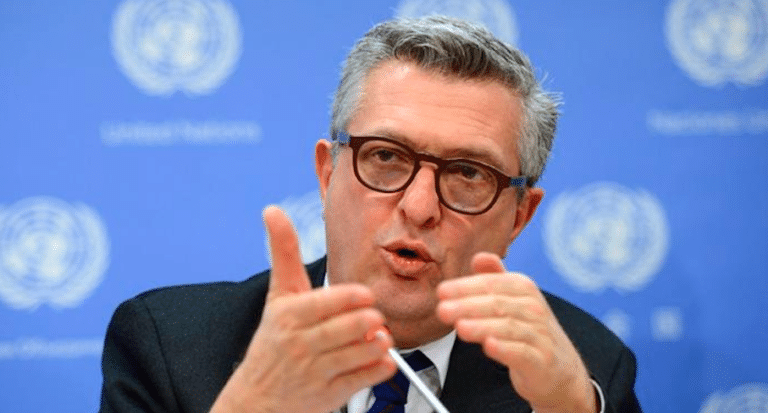
The UN High Commissioner for Refugees (UNHCR), Filippo Grandi, said the number of people forced to flee their homes in 2017 rose to 68.5 million, warning that the world’s displacement hotspots “are becoming hotter”.
UN High Commissioner for Refugees (UNHCR), Filippo Grandi
Grandi also said nearly three million more people were displaced year-on-year, citing ongoing, protracted violence around the globe and a lack of solutions to conflicts as reasons for the increase.
According to him, more than two thirds of all refugees worldwide originated from only a handful of countries.
He said that “continuous pressure on civilians” caught up in fighting, had pushed them to leave their homes.
Top of the list is Syria, where seven years of brutal fighting had forced more than six million people to seek shelter abroad, followed by Afghanistan (2.6 million) and South Sudan (2.4 million).
The High Commissioner noted ongoing concerns over 1.5 million Syrian refugees in neighbouring host countries, including Lebanon, stressing that “it’s not a question of ‘if’, but ‘when’” they will return to Syria – once conditions allow.
New disputes in 2017 were also significant contributors to global displacement, he said.
These include the exodus of more than 700,000 Rohingya refugees from Myanmar to Bangladesh in 2017, he said, adding that it is still not safe for them to return, as well as 1.5 million Venezuelans who had sought shelter in neighbouring countries in Latin America.
Grandi also expressed concern for the Democratic Republic of the Congo, where violence has spread to formerly peaceful areas of the vast country and caused displacement figures to double in 2017, to 4.4 million.
The report also found that 85 per cent of the 68.5 million displaced in 2017 came from poor or middle-income countries.
This, Grandi added, “should be an element dispelling the notion” that the so-called crisis is only in the rich world, “which it is not”.
“It continues to be a crisis mostly of the poor world – so, people from poor countries moving to poor countries, or staying within their country, as displaced.”
In addition, 70 per cent of the world’s displaced are nationals of just 10 countries, according to the UNHCR report.
“This is also significant because it means, frankly, that if there were solutions to conflicts to these countries – or some of them at least – this number could start to come down.
“But we haven’t seen any significant progress in peace-making or peace-building in any of these 10 countries,” the high commissioner said.
In spite of the rise in displacement driven by persecution and violence and the lack of conflict resolution, Grandi struck a positive note, saying solutions were within reach and UNHCR is helping to find solutions to the pressures caused by mass displacement.
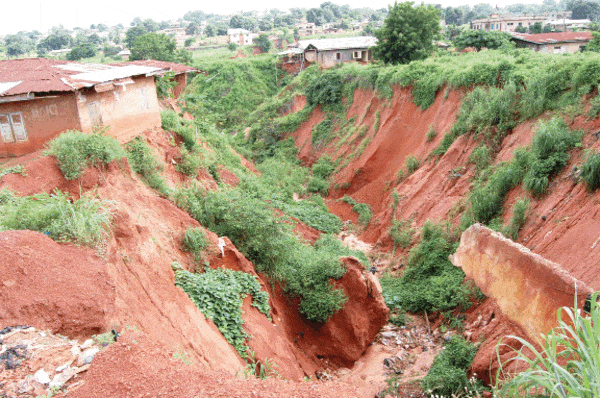
The Nigerian Erosion and Watershed Management Project (NEWMAP) has promised to resettle households of three communities in Anambra State that will be displaced in the course of rehabilitation on erosion sites.
A erosion site in Idemili, Anambra State
Dr Odili Ojukwu, a consultant to NEWMAP in Anambra State, gave the assurance on Wednesday, June 20, 2018 at a stakeholders’ meeting held with representatives of the communities in Agulu, Anaocha council area.
Ojukwu listed the communities to include Agulu in Anaocha Local Government Area as well as Oko and Nanka in Orumba North Local Government.
The meeting was titled “Preparation of Environmental and Social Impact Assessment (ESIA) and Resettlement Action (RAP)”.
According to him, the process of registering people with genuine claims is ongoing, and enjoined the affected people to register.
He said that people expected to register were those whose property, economic trees, farmland and other valuables would be damaged when the civil works begin.
The consultant urged the people to get involved in the entire gamut of the project as it was their own and not a “government thing”.
“This consultation is meant to ensure that no one is left out in our resettlement plan, those whose valuables will be affected during control works should endeavour to register with us.
“People with genuine claims will be commensurably resettled, this is your project, you must take full ownership, it is not the usual government thing because you will still be with the people that will live there,” he said.
In his remarks, Dr Emmanuel Okafor, Permanent Secretary in the Anambra State Ministry of Environment, said the state government was determined to bring lasting solution to the erosion menace in the state.
Okafor, who is also the chairman of NEWMAP Technical Committee, said the engineering design of the project had been approved by the World Bank and the counterpart funds fully paid by the state government.
He said all was set for the commencement of the rehabilitation and urged the people to ensure maximum cooperation with World Bank, the state government and the rest of the team when work began.
Mr Ikeobi Ejiofor, Chairman of Anaocha Council Area, expressed delight that reprieve had finally come their way and called for quality of job that would address the menace sustainably.
Ejiofor said the three communities were united in their common challenge and would render maximum support to ensure that the project succeeded.
“What we need is value for money because we have never come this close to solving the problem.
“Agulu, Oko and Nanka, are good neighbours and are willing to work; we want the work completed in record time,” he said.
Chief Damian Okeke, Chairman of Nanka Erosion Committee, said he was hopeful that this new move to control erosion would be a departure from the previous ones.
Okeke, who is also chairman of Ohanaeze, Anambra chapter, said over 1,000 families in Nanka had lost their ancestral land to the erosion while no fewer than 500 lives had been lost to the menace.
He recalled that previous attempt had been made around 1940 by the colonial masters, 1983 by former Presidents Shehu Shagari in 1983 and Goodluck Jonathan in 2014 but without success.
“It is a welcome development, Nanka community welcomes it, we see hope because we have lived with it for a long time.
“We have been hosting government and international visitors with respective to this erosion since 1940s but this the first time we are seeing high level of commitment, we thank World Bank and Anambra State Government.
“What we want is to save what is left for us, so we are fully ready to cooperate with them,” he said.
In his remark, Mr Mike Ivenso, Project Coordinator of NEWMAP in Anambra State said the project would be executed according to best international standards.
Ivenso represented by Mr Emeka Achebe, Head of Communications in NEWMAP said there would be constant engagements with the affected communities to ensure that their livelihood were normal during and after the control works.
“You can be assured of best of everything, contactors, supervision, social and environmental practices while the project lasts,” he said.
Prof. Laz Ekwueme, Igwe Innocent Obodoakor, traditional rulers of Oko and Agulu respectively, Presidents General of the communities, civil society and other representatives were part of the meeting.
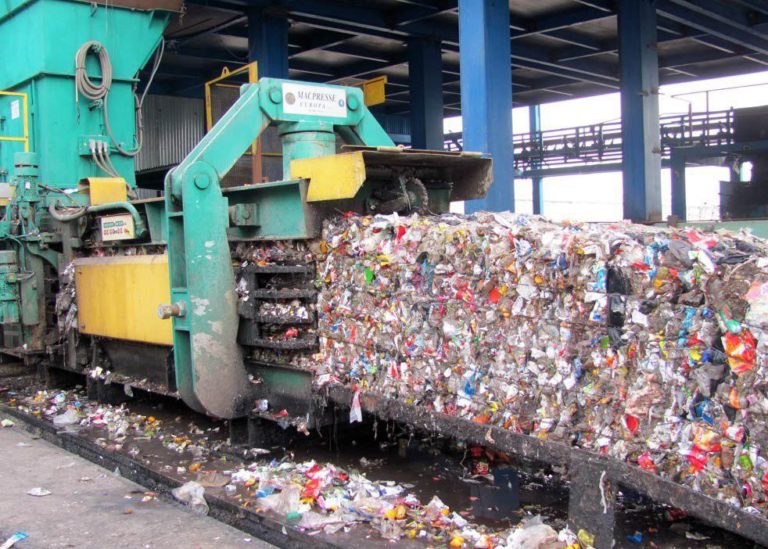
An environmentalist, Lolade Oresanwo, on Wednesday, June 20, 2018 urged the Federal Government to play a pivotal role to driving waste recycling activities in the country.
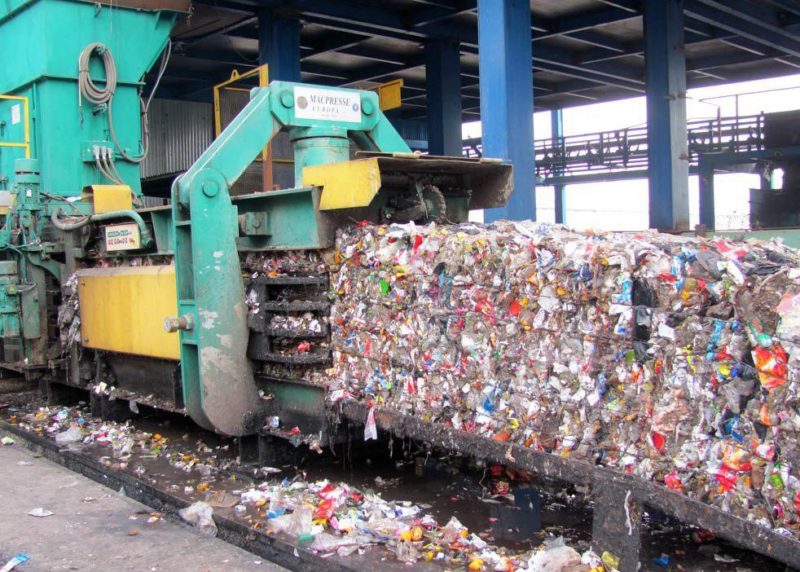
Industrial waste recycling process
Oresanwo, the co-founder of West Africa Energy, told News Agency of Nigeria (NAN) in Lagos that improved waste recycling would facilitate efforts to combat plastic pollution and other environmental hazards in the country.
“The only way to drive recycling is through the government’s involvement. The government has to take a stand to fund and assist businesses that are ready to drive recycling; we will then see a big change.
“The government can also organise public sensitisation and continuous education programmes, while bringing together product recycling stakeholders and assisting them with recycling friendly policies, finance and grants to boost recycling initiatives,” she said.
Oresanwo said that the adoption and practice of recycling innovations around the world was subject to government’s backing and private-sector involvement.
“The adoption of recycling innovations like green roads, for example, falls back to the government.
“If the government decides to use old tyres with asphalt for our road construction, discarded tyres will have more value in recycling and fumes from burnt tyres will no longer pollute our environment.
`If the government aligns with international best practices on single-use plastics and aids product recycling, we will see things change. Once the private sector sees the government backing recycling efforts, changes will come,” she said.
According to her, if recycling projects are supported by the government, they will, in turn, drive employment in the country and ultimately boost the national economy.
“The recycling industry can serve as a way out of the current unemployment in the country. My company currently employs quite a number of people who are involved in recycling.
“If there are about 20 to 50 recycling companies in Lagos state, for instance, unemployment rate in the country will drop drastically,’’ she said.
Oresanwo, however, called for a gradual prohibition of the use of plastic containers in the country because of its negative impact on the environment.
“We can beat plastic pollution in Nigeria by improving industry. There is so much we can do with plastics in terms of recycling and downcycling (a recycling practice that involves breaking an item down into its component elements or materials).
“We can reduce the single-use of plastics rather than banning plastics completely. Let us work towards a gradual ban; let us create industries that will capture these plastics and create employment,” she added.
The Nigerian Meteorological Agency (NiMet) says farmers in Dutse, the Jigawa State capital, may record bumper harvest due to the projected rainfall patterns in its Seasonal Rainfall Prediction (SRP) for 2018.
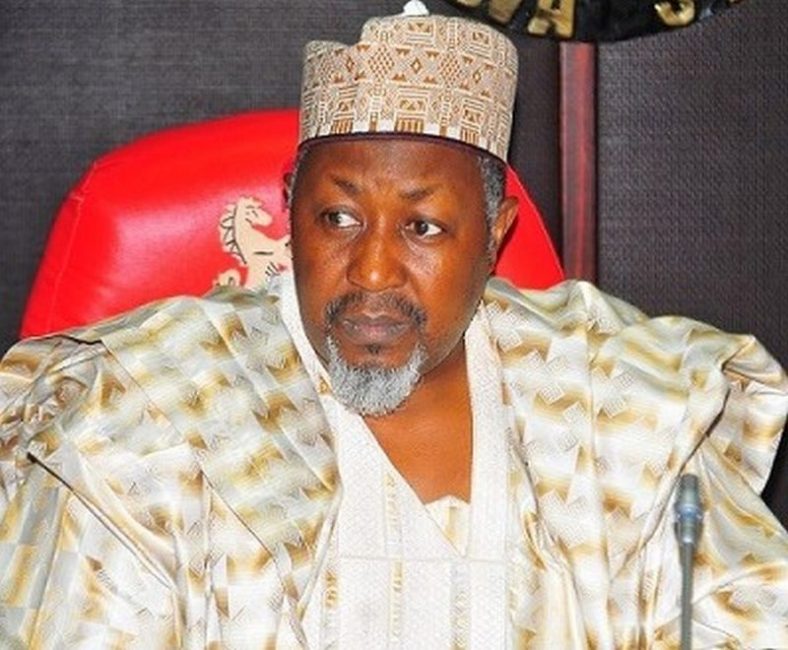
Mohammed Badaru Abubakar, Governor of Jigawa State
Malam Muhammad Abdullahi, State Manager of NiMet, said this in an interview with News Agency of Nigeria (NAN) in Dutse on Wednesday, June 20, 2018.
He said that the predictions of NiMet showed that Dutse would get rain on May 29 but “rains started falling from May 2, May 19 and May 11; which means the rains started before our prediction date.’’
Abdullahi said that with the positive development, farmers would have bumper produce harvests, not only in Dutse but also in other places across the state.
The meteorologist, however, urged farmers not to panic unnecessarily because of the inconsistent rainfall, saying that the rains would stabilise in due course.
“By our predictions, the rainy season will end in Dutse by Oct. 22; there would be 149 days of rainfall while 758 millilitres of rainfall are expected to be recorded,’’ he said.
Abdullahi, nonetheless, urged farmers in the state to plant only improved seeds which were climate-friendly to enable them to get good harvests.
Are you among the cross section of Ghanaians who believe that “GMOs are evil,” “GMOs are very bad,” “GMOs are manufactured by the whites and targeted at Africans to kill us in order to reduce our population,” “the production of GMOs is part of the satanic agenda to keep humans under bondage,” and therefore should not be allowed in the country’s agricultural sector?
Prof. Victor Agyeman, Director-General of Ghana’s Council for Scientific and Industrial Research (CSIR)
Then you are not alone, but belong to the group of people who are highly suspicious of foods and products from genetically modified organisms (GMOs). This has come about, mainly due to the fear of the unknown, because of which, concerned individuals and groups are cautioning people against eating food or using products from genetically modified crops. This is because according to them, such crops or products will have irreversible adverse impacts on human health, the environment and animals.
People are also being told that the process of getting GMOs is unethical and equal to playing God. GMOs are acquired through the scientific process of introducing into plants and animals desirable genes from other related species. This process is known as genetic modification and associated with biotechnology, which are scientific methods used to address certain agricultural and health challenges.
“And this should not be a cause for alarm,” says the Director-General of the Council for Scientific and Industrial Research (CSIR), Prof. Victor Agyeman. “The process is essentially science, and science is the way to go and modern biotechnology including genetic modification is one of the vital new sciences we need as a country,” he added.
In an interview, Prof. Agyeman reminded Ghanaians that science plays a crucial role in fostering socio-economic development for human survival. “There are instances, when for the survival of man, we need to take drastic measures including modern biotechnology,” he said.
Prof. Agyeman noted that the country is currently experiencing fluctuations in the food sector due to decreasing agricultural production as a result of reducing arable lands for agriculture, because of competitive land uses, unsustainable farming practices, rapid population growth, urbanisation and climate change impacts among others factors.
He stated: “If we don’t do anything about the current situation in this country, and allow people’s fears and uncertainties about GMOs and modern biotechnology to stop us from adopting it; we will lose our foods and soils, and ground water will be reduced and our water resources will be depleted.”
And probably, it is high time Ghanaians pay closer attention to the subjects of modern biotechnology and genetic modification by learning more about what they are, how they work and the benefits they have to offer.
The new report released on the impact of genetically modified (GM) corn, provides information that is contrary to people’s fears and can help them learn more about the subject. Published in the February 15th, 2018 edition of Nature’s “Scientific Reports,” by a team of researchers, the report, presents among other things, findings of the study conducted over a 21-year period.
And its conclusion is that there are huge benefits and little risks from genetically modified crops. The results focus on some key areas. One is that genetic modification increases the yields of corn by addressing two sources of loss – pests and weeds that individually accounts for the loss of one third of yields. The Report indicates that genetically modified corn resistance to both experience a 25 % increase in yields. This means producing more food on less land, hence, efficient use of land, less deforestation and less greenhouse gas emissions.
Another key finding is that corn fields experience an average of 60% reduction in damaged crops and none of the nutritious composition of corn is reduced. Rather, genetically modified corn was found to have one third less of the poisonous chemicals “mycotoxins” introduced into crops by insect attacks. This finding should be of interest to developing countries, because as the Report indicates – contamination of grain is huge in developing countries, where illnesses caused by such contaminations have significant economic costs.
The study additionally examined another dominant concern that genetically modified crops use chemicals that cause unintended environmental harms. The report establishes that overall, there is no substantial effect on insect biodiversity and that only one family of the parasitic wasps is negatively affected.
The significance of this report is that it highlights genetic modification and modern biotechnology as important scientific tools for enhancing the yields and nutritional value of crops among other benefits. Additionally, the report concurs what other Ghanaian scientists have stated about GMOs and modern biotechnology.
For instance, a Senior Research Scientist of the Biotechnology Nuclear Agricultural Research Institute (BNARI), Ghana Atomic Energy Commission (GAEC), Dr. Vivian Oduro says in Ghana, modern biotechnology can be used to address stable crops diseases like the cassava mosaic, cassava brown streak virus and the black sigatoka disease in plantains that affect crop nutrition and reduce yields. She explained that “these diseases can be addressed through modern biotechnology to increase productivity, enhance food and nutritional security, ensure higher economic benefits and safeguard the environment.”
An Associate Professor of the College of Science and Technology of the Council for Scientific and Industrial Research (CSIR), Dr. Marian Quain says the issue of concern over the safety of genetically modified foods is adequately taken care of. “Scientists call for a cautious case-by-case assessment of each product or process prior to its release in order to address legitimate safety concerns,” she noted.
Moreover, the scientists have also dispelled rumours that “once Ghana starts producing genetically modified seeds, farmers will be forced to adopt that option.” A Senior Advisor to the Ghana Program for Biosafety Systems (PBS), Prof. Walter Alhassan says, “farmers will soon have available the three main sources of seeds – the open pollinated variety, hybrid and the genetically modified seeds.”
He explained that farmers will not be compelled to use only genetically modified seeds. “Farmers will not be obliged to stick to one, but will exercise their freedom to go for the option that they deem best for increased productivity…”
The expectation is that the findings of the report and the work of Ghanaian scientists working on biotechnology related areas will allay the concerns of people about GMOs.
Meanwhile, in Ghana genetically modified crops have not yet being released. But rather, the National Biosafety Authority (NBA) has given permits for field trials that are still on-going in Bt. Cowpea and NEWEST (Nitrogen use efficient, Water use efficient, and Salt tolerant) Rice.