

WorldStage Nigeria projects inflation will ease to 12.94 per cent, citing ongoing reforms and cautious optimism for economic growth.
The media firm notes the forecast is below the current inflation rate of 15.06 per cent.
It presented the outlook at its Macroeconomic Outlook 2026 event with the theme “Nigeria’s Economy: Getting it Right” on Thursday, March 26, 2026, in Lagos.
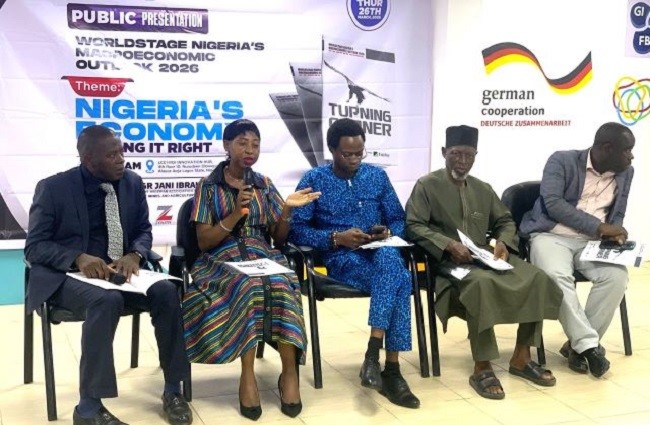
Lagos State Commissioner for Information and Strategy, Mr. Gbenga Omotoso, reviewed the publication titled “Turning the Corner”.
Represented by Ms. Temilade Aruya, Director, Public Affairs in the ministry, he described the report as a timely contribution to economic discourse.
He said it captures a country transitioning from economic strain towards recovery, stability and sustainable growth.
“As its title suggests, ‘Turning the Corner’ reflects a nation moving towards recovery and long-term growth,” he said.
Omotoso said the report projected GDP growth of 4.49 per cent in 2026 alongside easing inflation, reflecting “cautious optimism”.
“This balance between optimism and realism is a key strength, acknowledging infrastructure gaps, high capital costs and global uncertainties,” he said.
He said the report provided a broad assessment covering banking, capital markets, telecommunications, agriculture, manufacturing, maritime, aviation, health, education and the creative sector.
According to him, the analysis highlights the need for a holistic and inclusive growth strategy.
“No single sector can drive growth in isolation. Progress must be interconnected across industries,” he said.
On banking, he said reforms including recapitalisation, digital innovation and stronger regulation positioned the sector as critical to a one-trillion-dollar economy.
He, however, stressed the importance of workforce stability.
“Sustainable growth must be people-centred. Strong institutions depend on capital and human resources,” he said.
On capital markets, he noted strong performance and rising investor confidence, while warning of policy uncertainty risks in a pre-election period.
“Policy consistency, regulatory clarity and macroeconomic stability will sustain investor confidence,” he said.
Omotoso said the report identified growth opportunities driven by reforms, innovation and investment across key sectors.
He added that it provided insight into policies such as exchange rate reforms, subsidy removal and tax restructuring.
He acknowledged short-term challenges but said the reforms were vital for long-term stability.
“The message is clear: consistent policy implementation will determine reform success.
“The report also identifies risks including inflation, exchange rate volatility, rising debt costs and infrastructure gaps,” he said.
He stressed that inclusive growth must translate into better living standards, jobs and wider opportunities.
Omotoso urged government, private sector and civil society to remain committed to sustaining reforms.
“Turning the corner is only the beginning. Sustained progress requires discipline, strong institutions and collective commitment,” he said.
Earlier, WorldStage President, Mr. Segun Adeleye, said the outlook offered detailed analysis of trends, opportunities and challenges shaping the economy.
He said credible information was essential for operators to make informed investment decisions as the economy expands.
Adeleye noted the report was produced through partnerships with public and private stakeholders.
He added that quarterly reports would be released to guide businesses as Nigeria targets a one-trillion-dollar economy.
“Work on the Q1 2026 report is advanced, offering actionable insights for policymakers, businesses and investors,” he said.
According to him, key metrics include GDP, inflation, exchange rate, oil output and prices, non-oil revenue, manufacturing PMI and foreign reserves.
By Taiye Olayemi