

On Monday, February 2, World Wetlands Day 2026 is being observed across the globe under the theme “Wetlands and Traditional Knowledge: Celebrating Cultural Heritage.” This year’s theme highlights the enduring role of indigenous and traditional knowledge systems in sustaining wetland ecosystems while preserving cultural identity and livelihoods that have evolved alongside them for generations. CITES Secretary-General, Ivonne Higuero, and Mahmood Akhtar Cheema, Country Representative IUCN Pakistan, share their messages
CITES Secretary-General, Ivonne Higuero
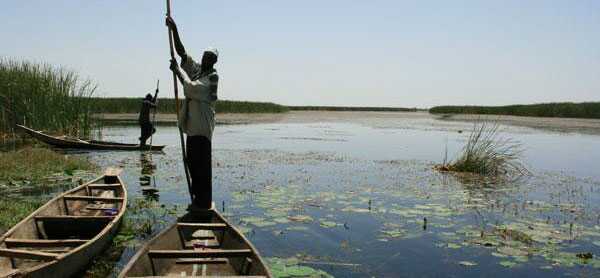
Across the world, wetlands are more than ecosystems – they are storykeepers. They carry the traditions, practices, and wisdom of communities who have lived alongside them since the beginning of time.
This year’s theme, “Wetlands and Traditional Knowledge: Celebrating Cultural Heritage,” reminds us that conserving wetlands also means protecting the cultural identity woven into them.
Wetlands are home to extraordinary species – from the Shoebill to the American alligator, whose international trade is regulated by the Convention on International Trade in Endangered Species of Wild Fauna and Flora, or CITES. This 50-year-old treaty aims to ensure that international trade does not threaten the survival of their species.
But wetlands are not only sanctuaries for wildlife; they are living classrooms, where traditional knowledge has guided sustainable use and coexistence for generations.
Indigenous people have long understood the rhythms of wetlands – how to fish, farm, and harvest in ways that respect nature’s cycles. These practices are more than heritage; they are solutions we urgently need as we confront climate change, pollution, and biodiversity loss. By valuing and integrating traditional knowledge, we ensure wetlands continue to sustain both people and wildlife.
On this World Wetlands Day, let us celebrate wetlands as cultural landscapes as well as natural ones. Let us work together to achieve our Global Goals for biodiversity and sustainable development, towards a future where wetlands remain places of life, identity, and resilience – for people and for wild species everywhere.
Mahmood Akhtar Cheema, Country Representative, IUCN Pakistan
Wetlands are among the world’s most productive ecosystems. They are home to more than 100,000 species and play a vital role in supplying freshwater, supporting biodiversity, and contributing significantly to global food security. Equally important, wetlands function as natural buffers by absorbing excess rainfall, regulating water flows, and reducing the risks of floods and storm surges.
However, rapid population growth, industrialization, urban expansion, unplanned development, and intensified agriculture are placing unprecedented pressure on these fragile ecosystems. Wetlands, the ecosystems upon which water security and life itself most depend, are being lost at an alarming rate. It is estimated that nearly 40 percent of the world’s species live and breed in wetlands, making their degradation a direct threat to global biodiversity.
In the context of climate change and the increasing frequency of extreme weather events, the importance of wetlands has never been greater. By acting as natural shock absorbers, wetlands enhance resilience, support adaptation, and provide cost effective solutions to climate related risks. Protecting and restoring wetlands is therefore not only an environmental priority but also a critical investment in climate resilience and sustainable development.
IUCN has a long standing history of supporting wetland conservation in Pakistan. It has assisted the Government of Pakistan in the formulation of the National Wetlands Policy and Action Plan in 2011 and has played a key role in the designation of eight new Ramsar sites, including the Indus Dolphin Reserve, Nurri Lagoon, Jubbo Lagoon, Hub Dam, Miani Hor and Siranda Lake, Ormara Turtle Beaches, Astola Island, Jiwani Turtle Beach, and the mangrove forests of the Indus Delta. Earlier, IUCN provided technical guidelines for environmental flow releases from reservoirs to sustain downstream wetland ecosystems and dependent livelihoods in 1999 and conducted the environmental assessment of Haleji Lake in 1997.
At present, IUCN Pakistan is implementing several initiatives in collaboration with federal and provincial governments, donors, and private sector partners to restore mangrove ecosystems along Pakistan’s coastline. Through engagement with key stakeholders, these efforts aim to strengthen coastal sustainability while creating livelihood opportunities for millions of people who depend on coastal and wetland ecosystems.
In partnership with Karot Power Company Private Limited and the Governments of Punjab and Azad Jammu and Kashmir, IUCN Pakistan is implementing the Biodiversity Management Plan for the 720 MW Karot Hydropower Project. The reservoir created on the Jhelum River has emerged as an ecologically important wetland and is being actively managed for fish and aquatic biodiversity conservation.
On this World Wetlands Day, the time to act is now. Governments, communities, the private sector, and civil society must work together to protect remaining wetlands, restore degraded ecosystems, and integrate traditional knowledge with science-based solutions. By translating commitments into concrete action and investing in nature-based solutions, we can secure wetlands as a foundation for biodiversity, climate resilience, and sustainable livelihoods for present and future generations.