

The Executive Director, UN Women, Sima Bahous, has urged governments worldwide to invest in gender-responsive water governance, financing, and services toward ensuring that no woman or girl is left behind.
Bahous stated this in her message for World Water Day released on the sidelines of the ongoing 70th Session of the Commission on the Status of Women (CSW) on Monday, March 16, 2026, in New York.
World Water Day is an annual United Nations observance day held on March 22 that highlights the importance of fresh water. The day is used to advocate for the sustainable management of freshwater resources.
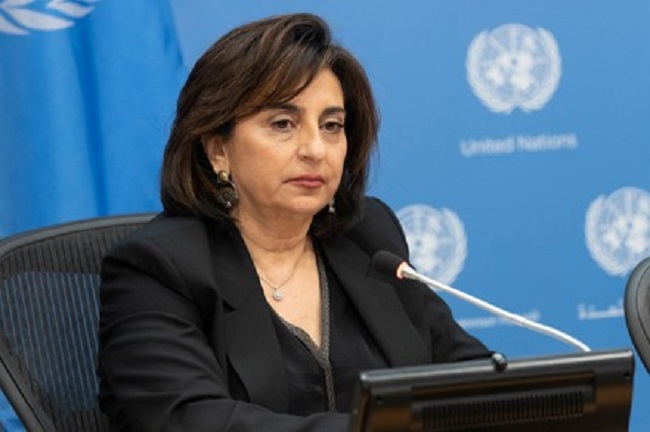
“We must invest in gender-responsive water governance, financing, and services; and ensure that no woman or girl is left behind.
“Water can be a force for equality, resilience, and prosperity. Together, let us make it so: for all women and girls, for communities, and for generations to come,’’ she said.
According to her, 2026 World Water Day with the theme: “Water and Gender Equality – Where water flows, equality grows,” is a call for a transformative, rights-based approach that places women’s leadership at the centre of water solutions.
Bahous said in a world shaped by climate change, growing inequalities, and increasing pressure on natural resources, water lies at the heart of our shared future.
“Water is essential for life, health, food, and livelihoods.
“Yet for billions of people, access to safe water and sanitation remains out of reach. And while the global water crisis affects everyone, it does not affect everyone equally,’’ she said.
The UN women chief further said that women and girls bear the greatest impacts of the unequal access to and scarcity of water.
“Every day, they spend millions of hours collecting water, caring for families, and managing scarcity, often at the cost of their education, income, health, and safety. When water is unsafe or unavailable, inequalities deepen and opportunities disappear.
“This reality was already recognised thirty years ago in the Beijing Declaration and Platform for Action, which underscored the central role of women in environmental sustainability and called for their full participation in the management and safeguarding of natural resources, including water.
“Today, those commitments are more urgent than ever,” she said.
The Executive Director added that women are not only the most affected by water crisis but are also powerful agents of change.
By Cecilia Ologunagba