

In Visepo Model Village under Traditional Authority Mpherembe in Mzimba, Malawi, Rabecca Nkhata, a 43-year-old farmer, is rewriting the narrative of women in agriculture through hard work, resilience, and determination.
With support from the Royal Norwegian Embassy through Find Your Feet under the NCA-DCA Malawi Joint Country Programme’s Transform Project, Rabecca has turned her small-scale farm into a thriving agribusiness – and inspired her entire community in the process.
As a member of a 72-member farmers’ group, she benefited from access to loans, agricultural training, and other empowerment initiatives provided by the project.
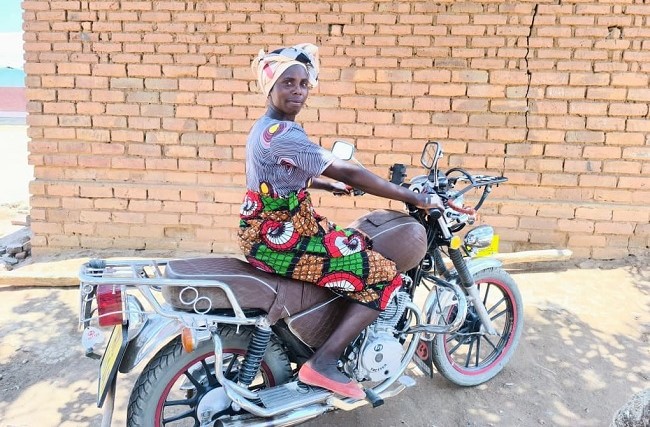
Her efforts bore fruit during the 2024/2025 farming season, when she harvested 400 tins of maize and several bales of tobacco, earning K12 million in total.
After repaying her loan and paying workers, Rabecca walked away with K7 million in profit – money she used to purchase a motorbike and modern farming equipment to boost her productivity.
What makes Rabecca’s story even more remarkable is that she achieved all this without her husband’s help.
“I wanted to empower myself and fellow women in my village,” she said proudly.
“I believe women can achieve anything with the right mindset and support.”
Her determination has not only changed her own life but has also motivated other women in her community to pursue self-reliance and financial independence.
Community Transformation
Village Headman Israel Mithi hailed the project for transforming livelihoods in Visepo.
“Our lives have truly changed,” he said.
“We now have enough maize, livestock, and gardens. We don’t lack anything at all.”
He added that many households can now afford to pay school fees and meet other basic needs without difficulty.
The farmers’ group, which now boasts K3.5 million in savings, plans to purchase another maize sheller – a crucial piece of equipment that has made maize shelling easier and created a new source of income for the community.
Neighbouring villages now pay K1,000 per 50kg bag to use the sheller, turning it into a small but sustainable business venture.
Looking Ahead
As the Transform Project nears its conclusion, community members say they are determined to sustain its gains.
“We really appreciate it from the bottom of our hearts,” said Village Headman Mithi.
“We are not stopping – we’ll continue working hard so that those who brought this project here will never regret it.”
Rabecca’s story stands as a powerful testament to women’s potential in agriculture.
Her success shows that, with access to resources, training, and supportive structures, rural women can lift themselves – and their communities – out of poverty.
By Tionge Hara, AfricaBrief