

The World Health Organisation (WHO) says it is seeking $1 billion to respond to health emergencies worldwide.
The organisation disclosed this in a statement on Tuesday, February 3, noting that it has launched the 2026 global appeal to ensure that millions living in humanitarian crises and conflicts can access health care.
It also said that, in 2025, WHO and partners supported 30 million people funded through its annual emergency appeal.
”These resources helped deliver life-saving vaccination to 5.3 million children, enabled 53 million health consultations, supported more than 8,000 health facilities, and facilitated the deployment of 1,370 mobile clinics.
”The 2026 appeal seeks nearly $1 billion to respond to 36 emergencies worldwide, including 14 Grade Three emergencies requiring the highest level of organisational response.
”These emergencies span sudden-onset and protracted humanitarian crises where health needs are critical,” it said.
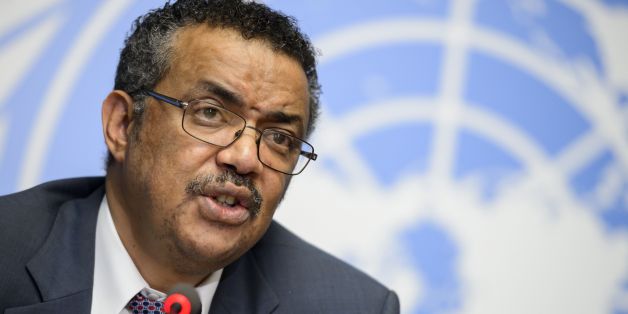
WHO Director-General, Dr Tedros Ghebreyesus, said that the appeal was a call to stand with people living through conflict, displacement and disaster to give them not just services, but the confidence that the world has not turned its back on them
“It is not charity. It is a strategic investment in health and security.
“In fact, access to health care restores dignity, stabilises communities and offers a pathway toward recovery,” Ghebreyesus said.
The D-G said that the 2026 appeal came at a time of converging global pressures.
He said that the protracted conflicts, the escalating impacts of climate change and recurrent infectious disease outbreaks are driving increasing demand for health emergency support, while global humanitarian financing continues to contract.
Ghebreyesus said that in 2025, humanitarian funding fell below 2016 levels, leaving WHO and partners able to reach only one-third of the 81 million people originally targeted to receive humanitarian health assistance.
”Renewed commitments and solidarity are urgently needed to protect and support the people living in the most fragile and vulnerable settings,” he said.
Ghebreyesus said that WHO’s priority emergency response areas in 2026 would include Afghanistan, Democratic Republic of the Congo, Haiti, Myanmar, the occupied Palestinian territory, Somalia, South Sudan, Sudan, the Syrian Arab Republic, Ukraine and Yemen, as well as ongoing outbreaks of cholera and mpox.
”As the lead agency for health response in humanitarian settings, WHO coordinates more than 1,500 partners across 24 crisis settings globally, ensuring that national authorities and local partners remain at the centre of emergency response,” he said.
Speaking as co-chair at the launch event, Amb. Noel White, Permanent Representative of Ireland to the United Nations Office in Geneva, said that every humanitarian crisis was a health crisis.
White said that was the reason Ireland was proud to support the WHO emergency response through unearmarked, flexible and predictable funding of the Contingency Fund for Emergencies.
Also speaking as co-chair at the event, Ms. Marita Sørheim-Rensvik, Deputy Permanent Representative of Norway to the United Nations, said that in the present day’s most complex emergencies, WHO remained indispensable, protecting health and upholding international humanitarian law.
Sørheim-Rensvik said the organisation also ensure life-saving care reached people in places where few others can operate.
”From safeguarding access to sexual and reproductive health and rights to supporting frontline health workers under immense strain, WHO’s role is vital.
”Norway calls on all Member States to strengthen support for WHO so it can continue delivering for those who need it most,” she said.
According to her, WHO and partners’ emergency response actions include keeping essential health facilities operational and delivering emergency medical supplies and trauma care.
”Others are preventing and responding to outbreaks; restoring routine immunisation; and ensuring access to sexual and reproductive, maternal and child health services in fragile and conflict-affected settings.
”Early, predictable investment enables WHO and partners to respond immediately when crises strike – reducing death and disease, containing outbreaks and preventing health risks from escalating into wider humanitarian and health security crises with far greater human and financial costs.
”While WHO and other humanitarian partners have been forced to make difficult choices to prioritise the most critical interventions, what remains are the most impactful activities.
She noted that with the requested resources, WHO could sustain life-saving care in the world’s most severe emergencies, while building a bridge towards peace.
Meanwhile, the WHO and its International Agency for Research on Cancer (IARC) say up to four in 10 cancer cases globally can be prevented.
The organisations said this in a statement on Tuesday, citing a new global analysis.
According to it, the release, issued ahead of the is ahead of World Cancer Day on Feb., 4, with theme “United by Unique”, estimates that 37 per cent of all new cancer cases in 2022, were linked to preventable causes.
Also, it said that the estimate represented 7.1 million cases worldwide.
The organisation said the study examined 30 preventable causes of cancer, including tobacco, alcohol, high body mass index, physical inactivity and air pollution.
It also considered ultraviolet radiation and, for the first time, nine cancer-causing infections.
“The findings highlight the enormous potential of prevention in reducing the global cancer burden,” the statement said.
According to the analysis, drawing on data from 185 countries and 36 cancer types, tobacco remained the leading preventable cause of cancer, responsible for 15 per cent of all new cases.
It said infections accounted for 10 per cent, while alcohol caused three per cent of new cancer cases.
It noted that lung, stomach and cervical cancers made up nearly half of all preventable cancers.
”Lung cancer was primarily linked to smoking and air pollution, stomach cancer was largely attributable to Helicobacter pylori infection, and cervical cancer was overwhelmingly caused by human papillomavirus (HPV),” it said.
Dr André Ilbawi, WHO Team Lead for Cancer Control and an author of the study, said the analysis was the first to show the extent of preventable cancer risks.
“By examining patterns across countries and population groups, we can provide governments and individuals with more specific information to help prevent many cancer cases before they start,” Ilbawi said.
She said preventable cancer was significantly higher in men than in women with 45 per cent of new cancer cases in men compared with 30 per cent in women.
“In men, smoking accounted for 23 per cent of new cancer cases, followed by infections at nine per cent and alcohol at four per cent,” she said.
“Among women globally, infections accounted for 11 per cent of new cancer cases, followed by smoking at six per cent and high body mass index at three per cent.”
Also, Dr Isabelle Soerjomataram, Deputy Head of the IARC Cancer Surveillance Unit and senior author of the study, said the report was a comprehensive assessment of preventable cancer globally.
She said it incorporated infectious causes of cancer for the first time, alongside behavioural, environmental and occupational risks.
“Addressing these preventable causes represents one of the most powerful opportunities to reduce the global cancer burden,” she said.
She said preventable cancer varied across regions and that among women it ranged from 24 per cent in North Africa and West Asia to 38 per cent in sub-Saharan Africa.
“Among men, the highest burden was in East Asia at 57 per cent and the lowest in Latin America and the Caribbean at 28 per cent,” she said.
She said the differences reflected varying exposure to risk factors, socioeconomic conditions and national prevention policies.
She said they also reflected differences in health system capacity.
“The findings underscore the need for context-specific prevention strategies that include strong tobacco control measures, alcohol regulation and vaccination against HPV and hepatitis B.
“Others include improved air quality, safer workplaces and healthier food and physical activity environments,” she said.
Soerjomataram said coordinated action across sectors could prevent millions from experiencing the burden of cancer.
She added that reducing preventable risks would also lower long-term health costs and improve population well-being.
By Franca Ofili