

Health analysts say the reform agenda unveiled by the World Health Organisation (WHO) Regional Director for Africa, Dr Mohamed Janabi, signals an important shift in how African countries prepare for disease outbreaks.
According to them, it will also help strengthen routine health services, particularly in Nigeria.
The analysts said this in an interview on Saturday, January 3, 2026, in Abuja.
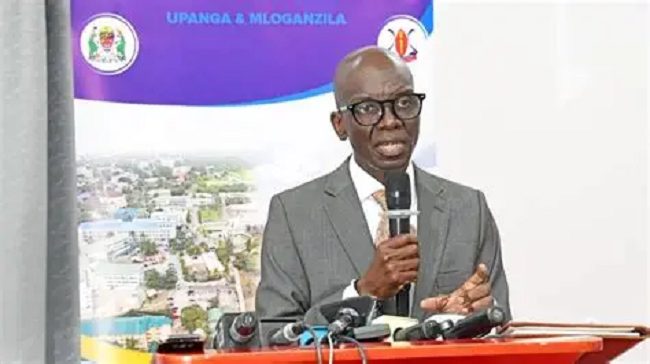
Janabi said Africa must prioritise early detection of outbreaks, stronger primary healthcare (PHC) systems and regional manufacturing of vaccines and medical commodities to reduce dependence on emergency responses.
He warned that delayed reporting and weak laboratory systems had contributed to the wider spread of infections across the continent, noting that preparedness should no longer rely on funding that only increases during crises.
“Africa has learned repeatedly that delayed action is costly. If we strengthen systems early, we reduce the severity of the shocks that follow,” he said.
Dr Ishaku Akyala, an Associate Professor of Infectious Diseases at Nasarawa State University, said that the blueprint was particularly relevant to Nigeria, which continued to battle recurring outbreaks such as Lassa fever, cholera and diphtheria, alongside a growing burden of non-communicable diseases.
Akyala noted that Janabi’s emphasis on district-level surveillance, real-time data, laboratory readiness and reliable electricity in health facilities aligned with Nigeria’s ongoing efforts to modernise disease intelligence systems.
According to him, the approach could help the country detect outbreaks earlier, reduce response delays and limit both economic and human losses.
Janabi identified PHC as the strongest lever for improving public health in Africa, warning that heavy investment in tertiary care at the expense of community-level services leaves millions exposed to out-of-pocket health expenditure.
“If we strengthen the foundations, everything upstream becomes more efficient,” he said.
Meanwhile, Dr Samuel Eleojo, a Public Health Expert, said that this supported Nigeria’s plans to revitalise PHC centres, expand health insurance coverage and scale up community-level care through initiatives such as the Basic Health Care Provision Fund.
Janabi also called for increased local manufacturing of vaccines, diagnostics and medicines, saying Africa must not continue to depend almost entirely on foreign supply during global emergencies.
He said coordinated procurement, regulatory harmonisation and sustained financing were needed to make regional production viable.
Eleojo said that Nigeria would benefit from such reforms through its ongoing national vaccine manufacturing and pharmaceutical sector revitalisation initiatives.
Janabi further acknowledged funding pressures within WHO Africa and pledged reforms to make country offices more responsive, technically strong and accountable to member states.
He said WHO Africa would continue to support governments to shift from a crisis-driven response to a predictable, long-term system strengthening.
“The momentum is there. Our task is to turn promising progress into standard practice,” he said.
Observers said that the blueprint challenged Nigeria to sustain health financing, improve coordination, strengthen PHC delivery and invest in early warning systems to ensure resilience against shocks such as pandemics, climate-related disease spread and economic strain.
They noted that full implementation would help Nigeria move toward routine readiness, protecting households from catastrophic health spending and strengthening health security.
By Abujah Racheal