

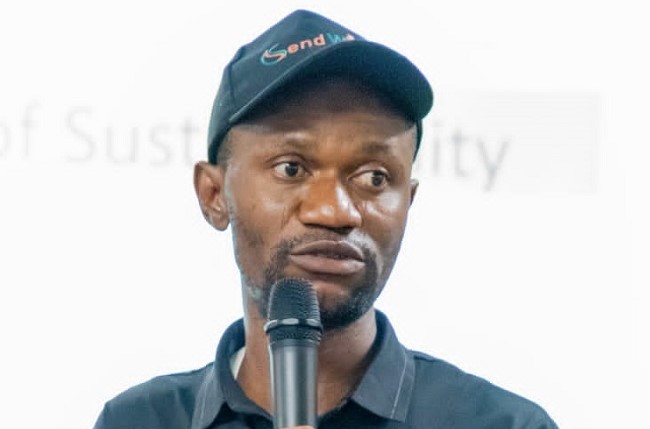
While many may find UpwardEco’s goal of reducing dumpsite waste by 90% to be very ambitious, it’s CEO, Muhammad Sanusi, told EnviroNews in this exclusive interview that he believes it is achievable if stakeholders work together. Excerpts:
Problems and solutions
We know that tackling waste pollution requires more than just awareness; it demands action, innovation, and community. I know that our goal of reducing materials ending up in dumpsites by over 90% is ambitious, but we also believe that it is possible when every stakeholder plays a role. That is why we begin with education and engagement, encouraging households and businesses to separate waste at the source. This is to enable us to channel recyclables to processors, upcycle materials into new products, and connect artisans and green innovators to resources they need.
By creating this closed-loop system, nothing is wasted; everything finds a purpose. Most importantly, we are building a culture where sustainability is not an option but a way of life, because every kilogram saved from the dumpsite is proof that collective action works, and together, we can reimagine waste as a resource that sustains both people and the planet.
Ecosystem and its impact
Our ecosystem is designed to make sustainability a simple and inspiring journey. It begins with GreenBridge, where people first encounter awareness and education about living green. From there, many take the next step into green recovery, joining us in the practical work of waste segregation and collection. The recovered materials don’t just stop at being saved from dumpsites; they are reborn.
Through the AURA Store, we showcase beautiful, functional products created from what was once considered waste, proving that sustainability can be both innovative and stylish. Holding all these efforts together is the Sendwaste.com, our technology backbone that tracks recovery, connects stakeholders, and ensures transparency every step of the way.
Together, these services form a closed-loop system where waste is not the end of the story but the beginning of something new. This ecosystem has already helped divert over 50 tonnes of plastics from dumpsites while sparking a culture of green living.
Challenges
Like many young organisations, our biggest challenges lie in access to the right tools, equipment, and facilities that can help us scale our recovery and recycling efforts, and access to strong, long-term partners who believe in this mission as much as we do. At times, limited resources slow us down, but they have also taught us creativity and resilience.
So, we address these gaps by building partnerships with local artisans, recycling processors, and community groups, turning shared struggles into shared solutions.
Our back-end technology also helps us maximise efficiency with what we have, ensuring nothing is wasted. Most importantly, we lean on the passion of our team and the support of everyday people who believe in a cleaner, greener Nigeria.
These challenges are real, but they remind us daily that this journey is worth fighting for—and that together, we can overcome them.
Uniqueness
What sets UpwardEco apart is that we don’t just manage waste; we transform it into a journey of awareness, action, and value creation.
Many organisations stop at collection or recycling, but we have built a connected ecosystem that starts with education through GreenBridge, moves into practical recovery with Green Recovery, showcases impact through the AURA Store, and is all powered by our technology platform. This closed-loop approach ensures that waste is not only diverted from dumpsites but also reborn into products that inspire people to live greener.
Beyond technology and products, our uniqueness lies in the emotional connection we create, helping individuals and businesses see their contribution, track their progress, and share their sustainability story, because we are not just reducing waste; we are building a culture of responsibility and hope, where everyone feels part of the solution.
Public awareness
Public awareness of waste management is growing, and the informal sector has played a commendable role in keeping our cities cleaner. However, awareness alone is not enough; we must move from telling people what to do to showing them how it can be done.
At UpwardEco, we’ve seen that many Nigerians are willing and eager to be part of the solution; what they need are the right tools, simple systems, and consistency.
That is why our approach combines education with practical engagement: through GreenBridge we raise awareness, through Green Recovery we involve people directly in segregation, and through the AURA Store we showcase what is possible when waste is given new life.
By making sustainability visible, accessible, and rewarding, we bridge the gap between knowledge and action, turning good intentions into lasting impact against waste pollution.
Fund raising plan
While our long-term needs go far beyond seven to ten million Naira, we believe in planning, prioritising, and taking steady steps forward. This immediate fundraising is designed to keep us afloat while strengthening the very core of our operations.
With it, we will establish a fully functional UpwardEco Hub, which will serve as a centre for recovery, innovation, and community engagement. More importantly, the funding will allow us to empower women and youth within the AURA product creation value chain, equipping them with skills, tools, and opportunities to turn waste into value.
This step will not only improve the delivery of our services but also create a model of revenue stability that ensures sustainability in the long run. Every Naira invested in this initiative is an investment in people, in livelihoods, and in a cleaner, greener Nigeria.
Recommendations
If I had the power to transform the sector, I’d combine positive incentives with firm, fair enforcement, but design both to avoid perverse outcomes.
Practically, I’d roll out deposit-return and pay-as-you-throw schemes, tax breaks and microgrants for businesses that adopt low-waste packaging, and direct payments or subsidies to informal waste workers who deliver verified recyclables.
At the same time, I’d enforce graduated penalties for non-compliance fines, licensing sanctions and public transparency. So the cost of polluting is real.
Crucially, I’d pair enforcement with alternatives: invest in viable reuse options, create green jobs for women and youth, and pilot programmes with rigorous monitoring to prevent unintended “cobra effect” incentives.
The result: align economic interest with responsible behaviour so people are rewarded for doing the right thing, not punished into poverty.
Next steps
Our next steps are focused on scaling impact and deepening engagement. We are expanding our recovery coverage to reach more neighbourhoods across Abuja, ensuring that more households and businesses can actively participate in diverting waste from dumpsites.
At the same time, we are working on developing a more diverse and exciting product line through the AURA Store, giving sustainability lovers new ways to experience beauty and creativity born from recovered materials.
For the public, we want you to watch for these stories of transformation, waste becoming resources, communities coming together, and small actions adding up to big change.
Finally, we want people to see that this is not just UpwardEco’s journey but a collective one, where every contribution matters. Together, we can shape a future where Abuja leads as a model for sustainable living and responsible waste management.