

A damning investigative report presented at the 13th Pan-African Conference on Illicit Financial Flows and Taxation (PAC) on Thursday, October 9, 2025, alleges British American Tobacco Kenya may have evaded up to $28 million in taxes through a mysterious gap between cigarette production and reported sales.
The report, titled “Missing Millions: A Cross-Examination of British American Tobacco Kenya’s Tax Bill,” reveals discrepancies of up to 9.6 billion Kenyan shillings ($93 million) in the company’s revenue statements for 2017 and 2018.
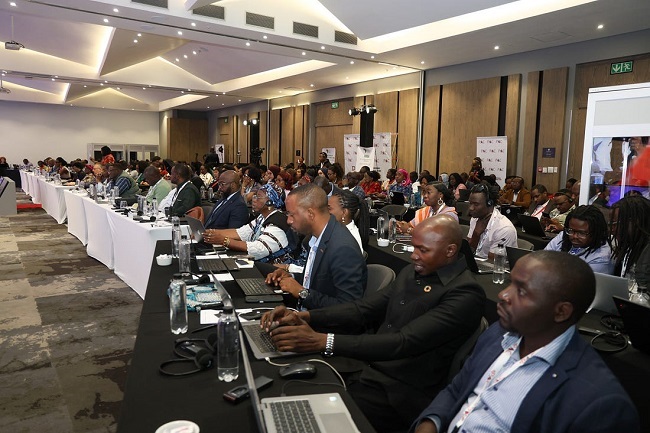
Marcel Metze, director and editor at The Investigative Desk, presented the findings during a side session on financing climate action at the 13th Pan-African Conference on Illicit Financial Flows and Taxation.
“We’re talking about somewhere between 18 and 28 million packs, which was somewhere between 10 and 20% of annual domestic production in Kenya,” Metze said.
“We call these the missing millions of cigarettes. We don’t know where they went.”
The report calculated the missing cigarettes’ sales value at approximately $94 million.
Production vs. Sales Discrepancy
The investigation conducted a meticulous cross-examination of British American Tobacco Kenya’s annual reports; production data submitted to the Kenya Revenue Authority and independent sources including the World Health Organisation and World Bank.
Metze outlined a seven-step analysis process to examine the discrepancies.
“If BAT Kenya produced 100 packs of cigarettes in 2016 and sold 100 packs, which was happening at that time, this changed in the years after,” Metze said.
“Production went down to 72%, but sales went down to 61%. So they sold less than they produced.”
The investigation found that, in 2017, British American Tobacco Kenya reported a 7% decline in domestic sales volume while production data showed a 2.3% increase, with an estimated retail value of 13 billion shillings – 37% more than the 9.5 billion shillings revenue declared.
In 2018, the discrepancy expanded further. Production data suggested up to 16.8 billion shillings in revenue against the company’s reported 11 billion shillings.
Cumulatively from 2016 to 2021, domestic production declined 28% while sales volumes reportedly fell 39%, defying market trends from Euromonitor and WHO data showing slower consumption drops due to tobacco’s addictive nature.
Tax Implications
Metze said the investigation verified excise payments and found them correctly reported — the only data point without discrepancies.
“The reporting of that is correct. It’s the only issue in which we find that,” he said.
However, when comparing potential revenue from entire production against reported sales, notable differences emerged in 2017, 2018 and 2019.
The investigation accounted for potential stockpiling of overproduced cigarettes but found minimal impact.
“The effect of that was only minimal. No real impact,” Metze said.
“They could explain only a small part of the missing cigarettes, the missing millions.”
Even using conservative revenue estimates with high retail margins and zero inventory value, unexplained revenue gaps remained.
“We found that the tax value of the missing cigarettes, especially in the years 2017 and 2018, was somewhere between 660 million and 2.9 billion Kenyan shillings, which is about $6.5 million to $28 million,” Metze said.
Company Response and Impact
British American Tobacco Kenya rejected the allegations when the report was published in February, stating it “pays all taxes in line with applicable laws” and attributing discrepancies to “other costs not paid to BAT Kenya.”
The company refused to provide details, citing commercial confidentiality.
Metze said the report generated significant attention.
“The BAT Kenya campaign reached more than 200 million people, which is a huge number,” he said.
“There was global attention for the report across Africa but also the United States and UK.”
The Kenya Revenue Authority announced an investigation following publication but has not released results.
“We haven’t heard anything of that investigation since, so we don’t know what’s still going on, whether there are any results,” Metze said.
Shortly after the investigation announcement, British American Tobacco Kenya announced two directors would leave the company.
Excise-Led Pricing Strategy
The investigation found British American Tobacco Kenya maintained stable revenues despite declining sales through price increases matching government excise raises.
“One of the reasons that BAT Kenya could keep its revenue at the same level is that they raised their prices in accordance with the government prices in excises,” Metze said.
“It’s as simple as that. Excise-led pricing, we call that.”
The company’s dividends increased 65% from 2017 to 2020 despite reported volume declines.
Contradicting the Illicit Trade Narrative
British American Tobacco Kenya blamed declining sales on what Metze called a “perfect storm” narrative – porous borders, illicit trade, economic challenges and excise hikes.
However, the investigation found contradictions.
“Illicit trade allegedly rose to 25% of the market in 2020, yet competitor Mastermind’s share remained static, and overall consumption didn’t plummet as claimed,” Metze said.
The company’s revenues stayed stable or grew on an inflation-adjusted basis despite the alleged market challenges.
Societal Impact
Beyond tax implications, Metze highlighted broader societal costs.
“We see that the number of Kenyans that die of smoking each year would be 12,000,” he said. “That’s a lot of people.”
While smoking rates have declined, the number of smokers has grown.
The investigation documented farmer exploitation in Kenya’s Migori region, where most tobacco is grown.
“For small farmers, life has remained difficult,” Metze said.
“They don’t profit from the profits the companies make. They need to take loans for seeds, pesticides, fertilizers, which keep them just barely on the level or even below that.”
The report estimated damage to the Kenyan economy at $333 million per year – eight times British American Tobacco Kenya’s profit.
Follow-Up Investigation
Metze announced a new investigation examining trade between British American Tobacco Kenya and British American Tobacco Uganda, focusing on potential tax avoidance.
“We are investigating the trade between BAT Kenya and BAT Uganda, where we have a focus on the tax avoidance that might be taking place in this trade,” he said.
The project, supported by the University of Bath and Tax Justice Network Africa, is expected to take 18 months to two years.
“We see again in this trade large discrepancies between reported production, production that is done in Kenya for Uganda, and what is actually imported into Uganda,” Metze said.
“We also have clear indications of profit shifting from Kenya to Uganda.”
He noted the Netherlands plays a role because Uganda has a favorable tax treaty with the country.
“More details, of course, you will have to wait for,” Metze said, indicating publication is planned for early 2026.
Conference Context
The presentation occurred during a side session organized by the African Forum and Network on Debt and Development and the Centre for Economic and Social Rights, focusing on financing climate action and addressing the debt-illicit financial flows nexus.
Session organizers linked corporate tax avoidance to broader challenges facing debt-strapped African nations seeking climate finance.
The argument centered on lost revenues from illicit flows that could fund sustainable development and climate adaptation.
The 13th Pan-African Conference, themed “Honouring a Legacy, Building a Future: A Decade of the HLP Report,” commemorates the 2015 High-Level Panel on Illicit Financial Flows led by former South African President Thabo Mbeki.
That landmark report found Africa loses at least $50 billion annually through illicit flows – 65% from commercial practices, 30% from criminal activity and 5% from corruption.
Corporate Structure
The investigation profiled British American Tobacco Kenya’s complex structure within the broader BAT Group, with subsidiaries in Kenya, the Netherlands and the United Kingdom, facilitating potential profit shifting.
British American Tobacco dominates Africa’s tobacco market with 50% to 80% market share in many countries and 70% to 80% in Kenya, Nigeria and South Africa.
The company exports from Nairobi to 20 markets across the continent.
The report referenced British American Tobacco’s history of tax avoidance, including a 2020 investigation titled “Big Tobacco, Big Avoidance.”
Debt and Climate Finance Connection
Conference experts tied the findings to the debt-illicit financial flows nexus, noting illicit flows cost Africa $100 billion to $240 billion annually according to OECD estimates.
Panelists argued that properly collected tobacco taxes could generate revenues for green transitions and climate adaptation.
They advocated integrating anti-illicit flow measures into climate finance strategies, with British American Tobacco Kenya’s alleged avoidance exemplifying how extractive industries drain funds needed for development priorities.
Regional Hub Expansion
British American Tobacco elevated its Nairobi operation as a regional hub in 2023, positioning for growth across Africa’s youth-heavy demographic despite health warnings about smoking.
Kenya’s Trade Minister Moses Kuria’s 2023 social media post praising tobacco as a tax contributor drew criticism as echoing the industry narrative.
Kenya’s Economic Context
The findings come as Kenya, classified as a lower-middle-income economy, grapples with budget deficits, large debts and International Monetary Fund-mandated reforms.
Aggressive tax avoidance by multinationals reduces government income amid rising civil unrest over tax hikes on ordinary citizens.
While taxes on Kenyans increased in 2023 and 2024, annual excise adjustments for cigarettes were halted – a move the report criticized as favoring big tobacco.
Farmer Exploitation Details
The investigation documented conditions for contracted farmers in Migori region who receive overpriced inputs on loan and labor intensively for six months.
After deductions, families earn around 20,000 shillings ($140) annually – equivalent to 38 cents per day, below the extreme poverty line of $2.15.
In 2023, amid British American Tobacco Kenya’s record 6.9 billion shillings in profits, farmer pay was cut 20% to the lowest level in five years.
Health risks include respiratory issues from curing tobacco in smoke-filled huts. Farmers cannot eat their crop, worsening food insecurity.
Research by economist Peter Magati shows tobacco farmers operate at losses when labor costs are factored in, while those switching crops double their incomes.
The World Health Organisation’s Tobacco-Free Farms initiative has helped more than 2,000 farmers transition to beans for the World Food Programme, but 36,000 remain in tobacco cultivation.
Call for Accountability
The presentation at the Pan-African Conference underscored calls for stronger accountability measures against corporate tax avoidance.
Session participants recommended strengthening tax cooperation, linking debt relief to illicit flow curbs and mobilizing domestic resources for climate finance.
The conference’s focus on the High-Level Panel Report’s decade-old legacy emphasized unfinished business in stemming illicit flows to build resilient futures.
As Africa faces climate vulnerabilities and debt burdens, the British American Tobacco Kenya case illustrates how corporate evasion undermines development progress.
Whether Kenya Revenue Authority acts on the investigation’s findings remains uncertain, but the presentation signals growing pressure for accountability in extractive industries across the continent.
The four-day conference continues through Friday at the Sandton Convention Centre.
It is co-hosted by the African Union Commission, U.N. Economic Commission for Africa, Africa Tax Administration Forum, Tax Justice Network Africa and the Economic Justice Network.
The “Missing Millions” report was authored by Tim Luimes and Mirjam van der Puijl of The Investigative Desk, with editing by Marcel Metze.
By Winston Mwale, AfricaBrief