

The Fourth session of the Meeting of the Parties to the Protocol to Eliminate Illicit Trade of Tobacco Products has concluded with a series of decisions to strengthen measures on international cooperation.
The Protocol was developed in response to the global issue of illegal trade in tobacco products. Independent estimates suggest that illicit trade accounts for some 11% of the global tobacco market, and that its elimination could bolster global tax revenues by around $47.4 billion annually.
Representatives from 60 Parties participated in the deliberations from November 24 to 26, 2025, in Geneva. Topics included measures to strengthen the implementation of international cooperation in combating illicit trade, mechanisms of assistance and mobilisation of financial resources to support implementation of the Protocol, licensing, and measures to control the supply chain of tobacco products.
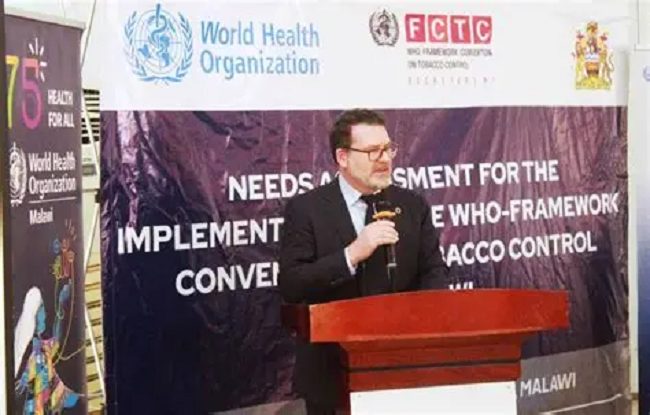
“The Protocol is more than a treaty – it is a framework for coordinated action that equips Parties with tools to slam the door on illicit trade,” said Andrew Black, Acting Head of the Secretariat of the WHO Framework Convention on Tobacco Control.
“Illicit trade in tobacco products is not a victimless crime. It robs governments of vital resources, undermines public health, and erodes the foundations of sustainable development. It fuels corruption, money laundering and organised crime. we cannot allow those who profit from illicit trade in tobacco to escape justice.”
“We are thankful to all the Parties for their cooperation and collaboration during the MOP negotiations.”
Parties adopted a decision that calls on the Convention Secretariat to undertake, in coordination with the World Customs Organisation and the United Nations Office of Drugs and Crime, an exercise to map existing data on seizures of tobacco, tobacco products and manufacturing equipment. This will be used to inform decision-making on tackling illicit trade.
Parties agreed to set up a working group on evidence-based research, and to promote exchange of experiences of control measures, best practices, related case studies, technology and capacity building.
A second working group was established to identify good practice, and to prepare a report on effective mechanisms for strengthening assistance and cooperation on investigation and prosecution of offences.
A decision was also adopted inviting Parties to intensify efforts to monitor and collect licence fees; these may be levied and used to support the effective administration and enforcement of the licensing system, or for public health or other related activities. Parties were also urged to cooperate with each other and through competent international and regional organisations to provide training, technical assistance and cooperation in implementation of licensing-related measures.
Finally, it was announced that Vanuatu is the latest country to join the Protocol, becoming its 71st Party.
The Protocol to Eliminate Illicit Trade in Tobacco Products is an international treaty adopted under the WHO Framework Convention on Tobacco Control (WHO FCTC). It was adopted by consensus on November 12, 2012, at the Fifth session of the Conference of the Parties to the WHO FCTC in Seoul, Republic of Korea.
The Protocol builds upon and complements Article 15 of the WHO FCTC, which addresses means of countering illicit trade in tobacco products – a key aspect of a comprehensive tobacco control policy.