

Türkiye has decided to phase out single-use plastics in line with the European Union’s acquis, aiming to further contribute to its environmental progress.
The Ministry of Environment, Urbanisation, and Climate Change is finalising a new regulation modeled after the EU’s Single-Use Plastics (SUP) directive.
This was adopted in 2019 to prevent and reduce the impact of certain plastic products on the environment and human health.
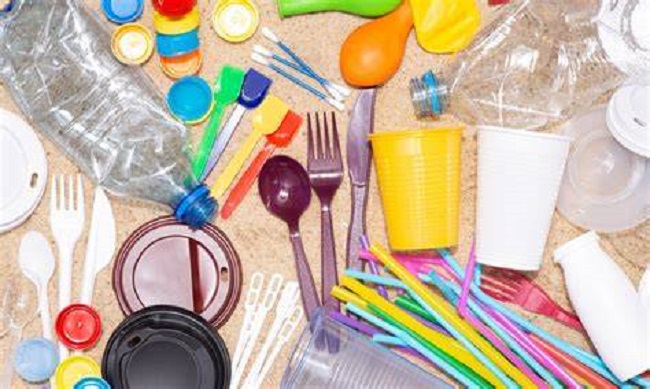
The ban aims to significantly reduce plastic pollution by prohibiting common disposable items, such as plastic cutlery (forks, knives, spoons, and chopsticks), plates, straws, and plastic-stemmed cotton buds.
Currently in the draft stage, the regulation is expected to take effect by the end of the year following consultations with industry leaders and NGOs.
The policy encourages a shift toward sustainable alternatives made from glass, porcelain, wood, and cardboard.
The ministry estimates an annual reduction of 1.5 million tons of carbon emissions and savings of approximately $44 million in waste management costs.
Future phases of the initiative will introduce stricter labeling requirements and consumption targets for composite beverage cups, food containers, wet wipes, and all types of plastic bags used for shipping.
This follows 2022 data showing that Türkiye consumed over 700,000 tons of single-use plastics.
Public sentiment strongly supports the transition.
A joint survey by the ministry and the Turkish Statistical Institute (TurkStat) found that over 76 per cent of citizens favour restrictions on disposable plastics, while 80 per cent support a shift toward reusable materials like metal and ceramic.
This high level of public support aligns with Türkiye’s National Circular Economy Strategy and Action Plan, which was officially announced and entered into force on Oct. 20, 2025.
This roadmap specifically targets the reduction of single-use plastics, marine litter, and microplastics across the country through 2028.
In a related development, Türkiye has announced that it will release 11.6 million barrels of crude oil from its strategic reserves as part of the International Energy Agency’s largest-ever coordinated stockpile release.
The country’s Energy and Natural Resources Minister, Alparslan Bayraktar, said on Thursday.
A national oil stock committee approved the release, which will take place gradually over 90 days, Bayraktar said during a visit to a coal mine in the Black Sea province of Zonguldak.
“We decided to release 11.6 million barrels from our strategic reserves in support of the IEA’s coordinated release of 400 million barrels,” he told reporters.
IEA earlier on Wednesday recommended that members release a combined 400 million barrels from national stockpiles the largest coordinated action in the agency’s history.
According to Executive Director, Fatih Birol, IEA has 32 member countries and 13 association countries representing roughly 75 per cent of global energy demand.
The coordinated release came amid conflict in the Middle East that has drastically reduced oil flows through the Strait of Hormuz including imports from Iran.