

Trade union and civil society organisations from Nigeria, Kenya and Uganda have frowned at alleged intimidatory acts of the management of Senegalese water company, SEN’EAU, against union members in the country’s public water sector.
They are bothered by the “bullying and unrelenting pressure” being mounted particularly on Mr. Oumar Ba, General Secretary of the Autonomous Union of Water Workers of Senegal (SATES), who has been at the fore of agitation for fair and equitable public water services and the rights of workers.
“We find it very disturbing that the management of SEN-EAU has decided to victimise Oumar Ba for refusing to accept their double dealing and attempt to sideline his union, a vocal advocate for workers right, while negotiating multi-year agreements with three other unions within SEN’EAU.
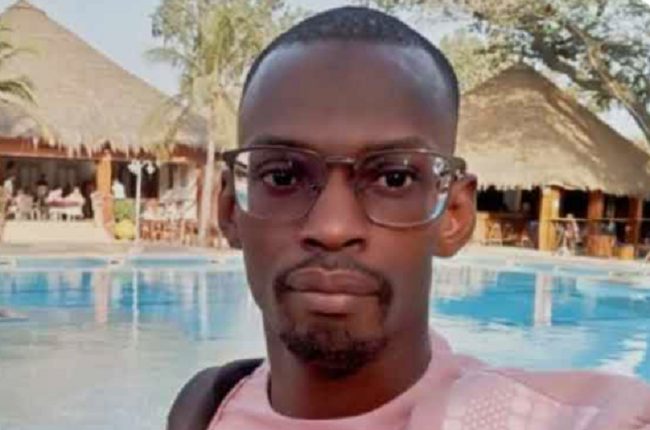
“The attempt by SEN’EAU to introduce divide and rule tactics among the unions within it through the sidelining of SATES is totally unacceptable and cannot be allowed to stand in a system that must be transparent and accountable to the people,” the groups said in a statement.
According to them, more disturbing is the fact that, even with the growing outrage over what is being unleashed on workers by SEN’EAU, the Senegalese government has maintained a complicit silence, allowing the management to undermine freedom of expression which is guaranteed in Articles 8 & 10 of that country’s Constitution.
Article 8 of the Constitution guarantees all citizens fundamental individual freedoms, economic and social rights, and collective rights, including freedoms of opinion, expression, association, movement, enterprise, property, work, health, and a healthy environment, all exercised under conditions set by law.
“No one individual or organisation and not even the government has the right to prevent workers from exercising these rights and liberties,” the groups noted, adding:
“In the face of the very disturbing developments we have observed, we stand in solidarity with Oumar Ba and other victimized unionists and encourage them to remain resolute in advocating for their rights to fair treatment and improved work conditions.
“We are calling on the government of Senegal to rein in on the anti-people and anti-workers actions of the management of SEN’EAU and carry out an independent, detailed and transparent review of its managerial practices to ensure they are in line with the principles of justice and public accountability.”
The organisations include Amalgamated Union of Public Corporations Civil Service Technical and Recreational Services Employees (AUPCTRE) (Nigeria), National Union of Electricity Employees (Nigeria), Citizens Free Service Forum (Nigeria), Ecumenical Water Network Africa (Nigeria), Renevlyn Development Initiative (Nigeria), Help initiative for Social Justice & Humanitarian Development (Nigeria) and New Life Community Care Initiative (Nigeria) Child Health Organisation (Nigeria).
Others are Environmental Defenders Network (Nigeria), Country Government Workers Union (CGWU-K) (Kenya), Union of Kenya Civil Servants (UKCS) (Kenya). Kenya Electrical Trade and Allied Workers Union (KETAWU) (Kenya), Kenya Union of Commercial Food and Allied Workers (KUCFAW) (Kenya), Global Outlook Trade Union School Alumni Network (GOTUSA) (Kenya) and Uganda Public Employees Union (UPEU) (Uganda).
As the world marks International Human Rights Day on Wednesday, December 10, 2025, the Our Water Our Right Africa Coalition (OWORAC) has condemned the repression intensifying across Senegal’s water sector, saying that the management of Senegalese water company, SEN’EAU, has sustained a campaign of intimidation against Comrade Oumar Ba, General Secretary of the Autonomous Union of Water Workers of Senegal, an affiliate of Public Services International (PSI), and a member of the coalition.
“SEN’EAU’s actions are a direct violation of fundamental trade union freedoms and basic human rights,” submitted the coalition.
OWORAC, PSI, and Corporate Accountability say they stand in solidarity with Ba and call on the company and Senegalese authorities to immediately halt all punitive measures against him, respect lawful representation, and uphold international labour standards.
“Comrade Ba’s latest ordeal follows his questioning of SEN’EAU’s attempt to negotiate a multi-year agreement with representatives of three unions while excluding SATES, the union he leads. SATES is contesting in court a digital voting process that led to the election of trade union representatives in SEN’EAU. The process, according to workers, violates Senegalese labour laws and lacks transparency. For refusing these irregularities, Ba now faces illegitimate sanctions.
“SEN’EAU’s actions are not occurring in a vacuum. The company is effectively controlled by French private water multinational giant, Suez, which adds to the power imbalance between its management and workers.
“Sadly, this ongoing assault is unfolding on the eve of International Human Rights Day 2025, which carries the theme Human Rights: Our Everyday Essentials. Few essentials are more fundamental than water, and few rights deteriorate more rapidly when control over water is ceded to private actors with limited accountability. A day dedicated to everyday essentials cannot be meaningfully observed where workers are punished for exercising the very rights the day is meant to honour.
“SEN’EAU’s conduct exposes how fragile those rights become when private interests govern public goods.
“The consequences of this crackdown are already grave. On November 28, Ba embarked on a hunger strike after years of harassment and targeted attacks from SEN’EAU’s management. His circumstances reveal the growing sense of despair within SEN’EAU and the broader conviction among workers that their rights, health and safety are being traded away for a model of water governance driven by private power rather than public interest.
“This deterioration inside the company mirrors a wider crisis that communities across Senegal continue to describe, one marked by poor service delivery, rising costs and a steady erosion of trust under the privatised SEN’EAU regime. Unfortunately, the negative impacts of privatised water regimes are not limited to SEN’EAU’s control in Dakar. Similar patterns have been reported and documented in other privately-run water schemes across the country.
“Yet even in the middle of this crisis, there remains an opening for decisive change. With major rural water contracts set to expire in 2027 and 2028, Senegal has an opportunity to recalibrate its water governance model and restore accountability by returning decision-making power to the communities and workers who depend on water as a public resource rather than a corporate asset.
“OWORAC, PSI and Corporate Accountability align themselves fully with Ba, with SATES, and with every Senegalese water worker who refuses to surrender their rights to a process designed to erode democratic participation and concentrate power in hands that have already failed the public.
They called for:
- An immediate end to all disciplinary and retaliatory actions against Oumar Ba
- The withdrawal of all threats and intimidation directed at water workers, and
- The cancellation of the unlawful digital election that has already cast a long shadow over the sector.
“SEN’EAU must adopt procedures that respect Senegalese labour law and open the door to transparent and lawful dialogue with legitimately elected representatives, including SATES, whose mandate cannot be erased by administrative manoeuvres.
“We also insist on urgent medical care and robust protection for Ba, whose wellness and safety have become a matter of national and moral concern as this crisis deepens. Human Rights Day will carry little meaning if those who defend public accountability are victimised and attacked for doing so.”
The coalition comprises: Water Citizens Network / Revenue Mobilisation Africa (Ghana), Public Service International (Africa and Arab Region), Corporate Accountability and Public Participation Africa (Nigeria), Biodiversity and Biosafety Association Kenya (BIBA Kenya), Disability Not a Barrier Initiative (Nigeria), Cheriehomes Global Initiatives (Nigeria), Africa Water Justice Network, Voices for Water (Zimbabwe), Senegalese Water Justice Network (Senegal), Syndicat National Autonome des Travailleurs de l’Energie, de l’Eau et des Mines du Cameroun SYNATEEC (Cameroon), African Centre for Advocacy (Cameroon), Corporate Accountability (USA)and La Confédération des Syndicats Aitonomes du Sénégal (CSA-Sen).