

A rising wave of nicotine addiction, particularly among young people, and the growing threat of illicit tobacco trade will be addressed in the coming two weeks by over 1,400 delegates representing governments, international organisations and civil society.
These urgent concerns, as well as highlighting the importance of criminal and civil liability to comprehensive tobacco control, will be among the issues on the agenda of biennial meetings of governing bodies of two landmark international health treaties – the WHO Framework Convention on Tobacco Control (WHO FCTC) and the Protocol to Eliminate Illicit Trade in Tobacco Products.
The Conference of the Parties (COP) to the WHO FCTC will meet in Geneva from November 17 to 22, followed by the Meeting of the Parties (MOP) to the Protocol from November 24 to 26, 2025.
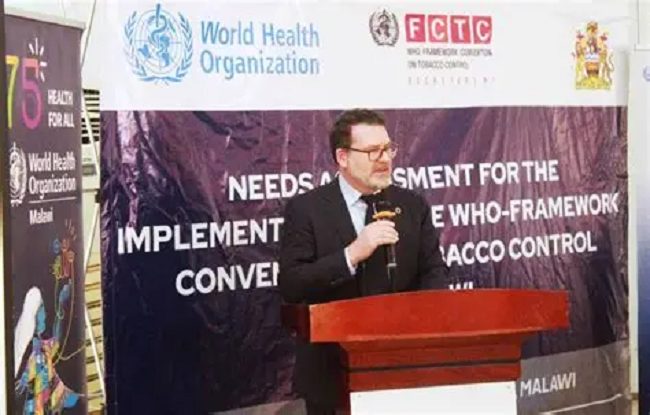
“The COP and the MOP provide a platform for Parties to review and strengthen the implementation of the WHO FCTC and the Protocol,” said Andrew Black, Acting Head of the Secretariat of the WHO FCTC. “These meetings will bring the world together to energise international cooperation and foster political will to address the global tobacco epidemic, which claims more than 7 million lives annually.”
The broad availability and marketing of e-cigarettes and other nicotine products and the actions governments can take, especially to protect children, will be the subject of a ministerial roundtable on the opening day of the meeting. Speakers will include the Deputy Prime Minister and Minister of Health and Social Affairs of Belgium, Mr. Frank Vandenbroucke, the Minister of Public Health of Uruguay, Dr Cristina Lustemberg and the Director-General for Health and Food Safety of the European Commission, Ms. Sandra Gallina among others.
Later in the week, the COP will consider measures to prevent and reduce tobacco consumption, nicotine addiction and exposure to tobacco smoke.
Also on the opening day, an event marking 20 years since the entry into force of the WHO FCTC, one of the most rapidly and widely embraced UN treaties, will bring together government and United Nations officials, civil society and youth advocates in a high-level strategic dialogue on the meeting’s theme – Uniting Generations for a Tobacco-free Future.
Delegates to the COP also will be on hand for the launch of the 2025 Global Progress Report on implementation of the WHO FCTC.
During the six-day meeting Parties to the WHO FCTC will also have the opportunity to share their experiences in implementing the treaty, and will also consider forward-looking tobacco control measures, as well as discuss an Expert Group report on liability. Other issues on the agenda include the environment and health, as the tobacco product supply chain and tobacco use result in extensive environmental damage. For example, plastic cigarette filters are a leading single source of waste that leaching toxic chemicals into the environment and break down into microplastics.
Illicit trade of tobacco products
Following the COP, 71 Parties to the Protocol will meet from November 24 to 26, 2025.
Illicit trade fuels the tobacco epidemic and undermines tobacco control by increasing access to – often cheaper – tobacco products. The availability of illicit tobacco poses a threat to public safety by weakening security and fostering corruption and organised crime.
Meanwhile, health authorities in Ethiopia are carrying out further investigations and ramping up response after suspected cases of viral haemorrhagic fever were reported in the country’s South Ethiopia Region. In support, the World Health Organisation (WHO) is deploying an initial team of responders and delivering medical supplies to assist in the ongoing efforts to determine the cause of infection and halt further transmission.
So far, eight suspected cases have been reported. Laboratory testing is ongoing at the Ethiopia Public Health Institute to determine the exact cause.
To support the national authorities, WHO is deploying a multi-disciplinary team of 11 technical officers with experience in responding to viral haemorrhagic fever outbreaks to help strengthen disease surveillance, investigation, laboratory testing, infection prevention and control, clinical care, outbreak response coordination and community engagement.
WHO is also providing essential supplies including personal protective equipment for health workers and infection-prevention supplies, as well as a rapidly deployable isolation tent to bolster clinical care and management capacity. Additional technical capacity is being mobilised to support the overall response.
WHO has also released $300,000 from its Contingency Fund for Emergencies to provide immediate support to the national authorities.
Viral haemorrhagic fevers refer to a group of epidemic prone diseases that are caused by several distinct families of viruses. They include Marburg and Ebola virus diseases, Crimean Congo haemorrhagic fever and Lassa fever.
Specific signs and symptoms vary by the type of viral haemorrhagic fever, but initial signs and symptoms often include marked fever, fatigue, dizziness, muscle aches, loss of strength and exhaustion. All cases of acute viral haemorrhagic fever syndrome whether single or in clusters, should be immediately notified without waiting for the causal agent to be identified.