

Introduction
The global generation of waste is escalating at an unprecedented rate, driven by rapid urbanisation, population growth, and shifting consumption patterns. Worldwide, waste production was estimated at approximately 2.0 billion metric tonnes in 2016 and is projected to reach 3.4 billion metric tonnes annually by 2050.
In Nigeria alone, approximately 25 million tonnes of waste are generated in cities each year, a figure expected to double by 2040 as urban centres continue to expand. This trajectory presents a formidable governance and environmental challenge, particularly in secondary cities where institutional capacity often lags behind demographic pressure.
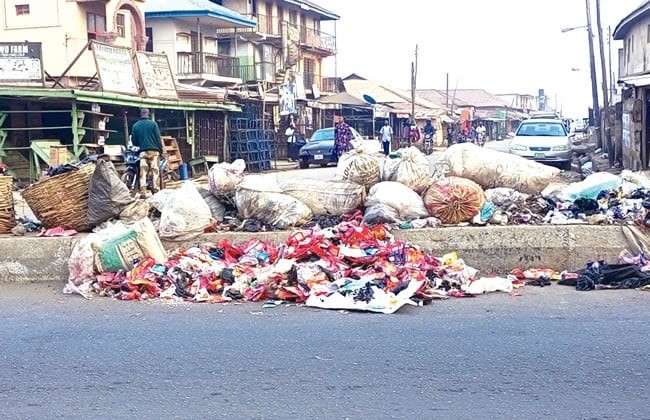
Waste management in Akure, the capital of Ondo State, represents a significant environmental and public health challenge. As with many Nigerian urban centres, Akure is characterised by a heterogeneous waste stream, inadequate collection infrastructure, and limited regulatory enforcement, conditions that engender widespread indiscriminate waste disposal.
The consequences extend beyond visual blight: improper waste management has been scientifically linked to the proliferation of infectious disease vectors, deterioration of ambient air quality, contamination of surface and groundwater resources, and the emission of climate-forcing greenhouse gases.
Scale of the Problem
The waste stream in Akure is generated from a diverse array of sources, including residential households, commercial establishments, markets, educational institutions, and places of worship such as churches, mosques, and traditional ceremonial centres. This heterogeneity produces a complex mixture of materials: biodegradable organic matter, non-biodegradable synthetic polymers (polythene and plastic packaging), metals, paper, wood, and agricultural residues.
Comparatively, Studies in Uyo, Akwa Ibom State, found that over 50% of waste arriving at disposal facilities comprised recyclable materials such as plastics, metals, and paper, while organic waste constituted more than 30%. The per capita waste generation rate in that study was measured at 1.34 kg/person/day, nearly double estimates published a decade earlier, a trend attributed to urban population growth and increasing consumption of manufactured goods.
These figures are consistent with patterns documented across south-western Nigerian cities. Research on market waste in Ibadan, Oyo State, found that over 68% of market-generated waste comprised easily decomposable organic matter, with significant quantities of volatile solids and total phosphorus, indicating high nutrient leaching potential if left untreated.
In Akure, field observations confirm that biodegradable waste constitutes the dominant fraction of the waste stream. However, the non-biodegradable components particularly polythene materials and synthetic packaging are of serious environmental concern due to their persistence in the environment and their contribution to drainage blockage, soil degradation, and ecotoxicological hazards.
Disposal Practices
The methods of disposal are often unsanitary and unlawful which deviate from environmentally sound management protocols. Rather than utilising government-approved receptacles or scheduled collection points, a significant proportion of residents resort to indiscriminate dumping along roadsides, open burning in vacant plots and residential compounds, and disposal into drainage channels and watercourses.
Available data suggest that fewer than 10% of residents in certain wards of Akure employ government-approved waste bins for primary disposal which is a figure consistent with national statistics indicating that between 9% and 12% of total waste generated in Nigeria is properly recycled or incinerated.
A contributing structural factor is the irregular and unreliable service delivery by official waste management agencies. The absence of a consistent and adequate number of collection bins in markets and residential neighbourhoods, coupled with unpredictable collection schedules, compels traders and households to manage waste informally. This dynamic is not unique to Akure; similar governance-driven lapses in service delivery have been documented in urban centres across Nigeria, including Lagos, Port Harcourt, Ibadan, and Maiduguri.
Public Health Implications of Improper Waste Disposal
The public health consequences of inadequate waste management systems in Akure are both immediate and far-reaching. Uncollected waste accumulations, particularly in institutional settings such as schools and markets create ideal microhabitats for disease vectors including Anopheles mosquitoes (malaria), Periplaneta cockroaches, and murid rodents (Salmonella, Leptospira).
The standing water that pools in open dumpsites, particularly within and around non-biodegradable containers such as tyres, tins, and polythene bags, provides optimal breeding conditions for the Aedes aegypti mosquito, a primary vector for dengue fever and yellow fever.
Furthermore, the decomposition of organic waste in open dumpsites generates metabolic heat, contributing to documented localised increases in surface and ambient air temperatures in the immediate vicinity of waste accumulations. This thermal anomaly has implications for urban heat island dynamics and may exacerbate thermal stress on proximate communities.
Environmental and Health Consequences of Open Waste Burning
Open waste burning is a widespread informal disposal practice in Akure which constitutes a particularly acute environmental hazard. The combustion of heterogeneous solid waste is thermodynamically inefficient, characterised by low combustion temperatures and restricted oxygen supply. As a result, incomplete combustion generates a broad spectrum of toxic air pollutants including fine particulate matter (PM2.5), carbon monoxide (CO), nitrogen oxides (NOx), polycyclic aromatic hydrocarbons (PAHs), polychlorinated dibenzodioxins and dibenzofurans (PCDD/F), heavy metals, and black carbon (BC).
The World Health Organisation (WHO) has explicitly identified open waste burning as a major source of ambient air pollution, with documented exposure pathways including respiratory disease, skin irritation, immunological impairment, and cardiovascular conditions.
In Nigeria, research by Oguntoke and colleagues has measured ambient chemical species consistent with open burning of solid waste, confirming that this practice materially degrades urban air quality. The burning of plastic-containing waste is of particular toxicological concern, as plastics are the primary source of dioxin and halogenated compound emissions during incomplete combustion.
The cumulative atmospheric burden from routine small-scale burning events may be ecologically significant at the city scale, particularly in densely settled neighbourhoods with limited ventilation.
Systemic and Governance Failures
The persistence of inadequate waste management in Akure is not solely a function of resident behaviour but reflects deeper systemic and institutional failures. ZL Global Alliance, a firm contracted by the Ondo State Government for public waste collection and disposal, has publicly identified the non-enforcement of extant sanitation legislation as the primary structural obstacle to effective waste management in the state capital. The failure to arrest, prosecute, or impose financial penalties on individuals and entities found disposing of waste indiscriminately undermines the deterrent effect of environmental regulations and sustains a culture of non-compliance.
This enforcement gap is consistent with findings from research done on Nigerian waste management systems. Ugwuanyi and Isife identified the paucity of enforceable legal frameworks as a systemic driver of waste management failure across Nigerian urban centres.
Compounding the enforcement deficit is the declining operational capacity of private sector participants (PSPs) in Akure’s waste collection ecosystem. Although multiple PSPs were initially licensed to provide residential and commercial waste collection services, their numbers have significantly diminished due to inadequate capitalisation, specifically, an insufficient fleet of suitable trucks and compactors to service growing collection routes. This withdrawal of private sector actors has created critical gaps in service delivery, particularly in peripheral and low-income residential areas.
Recommendations and Conclusion
To address these multifaceted challenges, researchers and practitioners have proposed several measures. These include intensifying public enlightenment campaigns on the dangers of improper waste disposal, government need to make appropriate waste disposal means more available to residents, such as providing sufficient disposal bins in markets and residential areas, employing additional waste management personnel and ensuring adequate monitoring of the agencies in charge are also seen as vital steps.
Ultimately, the full enforcement of environmental waste laws and the imposition of penalties for violations are considered essential to deterring unlawful practices and ensuring a cleaner, healthier environment in Akure.
While immediate priorities centre on collection and enforcement, longer-term sustainability requires the development of waste minimisation strategies, including community-based source separation programmes and informal sector integration. Given that over 50% of waste in comparable Nigerian cities comprises recyclable materials, appropriately structured recycling schemes could simultaneously reduce disposal volumes, create employment, and generate economic value. Pilot composting programmes for organic market waste could convert a significant fraction of Akure’s waste stream into agricultural amendment materials.
In conclusion, the waste management crisis in Akure, Ondo State, is emblematic of a broader governance and infrastructural challenge confronting secondary urban centres across Nigeria and the wider Global South. The convergence of inadequate infrastructure, weak enforcement, low public compliance, and declining private sector capacity has produced a system in which indiscriminate waste disposal is the norm rather than the exception.
Addressing this crisis demands a coordinated, multi-stakeholder response that integrates legal deterrence, infrastructure investment, community engagement, and institutional accountability. In the context of Nigeria’s commitments to the United Nations Sustainable Development Goals, particularly SDG 3 (Good Health and Well-Being), SDG 6 (Clean Water and Sanitation), SDG 11 (Sustainable Cities and Communities), and SDG 13 (Climate Action), the urgency of action in Akure and cities like it cannot be overstated.
By Sasere Omolade Victoria, Nigerian Environmental Study Action Team (NEST), Ibadan