

When 32-year-old Grace Choji, who lives in Mpape, a satellite town in the FCT, swallowed her antiretroviral medication, she whispered a quiet prayer that the pills would still be available next month.
Choji, a front desk officer at a reputable real estate firm, has lived with HIV for 11 years.
She has a toddler, a job she loves, and carefully nurtured dreams of a stable future.
“I do not sleep well anymore. If the free treatment ends, I do not know how I will survive, or what will happen to my child,” she said.
Choji is one of an estimated 1.8 million Nigerians living with HIV, alongside hundreds of thousands battling tuberculosis and millions affected by malaria.
Their survival depends on medicines, preventive tools and health systems that have relied heavily on international donor support for more than two decades.
However, in 2025, that long-standing certainty is under threat.
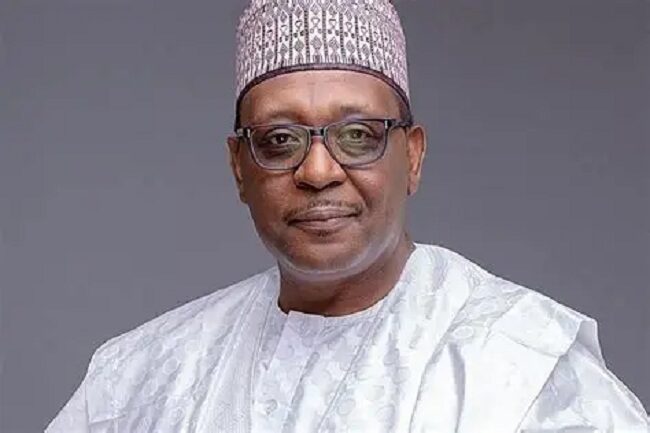
Nigeria’s Coordinating Minister of Health and Social Welfare, Dr Muhammad Ali Pate, has warned that the country must begin to finance a far greater share of its HIV, tuberculosis and malaria response as donor funding declines.
Speaking at a House of Representatives investigative hearing into more than $4.6 billion in Global Fund and USAID grants received between 2021 and 2025, Pate said the probe was “a welcome step towards transparency, accountability and domestic ownership”.
“Donor funding has saved millions of lives, but underfunding threatens sustainability,” he cautioned, noting that Nigeria’s health spending still falls below the 15 per cent target set by the Abuja Declaration.
Similarly, the Speaker of the House of Representatives, Abbas Tajudeen, said lawmakers were determined to strengthen accountability, stressing that in spite massive investments, many Nigerians continue to suffer devastating health outcomes.
The motion to investigate the utilisation of donor funds was moved by Philip Agbese (APC, Benue), who warned that Nigeria remains among the world’s highest-burden countries for HIV, TB and malaria, despite billions of dollars in external assistance.
For Yahata Musa, a 46-year-old truck driver from Lugbe, another FCT suburb, the danger is already uncomfortably close.
Musa is undergoing treatment for Drug-Resistant Tuberculosis (DR-TB); a more complex and costly form of the disease that requires stronger medication and longer treatment periods.
“They told me my TB did not respond to the first medicine. Now the treatment is longer and harder. If the drugs stop coming, what happens to people like me?” he asked.
A clinician at the National Hospital, Abuja, who requested anonymity, said DR-TB cases were becoming “a very real clinical and financial threat”.
“These medicines are lifesaving, but they are also extremely expensive. Without donor support, most patients simply cannot afford treatment,” she said.
Public health economist, Chinyere Okafor, also expressed concern.
“Funding shocks do not merely pause services; they reverse progress.
“They increase deaths, fuel drug resistance and raise future costs. Communities feel the impact first,” she said.
Against this backdrop, civil society organisations are attempting to strengthen accountability from the grassroots.
The Civil Society in Malaria Control, Immunisation and Nutrition (ACOMIN) is expanding Community-Led Monitoring (CLM) under the Global Fund’s GC7 grant.
ACOMIN’s National Coordinator, Ayo Ipinmoye, said the initiative has already delivered measurable results.
These include advocacy that led to the procurement of N190 million worth of hospital equipment in Jigawa through the Association of Local Governments of Nigeria (ALGON), the restoration of services in several primary healthcare centres, and improved TB and HIV testing in Taraba.
“Community monitoring brings real-time evidence from the grassroots directly into policy conversations.
“We want this model scaled nationwide and integrated into pandemic preparedness efforts,” Ipinmoye said.
Currently, the intervention spans 13 states, working with 260 community-based organisations and 780 trained volunteers.
Meanwhile, the Global Fund is investing nearly $1 billion in Nigeria between 2024 and 2026 to combat HIV/AIDS, tuberculosis and malaria, strengthen health systems and improve pandemic preparedness.
The funding prioritises vulnerable groups, including women, children, pregnant women and key populations, while supporting treatment, service delivery, the distribution of insecticide-treated nets and stigma reduction.
HIV programmes focus on adults, children and key populations, with the aim of ending AIDS by 2030.
Tuberculosis interventions prioritise early detection, effective treatment and stigma reduction, while malaria efforts include the large-scale distribution of insecticide-treated nets and data-driven campaigns in states such as Delta and Adamawa.
In addition, health system strengthening initiatives target infrastructure, supply chains and the efficient use of resources, while pandemic preparedness programmes aim to build resilience against future health emergencies.
In February 2024, Nigeria received nearly $993 million in Cycle 7 grants; its largest single allocation from the Global Fund, part of more than $4.8 billion the country has received since the partnership began.
Collaboration with organisations such as FHI 360 and PharmAccess, aligned with PEPFAR, supports integrated service delivery nationwide.
Nevertheless, lawmakers are now demanding clarity on how these funds have been utilised and whether outcomes justify the scale of investment.
Agbese cited sobering data, noting that 51,000 AIDS-related deaths were recorded in Nigeria in 2023.
He added that the country ranks first in Africa for tuberculosis burden and accounts for 26.6 per cent of global malaria cases.
Without improved coordination and transparency, he warned, Nigeria risks missing the 2030 Sustainable Development Goals targets to end the three epidemics.
The House Committee on HIV/AIDS, TB and Malaria has been mandated to report its findings within four weeks.
Amid rising concern, Nigeria and the United States recently signed a $5-billion health sector Memorandum of Understanding (MoU), signalling a strategic pivot towards partnership and domestic responsibility.
Under the agreement, the United States will provide nearly $2 billion in grants between 2026 and 2030, while Nigeria has committed to increasing health spending to at least six per cent of federal and state budgets.
Over time, US-funded commodities will transition to full Nigerian financing by 2030, alongside investments in health data systems, workforce capacity and laboratory networks.
The MoU aligns with the Nigeria Health Sector Renewal Investment Initiative (NHSRII) and the Sector-Wide Approach (SWAp) launched under President Bola Tinubu, marking a gradual shift from donor dependence towards self-reliance.
Still, stakeholders caution that stigma, poverty, insecurity, workforce shortages and commodity stock-outs continue to shape daily survival.
Key populations face persistent discrimination, rural patients struggle with transport costs, flood-related malaria outbreaks threaten children, and drug resistance looms.
Ultimately, Alash’le Abimiku, Executive Director of the International Research Centre of Excellence (IRCE), stressed that Nigeria must increase predictable domestic funding; not just in words, but through executed budgets.
She added that transparency must extend beyond hearings, with parliamentary oversight enforcing genuine accountability, while communities remain central to the response.
“They are the first to feel system failures, and the strongest agents of change,” she said.
Meanwhile, Pate insisted that Nigeria will not abandon donor partnerships but must take ownership of its future.
For millions of Nigerians living with HIV, tuberculosis and malaria, 2025 must not be the year the system falters.
For them, the line between life and fear is measured in pills, tests, nets and trust.
As Nigeria moves towards self-reliance, one truth is clear: health security is not charity; it is survival.
By Abujah Racheal, News Agency of Nigeria (NAN)