

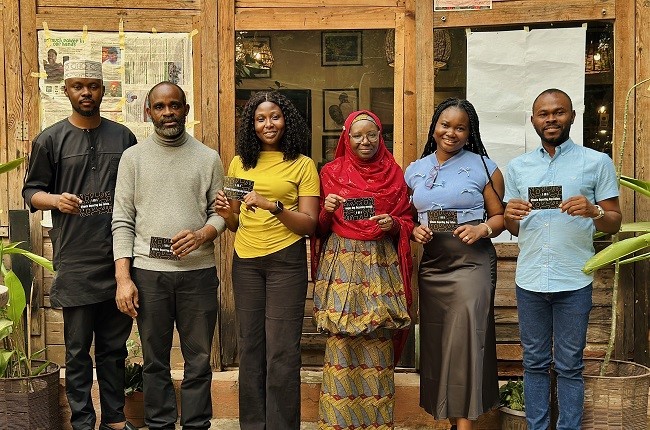
From January 29 to 30, 2026, the six journalists selected for the Climate Reporting Gap Fellowship gathered in Abuja for a pivotal in-person training. This intensive workshop, a core part of the Climate Reporting Gap Fellowship by Surge Africa and One World Media, equipped the fellows with technical expertise to execute their deep investigations into Nigeria’s climate and energy future.
The Climate Reporting Gap Initiative (CRGI) addresses the critical deficit in West African climate journalism, where increased media coverage has not been matched by rigorous, investigative scrutiny of climate responses, often relying instead on passive reporting and second-hand sources.
Launched amid widespread disinformation and political resistance, CRGI aims to close this strategic advocacy gap by strengthening journalists’ capacity to translate complex climate data and politics into accessible, accountable narratives. By empowering media to frame climate issues as interconnected political, economic, and social processes, the initiative seeks to foster evidence-based reporting that links local realities to global dynamics, challenges misinformation, and promotes informed public discourse to drive equitable and ambitious climate action.
The training responds to a critical need: as climate impacts intensify across communities, the fellowship aims to close the gap between complex policies and lived realities. The two-day programme was designed to transform principles into practice, directly supporting the fellows’ projects through hands-on, practical sessions.
The workshop, held in Abuja as part of the overall fellowship programme, set a foundation for critical, context-driven climate journalism in Nigeria. Opening the session, Nasreen Al-Amin, Director at Surge Africa, challenged fellows to move beyond surface-level reporting by interrogating emerging geopolitical trends and questioning dominant narratives around climate and energy.
She emphasised that the fellowship exists to amplify local realities and everyday struggles, ensuring audiences understand not just that the energy transition is happening, but why, and at what social and economic cost.
The first technical session, led by Mr. Botti Isaac of Social Action Nigeria, unpacked Nigeria’s energy transition through its NDC commitments, decarbonisation pathways, the gas debate, fiscal constraints, just transition implications, and governance challenges. He underscored the disconnect between policy ambition and lived realities, urging fellows to identify gaps and hold the government accountable.
This was followed by a data journalism session with Khadijah Kareem of Dataphyte, who reframed data as a storytelling tool shaped by power, evidence, and intent.
Fellows explored how to localise, simplify, and critically interpret datasets while navigating data gaps. The rest of the programme focused on visual storytelling, concluding with reflective discussions, where fellows expressed renewed clarity, confidence, and enthusiasm, particularly around using data to tell socially relevant climate stories.
“Our goal with this programme is to witness a shift in how the energy transition discourse is conveyed, ensuring it is non-partisan to any particular sector, and that information reflects live realities of the Nigerian people, and most importantly address the policy and governance gaps that we see with Nigeria as a petro-state. The transition is necessary, but so does reporting that links local issues with regional or global expectations without discrimination and vague expectations,” said Al-Amin.
Climate Reporting Gap Initiative will build on its efforts to support independent journalists by providing a grant up to £5,000 to CRG fellows, to develop and deliver investigative stories with themes centering oil politics and energy transition as part of the overall outcomes of the Fellowship programme.
This will be technically supported by One World Media, a UK-based company serving as implementing partners for the fellowship. The Initiative itself will continue to launch numerous fellowship programmes with the core aim of advancing climate reporting and bridging communication gaps with local communities.