

A new study led by researchers at ETH Zurich and the Paul Scherrer Institute PSI in collaboration with African partners shows that electric vehicles could be economically competitive in many African countries before 2040 – just as long as charging infrastructure is developed and geared specifically towards solar powered off-grid systems.
The number of vehicles in Africa is expected to double between now and 2050 – faster than on any other continent. The question is not whether mobility will increase, but how. A new study led by researchers at ETH Zurich and the Paul Scherrer Institute PSI, in collaboration with African partners from Makerere University (Uganda), University of Port Harcourt (Nigeria) and Stellenbosch University (South Africa), shows that electric vehicles, combined with solar-powered off-grid charging systems, could be economically competitive in many African countries well before 2040.
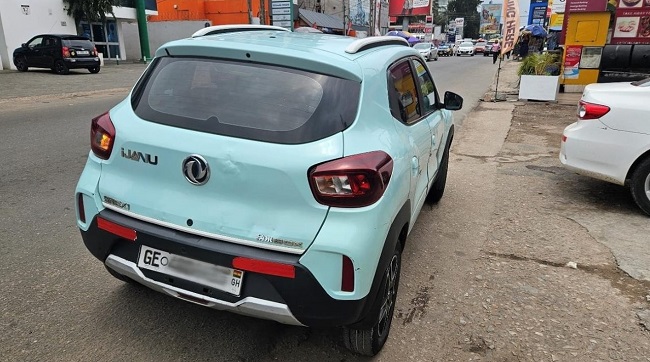
“Many models have assumed that combustion engine vehicles will continue to dominate in Africa through mid-century,” says lead author Bessie Noll, a senior researcher in the Energy and Technology Policy Group at ETH Zurich, headed up by Professor Tobias Schmidt. “Our findings show that, under certain conditions, e-mobility is feasible sooner than many people think.”
The study was published in Nature Energy.
Solar power the difference-maker
A key aspect of the study is vehicle charging. In many regions of Africa, the electrical grid is unreliable or non-existent. The researchers therefore analysed 52 African countries and more than 2,000 locations for a scenario, in which electric vehicles are charged using dedicated solar power facilities and stationary batteries, independent of the grid.
What helps here is that the cost of solar power and batteries has fallen sharply in recent years. At the same time, more and more affordable electric vehicles are hitting the market, especially from China. Motorbikes and eScooters are particularly economical today.
“We wanted to know what would happen if the charging system were designed specifically for daily demand,” explains second lead author Christian Moretti, a research scientist in the Laboratory for Energy Systems Analysis at PSI. “Even we were surprised by the results: these systems are significantly cheaper than is often assumed, and in many contexts they are even more reliable than the existing electrical grid.”
Specifically, the team’s calculations show that a compact solar system is enough for a small car that travels around 50 kilometres (approx. 30 miles) per day. The cost of charging accounts for only a very small portion of the total vehicle costs. In many places, switching to electric scooters and motorbikes already makes good financial sense.
A diverse continent
Something the study also highlights are the significant differences within Africa. In countries like Botswana or South Africa, where financing conditions are more stable, electric vehicles could become competitive sooner. In countries like Guinea, where financing costs are high, the transition will likely be slower. “Africa is not a single, uniform market,” stresses Noll. “The framework conditions vary enormously, as does the point at which e-mobility makes sense financially.”
Synthetic fuels not an option
The researchers also compared electric vehicles to cars powered by synthetic fuels. These vehicles perform significantly worse. Even under very optimistic assumptions, such as production using highly affordable solar power in Chile, the costs remain high.
“Synthetic fuels are urgently needed in other areas, such as aviation and industry,” says Moretti. “They don’t make sense as a priority for passenger transport in Africa.”
Financing the primary issue
According to the researchers, the biggest obstacle to e-mobility is financing, rather than technology. In many African countries, loans are expensive because investments are considered risky. This affects electric vehicles, in particular, since the initial outlay is higher.
“If financing costs can be reduced, the transition will accelerate dramatically,” says Noll. Potential options include government guarantees, new financing models or international support. E-mobility could also create new economic opportunities for Africa, through things like local assembly, new services or jobs along the supply chain.
What the study doesn’t show
The analysis, published in Nature Energy, is deliberately based on a simplified scenario. In their calculations, the researchers did not take into account existing electrical grids, import duties, value added tax or government subsidies. Their aim was to compare the different drive technologies in purely technological and economic terms.
The researchers also did not model in detail infrastructure issues, such as the expansion of public charging stations, or social and political factors, such as import regulations on used vehicles. “We first wanted to understand whether e-mobility is feasible and affordable in principle,” says Noll. “How each country manages their specific transition depends heavily on local conditions and policy decisions.”
How does e-mobility affect public finances?
A second study, which Bessie Noll is involved in and which was published in Nature Sustainability, reveals another dimension of the transition. This study examines the implications of the global transition to electric vehicles for public finances worldwide. Today, taxes on petrol and diesel generate around $900 billion per year worldwide. In many countries, this revenue finances road building and more broadly transport infrastructure. With the rise of electric vehicles, this revenue is at risk of disappearing.
Low-income countries are bearing the brunt. Here, fuel taxes account for more than nine percent of total government revenue on average, significantly higher than in wealthier countries. At the same time, these countries often have less institutional capacity to introduce new tax regimes quickly.
“The transition to electric vehicles makes sense in terms of climate policy, but poses difficult budgetary questions for a lot of countries,” notes Noll. Early tax reforms and international support could help to avoid financing gaps.
Together, both studies show that e-mobility in Africa is technically and economically feasible, but it will take forward-thinking policies that take a holistic view of energy, transport and financial issues if it is to achieve its full potential.