

Stakeholders in the environmental sector have explored the potential of a new Environmental Impact Assessment (EIA) initiative in Nigeria.
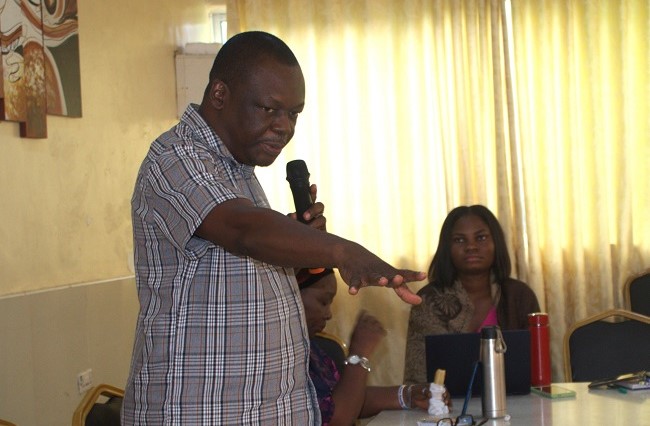
The stakeholders said this at the Inclusive Environment Nigeria Workshop organised by the University of Derby, Renevlyn Development Initiative and the Environmental Defenders Network on Tuesday, April 7, 2026, in Lagos.
The initiative aims to address long-standing issues of community exclusion and environmental injustice in development projects across the country.
It is anchored on findings from a 12-month research led by Dr Eghosa Ekhator of the University of Derby and other scholars.
The 2023 research adopted co-production principles through extensive engagement with communities and key stakeholders.
The outcome is the Inclusive Environments (Environmental Justice) Framework designed to promote equitable environmental decision-making.
Speaking at the workshop, Ekhator said the framework provides a structured approach for inclusive and accountable environmental governance.
He said the tool draws from equality impact assessment models but tailored for environmental sustainability challenges.
Ekhator added that the framework is flexible and can be adapted to different national and institutional contexts, including Nigeria.
The Executive Director of Renevlyn Development Initiative, Mr. Philip Jakpor, who moderated the hybrid workshop, said the failure to involve communities in decision-making around development projects remains a “sore point” nationwide.
Jakpor noted that although EIAs are legally required for projects with significant environmental impact – such as oil and gas exploration, mining, and large-scale construction – implementation in Nigeria is often flawed.
“Community people are supposed to be part and parcel of the process. Their views should inform whether a project goes forward or not.
“Where projects must proceed despite concerns, safeguards should be agreed upon with the communities,” Jakpor said.
He, however, lamented that in practice, communities are largely sidelined.
“What we see in Nigeria is limited or no community involvement in EIA processes and a total lack of transparency by project implementers. In many cases, the so-called EIA reports cannot even be found,” he said.
Jakpor cited several examples across the country – from the Niger Delta to northern mining regions – where communities claim projects were imposed on them without consultation.
“The process is treated as a mere formality. Companies only inform communities instead of engaging them as stakeholders whose views matter,” he added.
He stressed that the exclusion of communities makes it difficult for them to seek justice when their environmental rights are violated, noting that companies are rarely penalised for breaching EIA requirements.
“These gaps are largely responsible for the environmental degradation we see across the country,” Jakpor said.
Also speaking, an Ogoni environmental activist, Chief Eric Dooh, decried what he described as a long-standing conspiracy between government authorities and oil companies, which has left host communities to bear the brunt of environmental damage.
Dooh said there was little or no consultation with communities before the commencement of oil exploration activities in Ogoniland.
“There were no discussions with the people who own the environment. What we saw was a high-level arrangement between the government and companies, without considering the impact on communities,” he said.
Dooh recounted his personal journey in environmental advocacy, which began after taking over from his father, who had initiated legal battles against oil companies over environmental pollution.
“My father had taken Shell to court several times. When he became too weak, I took over the struggle. It has not been easy – seeking justice in Nigeria is very difficult,” he said.
He noted that decades of oil exploration have devastated the local economy, which once thrived on fishing and farming.
“That environment sustained us before – it supported fishing and farming. Today, it is destroyed. We have lost so much,” he lamented.
The activist called for a more inclusive approach to resource management, urging the government and companies to actively involve communities in decision-making processes.
“If development must continue, then communities must be carried along. They should be involved in project planning, empowerment programmes, and environmental management.
That is the only way to ensure peace and sustainability,” he said.
The workshop brought together policymakers, academics, community representatives and civil society organisations.
Participants called for stronger collaboration among government, civil society and host communities.
They stressed that development must not marginalise vulnerable populations but ensure equitable outcomes.