

The Managing Director of NIPCO Gas Ltd., Mr. Nagendra Verma, says the 18-inch, 80-kilometre Sagamu–Ibadan natural gas pipeline has reached 80 per cent completion.
Verma disclosed this during an interactive session with energy correspondents on Friday, February 27, 2026, in Lagos.
He stated that the project is scheduled for delivery between June and July, reaffirming the company’s commitment to completing the strategic infrastructure within the projected timeline.
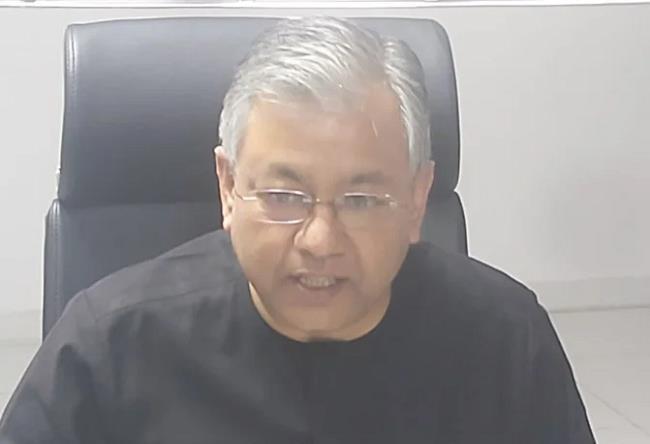
According to him, the pipeline, being developed in partnership with NNPC Gas Marketing Ltd. (NGML), will significantly boost gas supply to industrial and commercial consumers in Ogun and Oyo states, as well as adjoining areas in the Southwest.
Verma described the Sagamu–Ibadan pipeline as a major milestone in Nigeria’s gas expansion drive, noting that it is expected to strengthen industrial productivity and enhance energy security.
“This critical infrastructure will improve manufacturing competitiveness, lower production costs for industries dependent on alternative fuels, and stimulate regional economic growth,” he said.
He added that given the project’s strategic importance to Southwest industrialisation and national energy security, the company sought the continued cooperation and support of relevant federal and state authorities to ensure seamless execution.
Verma explained that many manufacturers in the region currently rely on diesel and Low Pour Fuel Oil (LPFO), both of which are more expensive and subject to price volatility.
He noted that access to pipeline gas would provide a more stable, cost-effective and environmentally friendly alternative, enabling businesses to optimise operations and expand capacity.
Beyond the Ibadan corridor, he disclosed that NIPCO Gas, in collaboration with NGML, is also developing complementary gas distribution infrastructure from Sagamu to Abeokuta to deepen gas penetration across Ogun State.
The Sagamu–Abeokuta project, he said, is aimed at accelerating industrial growth by providing reliable gas supply to existing manufacturers while attracting fresh investments into the state.
He further noted that the initiative is projected to improve energy reliability, enhance operational efficiency for businesses and boost internally generated revenue through increased economic activity.
“The project continues to enjoy strong collaboration and support from the Ogun State Government, reflecting a shared commitment to energy-driven economic development and sustainable industrial expansion,” Verma added.
The Sagamu–Ibadan pipeline as strategic backbone infrastructure that will further consolidate Ogun and Oyo states as leading industrial hubs in the Southwest.
Improved access to natural gas is expected to drive growth across key sectors, including cement, food and beverage, steel, pharmaceuticals and agro-processing.
In a related development, Rural Electrification Agency (REA) has listed 500 projects in the 2026 budget to boost electricity supply in strategic public institutions and rural communities across the country.
Managing Director of the agency, Dr Abba Aliyu, made this known while addressing newsmen on the sidelines of the 2026 budget defence session organised by House Committee on Rural Electrification in Abuja on Friday.
He said that the total budget size for 2026 operations is N170 billion, out of which N100 billion had been approved for National Public Sector Solarisation.
The managing director said that the N100 billion targets provision of hybrid mini-grid for government agencies within and outside Abuja.
“In the National Hospital in Abuja, you can see our infrastructure, trying to provide reliable electricity to reduce the cost of electricity at the hospital.
“In the 2026 budget, we have a plan for over 500 different projects; a number of them are extension of grid for communities that are very close to the grid where we extend the grid, deploy transformers to power the communities.
“We have also a reasonable number of mini-grids for communities that are agrarian in nature or have cottage industries,” he said.
Aliyu said that the agency had also planned for mini-grids in an agricultural processing area in the 2026 budget.
“We also have plans for deployment of solar home system for sparsely populated communities. What we presented to the National Assembly is the details of this 500 projects that are to be executed,” he said.
Accounting for the 2024 budget, Aliyu said that the agency achieved 85 per cent budget performance.
He said that the agency had so far achieved 32 per cent of the 2025 budget in spite of the low release of funds experienced during the fiscal year.
Earlier, Chairman of the Committee, Rep. Mohammed Bukar (APC-Borno), said that after thorough deliberations and scrutiny, the committee was satisfied with the explanations provided and the documentation presented by the agency.
He said that measurable progress had been made in expanding energy access through off-grid and renewable energy interventions across rural communities, federal institutions and public sector establishments nationwide.
The lawmaker acknowledged the agency’s compliance with applicable procurement laws, fiduciary safeguards and development partner frameworks governing its operations.
He, however, said that the committee would embark on oversight visits for on-the-spot assessments, in line with constitutional demands.
“Legislative oversight is a critical pillar of accountability, and we will continue to ensure that the Rural Electrification Agency remains aligned with its statutory mandate and national development priorities.
“However, at this stage, we are satisfied that the agency is operating within its mandate and delivering tangible impact.
“We encourage the agency to sustain this momentum, as Nigeria advances its rural electrification and energy transition objectives.”
By Yunus Yusuf and EricJames Ochigbo