

Natural grazing by large ungulates improves conditions for vegetation growth, promotes the storing of organic substances in the soil, and enhances water retention in the landscape.
This has been demonstrated in the research conducted by scientists at the reserve of large herbivores in the former military area of Milovice, one of a number of sites where European bison, wild horses and back-bred aurochs live across Central Europe.
“Year-round grazing by large ungulates reduces the average amount of aboveground plant biomass while also increasing its ‘nutritional’ quality. The vegetation contains more nitrogen and water, making it more nutritious for animals and also more efficient at managing water,” explains Eva Kastovska from the University of South Bohemia in Ceske Budejovice, Czech Republic.
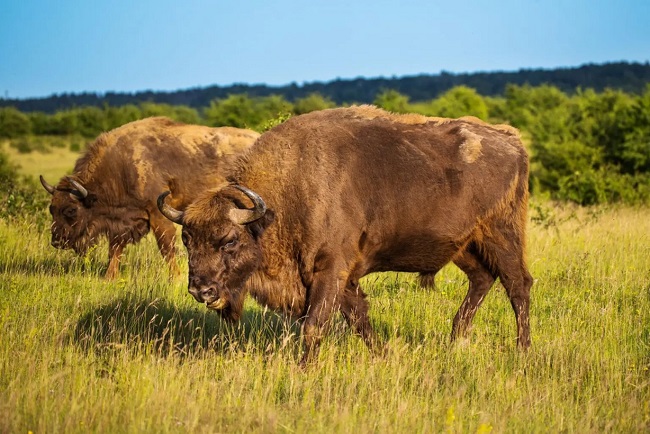
This is precisely what fundamentally distinguishes natural grazing by large herbivores from intensive livestock grazing. “The underground plant biomass remains unaffected – it does not decrease, as often appears during intensive grazing, when animals repeatedly nibble on the growing aboveground parts of plants.
Thanks to this, the vegetation has enough time to regenerate, absorb sufficient nutrients and water through its roots, and supply the soil with organic matter that supports its recovery. In this way, they contribute to the formation of soil organic matter, which is closely linked to water retention,” says Kastovska, describing the process behind the long-term sustainability of grazing ecosystems.
Even at the height of summer, the vegetation in the pastures of large ungulates remains vigorous.
“Grazing naturally connects the needs of plants with the activity of soil microorganisms. We observed improved nutrient uptake – primarily nitrogen, but also phosphorus – in grazed herbage. In our opinion, these closer links support the self-regulation of the system and its ability to respond flexibly to environmental changes, including weather extremes such as droughts,” emphasises Kastovska.
As such, natural grazing by large herbivores has great potential in Europe to help with water retention in the landscape, which, taken together with progressing climate change, is becoming an increasingly serious problem in this country.
“Large ungulates bring several significant benefits to nature conservation. In addition to water retention in the landscape and soil restoration, they also support biodiversity, promote carbon storage in the soil, and reduce the risk of wildfires. This is why this approach is becoming increasingly popular in the environmentally conscious countries of Western Europe. Moreover, this solution is financially efficient,” added Dalibor Dostal, director of the European Wildlife conservation organisation, which founded the Milovice Reserve for large ungulates in cooperation with scientists in 2015.
Year-round natural grazing, also known as trophic rewilding, is increasingly being used for the management of open landscapes. This approach has the potential to mitigate biodiversity loss and climate change.