

January marks International Zero Waste Month, a growing global observance that calls for systemic action from governments, industries, and all sectors to reduce waste at its source and prevent pollution.
The movement began in the Philippines in 2012 through the Zero Waste Youth Initiative and was formally recognised in 2014 with Presidential Proclamation No. 760, which promotes designing and managing products and processes to systematically avoid and eliminate the volume and toxicity of waste and materials, while conserving and recovering resources instead of indiscriminately disposing or burning them.
Since 2023, environmental organisations led by the Global Alliance for Incinerator Alternatives (GAIA) have helped expand the campaign internationally, making zero waste a shared advocacy across countries, sectors, and communities.
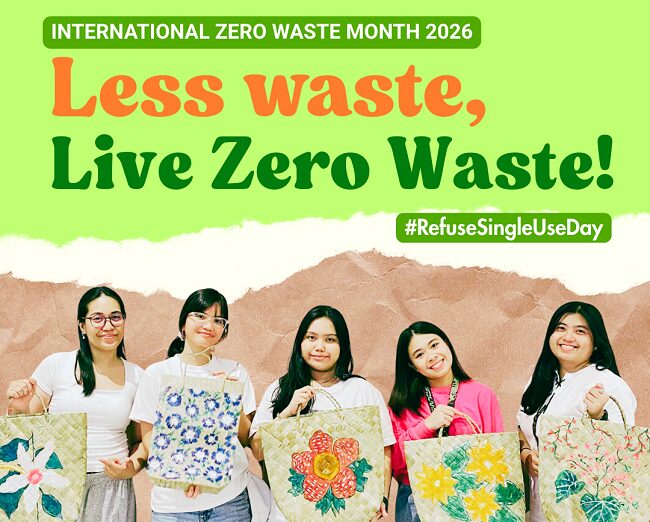
This year’s observance of International Zero Waste Month also coincides with the 25th anniversary of Republic Act No. 9003, or the Ecological Solid Waste Management Act, enacted on January 26, 2001, which provides the national framework for integrated solid waste management based on resource conservation and recovery. More than two decades on, persistent challenges such as improper waste disposal, infrastructure constraints, and gaps in public awareness underscore the need to strengthen and fully implement the law.
According to DENR reports, the Philippines generates 2.7 million tons of plastic waste annually, contributing to the 61,000 metric tons of solid waste produced daily – enough to fill 37 Olympic-sized swimming pools. This includes 163 million plastic sachets, 48 million shopping bags, and 45 million thin-film bags. Alarmingly, only a third of this waste ends up in landfills, while 35% is discarded into the ocean.
“Zero Waste is a goal that is ethical, economical, efficient, and visionary, guiding industries, governments, and communities to prioritise upstream solutions – reducing production, designing products responsibly, and minimising waste at its source – while recognising that recycling and other downstream measures remain essential,” said Jam Lorenzo, Deputy Executive Director of BAN Toxics.
The group emphasised that the country should adopt the principle of Zero Waste across all sectors, focusing on policies and practices that prevent waste generation before it occurs. By prioritising upstream solutions, the country can conserve natural resources, protect ecosystems, and create sustainable production and consumption systems, complementing downstream strategies like recycling, recovery, and safe disposal.
Meanwhile, at the community level, BAN Toxics suggests practical Zero Waste approaches that can help reduce waste, promote sustainable production and consumption, and create a safer, healthier environment at home and in the neighborhood:
- Segregate Your Waste
Segregating waste at home is the first step toward a Zero Waste approach. Separate recyclables, compostables, biodegradables, and hazardous items to conserve resources, reduce landfill dumping, and prevent toxic contamination and pollution.
- Refuse Single-Use Plastics, Switch to Reusables
Say “no” to plastic bags, straws, and disposable utensils, and bring reusable alternatives whenever possible. Use bayongs, mesh, or cloth produce bags for fruits and vegetables, and carry metal straws and reusable utensils for take-out orders. Replace plastic wrap and disposable containers with glass or stainless-steel food storage, which keeps food fresh without generating waste or absorbing odors. Consistently adopting these practices can prevent hundreds of single-use plastics from entering the waste stream.
- Compost Kitchen Waste and Non-Recyclables
Biodegradable waste makes up a significant portion of household garbage. Compost vegetable peels, fruit scraps, coffee grounds, and eggshells. Tear non-recyclable items like food cartons, paper napkins, tissue paper, pizza boxes, and paper egg cartons into small pieces and add them to the compost bin. The resulting compost can be used in home gardens, potted plants, or community composting programmes.
- Support Eco-Friendly Refilling Stores or Plastic-Free Sari-Sari Stores
Refilling stores and plastic-free sari-sari stores are zero-waste shops where you bring your own containers to fill with bulk goods like food, cleaning supplies, and personal care items. They reduce single-use plastics and packaging while offering sustainable alternatives for everyday essentials.
- Make Your Own Cleaning Products
Replace household cleaners with simple ingredients like vinegar, baking soda, and lemon. Natural cleaners cost less, reduce plastic bottles, and eliminate harsh chemicals. A basic all-purpose cleaner of equal parts water and vinegar with a few drops of essential oil works for most tasks.
- Choose Environmentally Friendly Products
Select products made from natural or recycled materials, such as bamboo, organic cotton, or native leaves. Choose items that reduce waste, like steel bottles and cloth bags, energy-efficient options like LED bulbs or solar devices, non-toxic household cleaners, and chemical-free personal care products.
- Practice Mindful Meal Planning
Plan meals weekly, shop with a list, and use what you have before buying more. Store food properly to extend freshness and repurpose leftovers to reduce food waste.
- Repair, Repurpose, and Donate
Before discarding items, consider if they can be repaired, repurposed, or given to someone who needs them. Learn basic repair skills such as sewing buttons, patching clothes, or fixing small appliances. Transform old t-shirts into cleaning rags, glass jars into storage containers, and worn towels into washable cleaning cloths. Donate usable items you no longer need instead of throwing them away. These practices extend product lifespans and keep materials in circulation.
- Replace Disposables with Sustainable Alternatives
Examine your daily routine for disposable items you can replace with reusable alternatives. Use cloth handkerchiefs instead of tissues, washable menstrual products instead of disposables, rechargeable batteries instead of single-use, and real dishes for gatherings instead of paper plates and cups. Small changes like these may seem minor, but together they prevent large amounts of waste.
BAN Toxics emphasises that transitioning to zero-waste habits does not require perfection. Individuals and communities can start with one or two manageable changes and gradually add more as these practices become routine. Focusing on progress over perfection, even reducing waste by 20% can make a meaningful difference.
The organisation stresses that the Zero Waste journey is ultimately about being more intentional with resources, reconnecting with what we consume, and recognizing that individual and collective choices shape the environment.