

On Sunday, January 18, 2026, travellers on the Abuja-Lokoja highway were once again caught in hours-long traffic gridlock, renewing concerns about the fragility of Nigeria’s road infrastructure and the growing human and environmental cost of repeated transport failures.
Passengers travelling from Lagos and other southern states towards the north said vehicles barely moved for several hours, with some commuters reporting delays of up to eight hours, while others said they spent close to two days on the road.
The gridlock comes barely weeks after a similar congestion episode in December, when motorists and bus passengers were stranded overnight along the same corridor despite official assurances that traffic flow had been restored.
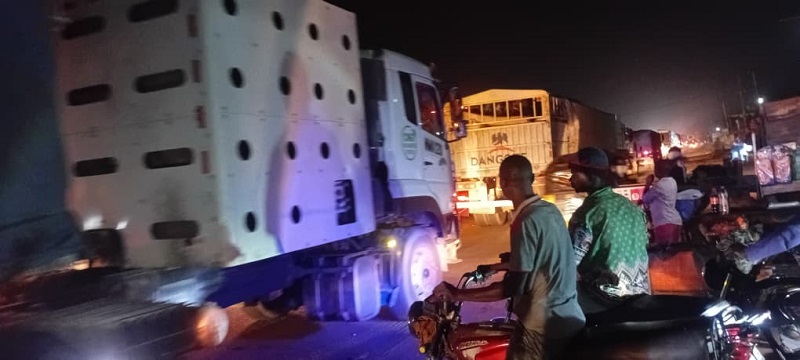
Lokoja in Kogi State occupies a strategic position in Nigeria’s transport network, serving as a convergence point for traffic moving between the south, north and eastern parts of the country. However, the city’s road infrastructure has long struggled to cope with increasing vehicle volumes, heavy-duty trucks and seasonal travel surges, leaving little room for diversion when disruptions occur.
For many travellers, the experience has become disturbingly familiar.
“You think it has been solved because you hear traffic has cleared, but after some time you are stuck again,” a passenger travelling north from Lagos said. “This time, some people were on the road all night.”
Beyond delays, prolonged congestion raised safety and welfare concerns, particularly as night fell. Travellers described growing anxiety over personal security, access to food and water, and uncertainty over when movement would resume.
Commercial drivers operating on the route said gridlocks in Lokoja are often triggered by a combination of broken-down vehicles, narrow road sections and the absence of functional alternative routes.
“When something goes wrong here, everything stops,” a bus driver explained. “There is no bypass, no other road to pass.”
A source familiar with operations around the corridor said a disruption linked to water infrastructure around the Ganaja axis may have contributed to the latest delays, though authorities are yet to issue an official explanation.
In past incidents, the Federal Road Safety Corps (FRSC) has attributed gridlock on the Abuja-Lokoja axis to traffic volume and obstructions, often deploying personnel to manage traffic and clear stalled vehicles.
Transport analysts, however, argue that traffic control alone cannot resolve what is essentially a structural problem.
Nigeria’s reliance on overstretched federal highways, combined with limited investment in bypasses, rail freight alternatives and long-term urban transport planning, have left key transit cities like Lokoja vulnerable to repeated congestion.
Environmental observers also warn that prolonged gridlocks increase fuel consumption and vehicle emissions, compounding environmental and climate pressures while offering no economic benefit.
As traffic gradually eased after several hours, many travellers were left with lingering questions about how long the relief would last and when permanent solutions would replace temporary fixes.
By Oyeyemi Abolade