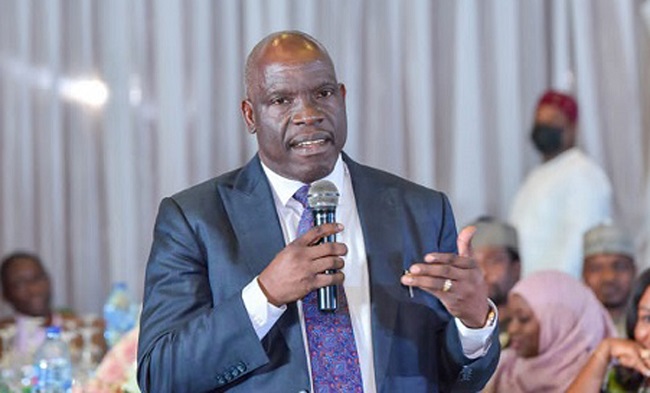
CEO, Nigerian Upstream Petroleum Regulatory Commission (NUPRC), Mr. Gbenga Komolafe, has restated the commission’s commitment to transparency, accountability, and sustained investment growth in the oil and gas sector.
Komolafe made the pledge on Tuesday, November 18, 2025, in Lagos during a strategic workshop for energy correspondents.
He was represented by Mrs. Efemona Bassey, Deputy Director, Services and Administration at the Commission.
Komolafe told participants that the media plays a vital role in national development, noting that the 1999 Constitution empowers journalists to hold public institutions accountable.
He added that the Petroleum Industry Act reinforces this expectation by requiring the Commission to publish reports, data, and statistics on upstream operations.
“At the heart of our missions is a shared commitment to openness, accountability, and service to the Nigerian people,” he said.
He explained that the workshop was designed to give correspondents deeper insight into the Commission’s activities and the upstream petroleum industry.
Komolafe noted that over the past two years, NUPRC experts have provided extensive briefings on exploration, production, acreage management, and community relations.
He observed that global fossil fuel investments are declining as countries intensify energy transition efforts.
In spite of this, he said Nigeria continues to make steady progress, supported by PIA reforms and the backing of President Bola Tinubu’s administration.
According to him, the number of oil rigs in the country has risen to nearly 70, with more than 40 currently active.
He added that the Commission has approved several final investment decisions worth billions of dollars in recent months.
The chief executive said a major development plan valued at about $20 billion was approved within the past 10 months.
“These milestones reflect the stability and renewed confidence in Nigeria’s upstream sector,” he said.
Komolafe also disclosed that the commission will launch a new oil licensing round on Dec. 1.
He described the exercise as a defining moment for the industry and more transparent than the 2024 bid round.
He said the round aims to open new frontiers and unlock fresh opportunities for both local and international investors.
He added that the process will meet global standards as Nigeria works toward adding one million barrels of oil per day to its output.
Komolafe emphasised the media’s decisive role in shaping investor sentiment, urging journalists to avoid inaccurate or sensational reporting.
He warned that harmful reporting could discourage investors in the highly sensitive oil and gas sector.
He urged correspondents to prioritise factual, contextual, and development-focused reporting in the national interest.
Komolafe reaffirmed the Commission’s dedication to openness, noting that NUPRC publishes data and updates on its website and platforms.
He called for deeper collaboration with the media, stressing the joint responsibility to uphold transparency and accountability for national growth.
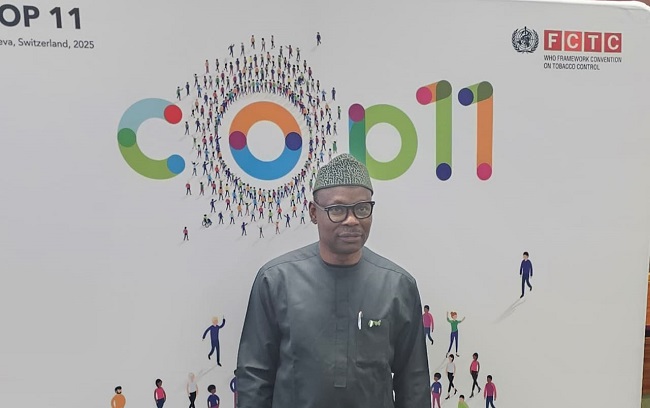
Minister of State for Health and Social Welfare, Dr. Iziaq Salako, has praised Nigeria’s tobacco control efforts since 2012, saying the country had made “remarkable progress” in the fight against the deadly product.
Dr. Salako, who spoke at the ongoing 11th Session of the Conference of the Parties (COP11) to the WHO Framework Convention on Tobacco Control (WHO FCTC) in Geneva, said it had resulted in a continued decline in the number of adults using tobacco in the country.
The opening session featured over 1,400 delegates from across the world participating in a high-level dialogue that reviewed two decades of progress under the WHO FCTC and deliberated on accelerated action on tobacco control.
Minister of State for Health and Social Welfare, Dr. Iziaq Salako
The delegates from government, international organisations and civil society including Corporate Accountability and Public Participation Africa (CAPPA) – representing 162 Parties to the WHO FCTC – began discussions on a wide range of measures to stem tobacco use, which kills more than 7 million people annually, and to protect the environment from the harms caused by tobacco production, use and waste.
Delivering Nigeria’s high-level statement at the global meeting on Monday, November 17, 2025, Dr. Salako highlighted new national data, strengthened enforcement, and bold regulatory actions that he said reinforce Nigeria’s commitment to public health and the WHO FCTC.
He said at the centre of the country’s progress was the successful completion of the second round of the Global Adult Tobacco Survey (GATS 2025), which shows a continued decline in daily tobacco use among adults compared to earlier surveys.
According to the Minister, the latest findings also reveal the powerful impact of graphic health warnings, with the percentage of smokers who considered quitting after seeing the warnings rising from 26.7 percent in 2012 to 43.3 percent in 2025, a major step forward for cessation efforts.
“Overall, from 2012 to 2025, exposure to secondhand smoke significantly declined inside homes, government buildings, restaurants, public transportation, tertiary institutions and schools,” Dr. Salako added.
Nevertheless, he emphasised that although the gains were encouraging, sustaining them would require continued vigilance and stronger enforcement at all levels of government.
The minister explained that, to reinforce implementation of the National Tobacco Control Act, 2015 & Regulations, 2019, the Federal Government had rolled out multiple strategic policy documents, including the National Tobacco Control Strategic Plan of Action, 2024 – 2028, National Tobacco Control Communication Strategy, 2024 – 2028 and the National Tobacco Control Enforcement Plan, 2024 – 2028.
These frameworks, he noted, ensure a coordinated, multisectoral approach to regulation and public education.
The Minister highlighted Nigeria’s advancement of the WHO FCTC Article 19, which encourages Parties to hold the tobacco industry legally and financially accountable for actions that undermine public health, as one of the country’s most notable achievements.
“In this regard, our Federal Competition and Consumer Protection Commission (FCCPC) recently imposed a fine of 110 million US dollars on the British American Tobacco Nigeria (BATN) for multiple infringements of the National Tobacco Control Act, 2015, the National Tobacco Control Regulations, 2019, and other consumer protection laws”, Dr. Salako said.
“This represents one of the most significant applications of Article 19 globally and sends a strong message that the tobacco industry must bear responsibility for its actions.”
In addition, he spotlighted new regulations from the National Film and Video Censors Board (NFVCB) to prohibit tobacco advertising, promotion, and sponsorship (TAPS) across films, TV, music videos, and digital media, saying it was an important step in protecting young people.
“This bold step gives practical effect to Article 13 of the WHO FCTC, helping to prevent indirect advertising and the normalisation of tobacco use,” Dr. Salako added.
Despite this progress, he acknowledged ongoing challenges, including tobacco industry interference and the rise of new nicotine products. He called for stronger global collaboration, technical support, and knowledge exchange to help countries, especially developing nations, stay ahead of industry tactics.
“In conclusion, while significant progress has been made, we acknowledge that key challenges persist, including the need to strengthen enforcement especially at subnational levels; addressing the growing spread and false narrative of new and emerging tobacco and nicotine products and ensuring their strict regulation; as well as countering persistent tobacco industry interference,” Dr. Salako said.
The Minister concluded by expressing Nigeria’s gratitude to the WHO FCTC Secretariat, COP11 leadership, and participating Parties, wishing all delegates productive deliberations.
In addition to the strategic dialogue that reviewed progress on tobacco control in the 20 years since the WHO FCTC entered into force, a ministerial round table organised by the Government of Belgium addressed the pressing issue of nicotine addiction among young people and how to prevent it amid the wide availability and marketing of e-cigarettes and other novel tobacco and nicotine products.
Discussions at the round table focused on national approaches and lessons learned and the potential role of the WHO FCTC in tackling the issue.
“COP11 provides an opportunity for Parties to consider important issues including forward-looking tobacco control measures, environmental protection, liability and measures to prevent and reduce tobacco consumption, nicotine addiction and exposure to tobacco smoke,” said Andrew Black, Acting Head of the Secretariat of the WHO FCTC.
“The Secretariat of the WHO FCTC welcomes all Parties and observers to COP11 to promote international cooperation and move ahead with global action to address the global tobacco epidemic,” he added.
COP11, organised around the theme of “20 years of change – uniting generations for a tobacco-free future”, will be followed by the Fourth Meeting of the Parties to the Protocol to Eliminate Illicit Trade in Tobacco Products from November 24 to 26.
The European Centre for Constitutional and Human Rights (ECCHR) on Tuesday, November 18, 2025, filed a criminal complaint in France against TotalEnergies for alleged complicity in war crimes, torture and enforced disappearance.
The oil and gas major is accused of having directly financed and materially supported the Joint Task Force, composed of Mozambican armed forces which, between July and September 2021, allegedly detained, tortured and killed dozens of civilians on TotalEnergies’ gas site. The complaint has been filed with the French National Anti Terrorism Prosecutor (PNAT), which also has a mandate to investigate international crimes.
TotalEnergies
This filing comes as TotalEnergies announced the lifting of the force majeure declared in April 2021 on its liquified natural gas project, Mozambique LNG, despite a persistent conflict, intensifyingdeadly attacks and a major humanitarian crisis. The final restart of the project however still depends on the Mozambican government agreeing to TotalEnergies’ revised budget and to cover for the $4.5 billion extra cost of the project.
The complaint centres on the so-called “container massacre” at the company’s facility. These allegations were first reported by the newspaper Politico in September 2024, followed by SourceMaterial and Le Monde.
Following an insurgent attack on Palma town by the armed group Al-Shabab in March and April 2021, the Mozambican army – including members of the Joint Task Force supported by TotalEnergies – allegedly arbitrarily detained dozens of civilians in metal containers situated at the facility entrance between July and September 2021.
The civilians were fleeing their home villages as a result of attacks by Al-Shabab when they were intercepted by the army. According to reported allegations, detainees were tortured, subjected to enforced disappearance and some of them executed. In September 2021, the final 26 detainees were released.
The Joint Task Force was established through a 2020 memorandum between TotalEnergies’ Mozambique subsidiary and the Mozambican government as a dedicated security unit to protect the Mozambique LNG project operations.
TotalEnergies knew of human rights violations committed by armed forces before massacre
“TotalEnergies knew that the Mozambican armed forces had been accused of systematic human rights violations, yet continued to support them with the only objective to secure its own facility” says Clara Gonzales from ECCHR. “The involvement of TotalEnergies with local armed forces and the gravity of allegations ought to lead to the opening of an investigation by French judicial authorities. Companies and their executives are not neutral actors when they operate in conflict zones: if they enable or fuel crimes, they might be complicit and should be held accountable.”
Internal TotalEnergies documents, including from its security contractor, detail acts of violence against civilians committed by Mozambican armed forces from May 2020, revealing that the company was aware of serious human rights violations carried out by the Joint Task Force in close proximity to its facility before the container massacre.
Those documents were obtained through freedom of information requests addressed to public financiers of the project3. Some have been reported on by Le Monde and SourceMaterial, but the complaint analyzes new documents sent by the Dutch government, in which TotalEnergies details its security system, as well as the human rights risks associated with the employment of the Joint Task Force.
Despite this knowledge, TotalEnergies continued to directly support the Joint Task Force by providing accommodation, food, equipment, and soldier bonuses – while stipulating that bonuses would be withdrawn if soldiers committed human rights violations.
Media investigation sparks official probes
The Politico article prompted investigations by Mozambican authorities, as well as by two public financiers of the project, the UK Export Finance agency and the Dutch government – via Atradius. However, no European judicial investigation has yet been opened.
Lorette Philippot from Friends of the Earth France says: “The seriousness of the allegations against Total, laid out in this criminal complaint, must set a red line for the financial backers of Mozambique LNG. More than 30 public and private banks have decided to place their trust in TotalEnergies in 2020 by signing loans, but they did not sign blank cheques.
“TotalEnergies continues to demonstrate that it has learned nothing from the past: it just announced the lifting of the force majeure on its gas project, despite the dramatic security and humanitarian situation. The UK and Dutch governments, like the French banks Société Générale and Crédit Agricole, must now refuse to renew their financial support and withdraw from Mozambique LNG.”
Daniel Ribeiro from Justiça Ambiental says: “The local communities have experienced repeated violations of their human rights, yet to date have received no justice. The perpetrators of these crimes have not faced any consequences. This case is an important step toward justice, where the business interests of a company like TotalEnergies do not override the rights and lives of local people.”
Second complaint against TotalEnergies regarding its Mozambique LNG project
This case follows another criminal complaint filed in 2023 by survivors and relatives of victims of the March and April 2021 Palma attack, in which TotalEnergies is separately accused of failing to ensure the safety of its subcontractors who were targeted, and for some of them killed. In March 2025, the Prosecutor in Nanterre opened a preliminary investigation against TotalEnergies on charges of manslaughter and failure to assist persons in danger.
Companies can be held criminally liable: in France, the Lafarge case has led to the indictment of the company and executives for complicity in crimes against humanity committed by ISIS in Syria, and an on-going trial for terrorism financing in front of Paris court. In Sweden, a trial is also taking place against two former executives at the Swedish oil company Lundin for complicity in war crimes committed by Sudan’s regime – now South Sudan.
Beyond its association with numerous accusations of human rights violations, the project could contribute to emit up to 4.5 billion tons of CO₂ equivalent over its lifetime, making it one of the carbon bombs threatening the Paris Agreement’s goals.
Friends of the Earth Mozambique (Justiça Ambiental), Friends of the Earth France and Friends of the Earth Europe, who have been engaged for years in a campaign against human rights violations associated with the TotalEnergies Mozambique LNG project, claim that they are supporting the legal action.
As global climate negotiations unfold at COP30 in Belem, Brazil, one of the revelations that has caught media attention is that global GHG emissions are still rising and that the world may be headed for a 2.5oC temperature rise by the end of the century. With the effects of climate change already weighing heavily on us in Nigeria, it has become imperative to factor climate resilience in fabric of every sector. One of the sectors where urgent action is required in Nigeria is the building sector.
Globally, buildings account for 37% of greenhouse gas emissions, consume 40% of the world’s energy, and use 16% of water annually (UNEP, 2024). Cement, the backbone of construction in Nigeria, is responsible for emitting over 11 million tonnes of CO₂ every year, according to UNEP (2023).
Ifeoma Adenusi
We also face a housing deficit of over 24 million units, with more than 75% of existing homes classified as substandard by government and industry assessments. This has fueled a sprawling informal construction boom that often overlooks climate resilience, increasing dependence on diesel generators, straining waste management systems, and leaving millions vulnerable to environmental hazards.
In 2012, catastrophic floods displaced 2.1 million people and caused an estimated ₦2.6 trillion in damages. Another 600,000 people were displaced during the 2018 floods, underscoring the growing threat of climate-related disasters (UN-Habitat, 2024). Meanwhile, Nigerian cities grow at over 3.5% annually and Nigeria ranks 162 out of 180 countries in the 2022 Environmental Performance Index, a painful reminder that we are falling behind.
The spaces where we live shape how we adapt to climate change. Stronger building codes mean safer homes, fewer lives lost to disasters, and cities that thrive rather than crumble. Nigeria has introduced climate policies such as the NDC pledging 20% unconditional emission reduction and 47% conditional emissions reduction by 2030, the Climate Change Act (2021), the National Building Code, and the Building Energy Efficiency Code (2017). Yet these commitments have not translated to practice. The gap is not one of ambition but a lack of enforcement.
Nigeria’s building regulations exist, but are rarely enforced consistently with implementation heavily impeded and compromised by local politics and corruption. Informal construction remains widespread due to limited technical expertise and weak institutional oversight.
Lagos State exemplifies the complexity of Nigeria’s urban regulatory landscape. Securing a building permit involves navigating 17 distinct procedures over an average of 118 days. Faced with such delays, developers rationally choose to bribe officials for expedited permits or to build informally without permits.
These practices undermine code compliance and heighten safety risks. While regulatory agencies have the mandate to inspect and enforce standards, enforcement tends to be reactive rather than preventive, often triggered only after structural failures or public outcry. At its core, this is a governance challenge, not just a technical one.
Yet change is possible. Kenya updated its National Building Code in 2024 to mandate rainwater harvesting, heat mitigation, energy efficiency, and Electric Vehicle charging infrastructure, making climate resilience legally required, not optional. India’s Energy Conservation and Sustainable Building Code establishes tiered compliance levels, allowing developers to choose standards that match their project budgets while maintaining baseline performance. These example are recent, tested, and can apply to Nigeria.
Strengthening codes alone will fail without simultaneously investing in enforcement capacity, institutional integrity, and professional accountability. Research has shown that the issue isn’t a lack of laws, but a failure to enforce them effectively. The gap between Nigeria’s codes and their implementation is not knowledge; it is institutional will that requires action on three fronts:
First, we must integrate climate resilience into the National Building Code itself. Mandatory provisions must address energy efficiency, water conservation, flood resilience, and embodied carbon with clear standards tied to climate zones, including inclusivity requirements for disabled or vulnerable occupants, ensuring resilience serves all populations, not just the able-bodied. This integration must reflect Nigeria’s actual emissions and vulnerabilities.
Secondly, we need to reform enforcement. Permitting processes must be streamlined to eliminate corruption incentives. Multi-agency coordination must be simplified. Professional oversight must be strengthened with clear liability. Training for building officials must be mandatory. The adoption of transparent online permitting systems can significantly reduce opportunities for corruption by minimising human discretion and increasing accountability. Critically, state and federal oversight is essential as local authorities alone cannot bear the full weight of enforcement.
Thirdly, we need to create market incentives that reward excellence. Kenya offers a compelling model by pairing mandatory building standards with voluntary green certification schemes that unlock financing benefits. Nigeria could adopt a similar dual-track approach. Mandatory standards would establish the baseline for compliance, while voluntary certifications would encourage developers to aim higher, offering access to concessional financing, faster permitting, and recognition for sustainable performance.
With 24 million housing units needed and millions more to come, Nigeria faces a transformational opportunity. Each new building is an opportunity to construct smarter, more resilient structures. Enforcing standards sets a precedent, and holding developers accountable strengthens norms. By strengthening and enforcing building codes, construction shifts from national liability to national asset. The benefits are far-reaching: reduced repair costs, healthier living, job creation, innovation in local materials, and greater resilience to climate shocks.
If we fail to act, the costs will be staggering. The cities we build today will shape generations to come. We can settle for incremental tweaks or seize the chance to build lasting resilience. We can treat building codes as bureaucratic hurdles or embrace them as essential tools for public safety and climate adaptation.
The real question facing Nigeria is not whether we can afford to act, but whether we can afford not to.
By Ifeoma Adenusi, Society for Planet and Prosperity, Nigeria
The Lagos Waste Management Authority (LAWMA) says it has intensified enforcement operations across the state to curb indiscriminate waste disposal, black spots and persistent environmental violations that threaten public health.
This is contained in a statement issued by LAWMA’s Managing Director/Chief Executive Officer, Dr Muyiwa Gbadegesin, on Monday, November 17, 2025, in Lagos.
Gbadegesin who acknowledged challenges in waste management in some areas said the Authority remained committed to eliminating reckless disposal practices.
Managing Director/CEO of LAWMA, Dr. Muyiwa Gbadegesin
He said Lagos’ coastal geography made strict enforcement unavoidable, noting that waste dumped into drains and canals worsened flooding, contaminated water sources and disrupted the city’s environmental systems.
“A bag of refuse tossed into a drain anywhere in the metropolis does not disappear. It blocks culverts, worsens flooding, exposes households to contaminated water and sends plastics and debris into our canals and lagoon systems.
“Illegal dumping has consequences far beyond the act itself,” he said.
Gbadegesin said the authority had moved from episodic exercises to an intelligence-driven enforcement model, integrating surveillance, community reporting and swift prosecution of offenders.
He said the agency had carried out far-reaching operations in several parts of the state and had arrested and prosecuted violators to serve as deterrent.
“Enforcement is central to our mission. Lagos cannot achieve a clean, flood-resilient city without consequences for illegal dumping and non-compliance.
“We are acting decisively to ensure there is no room for environmental infractions,” he said.
Gbadegesin said LAWMA would continue to work with Private Sector Participation (PSP) operators and provide backup services in areas needing urgent attention.
He added that the state government was supporting PSP operators to recapitalise for better service delivery.
He said the authority had recently completed the evacuation of a notorious dumpsite in Somolu Local Council Development Area, in partnership with Somolu LCDA, Bariga LCDA and the Oodua People’s Congress, which would now secure the site and conduct night and early-morning patrols.
Gbadegesin disclosed that several offenders had been apprehended, including commercial tricycle operators who were caught dumping waste illegally.
“This shows that advocacy and enforcement must be continuous and backed by real-time surveillance,” he said.
The chairmen of Somolu LCDA and Bariga LCDA pledged stronger collaboration with LAWMA to sustain advocacy and enforcement, in line with the Ministry of the Environment and Water Resources’ directive for LGAs and LCDAs to take ownership of waste management in their areas.
Gbadegesin said LAWMA had strengthened public sensitisation through radio programmes and social media, focusing on recycling, proper waste disposal, the role of PSP operators and penalties for environmental violations.
He urged residents to acquire covered waste bins, avoid patronising cart pushers and desist from indiscriminate dumping, stressing that environmental protection was a shared responsibility.
“While enforcement is our duty, voluntary compliance is what will secure the future. Lagosians must embrace responsible waste disposal because a polluted environment eventually harms everyone,” Gbadegesin said.
The Pan African Climate Justice Alliance (PACJA) has called on African negotiators attending COP30 to resist anything short of a decision that reflects the scale and urgency of adaptation on the continent.
The body and other African non-state actors are reportedly alarmed at the seeming little progress on the means of implementation of the Global Goal on Adaptation (GGA) discussion and an alleged pressure to force through “half-baked indicators”.
According to them, without means of implementation, indicators are useless.
Dr. Mithika Mwenda, Executive Director, Pan African Climate Justice Alliance (PACJA), delivering remarks at the opening session of the Africa Day
In a statement issued on Monday, November 17, 2025, PACJA alleged that “unfair game” characterises COP30 negotiations on financing implementation for the GGA, and that it “must come to a halt”.
The group submitted: “Africans came to Belem in Brazil with one hope – to secure the means for implementation of adaptation programmes, precisely climate finance for implementation of the GGA. Unfortunately, in the current state, securing the much-needed climate finance for adaptation is not only a distant away, but a mirage!
“In the current state of talks, what we see are machinations by developed country parties to rewrite the Paris Agreement by shifting obligations for the implementation of the adaptation agenda to those least responsible for the climate crisis, and those with the least capability to finance adaptation. The Paris Agreement principle on Common but Differentiated Responsibilities based on Respective Capabilities is being thrown to the dogs, and in its place, Africa is being requested to demonstrate its contribution towards funding adaptation.
“We are disturbed by a number of indicators that are hellbent on rewriting the Paris Agreement and shifting the responsibility of financing the implementation of the convention to African countries, which are already debt-stricken. Indicators such as “proportion of government budget allocated to climate adaptation and resilience” and “annual adaptation finance expenditure” effectively transfer the burden of financing adaptation to developing countries.
“At the onset, we insist that financing adaptation cannot be optional; it is not charity, and therefore, it is mere rhetoric to discuss indicators of GGA, without the requisite means of implementation. For UNFCCC COP30, the horse has to lead the cart – in this case, climate finance.
“As the negotiations enter the second and final week, there are no indicators on finance yet on the table. The indicator list on means of implementation is yet to be finalised. This is a worrisome state because parties have no basis for negotiation on the most crucial ingredient for the delivery of the GGA. Whereas the call for ambitious GGA has been normalised, we assert that there cannot be ambition on action without corresponding ambitious support. We cannot strive to measure the results of an action that is not funded.
“Yet, whereas the strive to adopt the GGA indicators remains on, glaring gaps in these indicators point to the need for much more work and collaborative action. The multivariate issues and gaps in the list of indicators point to much more protracted work to be precise and certain in what we seek to measure, as well as relevantly so in aligning efforts. For instance, a number of indicators focus on superficial outputs rather than measuring transformative and tangible results/ adaptation outcomes.
“We assert that securing the GGA indicators is inadequate unless supported by adequate means of implementation and therefore call on the COP30 Presidency to take personal leadership and influence on the global community to ensure GGA indicators are complete with means of implementation.
“The grandstanding on climate finance, which is an essential ingredient in the implementation of the adaptation agenda, cannot go unchallenged. In addition, we take note of other pertinent issues that should be at the focus of expedited closure:
The Global Goal on Adaptation (GGA) framework must include strong and measurable indicators on the Means of Implementation (MoI), as determining factors for accountability and alignment with Article 9.1 of the Paris Agreement. These indicators should comprehensively assess both action and support provided to developing countries, measuring access to, quality of, and the scale of adaptation finance in line with the principles of equity and common but differentiated responsibilities.
Mainstream the global reform agenda into adaptation, ensuring appropriate reforms in finance, debt, taxation and trade to afford vulnerable states and their citizens the fiscal space necessary to implement adaptation efforts.
Defer the adoption of the GGA indicators for further in-depth discussions, refinement, and utilise the opportunity provided by COP30 to take note of the work and progress that has gone into the development of these indicators.
A deeper introspection of the policy implications of the GGA indicators is important, ensuring that there are no substantial policy shift expectations for Africa
“We insist that COP must maintain its fidelity to parties’ commitments. It’s a public discourse, not a private one. The more UNFCCC COPs begin to focus on private provision of climate finance, they lose focus.
“We urge parties at COP30 to pay more attention to the amount of international public finance provided by developed countries to developing countries to implement the GGA, including its targets.”
Seplat Energy Plc, leading Nigeria indigenous energy company, has continued its tradition of empowering the media with knowledge and tools for professional growth through a two-day capacity-building workshop for journalists in Imo State.
The training, held in Owerri, the state capital, brought together 25 journalists from both print and electronic media across the state for an intensive learning experience designed to enhance communication, writing, and digital storytelling skills.
Manager, Corporate Communications, Seplat Energy Plc, Stanley Opara; Management Team of ELOH Consulting; CEO, DFD Smart & Standard Concept, Dan Aibangbe; and journalists, during a Media Capacity Building Workshop organized by Seplat Energy for journalists in Owerri, Imo State as part of its human capital development initiative …recently
In his opening remarks on behalf of the Director, External Affairs & Social Performance, Chioma Afe; the Manager, Corporate Communications, Stanley Opara, reaffirmed the company’s commitment to nurturing media partnerships that promote transparency, accountability, and national development. He emphasised Seplat Energy’s role in supporting journalists to adapt to the fast-evolving digital and technological landscape.
“We consider excellence as cardinal in everything we do. The critical role of the media in shaping narratives and culture makes it very important to embed global best practice in its delivery. This is what we need to drive development in Nigeria, and Seplat Energy is well aligned on this,” Opara said.
The Base Manager, Eastern Assets, Mr. Emmanuel Otokhine, encouraged journalists to make the most of the robust training and capacity-building opportunity, advising them to remain spontaneous, adaptable, and open to exploring career prospects that leverage their transferable skills.
The workshop featured insightful sessions led by Dr. Solomon Avbioroko, who explored the psychology of communication, professional interaction, and the importance of self-awareness in journalism. Participants engaged in interactive exercises and assessments that deepened their understanding of effective storytelling and newsroom productivity.
Media expert, Mr. Nnamdi Uwaemulem, facilitated practical modules on report writing and mobile video journalism (MOJO), introducing participants to the art of creating impactful stories using smartphones, from framing and lighting to mobile editing.
His second session, Media Transformation and Emerging Opportunities, examined how digital disruption is reshaping the industry and opened participants’ eyes to new opportunities in media entrepreneurship and content creation.
Another facilitator, Mr. Abiola Adedeji, guided participants through Understanding Digital Marketing and Social Media Strategy, highlighting how data-driven storytelling and analytics can amplify journalistic impact across platforms like X (formerly Twitter), Instagram, TikTok, and YouTube.
Participants described the experience as both practical and transformative, commending Seplat Energy for its sustained investment in human capital development. The company’s initiative once again underscores its belief that skilled and informed media remains critical to driving sustainable national development and shaping positive public discourse.
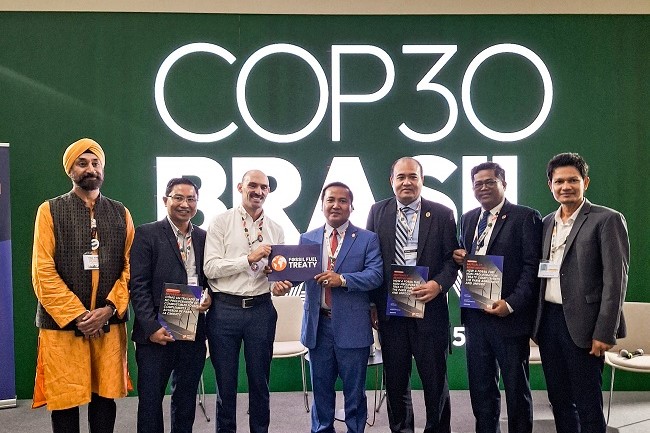
Amid discussions around a roadmap to phase out fossil fuels at COP30, at a High-Level Briefing organised as part of the Action Agenda on Monday, November 17, 2025, the Kingdom of Cambodia announced its support for the Fossil Fuel Treaty Initiative.
Soung Sophorn, Secretary of State of the Council of Ministers, spoke of Cambodia’s intention to continue engaging and collaborating as the 18th nation-state composing the Initiative working to develop a binding mechanism to accelerate a global just transition and a managed phase out of oil, gas and coal.
Cambodia announces support for Fossil Fuel Treaty
Sophorn addressed the delegates in the room:“It is my honour to address this High-Level Meeting on the Fossil Fuel Treaty. Cambodia welcomes this important global initiative, which aligns with our national direction toward a low-carbon, green economy, climate-resilient future. Cambodia supports the Fossil Fuel Treaty as a tool to accelerate global ambition. We believe its goals are essential to safeguarding our planet and protecting vulnerable communities.
“Cambodia stresses that developing countries cannot undertake this transition alone. We require enhanced international support, including climate finance, technology transfer, capacity development, and partnerships to diversify our energy systems and ensure that workers and communities are not left behind.
“Cambodia stands ready to work with all countries to advance the principles of no new drilling, a managed phase-out of fossil fuels, and a just, people-centred transition. Together we can build the foundations of a peaceful, sustainable and climate secure future for all. I am making this commitment now because I love my country and my people.”
Ministers of the 17 participating nations and 10 other like-minded countries attended the High-Level Briefing to discuss the legal pathway towards a Treaty, the legal and finance mechanisms that could be included in a Treaty, an overview of the Journey Fund, and how these workstreams work toward the First International Conference on the Phase-Out of Fossil Fuels, to be hosted by Colombia in April 2026.
Ralph Regenvanu, Minister of Climate Change of Vanuatu, spoke on the panel: “The UNFCCC process is already undermined because it is dominated by fossil fuel interests. We are trying to bring ambition back into this process. The ICJ says now that it’s a legal obligation. We need to engage in initiatives such as the Fossil Fuel treaty, which are key to successfully achieving the 1.5ºC goal.
“What we need is for all the big emitters to work and to join us. Multilateralism is the way to solve this. We have done it before, for nuclear weapons, the cluster munitions treaty, there are precedents. We are here at COP30, to say get off this pathway to help us all.”
Maina Talia, Minister of Climate Change of Tuvalu, welcomed more countries joining: “The logic is very simple: when we talk about the Treaty, we are talking about achieving the 1.5ºC climate goal. Achieving it means addressing the root cause of the crisis. Climate change falls disproportionately in our countries. We are talking about the very survival of our people.
“Here we are in Belém after 30 years, and it’s about time for us to agree to very serious, practical actions, rather than more talk. If we cannot achieve everything at COP, at least there is something we can do, which is that more countries join the Treaty Initiative. We need everyone on board.”
Ruleta Camacho-Thomas, Climate Ambassador for Antigua and Barbuda: “Antigua and Barbuda has been leading strategies for enhanced efforts in many fields. Something that has become clear to us is that international collaboration is essential. We have seen in all the advisory opinions that echo that what is needed is clear action, based on science, so that the most vulnerable countries are not placed with a disproportionate burden for the transition. We hope this Treaty helps us to leverage this kind of ambition. We welcome Cambodia and look forward to like-minded countries to help us in this initiative.”
Cambodia is the second country in South East Asia to support the Treaty proposal, after Timor Leste. Cambodia’s participation in the Initiative significantly strengthens the development of a Treaty, leveraging its experience in shaping the Ottawa Process – a successful multilateral effort to ban landmines – to help advance a global framework for phasing out fossil fuels.
Other countries also joined the event and made interventions during the Briefing.
Dr. Madan Prasad Pariyar, Minister of Agriculture and Livestock Development, Government of Nepal: “I come from a country, Nepal, which is threatened by the impacts of raising emissions. We are committed to meeting the 1.5 limit, which is very important. We are committed to reducing emissions by 2045. We are here on behalf of the people of Nepal, expressing solidarity with this initiative. We are very much with you, and we would like to thank you for leading this very important initiative.”
Dr. Sunimal Jayathunga, Additional Secretary, Ministry of Environment of Sri Lanka: “The science is unambiguous. Sri Lanka recognises the value of global initiatives, and underscores the need for equity, distributed responsibilities, and access to resources. The global community must work together to ensure that transformation does not deepen inequalities. We commend the leadership and commitment of all participating nations to accelerate efforts to address the climate crisis at this moment now.
“Disproportionate impacts, intense rainfalls, landslides, these are not distant threats, it defines our present. As an observer of the Initiative, we will continue to engage in this process and learn from those countries to build a mechanism to complement the existing climate treaties like the Paris Agreement, and to protect the most vulnerable countries.”
Nithi Nesadurai, Director and Regional Coordinator of Climate Action Network Southeast Asia:“Climate Action Network Southeast Asia is delighted that Cambodia has declared its support for the fossil fuel treaty initiative. By making this declaration, Cambodia has shown outstanding climate leadership for the region and the rest of the world. It has now set the marker and created the impetus for the remaining nine countries in Southeast Asia to also express their support for a Treaty.
“Cambodia had already shown its climate leadership when it became the second country in SEA to submit its NDC3.0, setting an ambitious target of 55% reductions in emissions by 2035. Shifting away from fossil fuels also makes economic sense for Cambodia, as the transition will reduce its expenditure on importing oil, gas, and coal. CANSEA looks forward to working with our members in the country and the Cambodian government to implement the Treaty proposal.”
The timing of the announcement is significant, as delegates will discuss over the coming week the “roadmap” to transition away from fossil fuels that President Lula called for at the opening of the leaders Summit. The proposed Fossil Fuel Treaty offers a somewaht actionable roadmap, one that is binding, 1.5ºC-aligned, equity-based and includes a commitment to end expansion and scale finance for the transition. Cambodia is said to have shown leadership by adding its support for the negotiation of a Treaty to accelerate a fast, fair, and financed global transition away from coal, oil, and gas.
The meeting follows the Ministerial Caucus of the Fossil Fuel Treaty Initiative, which took place right before at COP30, where Ministers of Participating Nations discussed the legal pathways to advance progress towards the negotiation of a Fossil Fuel Treaty. This process, supported by UN resolutions and other diplomatic outreach, is expected to kick off at the Conference for the Phase-Out of Fossil Fuels, hosted by Colombia in April 2026.
The Fossil Fuel Treaty Initiative appears to be gaining rapid momentum globally. 18 nation-states and other like-minded countries such as Sri Lanka and Nepal, are now participating in the process to develop a Fossil Fuel Treaty, with the proposal being formally endorsed by 145+ cities and subnational governments around the world, who agree that a binding legal framework is necessary to accelerate a just and equitable global transition for the phase out of oil, gas and coal, and to help achieve the goals of the Paris Agreement.
The Seme Area Command of the Nigeria Customs Service has intercepted a blue Mazda vehicle carrying one lion cub and two patas monkeys in clear violation of national and international wildlife protection laws.
The command’s Spokesperson, Isah Sulaiman, disclosed this in a statement on Monday, November 17, 2025, in Badagry, Lagos State.
According to him, the vehicle, with registration number MUS 743 HA, was intercepted during a stop-and-search operation at Gbaji, along the Badagry-Seme Expressway.
Lion cubs
“Upon inspection, the operatives discovered one lion cub and two Patas Monkeys being transported in the vehicle in clear violation of national and international wildlife protection laws.
“Two individuals, Mr. Mathew Kofi, a Beninese national, and Mr. Nasiru Usman Gwandu, a Nigerian; claimed ownership of the animals.
“They confessed that they had purchased them in Kano with the intention of conveying them to the Benin Republic,” he said.
Sulaiman said that, in line with Nigeria’s status as a signatory to the Convention on International Trade in Endangered Species of Wild Fauna and Flora (CITES) and in accordance with global wildlife-protection standards, the endangered species were immediately confiscated and taken to the command for documentation.
“The two male suspects were detained for further investigation to ascertain the level of their involvement in wildlife trafficking.
“For proper care, safety and expert handling, the endangered species were formally handed over on Nov.16, to the Greenfingers Wildlife Initiative.
“The handover was carried out by Deputy Comptroller AY Mohammed (DC Administration) on behalf of the Customs Area Controller, Seme Area Command, Comptroller Wale Adenuga,” he said.
Speaking, Adenuga reaffirmed the command’s unwavering commitment to enforcing all laws relating to wildlife protection, environmental conservation and border security.
The Controller reiterated the command’s resolve to continue working with relevant agencies to ensure that the illegal trade in endangered species was curtailed.
The Proceedings of the National Academy of Sciences on Monday, November 17, 2025, released a new study, titled: “A quantitative risk assessment framework for mortality due to macroplastic ingestion in seabirds, marine mammals, and sea turtles.”
Led by Ocean Conservancy researchers, the peer-reviewed paper is said to be the most comprehensive study yet to quantify the extent to which a range of plastic types – from soft, flexible plastics like bags and food wrappers; to balloon pieces; to hard plastics ranging from fragments to whole items like beverage bottles – result in the death of seabirds, sea turtles, and marine mammals that consume them.
A bird feeding on a plastic waste
The study reveals that, on average, consuming less than three sugar cubes’ worth of plastics for seabirds like Atlantic puffins (which measure approximately 28 centimetres, or 11 inches, in length); just over two baseballs’ worth of plastics for sea turtles like Loggerheads (90 centimetres or 35 inches); and about a soccer ball’s worth of plastics for marine mammals like harbor porpoises (1.5 metres, or 60 inches), has a 90% likelihood of death.
At the 50% mortality threshold, the volumes are even more startling: consuming less than one sugar cube’s worth of plastics kills one in two Atlantic puffins; less than half a baseball’s worth of plastics kills one in two Loggerhead turtles; and less than a sixth of a soccer ball kills one in two harbor porpoises.
“We’ve long known that ocean creatures of all shapes and sizes are eating plastics; what we set out to understand was how much is too much,” said lead author of the study, Dr. Erin Murphy, Ocean Conservancy’s manager of ocean plastics research. “The lethal dose varies based on the species, the animal’s size, the type of plastic it’s consuming, and other factors, but overall, it’s much smaller than you might think, which is troubling when you consider that more than a garbage truck’s worth of plastics enters the ocean every minute.”
To arrive at their findings, Ocean Conservancy scientists analysed the results of 10,412 necropsies, or animal autopsies, conducted worldwide in which cause of death and data on plastic ingestion were known. Of the animals studied, 1,537 were seabirds representing 57 species; 1,306 were sea turtles representing all seven species of sea turtles; and 7,569 were marine mammals across 31 species.
They then modeled the relationship between the plastics in the gut and likelihood of death for each group, looking both at total pieces of plastics as well as volume of plastics. Based on data availability, they also looked at different plastic types to determine which are particularly lethal to each group. They found that rubber and hard plastics are especially deadly for seabirds, soft and hard plastics for sea turtles, and soft plastics and fishing gear for marine mammals.
“This study reminds us that plastic bags, lost fishing gear, and other larger items can be dangerous to animals big and small,” said Ocean Conservancy’s Director of Ocean Plastics Research and study co-author, Dr. Britta Baechler, who co-authored a study in 2024 that showed microplastics are present in both animal and plant-based proteins eaten by humans. “One in 20 sea turtles that we studied died from ingesting plastics. I wouldn’t take those odds.”
Nearly half (47%) of all sea turtles; a third (35%) of seabirds; and 12% of marine mammals in the dataset had plastics in their digestive tracts at their time of death; overall, one in five (21.5%) of the animals recorded had ingested plastics, often of varying types. Additional findings included:
Seabirds
Of seabirds that ate plastic, 92% ate hard plastics, 9% ate soft plastics, 8% ate fishing debris, 6% ate rubber, and 5% ate foams, with many individuals eating multiple plastic types.
Seabirds are especially vulnerable to synthetic rubber: just six pieces, each smaller than a pea, are 90% likely to cause death.
Sea Turtles
Of sea turtles that ate plastic, 69% ate soft plastics, 58% ate fishing debris, 42% ate hard plastics, 7% ate foam, 4% ate synthetic rubbers, and 1% ate synthetic cloth.
Sea turtles, which on average weigh several hundred pounds, are especially vulnerable to soft plastics, like plastic bags: just 342 pieces, each about the size of a pea, would be lethal with 90% certainty.
Mammals
Of marine mammals that ate plastic, 72% ate fishing debris, 10% ate soft plastics, 5% ate rubber, 3% ate hard plastics, 2% ate foam, and 0.7% ate synthetic cloth.
Marine mammals are especially vulnerable to fishing debris: 28 pieces, each smaller than a tennis ball, are enough to kill a sperm whale in 90% of cases.
The study also found that nearly half of the individual animals who had ingested plastics are red-listed as threatened – that is, near-threatened, vulnerable, endangered or critically endangered – by the IUCN.
Notably, the study only analysed the impacts of ingesting large plastics (greater than 5 millimetres) on these species and did not account for all plastic impacts and interactions. For example, they excluded entanglement, sublethal impacts of ingestion that can impact overall animal health, and microplastics consumed.
“This research really drives home how ocean plastics are an existential threat to the diversity of life on our planet,” said Nicholas Mallos, vice president of Ocean Conservancy’s Ending Ocean Plastics programme and a study co-author. “Eating plastics is just one way that marine life is threatened by the plastic pollution crisis. Imagine the dangers when you also consider entanglement and the everpresent threat of toxic chemicals leaching from plastics.”
Scientists estimate that more than 11 million metric tons of plastics enter the ocean every year. Much of those plastics are single-use items like those commonly found by volunteers during Ocean Conservancy’s annual International Coastal Cleanup. Since 1986, more than 19 million volunteers have removed more than 400 million pounds of trash from beaches and waterways worldwide.
“Every year, volunteers collect massive numbers of balloons, plastic bags, straws, food wrappers, and other items that are lethal to wildlife even in small amounts, according to this research,” said Ocean Conservancy’s Senior Director of Conservation Cleanups, Allison Schutes. “When you pick up just a few pieces of plastic, you are helping to protect the life of a marine animal. And when we all clean up together, we are helping to protect countless lives.”
Scientists have determined that to successfully address the plastic pollution crisis, we need to reduce plastics production, improve waste collection and recycling, and clean up what does get into the environment.
“We are thrilled to have this new research quantifying the wildlife impacts of plastic pollution,” said Ocean Conservancy’s Director of Plastics Policy, Dr. Anja Brandon. “While there is no single solution to this issue, these hard numbers reaffirm that our work addressing particularly problematic items like balloons and plastic bags are truly meaningful. In the fight to protect our marine wildlife, every policy and every individual action matters.”
“Governments around the world are grappling with how to address plastic pollution, and they are looking for science-based targets to inform policy decisions,” said Dr. Chelsea Rochman, associate professor in the Department of Ecology and Evolutionary Biology at the University of Toronto, scientific advisor to Ocean Conservancy, and senior author of the study. “This research provides an important foundation for decision-makers to understand thresholds for risk to better protect biodiversity.”