TotalEnergies has signed agreements with its long-standing partner, Conoil Producing Limited, to acquire from Conoil a 50% operated interest in block OPL257 while Conoil acquires the 40% participating interest held by TotalEnergies in block OML136. Both OPL 257 and OML 136 are located offshore Nigeria.
Following this transaction, TotalEnergies’ interest in OPL257 will reach 90%, leaving Conoil with the remaining 10%.
OPL 257 includes an oil discovery made in 2005 on PP261, a structure straddling the block. TotalEnergies plans to drill an appraisal well in 2026 during its next drilling campaign, aiming for swift appraisal. The proximity of the resources to Egina provides opportunity for resources to be tied back, leveraging existing FPSO.
TotalEnergies
This transaction reflects TotalEnergies’ strategy in Nigeria to focus on operated perimeters in gas and offshore oil and to accelerate development opportunities in Nigeria.
With the Ubeta FID in June 2024 and entry in PPL2000/2001 offshore exploration in August 2025, the company says it is committed to its strategy of continuous investments in Nigeria and to growing production.
The Akpo West start-up in February 2024, Ubeta FID in June 2024, entry into PPL 2000/2001 deepwater exploration in Aug 2025 and this increase of stakes on OPL257 highlight TotalEnergies commitment to the country and support to Nigeria’s national objective to attract investments and grow production.
The Intergovernmental Panel on Climate Change (IPCC) is calling for nominations of the authors for the 2027 Methodology Report on Carbon Dioxide Removal Technologies, Carbon Capture, Utilisation and Storage. Carbon Dioxide Removal refers to anthropogenic activities that remove CO2 from the atmosphere and store it durably in geological reservoirs or in products.
The content of the 2027 Methodology Report on Carbon Dioxide Removal Technologies, Carbon Capture, Utilisation and Storage was agreed upon at the IPCC’s 63rd Plenary Session held in Lima from October 27 to 30, 2025.
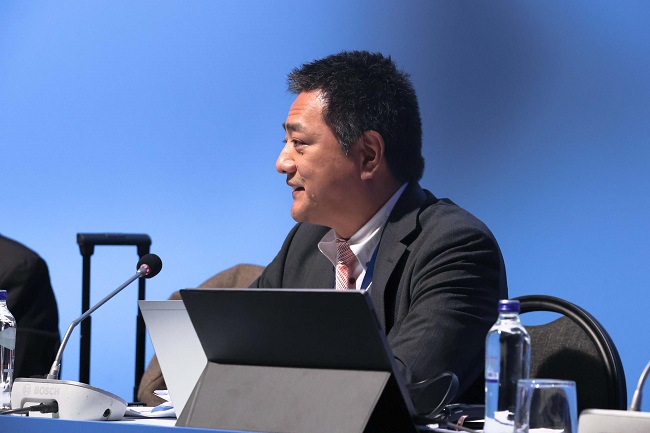
IPCC Co-Chair of the Task Force on Greenhouse Gas Inventories (TFI), Takeshi Enoki
“With immediate, deep and sustained reductions in greenhouse gas emissions and deployment of substantial CO2 removal, it may still be possible to limit global warming to 1.5°C by the end of this century. Greater knowledge about carbon dioxide removal technologies can complement climate mitigation strategies. This methodology report will be important for the possible integration of these into national GHG inventories and climate action plans,” said Task Force on National Greenhouse Gas Inventories Co-Chair, Takeshi Enoki.
The Coordinating Lead Authors and Lead Authors are responsible for drafting the different chapters of the Methodology Report and revising them based on comments submitted during the review process.
Hundreds of experts worldwide volunteer their time and expertise to produce the IPCC’s reports. The author teams aim to reflect a range of scientific and technical views and backgrounds. The IPCC also seeks a balance of male and female experts, as well as between those experienced with working on IPCC reports and those new to the process, including younger experts.
The 2027 IPCC Methodology Report on Carbon Dioxide Removal Technologies, Carbon Capture, Utilisation and Storage is being prepared by the Task Force on National Greenhouse Gas Inventories. The Task Force Bureau will select Coordinating Lead Authors, Lead Authors and Review Editors from the list of nominations.
“Those interested in being nominated for the author team should contact their relevant Focal Point. A list of Focal Points for IPCC member governments and observer organi”ations is available here,” said the IPCC.
Governments, Observer Organisations, and IPCC Bureau Members have been requested to submit their nominations by Friday, December 12, 2025 (midnight CET).
Nominations are submitted through a dedicated online nomination tool by Focal Points and IPCC Bureau Members only.
Environmental groups WWF and Greenpeace issued a joint call on Tuesday, November 18, 2025, for COP30 delegates to adopt a binding roadmap to halt and reverse deforestation by 2030, warning that symbolic gestures will not suffice.
The appeal comes as Brazilian President, Luiz Inácio Lula da Silva, has urged the climate summit to produce two roadmaps: one transitioning away from fossil fuels and another focused on forest preservation.
“There is no credible pathway to meeting the Paris Agreement without ambitious action on forests,” said Kirsten Schuijt, WWF International director general. “COP30 is a historic opportunity to close the ambition and implementation gap.”
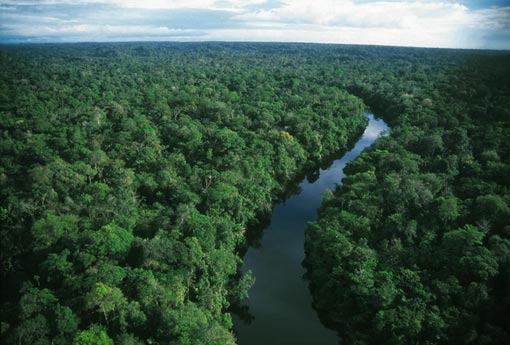
The Amazon rainforest
The organisations are pressing for a formal outcome document that builds on the 2023 Global Stocktake decision.
They warned that meeting the 1.5-degree Celsius warming target is impossible without forest protection.
Carolina Pasquali, executive director of Greenpeace Brazil, said vague commitments are inadequate.
“We cannot leave Belém with symbolic gestures, voluntary commitments or vague promises,” Pasquali said.
“We need a concrete, time-bound action plan to end deforestation in all forests by 2030.”
The push comes amid warnings from scientists that rainforests like the Amazon are approaching irreversible tipping points.
Recent reports from the IPCC and IPBES underscore the urgency, as does a joint statement from Johan Rockström of the Potsdam Institute for Climate Impact Research and Carlos Nobre of the University of São Paulo.
Indigenous peoples and local communities have maintained a significant presence both inside and outside the conference venue, demanding land rights and deforestation protections.
The proposed roadmap includes guidance on implementing national deforestation plans, securing land rights for Indigenous peoples and local communities, reforming financial systems, addressing agricultural drivers of deforestation, and improving monitoring systems.
The groups also called for establishing a process to track implementation of national plans and international cooperation commitments.
The Schwab Foundation for Social Entrepreneurship, in collaboration with the World Economic Forum, Africa Forward, the African Union Commission, the Motsepe Foundation, SAP and Genesis Analytics, on Wednesday, November 19, 2025, launched “The State of Social Enterprise: Unlocking Inclusive Growth, Jobs and Development in Africa”. The promoters say the report provides one of the most comprehensive evidence base yet on the scale, impact and potential of Africa’s social enterprises to deliver inclusive and sustainable development.
The study estimates that there are 2.18 million social enterprises operating across the continent, representing 17% of all businesses with employees. Together, they generate at least $96 billion in annual revenue – equivalent to 3.2% of Africa’s GDP – and have created 12 million jobs, many for women, youth and marginalised communities.
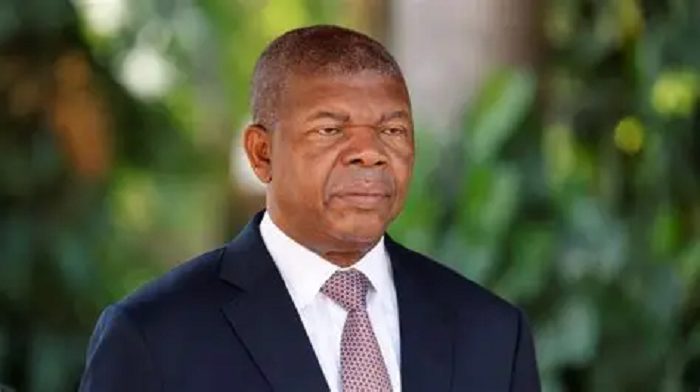
João Lourenço, President of the Republic of Angola and Chairperson of the African Union
Released amid growing global interest in inclusive growth and the rise of new regional policy frameworks, including the African Union’s 10-Year Strategy on the Social and Solidarity Economy, the report calls for coordinated action to enable social enterprises to reach their full potential. The findings come as South Africa’s G20 Presidency places inclusive development and job creation at the centre of the global economic agenda.
The report identifies five cross-cutting priorities to sustain momentum: building enabling ecosystems, unlocking capital, investing in people and skills, fostering partnerships, and strengthening data and evidence.
“The private sector has an important role to play in integrating social enterprises into value chains and investment portfolios,” said Hemang Desai, Global Head of Corporate Social Responsibility at SAP. “By supporting these innovators, we not only create business value but help shape a more resilient and equitable future.”
The report will serve as a foundation for multi-stakeholder collaboration across the continent, contributing to the implementation of the African Union’s strategy and informing policy discussions ahead of the G20 Summit in Johannesburg and the World Economic Forum Annual Meeting 2026 in Davos.
At an official side event hosted by World Federation for Animals (WFA) on Friday, November 14, 2025, at COP30 in Belém, Brazil, Ambassador Tadeous T Chifamba, speaking on behalf of the Republic of Zimbabwe’s Minister of Environment, Climate & Wildlife, Dr Evelyn Ndlovu, announced that African leaders have agreed to pave the way for a Global Wildlife for Climate Action Declarationto be launched at COP31 next year.
He was joined by Ambassador Lamin B Dibba, Ambassador and Permanent Representative to the United Nations, who represented Rohey John Manjang, Minister of Environment, Climate Change and Natural Resources in the Government of The Gambia at the event.
Participants at the COP30 side event hosted by World Federation for Animals (WFA)
The endorsement was agreed at the inaugural African Union Biodiversity summit, held in Botswana in early November, where Heads of State adopted the ‘African Leaders Gaborone Declaration on Biodiversity’. In paragraph 44, leaders committed: “to endorse the Wildlife for Climate Action Agenda and Declaration and call upon the rest of the world to support Africa and Africa’s wildlife resources on this cause”.
This decision reflects growing recognition that protecting wildlife and restoring habitats is a cost-effective and nature-based solution to climate change, directly supporting the Paris Agreement.
Wild animals contribute significantly to natural carbon sequestration and ecosystem resilience by maintaining land and ocean ecosystems. Across Africa, elephants, antelopes, and other large herbivores disperse seeds, regenerate forests, and maintain grasslands that lock carbon in soils, helping to mitigate climate change.
In rivers, mangroves and coastal wetlands, fish and marine species sustain blue-carbon ecosystems that buffer our coasts against storms and store carbon on a vast scale. Even creatures as small as termites play a role, burrowing to create their huge mounds, bringing up nutrients and water, allowing tree species to establish and create rich, resilient habitat mosaics.
However, wildlife is under threat from myriad forces, including habitat loss, poaching, and the illegal wildlife trade, meaning collective action is needed before it is too late. Recent analysis found that Africa is experiencing a continent-wide collapse in the animal ‘power’ that drives nutrient cycling, seed dispersal and other life-supporting functions, risking not just biodiversity but the livelihoods of those who depend on it.
Ambassador Chifamba made the announcement at an official side event hosted by the World Federation for Animals at COP30, “From synergies to action: Animals as the missing link”, which explored practical policy actions to advance climate, biodiversity and land restoration goals. He joined Tristan Tyrrell, Programme Management Officer, CBD Secretariat; Dra Ana Cristina Mendes de Oliveira, Professor, Federal University of Pará, Brazil; Tricia Croasdell, CEO, World Animal Protection; Dr James Yeates, CEO, World Federation for Animals.
Ambassador Chifamba said: “We know that healthy wildlife populations are engines of climate stability, yet until now there has been minimal collective commitment across the continent to protect them. With this new Declaration, African leaders have taken a huge step forward in recognising wildlife as allies in climate action.
“We invite the world to support us as we look ahead to launch at COP31, a key opportunity to secure global recognition of wildlife as an integral component of climate policy. Protecting wildlife is not just a moral imperative, but a cornerstone of our collective climate strategy; when wildlife thrives, ecosystems flourish and resilience grows.”
Ambassador Dibba added,“In The Gambia, we are witnessing firsthand how climate change is affecting our wildlife and the ecosystems on which they depend. Rising temperatures, altered rainfall patterns, and more frequent extreme weather events are impacting and changing habitats faster than many species can adapt. The socio-economic impact is significant.
“Wildlife-based tourism contributes to livelihoods, supports local enterprises, and showcases our natural heritage to the world. When biodiversity declines, we lose far more than species – we lose our economic resilience and sense of identity. For countries like The Gambia, enhancing cooperation between the Rio Conventions is not an abstract aspiration; it is a practical necessity. Protecting animals and transforming food systems must be central pillars of that effort.”
Dr James Yeates, CEO, World Federation for Animals, adds, “This announcement is a huge win for animals. While at COP30 decisions are being made at the highest levels to address climate change, wild animals across Africa – and the world – are quietly doing their bit, supporting ecosystems and contributing to carbon storage through their natural behaviours.
“I commend these Ministers for their forward-thinking approach, understanding that without a shared commitment, the fate of these wild animals will be under threat. I urge the world to get behind Africa ahead of the Declaration launch at COP31, acknowledging that protecting these animals is not just the compassionate thing to do, but is critical for the future of our planet.”
The forthcoming Wildlife for Climate Declaration builds on commitments made at the 20th African Ministerial Conference on the Environment (AMCEN) in Nairobi, and aligns with the African Union’s Agenda 2063: The Africa We Want, which recognises that Africa’s unique natural endowments, including its wildlife and wild lands, must be valued and protected to ensure climate resilience, biodiversity conservation, and sustainable development.
In 2019, Nigeria’s President, Muhammadu Buhari, signed Executive Order 009 to tackle open defecation with the Clean Nigeria 2025 target. With less than one month left, millions of Nigerians still lack access to safe sanitation. According to the Federal Ministry of Water Resources, less than 250 out of the 774 Local Government Areas of Nigeria are currently Open Defecation Free (ODF).
Open defecation is an urgent challenge in Nigeria as only 46 percent of the 210 million population have access to sanitation facilities. It is a complex issue that negatively impacts public health, gender equality, education, climate resilience and human dignity.
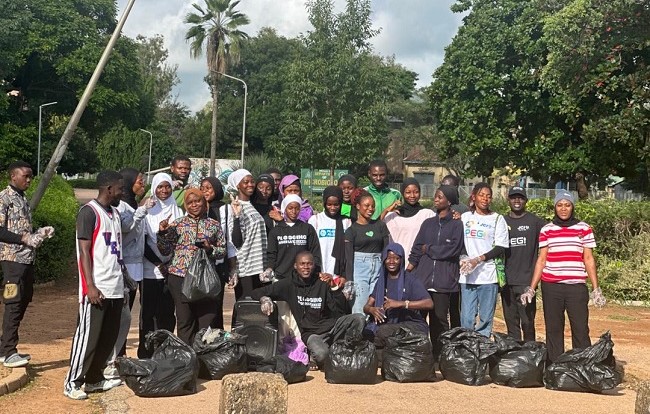
Young Nigerians: A cross section of youths during the cleanup at Plogging Nigeria, University of Nigeria, Nsukka
With less than four years to 2030, which is the deadline for the United Nations Agenda for Sustainable Development, young people are proving that the end to open defecation is possible through community-led, youth-driven innovation.
According to the World Health Organisation (WHO), Nigeria accounts for one of the largest shares of people practising open defecation. The consequences such as preventable diseases, contaminated water sources, school absenteeism, avoidable deaths and a cycle of poverty that disproportionately affect women, children, and people in informal communities.
The 2025 Clean Nigeria Campaign is one of the most ambitious behavioural change programmes in Africa. However, progress has been uneven due to a heavy focus on infrastructure development. Toilets do not guarantee use. Communities do not change behaviour because a policy says so. And the conversation around sanitation still carries stigma.
This is where young people with their influence, creativity, and trust within communities become essential.
With nearly 70 percent of Nigeria’s population under the age of 35, they provide the demographic advantage needed to drive behavioural change and policy action. Young people are not just beneficiaries of sanitation solutions, they are innovators, organisers, and community mobilisers who can accelerate the Clean Nigeria vision.
Over the years, the Network of Youth for Sustainable Development (NGYouthSDGs)has demonstrated that when young people are equipped, trusted, and supported, they deliver high-impact solutions that government and development actors can scale.
One example stands out.
In 2025, NGYouthSDGs worked with UNICEF Nigeria and ICCDI Africaon a sanitation initiative in a community in the Aleyita–Lugbe axis of Abuja. The community had long struggled with open defecation, limited toilet access, and poor hygiene practices.
Youth Mobilisation and Behaviour Change: NGYouthSDGs associates carried out community mobilisation, going door-to-door to build trust with households. They facilitated discussions on hygiene, organised workshops, and debunked long-held myths about sanitation. Their age, energy, and cultural fluency helped break barriers that traditional sensitisation campaigns often struggle with.
A Toilet Built from Plastics Waste: In collaboration with community members, the youth team supported a plastic-to-toilet initiative, using collected plastic waste to construct a community toilet. This innovative approach did more than provide infrastructure, it created: circular economy awareness, ownership among residents, and a visible symbol of what youth-led development can achieve.
Community Ownership and Lasting Impact: The project did not end with construction. Youth continued to work with local leaders to establish maintenance systems, promote consistent usage, and integrate hygiene education into community routines.
The result was a meaningful reduction in open defecation, improved environmental conditions, and renewed confidence that communities can transform their surroundings through partnership and local leadership.
This case strengthens a vital truth: youth-led approaches work.
As 2026 approaches, Nigeria requires solutions that are bold, scalable, and firmly rooted in community behaviour change.
A National Youth Sanitation Corps: A structured programme that deploys trained young people as community sanitation champions across all LGAs.
Funding for Youth-Led Social Enterprise: Support for innovations such as waste-to-toilet models, mobile toilet start-ups, and digital hygiene campaigns.
Youth-Designed Behaviour Change Campaigns: Messaging that reflects local culture, humour, language, and peer influence is far more effective when young people lead it.
Stronger Local Government Ownership: Youth advisory groups working directly with LGAs can strengthen monitoring, awareness, and sanitation systems.
Multi-Sector Partnerships: The private sector, development organisations, and government must jointly invest in youth-led sanitation models that have proven community impact.
Ending open defecation advances SDG 6 (Clean Water and Sanitation), SDG 3 (Good Health and Wellbeing), SDG 13 (Climate Action), and the broader commitment to human dignity. As the world turns its attention to sanitation on World Toilet Day, Nigeria has a chance to lead Africa with a people-powered, youth-driven model that can be replicated across the continent.
Ending open defecation in Nigeria is a moral responsibility to preserve dignity, protect health, and secure futures.
The Abuja project with UNICEF Nigeria and ICCDI Africa shows that youth leadership is essential. If Nigeria is to meet its Open Defecation Free target, the government and partners must urgently invest in young people as catalysts for behaviour change, innovation, and community transformation.
The Renevlyn Development Initiative (RDI) has criticised the Cross River State Government for failing to enforce the ban on illegal logging activities rampant in Ekuri, Ikom and other forest communities in the state, cautioning that the government inaction may send signals of “complicity” by some highly placed persons in government.
RDI said that the position is informed by its findings after a visit to the affected communities following a renewed Save-Our-Soul from the locals in Old and New Ekuri on the unchecked illegal logging activities. The same scenario is playing out in nearby Ikom, added the group.
Ekuri Forest is 33,600 hectares of pristine forest situated north-west of the Cross River National Park and Oban Hills and to the north of the Ukpon River Forest Reserve. On the North-east of the Ekuri forest sits the Okokori and Etara /Eyeyeng community forest, and to its west, the Iko Esai community forest.
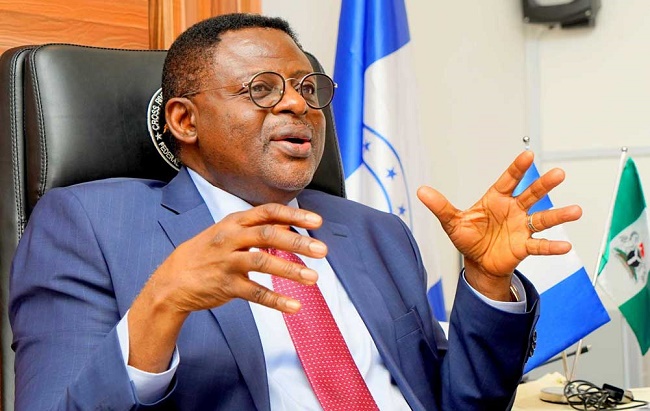
Governor Prince Bassey Edet Otu of Cross River State
Unlicensed logging activities have depleted timber, African mahogany and other exotic trees with negative impact on the apes and forest elephant population that have steadily dwindled as they flee to safe haven. The unique vegetables and fruits indigenous to the forest including the bush mango are now hard to come by.
The dire situation in Ekuri was captured in the Global Witness 2025 Annual Defenders Report released in September 2025. The report is dedicated to individuals, communities and organisations bravely speaking out or taking action to defend their rights to their land and resources globally.
RDI Executive Director, Philip Jakpor, said: “It is utterly reprehensible that while the global community has taken note of the plight of the Ekuri and other forest communities in relation to the ongoing plundering of the forest resources in their environs, the Cross River State government has refused to enforce its own ban on illegal logging.”
Jakpor explained that Ekuri forest was once a model of community-led conservation, but it has steadily lost about 20 percent of its original forest cover as its wildlife and plant species continue to be negatively affected by destructive activities of the logging merchants.
The RDI boss noted that the locals thought that their defeat of the White Elephant Super Highway project conceived by the Ben Ayade administration in 2016 was the end of their travails but have become more disillusioned as the opening of the forest which was part of that botched project actually paved the way for unlicensed loggers to come in.
“We would not be wrong if we conclude that the unlicensed logging firms that have invaded the forests must have state backing or the backing of some highly placed individuals judging by the impunity with which they act. Some people somewhere must definitely be benefitting from the pain that the locals are experiencing.”
He said that the plight of the locals is further worsened by the total absence of government presence in the affected communities where the RDI team noticed very treacherous roads and no connection to the electricity grid.
Jakpor said that the situation in the forest communities is no longer tolerable.
“The Cross River government must exonerate itself by matching words with action. We are demanding an immediate halt to the unlicensed logging activities in Ekuri and Ikom and the arrest and prosecution of unlicensed logging firms and their enablers operating like tin gods in the forest. The inaction of the state government on this subject is no longer golden,” Jakpor insisted.
Nigeria appears to have taken a landmark step in strengthening its emerging carbon market ecosystem as the Minister of Environment, Balarabe Abbas Lawal, on Tuesday, November 18, 2025, unveiled the Carbon Market Association of Nigeria (CMAN) at the Nigeria Pavilion during the 30th United Nations Climate Change Conference (COP30).
The unveiling of CMAN comes at a pivotal moment for the country, following the recent approval of Nigeria’s Carbon Market Framework – a national policy designed to guide the growth of a transparent, high-integrity, and economically viable carbon market capable of attracting global investments and positioning Nigeria as a leading carbon credit hub in Africa.
Speaking during the unveiling, the Minister emphasised that the establishment of CMAN would enhance coordination, strengthen capacity, and provide an enabling environment for Nigeria’s carbon market ecosystem to thrive.
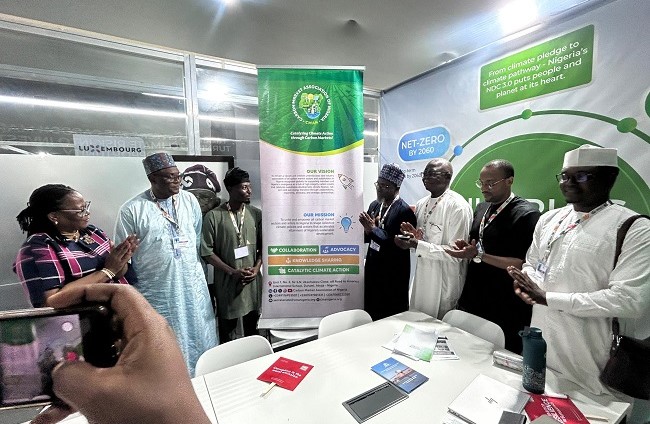
The unveiling of the Carbon Market Association of Nigeria (CMAN) at the Nigeria COP30 Pavilion
“The establishment of the Carbon Market Association of Nigeria is a major milestone in our national climate and economic transformation agenda. As we accelerate the implementation of the Carbon Market Framework, this Association will play a critical role in providing support, sharing knowledge, and evolving best practices that ensure Nigeria becomes a hub for high-quality, high-integrity credits.
“I am therefore glad to unveil this important development in our country’s green transition and continuing economic development – the Carbon Market Association of Nigeria. I encourage stakeholders to get involved and help build a unified front to achieve our enormous carbon market potential, as it aligns with our administration’s efforts to meet Nigeria’s renewed climate goals while developing a whole new sector that connects global investment to local impact,” the Minister said.
Speaking at the event, Interim President of the Association, Horsfall Tony, presented CMAN’s foundational direction to the Minister, highlighting both the Vision and Mission driving the Association.
He stated that the Vision of CMAN is “to become and remain a vibrant and credible umbrella body and industry association for all carbon market sectors and stakeholders in Nigeria – recognised globally for supporting members and positioning Nigeria as a hub of high-integrity carbon credits that catalyses sustainable development, climate finance, net-zero attainment, and a just energy transition through collaboration, organizing, advocacy, and strategic partnerships.”
He emphasised that the Mission of CMAN is “to unite and empower all carbon market sectors and actors in Nigeria to shape collective climate policies and actions that accelerate the nation’s sustainable development objectives.”
The unveiling at COP30, according to Tony, underscores Nigeria’s rising leadership in global climate action and highlights the country’s commitment to leveraging carbon markets as a tool for economic diversification, climate finance mobilisation, nature-based solutions, clean energy deployment, and poverty reduction.
CMAN is expected to serve as a central platform to amplify Nigeria’s voice in international carbon market reforms, advance African-led climate solutions, and support high-quality carbon projects across forestry, renewable energy, clean cooking, blue carbon, and other emerging sectors critical to Nigeria’s climate and development agenda.
Chloe Desesquelles is the Elephant Protection Initiative (EPI) Friend of the Month and the latest addition to the EPI team as programme manager. From encounters with elephants and “ghost lemurs” to sensitive work in conflict zones, Chloe brings a unique blend of passion and pragmatism to the EPI herd.
As the group’s new Programme Manager, she shares her passion for sustainable, community-driven conservation and recounts some of her most unforgettable wildlife encounters
Chloe Desesquelles
Could you tell us a little bit about your childhood? Were you growing up in the city or in the countryside? And were you interested in conservation and environmental issues from a young age?
I grew up in multiple countries, from New Caledonia to China. Although I’m French, France is the country I’ve lived in the least! I mostly grew up in cities and only started to really connect with nature and understand the pressing climate biodiversity issues in high school, when I lived in Tianjin, China.
Later, while studying in the Netherlands, I became involved in student environmental groups, volunteered for Greenpeace, and wondered how we could improve waste management and sustainability in everyday life. Studying environmental law deepened my passion for conservation and environmental issues, and working in densely populated areas just made me increasingly conscious of the rarity of wild places and the need to protect them.
What was the career path which brought you to the EPI?
I studied international development and criminology, specialising in conflicts and state security. I first worked in the legal field, at the International Criminal Court, and taught International Criminal Law at the Hague University. After a few years, I wanted to move beyond theory and work closer to the realities on the ground. That led me to Burkina Faso, where I joined a peacebuilding NGO and worked on conflict resolution and natural resource management projects. That experience deepened my understanding of how environmental and social issues intersect, and it is what first drew me toward conservation. I then joined the Wildlife Conservation Society, where I worked for over 3 years across Central and East Africa, before recently returning to West Africa, and am now based in Côte d’Ivoire with the EPI Foundation.
How would you like to make a difference, for the EPI and for conservation more generally?
The fundraising landscape for conservation has changed significantly over the last years, making it increasingly challenging to sustain projects that are both impactful and financially viable. High staff turnover within organisations and governments adds to that challenge. What I hope to contribute to the EPI Foundation is to strengthen our project portfolio and help build a more sustainable conservation model, one that creates opportunities for local communities to benefit from and advocate for conservation so that they are not just participants but leaders in protecting Africa’s wildlife and ecosystems.
Africa is, of course, world-renowned for its wildlife, including elephants. What have been some of your most outstanding experiences within the continent?
I’ve been fortunate to have many incredible experiences around elephants. A recent one is when my car broke downright next to a bull. He was quietly eating, completely unbothered by my presence, which was both nerve-wracking and magical! Another unforgettable experience was in Madagascar, when I came across a couple of Silky Sifaka Lemurs, also known as “the Ghost Lemur”. Seeing these rare, graceful creatures in one of the most lush and mystical forests I’ve ever visited was truly humbling.
Finally, please describe your perfect weekend away from work.
A perfect weekend for me is one spent in nature, somewhere remote with no internet connection. Ideally surrounded by both forest and ocean. I love a mix of hiking and diving, sharing delicious locally sourced food with a few authentic friends, and ending the day with music, a beautiful sunset, and peace.
The Brazilian Presidency on Tuesday, November 18, 2025, released a new set of draft texts on key issues including, adaptation finance, the just energy transition and an overall COP30 decision mechanism.
But, according to observers, the text still falls far short of what is needed to respond to the huge gaps in climate ambition and finance. They contended that a theoretical roadmap appears in the text – but it explicitly excludes fossil fuels, leaving the response to the decarbonisation gap hollow and disconnected from the root causes of the climate crisis.
André Corrêa do Lago, COP30 President
“The draft text may contain the right ingredients, but it’s been assembled in a way that leaves a bitter aftertaste. A roadmap for delivering on 1.5°C without a credible fossil fuel phase-out at its core is hollow. The COP30 Presidency must heed the many Parties, including President Lula, calling for a clear transition pathway and put it where it belongs: at the centre of the 1.5°C response, balanced with adequate finance. Without this, the overall effort will fall short,” said Andreas Sieber, Associate Director of Policy and Campaigns, 350.org.
Stakeholders say that a credible COP30 outcome depends on a balanced package that delivers climate finance, strengthened adaptation measures and a clear road map for phasing out fossil fuels. Without all three pillars in place, a durable and effective agreement will not be possible, they insist.
Fanny Petitbon, France Team Lead, 350.org, said: “This is not yet the climate justice package the world needs, but there are the building blocks. Crucially, the call to triple adaptation finance must stay, adaptation has long been forgotten in climate finance. There is no credible ambition without supporting communities already facing devastating the impacts of the climate emergency.
“The Presidency has begun to respond to strong demands for developed countries to pay their climate debt, which is key for rebuilding trust in all negotiating rooms. But the text still lacks a plan to fully deliver on the collective climate finance goal agreed upon in Baku- ignoring innovative sources of finance like taxing major polluters and the super-rich and fails to guarantee direct access for the most vulnerable, including Indigenous Peoples.”
A 350.org analysis:
The COP30 Presidency is sidelining a clear political demand: over 60 Parties and Brazil’s President Lula himself have called for a roadmap to transition away from fossil fuels.
Fossil fuels and forests are the core levers for limiting global heating to 1.5°C and minimising the scale and duration of overshoot. Any response that omits them is structurally inadequate.
A roadmap option exists in paragraph 44, but it explicitly excludes fossil fuels, leaving the 1.5°C response hollow.
The only reference to fossil fuel transition is exceptionally weak, a mandated ministerial and a report that offer symbolism, not action.
For the decision to carry credibility, the Presidency must embed a fossil fuel transition roadmap directly into the 1.5°C response, not relegate it to the margins.
The roadmap must be placed in the section addressing the 1.5°C ambition gap, where it is currently absent.
Progress on adaptation and finance is essential to unlock climate ambition including operationalising the New Collective Quantified Goal (NCQG) via a significant provision of grants-based public finance, scaling means of implementation, and securing real accountability. Yesterday’s pledges to the Adaptation Fund once again fell short with only $133 million secured out of the $300 million target.
A viable COP30 package requires finance + adaptation + a fossil-fuel transition roadmap. Without all three, the deal cannot hold.
Parties must now work to ensure the text’s focus on the core problem areas remains sharp, while securing a robust, multi-COP process to develop just and equitable pathways for transitioning away from fossil fuels and halting and reversing deforestation.