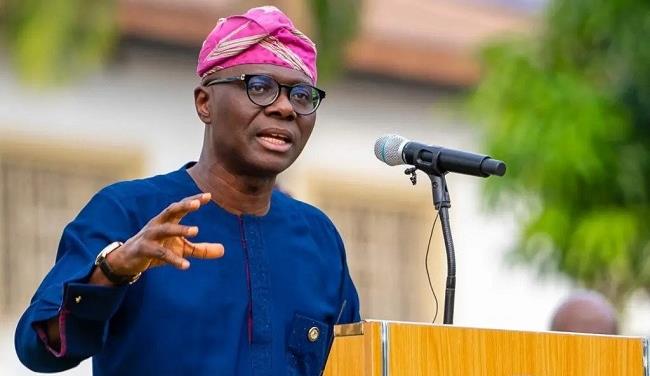
Gov. Babajide Sanwo-Olu of Lagos says the outstanding performance of the state’s latest bond issuances demonstrates global confidence in the state’s economy, governance structure and long-term development strategy.
At the signing of the state’s Series III Green Bond and Series IV Conventional Bond, on Thursday, November 20, 2025m in Lagos, Sanwo-Olu said the strong investor demand underscored the reputation of Lagos for stability and sustainable growth.
“The overwhelming subscription we received is a vote of confidence in our fiscal discipline, our economic strength and our commitment to environmental sustainability under the THEMES Plus development agenda.”
Governor Babajide Sanwo-Olu of Lagos State
He gave the assurance that the funds would be channelled into critical projects in transport, housing, healthcare, education, environmental sustainability and urban renewal.
Sanwo-Olu thanked President Bola Tinubu, Federal Ministry of Finance, Debt Management Office, Securities and Exchange Commission, National Pension Commission, Lagos State House of Assembly, Lagos State Executive Council and technical partners for support.
“This bond success reinforces our credibility and the trust our partners have in Lagos.
“We will ensure every Naira raised delivers value for our people,” he said.
The state Commissioner for Finance, Mr. Abayomi Oluyomi, described the N14.815 billion green bond issuance as a landmark in Nigeria’s capital market.
He said the bond met all international certification standards under the Climate Bonds Initiative and would support Sustainable Development Goals-focused projects.
“These funds will deliver healthcare upgrades, solar energy solutions, improved education infrastructure, strengthened food security systems and an expanded urban transportation network.
“This issuance sets a new benchmark for subnational green financing in Nigeria and shows the commitment of Lagos to global best practices,” he said.
The United Kingdom also commended the Lagos State’s milestone.
Representing the UK Deputy High Commissioner, Private Sector Development Adviser at the Department for International Development, Temilola Akinrinade, said that the feat was laudable.
She said that Lagos State and the entire Nigeria should be proud of the achievement which, she said, reflected strong investor confidence.
Organisers of the Climate Equity Project have called for stronger collaboration among governments, civil society organisations (CSOs), and community actors to address the growing impacts of climate change across Nigeria.
This was the concession during the Climate Equity Validation Session in Ibadan, Oyo State, on Wednesday, November 19, 2025.
The project, implemented by NETHOPE, the Youth in Agroecology and Restoration Network (YARN) and Ushahidi, aims to amplify the voices of vulnerable communities in Oyo, Osun and Ondo states.
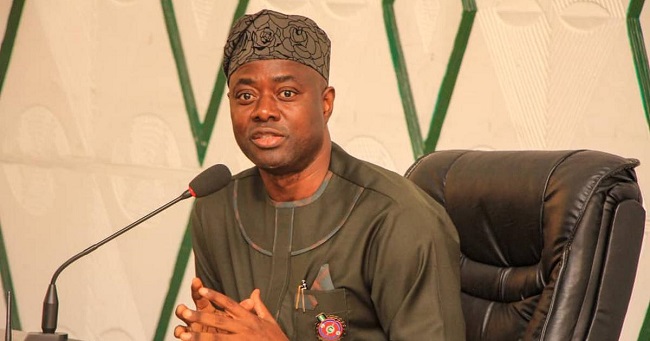
Gov. Seyi Makinde of Oyo State
The Implementation Manager for Ushahidi, Ms. Rhoda Omenya, said the presence of government officials at the validation meeting was a positive indication that the presented data would influence climate adaptation efforts.
“I’m very glad that we had some government representatives in the session, which means they agreed with the data outputs.
“Once the final report is compiled, we hope to present it to them for use in strengthening their adaptation and mitigation strategies.
“I’m hoping this informs climate action policies in the three states, and even nationally,” she said.
Mr. Seyi Olawuyi of YARN said the project exposed the scale of neglect in rural and riverine communities, where residents had repeatedly called for government intervention.
According to him, the data reveal that communities need urgent help.
“We realised that government hands do not reach many of these areas. Flooding is a common problem across Oyo, Osun and Ondo states.
“People complain bitterly about excessive rainfall and the lack of functional drainage systems.
“We are urging the government to do more by providing proper drainage and strengthening infrastructure,” Olawuyi said.
He further stated that CSOs, government agencies and community leaders must jointly undertake awareness creation and sensitisation exercises.
“None of us can do it alone. There should be synergy among all stakeholders so we can provide sustainable solutions,” he said.
Also, Climate Intersections Project Coordinator at NETHOPE, Mrs. Aminat Adebayo, said the initiative aligned with the organisation’s climate equity pillar, which sought to integrate community voices into climate policy.
“Nigeria is clearly vulnerable to the impacts of climate change.
“People know they are being affected. That is, farmers know and communities know.
“They may not call it climate change, but they understand that rainfall patterns have shifted and weather conditions are no longer stable,” she said.
Adebayo said earlier projects in Uganda showed that climate impacts, such as flooding and drought, could even trigger secondary crises, including gender-based violence.
She noted that similar realities informed the organisation’s work in Nigeria.
Adebayo also identified gaps between climate science and local implementation.
“There’s a huge disconnect between what is discussed at global platforms and how it is translated into local action.
“Government involvement is still limited, especially in enforcing policies that address these challenges,” she said.
According to her, participants agreed that collaboration among government, CSOs and community-based groups remains central to tackling Nigeria’s climate challenges.
“People are aware and ready to make changes, but the support system must work,” Adebayo said.
She further stated that the Climate Equity Project’s final report would guide climate adaptation and mitigation programming across the three participating states and support broader national climate-action planning.
The findings highlight recurring climate-related concerns, particularly flooding, excessive rainfall, poor drainage, and low government presence in the most-affected communities.
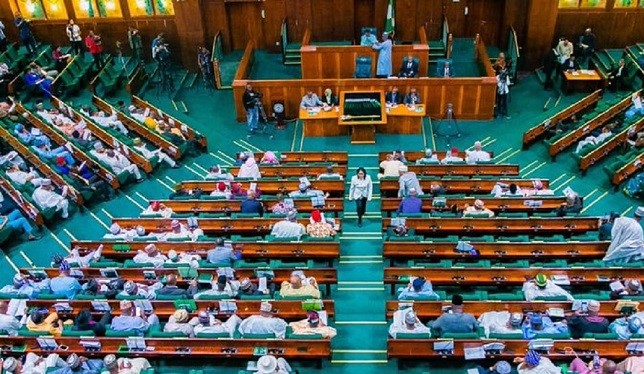
The House of Representatives Ad hoc Committee on Implementation and Oversight of the Naira-for-Crude Oil Policy has ordered all stakeholders to submit requested documents on or before Nov. 27.
Chairman of the committee, Rep. Boniface Emerengwa (PDP-Rivers), gave the order at an abridged hearing on Thursday, November 20, 2025, in Abuja, following the failure of some stakeholders to submit documents and appear before the committee.
“The investigative hearing scheduled for today, November 20, 2025, has been adjourned due to the gross negligence and lack of seriousness displayed by relevant stakeholders.
The Nigerian House of Representatives in session
“Despite ample notice, the majority of stakeholders failed to recognise the role of the legislative arm in working with the executive for the effective implementation of the policy by their failure to submit their required documents within the stipulated time frame.
“This dereliction of duty has not only undermined the integrity of the committee’s work but has also cast a shadow of unseriousness over a matter of national importance.
“The committee views this conduct as a blatant disregard for the legislative process and a disrespect to the Nigerian people whose interests we are mandated to protect.
“Let it be unequivocally stated, the committee is deeply disappointed. The failure to submit documents on time has impeded our ability to conduct proper vetting and due diligence, thereby frustrating the investigative process,” he said.
Emerengwa said that the extension was a final opportunity for stakeholders to demonstrate their commitment to transparency and cooperation.
“Furthermore, the investigative hearing has been rescheduled to 2nd December 2025, 12:00 AM, Conference Room 440. This date is final and non-negotiable,” he said.
The lawmaker warned that failure to comply with the extended deadline would attract severe sanctions.
“The committee will not hesitate to invoke its full legislative powers, including but not limited to issuance of summons and subpoenas, public naming and shaming of non-compliant entities, recommendation of sanctions to relevant regulatory and executive bodies and escalation to plenary for further disciplinary action,” Emerengwa said.
The chairman said that the committee was constituted to ensure transparency, accountability and effective oversight of the policy which had far-reaching implications for the economy and national development.
He advised all stakeholders to treat the ultimatum with the seriousness it deserved, as the policy was not a peripheral issue but one at the centre of the nation’s economic sovereignty and fiscal accountability.
Emerengwa also urged all stakeholders to submit their documents by the new deadline and prepare to appear before the committee on the rescheduled hearing date.
The Executive Secretary, Amazon States Consortium, Mr. Marcello Brito, says Brazil and Nigeria have partnered on energy and agriculture to tackle climate change and reduce black carbon emissions.
Brito disclosed this on Thursday, November 20, 2025, in an interview on the sideline of the COP30 United Nations Climate Change Conference of the Parties in Belém, Brazil.
He said that both countries also recently committed to global action on reducing black carbon emissions.
Executive Secretary, Amazon States Consortium, Mr. Marcello Brito
“Nigeria and Brazil are collaborating on climate change remedies primarily through the Green Imperative Project (GIP) for sustainable agriculture, and by working together on renewable energy transition and climate finance mobilisation.
“The nations engage in South-South cooperation through the Brazil-Nigeria Strategic Dialogue Mechanism to exchange ideas and technology, and align their climate strategies within the global climate framework, particularly the Paris Agreement.
“These efforts are part of a broader strategic partnership aimed at fostering sustainable development and inclusive growth between the two Global South nations,” he said.
Brito stated that the Brazilian Amazon Interstate Consortium (CAL) and Chinese institutions would strengthen scientific, economic, and environmental cooperation between Brazil and China during COP30.
According to him, the cooperation is geared toward joint solutions in energy, agriculture, biodiversity, and ecological transition.
“The cooperation will focus on forests and infrastructure, air quality and green cities, energy transition, and agricultural innovation with artificial intelligence and regenerative practices.
“It will also centre on the urgency of expanding joint investments in conservation, bioeconomy, science, and technology, with a focus on reducing deforestation and enhancing the environmental and cultural assets of the Amazon.
“As a legacy, a bilateral technical document will be published, presenting recommendations and successful experiences from both countries.
“This will consolidate partnership between Legal Amazon Consortium and Chinese institutions around a common agenda of sustainability, innovation, and shared prosperity,” Brito said.
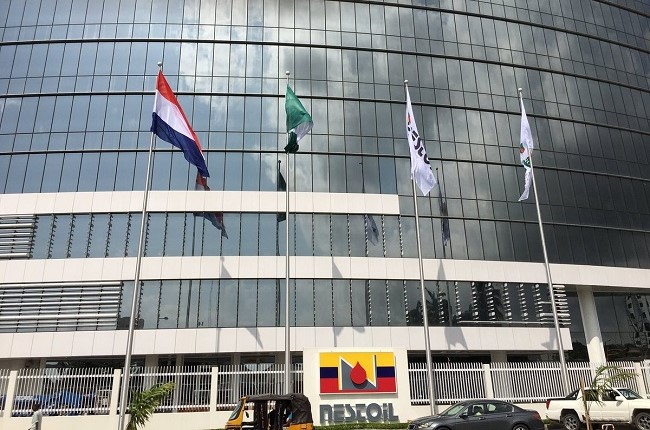
In a decisive ruling that appears to reset one of Nigeria’s most closely watched commercial disputes, the Federal High Court in Lagos has vacated the sweeping ex parte order previously granted against Nestoil Limited and Neconde Energy Limited, restoring both companies to full control of their assets and operations.
Justice Daniel Osiagor, who recently took over the matter, declared that all prior orders issued by Justice Isaac Dipeolu had lapsed by law, stressing that ex parte orders are temporary safeguards – not instruments to cripple businesses or deny fair hearing. He noted that the case is now starting de novo, making the earlier rulings null and void.
Nestoil
The vacated order had placed Nestoil and Neconde under receivership, a move that drew widespread backlash from civil society groups, legal analysts, and industry stakeholders, who argued that it was excessive, improperly granted, and based on incomplete disclosures by the plaintiffs, FBNQuest Merchant Bank and First Trustees.
Senior lenders including Glencore Energy UK, Fidelity Bank, Mauritius Commercial Bank and Africa Finance Corporation had earlier filed extensive affidavits challenging the legality of the ex parte order. They revealed that Neconde’s interest in OML 42 was already under a first charge in their favour – making it unlawful for any secondary charge to be created without their consent. They insisted that these facts were knowingly withheld from Justice Dipeolu.
When the matter was called on Thursday, November 20, 2025, Chief Wole Olanipekun (SAN), appearing for the defendants, urged the court to vacate the order, arguing that the previous ruling had expired after 14 days and could not continue to operate. Justice Osiagor agreed, confirming that all parties would now be heard on merit and that the era of far-reaching orders obtained without full disclosure had come to an end.
With the order now vacated, Nestoil and Neconde have regained full operational independence. Both companies reaffirmed their commitment to transparency, ethical business conduct, and the highest standards of corporate governance. They also signaled readiness to pursue an independent forensic reconciliation of their loan accounts, potentially through the Central Bank of Nigeria’s Consumer Protection Unit.
Industry watchers say Thursday’s ruling signals a reaffirmation of due process and commercial fairness in Nigeria’s judicial system. It also offers reassurance to local and international investors who had been closely monitoring the dispute.
As proceedings begin afresh under Justice Osiagor, stakeholders are hopeful that the court will fully address the substantive issues, including alleged unlawful debits, unexplained penalties, and prolonged refusal by lenders to release detailed account statements.
COP30 has entered its critical endgame, with ministers now locked in high-level negotiations that will determine whether the summit delivers meaningful progress for countries already bearing the brunt of the climate crisis.
And, for the first time in years, adaptation finance – often described as the weakest pillar of global climate action – has surged to the forefront of the talks.
A strong wave of support is building behind the Least Developed Countries (LDCs) Group’s proposal to triple global adaptation finance to $120 billion annually, a demand now backed by an expanding coalition of developing nations frustrated by the widening gap between needs and available funding.
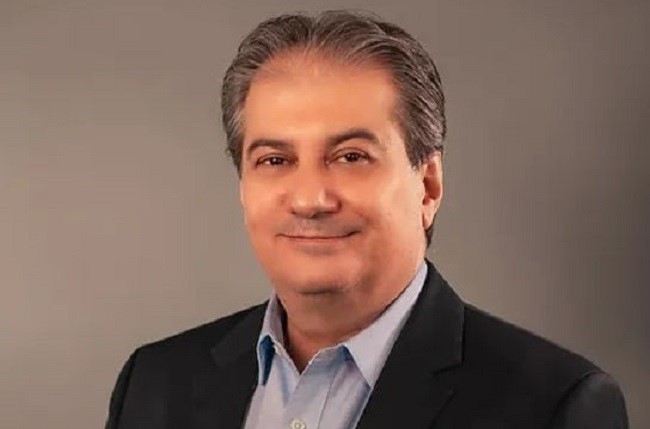
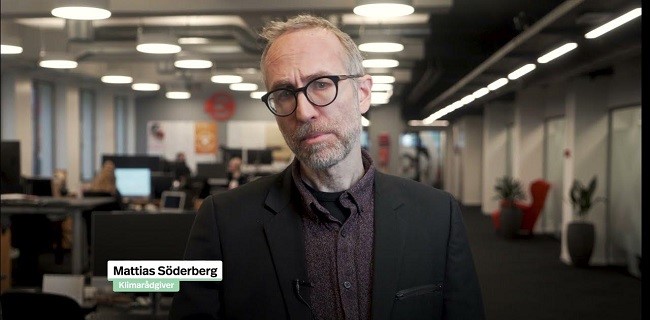
Mattias Söderberg, Global Climate Lead at DanChurchAid
“The LDC proposal to triple adaptation finance is not only reasonable – it is necessary. It is one of the most sensible and constructive ideas on the table at COP30, and it deserves strong support,” said Mattias Söderberg, Global Climate Lead at DanChurchAid.
Lives on the Line
For many climate-vulnerable countries across Africa, Asia and small island states, the stakes go far beyond diplomacy. Communities facing intensifying droughts, heatwaves, cyclones and seasonal flooding are struggling to adapt, while climate funding remains painfully insufficient.
“Adaptation should happen now in communities facing drought, heatwaves and flooding. What is missing is the money. Without finance, all talk about climate-resilient development rings hollow,” Söderberg warned.
Negotiators have spent much of the week debating metrics and methodologies for tracking adaptation progress, but developing nations say the technical discussions risk overshadowing the urgent need for real money for real projects on the ground.
Political Momentum Builds as Lula and Guterres Arrive
The arrival of Brazilian President Luiz Inácio Lula da Silva and UN Secretary-General António Guterres – a rare show of joint political intervention in week two of a COP – has raised expectations that progress on a deal is possible.
Observers say their presence could help break the deadlock, particularly on finance, long seen as the defining fault line between developed and developing countries.
Warning Against Last-Minute Trade-Offs
However, DanChurchAid cautions that adaptation finance must not be sacrificed in the final push to secure a broader political package.
“Adaptation finance must stay at the heart of the COP30 package. It cannot be traded away in the final hours. People on the frontlines need resources, not rhetoric, and they need them now,” Söderberg said.
As the negotiations move into their final days, the world’s most vulnerable nations will be watching closely to see whether Belém delivers the finance they urgently need – or whether adaptation once again slips through the cracks of global climate diplomacy.
About $135 million in new pledges to the Adaptation Fund were announced early during the second week of the UN COP30 climate change conference in Belem, Brazil.
New contributions will enable the Fund to continue to build and scale up climate resilience for the most vulnerable. Pledges announced include those from Germany ($69.36 million), Spain ($23.12 million), Sweden ($13.81 million ), Ireland ($11.56 million), Luxembourg ($5.78 million), Switzerland ($5.26 million), Belgium’s Walloon Region($3.47 million), Portugal ($1.16 million), South Korea ($0.82 million) and Iceland ($0.67 million).
Mikko Ollikainen, Head of the Adaptation Fund
Resource mobilisation is critical for the Fund at the Belém conference as it seeks a minimum target goal of raising at least $300 million in 2025 to help put it on the path towards tripling its outflows by 2030, in accordance with decisions taken at COP29, and help meet a growing pipeline of projects under development that has surpassed $1 billion. The Fund is hopeful other contributors may come forward before the end of the conference.
“We are very thankful for the new pledges, and hope more will follow. The Adaptation Fund is a good investment in our collective future. For 18 years, the Fund has been helping developing countries adapt and build resilience through funding locally rooted, tangible and scalable projects on the ground. This will help us reach more vulnerable communities who need it most,” said Washington Zhakata, Vice-Chair of the Adaptation Fund Board.
“We are grateful to all of the contributors for stepping up to deliver effective adaptation action. They will help the Adaptation Fund reach more vulnerable communities in developing countries with urgently needed adaptation projects on the ground,” said Mikko Ollikainen, Head of the Adaptation Fund. “The Adaptation Fund faces unprecedented demand for its work, and can receive funds from a variety of sources, so we are also hopeful others will come forward in the coming days.”
The impact of the Fund is clear. It has committed $1.5 billion to over 200 concrete adaptation projects in 108 countries through country systems and local leadership, with about half its portfolio in LDCs or SIDS. It is producing measurable resilience for more than 65 million people, protecting nearly 1 million hectares of natural habitat and creating over 600 early warning systems.
The Fund further pioneered Direct Access empowering country ownership in adaptation, and has expanded its funding windows in recent years to include those in project scale-up, Locally Led Adaptation and Innovation, among others.
Stakeholders, contributor and recipient governments alike praised the work of the Fund during the Fund’s Contributor Dialogue at COP30 and in high-level conference segments.
“Adaptation to climate change is rightly a key focus of COP30,” said Carsten Schneider, German Minister for the Environment, Climate Action, Nature Conservation and Nuclear Safety. “Societies that are not able to adapt to the new climatic conditions face the threat of hunger and poverty. People are forced to leave their homes. Many countries depend on international cooperation to adapt successfully. Germany has been a reliable partner in this area for many years. I hope that our contribution will build trust further and lend momentum to the search for joint solutions in Belém.”
Ms. Mónica Corrales,Director of European and Multilateral Sectoral Cooperation at the Spanish Agency for International Development (AECID) in Spain, said adaptation saves lives, prevents and reduces risks, and creates economic opportunities as the Fund empowers women and vulnerable groups through Locally Led Adaptation.
“The Adaptation Fund has been the premier,” she said. “It was the first fund to empower countries through direct access. We need to accelerate our effort and scale up where it’s needed the most.”
Mr. Leif Holmberg, Deputy Director of Sweden’s Ministry for Foreign Affairs, said Sweden’s long-standing support for the Fund reflects the need to continue to innovate scalable solutions. “Why do we value the Adaptation Fund so highly, because it delivers direct, country-owned projects that strengthen resilience where it matters most,” he said.
Mr. Darragh O’Brien, Ireland’s Minister for Climate, Energy and the Environment, said the Fund’s work supporting LDCs and SIDS (composing about half of the Fund’s portfolio) adapt to climate change is pivotal, as Ireland continues to increase its pledges each year.
“The work of the Adaptation Fund is very closely aligned to Ireland’s climate adaptation finance priorities,” he said. “It is about our investment in our future and those at the front lines of climate change.”
Mr. Thomas Schoos,Director-General for International, European and Internal Affairs for Luxembourg’s Ministry of the Environment, Climate and Biodiversity, praised the Fund for the crucial role it plays in adaptation finance for the most vulnerable.
Madam Cécile Neven, Minister of Energy, Air-Climate Plan, Housing and Airports for the Walloon Regional Government of Belgium, said Wallonia’s pledge will help scale up the Fund’s work and send a strong signal to strengthen resilience on the ground. “The Adaptation Fund has a direct impact on people’s lives,”she said.
“Adaptation is a major priority for us,” said Ms. Maria da Graça Carvalho, Minister for Environment and Energy of Portugal, in Portuguese during the high-level segment. “I am pleased to announce that we will also contribute one million euros to the Adaptation Fund, even in 2025.”
Ms. Gudrun Thorsteinsdottir,of Iceland’s Ministry of Foreign Affairs, said the Fund is one of Iceland’s primary climate partners. “Our partnership with the Adaptation Fund ensures local adaptation efforts and concrete impacts,” she said. “We thank the Adaptation Fund for their tireless work, leadership and dedication to create a more sustainable, resilient future for all.”
Ms. Alice de Moraes Amorim Vogas, Programme Director of the COP30 Brazilian Presidency, said action on adaptation is more urgent than ever as it serves not only to reduce risks but a source of opportunity while protecting vulnerable people and stabilizing economies.
“To work faster, we need credible funds. The Adaptation Fund plays an indispensable role,” she said, citing the Fund’s work over nearly two decades, its unique direct access modality and locally led actions that have been praised by local governments, indigenous peoples and others alike. “The Adaptation Fund must remain at the center of our collective efforts. We must strengthen capacity, broaden partnerships and build a safer more resilient future for all.”
COP29 President Mr. Mukhtar Babayev of Azerbaijan said the Fund provides concrete projects and pioneers new ways to empower countries to develop them directly. He emphasized the importance of tripling the Fund’s outflows by 2030.
“Adaptation funding means countries protected, it means lives saved,” he said. “The Adaptation Fund plays an important role in the climate finance landscape. It is a cost-effective investment for security and stability.”
Mr. Daniele Violetti, Senior Director of Programmes Coordination at the UNFCCC, said adaptation finance flows today are only a fraction of what is needed. Increasing adaptation finance to predictable, long-term reliable funding streams is crucial for planning. He praised the Fund’s ability to innovate and deliver real impact on the ground for the most vulnerable.
Several stakeholders including the LDC Group, Climate Action Network International, the Talanoa Institute and recipient countries such as Yemen and Grenada also praised the Fund’s support for the most vulnerable during the dialogue.
“Your leadership and experience on the ground remind us of the urgency of our collective effort and the importance of predictable, accessible, and scaled-up adaptation finance,” Washington said.
Also critical for the Fund at COP30 is its transition to the Paris Agreement. Although it has formally served the Agreement since 2019, it looks forward to guidance from COP30 to continue the momentum toward exclusively serving the Agreement.
The Nigerian Hydrological Services Agency (NiHSA) has raised concerns over water contamination in Lagos, Kogi, and Kebbi, calling for immediate action to protect public health and ensure safe water access.
NiHSA Director-General, Umar Mohammad, made the disclosure during a media briefing in Abuja on Wednesday, November 19, 2025.
According to Mohammad, the agency’s Water Quality, Flood Assessment, and Validation Report revealed high levels of heavy metals, microbial pollutants, and physical contaminants in groundwater and wells across the three states.
There are concerns over water contamination in Lagos, Kogi, and Kebbi states. Photo credit: Ravi Kant
“The findings follow flooding events that have worsened water safety risks.
“In Lagos, the agency found excessive levels of nitrite, fluoride, lead, and cadmium, alongside significant microbial contamination,” he said.
Mohammad attributed the pollutants to industrial discharge, sewage infiltration, waste leaching, and corrosion of ageing plumbing systems.
He warned that the contaminants could cause neurological damage from lead, kidney problems from cadmium, blue-baby syndrome from nitrites, and bone and dental deformities from fluoride.
Mohammad also noted that floodwater intrusion and damaged drainage systems worsen exposure, increasing public health risks in the state.
“In Kogi, groundwater samples indicated high lead concentrations ranging from 0.12 to 0.56 milligrams per litre, with microbial contamination including E. coli, Streptococcus, and Salmonella.
“These conditions could lead to poisoning, cognitive impairment, and waterborne diseases if left unaddressed,” Mohammad said.
“In Kebbi, well water in several local government areas contained arsenic levels between 0.75 and 4 milligrams per litre, along with high microbial loads.”
He said long-term exposure could result in arsenicosis, liver damage, and severe intestinal infections.
Mohammad called on state governments and relevant agencies to take immediate measures to mitigate contamination, strengthen public sensitisation, and ensure communities have access to safe drinking water.
He emphasised that NiHSA’s forecasts, water-quality updates, drought outlooks, and flood assessment reports provide actionable information for governments, communities, and emergency responders.
“In a country where the North often faces drought while the South battles flooding, NiHSA’s work is critical in saving lives and enhancing national preparedness and resilience,” Mohammad said.
Also, Mr Sunday Husseini, Acting Director, Hydrogeophysics at NiHSA, said the agency has communicated findings to the Lagos, Kogi, and Kebbi state governments.
Husseini noted that Kebbi has agreed to collaborate on a comprehensive study of the state to identify hotspots of heavy metal contamination and integrate water treatment facilities into water supply schemes.
“Similar engagements are ongoing with Lagos and Kogi governments,” he added.
He said NiHSA is also developing hydrological regulations to reduce disaster risks and improve the management of water quality, availability, and distribution.
Husseini stressed that integrating water quality monitoring with flood forecasts strengthens national resilience and ensures Nigeria does not face disasters blindly.
He urged Nigerians to heed official warnings, follow safe water practices, and collaborate with authorities to reduce risks and protect public health.
Tensions at COP30 are intensifying as African governments argue that they require “flexibility” to keep fossil fuels in their transition plans, citing the chronic shortfall of climate finance. The world’s wealthiest nations, who built their economies through centuries of colonial extraction and carbon-intensive industrialisation, continue to delay the finance they promised.
This position stands in stark contrast to the accelerating global push for a fossil fuel phase-out and raises the urgent question of who gets left behind as the world moves into a new energy era.
As wealthy nations delay delivering the finance they owe, African countries are being cornered into choices that risk locking the continent into more debt, energy poverty, stranded assets, weakened economies, and another cycle of extractive dependency.
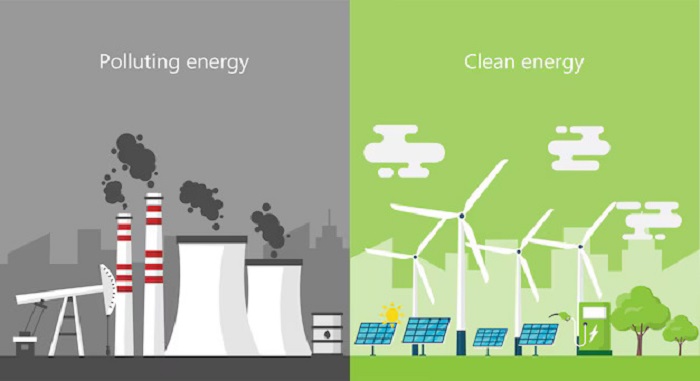
Will Africa choose clean energy over fossil fuels?
Observers believe that we need strong and clear calls for reparations and system change to decolonise Africa’s energy sector instead.
In response, Terry Githinji, Africa Programme Manager, Oil Change International, said:“It’s deeply worrying that at a time when global leaders are coalescing around phasing out fossil fuels, some African countries are pushing for a wiggle room for fossil fuels as part of the transition to clean energy.
“As COP30 confronts the reality that the fossil fuel era is ending, the real question for Africa is whether we allow ourselves to remain an extraction zone for other regions’ energy transitions, or whether we pursue energy sovereignty. Over 70% of projected new oil and gas production in Africa over the next 30 years is at high risk of becoming stranded assets.
“A just transition means stopping fossil fuels, not being held back by them, and choosing a future powered by clean energy. In Africa, a just transition includes energy access for the millions of Africans currently without energy for driving local economies and domestic needs. It is time that world leaders put in the work and finance to ensure that Africa has a just transition to renewable energy instead of being locked into more fossil fuels.”
Omar Elmawi, Convenor, Africa Movement of Movements, said:“The notion that Africa needs fossil fuels, especially gas, to transition and develop is propaganda pushed by a few fossil-fuel‑rich countries. The truth is fossil fuels have only impoverished our communities in Nigeria, Uganda, Angola, and South Africa. Fossil fuels are not helping our continent. We have enough renewable energy to meet the continent’s energy needs. What we need is grant-based finance and support so Africa can use its resources for its own development.”
Karabo Mokgonyana, Renewable Energy Campaigner, Power Shift Africa, said: “Fossil fuel extraction is taking over the land that feeds our communities, fueling conflict and militarization, harming health, and even displacing people from their own land. How much more evidence do we need to see that fossil fuels are destroying lives and livelihoods across Africa?
“Gas is not a transition fuel. What are we transitioning to; more harm, more loss, more damage? Africa does not need gas or other fossil fuels in our communities. As the Global South, we are saying no to fossil fuels and no to gas being labeled a transition fuel.”
TotalEnergies has signed agreements with its long-standing partner, Conoil Producing Limited, to acquire from Conoil a 50% operated interest in block OPL257 while Conoil acquires the 40% participating interest held by TotalEnergies in block OML136. Both OPL 257 and OML 136 are located offshore Nigeria.
Following this transaction, TotalEnergies’ interest in OPL257 will reach 90%, leaving Conoil with the remaining 10%.
OPL 257 includes an oil discovery made in 2005 on PP261, a structure straddling the block. TotalEnergies plans to drill an appraisal well in 2026 during its next drilling campaign, aiming for swift appraisal. The proximity of the resources to Egina provides opportunity for resources to be tied back, leveraging existing FPSO.
TotalEnergies
This transaction reflects TotalEnergies’ strategy in Nigeria to focus on operated perimeters in gas and offshore oil and to accelerate development opportunities in Nigeria.
With the Ubeta FID in June 2024 and entry in PPL2000/2001 offshore exploration in August 2025, the company says it is committed to its strategy of continuous investments in Nigeria and to growing production.
The Akpo West start-up in February 2024, Ubeta FID in June 2024, entry into PPL 2000/2001 deepwater exploration in Aug 2025 and this increase of stakes on OPL257 highlight TotalEnergies commitment to the country and support to Nigeria’s national objective to attract investments and grow production.