The Federal Government of Nigeria has renewed its commitment to confront the interconnected challenges of climate change, biodiversity loss and pollution.
The federal government made the commitment at the closing of the 18th National Council on Environment (NCE) meeting, hosted by the Federal Ministry of Environment in Katsina State.
The three-day meeting, which held at the Katsina State Secretariat, brought together commissioners, environmental experts, policymakers, and development partners from across the country.
Minister of Environment, Malam Balarabe Lawal
With the theme “Tackling the Triple Planetary Crises of Climate Change, Biodiversity Loss, and Pollution for Sustainable Development in Nigeria,” the council meeting served as a high-level platform for discussions on strengthening environmental governance and promoting sustainable development nationwide.
Speaking, Malam Balarabe Lawal, Minister of Environment, described the theme as timely and imperative.
“This is collectively known as the triple planetary crisis recognised as critical to Nigeria’s sustainable development, economic resilience, and environmental security.
Lawal warned that rising temperatures, desertification, flooding, pollution, and ecosystem degradation are already undermining livelihoods across the country, stressing that the crises are deeply interlinked and require an integrated, science-driven, and multi-sectoral response.
The minister commended Katsina State for its exemplary leadership in climate governance, noting its second place ranking in the 2025 Subnational Climate Governance Performance Ranking.
He highlighted the state’s Green Economy Roadmap, which prioritises renewable energy, dryland agriculture, eco-tourism, waste-to-energy solutions, and climate-smart development, alongside plans to establish a Green Investment Fund and implement a 2025 to 2030 Climate Action Plan.
He urged other states to replicate Katsina’s approach in transforming challenges such as desertification and soil degradation into opportunities for economic growth and job creation.
Lawal cited ongoing national initiatives including the Nigeria Energy Transition Plan, the Great Green Wall Programme, the National Policy on Plastic Waste Management, and renewable energy and clean cooking policies.
He also called for innovative financing mechanisms such as public-private partnerships, green bonds, climate funds, and carbon markets,
The minister urged stronger private-sector engagement, identifying corporate actors such as the Dangote Group and Nigeria Bottling Company as potential partners in environmental restoration and sustainability efforts.
Earlier, Gov. Dikko Radda, reaffirmed the state’s strong commitment to environmental sustainability.
Radda, who was represented by Malam Faruk Jobe, the Deputy Governor, highlighted the government’s early approval of funding and sustained support that ensured the successful hosting of the Council.
He described the NCE as a vital platform for policy harmonisation, collaboration, and coordinated action in addressing Nigeria’s pressing environmental challenges.
The National Agency for Food and Drug Administration and Control (NAFDAC) on Thursday, December 18, 2025, destroyed 618 tonnes of fake, counterfeit, substandard, expired and unwholesome regulated products worth over N10.19 billion in Kano.
The Director-General of NAFDAC, Prof. Mojisola Adeyeye, made this known during the burning exercise in Kano.
She said the exercise marked a major milestone in Nigeria’s commitment to safeguarding public health.
The destruction of substandard products in Kano
Adeyeye, who was represented by the NAFDAC Director, North-West Zone, Mr. Fraden Nantim-Mullah, said the destruction was not merely an enforcement action, but a clear statement that the era of impunity for those endangering lives through fake and dangerous products is ending.
She explained that NAFDAC, established under Act Cap N1, Laws of the Federation of Nigeria 2004, was empowered to regulate and control foods, drugs, cosmetics, medical devices, chemicals and related products to ensure their safety, quality and efficacy.
“Our mandate is unequivocal: to ensure that every regulated product available to Nigerians meets stringent standards of safety and quality.
“Today’s exercise demonstrates our unwavering commitment to executing this mandate without compromise,” Adeyeye said.
The NAFDAC boss warned manufacturers, importers, distributors and retailers involved in the production and sale of counterfeit and substandard products that the agency’s surveillance and enforcement mechanisms were robust and that offenders would face legal consequences.
According to her, the products destroyed were seized from unscrupulous operators across the pharmaceutical, food, cosmetic and chemical sectors.
She listed the destroyed items to include counterfeit medicines such as antibiotics, anti-malarials, antihypertensives, analgesics, herbal remedies and controlled psychoactive substances.
Other items included adulterated vegetable oils, contaminated beverages, unsafe sachet water, substandard condiments and falsified tomato paste, as well as hazardous cosmetic products containing dangerous chemical compounds.
Adeyeye said fake agrochemicals, including insecticides and pesticides that threatened food security, and counterfeit medical devices such as diagnostic kits and compromised infusion equipment were also destroyed.
“Each of these categories represents a deliberate assault on public health. Those involved are not just breaking regulations; they are endangering lives and undermining Nigeria’s health security,” she said.
Adeyeye also highlighted Nigeria’s recent attainment of the World Health Organisation (WHO) Maturity Level 3 status, describing it as evidence of a stable and well-functioning regulatory system.
She said the agency was working towards achieving WHO Maturity Level 4 status, which would position NAFDAC as a world-class regulatory authority, with the support of President Bola Tinubu’s administration.
On the economic benefits of quality assurance, Adeyeye said removing substandard and falsified products from circulation would reduce healthcare costs, improve productivity and enhance national economic growth.
She acknowledged the support of stakeholders, including compliant pharmaceutical companies that surrendered expired products and the Nigeria Customs Service, Kano/Jigawa Command.
She listed other critical stakeholders as the Nigeria Police Force, the Kano State Government, the Pharmaceutical Society of Nigeria (PSN), the National Association of Proprietary and Patent Medicine Dealers (NAPPMED), NGOs and trade unions.
Adeyeye reiterated the agency’s zero-tolerance policy towards regulatory violations.
“The citizens must exercise vigilance, refuse to purchase medicines from unlicensed hawkers and street vendors; report suspicious products through NAFDAC’s reporting mechanisms,” she warned.
Gov. Abba Yusuf of Kano State, represented by the Director of Pharmaceutical Services, State Ministry of Health, Mr. Kamilu Yakasai, commended NAFDAC for the exercise.
He said the destruction of seized and expired products was necessary to prevent them from re-entering society and causing harm to unsuspecting citizens and assured that the Kano State Government would continue to support such initiatives.
He reaffirmed the commitment of the state government to collaborating with NAFDAC to protect public health and improve healthcare delivery.
Representatives of the Nigeria Customs Service, Nigeria Police Force, National Drug Law Enforcement Agency (NDLEA), Department of State Services (DSS) and other stakeholders were present at the destruction exercise.
Similarly, the Lagos State of NAFDAC on Thursday began the destruction of unwholesome, banned, expired, fake and substandard products worth N55.4 billion in Ibadan.
The exercise took place at the Moniya dumpsite in Ibadan, the Oyo State capital.
Speaking during the exercise, the Director-General of NAFDAC, Prof. Christiana Adeyeye, said the products destroyed included damaged and expired items.
She added that the items were voluntarily handed over to the agency by no fewer than seventy compliant companies, non-governmental organisations (NGOs) and trade unions.
Adeyeye was represented by Mrs Florence Uba, the agency’s Deputy Director, Pharmaceutical Division, Investigation and Enforcement, Apapa, Lagos.
According to her, the estimated street value of the products destroyed is N55,436,844,470 (Fifty-five billion, four hundred thirty-six million, eight hundred forty-four thousand, four hundred seventy naira only).
She said the exercise aimed to prevent dangerous products from re-entering the market and causing public harm.
“The products destroyed included substandard and falsified medical products, unwholesome processed food products and food additives, unsafe cosmetics, and other expired items,” she added.
She stated that the agency seized the products from manufacturers, importers, and distributors.
“NAFDAC has been charged with the responsibility of safeguarding the health of the nation, and as such, it is committed to achieving its mandate,” she said.
Adeyeye urged community leaders, health professionals, religious figures, and journalists to educate the public on the dangers of patronising unlicensed drug sellers and unregistered pharmaceutical outlets.
NAFDAC also called for public participation in the fight against substandard products and urged Nigerians to report suspicious drug activities to help protect lives and strengthen the nation’s regulatory system.
She expressed gratitude to the Nigeria Customs Service (NCS), the Police, the Army, the Department of State Security Service (DSS), the Pharmacists Council of Nigeria, and other stakeholders for supporting NAFDAC’s mission.
“Together, we can protect the health and safety of all Nigerians,” she said.
Greenpeace Africa, together with Magamba Network and partners in the Kick Polluters Out Network, have launched a new satirical video exposing TotalEnergies’ sponsorship of the Africa Cup of Nations (AFCON) as a deliberate attempt to greenwash its controversial environmental and human rights record across the continent.
A second satirical video produced by Journal Rappe, members of the Kick Polluters Out network, will be released on Friday, December 19, 2025, extending the campaign’s reach across Francophone Africa and reinforcing the call to end TotalEnergies’ greenwashing of African football.
TotalEnergies
These videos challenge TotalEnergies’ efforts to associate itself with African pride, culture, and football, while the company continues to expand fossil fuel projects that drive climate breakdown, displace communities, and undermine human rights from Mozambique to Tanzania, including through the controversial East African Crude Oil Pipeline (EACOP).
The English version features BAFTA-award-winning UK comedian, Jolyon Rubinstein, alongside Zimbabwean comedian, Munashe Chirisa. The film delivers a sharp and accessible critique of what campaigners describe as TotalEnergies’ neo-colonial business model, using humour to expose the gap between the company’s public image and the real impacts of its operations on African communities.
“It’s a disgrace that at a time where 99% of climate scientists could not be clearer that Africa is tipping into a climate catastrophe, a neo-colonial fossil fuel giant can greenwash their image through one of the world’s most beloved football tournaments. Let’s work together to show TotalEnergies the red card,” said Jolyon Rubinstein, one of the actors/creatives who worked on the AFCON video.”
Football should unite, not greenwash pollution
TotalEnergies’ continued sponsorship of AFCON comes as the company faces growing scrutiny over fossil fuel expansion, land grabs, and displacement of communities, as well as legal and regulatory actions linked to misleading climate claims and environmental harm. From mass displacement linked to oil and gas projects to accusations of deceptive greenwashing, critics argue that the company’s branding strategy seeks to distract from mounting evidence of harm.
“TotalEnergies isn’t sponsoring AFCON to support African football; they’re using the beauty of the game to hide the ugliness of their pollution,” said Trust, campaigner with Kick Polluters Out. “They only care about their image and profits. Greenwashing is their favourite tactic, and this pretend shift into renewables is just another PR stunt. AFCON is simply another chance for them to distract Africa from the destruction they cause across our continent.”
Greenpeace Africa, Magamba Network and the Kick Polluters Out movement stress that football, one of Africa’s most powerful cultural forces, must not be exploited to legitimise companies whose core business accelerates climate catastrophe and deepens inequality. Campaigners are urging the Confederation of African Football (CAF) to adopt fossil-free sponsorship policies, similar to how tobacco sponsorships were once removed from sport.
A Call to CAF and African institutions
The video launch forms part of a wider continental mobilisation calling on sports institutions, governments, and sponsors to put people and the planet before polluters’ profits.
As Africa faces worsening floods, droughts, and heatwaves as a result of the climate crisis, allowing polluters to wrap themselves in the symbols of our unity and joy in is unacceptable when they ultimately need to be held accountable,” Sherelee Odayar, Oil and Gas Campaigner at Greenpeace Africa, said. “AFCON should inspire hope, resilience and solidarity – not serve as a billboard for climate destruction.”
Parties to the Convention on the Conservation of Migratory Species of Wild Animals (CMS) have submitted proposals to add 42 new migratory species to the Convention’s appendices as needing international conservation. Due to its increasing population, one species – the Bukhara deer – is proposed to be removed from the list requiring the highest protection.
An environmental treaty of the United Nations, CMS convenes governments and stakeholders to address the conservation of migratory species and their habitats. The legally binding Convention has two appendices: Appendix I, which is aimed at species that are endangered, and the Appendix II, which is aimed at species that warrant international cooperation.
“As the pressures on our planet’s migratory species intensify, international commitment to take effective measures has never been more essential. The proposals to list 42 new species on the CMS appendices, including iconic animals like the snowy owl and the hammerhead shark, reflect the urgent need for coordinated global action. At COP15, governments have an opportunity to strengthen efforts to safeguard these species,” said Amy Fraenkel, CMS Executive Secretary.
From antelopes and whales to bats, birds and sea turtles, migratory species addressed by the Treaty are those species of wild animals that need to travel regularly, often seasonally, as part of their natural life cycles, and which cross at least one national border. They are vital for healthy, well-functioning ecosystems. They provide crucial services like pollination, seed dispersal, carbon storage and pest control, and benefit communities that rely on them as a source of food and income.
Yet many such species are in decline due to pressures including habitat loss and fragmentation, overexploitation, climate change and pollution.
Among the 42 species proposed for listing under the Convention, several illustrate the urgent challenges facing migratory wildlife. The striped hyena (Hyaena hyaena), for example, occupies a broad but increasingly fragmented range across Asia and Africa. With a global population estimated at fewer than 10,000 mature individuals, it is threatened by habitat loss and fragmentation due to agriculture, urbanisation and infrastructure development; diminished prey caused by declines in other large carnivores and shifts in livestock practices; and illegal hunting and trade.
Widespread persecution, often stemming from human-wildlife conflict and negative perceptions, further endangers this vital scavenger, which helps recycle nutrients and prevent disease through carrion consumption.
Similarly, the snowy owl (Bubo scandiacus) has become widely recognised in recent years through popular culture, but its status is increasingly precarious. Over the past three decades, the species has lost a third of its global population; the international conservation organisation BirdLife International recently declared it extinct in Sweden.
As a top predator and an avian icon of the Arctic tundra, the snowy owl is a key indicator of the health of this fragile ecosystem. Climate change and overexploitation are among the primary drivers of its population decline, underscoring the species’ vulnerability despite its iconic status.
Marine species also face grave risks, as seen in the plight of the great hammerhead shark (Sphyrna mokarran). Overexploitation in fisheries, both as a targeted catch and as bycatch, has led to steep population declines, driven by the high market value of its fins and the demand for its meat. This overfishing affects the shark at all life stages in both nearshore and offshore waters. As an apex predator, the loss of the great hammerhead threatens to destabilise the marine food web and compromise the overall health of ocean ecosystems.
The 42 species proposed for listing on CMS appendices:
Terrestrial mammals
Cheetah (Acinonyx jubatus) – proposal to include the cheetah populations of Zimbabwe on Appendices I and II. Other populations apart those from Botswana and Namibia are already listed on Appendix I. The proposal was submitted by the Government of Zimbabwe.
Striped hyena (Hyaena hyaena) – proposal to include on Appendices I and II, submitted by the Governments of Tajikistan and Uzbekistan.
Avian species
Snowy owl (Bubo scandiacus) – proposal to include on Appendix II, submitted by the Government of Norway.
Gadfly petrels (26 species of the genera Pterodroma and Pseudobulweria) – proposal to include 9 taxa of gadfly petrels on Appendix I and 17 taxa on Appendix II, submitted by the Governments of Australia, Brazil, Chile, Cook Islands, Dominican Republic, Fiji and New Zealand.
Flesh-footed shearwater (Ardenna carneipes) – proposal to include on Appendix II, submitted by the Governments of Australia, France and New Zealand.
Hudsonian whimbrel (Numenius phaeopus hudsonicus) – proposal to include on Appendix I, submitted by the Governments of Brazil and Chile.
Hudsonian godwit (Limosa haemastica) – proposal to include on Appendix I, submitted by the Governments of Brazil and Chile.
Lesser yellowlegs (Tringa flavipes) – proposal to include on Appendix I, submitted by the Government of Uruguay.
Iberá seedeater (Sporophila iberaensis) – proposal to include on Appendix II, submitted by the Governments of Argentina and Brazil.
Aquatic species
Giant otter (Pteronura brasiliensis) – proposal to include on Appendices I and II, submitted by the Government of France.
Pelagic thresher shark, bigeye thresher shark and common thresher shark (Alopias pelagicus, Alopias superciliosus, Alopias vulpinus) – proposal to include all three thresher shark species on Appendix I while maintaining their status under Appendix II, submitted by the Government of Panama.
Patagonian narrownose smoothhound (Mustelus schmitti) – proposal to include on Appendix II, submitted by the Government of Brazil.
Scalloped hammerhead shark (Sphyrna lewini) – proposal to include on Appendix I while maintaining its status under Appendix II, submitted by the Government of Ecuador.
Great hammerhead shark(Sphyrna mokarran) – proposal to include on Appendix I while maintaining its status under Appendix II, submitted by the Government of Ecuador.
Angular angelshark (Squatina guggenheim) – proposal to include on Appendix II, submitted by the Government of Brazil.
Spotted sorubim (Pseudoplatystoma corruscans) – proposal to include on Appendix II, submitted by the Government of Brazil.
Species proposed for removal from CMS Appendix I:
Bukhara deer (Cervus elaphus yarkandensis) – proposal to remove from Appendix I, submitted by the Government of Uzbekistan.
The proposal to remove this species from Appendix I reflects successful long-term conservation action and the sustained recovery of this subspecies, according to the CMS, adding that the subspecies would remain under Appendix II and national protection, with Range States committed to maintaining and further consolidating these gains.
Many migratory species not yet listed under CMS
The CMS flagship report, State of the World’s Migratory Species, released at CMS COP14 in Uzbekistan, found that 399 globally Threatened and Near Threatened migratory species (mainly birds and fish) are not listed on the CMS appendices and may benefit from being included to receive higher protection or strengthened coordinated conservation measures.
The report also found that while climate change, pollution and invasive species are having profound effects on migratory species, the two greatest threats are overexploitation and habitat loss, which are also the main concerns for most of the proposed species for listing.
It also highlighted that although nearly half of CMS-listed species (44 per cent) are showing population declines, 12 per cent are increasing and another 31 per cent are stable, underscoring the importance of listing species and the value of the conservation work carried out under the Convention.
Concluding on Thursday, December 18, the ScC-SC8 is the last meeting of the Convention’s scientific advisory body before COP15, providing scientific and technical advice on an extensive conservation agenda including items related to illegal and unsustainable taking of species, ecological connectivity, infrastructure and renewable energy impacts on migratory species, and climate change, as well as a wide range of taxa-specific and cross-cutting conservation issues, all of which will be considered by COP15.
Upcoming scientific assessments and reports, including the first interim report of the State of the World’s Migratory Species report and a global assessment of migratory freshwater fish to be officially presented at COP15 next year, were also on the agenda of the experts.
Looking ahead to Campo Grande, gateway to the Pantanal
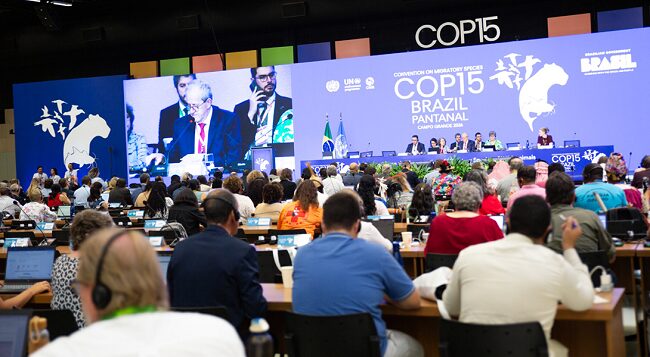
The 15th Meeting of the Conference of the Parties to CMS (COP15) will be hosted by the Government of Brazil in Campo Grande, in the state of Mato Grosso do Sul, from March 23 to 29, 2026, with associated events taking place in the preceding days.
This UN wildlife conservation meeting will bring together governments, scientists, conservation organizations, Indigenous peoples, local communities and other stakeholders to address the growing pressures on migratory species and their habitats. It is expected to adopt numerous new mandates to strengthen actions for the conservation of migratory species around the world.
The Kebbi State Government on Thursday, December 18, 2025, inaugurated the production of fortified rice as part of efforts to strengthen food and nutrition security in the state.
Gov. Nasir Idris, who launched the rice production at the Takalau Rice Mill in Birnin Kebbi, the state capital, said the aim was to position the state as one of the milling states in the country.
The governor, represented by the Commissioner for Agriculture and Natural Resources, Alhaji Shehu Muazu, described the project as “a major boost for low-income earners in the state.”
Kebbi fortified rice
He said the initiative would improve access to rice fortified with essential micronutrients, including zinc, iron, folic acid and vitamins B12, B1, B3 and B6.
He added that “this is a great win for the people of Kebbi. We appreciate the support of our development partners, particularly the World Food Programme (WFP) and TechnoServe, in making this project a reality.”
The governor’s wife, Hajiya Nasare Idris, represented by the Special Adviser on Budget Matters, Hajiya Aisha Usman, said the project aligned with efforts to address micronutrient deficiencies and improve public health outcomes in the state.
She reaffirmed her commitment to sustaining rice fortification and other nutrition-related interventions.
Earlier, Faruk Abubakar, the Permanent Secretary, Ministry of Agriculture and Natural Resources, said the mill had been further upgraded with additional equipment, including a sortex machine and a length grader, to enhance rice quality.
He urged local farmers to utilise the facility, assuring them of premium quality, fortified rice output.
Representatives of development partners at the event commended the state government for prioritising nutrition.
Mrs. Owen Osaigbevo-Iniobong of WFP, said the project would help to deliver nutrient-rich food to vulnerable populations.
On his part, Mr. Seun Elere, the Project Manager at TechnoServe, said that improved nutrition was critical to poverty reduction and livelihood improvement.
Similarly, Mr. Sani Isyaku of Global Alliance for Improved Nutrition (GAIN), praised the state’s commitment to closing nutritional gaps.
A panel of global agricultural and policy experts has released a new playbook to support African countries as they begin implementing the Kampala Declaration on building resilient and sustainable agrifood systems from January 1, 2026.
“Recipes for Success 2: Policy Innovations to Achieve the Kampala Declaration Goals“ synthesises lessons from 70 country case studies conducted by the Malabo Montpellier Panel based on 16 flagship reports published since 2017, offering practical and replicable approaches for African governments, nonstate actors, and development partners for the third phase of the Comprehensive Africa Agriculture Development Programme (CAADP) 2026-2035.
Dr. Ousmane Badiane, Executive Chairperson, AKADEMIYA2063
CAADP, the foundational framework for Africa’s agricultural development, was launched in 2003 following the endorsement of the Maputo Declaration. In 2014, the Malabo Declaration set forth seven commitments to be achieved by 2025. These included ending hunger in Africa by 2025, halving poverty through inclusive agricultural growth, and enhancing the resilience of livelihoods and production systems to climate variability and other related risks.
Africa has experienced sustained economic growth over the last two decades, with a steady increase in agricultural production. Despite progress, the continent has faced severe setbacks from climate shocks, the COVID-19 pandemic, and global commodity market disruptions linked to the Russia-Ukraine war.
In response to these pressing challenges, the Kampala Declaration and the associated CAADP Strategy and Action Plan (2026–2035) were adopted by African Union Member States in 2025, proposing a holistic agrifood systems approach to shape the next decade of Africa’s agrifood system transformation. With case studies from 22 countries and lessons from Regional Economic Communities, “Recipes for Success 2” maps the Panel’s body of evidence against the six commitments outlined in the Kampala Declaration.
“The Kampala Declaration is an ambitious framework to make up ground on the continent’s agrifood systems transformation, and the good news is that African countries already possess a rich foundation of policy innovations, institutional reforms, and programmatic successes to build on,” said Dr. Ousmane Badiane, Co-Chair, Malabo Montpellier Panel, and Executive Chairperson at AKADEMIYA2063.
“Evidence from the Panel’s work over nearly a decade shows that the success of the Kampala era would largely depend on Africa’s capacity to learn from documented experiences and scale up proven solutions through coordinated and sustained action,” Badiane added.
With this report, the Malabo Montpellier Panel presents an integrated agenda to support policy and programmatic interventions across areas such as agrifood finance, agro-processing, climate resilience, digitalisation, fisheries, irrigation, mechanisation, nutrition, and youth and women’s empowerment.
The report offers critical recommendations and highlights relevant, successful interventions for adoption and scaling under each of the six Kampala commitments.
Intensifying sustainable food production, agro-industrialisation, and trade: Achieving a 45 percent increase in output, halving postharvest losses, and tripling intra-African trade by 2035 will require sustained investment in technology, diversification, and competitive value chains. Experiences from Ethiopia, Rwanda, and Senegal provide workable models that show productivity gains rise sharply when policies align with investments in irrigation, digital advisory services, improved mechanisation, and climate-smart agricultural innovations responsive to farmers’ needs.
Trade-enhancing reforms in Kenya, South Africa, and Uganda demonstrate that reducing tariff and non-tariff barriers can stimulate regional markets, boost competitiveness, and strengthen food availability across borders.
Boosting investment and financing for agrifood systems transformation: The Kampala Declaration calls for mobilising at least $100 billion in public and private investment by 2035, allocating 10 percent of national budgets to the sector, and reinvesting 15 percent of agrifood GDP annually. Examples from Morocco, Seychelles, and Zambia show that innovative financing mechanisms, including revolving funds, blended finance instruments, and results-based subsidies, have expanded access to capital for women, youth, and other small producers.
Ensuring food and nutrition security: The Kampala Declaration targets Zero Hunger by 2035, 30 percent reductions in child stunting, wasting, and overweight, and ensuring that at least 60 percent of the population can afford a healthy diet. Interventions in Malawi, Côte d’Ivoire, and Ghana show that school feeding schemes, dietary diversification incentives, strengthened safety nets, and biofortified crops, along with stronger monitoring systems to track nutrition outcomes across all ages for both females and males, have proven effective in improving dietary quality, reducing food insecurity, and building human capital.
Advancing inclusivity and equitable livelihoods: Reducing extreme poverty and narrowing the gender yield gap by half requires reforms that prioritise equitable access to productive resources. Programmes that have expanded women’s and youth participation in agrifood systems, as observed in Ethiopia, Uganda, Kenya, and Zimbabwe, demonstrate that key enablers of inclusivity include secure land and resource rights, tailored financial services, access to mechanisation and digital tools, and agricultural innovation hubs that enable young people, in particular, to transition from being job seekers to job creators.
Building resilient agrifood systems: Protecting 40 percent of households from shocks requires a shift from reactive to anticipatory governance. Successful programmes in Niger, Mali, Zambia, and Morocco show that effective delivery of scalable technologies, such as solar irrigation, drought-tolerant seed varieties, and climate-informed advisory services, combined with early warning systems and risk financing mechanisms, have strengthened countries’ ability to withstand such shocks.
Investments in restoration, circular economy approaches, and sustainable land and water management can ensure long-term resilience for households engaged in agrifood-system-related livelihoods, as demonstrated in Ghana and Uganda. Furthermore, Mozambique and Malawi demonstrate that infrastructure and cross-border cooperation can turn aquatic resources into a pillar of resilient, nutrition-sensitive food systems.
Strengthening agrifood systems governance: Evidence indicates that countries that have invested in coherent policies, data-driven planning, accountable institutions, and participatory decision-making have achieved faster and more sustainable results in transforming their agrifood systems. As observed in Rwanda and Senegal, inter-ministerial coordination, regular performance reviews, and transparent regulatory systems, especially those designed around the use of digital technologies, enhance trust, efficiency, and investment attractiveness.
“The wealth of evidence in this report serves as a practical reference for African governments, development partners, and private-sector actors to advance the ambitions of the Kampala Declaration,” said Prof. Joachim von Braun, Co-Chair, Malabo Montpellier Panel at the Centre for Development Research (ZEF), University of Bonn. “The African research communities will play a key role providing guidance to implementation actions at continental and country level.”
As the continent embarks on the implementation phase of the Kampala Declaration, these policy solutions, along with robust communication and advocacy strategies, can serve as a blueprint for continentwide implementation, scaling, and monitoring to accelerate impact.
In line with its renewable energy business model, TotalEnergies says it has finalised the sale to Asterion Industrial Partners of 50% of its 424 MW portfolio of wind and solar projects located in Greece.
This transaction values the portfolio at €508 million, or approximately €1.2 million per MW installed.
TotalEnergies retains a 50% stake and remains the operator of the assets. Furthermore, TotalEnergies will purchase and market the majority of the electricity produced by these assets once they are no longer eligible for regulated tariffs.
A TotalEnergies solar energy facility
TotalEnergies’ business model in electricity
TotalEnergies is building a competitive portfolio combining renewable (solar, onshore wind, offshore wind) and flexible (CCGT, storage) assets to provide its customers with low-carbon electricity available 24/7.
To achieve its profitability objectives and share the risks, TotalEnergies sells up to 50% of its interests in renewable assets, thus allowing the Company to maximise the value of its portfolio.
Civil society organisations (CSOs) in Adamawa State have expressed concern over poor access to direct funding, calling for urgent government intervention to sustain humanitarian and development operations across Nigeria.
Mr. Peter Egwudah, Chairman of the Network of Adamawa Non-Governmental Organisations (NANGO), made the call on Wednesday, December 17, 2025, in Yola, the state capital, during the unveiling of the Nigeria Localisation Barometer Report.
Egwudah said limited access to direct funding remained a major challenge facing local organisations, in spite of global commitments to strengthen locally led humanitarian responses.
Participants at the unveiling of the Nigeria Localisation Barometer Report in Yola
He recalled that the 2016 Grand Bargain agreement in Istanbul set a target of allocating at least 25 per cent of humanitarian funding to national actors, noting that the benchmark had yet to be met.
According to him, inadequate funding is already affecting the capacity of local CSOs to respond effectively to conflict-induced and climate-related humanitarian crises.
He added that dwindling donor support had further constrained operations, making it necessary to assess the localisation agenda and advocate stronger government involvement.
Egwudah noted that governments at the federal, state and local levels did not directly fund NGOs, stressing the need for advocacy to encourage public investment in humanitarian response.
He said humanitarian crises had spread nationwide, citing insecurity in the North-East, North-West and North-Central, oil spillage in the Niger Delta, and other socio-economic challenges.
Egwudah added that Nigeria hosted more than three million internally displaced persons, requiring stronger government ownership and increased budgetary commitment.
He stressed that humanitarian assistance should not be left solely to international organisations, urging government investment to ensure sustainability and accountability.
Also speaking, Mrs. Amy Gaman, Managing Director of Nuru Nigeria, said the 25 per cent funding commitment to local actors had not been realised, adding that it might not have reached 10 per cent.
Gaman urged federal and state governments to support the localisation model through counterpart funding, noting that development efforts were anchored on strong government leadership.
Stakeholders in Nigeria’s environmental sector have been assured of resolutions that would strengthen policy direction and promote environmental sustainability nationwide.
The assurance was given on Tuesday, December 16, 2025, in Katsina by Mahmud Adam-Kambari, Permanent Secretary, Federal Ministry of Environment.
Adam-Kambari gave the assurance at the opening of the Technical Session of the 18th National Council on Environment (NCE)
Malam Balarabe Abbas Lawal, Minister of Environment
He described the council as the highest policy-making body on environmental matters, providing a critical platform for stakeholders to review progress, address emerging challenges and adopt resolutions that shape national environmental policy.
According to him, deliberations at the council will drive coordinated action towards a safer and more sustainable environment for all Nigerians.
He stated that the 2025 theme, “Tackling the Triple Planetary Crisis of Climate Change, Biodiversity Loss and Pollution for Sustainable Development in Nigeria”, reflected the urgent need for collective action.
The permanent secretary stressed that climate change, biodiversity loss and pollution posed serious threats to ecosystems, food security, public health and Nigeria’s sustainable development aspirations.
Adam-Kambari also commended the Katsina State Government and its people for their warm hospitality and strong partnership.
He also praised the Minister of Environment for his visionary leadership, as well as state commissioners, development partners and other stakeholders for their continued commitment to environmental sustainability.
Earlier, the Katsina State Head of Service, and Chairman of the Local Organising Committee, Falalu Bawale, welcomed the participants and described their presence as a clear demonstration of shared resolve to protect the environment.
He said the council provided an opportunity to deepen professional collaboration and deploy expertise towards effective environmental management.
Bawale thanked the Federal Ministry of Environment for selecting Katsina State to host the prestigious national forum.
He reaffirmed that the NCE remained Nigeria’s most strategic environmental policy organ, offering states access to best practices in environmental resilience and climate change adaptation.
Stakeholders in the environment sector have called for concrete implementation of existing policies, financial commitments to effectively address the global climate crisis.
They made the call at the Post COP30 National Consultative Dialogue on Advancing Nigeria’s Nationally Determined Contribution (NDC) 3.0 at the Climate and Sustainable Development Network (CSDevNet) Annual General Meeting in Abuja on Wednesday, December 17, 2025.
Rep. Sam Onuigbo, CSDevNet Patron, said that global climate action has entered a new phase, shifting from pledges to concrete implementation.
Participants at the CSDevNet Post COP30 National Consultative Dialogue in Abuja
“For Nigeria, the Nationally Determined Contribution under the Climate Change Act 2021 remains the central framework guiding national climate action.”
He highlighted the importance to ensure that post-COP30 priorities response to the lived experiences of communities facing climate impacts, while promoting equity, inclusiveness, and a just transition.
Onuigbo further identified key opportunities within NDC 3.0 implementation, including; Strengthening mitigation and adaptation measures, scaling up nature-based solutions, enhancing transparency and accountability in climate governance, expanding renewable energy deployment and green job creation.
He also emphasised the potentials of Nigeria’s emerging carbon market to mobilise climate investment and accelerate emissions reduction, and stressed on the need for strong environmental integrity and community safeguards.
He reaffirmed his commitment to collaborative, evidence-driven climate action and expressed optimism that Nigeria can emerge as a continental leader in low-carbon development and climate resilience.
“Post COP 30 priorities must respond to the lived experiences of communities grappling with climate shocks, farmers contending with shifting seasons, young people seeking green livelihoods, and institutions working to protect ecosystems.
“Implementing Nigeria’s NDC 3.0 offers us an opportunity to deepen mitigation pathways, expand adaptation finance, enhance nature-based solutions, and reinforce the transparency frameworks that underpin trust in our climate governance,” Onuigbo said.
Dr Sam Ogallah, Head of Unit, Climate Change, Africa Union, worried that Africa did not create the climate crisis, but Africa is paying the highest price.
“The outcome of COP30 reinforced the long-standing African demands for protection of livelihoods, jobs and development prospects fair and just transition pathways and scaled adaptation loss and damage support.
“Nigeria’s NDC 3.0 rightly prioritises emissions reduction of greenhouse gases by 29 per cent by 2030 and 32 per cent by 2035 (from 2018 levels) and energy transition by 50 per cent of national power from renewables by 2030,” Ogallah said.
Prof. Ibrahim Choji, Chairman of the CSDevNet Board, reaffirmed the Network’s strong commitment to aligning Nigeria’s national climate priorities with global climate processes.
Choji said that Nigeria had experienced significant climate-related challenges, including devastating floods, rising food insecurity, and increasing vulnerability among communities.
Inspite of these challenges, he highlighted positive developments such as the validation of Nigeria’s NDC 3.0, gradual progress in climate-related policies, and renewed global momentum following COP 30.
He reiterated that CSDevNet remains committed to translating climate policies into action by amplifying civil society voices in national and global climate spaces, supporting grassroots and community engagement and accountability in climate governance.
Also, he emphasised that civil society plays a critical role in ensuring that climate commitments move beyond policy documents and result in measurable improvements in people’s lives,“ Choji said.
Mrs. Anna Kalu, a representative from the Federal Ministry of Agriculture and Food Security, said that COP30 emphasised the interconnectedness of agriculture, food security, climate resilience, and sustainable development goals.
“For Nigeria, these outcomes resonate with national mandates to enhance sustainable agricultural productivity, strengthen resilience to climate shocks, and safeguard food production for a rapidly growing population.”
She reaffirmed the Ministry’s commitment to align with COP30 outcomes national policies, climate adaptation plans, and ongoing agricultural governance reforms.
“As we move into the post-COP 30 implementation phase, the ministry will continue engagement with CSDevNet in translating ambition into impact for climate-secure food security for Nigeria,” she assured.